Stories from the patent record
Unusual, notable, and historically significant US patents — the inventions that changed everything, the ones that were never built, and a few that should never have been granted.
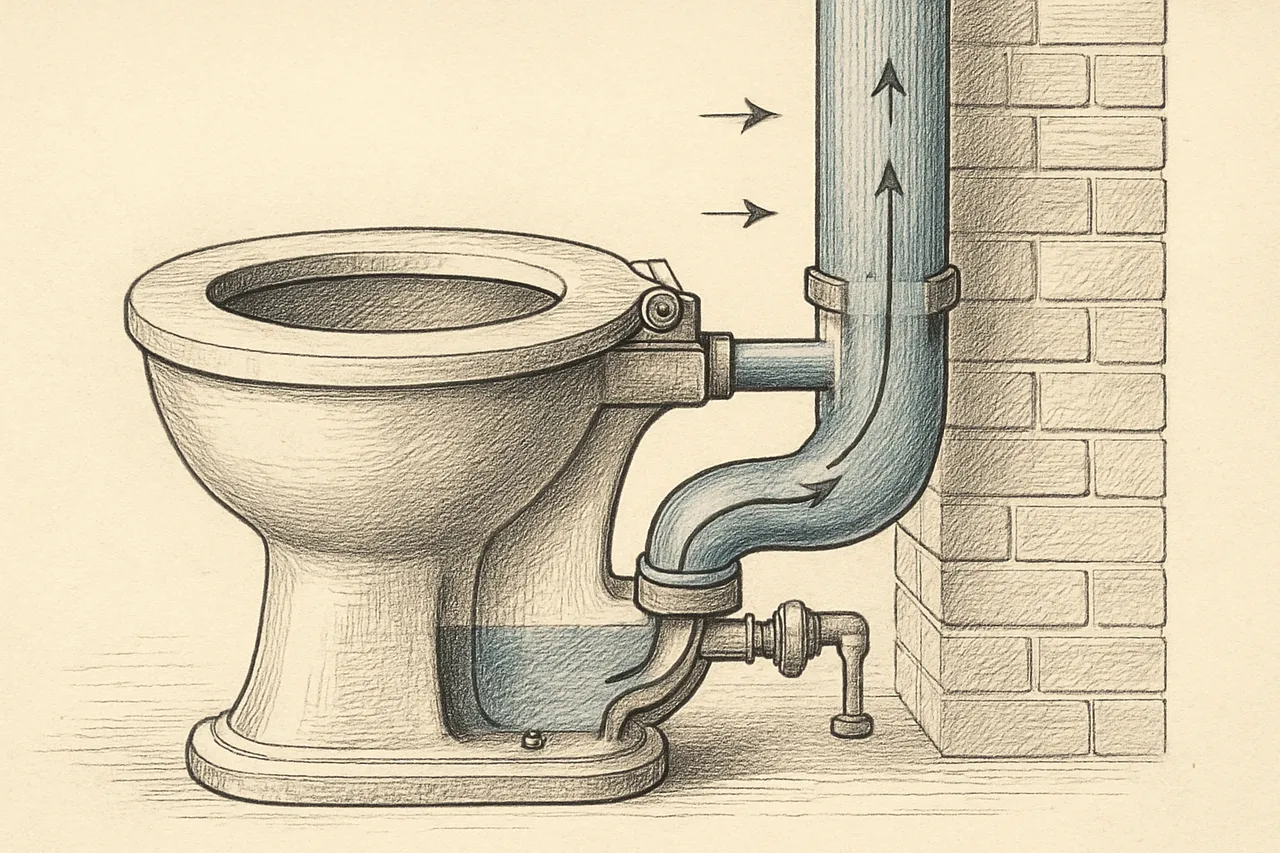
A Toilet for Automatically Exhausting Odious Air
An 1898 patent for a self-venting toilet seat that drew foul air directly into the chimney — a Victorian solution to a Victorian problem.
Read the story →Recent stories
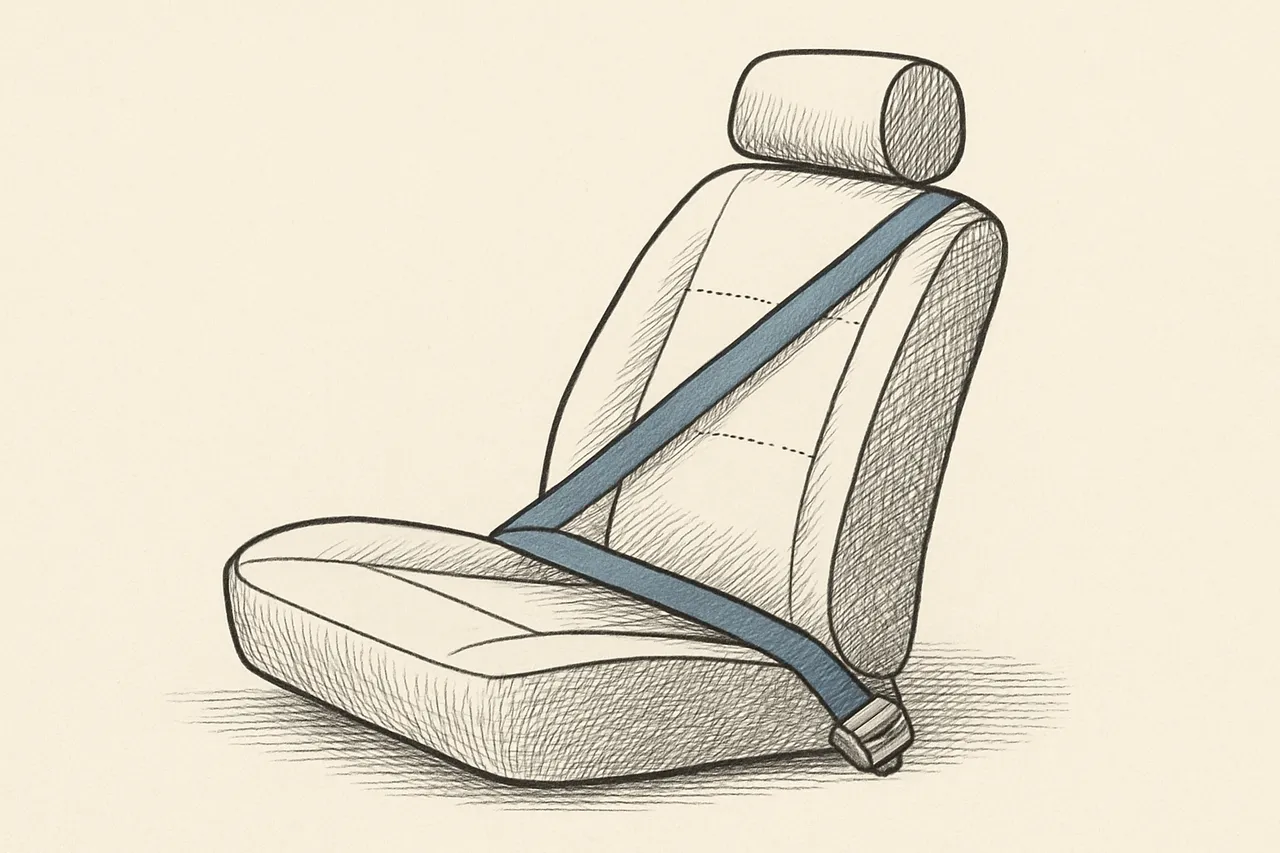
Volvo Patented the Three-Point Seat Belt in 1959, Then Opened the Patent to Every Rival It Had
Nils Bohlin came from building ejection seats for fighter aircraft, and he solved the seat belt in about a year. Volvo then did the thing companies almost never do with a patent that valuable: it made the design free to use, on the grounds that keeping it would cost lives.
Read the story →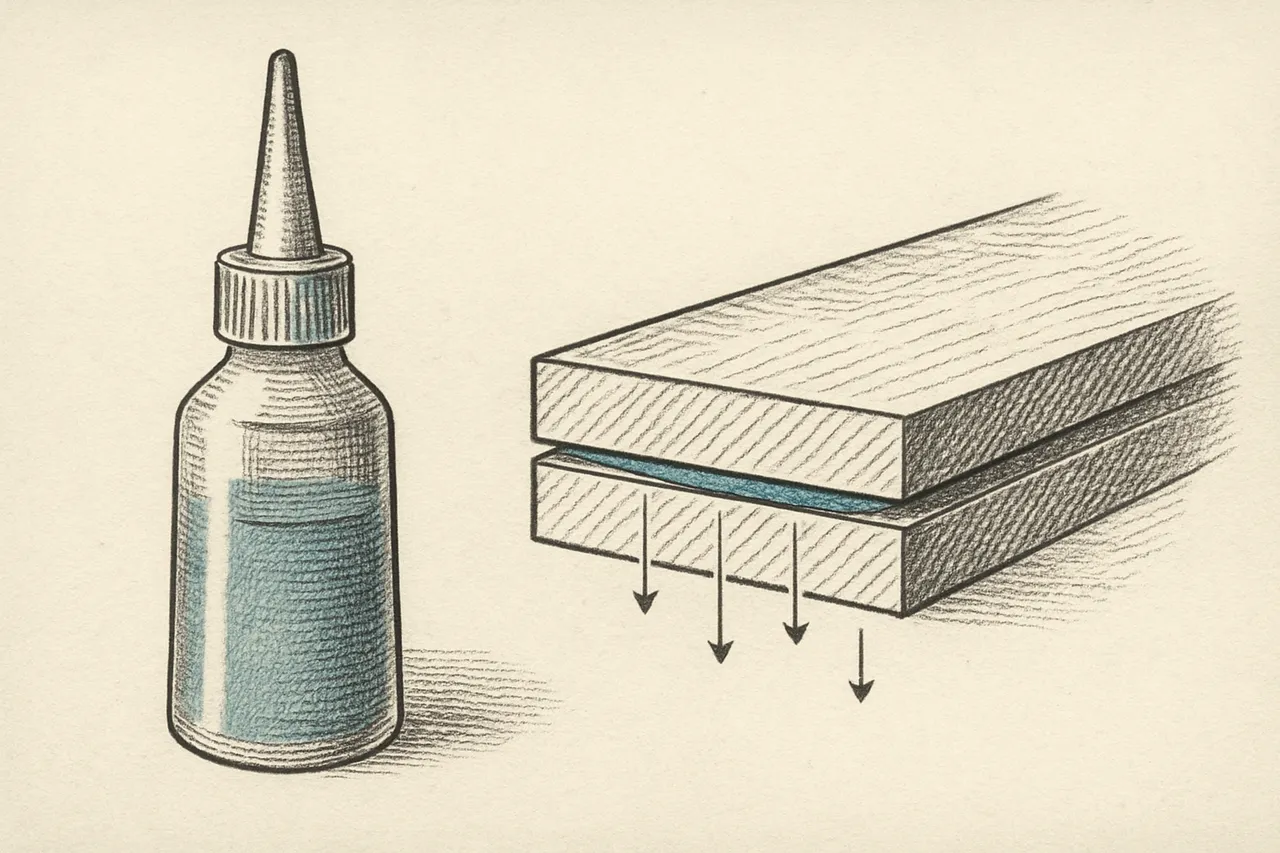
Super Glue Was Discovered Twice by the Same Man, and He Threw It Out Both Times
Harry Coover found cyanoacrylate in 1942 while trying to make gun sights, and dismissed it for sticking to everything. He ran into it again in 1951 doing jet canopies. It took nine years and a second accident before anyone recognized that sticking to everything was the product.
Read the story →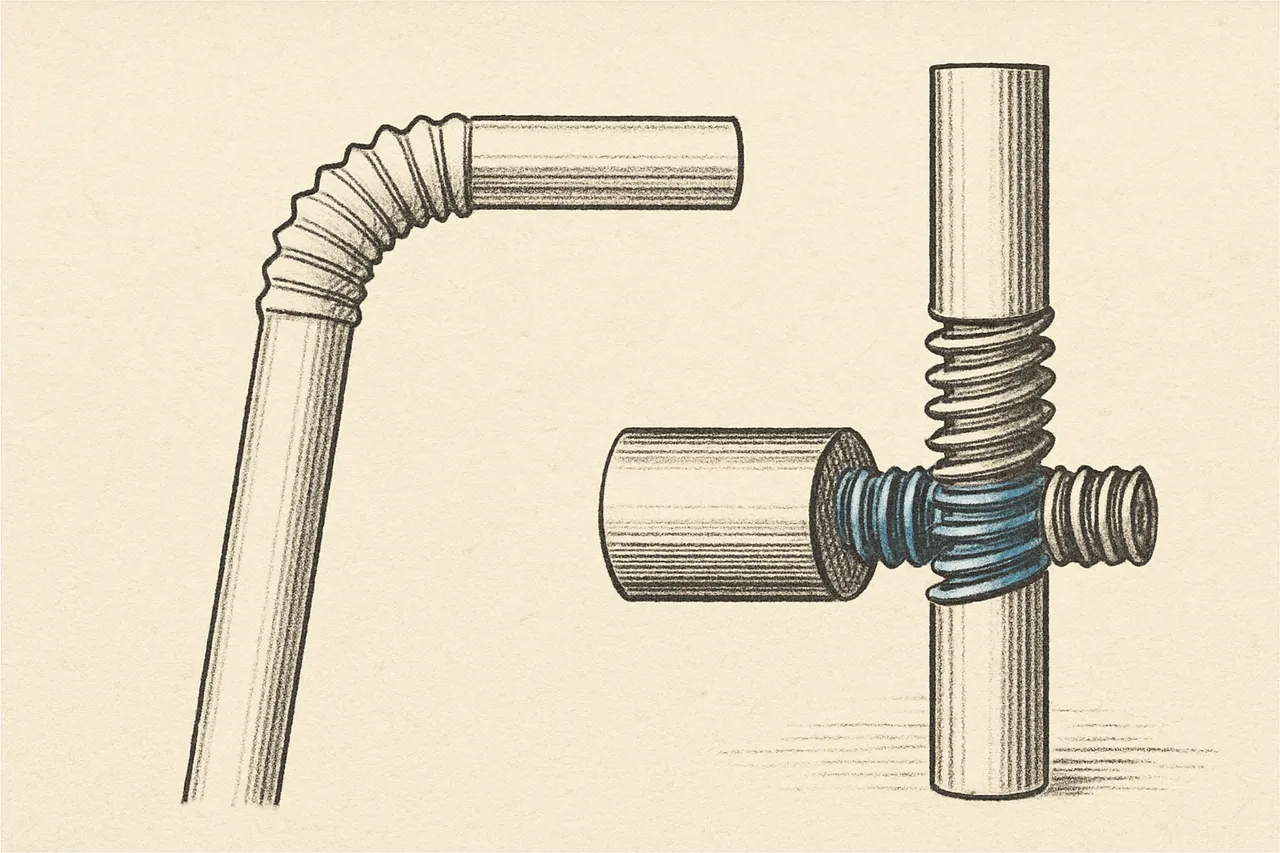
A Father Watched His Daughter Struggle With a Straw at a Soda Fountain and Went Home and Fixed It
Joseph Friedman's daughter was too short to reach the top of a straight paper straw. He took one home, dropped in a screw, wrapped it with floss, and made the first flexible drinking straw. Hospitals turned out to need it far more than soda fountains did.
Read the story →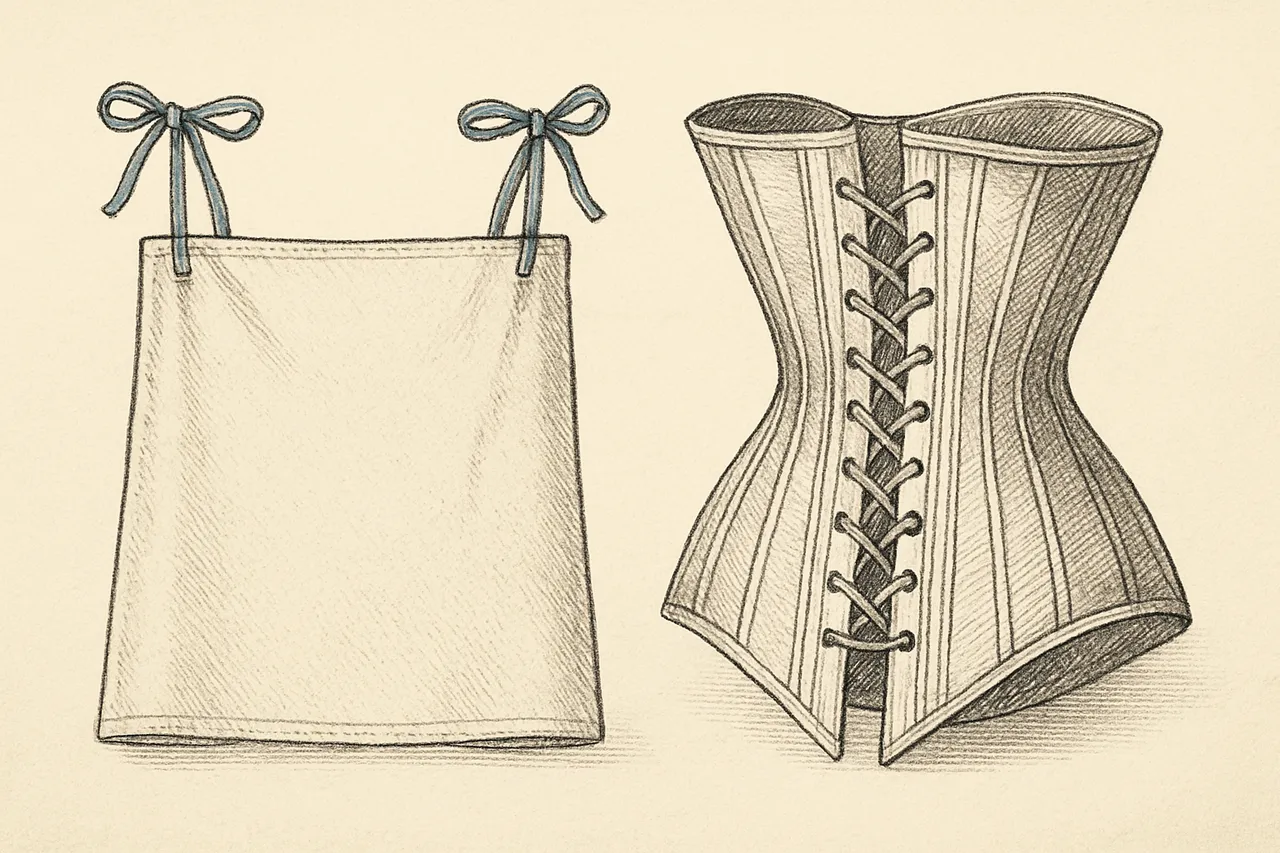
The First Modern Bra Was Two Handkerchiefs and a Ribbon, Improvised Before a Party
Mary Phelps Jacob was nineteen, dressing for a debutante ball, and the corset under her gown was ruining it. She had her maid bring two handkerchiefs and some ribbon. Four years later she held a US patent, and not long after that she sold it for $1,500.
Read the story →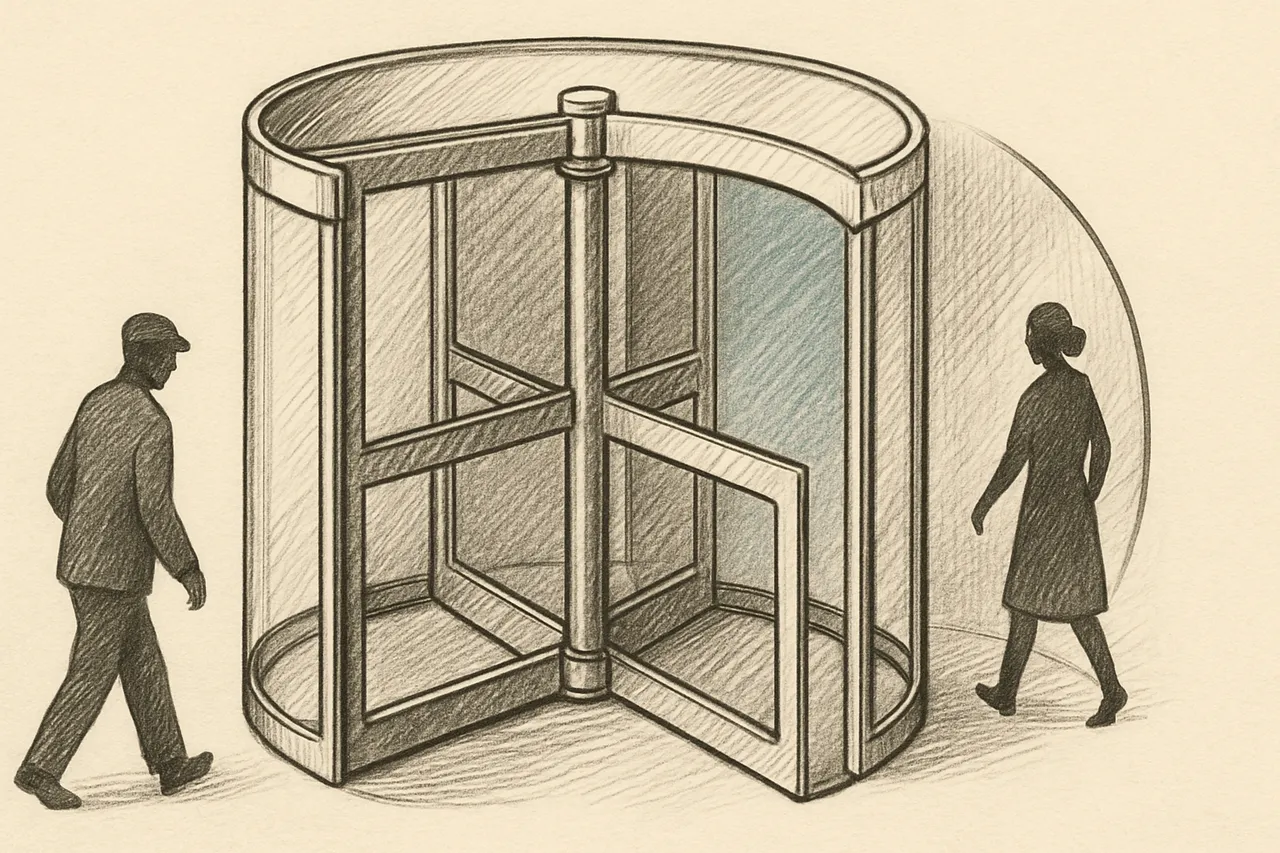
The Revolving Door Was Patented as a Storm Door. It Was Built to Stop Air, Not Move People.
Theophilus Van Kannel's 1888 patent is titled 'Storm-Door Structure,' and that title explains the whole design. The revolving door exists because a hinged door on a tall building leaks heat every time it opens, and Van Kannel worked out a door that is never actually open.
Read the story →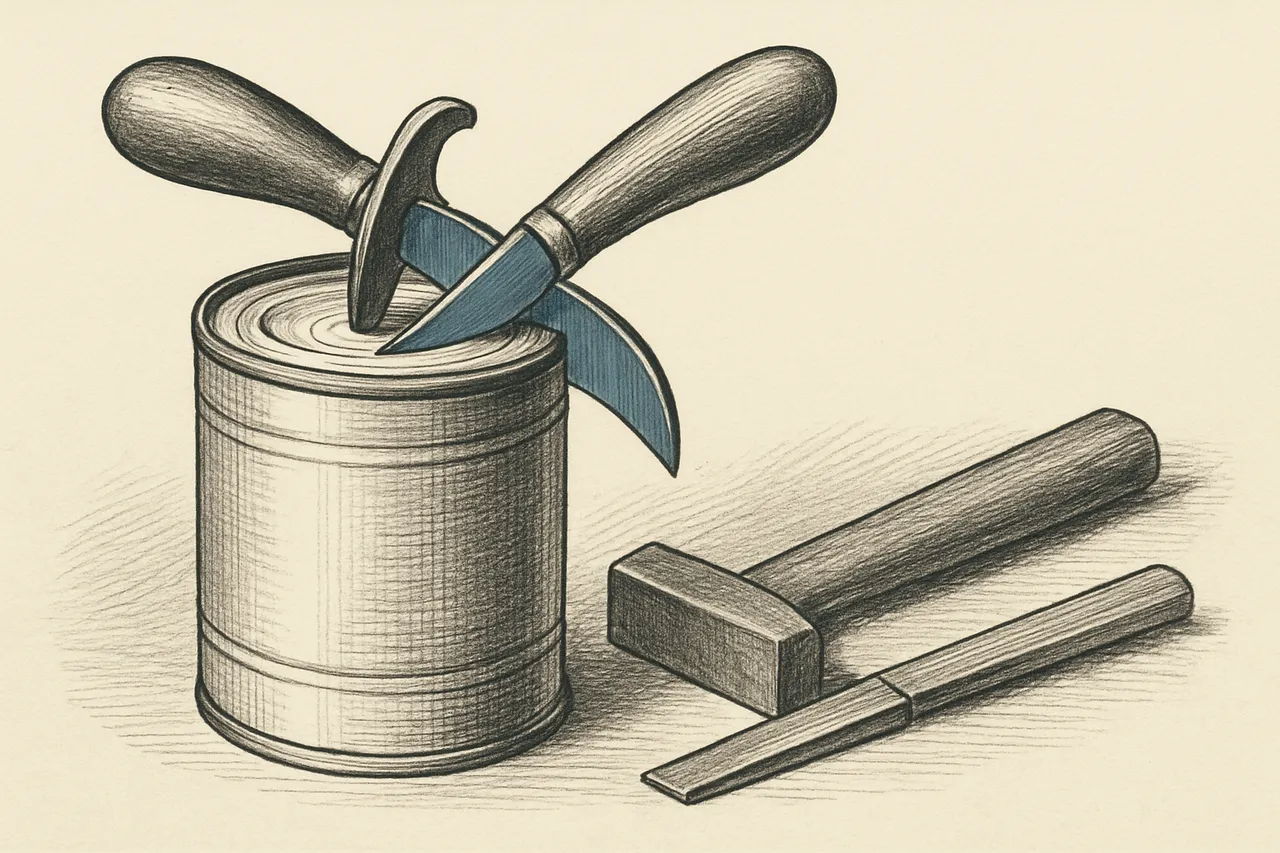
The Tin Can Was Invented in 1810. The Can Opener Showed Up in 1858.
For nearly fifty years, the instructions on a tin can told you to open it with a hammer and a chisel. Ezra Warner's 1858 patent was the first American attempt to do it with one tool, and it was so dangerous that grocers had to operate it for you.
Read the story →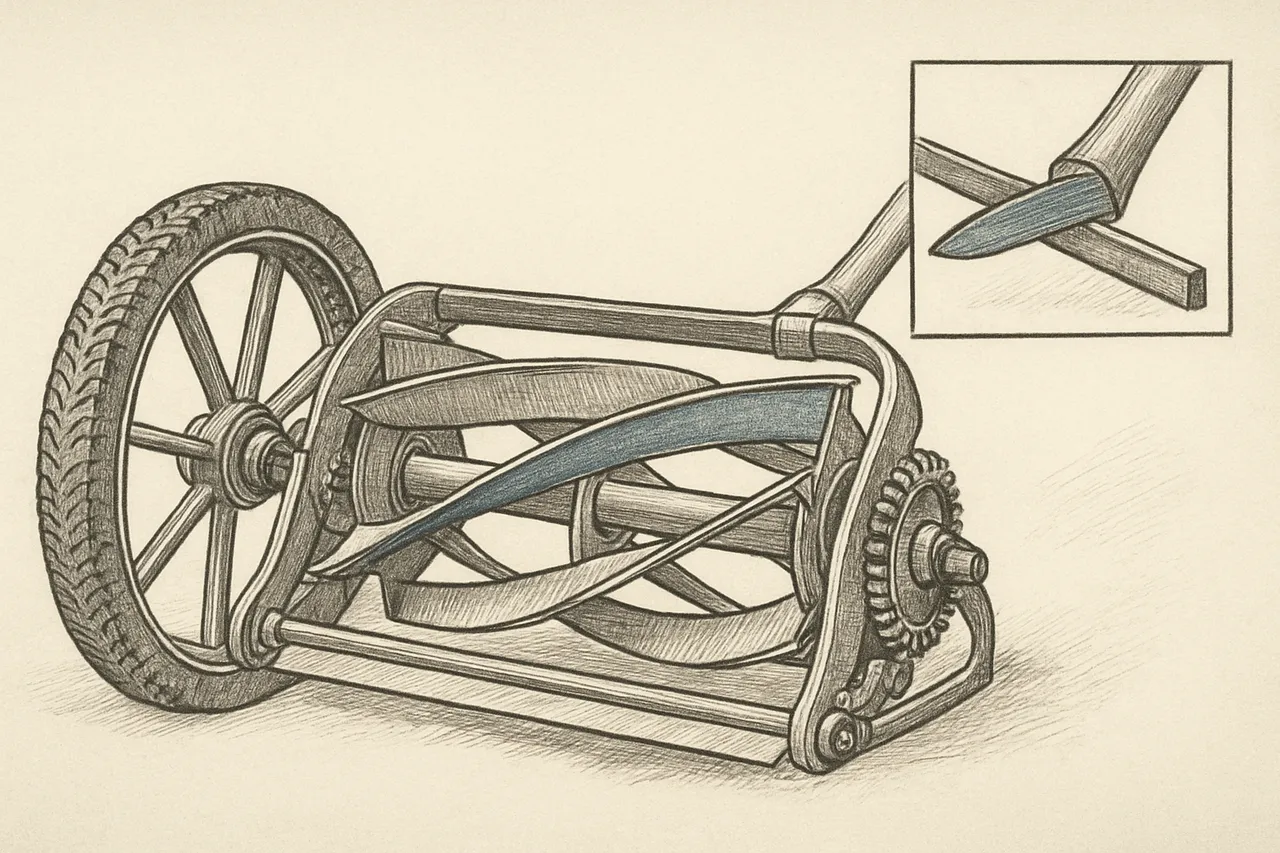
The Lawn Mower Is a Carpet Mill Machine Somebody Pointed at the Ground
Edwin Budding worked in an English textile mill where a bladed cylinder trimmed the nap off finished cloth. He decided grass was the same problem lying down. Amariah Hills brought the reel mower to America in 1868.
Read the story →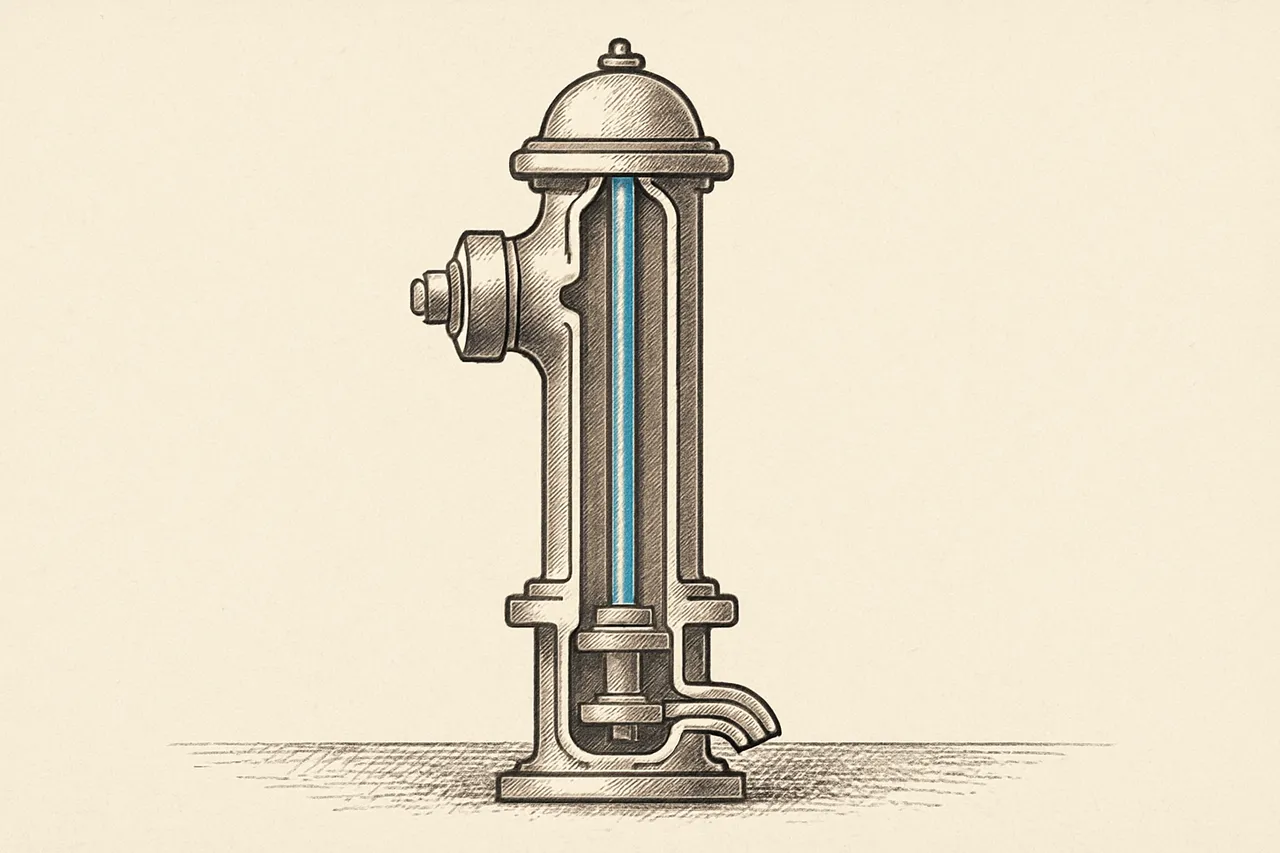
The Fire Hydrant Patent Was Destroyed in a Fire
Frederick Graff is usually credited with the post hydrant around 1801. Nobody can check, because the Patent Office burned to the ground in 1836 and took roughly ten thousand patents with it, including his.
Read the story →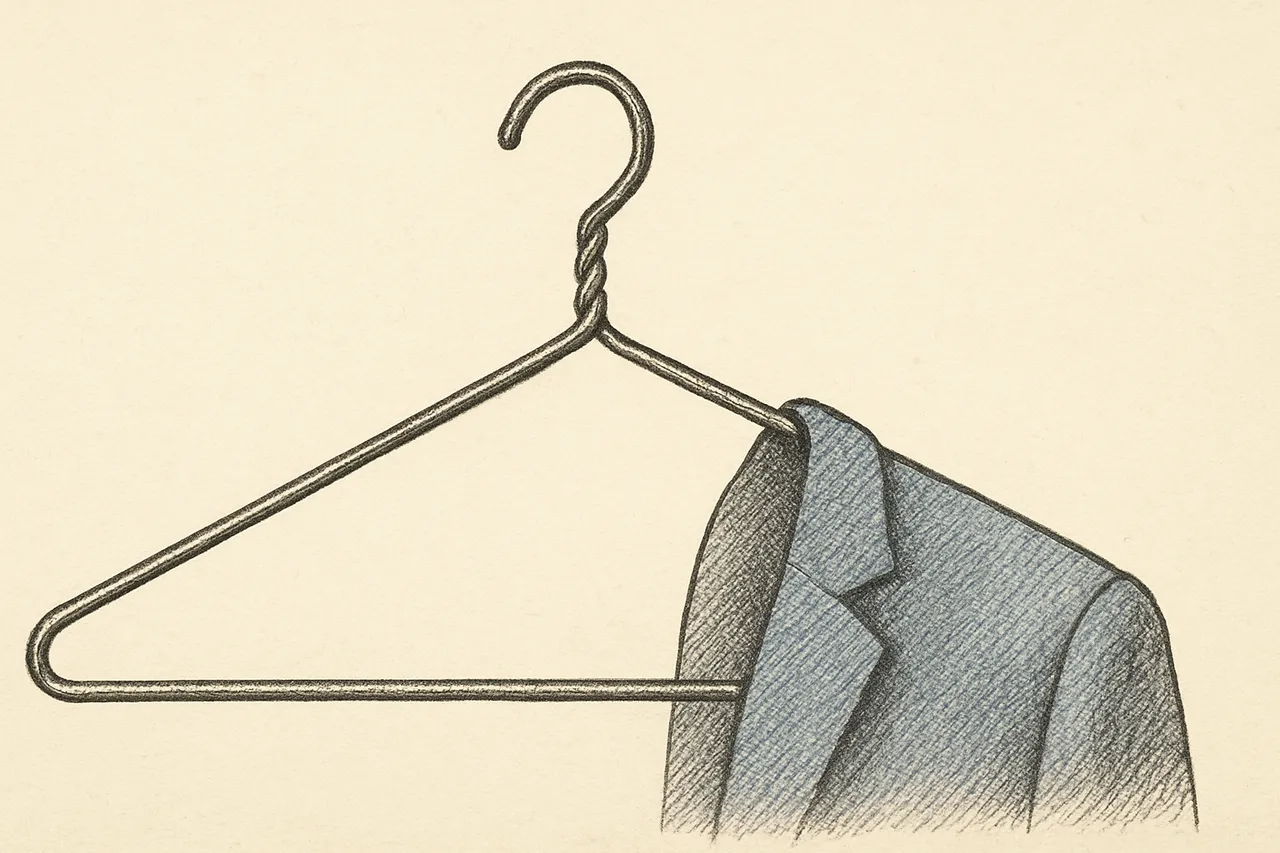
A Factory Worker Ran Out of Coat Hooks and Bent a Piece of Wire Into a Shoulder
The story told at Timberlake Wire and Novelty is that Albert Parkhouse came in one winter morning in 1903, found every hook taken, and twisted a length of wire into two ovals and a hanger. His employer patented it.
Read the story →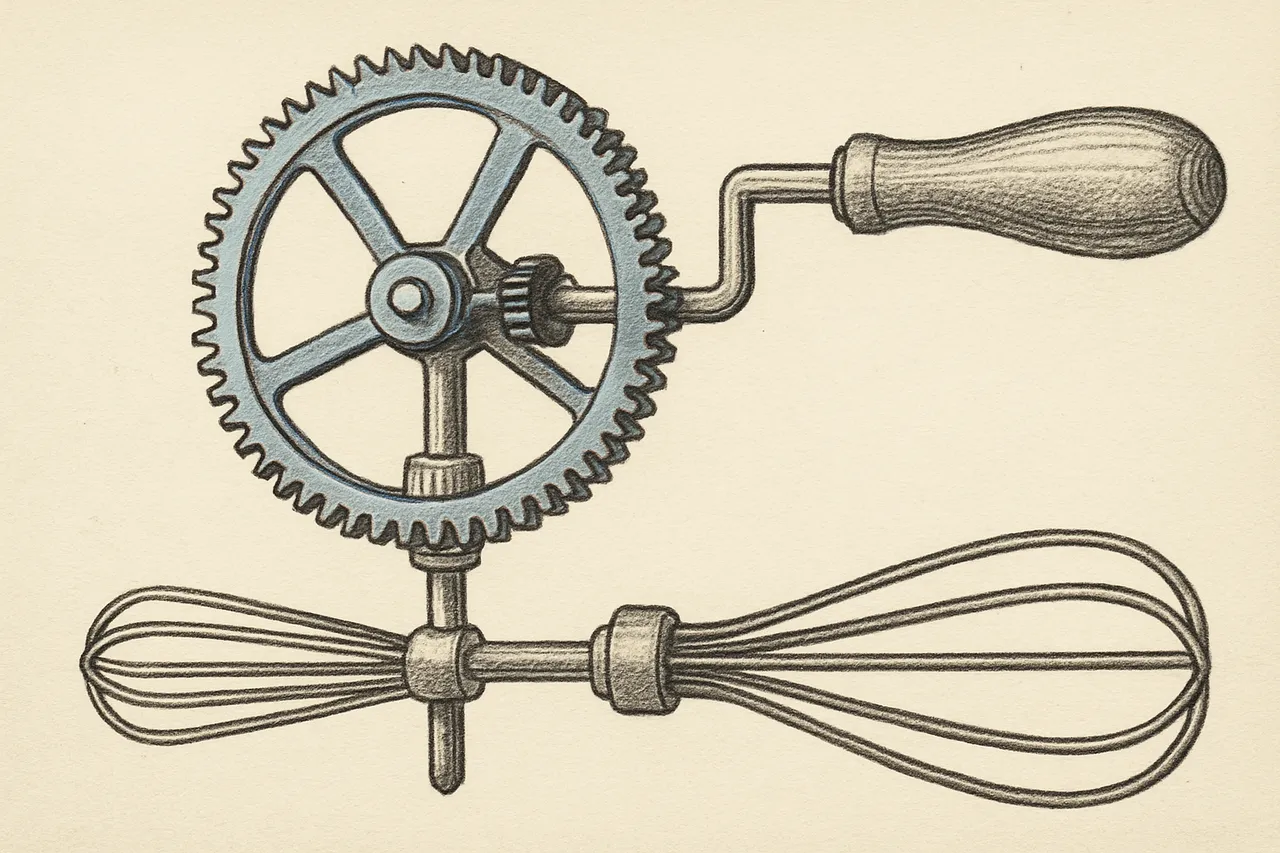
Willis Johnson Patented an Egg Beater in 1884, When Roughly A Thousand People Were Trying To
Beating eggs by hand with a fork or a bundle of twigs took a long time and gave inconsistent results. For about forty years the patent office received a flood of mechanical beaters, and almost all of them jammed, leaked, or fell apart.
Read the story →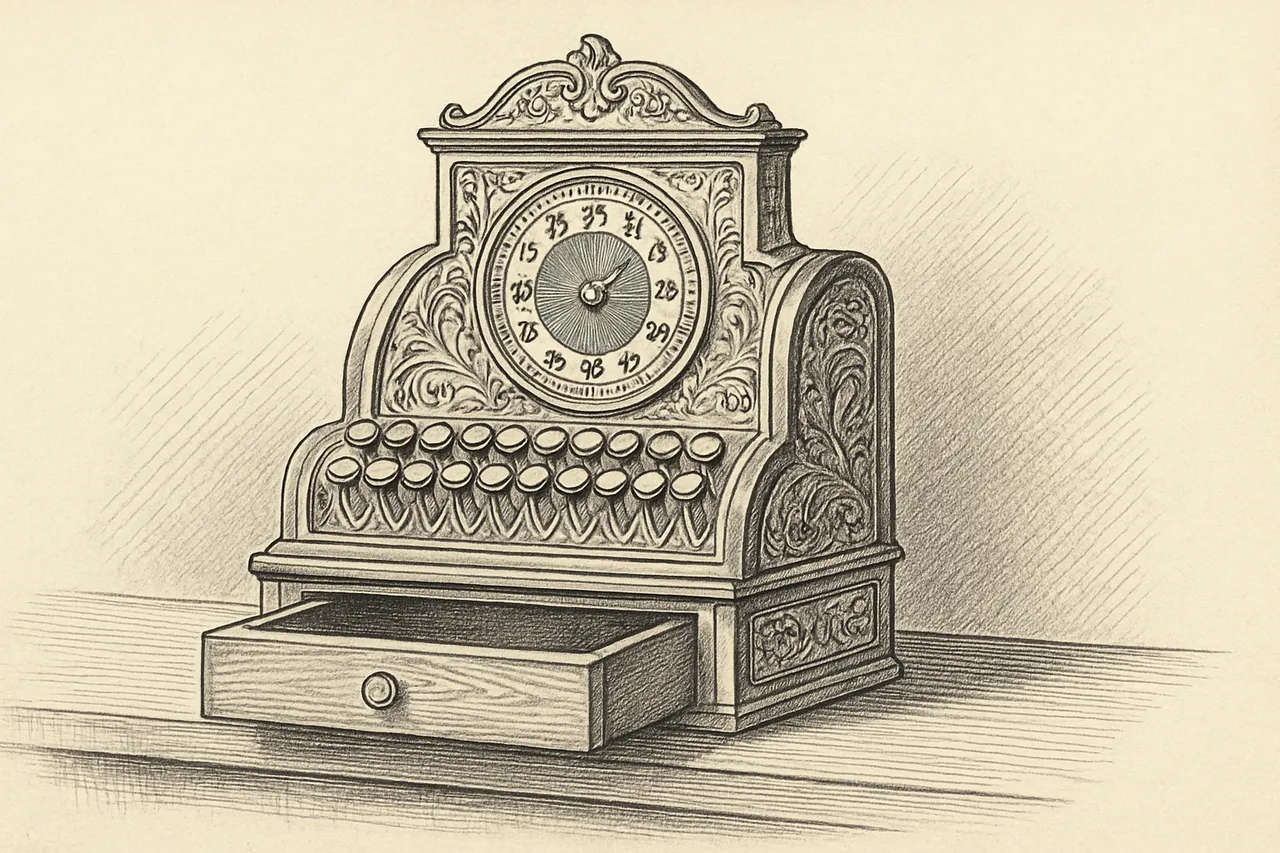
A Saloon Owner Built the Cash Register to Catch His Own Bartenders Stealing
James Ritty ran a bar in Dayton and could not stop his staff pocketing the takings. On a steamship to Europe he watched a device count the revolutions of the propeller shaft, and realized a machine could count sales the same way.
Read the story →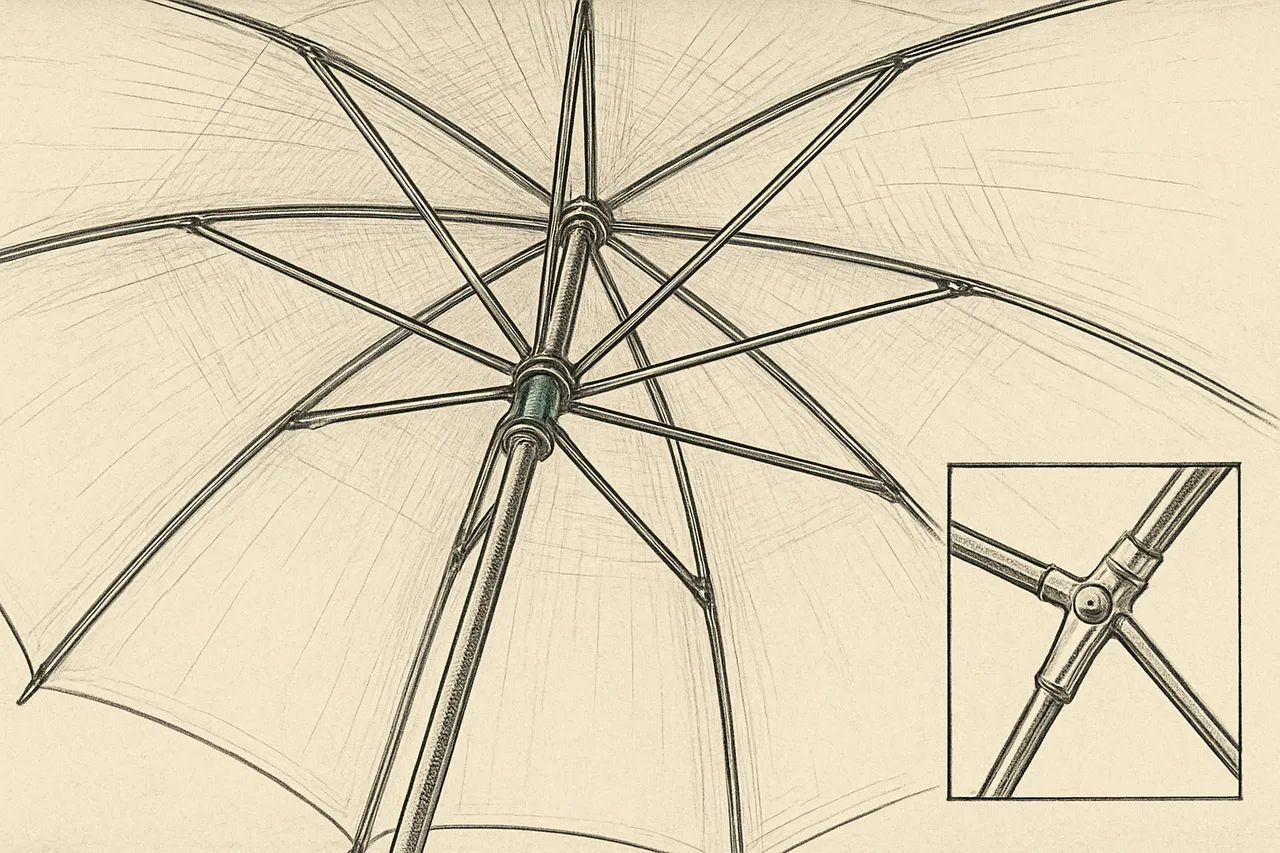
The Umbrella Barely Changed for Two Thousand Years, Then Somebody Made It Fold
Parasols existed in ancient Egypt, China, and Rome. The object stayed roughly the same until the nineteenth century, when steel ribs made it light enough to carry and hinged struts made it collapse into a bag.
Read the story →