Elisha Otis Didn't Invent the Elevator. He Invented Not Falling.
Hoists had existed for centuries. What Elisha Otis patented in 1861 was the safety brake that caught the platform if the rope snapped — and by removing the fear of falling, he made the skyscraper possible.
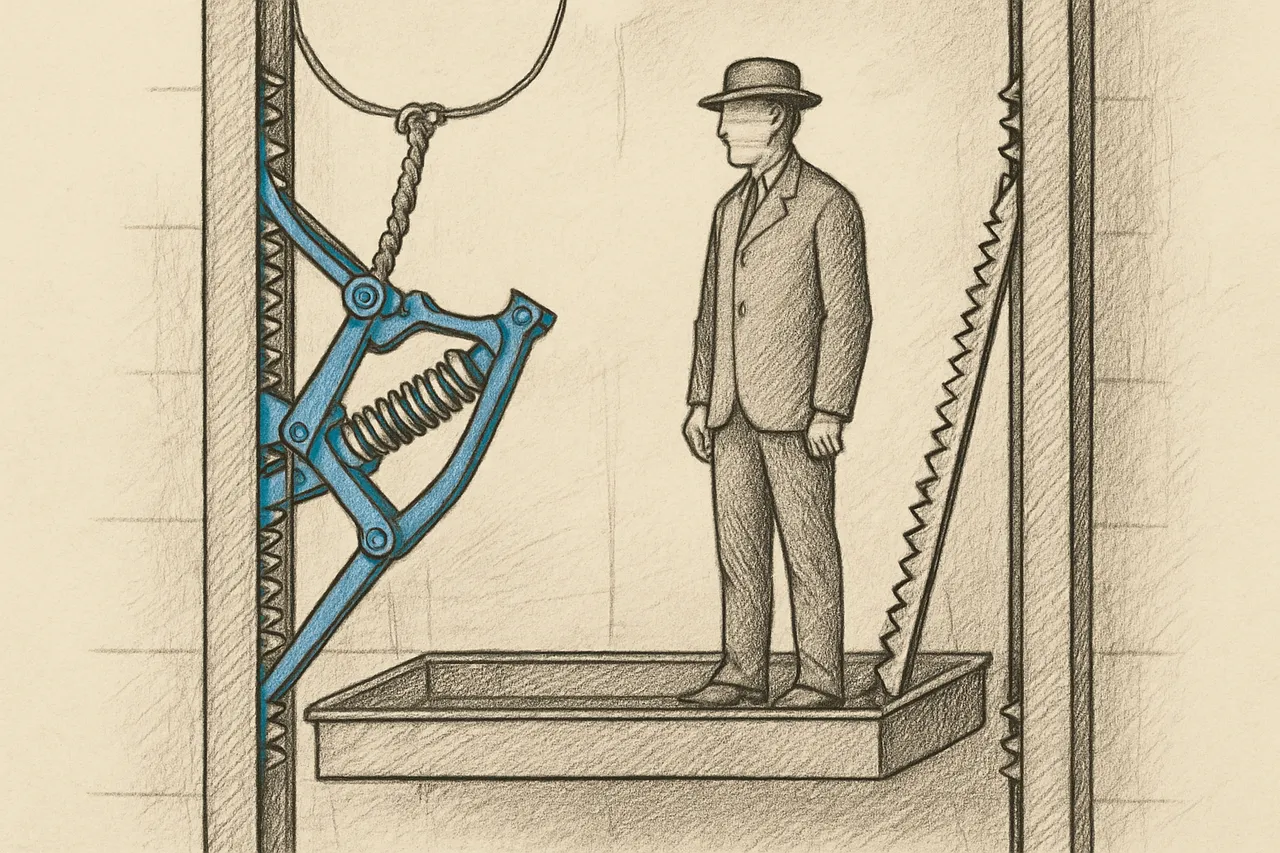
US31128 was granted to Elisha G. Otis on January 15, 1861. The title is "Improvement in Hoisting Apparatus." It does not describe the elevator — hoisting platforms lifted by ropes and pulleys had existed since antiquity. It describes something much narrower and, as it turned out, much more important: a mechanism that stops the platform from falling if the rope breaks.
The problem with hoists, for the whole of human history up to 1852, was that they were lethal. A rope holding a loaded platform could fray, snag, or snap, and when it did, the platform and everyone on it fell. This was an acceptable risk for freight. It was not acceptable for people. As long as a rising room might plunge to the bottom of its shaft at any moment, no one was going to install passenger elevators in buildings, and without passenger elevators, buildings could not usefully rise more than a few stories — nobody would climb ten flights of stairs, and nobody would rent the upper floors.
The safety brake
Otis's insight was a mechanism that used the tension of the hoisting rope itself as a failsafe. As long as the rope was taut, it held back a spring-loaded set of pawls. If the rope went slack — because it had broken — the spring released the pawls, which snapped outward and locked into a toothed guide rail running the length of the shaft, seizing the platform in place before it could fall.
The system was elegant because it was self-triggering: the very event that caused the danger (loss of rope tension) was the event that engaged the brake. No operator had to react. No secondary power source was needed. The failure caused the fix.
The demonstration
Otis understood that the invention was worthless if no one believed it, so in 1854, at the New York World's Fair in the Crystal Palace, he staged one of the most famous demonstrations in the history of engineering. He stood on an open hoisting platform, loaded with freight, and had it raised high above the crowd. Then he ordered an axeman to cut the single rope holding it up.
The crowd gasped. The platform dropped a few inches — and stopped. The safety brake had caught it. Otis, standing calmly on the platform, took off his hat and said, "All safe, gentlemen. All safe."
What it made possible
Orders followed. The first passenger elevator using Otis's safety system was installed in a New York department store in 1857. Otis received the patent for the improved braking mechanism in 1861 and died, of diphtheria, later the same year — before he could see what his invention would enable.
What it enabled was the vertical city. Once a building's upper floors could be reached safely and effortlessly, they became more desirable than the lower ones, not less — better light, less noise, better views. Real-estate economics inverted. Combined with the steel-frame construction that arrived in the following decades, the safe elevator made the skyscraper not just possible but inevitable. Every tall building in the world stands on the assumption Otis proved in the Crystal Palace: that the room lifting you into the sky will not fall.
See the original
The full text and figures of US31128 are on patents.us.
Related stories
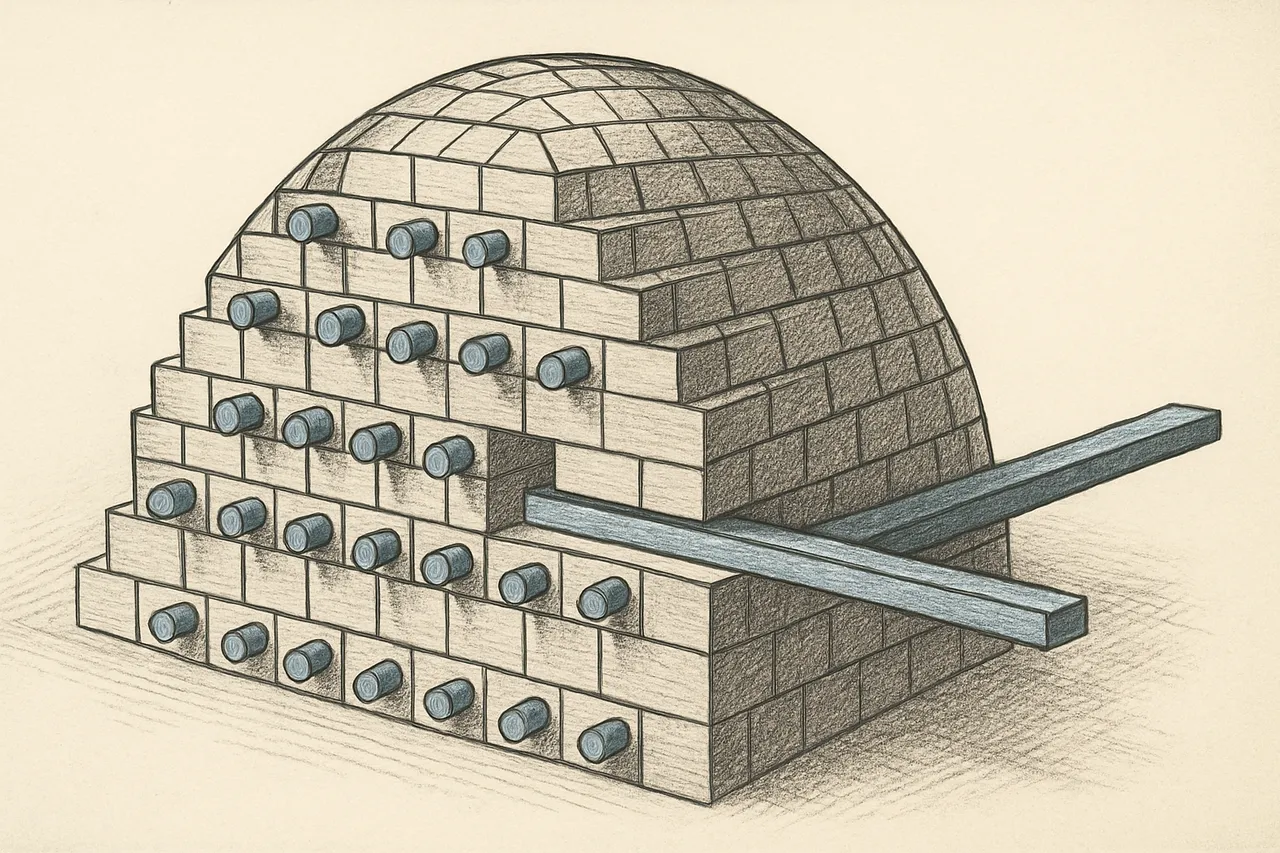
Fermi and Szilard Filed a Patent on the Nuclear Reactor in 1944. It Stayed Secret for More Than Ten Years.
The patent is titled Neutronic Reactor, which is a very flat name for the machine that produced the first controlled nuclear chain reaction. It was filed during the Manhattan Project, buried under a secrecy order, and not published until 1955, six months after Enrico Fermi died.
Read the story →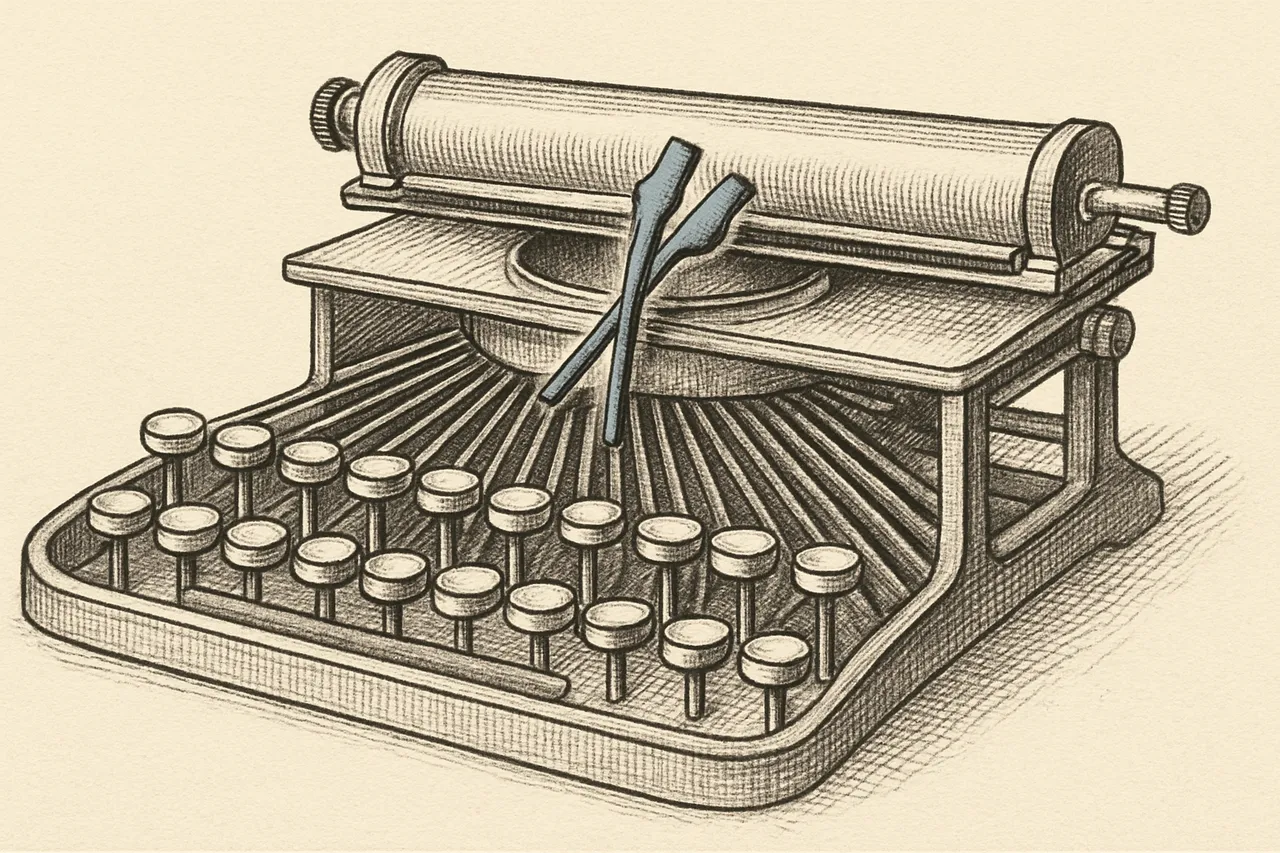
The 1868 Patent Behind the First Successful Typewriter Had Its Keys in Alphabetical Order. QWERTY Came Later, and Nobody Fully Agrees Why.
Christopher Latham Sholes and two partners patented a typewriter in Milwaukee in 1868 with keys arranged like a piano, roughly in alphabetical order. Over the next several years the letters were shuffled into QWERTY. The popular explanation for that is a distortion of a better one.
Read the story →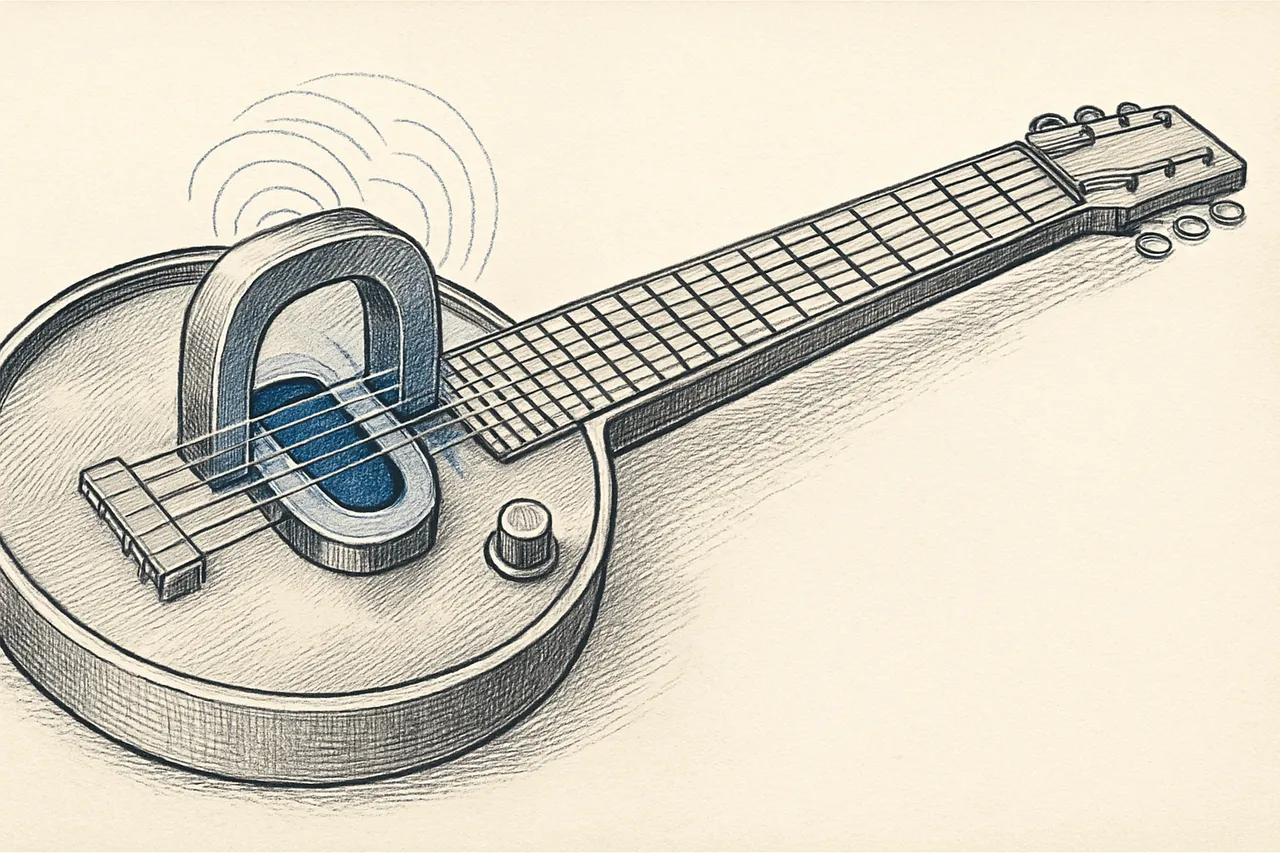
The First Electric Guitar You Could Buy Was Nicknamed the Frying Pan, and Its Patent Took Three Years
In the big band era, guitarists could not be heard over the horns. George Beauchamp set the strings inside a pair of horseshoe magnets, wound a coil beneath them, and mounted it all on a round aluminum body with a long neck. It looked like cookware, and the magnetic pickup it used is still how electric guitars work.
Read the story →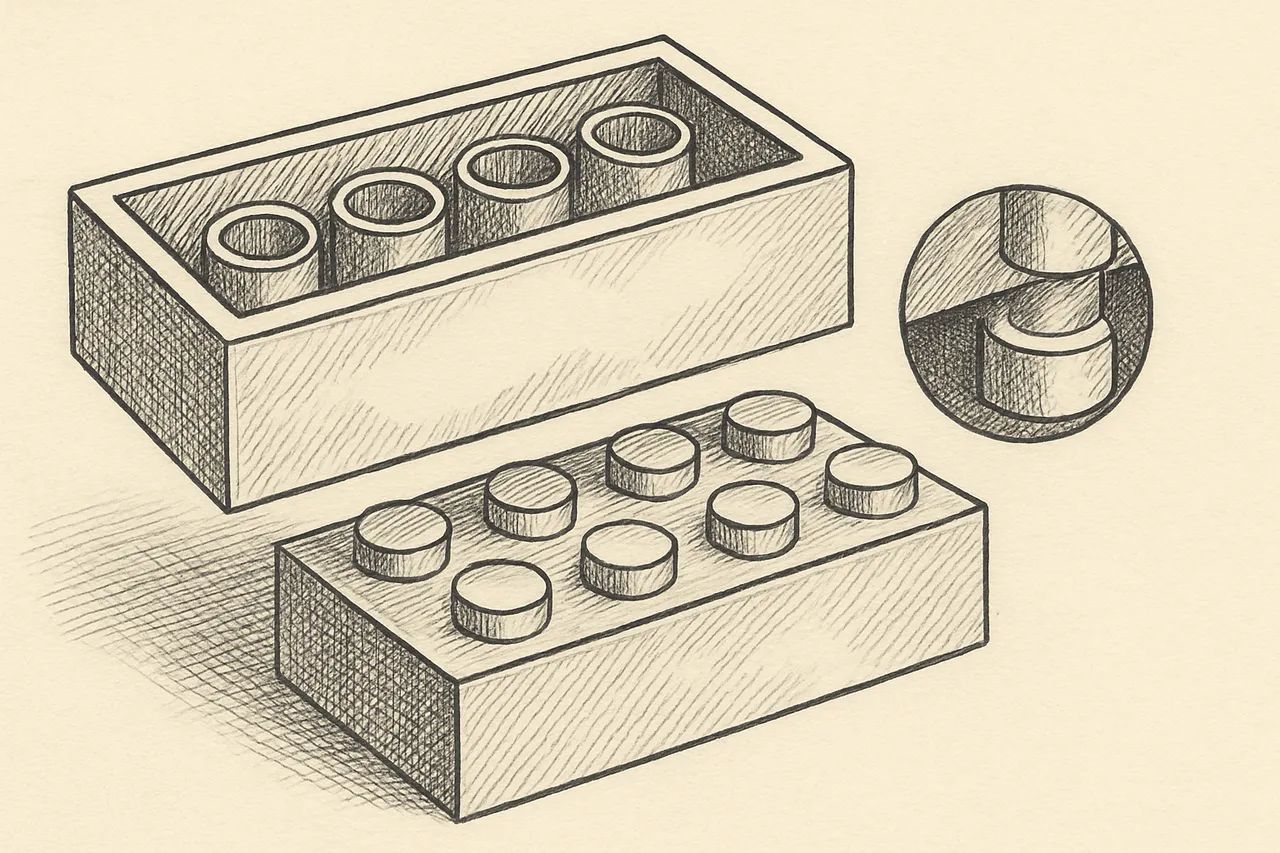
LEGO Bricks Were on Sale for Nine Years Before They Held Together Properly. The Fix Was a Row of Hollow Tubes.
The first LEGO bricks had studs on top and an empty space underneath, so models tended to come apart when you picked them up. Godtfred Kirk Christiansen's 1958 design put tubes inside the brick, and a brick molded that year still fits one molded today.
Read the story →