The Wright Brothers' Patent Nearly Grounded American Aviation
The 1906 patent on the 'Flying Machine' didn't just protect the Wright brothers' invention. The way they enforced it triggered a decade of litigation that left American aircraft design years behind Europe's by the time World War I began.
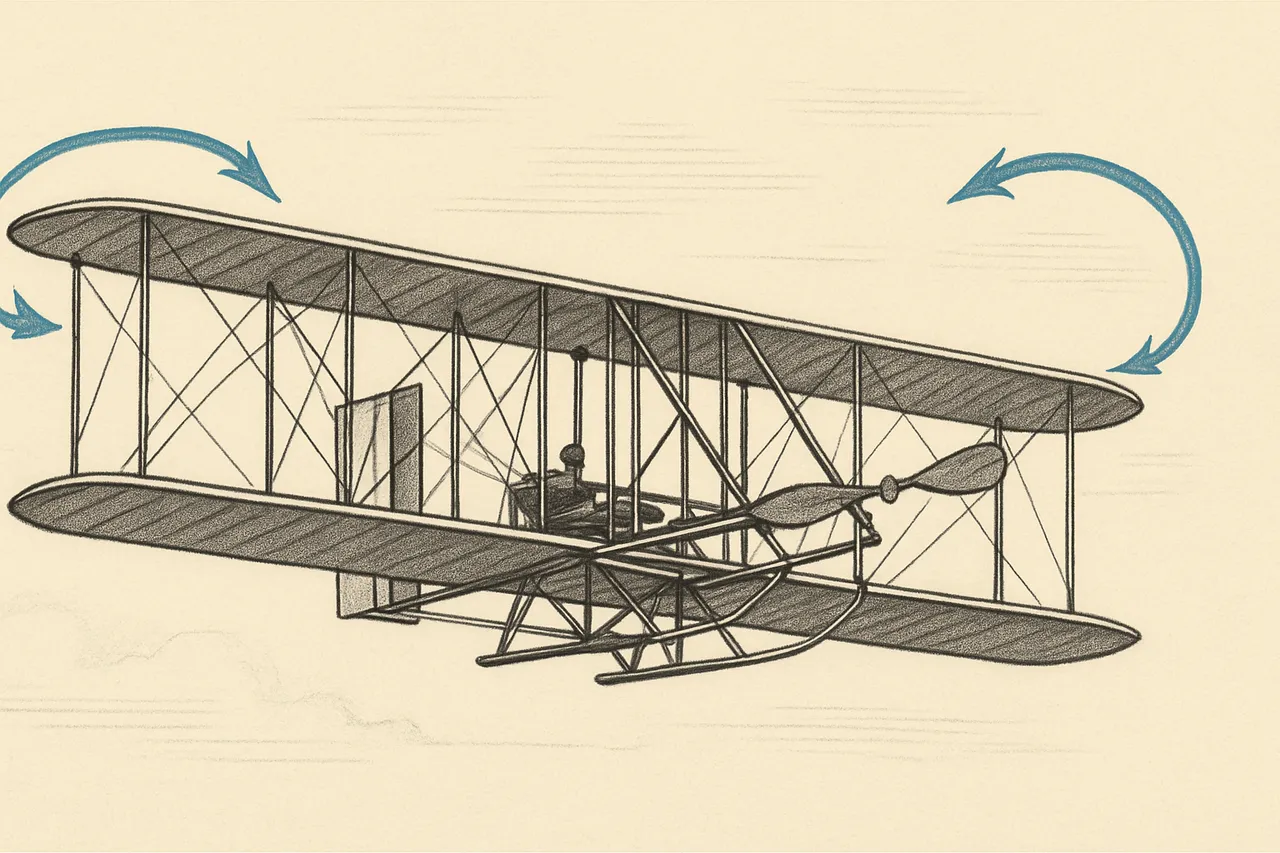
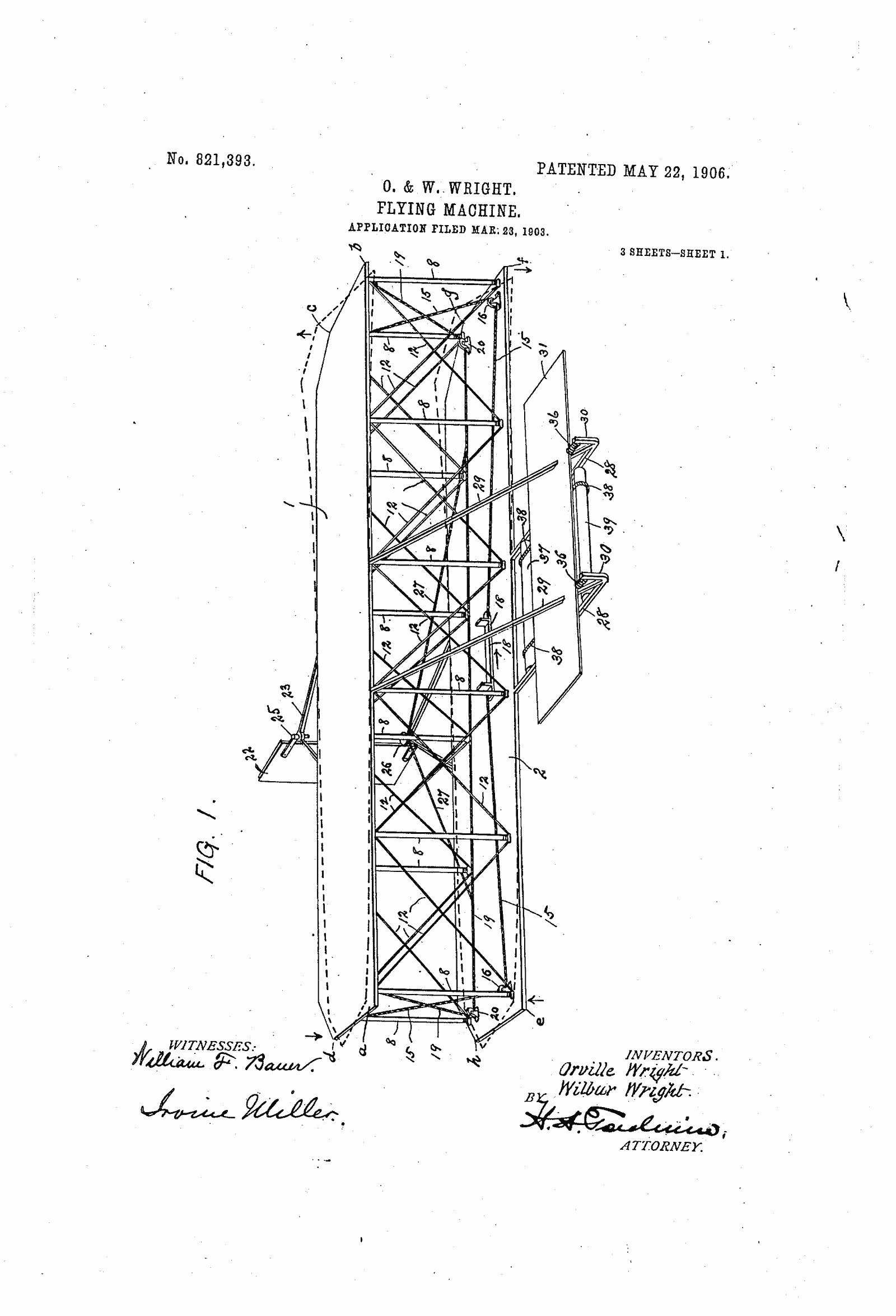
US821393 was filed on March 23, 1903 — nearly nine months before the first powered flight at Kitty Hawk that December — and granted on May 22, 1906. The title is "Flying Machine." The inventors are Orville and Wilbur Wright of Dayton, Ohio.
The patent's central claim is not the engine, the propeller, or the airframe. It is the system of wing-warping: a method of twisting the trailing edges of the wings in opposite directions to bank the aircraft and control roll. Lateral control — keeping the machine from tipping and spinning — was the problem that had killed or stalled every previous serious attempt at powered flight. The Wrights solved it, and they wrote their patent claims to cover not just their specific cable-and-pulley wing-warping mechanism but any system of controlling an aircraft's lateral balance by presenting its wing surfaces to the air at different angles.
That broad language is the whole story.
The patent war
When Glenn Curtiss began building aircraft a few years later, he used ailerons — small hinged flaps at the trailing edge of the wing — instead of warping the entire wing surface. Mechanically, ailerons are quite different from wing-warping. Functionally, they achieve the same thing: differential lift across the wingspan to control roll. The Wrights sued, arguing that ailerons fell within the broad claims of US821393.
The courts agreed. In a series of decisions between 1909 and 1914, US courts repeatedly upheld the Wrights' patent against Curtiss and against essentially every other American aircraft builder. The Wright Company demanded licensing fees of up to twenty percent of the sale price of any aircraft and pursued infringers relentlessly.
The effect on American aviation was close to catastrophic. Curtiss and the Wrights spent years and large fortunes in court rather than in the workshop. Talented engineers avoided the field. While French, German, and British designers iterated rapidly on aircraft design through the early 1910s — producing the machines that would fight the first air war — American designs stagnated. Wilbur Wright died of typhoid fever in 1912, at forty-five; those close to him attributed his weakened condition partly to the unceasing stress of the litigation he spent his final years conducting.
The forced resolution
When the United States entered World War I in 1917, the government discovered that it could not produce competitive military aircraft quickly because the patent situation had frozen the domestic industry. The solution was governmental coercion: the formation of the Manufacturers Aircraft Association, a compulsory patent pool that required all aircraft manufacturers to cross-license their patents for a modest fixed fee. The Wright patent war ended not because anyone won but because a war made the deadlock intolerable.
The patent itself is one of the foundational documents of human flight. Its enforcement is one of the foundational cautionary tales of intellectual property — the case study that gets cited every time a broadly-worded patent is used not to protect an invention but to tax an entire emerging industry into paralysis.
See the original
The full text and figures of US821393 are on Google Patents.
Related stories
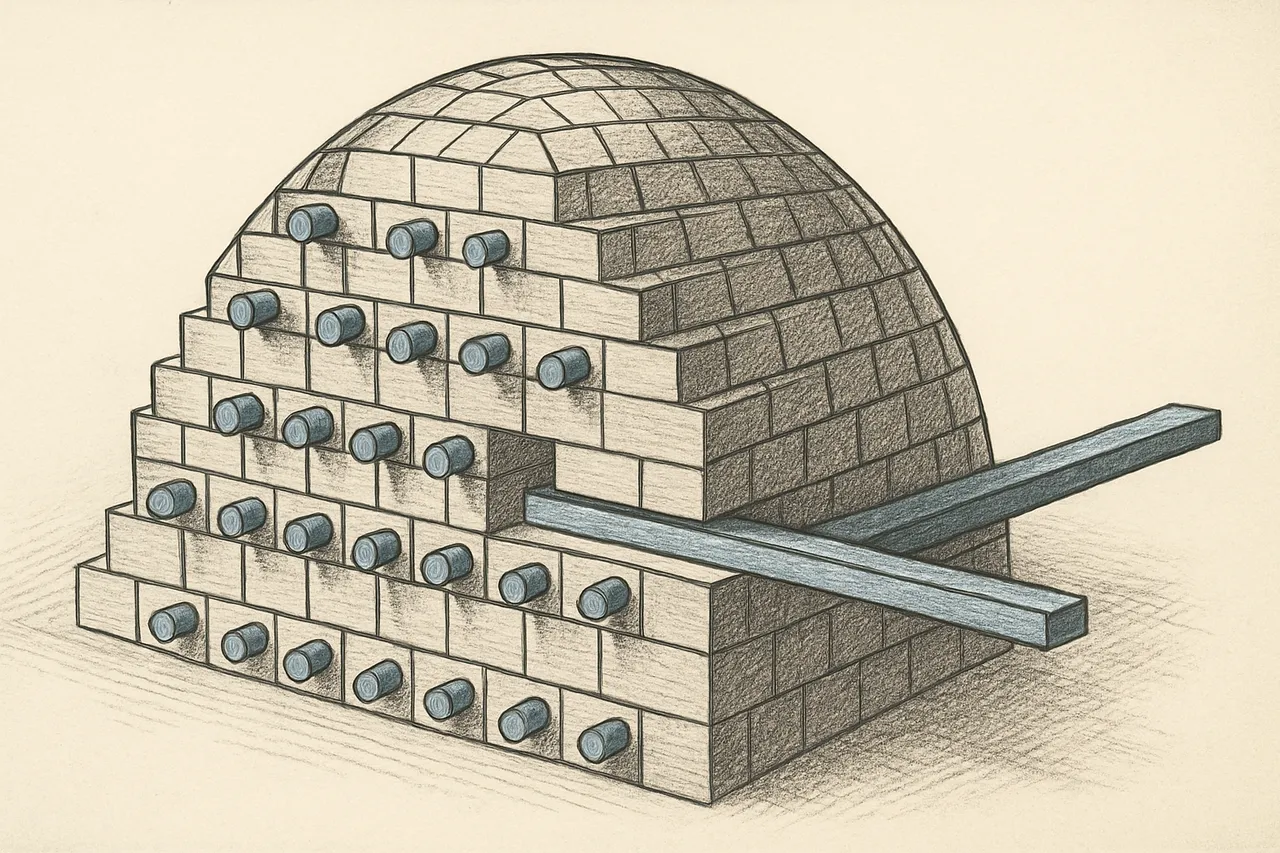
Fermi and Szilard Filed a Patent on the Nuclear Reactor in 1944. It Stayed Secret for More Than Ten Years.
The patent is titled Neutronic Reactor, which is a very flat name for the machine that produced the first controlled nuclear chain reaction. It was filed during the Manhattan Project, buried under a secrecy order, and not published until 1955, six months after Enrico Fermi died.
Read the story →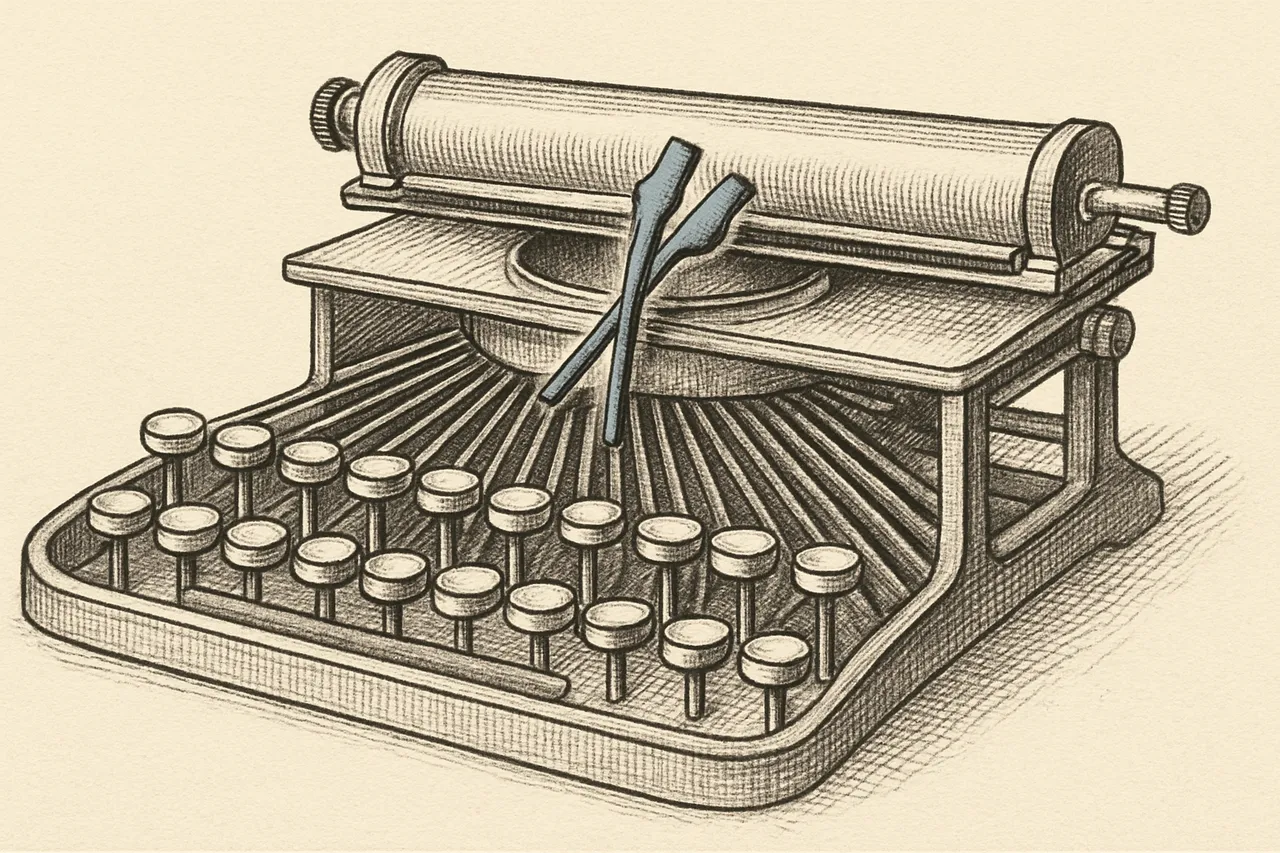
The 1868 Patent Behind the First Successful Typewriter Had Its Keys in Alphabetical Order. QWERTY Came Later, and Nobody Fully Agrees Why.
Christopher Latham Sholes and two partners patented a typewriter in Milwaukee in 1868 with keys arranged like a piano, roughly in alphabetical order. Over the next several years the letters were shuffled into QWERTY. The popular explanation for that is a distortion of a better one.
Read the story →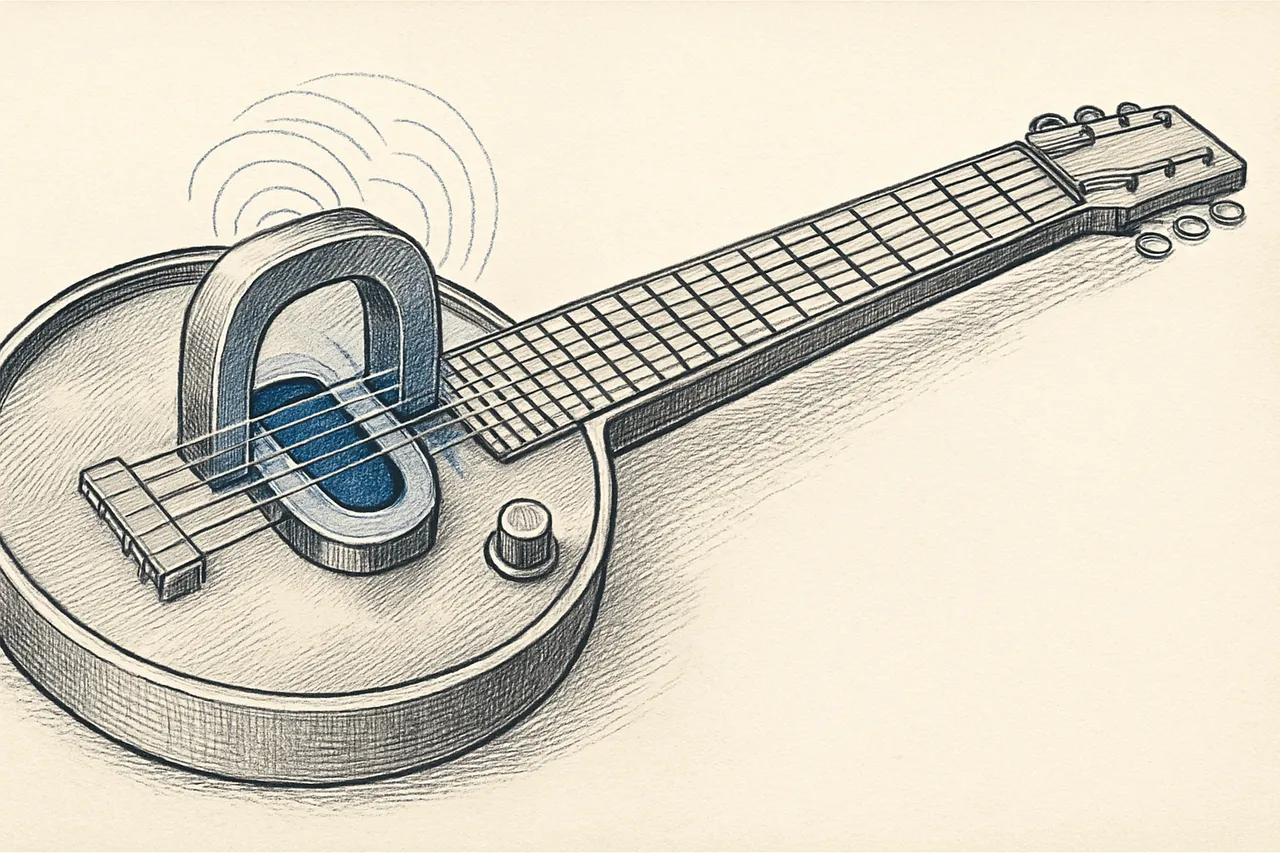
The First Electric Guitar You Could Buy Was Nicknamed the Frying Pan, and Its Patent Took Three Years
In the big band era, guitarists could not be heard over the horns. George Beauchamp set the strings inside a pair of horseshoe magnets, wound a coil beneath them, and mounted it all on a round aluminum body with a long neck. It looked like cookware, and the magnetic pickup it used is still how electric guitars work.
Read the story →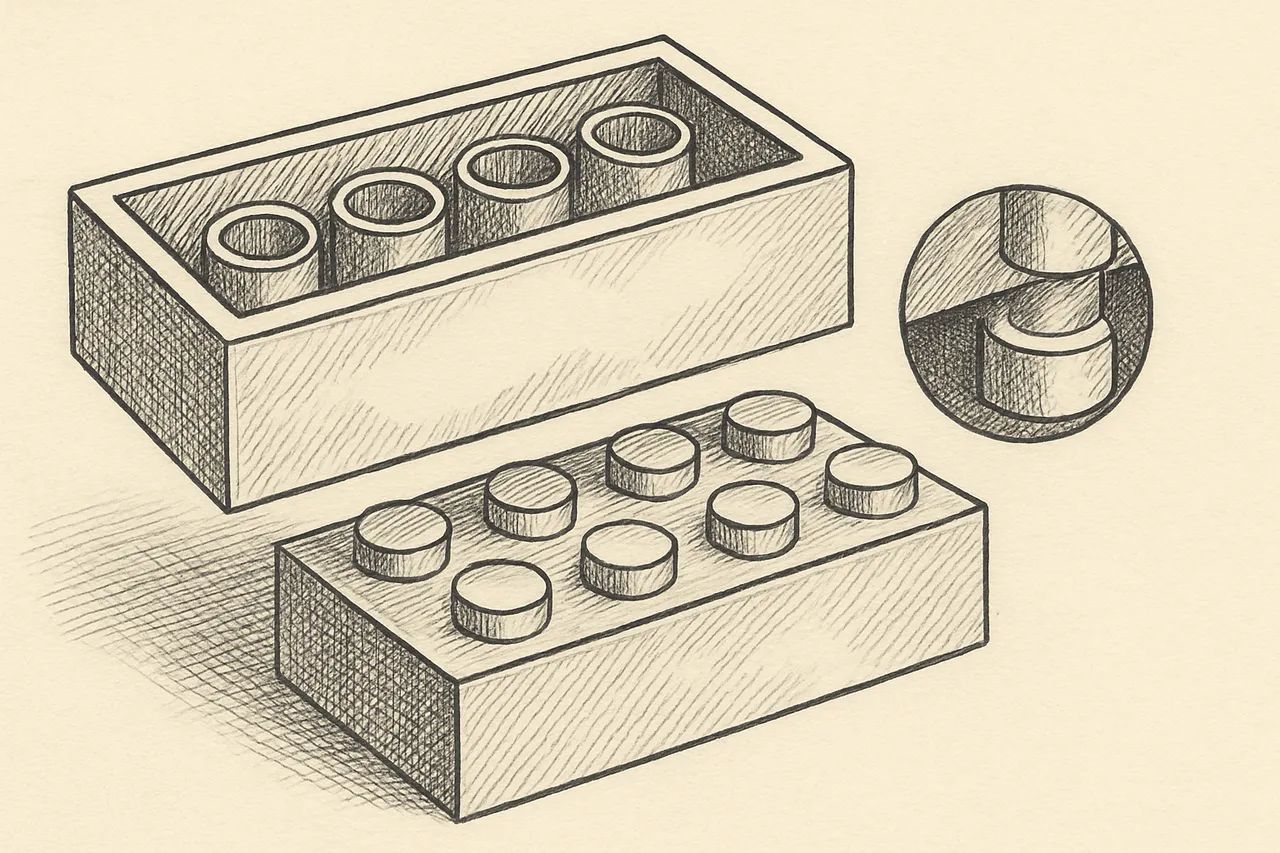
LEGO Bricks Were on Sale for Nine Years Before They Held Together Properly. The Fix Was a Row of Hollow Tubes.
The first LEGO bricks had studs on top and an empty space underneath, so models tended to come apart when you picked them up. Godtfred Kirk Christiansen's 1958 design put tubes inside the brick, and a brick molded that year still fits one molded today.
Read the story →