The Zipper Took Twenty Years and Three Inventors to Actually Work
The first 'clasp locker' was shown at the 1893 World's Fair and was a flop — it jammed, sprang open, and rusted. It took two more decades and a Swedish-American engineer's complete redesign to produce the interlocking-tooth zipper we use today.
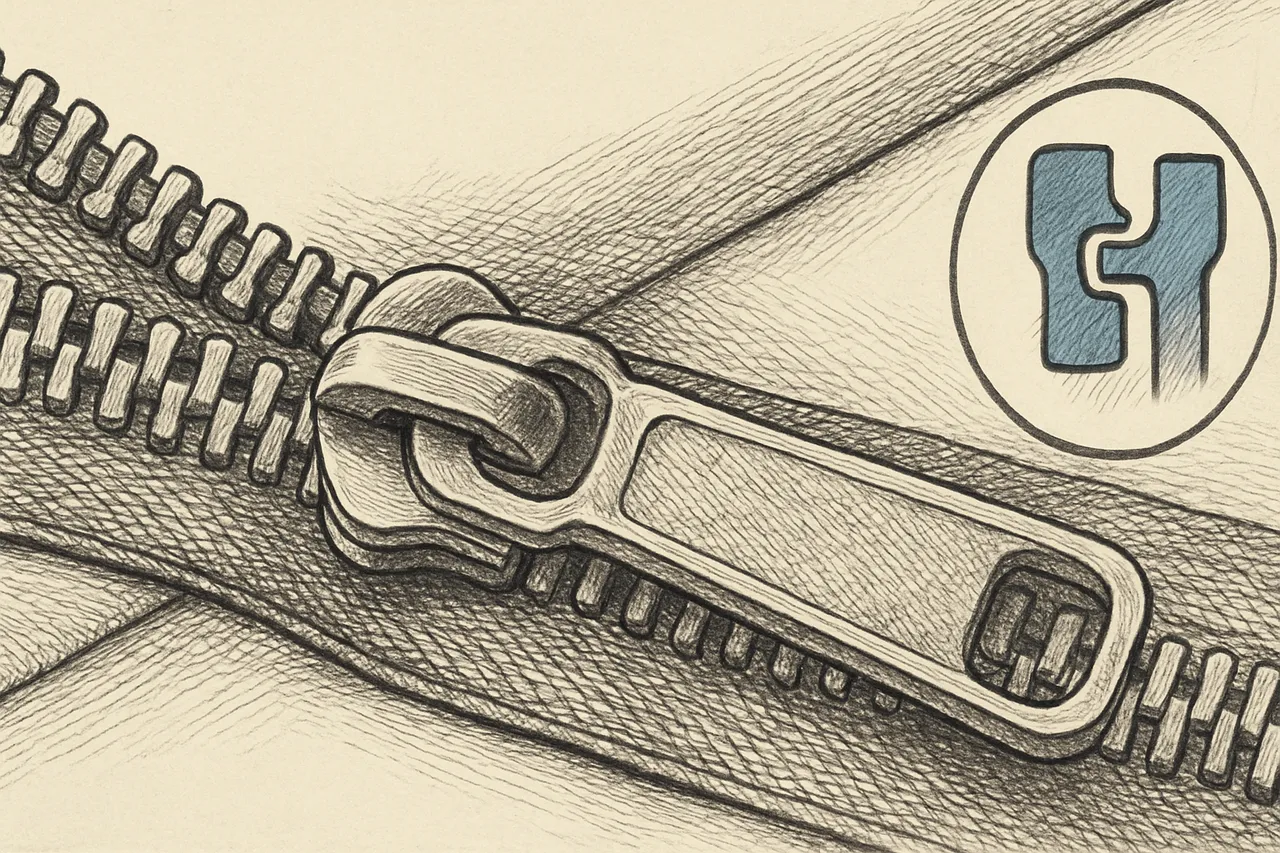
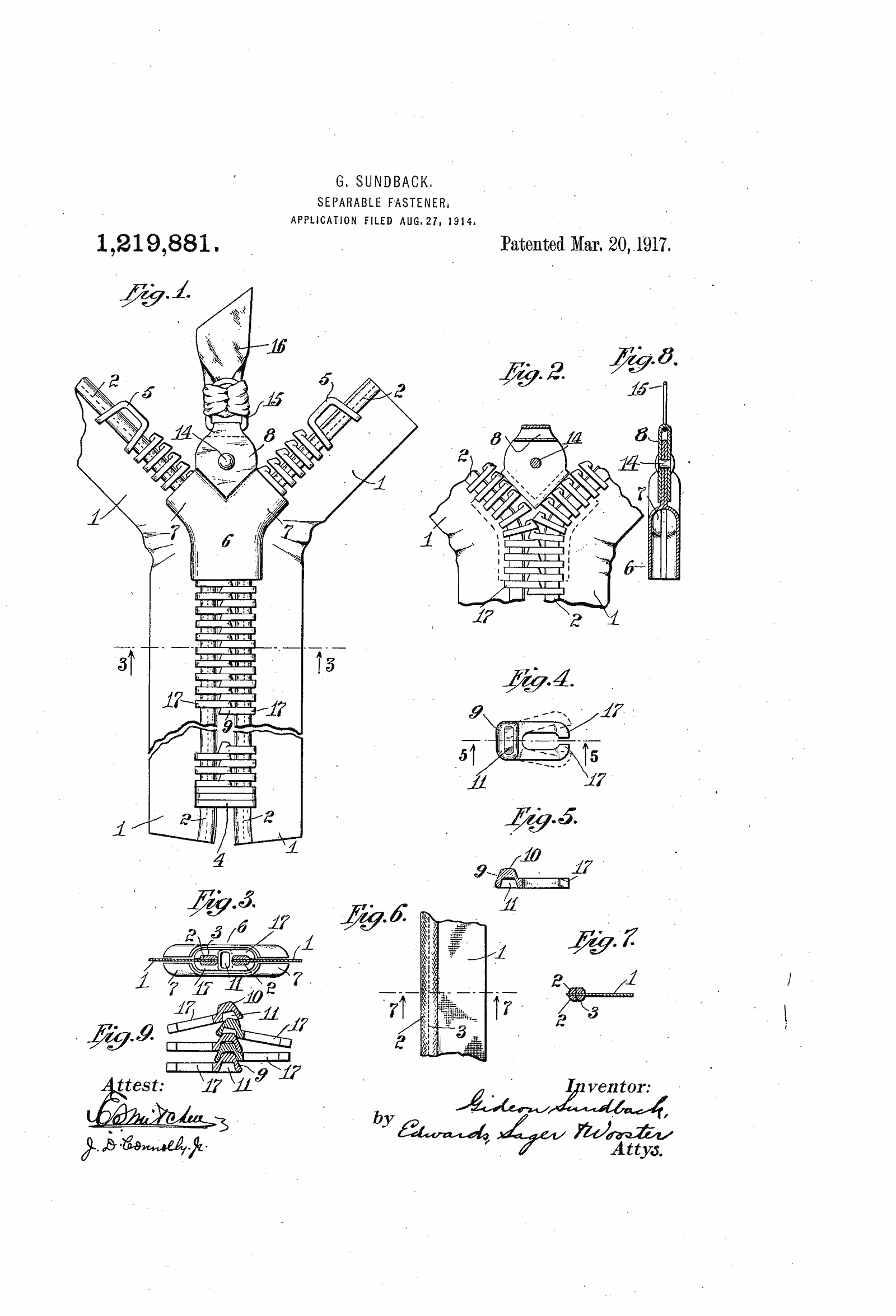
US1219881 was granted to Gideon Sundback on March 20, 1917. The title is "Separable Fastener." It is the patent for the modern zipper — the version that finally worked — and it arrived at the end of a roughly twenty-year struggle involving several inventors and a long series of failures.
The story begins with Whitcomb Judson, a Chicago engineer who, in 1893, patented and exhibited a "clasp locker" at the World's Columbian Exposition — a device of hooks and eyes drawn together by a slider, intended to replace the tedious business of buttoning tall boots. It attracted curiosity and almost no sales. The problem was simple: it did not work well. It jammed, it popped open at inopportune moments, and the metal parts tended to rust. No one wanted a fastener that might spring open unexpectedly, least of all on their footwear or clothing.
The redesign
Judson's company struggled with the concept for years. The breakthrough came from Gideon Sundback, a Swedish-American electrical engineer who joined the company and eventually rethought the mechanism from scratch. Judson's design used hooks and eyes. Sundback's insight was to abandon them entirely in favor of a series of identical interlocking teeth — small nubs, each with a dimple on one side and a matching bump on the other, so that when two rows were drawn together by the slider, each tooth nested securely between two teeth on the opposite side.
This was far stronger and more reliable than hooks and eyes. The interlocking teeth distributed the strain, resisted pulling apart sideways, and — crucially — did not spring open. Sundback also designed the machinery to manufacture the fastener at scale, which was its own substantial achievement. The 1917 patent describes this interlocking-tooth design, which is, in its essentials, exactly the zipper on your jacket, bag, and jeans today.
Slow adoption and a famous name
Even after it worked, the zipper took time to catch on. It was used first in military gear and money belts during the First World War, then in rubber galoshes. It was the B.F. Goodrich company, selling those galoshes in the 1920s, that gave the fastener the onomatopoeic name that stuck: zipper, after the zip sound it made.
The fashion industry resisted it for years — zippers on clothing were considered faintly improper, and there were lingering anxieties about a fastener that could be opened so quickly. It was not until the 1930s that the zipper became broadly accepted in garments, helped along by a famous endorsement when it was featured in men's trousers and children's clothing (the latter marketed on the promise of self-reliance, since a child could manage a zipper without help).
Judson, who started it, is often called the zipper's inventor, but his version never worked. Sundback, who made it work, is the one whose 1917 patent describes the object we actually use. Between the first flop at the 1893 World's Fair and the reliable modern zipper lay twenty years of a device that was almost, but not quite, a good idea — a reminder that the distance between "clever concept" and "thing that works every single time" is often where the real invention happens.
See the original
The full text and figures of US1219881 are on Google Patents.
Related stories
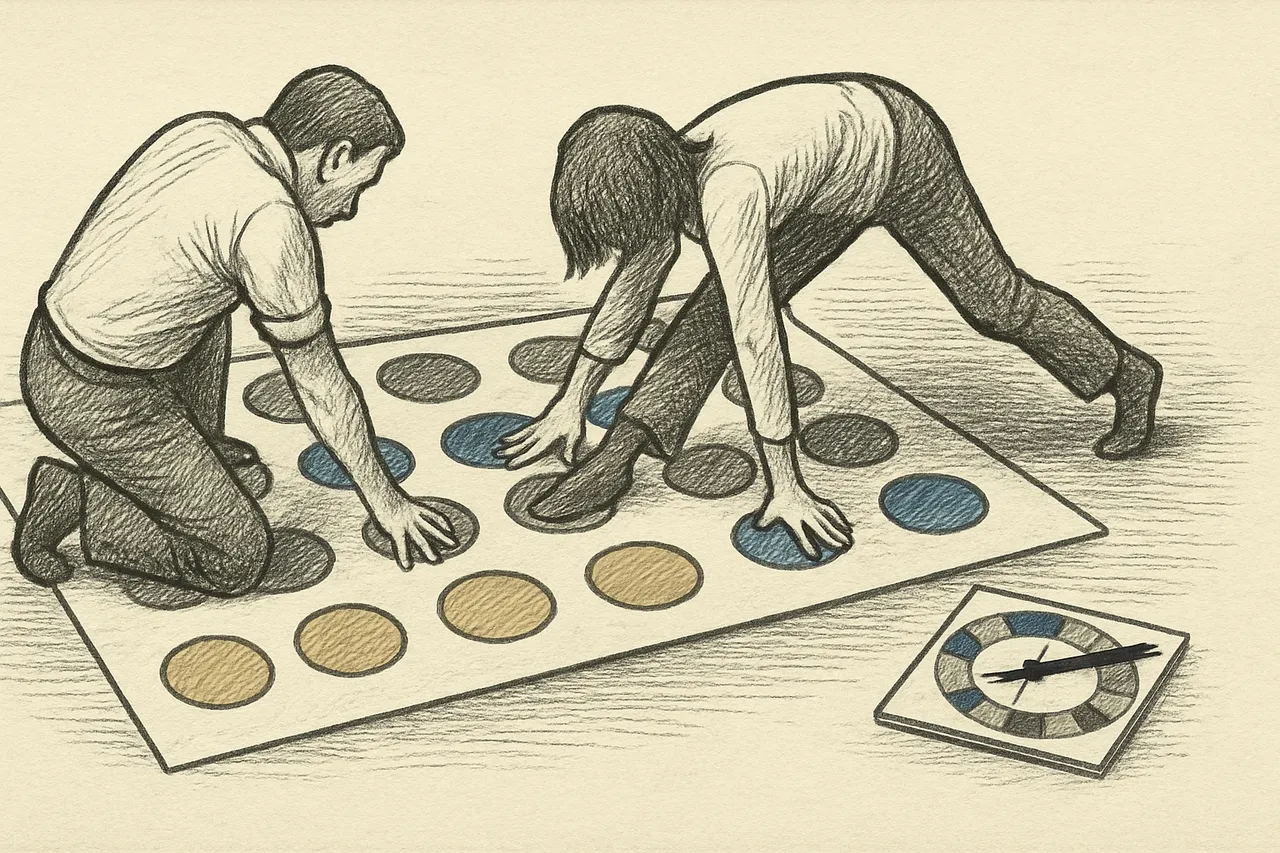
Twister's Patent Is Titled 'Apparatus for Playing a Game Wherein the Players Constitute the Game Pieces'
The patent title is the whole idea: the people are the pieces. Milton Bradley released the game in 1966, some retailers were wary of it, and critics found it a little too intimate. Then Johnny Carson played it on television with Eva Gabor, and the orders poured in.
Read the story →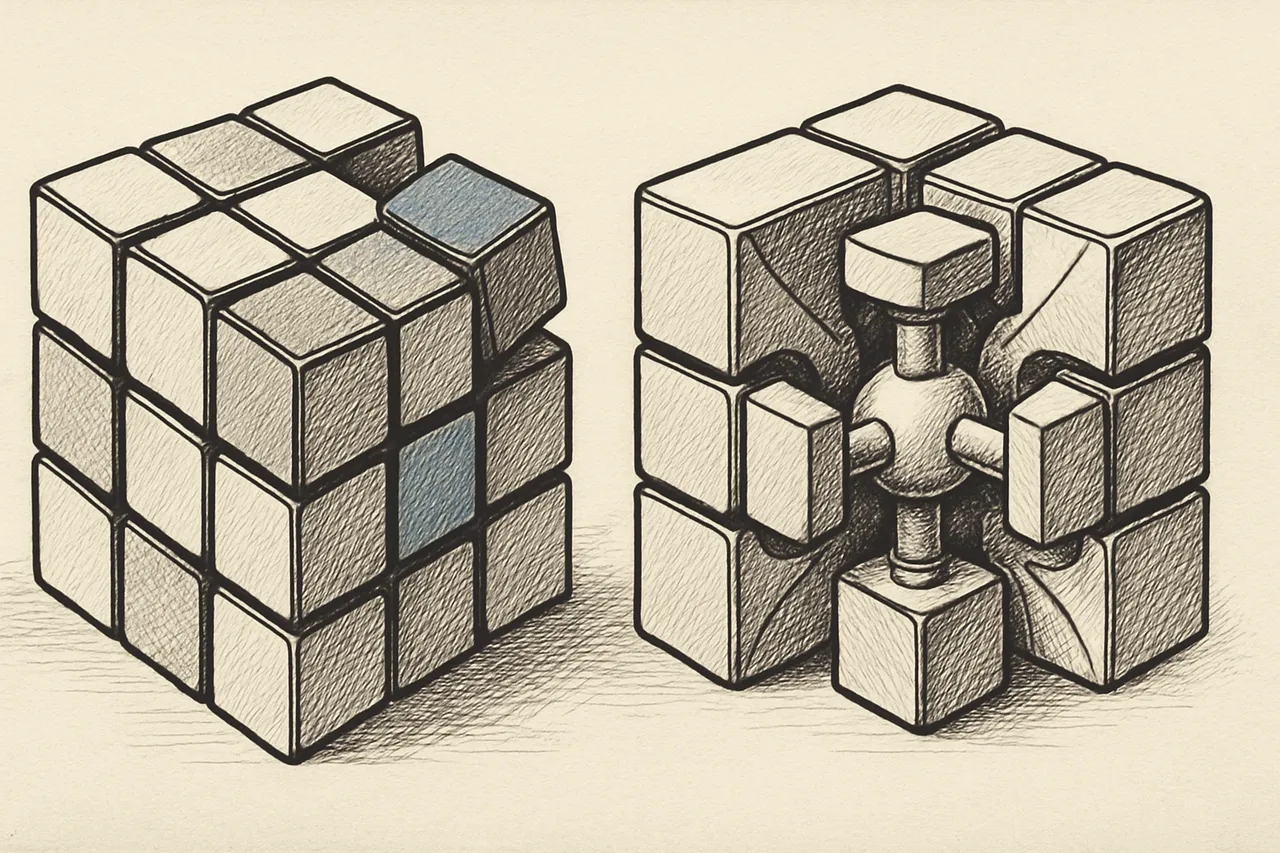
Ernő Rubik Needed About a Month to Solve His Own Cube. An American Court Later Found It Infringed an Earlier US Patent.
Rubik built the first cube in Budapest in 1974 as a way to think about three-dimensional movement. The clever part is how it holds together when most of its pieces are not attached to anything. In the United States, a chemist named Larry Nichols had patented a related puzzle in 1972, and his company sued.
Read the story →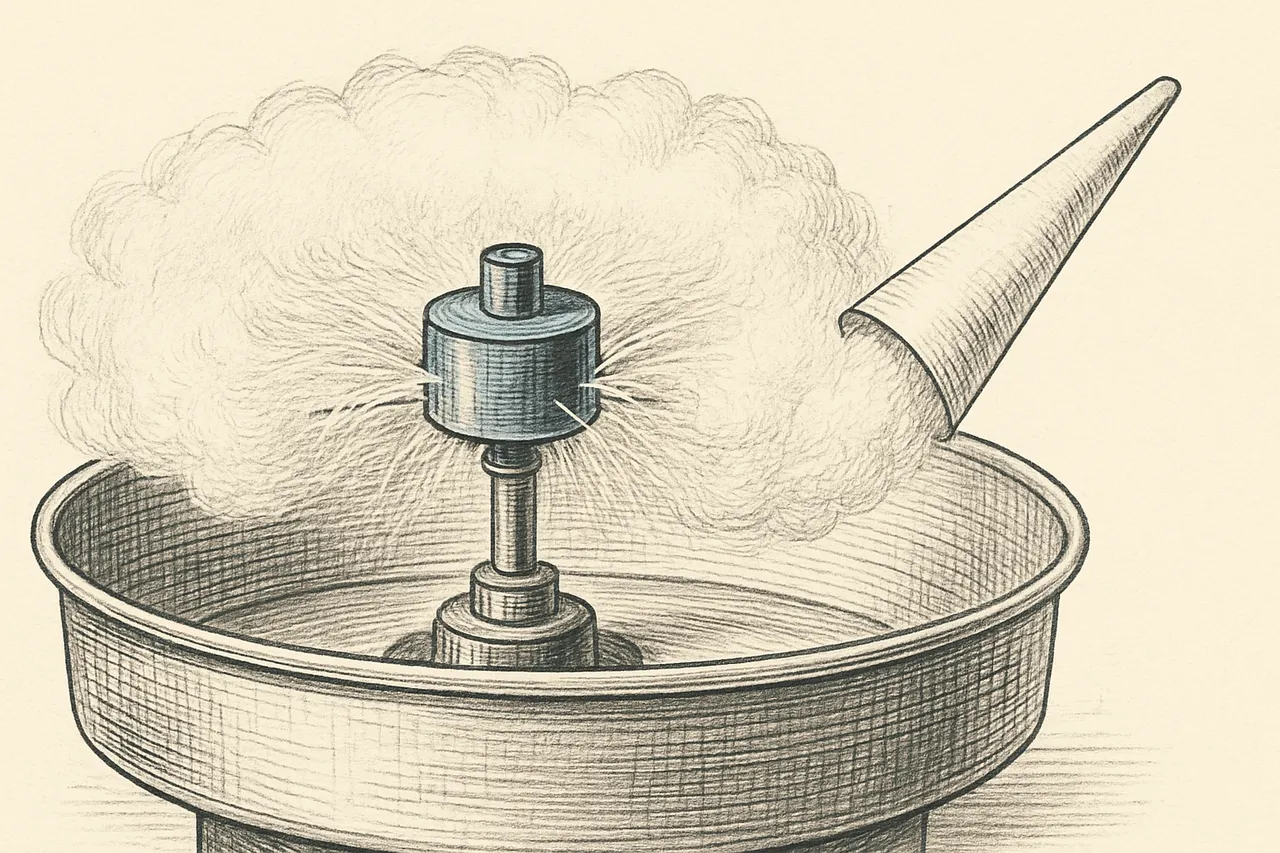
A Dentist Co-Invented the Cotton Candy Machine, and It Was Sold at the 1904 World's Fair as Fairy Floss
William Morrison was a dentist and John Wharton was a candy maker. Their machine melted sugar and flung it through tiny holes so that it cooled into threads finer than hair before it could crystallize. They filed in 1897, and at the St. Louis World's Fair it was a sensation.
Read the story →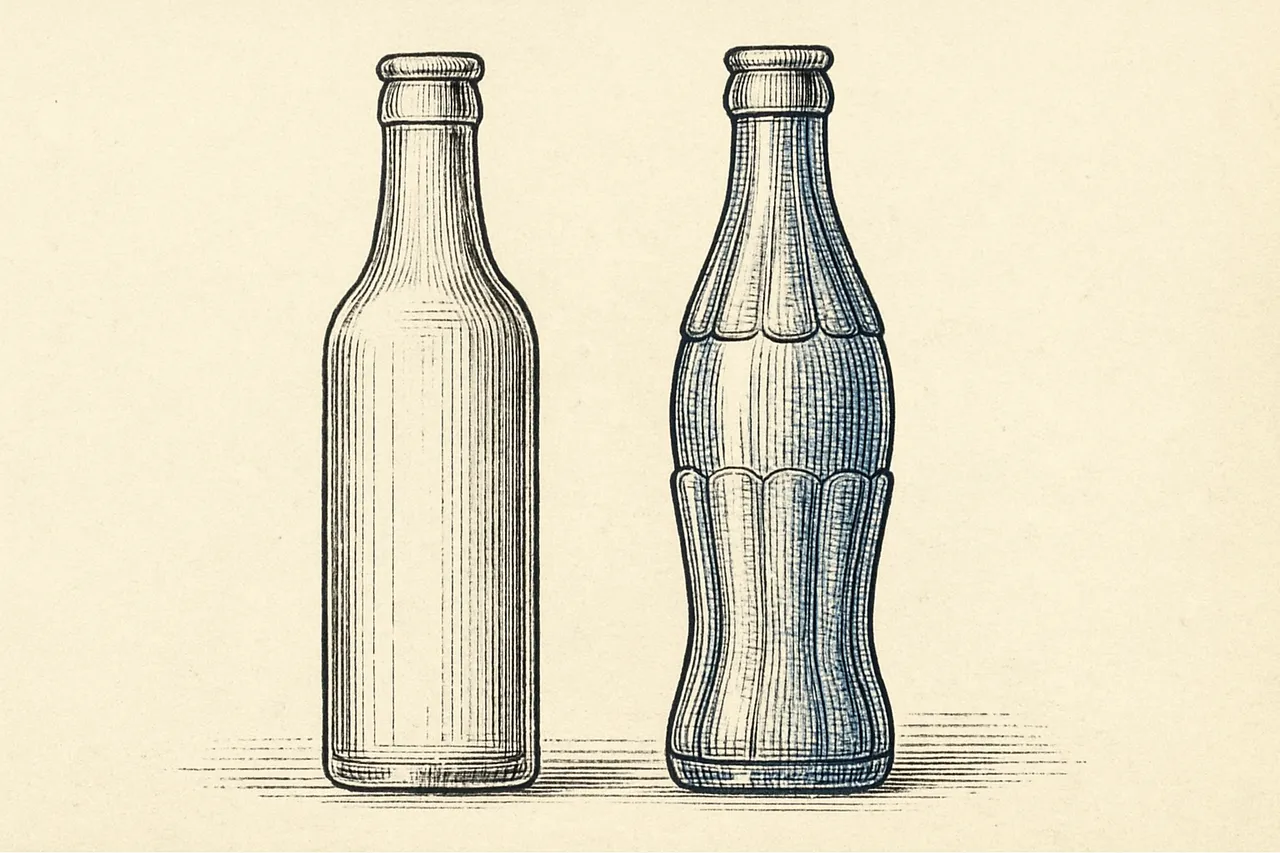
Coca-Cola Asked Glassmakers for a Bottle You Could Recognize in the Dark, or Broken on the Ground
In 1915 Coca-Cola had an imitation problem, since competitors used the same straight-sided bottles and borrowed-sounding names. It challenged glass companies to design a bottle identifiable by touch alone. The winner came from a small glassworks in Terre Haute, Indiana, and the name on the patent is not the name of the man who drew it.
Read the story →