Edwin Armstrong Invented Static-Free Radio. Then the Industry He Threatened Destroyed Him.
FM radio was better than AM in every way — no static, higher fidelity, less power. That was exactly the problem. The company that dominated AM spent two decades in court to bury it, and the inventor spent his fortune fighting back before jumping from his apartment window.
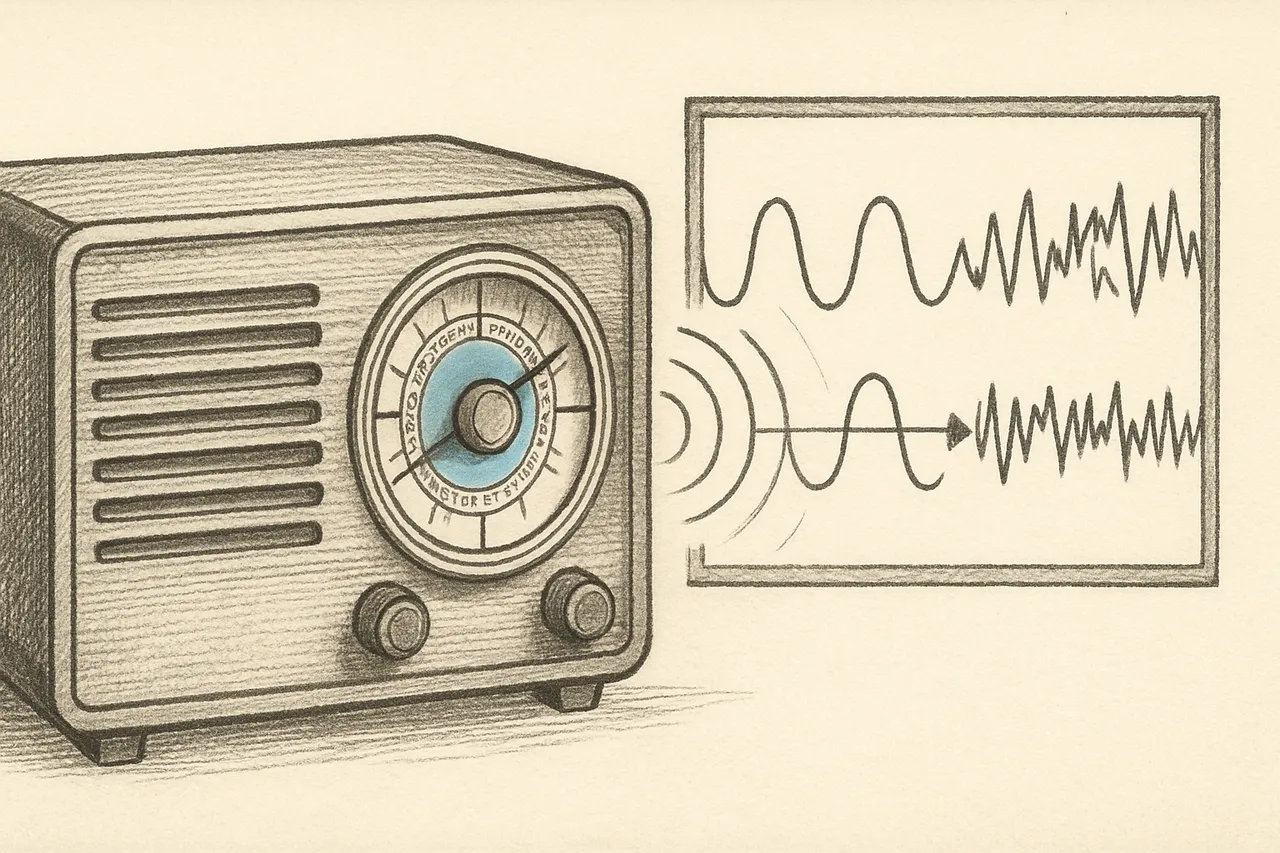
US1941066 was one of a set of patents granted to Edwin H. Armstrong on December 26, 1933, covering frequency modulation — FM radio. Armstrong was already one of the most important inventors in the history of radio; his earlier regenerative and superheterodyne circuits were the basis of essentially every radio receiver on Earth. But FM was his masterpiece, and it destroyed him.
The problem Armstrong set out to solve was static. AM radio — amplitude modulation — encodes sound in the strength of the radio wave, which means that any electrical interference, from lightning to motors to power lines, adds itself directly to the signal as noise. Every engineer of the era, including the giants at RCA, had concluded that static was an inherent, unbeatable feature of radio. The theoretical work seemed to prove it couldn't be solved.
Armstrong solved it anyway. FM encodes sound in the frequency of the wave rather than its amplitude, and a properly designed FM receiver can ignore amplitude variations entirely — which is to say, ignore static. The result was radio of a clarity no one had heard: no crackle, no hiss, full musical fidelity, using less transmitting power. In demonstrations, listeners reported hearing a glass of water being poured, the strike of a match, over the air with perfect clarity.
The company that didn't want it
The trouble was that FM was too good. RCA, under David Sarnoff, had built an empire on AM radio — it owned the AM networks, manufactured the AM receivers, and had enormous capital sunk in the AM broadcasting infrastructure. FM did not improve that empire; it threatened to make it obsolete, requiring an entirely new band, new transmitters, and new receivers that RCA had not built and did not control. Worse, RCA was pouring its capital into television, and FM was competing for the same spectrum, the same engineers, and the same corporate attention.
Sarnoff had once been Armstrong's friend and had funded his early work. Now RCA became the principal obstacle to FM's adoption. The company lobbied the FCC, which in 1945 moved the FM band to a different part of the spectrum — a decision that rendered every existing FM receiver and transmitter useless overnight and set the technology back years. RCA built FM into its television sound system without paying Armstrong royalties, and then contested his patents in court, deploying essentially unlimited legal resources against him.
The end
Armstrong fought back the only way he could: through litigation, funded out of his own once-substantial fortune. The lawsuits dragged on for years and consumed his money, his health, and his marriage. By early 1954 he was nearly broke and exhausted, his patents tied up in endless proceedings, the technology he knew to be superior still marginalized.
On the night of January 31, 1954, Armstrong removed the air conditioner from the window of his thirteenth-floor Manhattan apartment and jumped. He was sixty-three.
His widow, Marion, took up the litigation and spent the next thirteen years pursuing it. She won essentially every case. The courts affirmed, repeatedly, that Armstrong was the true inventor of FM. By the time the vindication was complete, FM radio had — slowly, belatedly — become the dominant medium for music broadcasting, precisely because it sounded so much better. Everything Armstrong had promised turned out to be true. He simply did not live to hear it.
See the original
The full text and figures of US1941066 are on patents.us.
Related stories
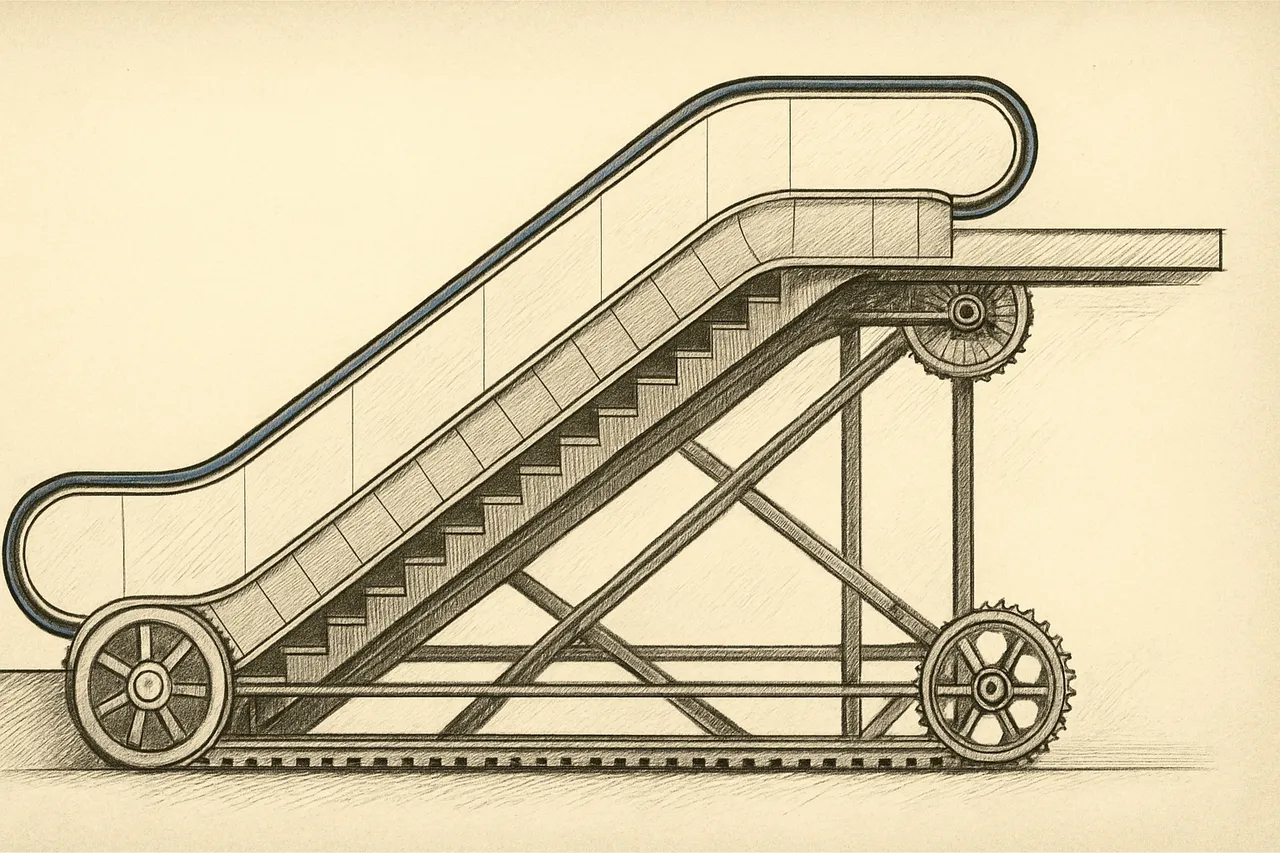
The Escalator Was Patented in 1859. Nobody Built One for Thirty Years.
Nathan Ames patented 'revolving stairs' before the Civil War. He admitted he wasn't sure what would power them, never built one, and died four years later at thirty-nine. The moving staircase arrived a generation after he did.
Read the story →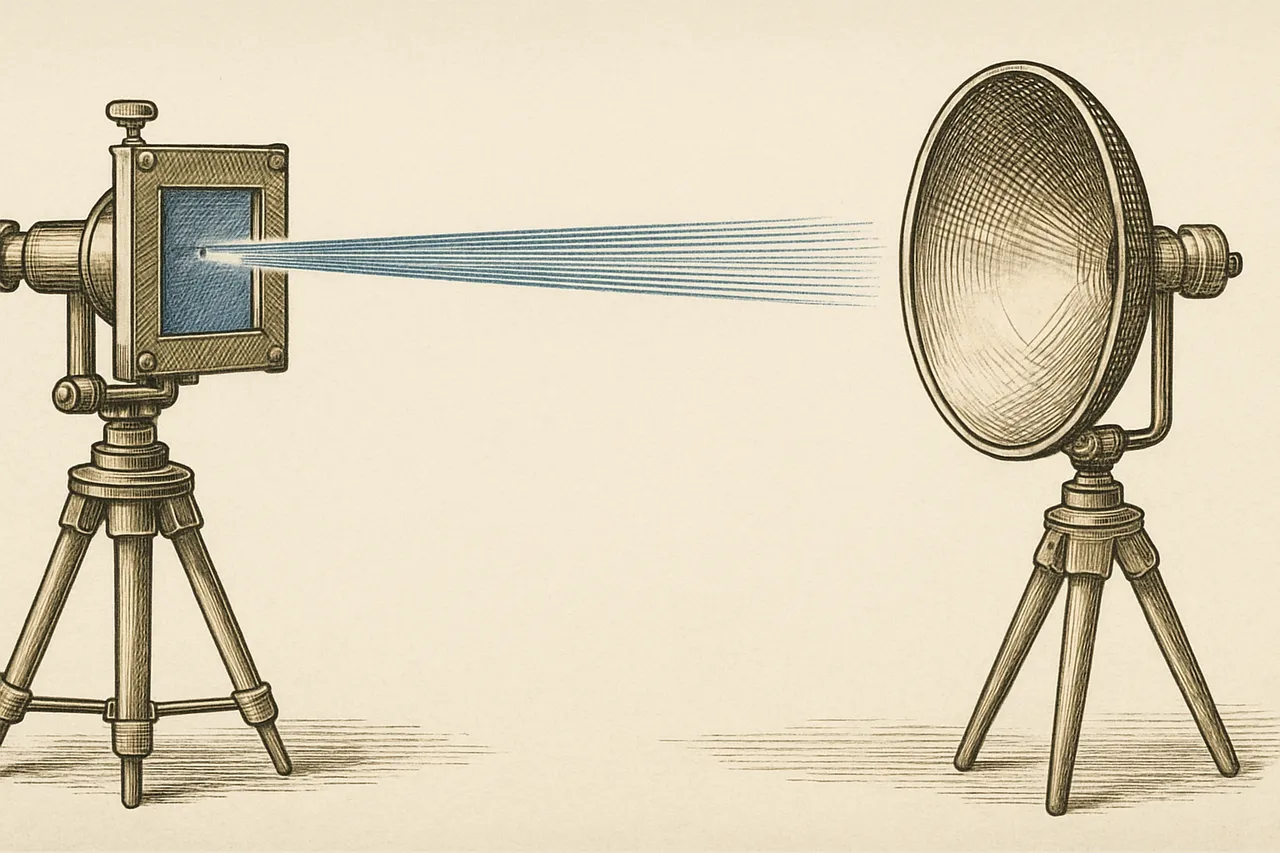
Bell Called It His Greatest Invention. It Sent Speech on a Beam of Light — in 1880.
Alexander Graham Bell thought the photophone, not the telephone, was his finest work. It transmitted the human voice on a beam of sunlight, with no wires at all. It was also a century early: the world had no use for it until fiber optics arrived.
Read the story →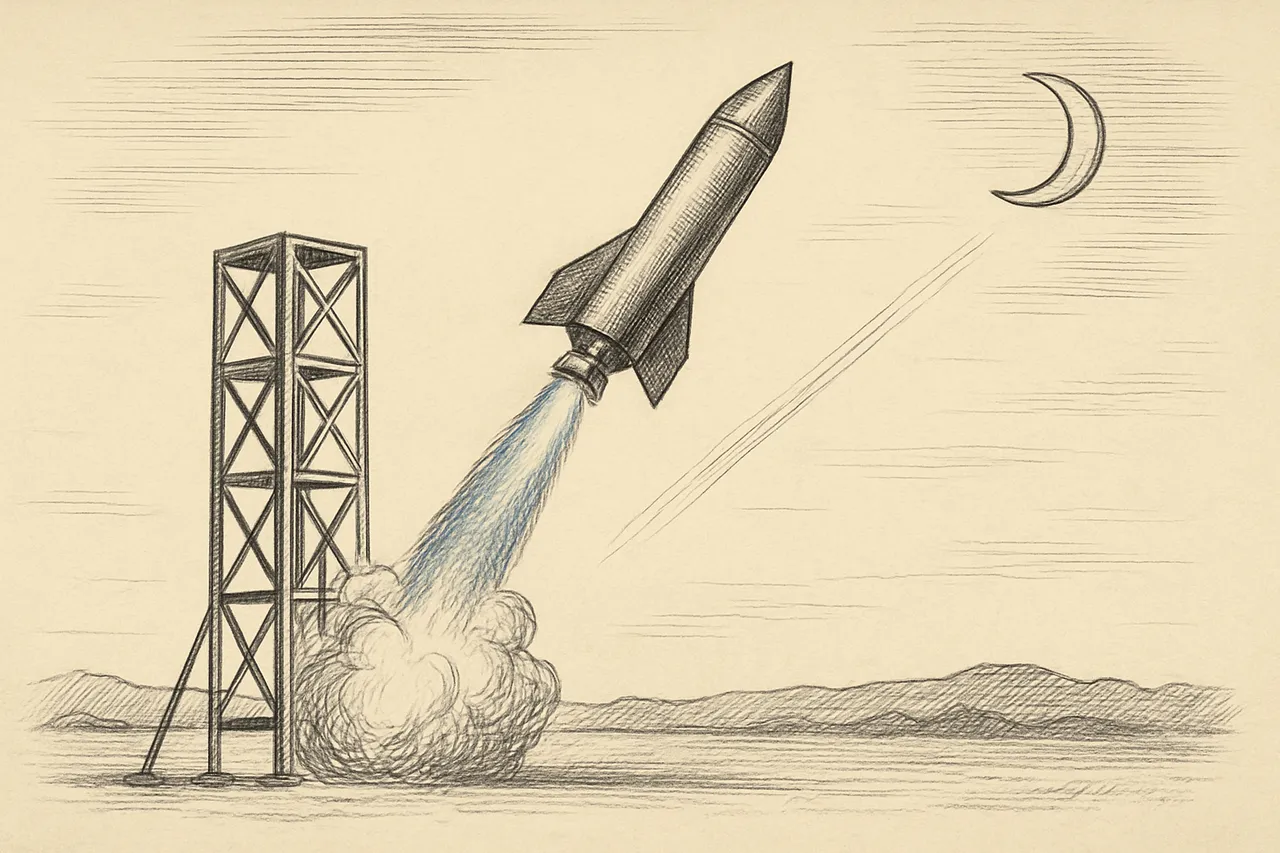
The New York Times Mocked Goddard's Rocket. It Apologized 49 Years Later — Mid-Flight to the Moon.
Robert Goddard patented the fundamentals of the liquid-fuel rocket in 1914. When he suggested a rocket could reach the Moon, a newspaper editorial declared he lacked 'the knowledge ladled out daily in high schools.' The correction ran during Apollo 11.
Read the story →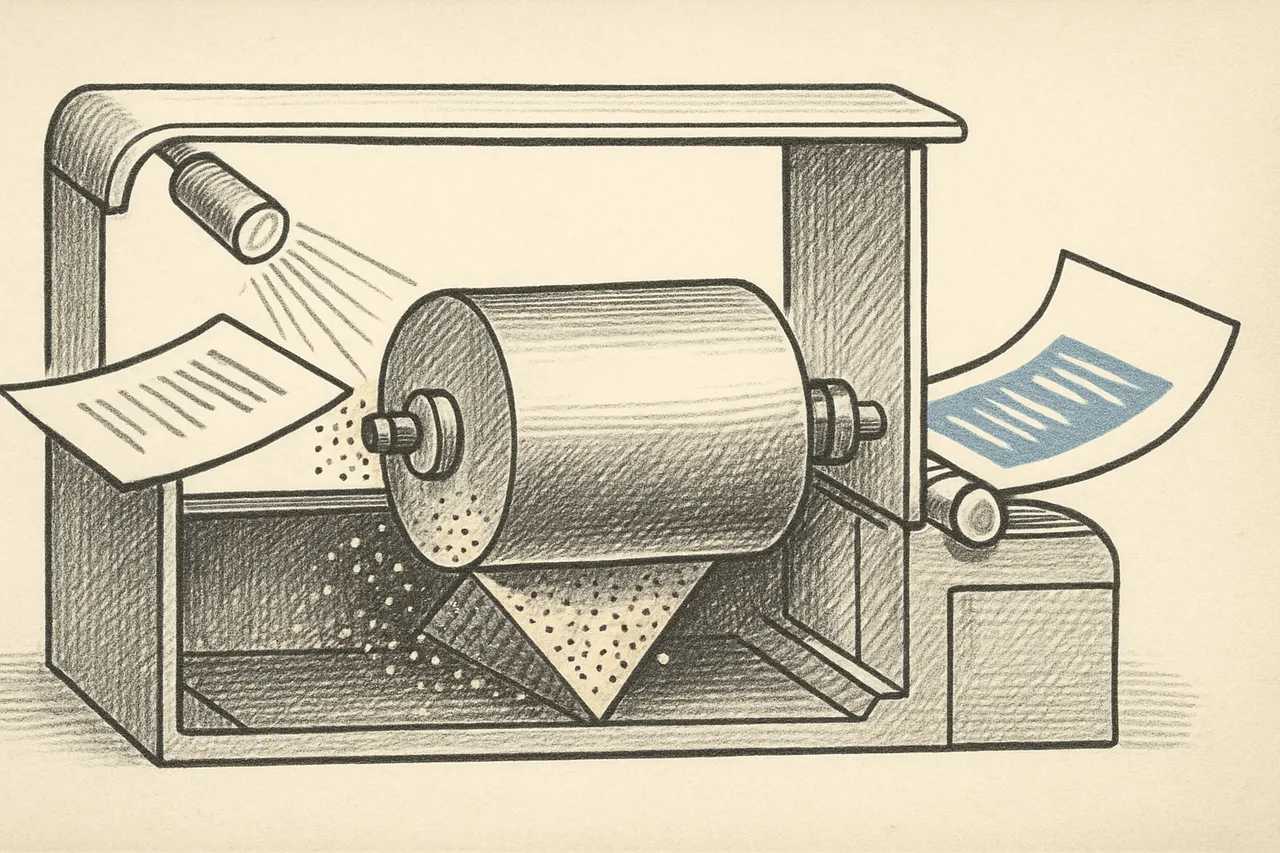
Chester Carlson Invented the Photocopier. Twenty Companies Said No.
A patent attorney tired of copying documents by hand invented dry photocopying in his kitchen in 1938. IBM, Kodak, GE, RCA, and the US Navy all turned it down. The company that finally said yes became Xerox.
Read the story →