Spencer Silver Invented an Adhesive No One Wanted for Twelve Years
In 1968, a 3M chemist named Spencer Silver was trying to make a stronger adhesive. He accidentally made a weaker one that didn't stick permanently. The product it eventually became — Post-it Notes — did not ship for another twelve years.
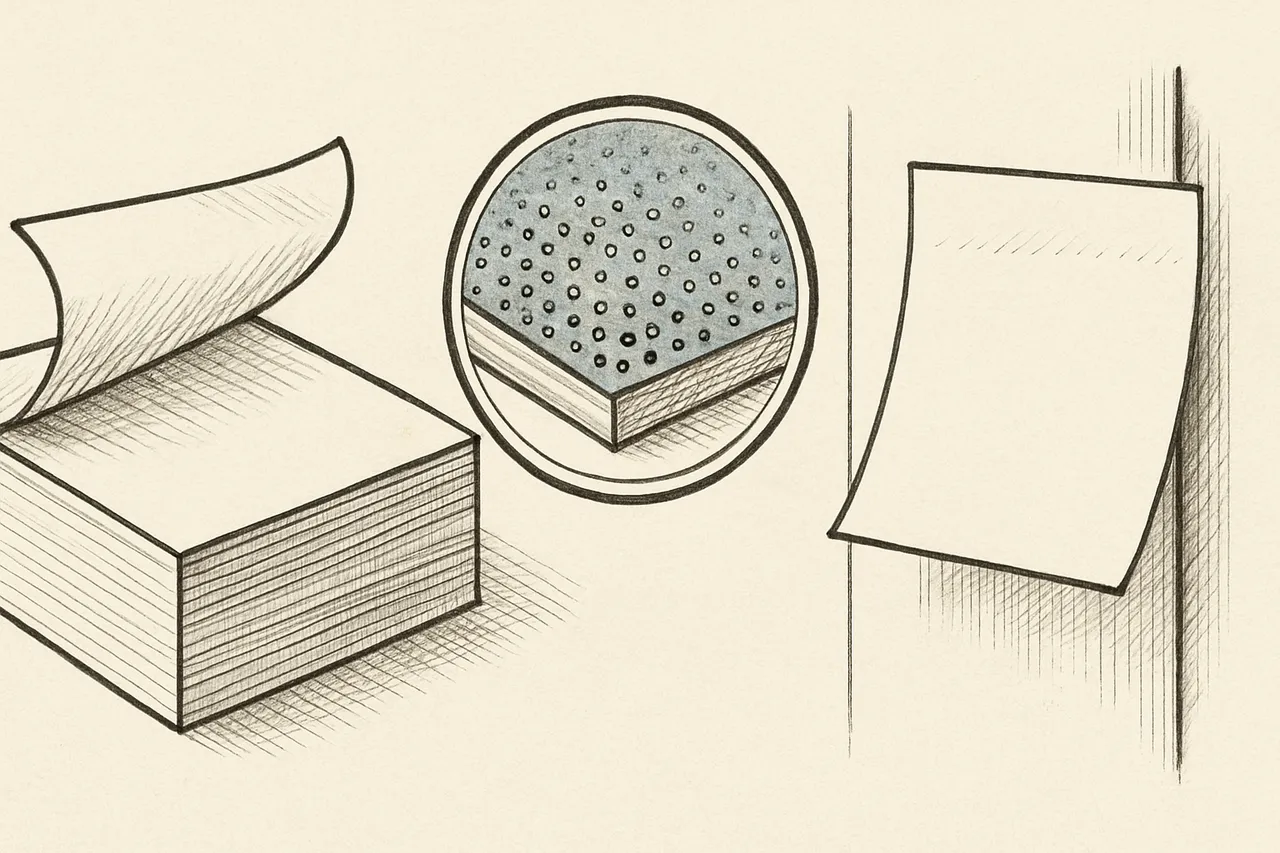
US3691140 was filed on March 9, 1970, and granted to Spencer F. Silver of 3M on September 12, 1972. The title is "Acrylate Copolymer Microspheres." The text describes a polymer adhesive composed of tiny acrylate beads, each one about the size of a single skin cell. When the bead-coated surface contacts another surface, the beads adhere lightly — strongly enough to stay attached, weakly enough to peel off without leaving residue, without tearing paper, and repeatedly. You could stick the material, peel it off, stick it again, and the beads would not have lost their adhesion.
Silver had not been trying to invent this. He had been working in 3M's central research lab on a project to make a stronger adhesive for the aerospace industry — something that would hold airframe components together more reliably than existing glues. The microsphere result, which he stumbled into in 1968, was a failure by every metric that mattered to that project. The beads did not bond permanently. They had roughly one-twentieth the holding strength of conventional contact adhesive. They were, by any reasonable measure, unfit for any of the applications 3M was actually trying to address.
A solution in search of a problem
Silver was, however, completely fascinated by what he had made. The reusable peel-and-stick property of the adhesive seemed to him obviously useful for something, even though he could not say what. He spent the next several years giving informal seminars on the technology inside 3M, hoping that someone in product development would recognize the application he had failed to think of. The seminars became something of a running joke in the company. People would attend, listen politely, admire the adhesive, and then go back to their actual work with no idea what to do with it.
The patent issued in 1972. The product line implied by the patent did not exist. There was no obvious customer.
The hymnal
In 1974, six years after Silver's accidental discovery, a 3M new-product researcher named Art Fry attended one of Silver's seminars. Fry was a singer in his church choir, and he had spent most of the previous Sunday struggling with paper bookmarks that kept falling out of his hymnal during the service. Sitting in Silver's seminar, he had the connection: the adhesive Silver kept showing in those slides was the perfect bookmark glue. It would stick to the page during the service and peel off without tearing the hymnal when he was done.
Fry began making prototype sticky bookmarks at his desk. Within a few weeks he had realized that the application was much larger than bookmarks: anywhere people might want to leave a small temporary note, the same product would work. He began carrying prototypes around 3M's offices and giving them to colleagues. Demand was immediate and visceral. Once you tried one, you wanted more.
3M's marketing department, however, initially refused to commission a product. Focus groups did not understand what the adhesive paper was for. Sales projections were weak. The marketing leadership concluded that there was no consumer market for it.
Fry persisted. He insisted on a trial release in a single market — Boise, Idaho — in 1977. Demand among Boise office workers was overwhelming. 3M expanded the trial. Demand expanded with it. In April 1980, twelve years after Silver's accidental discovery, Post-it Notes shipped nationally.
What it became
3M still does not separately report Post-it Note revenue, but external estimates put the brand at well over a billion dollars in annual sales by the late 1990s and into multiple billions today. The product is one of the most successful consumer office goods of the twentieth century.
Silver, who had made the adhesive in the first place, received a 3M research-grade share of the royalties under the standard inventor-compensation agreement. He retired from 3M in 1996 and died in 2021 at age eighty. He was, by every account, philosophical about the twelve-year gap between his discovery and its eventual market success: the invention had been ready; the application was the slow part.
Silver's adhesive was too weak to be useful and spent twelve years looking for a job. The opposite failure, an adhesive so strong it ruined the equipment that touched it, was found at Eastman Kodak and thrown away twice: see super glue.
See the original
The full text and figures of US3691140 are on Google Patents.
Related stories
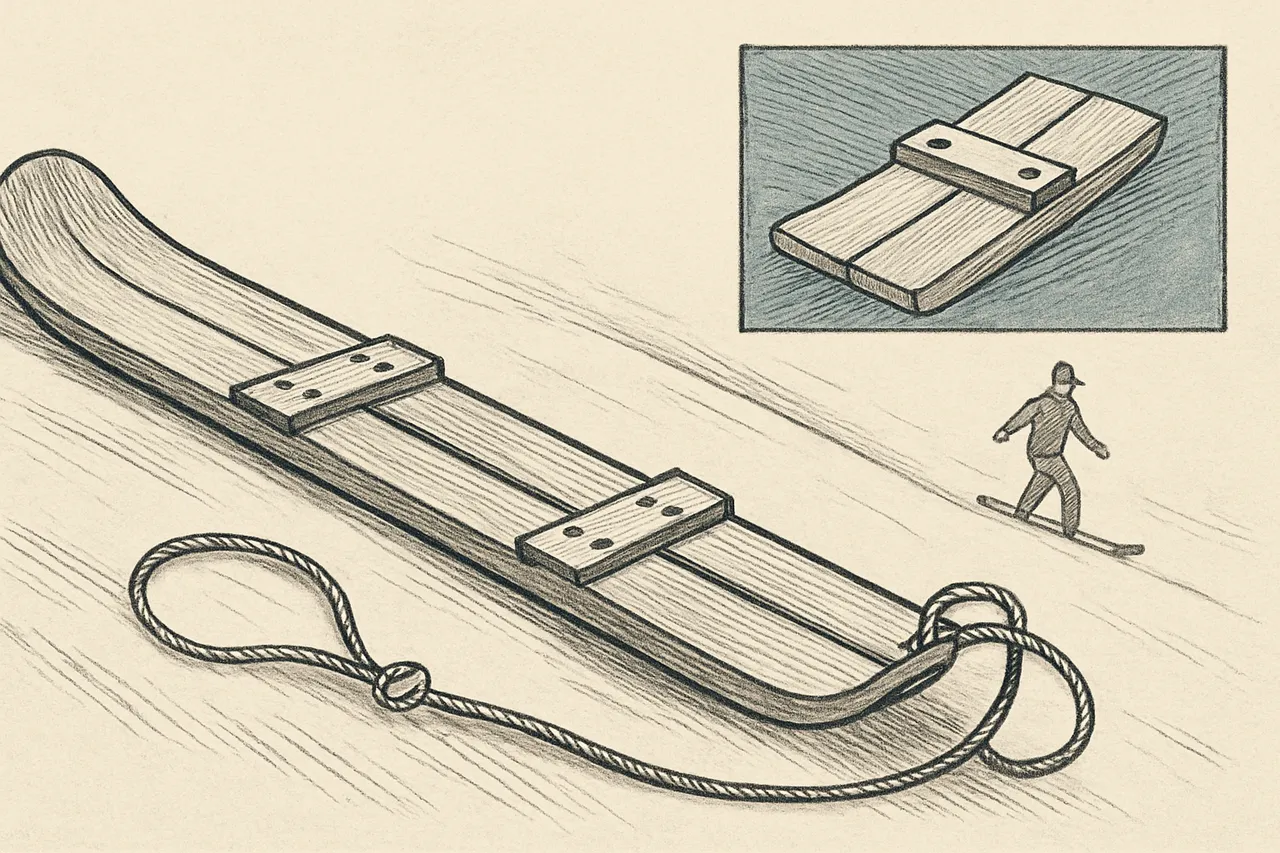
A Father Fastened Two Skis Together for His Daughter at Christmas in 1965. His Wife Named It the Snurfer.
Sherman Poppen was an engineer in Muskegon, Michigan, trying to keep his daughter busy over the holiday. He joined two children's skis side by side and tied a rope to the front. It sold as a toy by the hundreds of thousands, and the people who raced it turned it into a sport.
Read the story →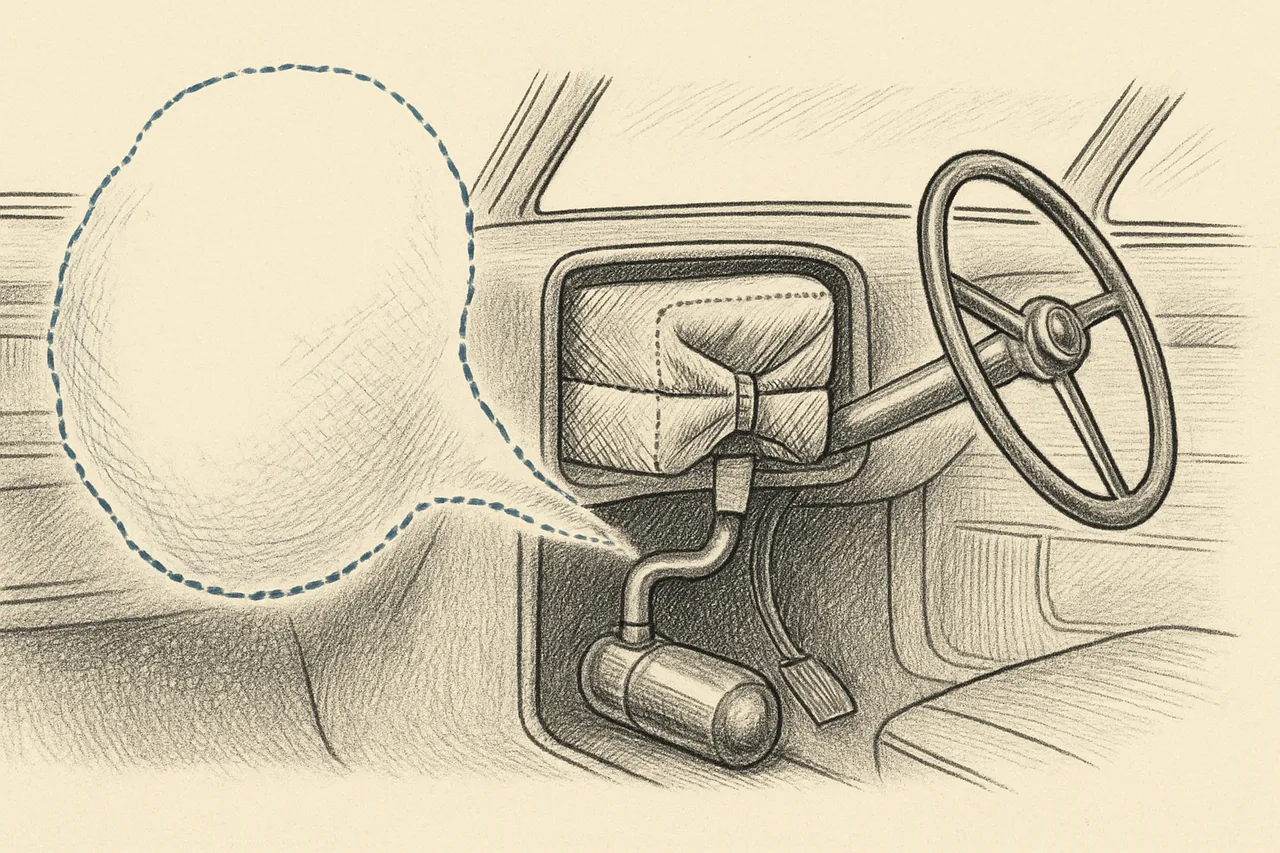
He Swerved to Avoid Something in the Road With His Family in the Car, and Patented the Airbag Three Months Later
John Hetrick was a Navy engineer who had worked with compressed air torpedoes. After a near miss on a Pennsylvania road in 1952, he worked out that a cushion could be inflated faster than a body can travel forward. Then he could not get a single manufacturer to care.
Read the story →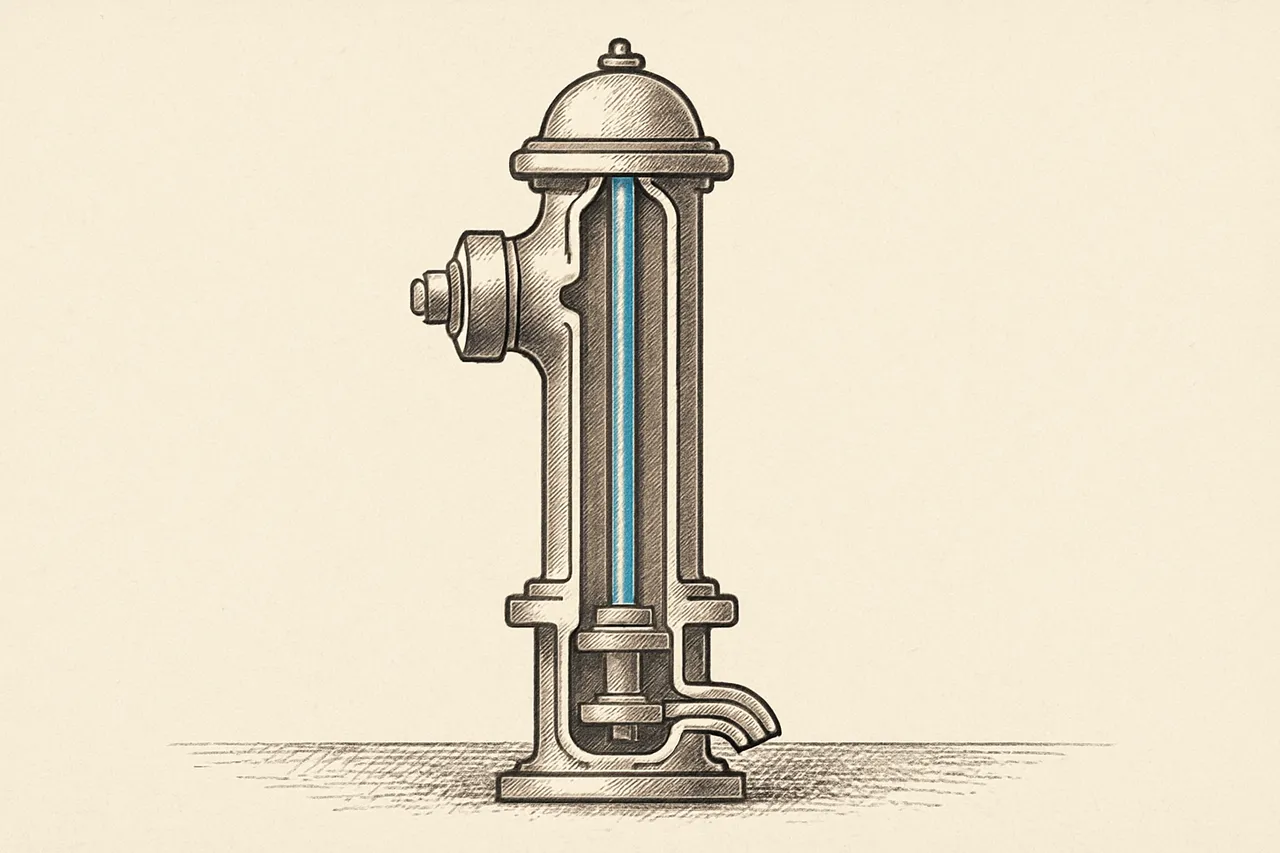
The Fire Hydrant Patent Was Destroyed in a Fire
Frederick Graff is usually credited with the post hydrant around 1801. Nobody can check, because the Patent Office burned to the ground in 1836 and took roughly ten thousand patents with it, including his.
Read the story →
Bubble Wrap Was Invented as Wallpaper. Nobody Bought It.
Two engineers sealed two shower curtains together and trapped air bubbles between them. They were trying to make textured wallpaper. That failed. So did their second idea, greenhouse insulation. Then IBM shipped a computer.
Read the story →