Bell Called It His Greatest Invention. It Sent Speech on a Beam of Light — in 1880.
Alexander Graham Bell thought the photophone, not the telephone, was his finest work. It transmitted the human voice on a beam of sunlight, with no wires at all. It was also a century early: the world had no use for it until fiber optics arrived.
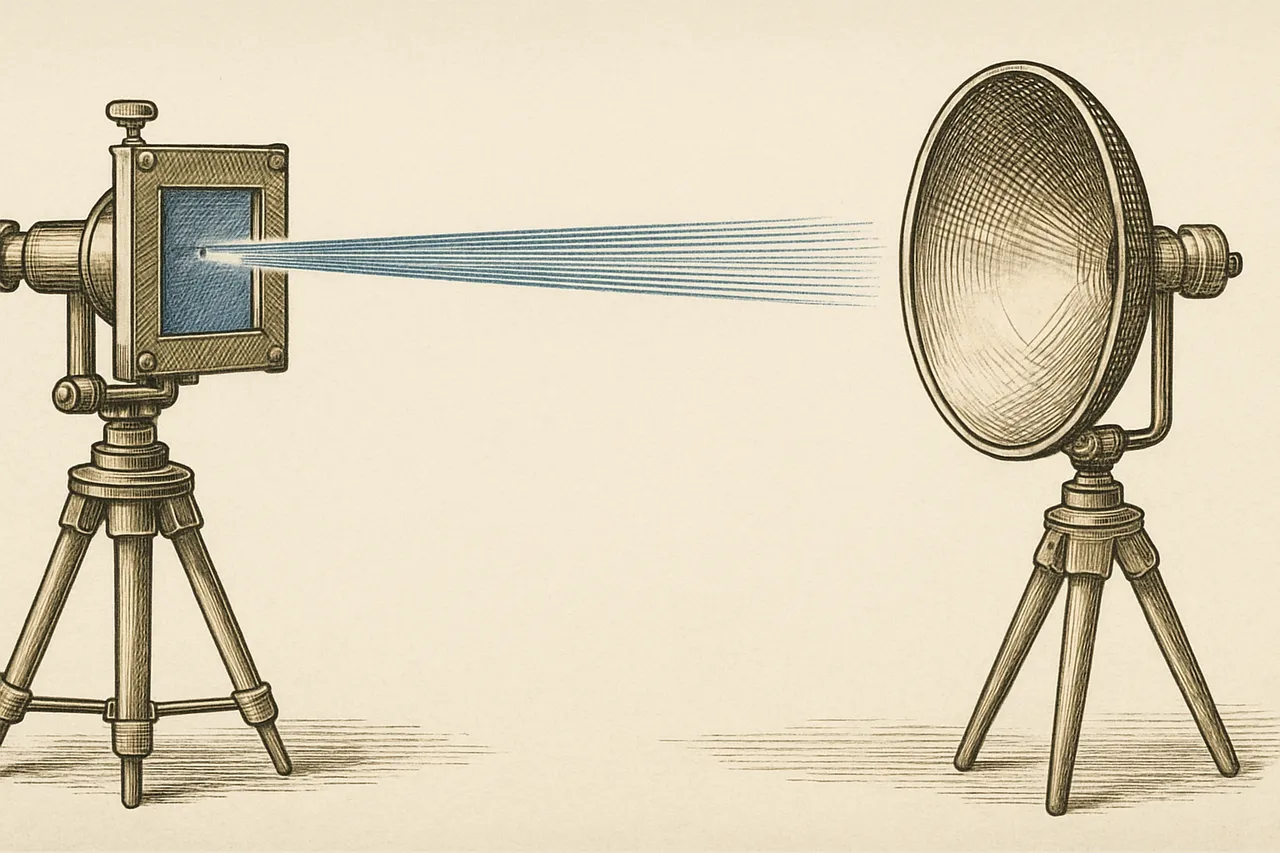
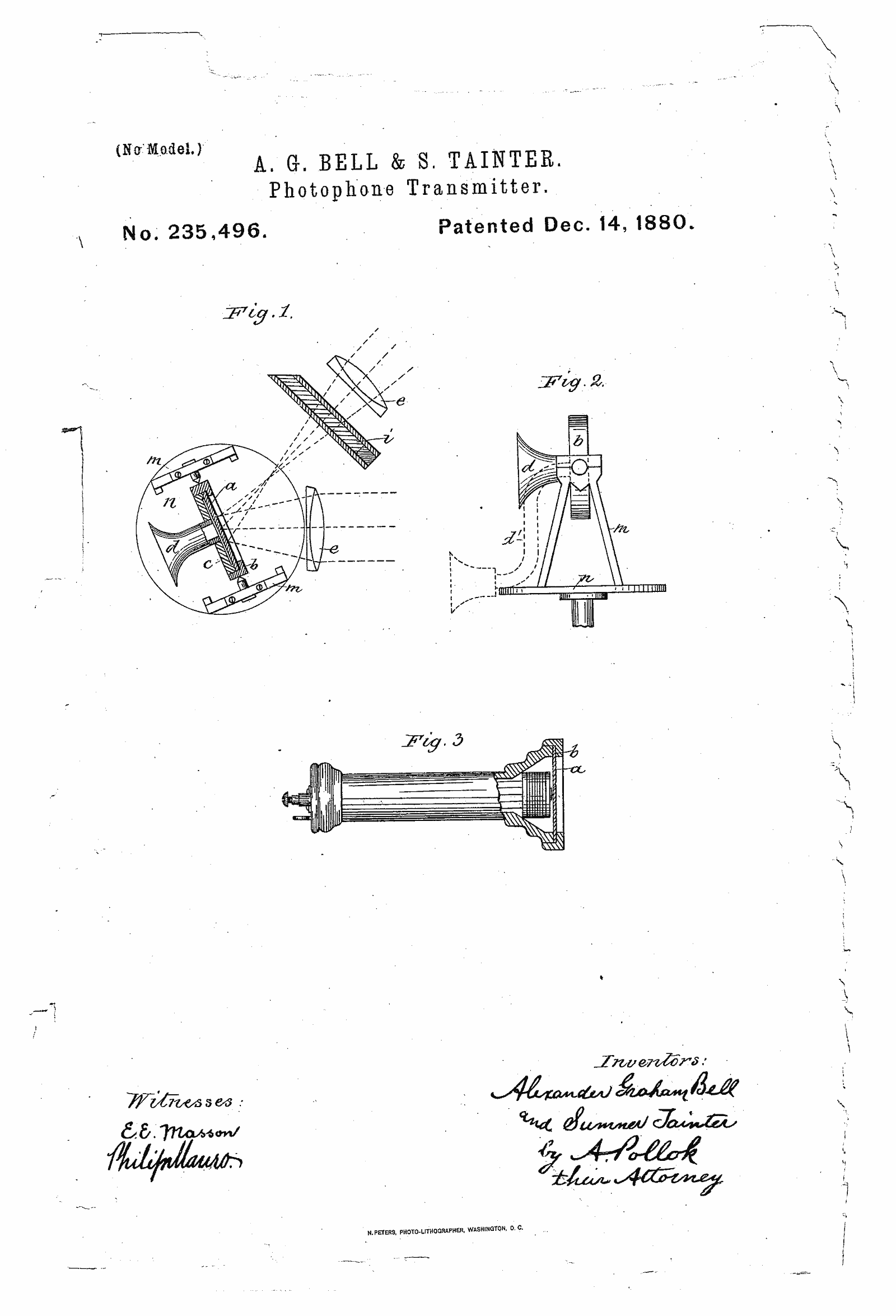
US235496 was granted to Alexander Graham Bell on December 14, 1880. The title describes an "Apparatus for Signalling and Communicating, called 'Photophone.'" It transmitted the sound of the human voice on a beam of light, through open air, with no connecting wire of any kind. Bell considered it the greatest invention of his life — greater than the telephone, which had made him world-famous four years earlier.
The mechanism is beautiful in its simplicity. At the transmitting end, Bell directed a beam of sunlight onto a thin mirror. When someone spoke, the sound waves vibrated the mirror, subtly varying the intensity of the reflected beam in step with the voice. That modulated beam of light traveled across open space to a receiver, where a parabolic mirror focused it onto a cell made of selenium — a material whose electrical resistance changes with the light falling on it. The fluctuating light became a fluctuating electric current, which drove an earpiece, which reproduced the voice. Speech, carried on light.
In 1880, Bell and his assistant Charles Sumner Tainter successfully transmitted a voice message about 700 feet between two rooftops in Washington, D.C. Bell was so moved that he wanted to name his second daughter "Photophone." (His wife talked him out of it.) He wrote: "I have heard a ray of the sun laugh and cough and sing."
Why it went nowhere
The photophone worked. It was also, in 1880, almost completely useless — not because of any flaw in Bell's thinking but because the surrounding world could not support it.
The fatal limitation was the transmission medium: open air. The beam required an unobstructed line of sight between transmitter and receiver, and it was defeated by the most ordinary things — rain, fog, clouds, a passing bird, nightfall. The telephone, running on a copper wire, worked in any weather, around corners, over hills, day or night. For every practical purpose of the era, the wire won, decisively.
There was also no good way to store, amplify, or generate a controlled beam of light. Sunlight was the only source bright enough, which meant the photophone only worked on clear days. The technologies that would eventually make optical communication world-changing — the laser (a controllable, coherent light source) and the glass optical fiber (a medium that carries light around corners and through weather, shielded from the open air) — would not exist for another eighty years.
Vindicated by fiber
When those technologies did arrive, in the 1960s and 70s, they vindicated Bell completely. Modern fiber-optic communication is, in its essence, exactly what the photophone did: encoding information onto light and transmitting it to a receiver. Today essentially the entire internet — every transoceanic cable, every backbone link — runs on pulses of light through glass fiber. The principle Bell patented in 1880 turned out to be the foundation of twenty-first-century communication. He was simply a century early, working with sunlight and selenium because the laser and the glass fiber had not been invented yet.
The telephone made Bell rich and famous. The photophone made him right.
See the original
The full text and figures of US235496 are on Google Patents.
Related stories
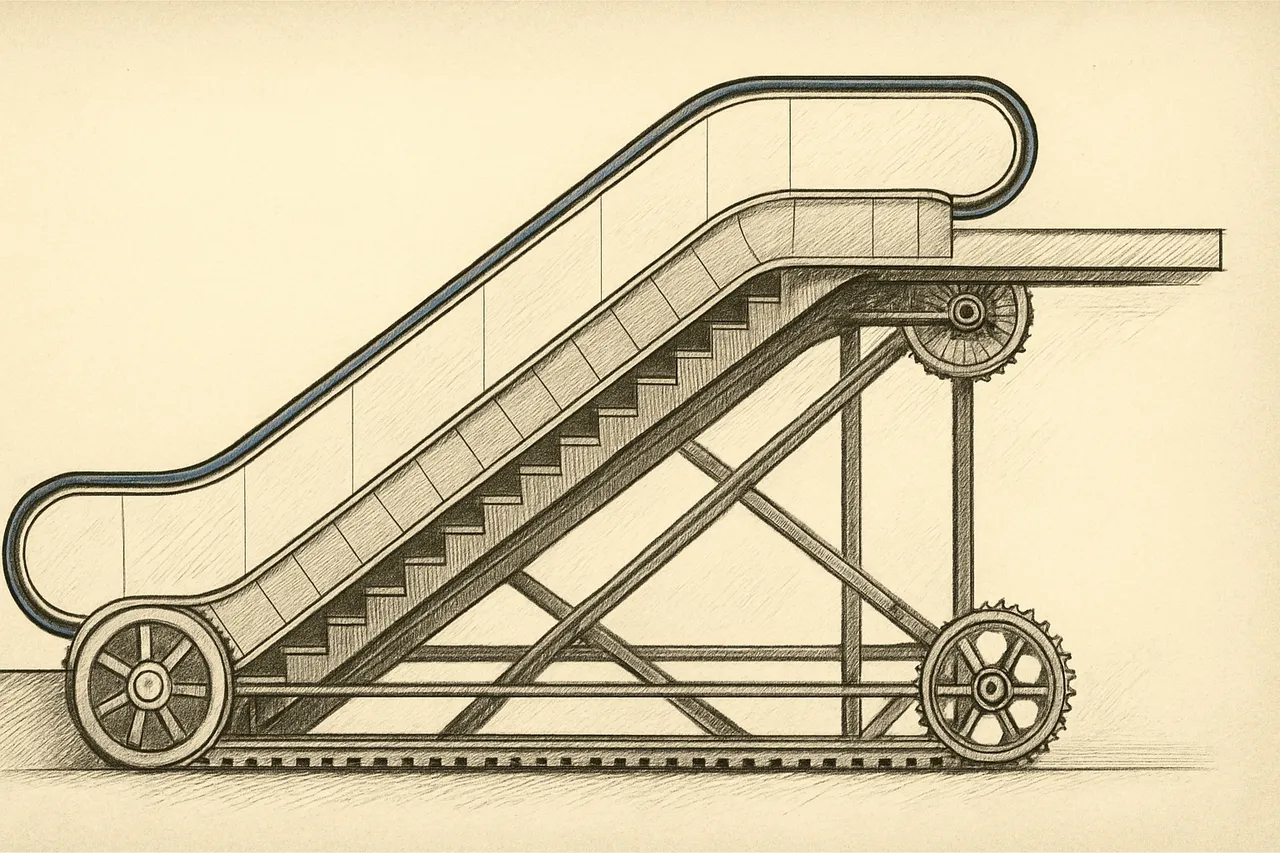
The Escalator Was Patented in 1859. Nobody Built One for Thirty Years.
Nathan Ames patented 'revolving stairs' before the Civil War. He admitted he wasn't sure what would power them, never built one, and died four years later at thirty-nine. The moving staircase arrived a generation after he did.
Read the story →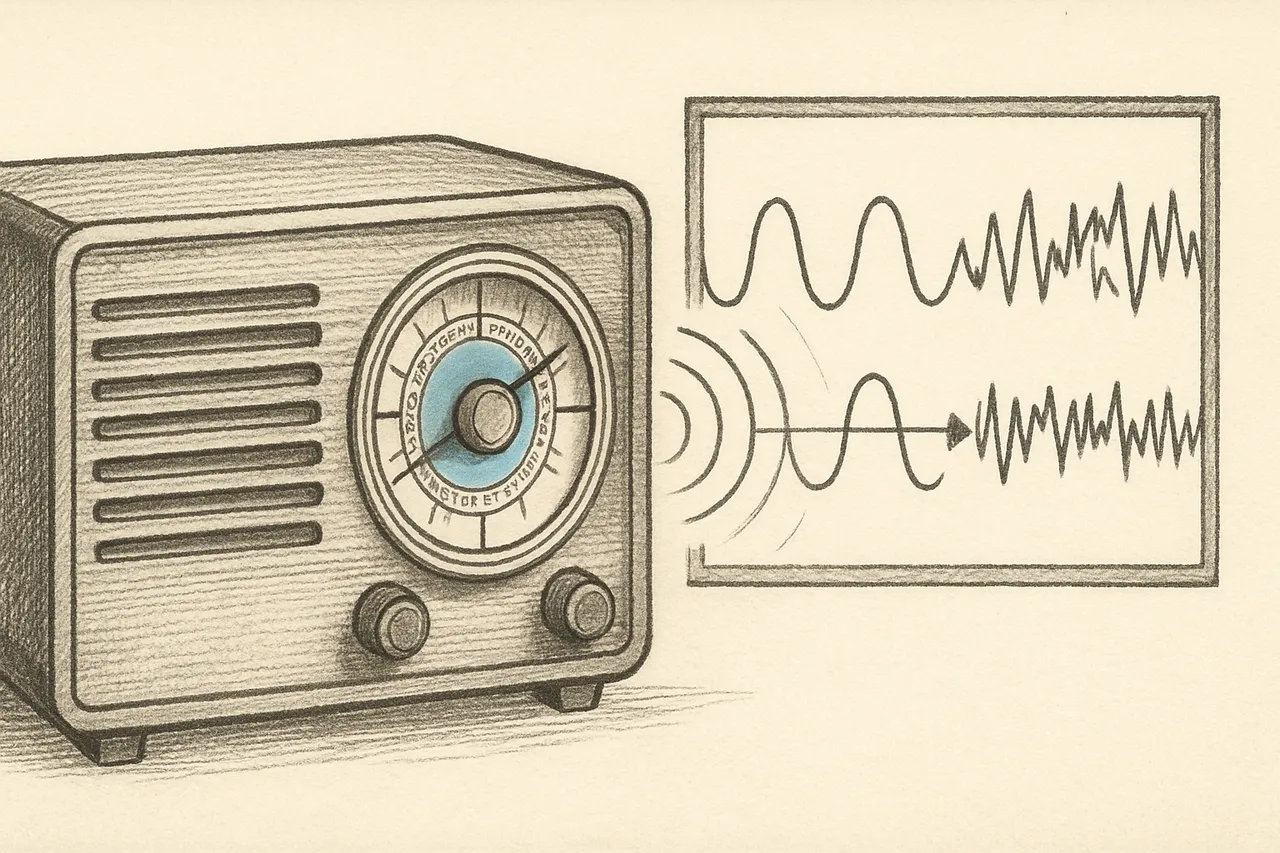
Edwin Armstrong Invented Static-Free Radio. Then the Industry He Threatened Destroyed Him.
FM radio was better than AM in every way — no static, higher fidelity, less power. That was exactly the problem. The company that dominated AM spent two decades in court to bury it, and the inventor spent his fortune fighting back before jumping from his apartment window.
Read the story →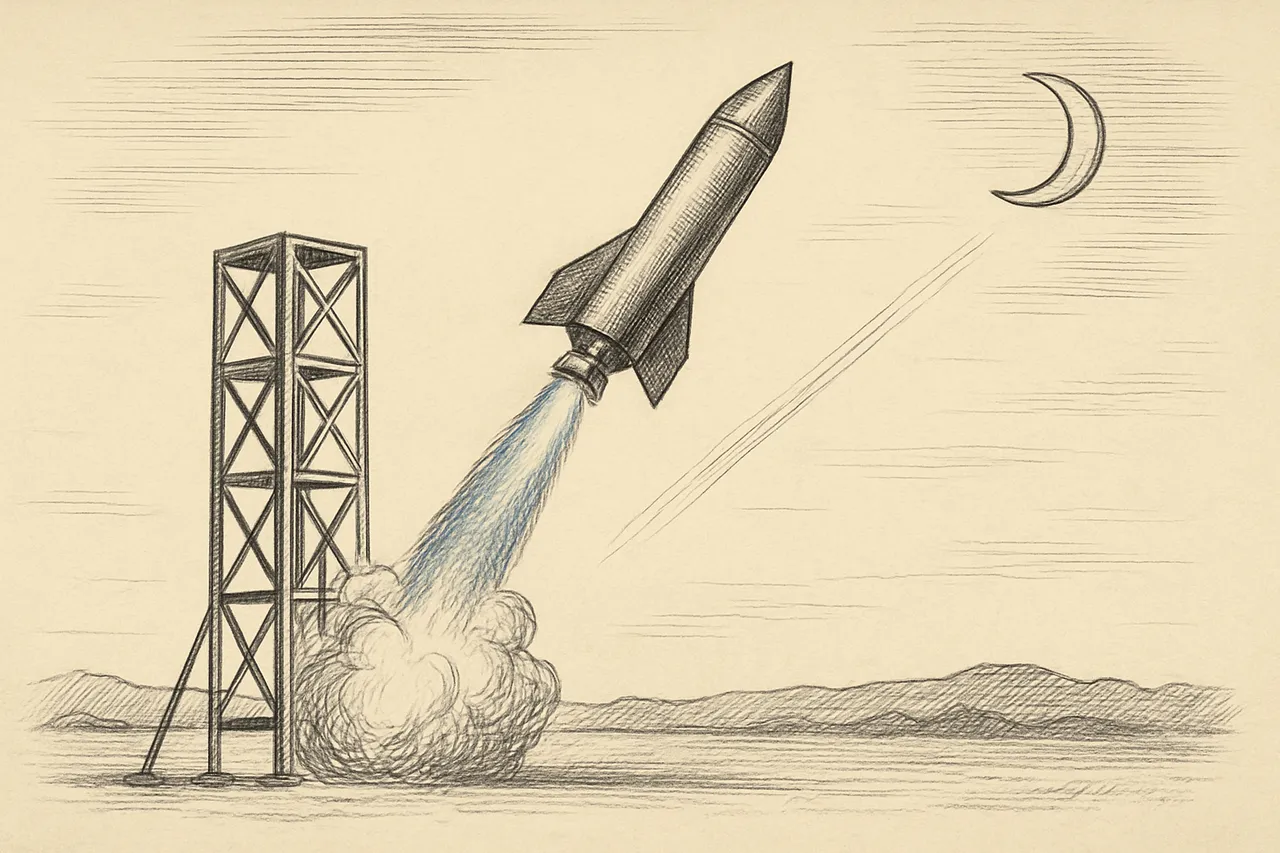
The New York Times Mocked Goddard's Rocket. It Apologized 49 Years Later — Mid-Flight to the Moon.
Robert Goddard patented the fundamentals of the liquid-fuel rocket in 1914. When he suggested a rocket could reach the Moon, a newspaper editorial declared he lacked 'the knowledge ladled out daily in high schools.' The correction ran during Apollo 11.
Read the story →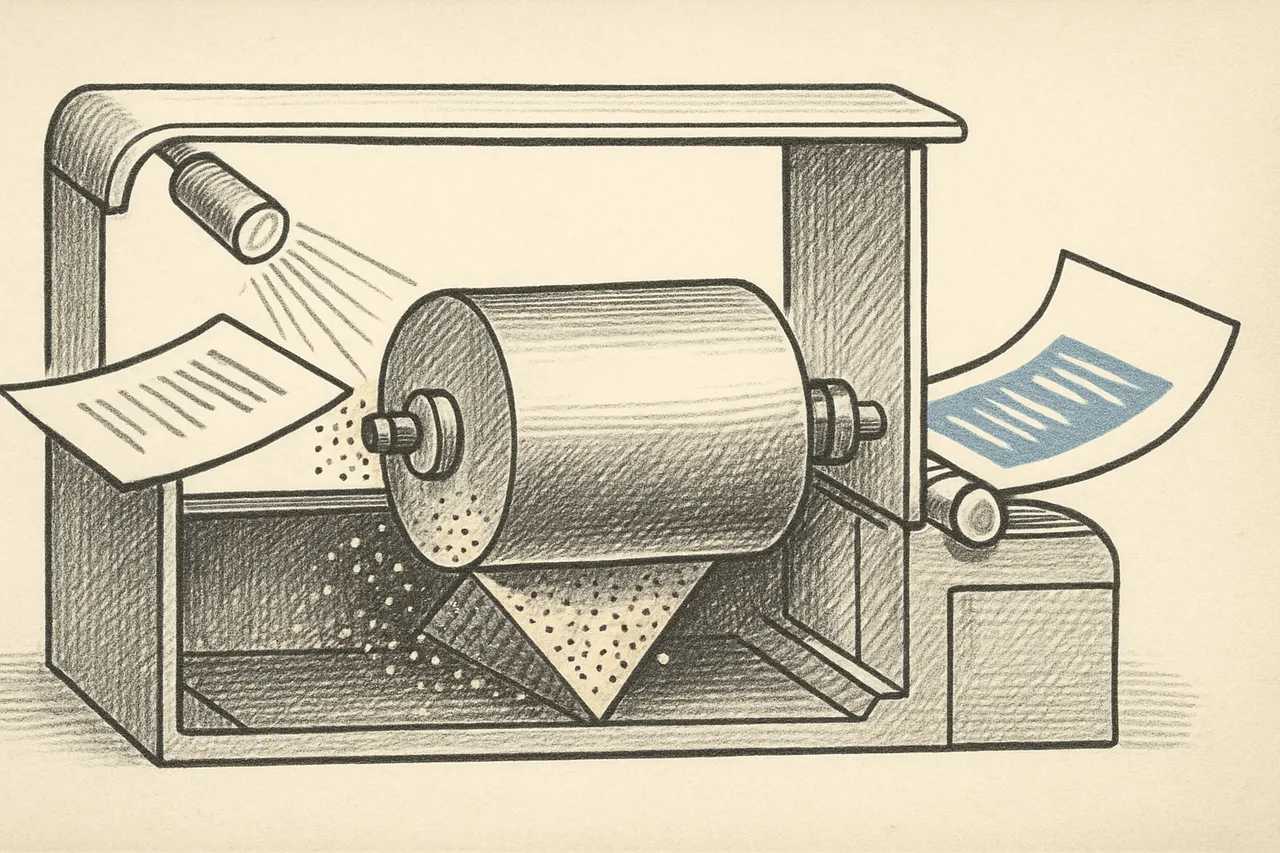
Chester Carlson Invented the Photocopier. Twenty Companies Said No.
A patent attorney tired of copying documents by hand invented dry photocopying in his kitchen in 1938. IBM, Kodak, GE, RCA, and the US Navy all turned it down. The company that finally said yes became Xerox.
Read the story →