Before 1912, You Carried Your Groceries in Your Arms
Walter Deubener ran a grocery in St. Paul and watched customers buy only as much as they could physically carry. He ran cord through a paper sack, reinforced the sides, and gave it handles. Sales in his store roughly tripled.
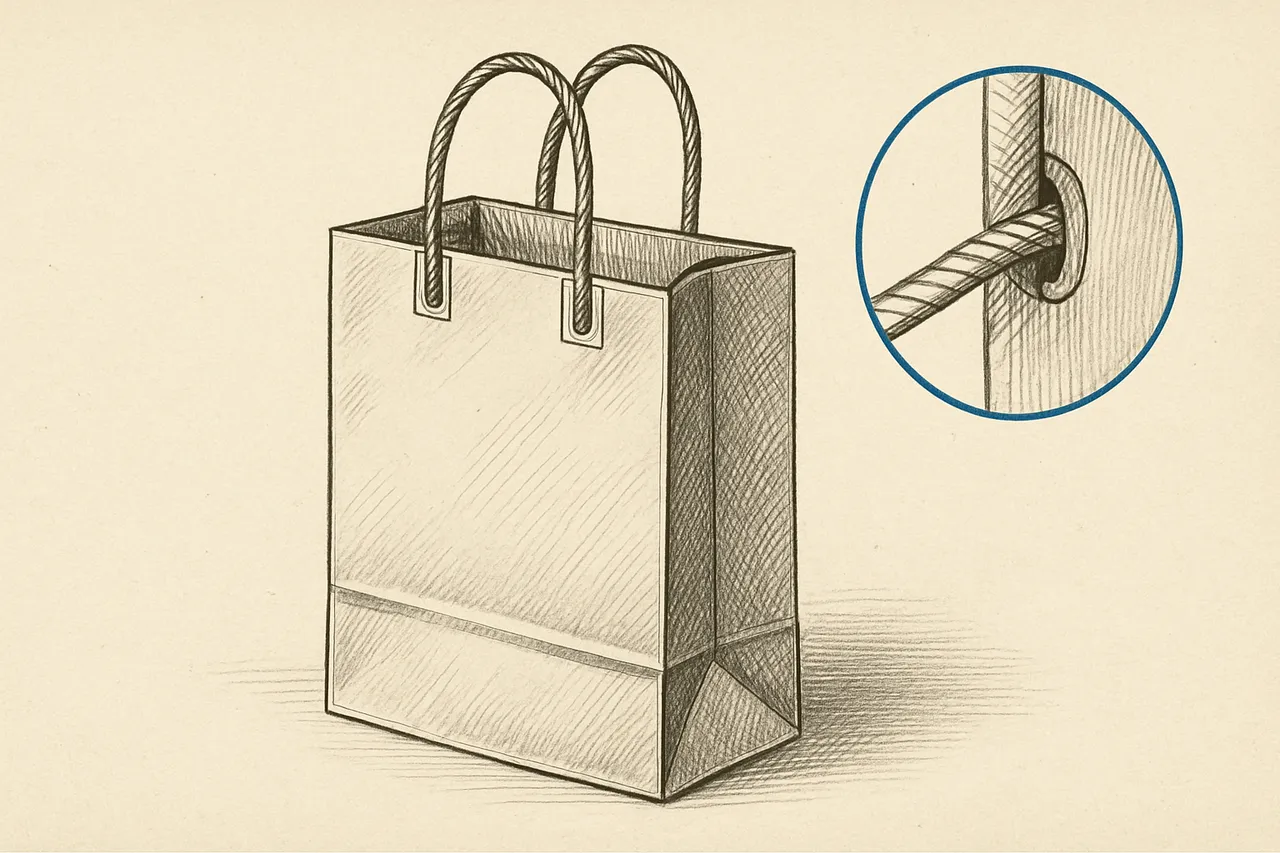
US1025279 covers a paper bag with handles — a "shopping bag" — and it exists because Walter Deubener, a grocer in St. Paul, Minnesota, got tired of watching money walk out of his store in customers' overloaded arms.
The paper sack itself was already established; Margaret Knight's machine had been mass- producing flat-bottomed grocery bags since the 1870s. But a paper sack has no handles. You carry it clutched to your chest with both arms, and there is a hard physical limit to how much of it a person can manage. Beyond that limit, a shopper simply stops buying.
Deubener's fix was almost aggressively simple. He ran a length of cord up through the sack, across the bottom, and out the other side to form two loops, and reinforced the side panels where the cord passed through so it would not tear out. The resulting bag could carry something like twenty pounds, and it hung from the hand rather than filling the arms.
What happened to his sales
The effect on his own store was immediate and dramatic. With handles, customers could carry substantially more, and — this is the part that mattered commercially — they bought substantially more, because the constraint that had been quietly capping every transaction was gone. Contemporary accounts of the store's sales describe an increase on the order of three times.
Deubener patented the bag in 1915 and began manufacturing. Within a few years the operation was selling in the millions of units annually, and the design spread rapidly through American retail.
The economics hidden in a handle
The shopping bag belongs to a small category of inventions that changed commerce by changing what a human body can do in a store. It sits alongside Sylvan Goldman's shopping cart, which solved the same problem two decades later at larger scale and for the same reason. In both cases the invention is trivial mechanically — a cord, a wheeled frame — and the insight is behavioral: people buy exactly as much as they can carry, and no more.
Every element of modern retail that assumes a customer can accumulate a large basket of goods before paying descends from that observation. So does the entire visual grammar of the paper shopping bag with rope handles, which retail turned from a convenience into a status object — printed, branded, and carried down the street as advertising.
The bag in your hand at the end of a shopping trip is one of the oldest pieces of conversion-rate optimization in existence. It was invented by a grocer who could see, from behind his own counter, exactly how much business two full arms were costing him.
See the original
The full text and figures of US1025279 are on patents.us.
Related stories
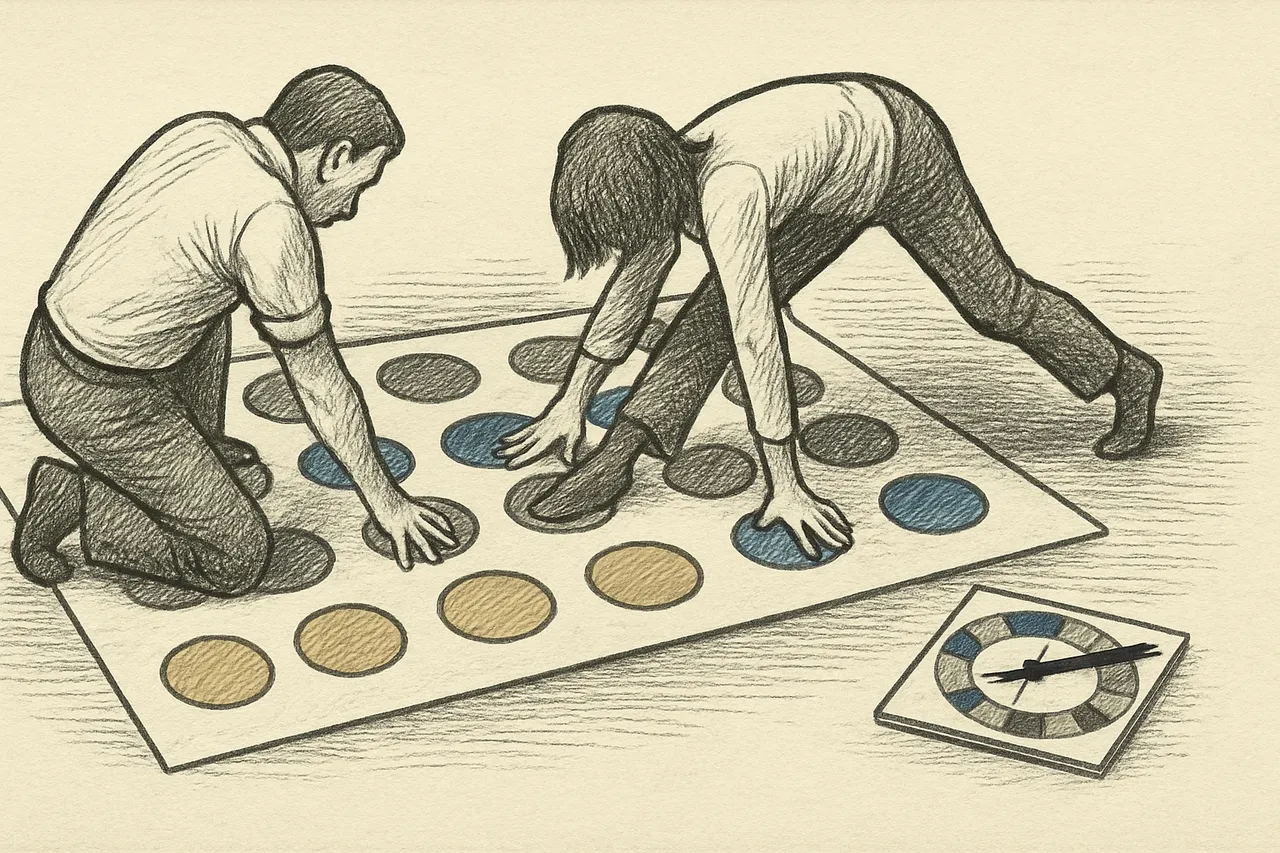
Twister's Patent Is Titled 'Apparatus for Playing a Game Wherein the Players Constitute the Game Pieces'
The patent title is the whole idea: the people are the pieces. Milton Bradley released the game in 1966, some retailers were wary of it, and critics found it a little too intimate. Then Johnny Carson played it on television with Eva Gabor, and the orders poured in.
Read the story →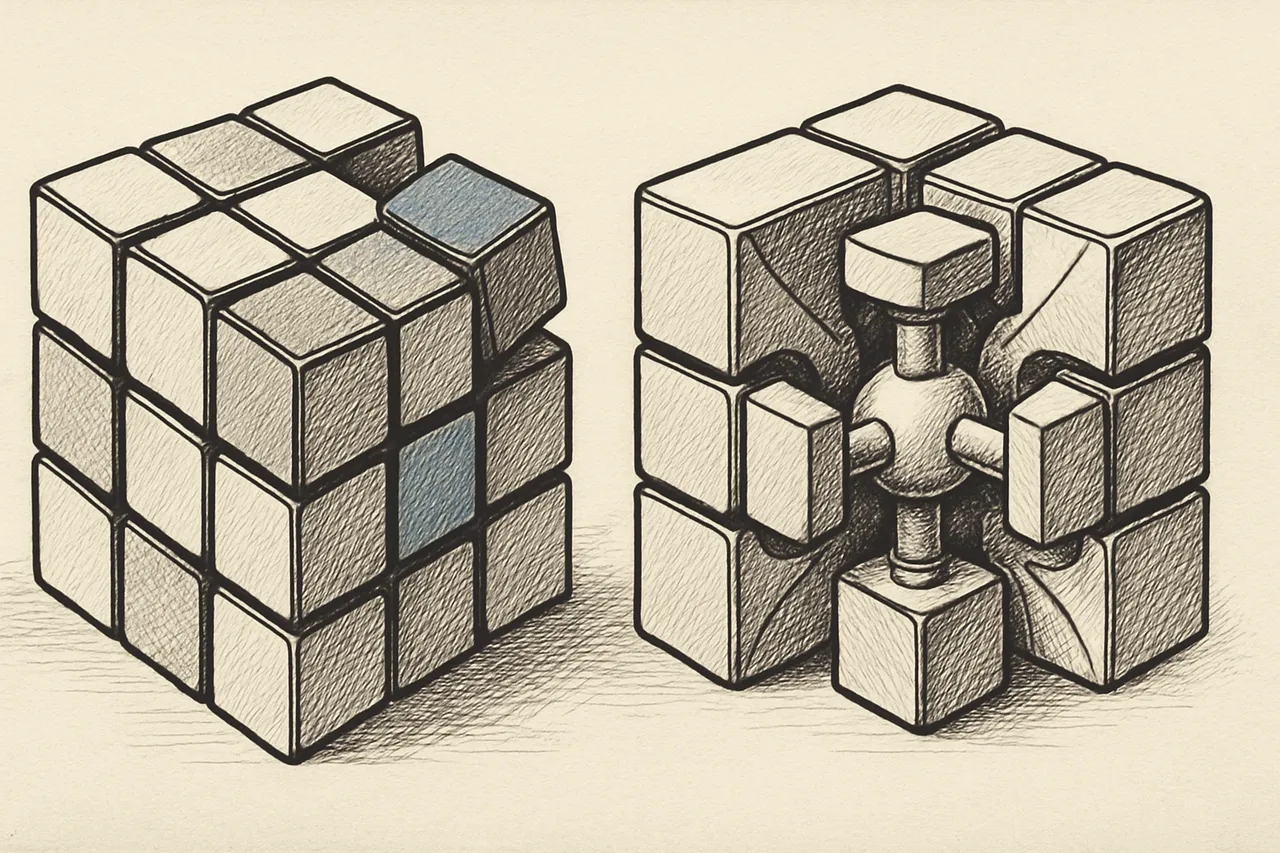
Ernő Rubik Needed About a Month to Solve His Own Cube. An American Court Later Found It Infringed an Earlier US Patent.
Rubik built the first cube in Budapest in 1974 as a way to think about three-dimensional movement. The clever part is how it holds together when most of its pieces are not attached to anything. In the United States, a chemist named Larry Nichols had patented a related puzzle in 1972, and his company sued.
Read the story →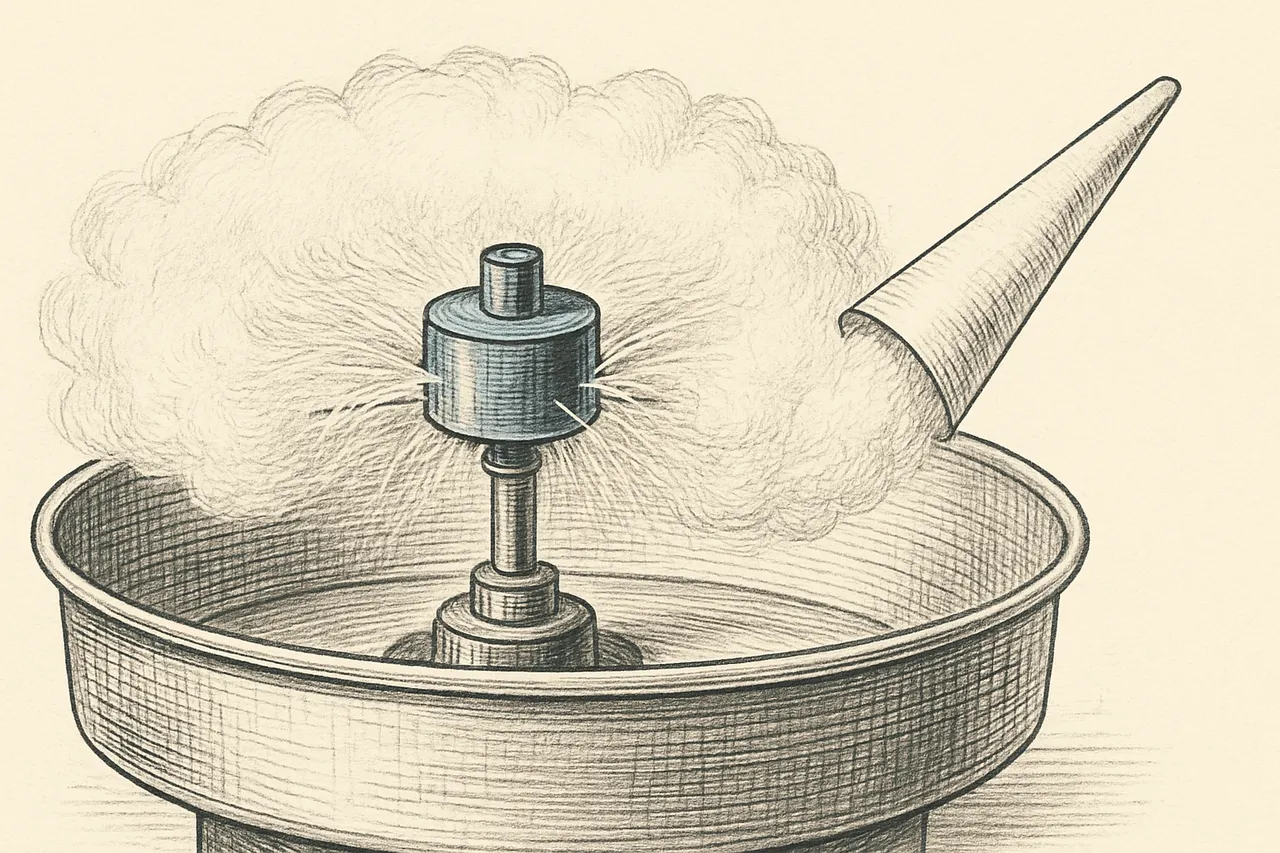
A Dentist Co-Invented the Cotton Candy Machine, and It Was Sold at the 1904 World's Fair as Fairy Floss
William Morrison was a dentist and John Wharton was a candy maker. Their machine melted sugar and flung it through tiny holes so that it cooled into threads finer than hair before it could crystallize. They filed in 1897, and at the St. Louis World's Fair it was a sensation.
Read the story →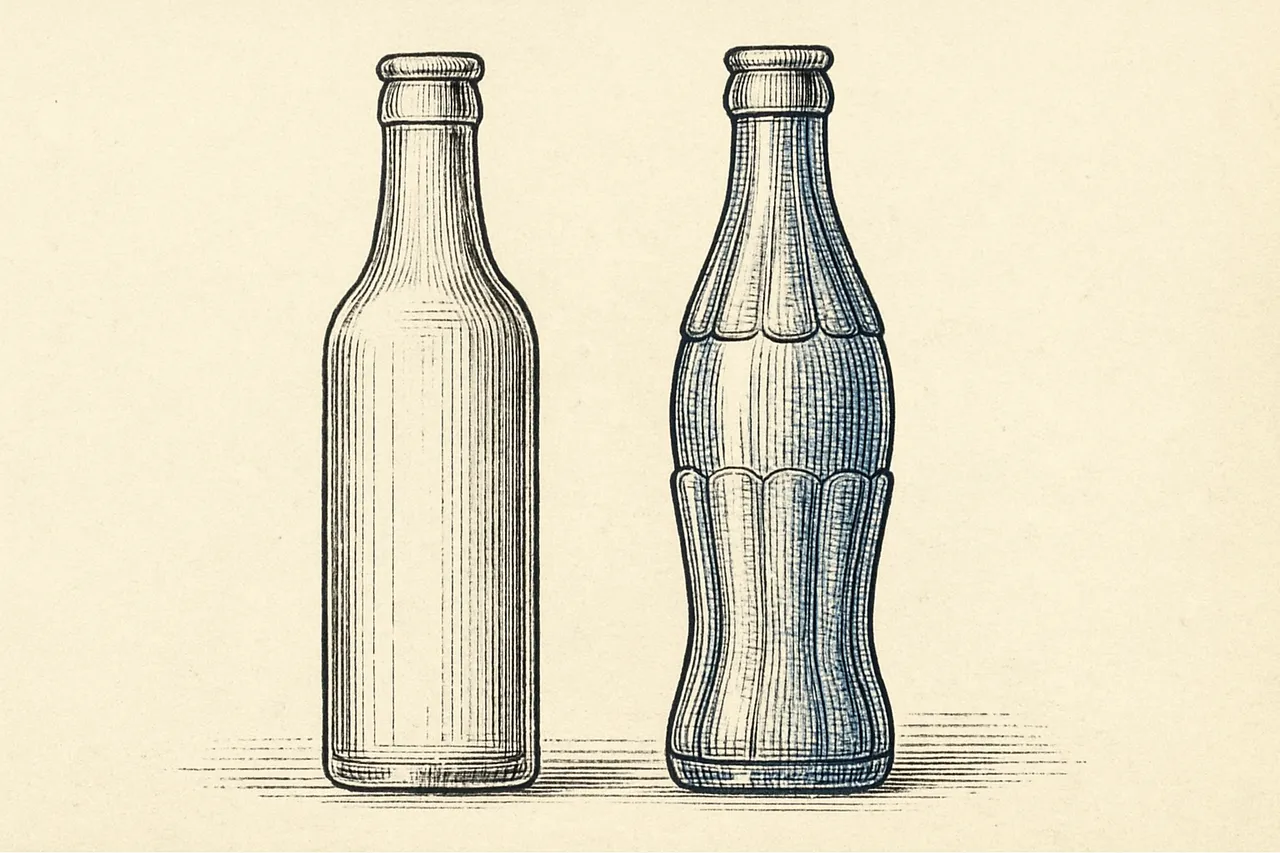
Coca-Cola Asked Glassmakers for a Bottle You Could Recognize in the Dark, or Broken on the Ground
In 1915 Coca-Cola had an imitation problem, since competitors used the same straight-sided bottles and borrowed-sounding names. It challenged glass companies to design a bottle identifiable by touch alone. The winner came from a small glassworks in Terre Haute, Indiana, and the name on the patent is not the name of the man who drew it.
Read the story →