Twister's Patent Is Titled 'Apparatus for Playing a Game Wherein the Players Constitute the Game Pieces'
The patent title is the whole idea: the people are the pieces. Milton Bradley released the game in 1966, some retailers were wary of it, and critics found it a little too intimate. Then Johnny Carson played it on television with Eva Gabor, and the orders poured in.
US3454279 was granted on July 8, 1969, to Charles F. Foley and Neil W. Rabens. Most patent titles are dry. This one describes an entirely new category of game in twelve words: Apparatus for Playing a Game Wherein the Players Constitute the Game Pieces.
The game is Twister.
A promotion for shoe polish
The idea is usually traced to Reyn Guyer, who ran a design firm in St. Paul, Minnesota, that produced promotional displays for companies. While working on a promotion for a shoe polish company, he developed the notion of a game played on the floor, where people stood on colored spaces.
Guyer brought in Foley and Rabens to develop it into a real game. The patent names the two of them. Guyer is widely credited with the original concept, and he went on to a second famous toy a few years later, the foam Nerf ball.
The game was originally called Pretzel. The name changed before release.
How it works
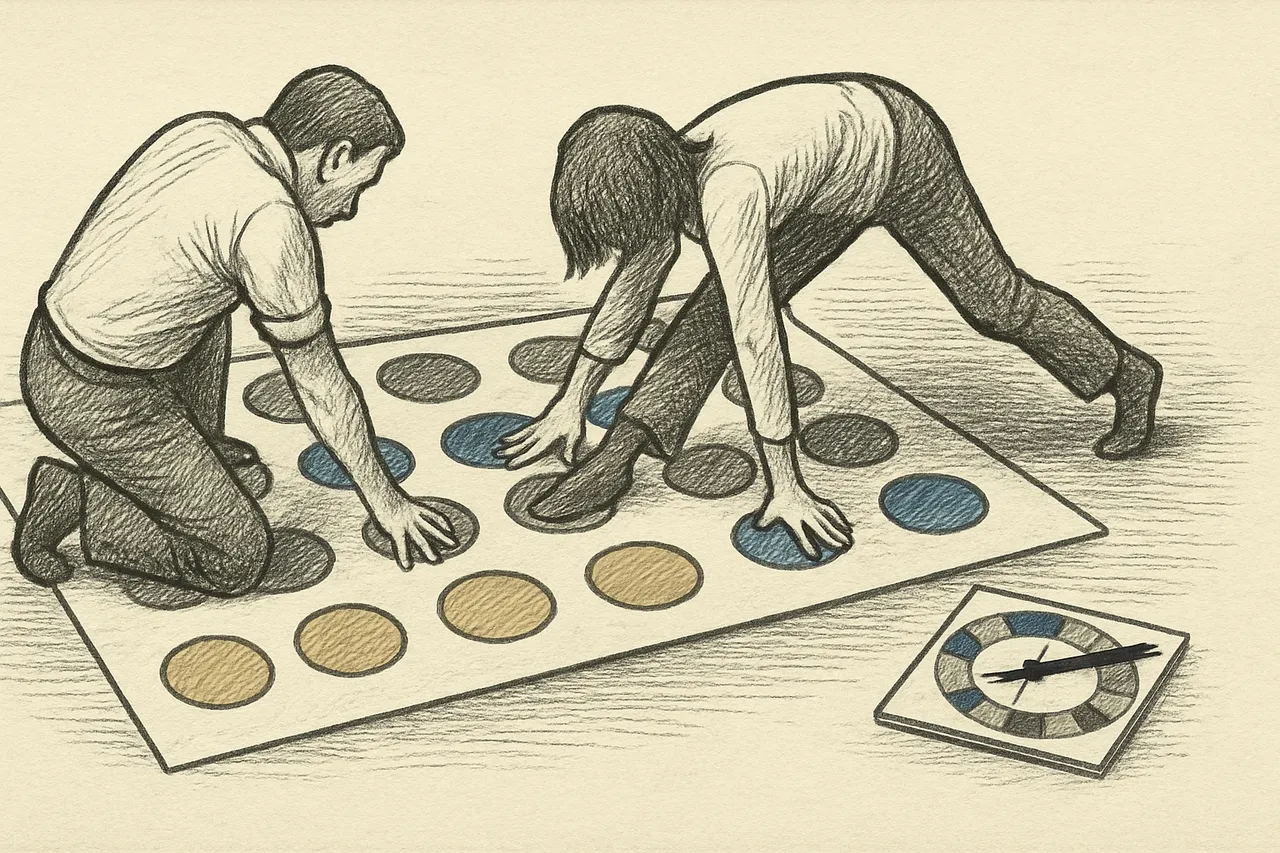
The equipment is simple. A plastic mat is laid on the floor, printed with four rows of six large colored circles, red, yellow, blue, and green. A spinner tells each player which limb to move, left or right, hand or foot, and which color to put it on.
Players keep every hand and foot where it has been placed, so after a few turns everyone is stretched, twisted, and leaning across each other. A player who falls, or who lets an elbow or knee touch the mat, is out. The last one standing wins.
The patent's point is in the title. In an ordinary board game, the players sit around the board and move small pieces across it. Here the board is on the floor, and the players' own bodies are what move across it. The game has no pieces other than the people.
An awkward launch
Milton Bradley released the game in 1966. The reception from the trade was nervous.
The appeal of the game is that it puts people in close, tangled physical contact, and for a mass-market family product in the mid 1960s that was a genuine concern. Some retailers were reportedly reluctant to stock it, and critics suggested it was more suggestive than a family game ought to be.
Early sales were weak.
The Tonight Show
On May 3, 1966, Johnny Carson played Twister on The Tonight Show with the actress Eva Gabor. It was very funny, the studio audience loved it, and a large share of the country was watching.
Demand followed almost immediately. The game that had been selling slowly became one of the season's big sellers, and it reportedly sold around three million copies in the following year.
Afterward
Twister has stayed in print ever since, and the basic equipment has hardly changed: a mat, twenty-four circles, and a spinner. It is also one of the few games whose central idea is completely stated by its patent title. Almost nothing else about it needed explaining.
The question of who gets credit for a game is a recurring one in this archive. For a much more contested case, see the woman who invented Monopoly.
See the original
The full text and figures of US3454279 are on patents.us.
Related stories
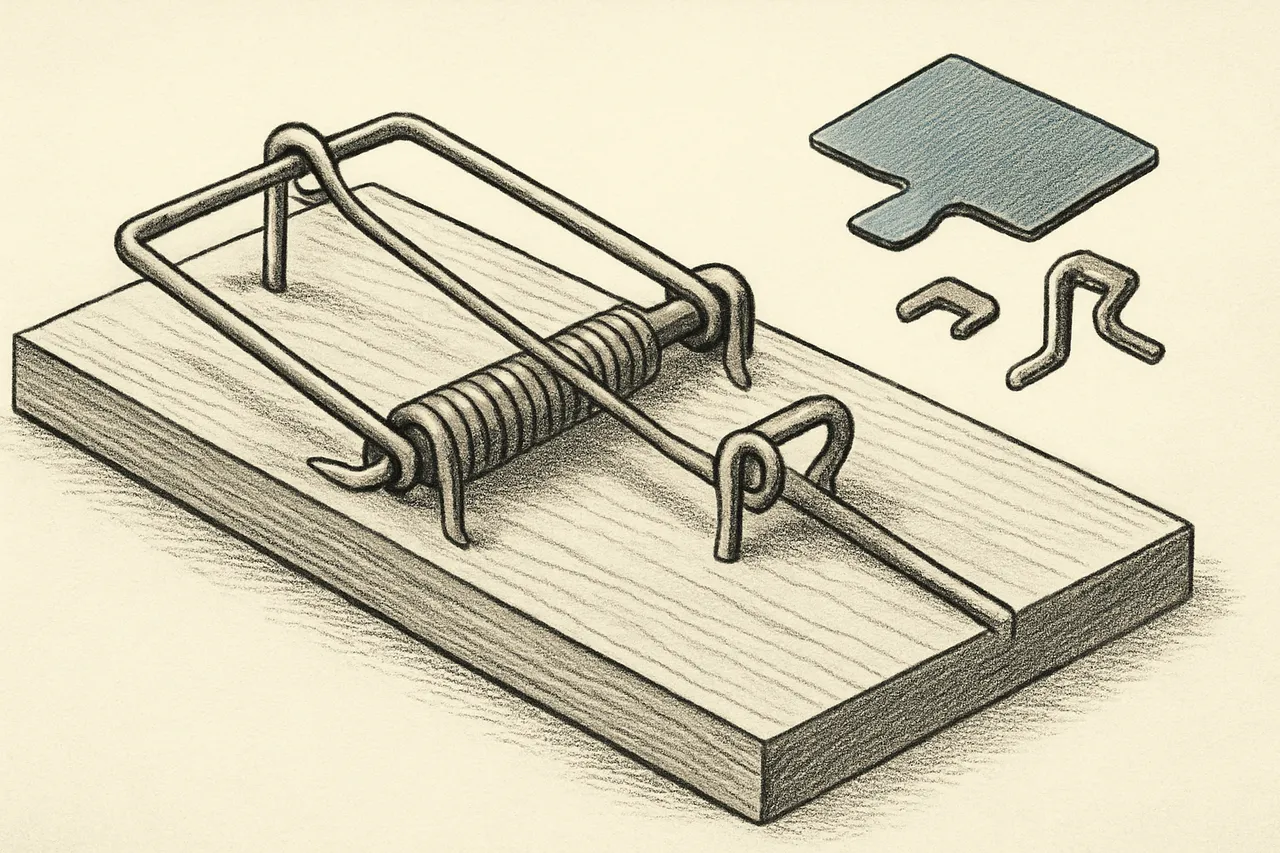
The Mousetrap Is the Most-Patented Device in American History. Almost None of Them Work.
More than four thousand mousetrap patents have been granted in the United States, and thousands more rejected. Roughly twenty have ever made money. The one that won was patented in 1894 and costs about a quarter.
Read the story →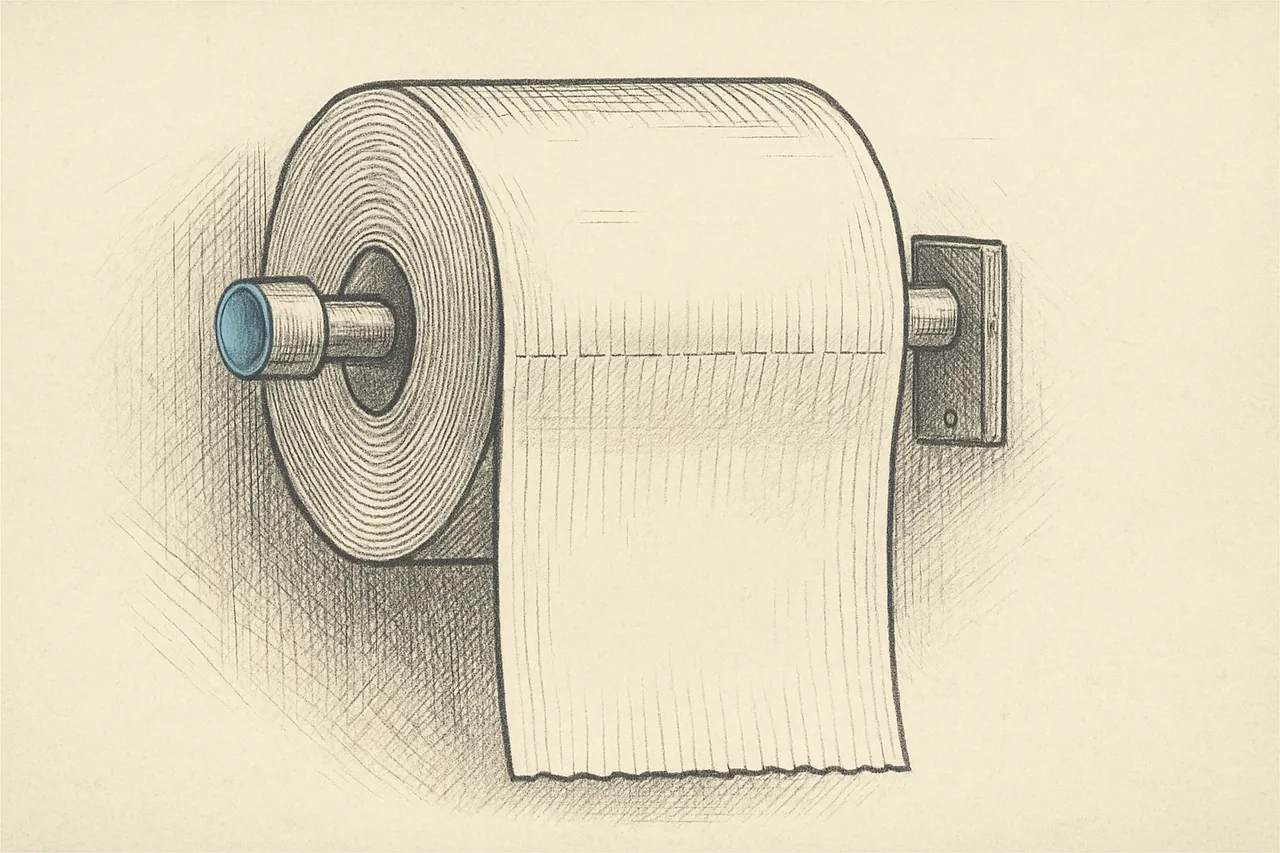
The 1891 Patent That Settles the Toilet Paper Argument: It's Over
Households have argued about whether the roll should hang over or under for more than a century. The original patent drawing, filed by Seth Wheeler in 1891, shows the paper coming over the top. The inventor's own diagram is not ambiguous.
Read the story →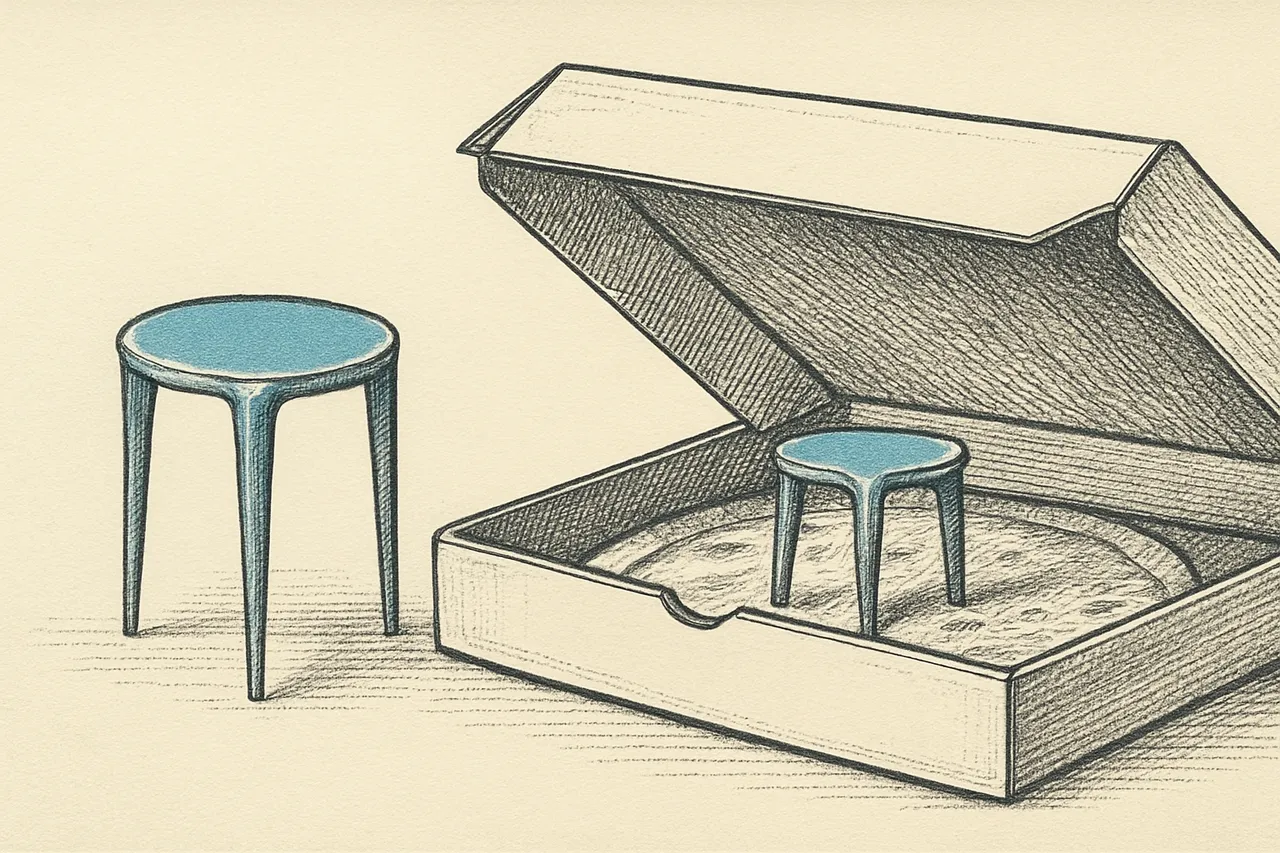
Someone Patented the Little Plastic Table in Your Pizza Box
The three-legged plastic stool in the middle of a delivered pizza has a name, a purpose, and a 1985 United States patent. It exists because a hot cardboard lid sags, and a sagging lid ruins the cheese.
Read the story →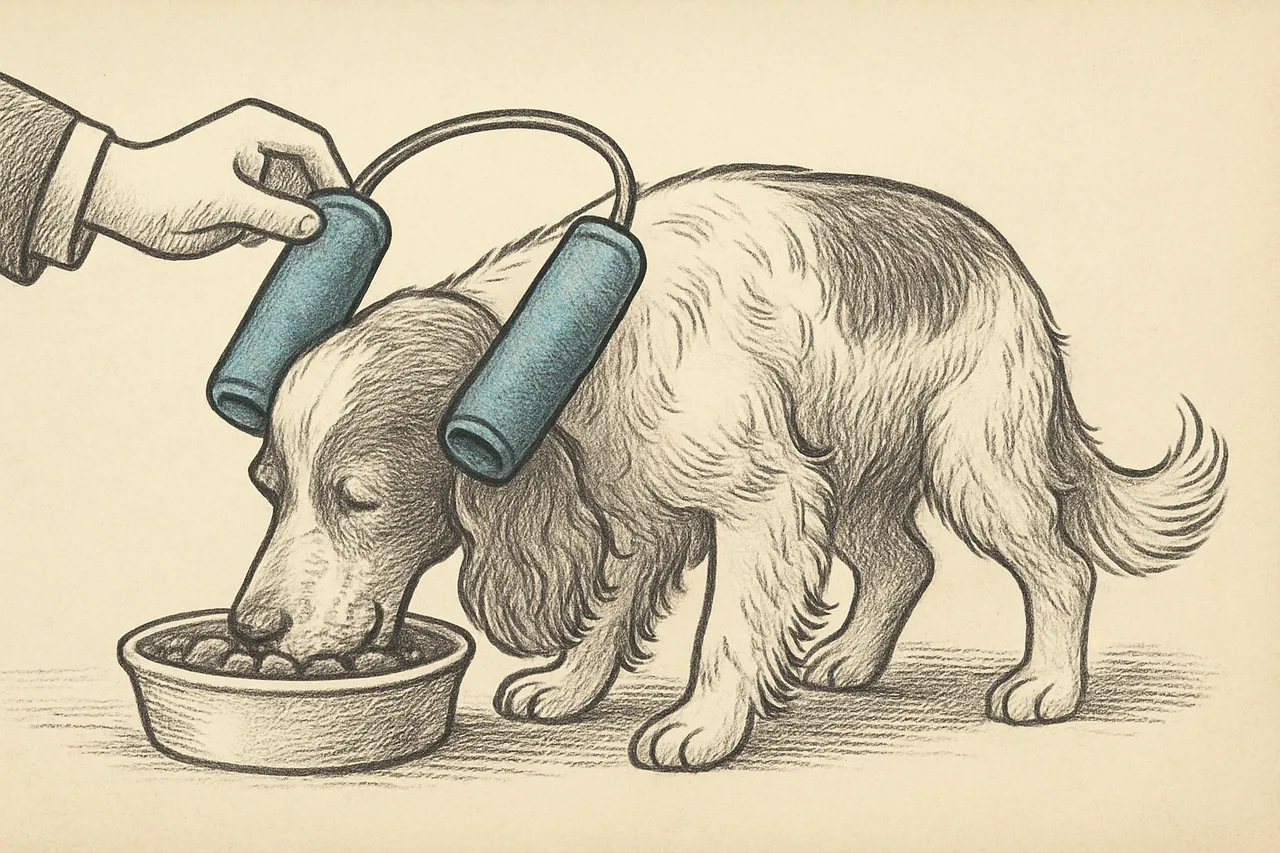
The Patent for Keeping a Dog's Ears Out of Its Food
In 2002, a patent was granted for a set of tubes that slip over the long ears of breeds like spaniels and setters, holding them up and back so they don't drag through the food bowl. It is deeply silly and, if you own such a dog, deeply reasonable.
Read the story →