The Mousetrap Is the Most-Patented Device in American History. Almost None of Them Work.
More than four thousand mousetrap patents have been granted in the United States, and thousands more rejected. Roughly twenty have ever made money. The one that won was patented in 1894 and costs about a quarter.
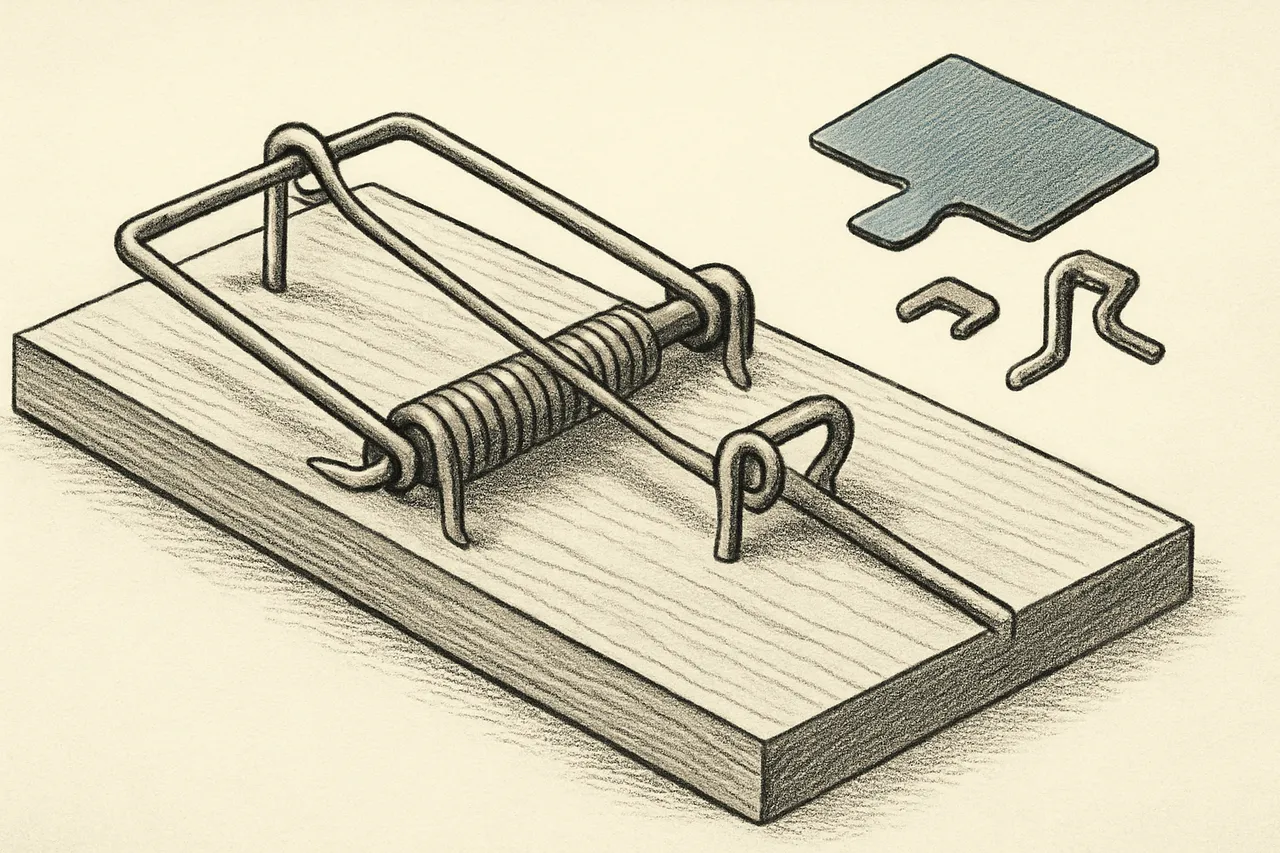
US528671 was granted to William C. Hooker of Abingdon, Illinois, on November 6, 1894. It describes the snap trap: a flat wooden base, a coiled spring, a pivoting metal bar, and a trigger holding it under tension until something disturbs the bait.
You have seen it. It has barely changed in a hundred and thirty years. It costs about a quarter to make.
And it sits on top of one of the strangest statistics in the entire patent archive.
Four thousand attempts
The United States Patent and Trademark Office has granted more than 4,400 patents for mousetraps, and has rejected several thousand more applications. It is, by a wide margin, the most-patented device in American history — more than the telephone, the engine, or the chair.
Of those thousands of granted patents, the number that ever earned their inventors any meaningful money is usually estimated at around twenty.
The traps that failed are a genuine wonder to page through. There are traps that drown, electrocute, glue, poison, crush, cage, and launch. There are traps with elaborate multi-chamber mazes, traps disguised as furniture, traps with automatic resetting mechanisms, traps that dispose of the body, traps operated by falling weights, and traps of such mechanical complexity that they resemble small factories.
Why the simple one wins
The reason the 1894 design beats them all is economic, not mechanical.
A mousetrap is a disposable commodity that competes on price. It must cost pennies, because a homeowner needs several and considers each one worthless after use. Hooker's design has four parts, requires no assembly skill, is stamped and cut from the cheapest possible materials, and works well enough.
Every "better" mousetrap fails on the same axis: it is better at catching mice and much worse at being cheap. A trap that costs eight dollars and catches mice more humanely and resets itself is a superior machine and an inferior product, because the customer will not pay eight dollars to solve a problem they think is worth twenty-five cents.
The proverb is wrong
The saying — build a better mousetrap and the world will beat a path to your door — is usually attributed, loosely, to Ralph Waldo Emerson, and the mousetrap archive is the most thorough refutation of it ever assembled.
Thousands of people did build a better mousetrap. The world did not beat a path to their door. It kept buying the cheap wooden one, because "better" in engineering and "better" in the market are different words that happen to be spelled the same.
The patent record contains 4,400 demonstrations of this, which makes the humble snap trap one of the most instructive objects in it.
See the original
The full text and figures of US528671 are on patents.us.
Related stories
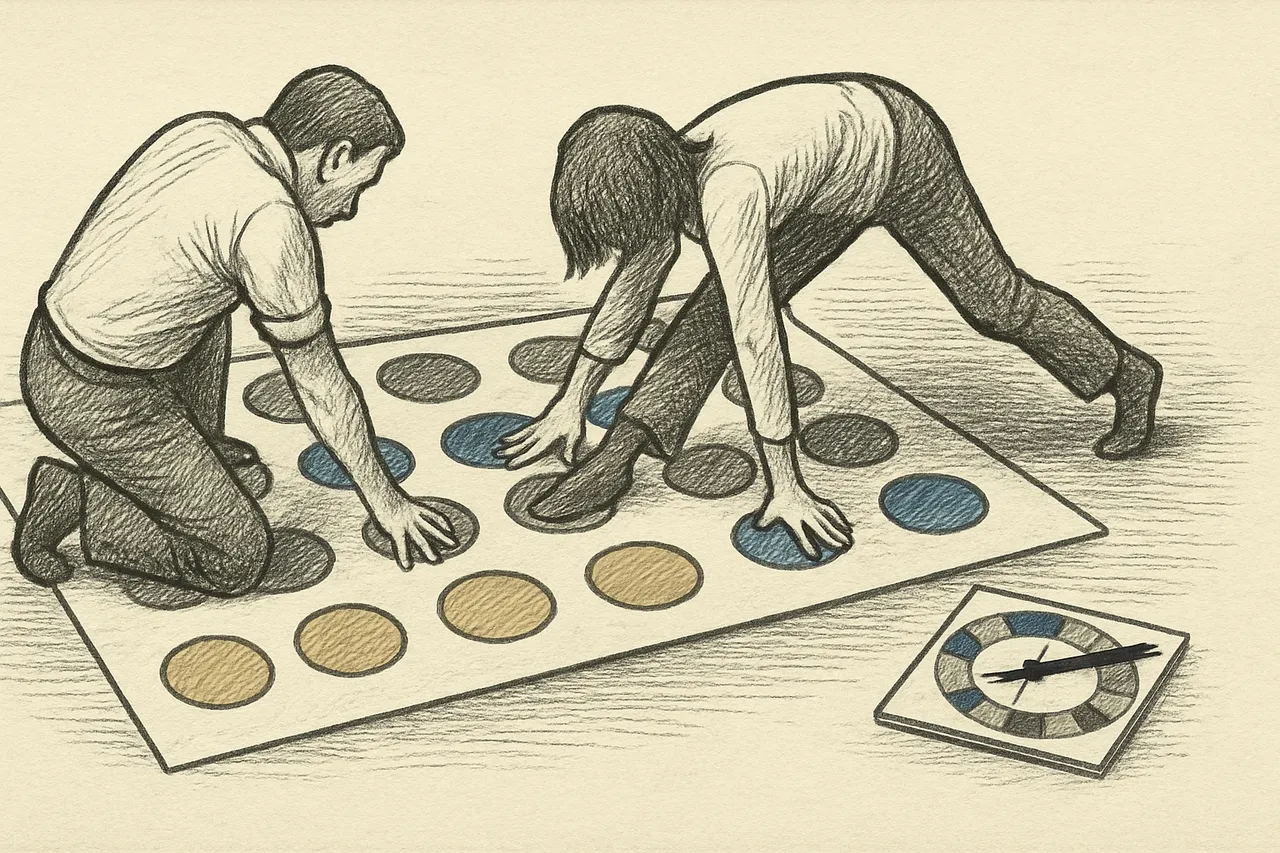
Twister's Patent Is Titled 'Apparatus for Playing a Game Wherein the Players Constitute the Game Pieces'
The patent title is the whole idea: the people are the pieces. Milton Bradley released the game in 1966, some retailers were wary of it, and critics found it a little too intimate. Then Johnny Carson played it on television with Eva Gabor, and the orders poured in.
Read the story →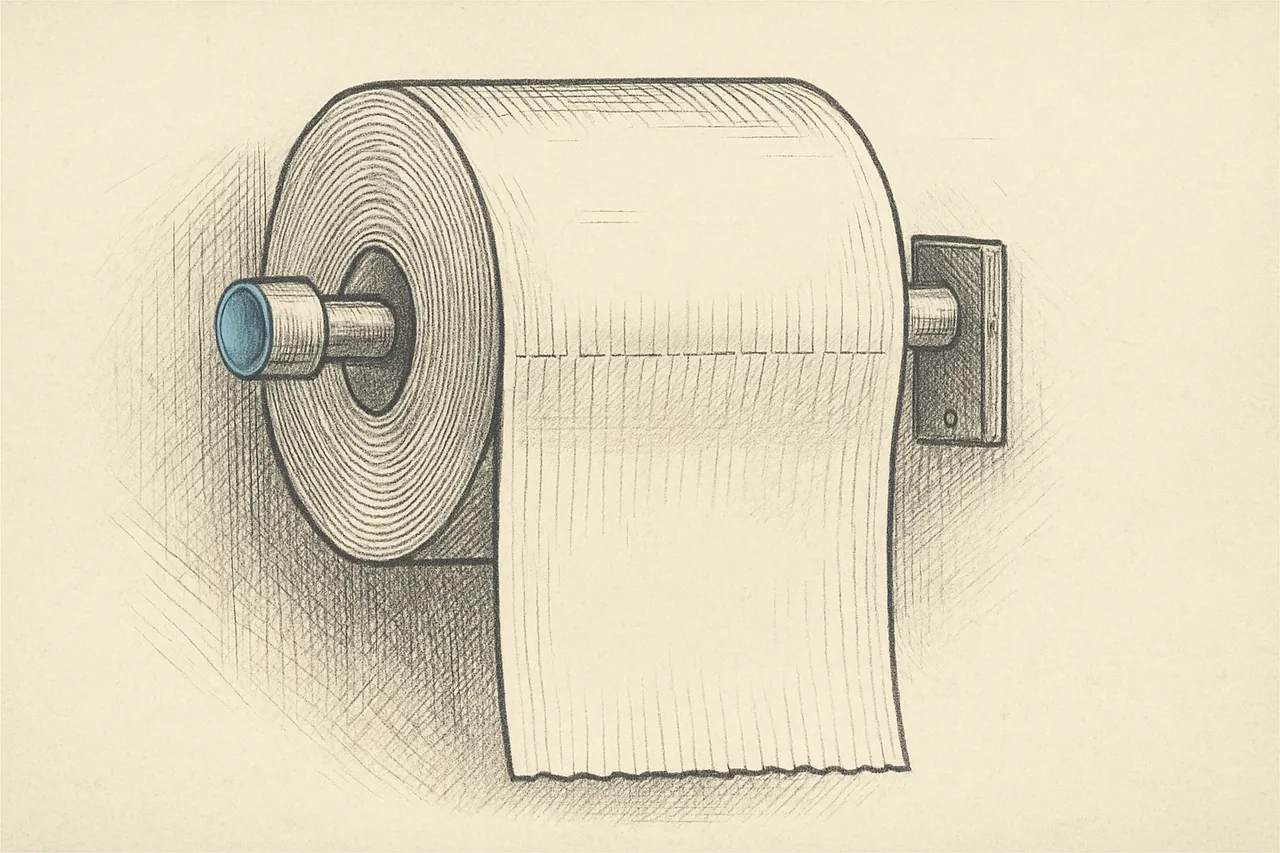
The 1891 Patent That Settles the Toilet Paper Argument: It's Over
Households have argued about whether the roll should hang over or under for more than a century. The original patent drawing, filed by Seth Wheeler in 1891, shows the paper coming over the top. The inventor's own diagram is not ambiguous.
Read the story →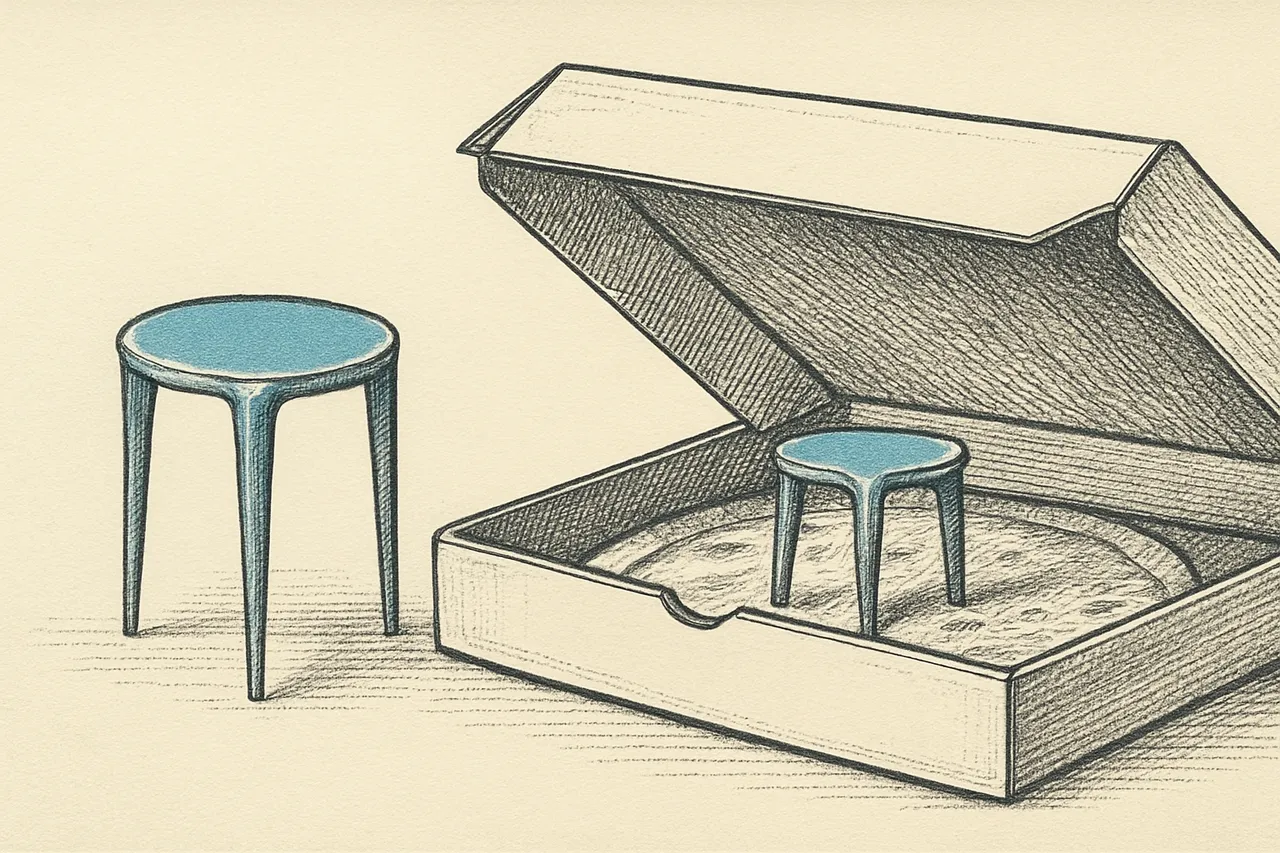
Someone Patented the Little Plastic Table in Your Pizza Box
The three-legged plastic stool in the middle of a delivered pizza has a name, a purpose, and a 1985 United States patent. It exists because a hot cardboard lid sags, and a sagging lid ruins the cheese.
Read the story →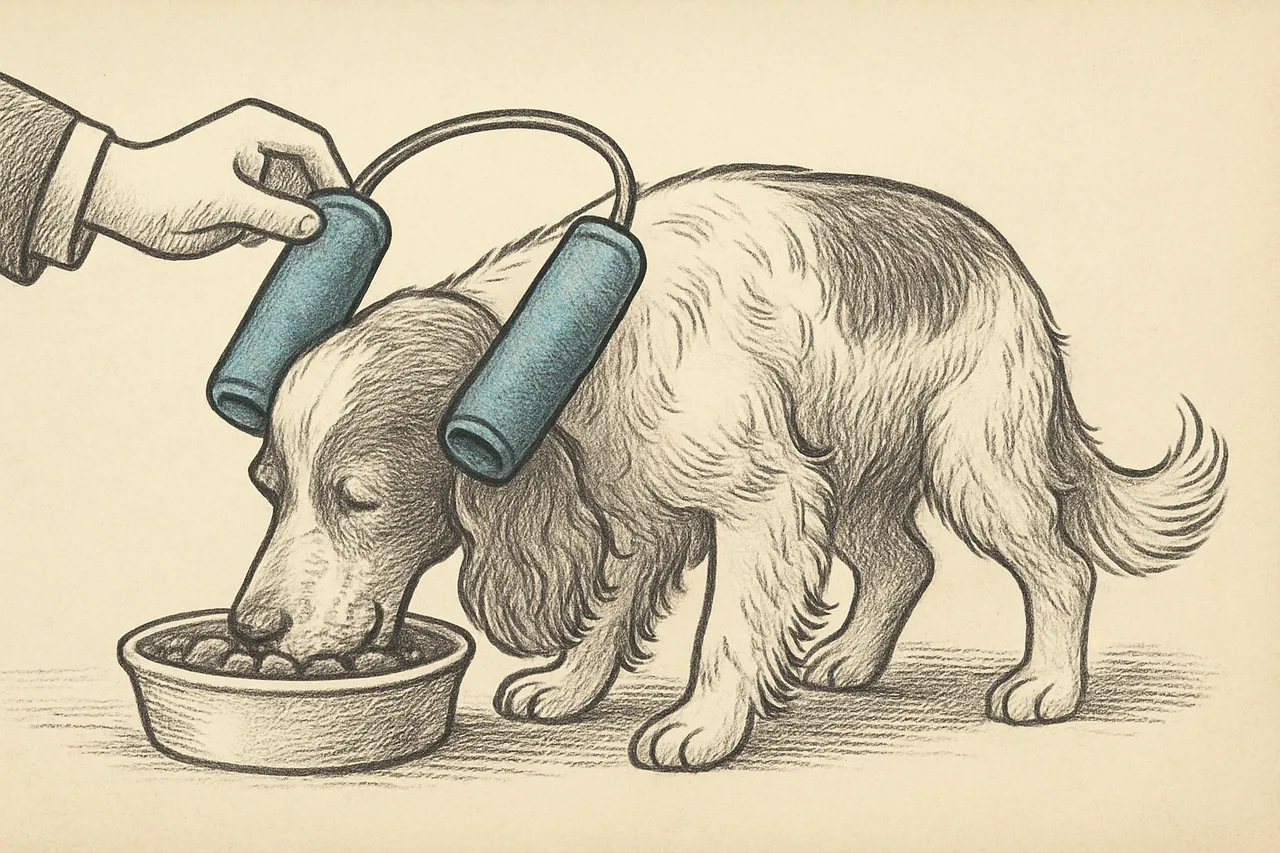
The Patent for Keeping a Dog's Ears Out of Its Food
In 2002, a patent was granted for a set of tubes that slip over the long ears of breeds like spaniels and setters, holding them up and back so they don't drag through the food bowl. It is deeply silly and, if you own such a dog, deeply reasonable.
Read the story →