The 1891 Patent That Settles the Toilet Paper Argument: It's Over
Households have argued about whether the roll should hang over or under for more than a century. The original patent drawing, filed by Seth Wheeler in 1891, shows the paper coming over the top. The inventor's own diagram is not ambiguous.
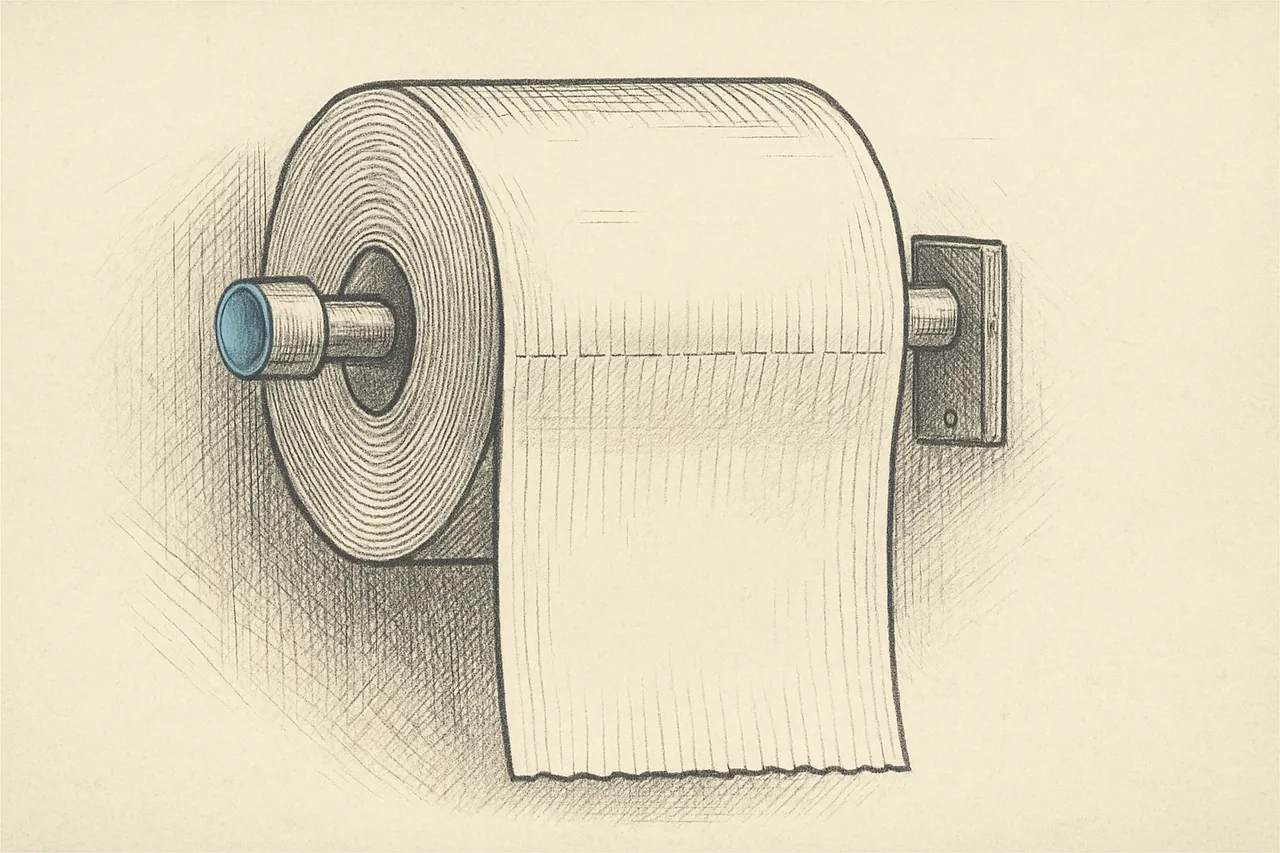
US465588 was granted to Seth Wheeler of Albany, New York, on December 22, 1891. The title is "Toilet-Paper Roll." It is one of a series of patents Wheeler took out in the 1880s and 90s covering perforated rolled paper and the fixtures that dispense it, and it has achieved a strange modern fame for a reason its inventor could not possibly have anticipated.
The figures show the roll mounted on its bracket with the loose end of the sheet coming over the top of the roll and hanging down the front.
That is the answer to the argument. The person who invented the thing drew it hanging over.
Why anyone cares
The over-versus-under debate is one of the most durable low-stakes disputes in domestic life. Surveys on it run regularly and reliably produce a majority for "over," a committed minority for "under," and a surprising amount of feeling on both sides. It has been the subject of newspaper columns, advice-column letters, and at least one long-running argument in most households that contain more than one adult.
When Wheeler's original patent drawings began circulating online in the 2010s, they were received as a kind of settlement — documentary evidence from the source. The image spread widely, and it does show what it appears to show.
The honest caveats
Two things are worth saying plainly, because this is an archive about what patents actually contain.
First, Wheeler's patents are about the perforation and dispensing mechanism — how to tear a uniform sheet from a continuous roll — not about hanging orientation. The direction in the drawing is incidental to what he was claiming. Nobody in 1891 was legislating your bathroom.
Second, the "under" camp has real arguments that the drawing does not address: over-hanging paper is more easily unspooled by a cat or a toddler, and under-hanging keeps the loose end tucked closer to the wall. Preference is preference.
What the patent does establish is the original intent of the design — the way the inventor pictured his own object being used — and in a debate that has no other authority to appeal to, that turns out to be enough for most people.
The larger point
Wheeler's actual contribution was significant and is mostly forgotten. Before perforated rolls, toilet paper was sold in flat stacked sheets, and rolled paper had to be cut or torn raggedly. The perforation — a line of small holes that lets a sheet separate cleanly and uniformly by hand, without a blade — is the innovation that made rolled paper practical, and the same principle now appears on paper towels, stamps, tickets, and receipts.
He should be remembered for inventing the tear-off line. Instead he is remembered, a century and a half later, for winning an argument he did not know he was having.
See the original
The full text and figures of US465588 are on patents.us.
Related stories
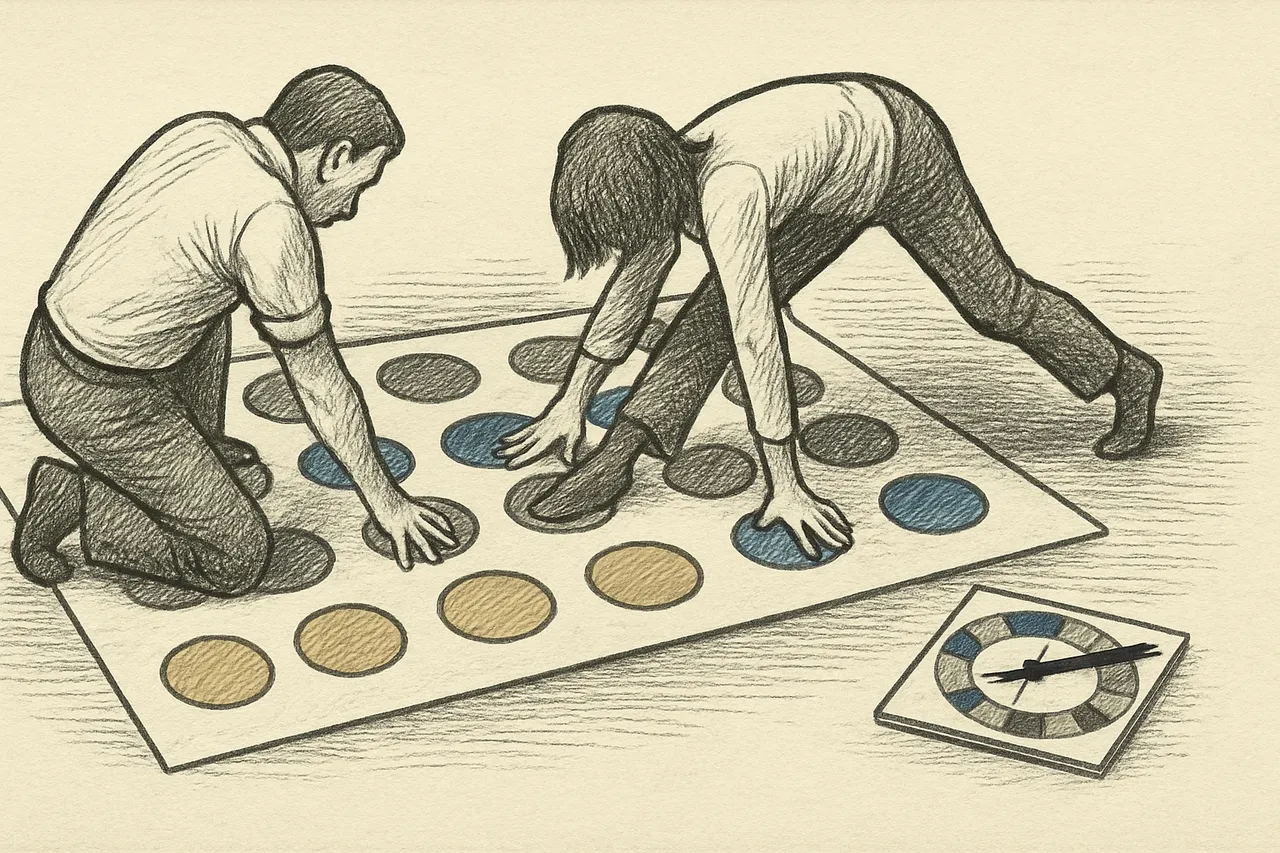
Twister's Patent Is Titled 'Apparatus for Playing a Game Wherein the Players Constitute the Game Pieces'
The patent title is the whole idea: the people are the pieces. Milton Bradley released the game in 1966, some retailers were wary of it, and critics found it a little too intimate. Then Johnny Carson played it on television with Eva Gabor, and the orders poured in.
Read the story →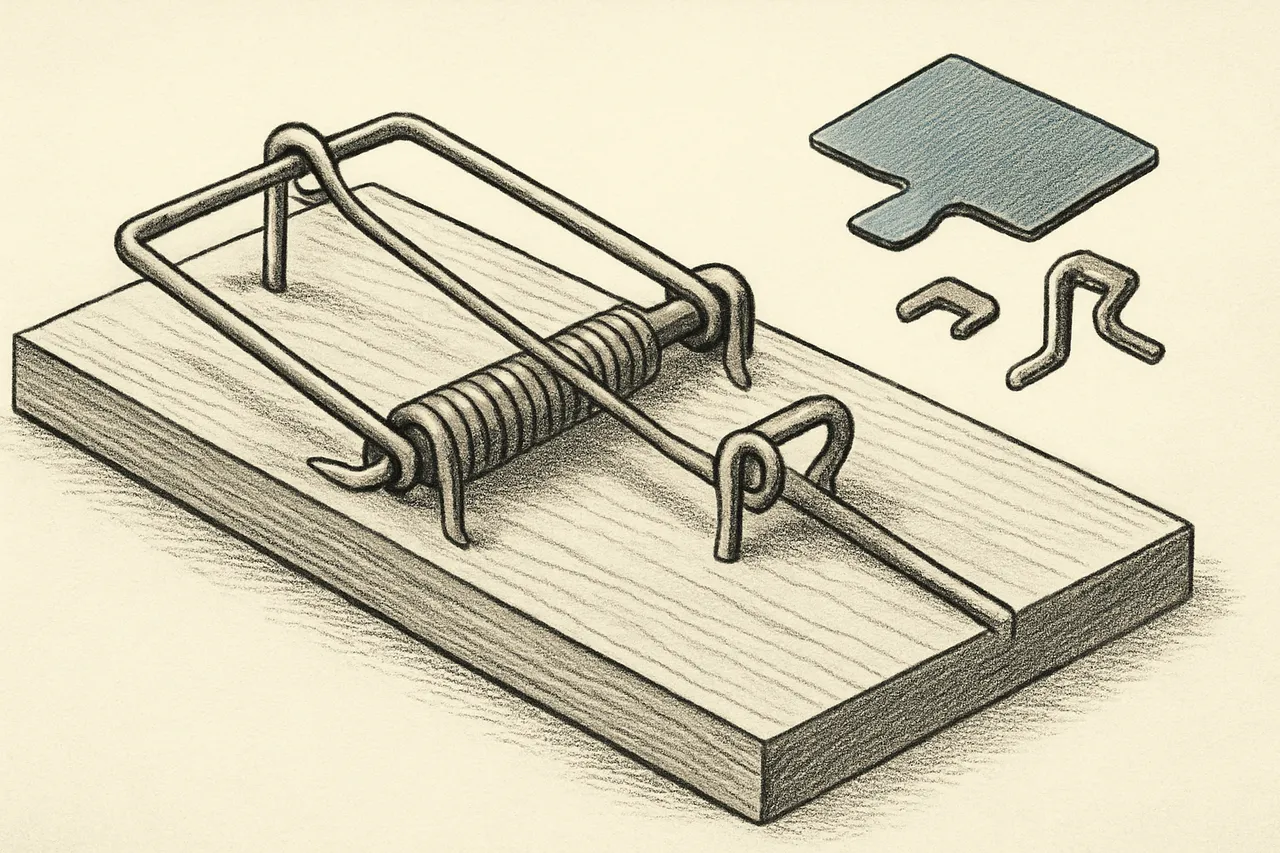
The Mousetrap Is the Most-Patented Device in American History. Almost None of Them Work.
More than four thousand mousetrap patents have been granted in the United States, and thousands more rejected. Roughly twenty have ever made money. The one that won was patented in 1894 and costs about a quarter.
Read the story →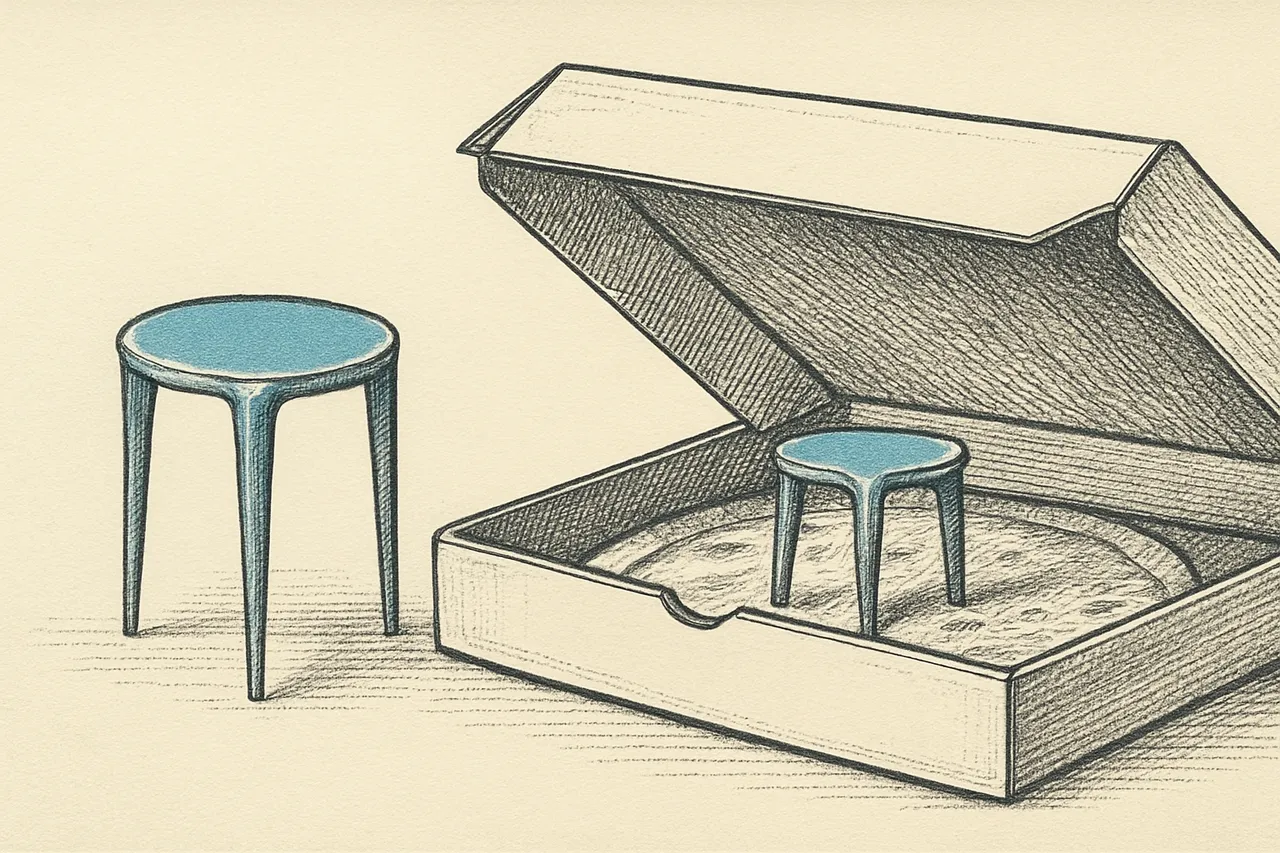
Someone Patented the Little Plastic Table in Your Pizza Box
The three-legged plastic stool in the middle of a delivered pizza has a name, a purpose, and a 1985 United States patent. It exists because a hot cardboard lid sags, and a sagging lid ruins the cheese.
Read the story →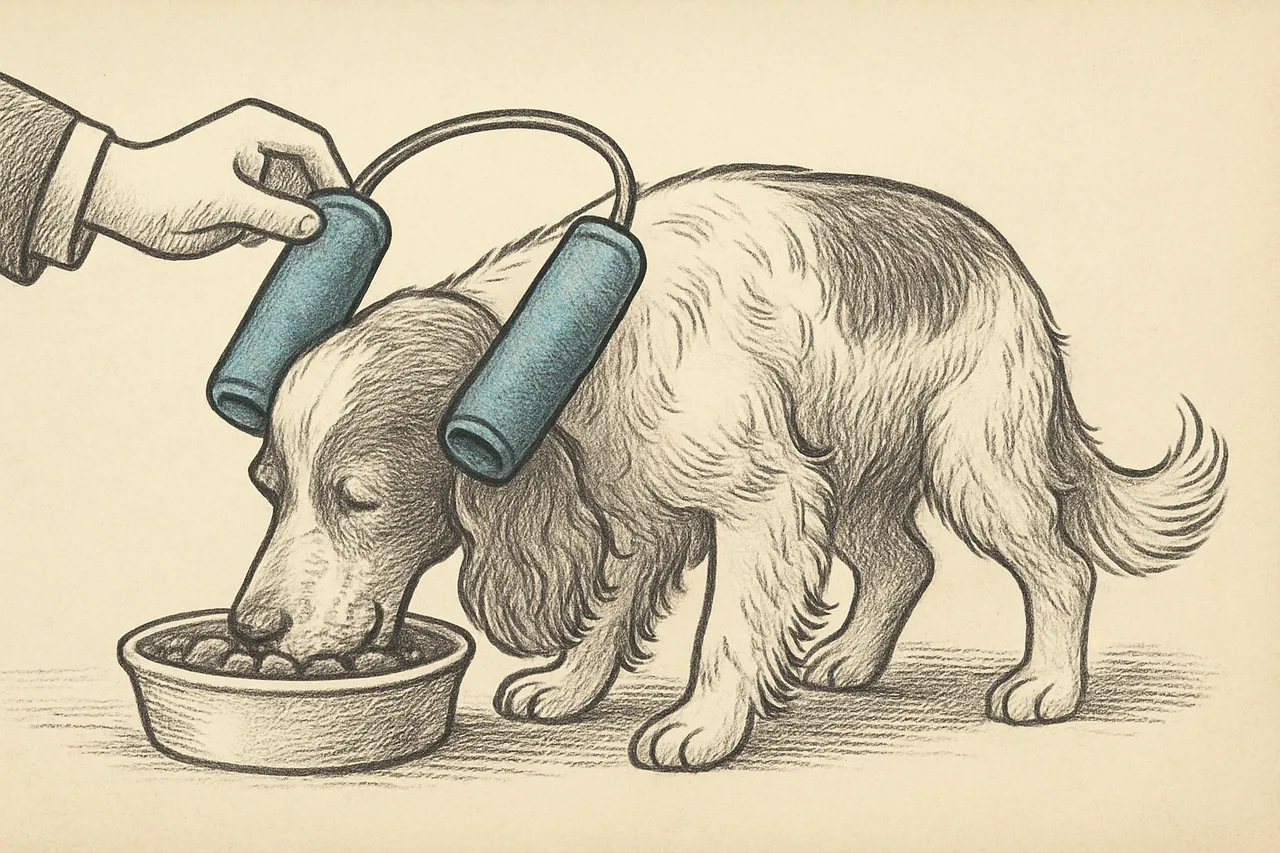
The Patent for Keeping a Dog's Ears Out of Its Food
In 2002, a patent was granted for a set of tubes that slip over the long ears of breeds like spaniels and setters, holding them up and back so they don't drag through the food bowl. It is deeply silly and, if you own such a dog, deeply reasonable.
Read the story →