The Hollywood Actress Who Invented Wi-Fi
In 1942, Hedy Lamarr — at the time MGM's most photographed actress — co-patented a frequency-hopping radio system designed to guide torpedoes. The Navy filed it away. Fifty years later, every cellphone on Earth was using the same idea.
In August of 1942, the United States Patent Office granted patent US2292387 to two applicants: a composer named George Antheil, and one Hedy Kiesler Markey, of Beverly Hills. Mrs. Markey was better known by her stage name. Hedy Lamarr was, at that point, under contract to MGM and had recently been described in the studio's publicity materials as "the most beautiful woman in the world." The patent had nothing to do with that.
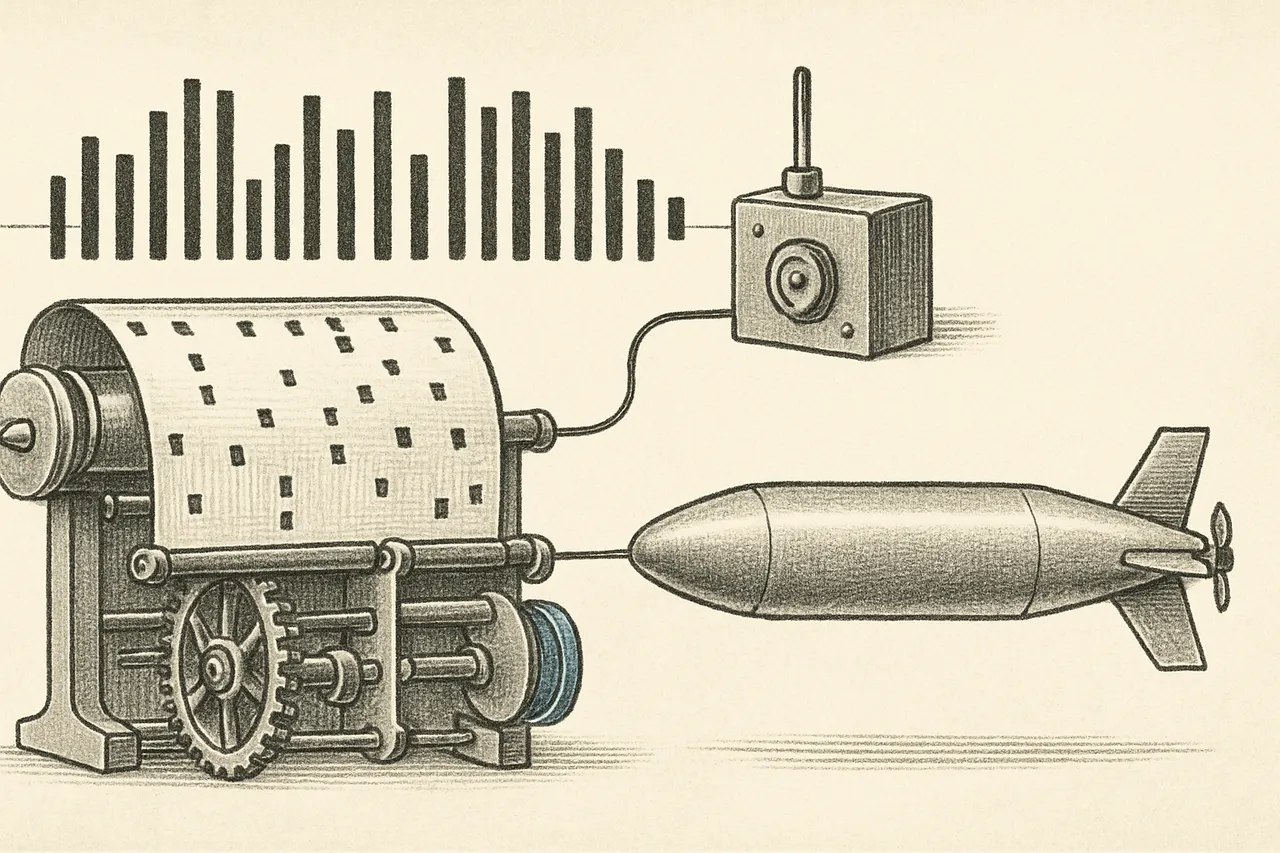
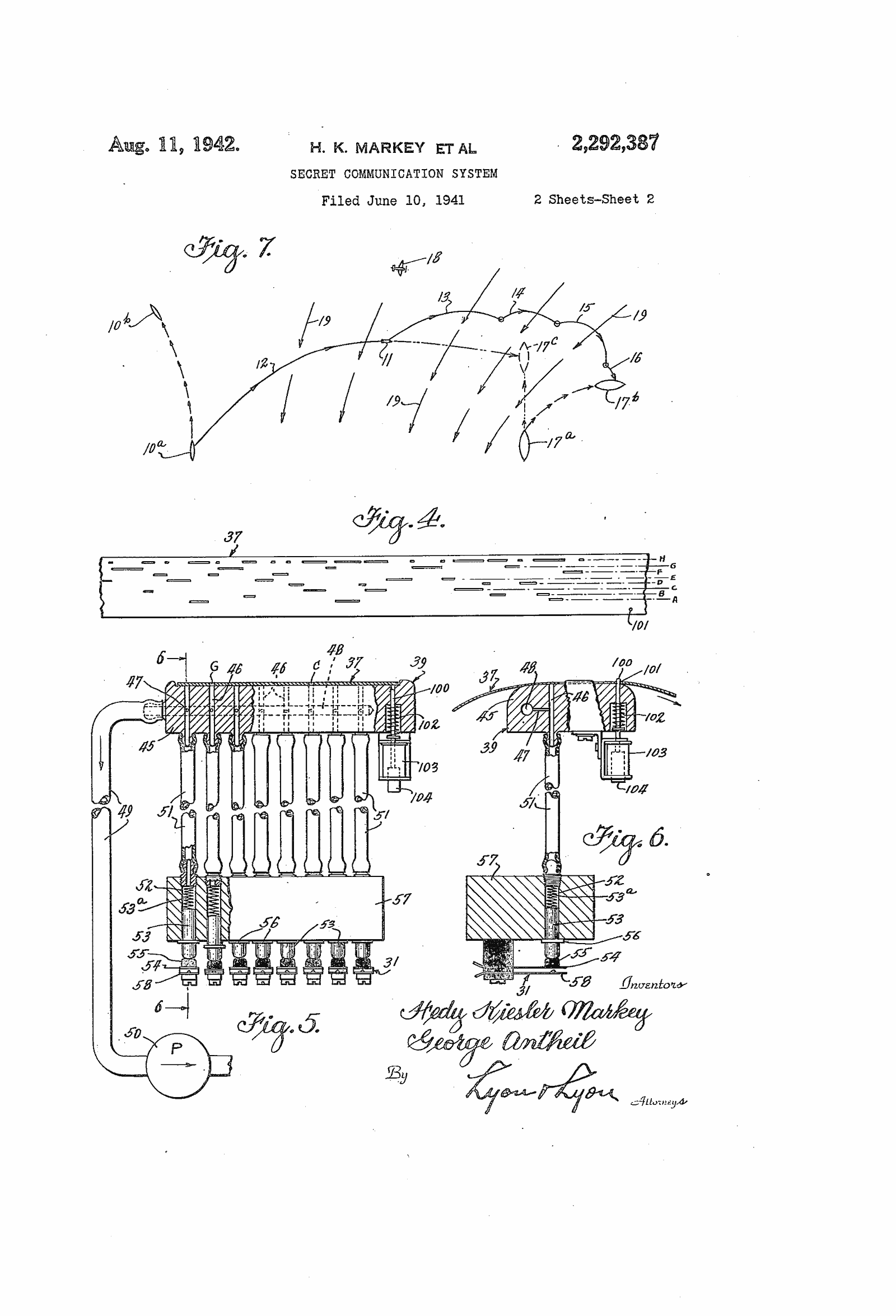
Title: Secret Communication System. The mechanism: a transmitter and receiver that hopped together across 88 different radio frequencies, in a sequence dictated by a synchronized punched-paper roll. The number 88 was not arbitrary; Antheil had built his career on synchronized player pianos, and the number of keys on a piano is 88.
The intended use was torpedo guidance. The Allies had a problem in 1942: radio-controlled torpedoes were susceptible to jamming, and a jammed torpedo missed. If the transmitter and receiver hopped frequencies fast enough, no jammer could keep up. The signal would be back on a fresh channel before the jammer found the previous one.
The Navy filed it away
Lamarr and Antheil submitted the design to the National Inventors Council in 1940. The Council passed it to the Navy. The Navy classified it, decided the mechanism was too complex to fit in a torpedo of the era, and took no further action during the war. The patent expired in 1959 without ever being used for its stated purpose.
How Lamarr knew about torpedo design is, by itself, a longer story. Before fleeing to Hollywood she had been married to Friedrich Mandl, an Austrian munitions manufacturer who supplied weapons to fascist governments across Europe. She sat through dinners with weapons engineers for years. She remembered.
What it became
The Navy revived the technology in 1962, during the Cuban Missile Crisis blockade, on ships intercepting Soviet vessels. By then the patent had expired and the mechanism could be built freely. Through the 1980s and 1990s, frequency hopping became foundational for spread-spectrum wireless communication of nearly every kind: GPS, military radio, Wi-Fi, Bluetooth, and the early cellular networks. Every device in your house that talks wirelessly to another device is, in a real sense, executing the principle described in US2292387.
Lamarr received almost no credit for any of it during her lifetime. The Electronic Frontier Foundation gave her a Pioneer Award in 1997, when she was eighty-two. She was inducted into the National Inventors Hall of Fame in 2014, fourteen years after her death.
See the original
The full text of US2292387 — including the surprisingly elegant player-piano-roll synchronization mechanism — is on Google Patents.
Related stories

The Escalator Was Patented in 1859. Nobody Built One for Thirty Years.
Nathan Ames patented 'revolving stairs' before the Civil War. He admitted he wasn't sure what would power them, never built one, and died four years later at thirty-nine. The moving staircase arrived a generation after he did.
Read the story →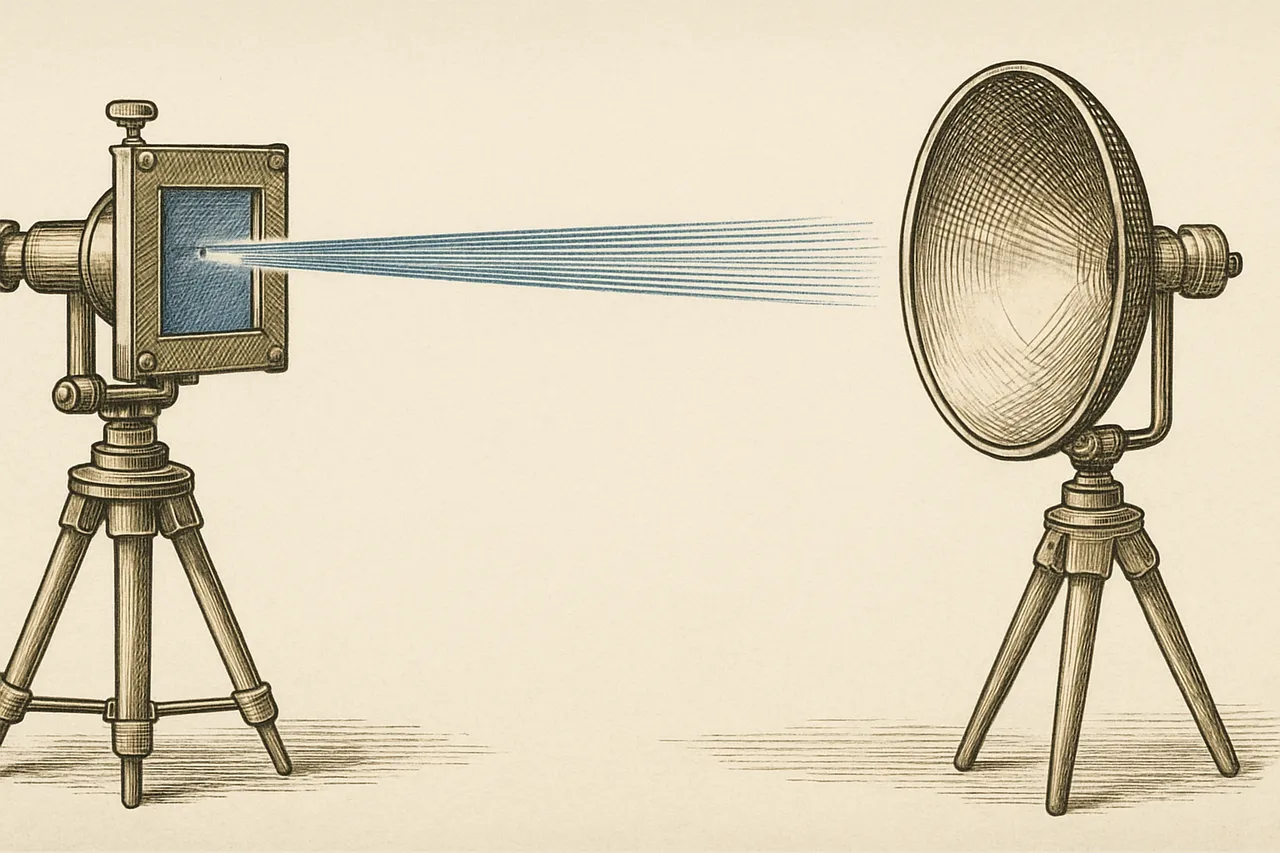
Bell Called It His Greatest Invention. It Sent Speech on a Beam of Light — in 1880.
Alexander Graham Bell thought the photophone, not the telephone, was his finest work. It transmitted the human voice on a beam of sunlight, with no wires at all. It was also a century early: the world had no use for it until fiber optics arrived.
Read the story →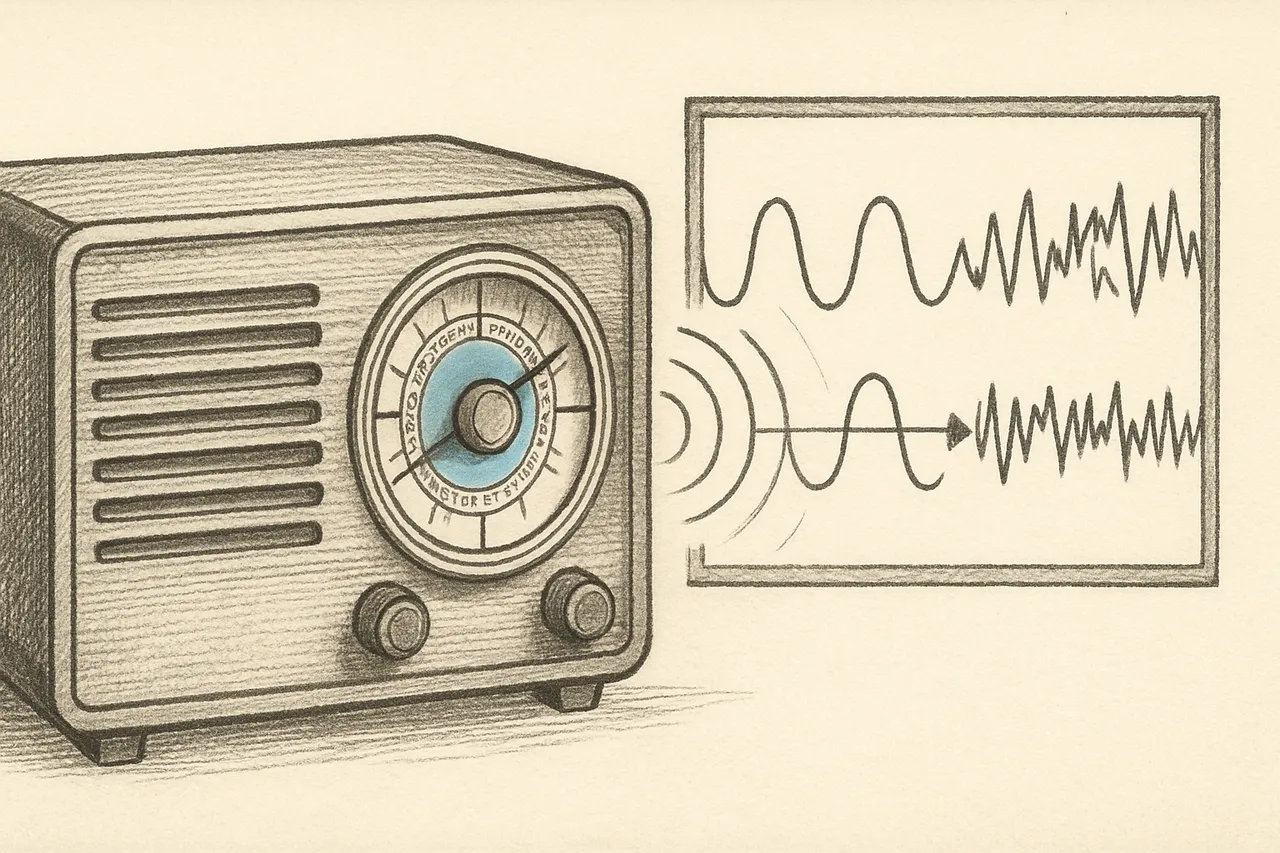
Edwin Armstrong Invented Static-Free Radio. Then the Industry He Threatened Destroyed Him.
FM radio was better than AM in every way — no static, higher fidelity, less power. That was exactly the problem. The company that dominated AM spent two decades in court to bury it, and the inventor spent his fortune fighting back before jumping from his apartment window.
Read the story →
The New York Times Mocked Goddard's Rocket. It Apologized 49 Years Later — Mid-Flight to the Moon.
Robert Goddard patented the fundamentals of the liquid-fuel rocket in 1914. When he suggested a rocket could reach the Moon, a newspaper editorial declared he lacked 'the knowledge ladled out daily in high schools.' The correction ran during Apollo 11.
Read the story →