Before the Crash Test Dummy, They Used Cadavers — and Sometimes Volunteers
Car safety research needed to know exactly what a human body does in a collision. For years the answer came from human corpses, live animals, and a colonel who repeatedly strapped himself into a rocket sled. The dummy was built to end all three.
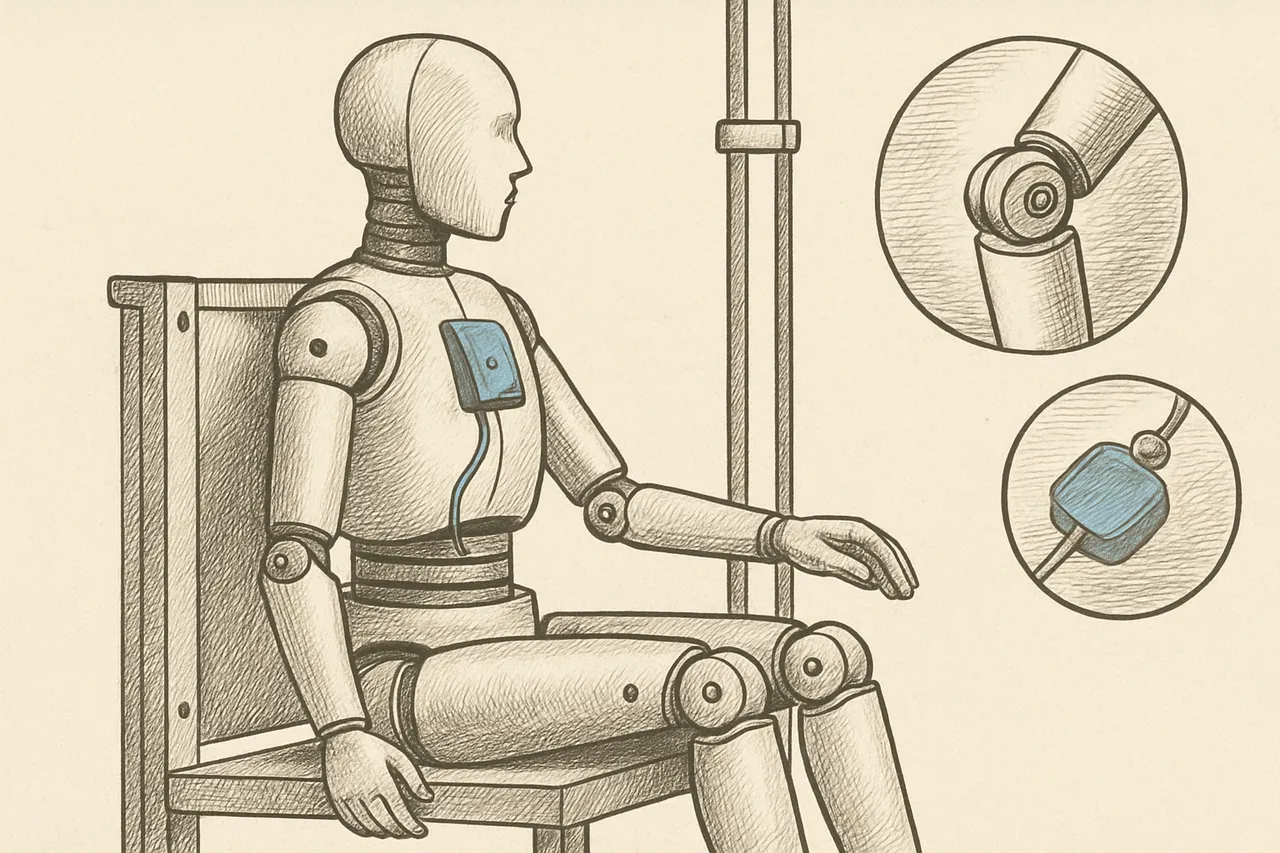
US3010223 covers an early anthropomorphic test device — the crash test dummy — and the reason it was built is that the alternatives were grim.
To design a car that protects people, engineers need to know precisely what happens to a human body during a collision: how far the head travels, what forces the chest sustains, where the femur breaks, what a windshield does to a face. That data has to come from somewhere.
Before instrumented dummies, it came from three sources. The first was human cadavers, used in university biomechanics laboratories, strapped into sleds and subjected to impacts — a practice that produced genuinely essential data and generated persistent ethical controversy. The second was live animals. The third, remarkably, was living human volunteers.
Colonel Stapp
The most famous of the volunteers was Colonel John Paul Stapp, an Air Force flight surgeon who wanted to know how much deceleration a human being could actually survive, because the prevailing engineering assumption — around eighteen times the force of gravity — was being used to design aircraft cockpits and he suspected it was far too low.
Rather than argue, Stapp strapped himself into a rocket-propelled sled on a track at Muroc and Holloman and ran it repeatedly through the late 1940s and 1950s. On his final and most famous run in 1954, he reached over 600 miles per hour and then stopped in about a second and a quarter, sustaining a peak of more than 46 times gravity.
He survived. He also suffered broken ribs and wrists, and repeated retinal hemorrhages that at times left him temporarily blind. His data rewrote survivability standards, and Stapp went on to be a central advocate for automotive seat belts.
This was heroic and completely unsustainable as a research method.
Sierra Sam and the family
The first purpose-built anthropomorphic dummies came out of aerospace: Sierra Engineering built "Sierra Sam" in 1949 for testing aircraft ejection seats. Automotive testing followed, and through the 1950s and 60s a series of increasingly sophisticated devices appeared, culminating in the Hybrid family developed by General Motors — Hybrid I, then Hybrid II, and in 1976 the Hybrid III, which remains the basis of the standard frontal- impact dummy today.
The engineering problem is harder than it looks. The dummy must not merely resemble a person; it must respond like one. Its neck must bend with roughly human stiffness, its chest must deflect like a human ribcage, its knees must take load the way a human knee does. And it must do all of that repeatably, so that two tests of two different cars can be compared, and it must survive being destroyed dozens of times.
A modern dummy carries dozens of accelerometers, load cells, and displacement sensors, and costs into the hundreds of thousands of dollars.
What they bought
Crash testing with instrumented dummies is the reason for the collapsible steering column, the crumple zone, the three-point seat belt's geometry, the airbag's timing, and the head-impact standards that shaped modern dashboards and pillars.
Traffic deaths per mile driven in the United States have fallen enormously since the 1950s, and the standardized dummy is one of the principal reasons — not because it saves anyone directly, but because it made "how badly does this car hurt a person" into a measurable, comparable, regulatable number.
One long-standing criticism is worth stating plainly: for decades the standard dummy was modeled on the average adult male, and the resulting vehicles were correspondingly optimized. Research has repeatedly found that women have faced higher injury risk in comparable crashes, and dummy families representing women, children, and varied body types were slower to arrive and are still being refined.
The dummy replaced the cadaver and the volunteer. Whose body it was modeled on turned out to matter almost as much.
The dummies existed to measure what a restraint actually does to a body. The two restraints they were chiefly used to evaluate are covered here as well: Volvo's three-point belt and the airbag patent that sat unused for decades.
See the original
The full text and figures of US3010223 are on patents.us.
Related stories

The 1868 Patent Behind the First Successful Typewriter Had Its Keys in Alphabetical Order. QWERTY Came Later, and Nobody Fully Agrees Why.
Christopher Latham Sholes and two partners patented a typewriter in Milwaukee in 1868 with keys arranged like a piano, roughly in alphabetical order. Over the next several years the letters were shuffled into QWERTY. The popular explanation for that is a distortion of a better one.
Read the story →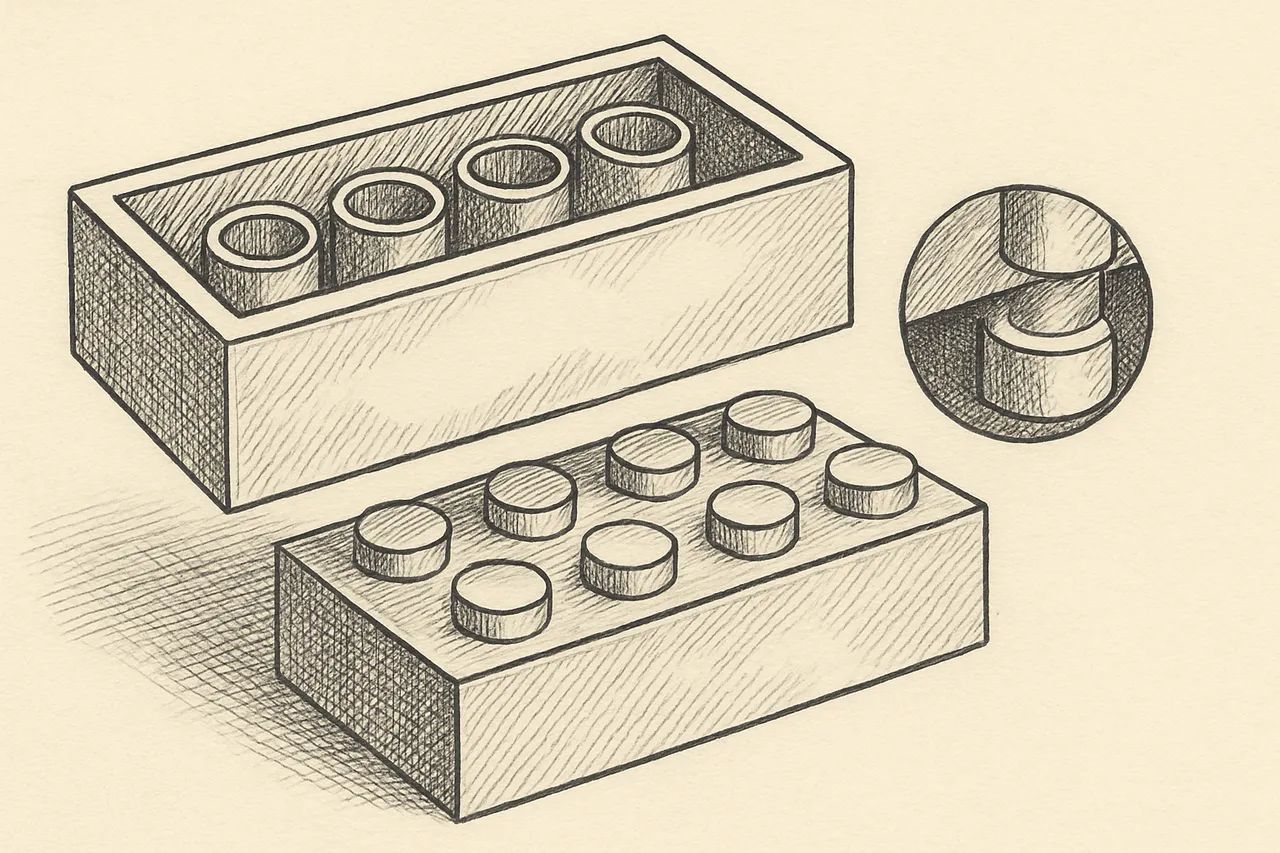
LEGO Bricks Were on Sale for Nine Years Before They Held Together Properly. The Fix Was a Row of Hollow Tubes.
The first LEGO bricks had studs on top and an empty space underneath, so models tended to come apart when you picked them up. Godtfred Kirk Christiansen's 1958 design put tubes inside the brick, and a brick molded that year still fits one molded today.
Read the story →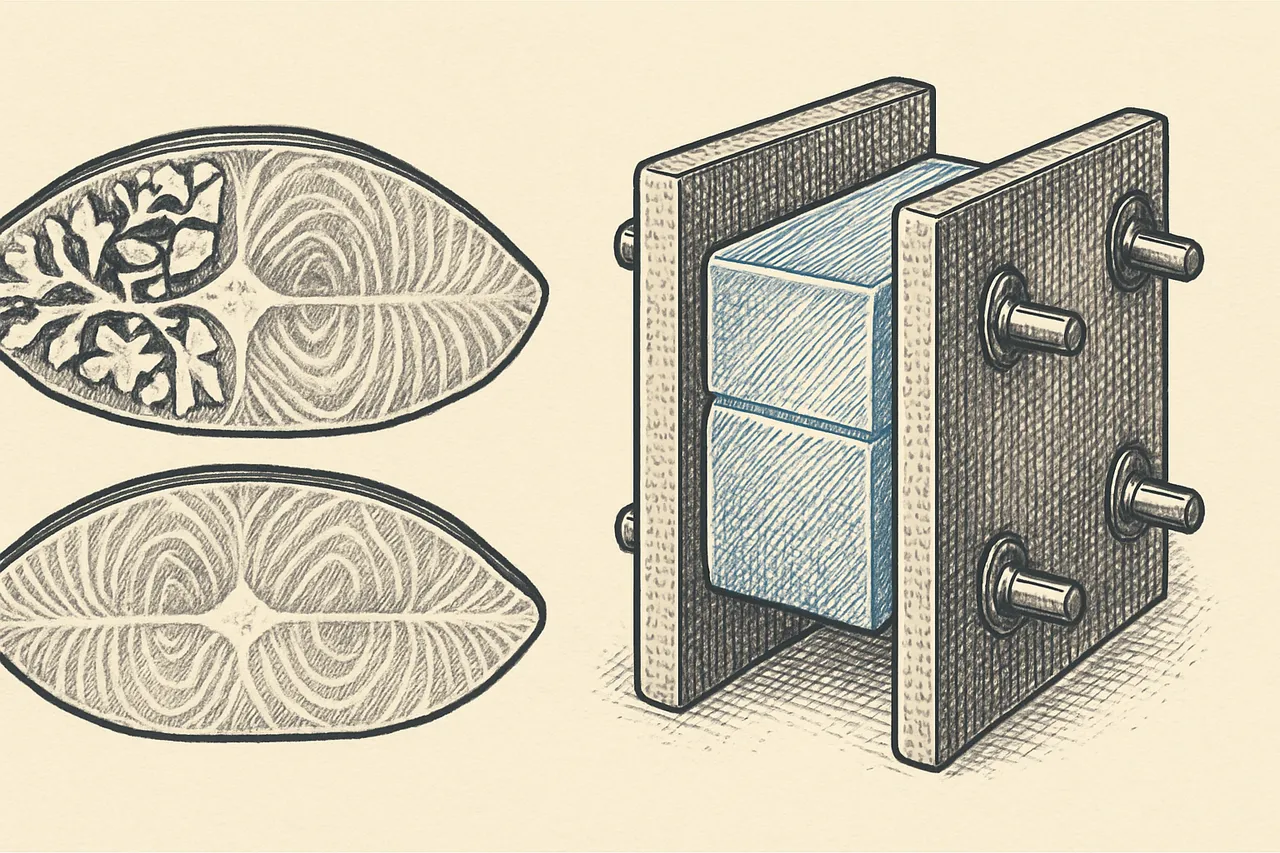
Clarence Birdseye Watched Inuit Fishermen Pull Fish From a Hole in the Ice and Worked Out Why Frozen Food Tasted Bad
Frozen food existed long before Birdseye and it was considered close to inedible. What he figured out in Labrador is that the problem was never freezing. It was freezing slowly, and the difference comes down to the size of the ice crystals.
Read the story →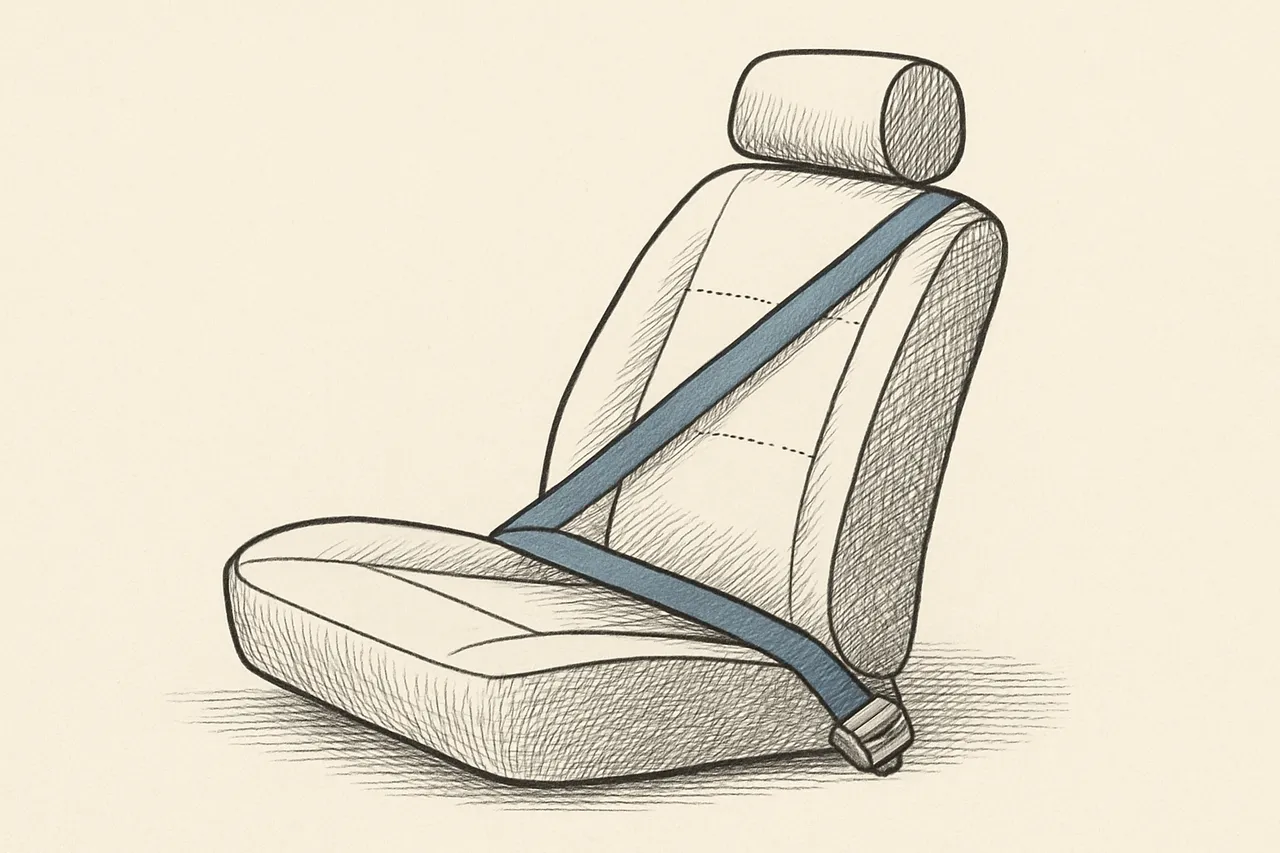
Volvo Patented the Three-Point Seat Belt in 1959, Then Opened the Patent to Every Rival It Had
Nils Bohlin came from building ejection seats for fighter aircraft, and he solved the seat belt in about a year. Volvo then did the thing companies almost never do with a patent that valuable: it made the design free to use, on the grounds that keeping it would cost lives.
Read the story →