He Swerved to Avoid Something in the Road With His Family in the Car, and Patented the Airbag Three Months Later
John Hetrick was a Navy engineer who had worked with compressed air torpedoes. After a near miss on a Pennsylvania road in 1952, he worked out that a cushion could be inflated faster than a body can travel forward. Then he could not get a single manufacturer to care.
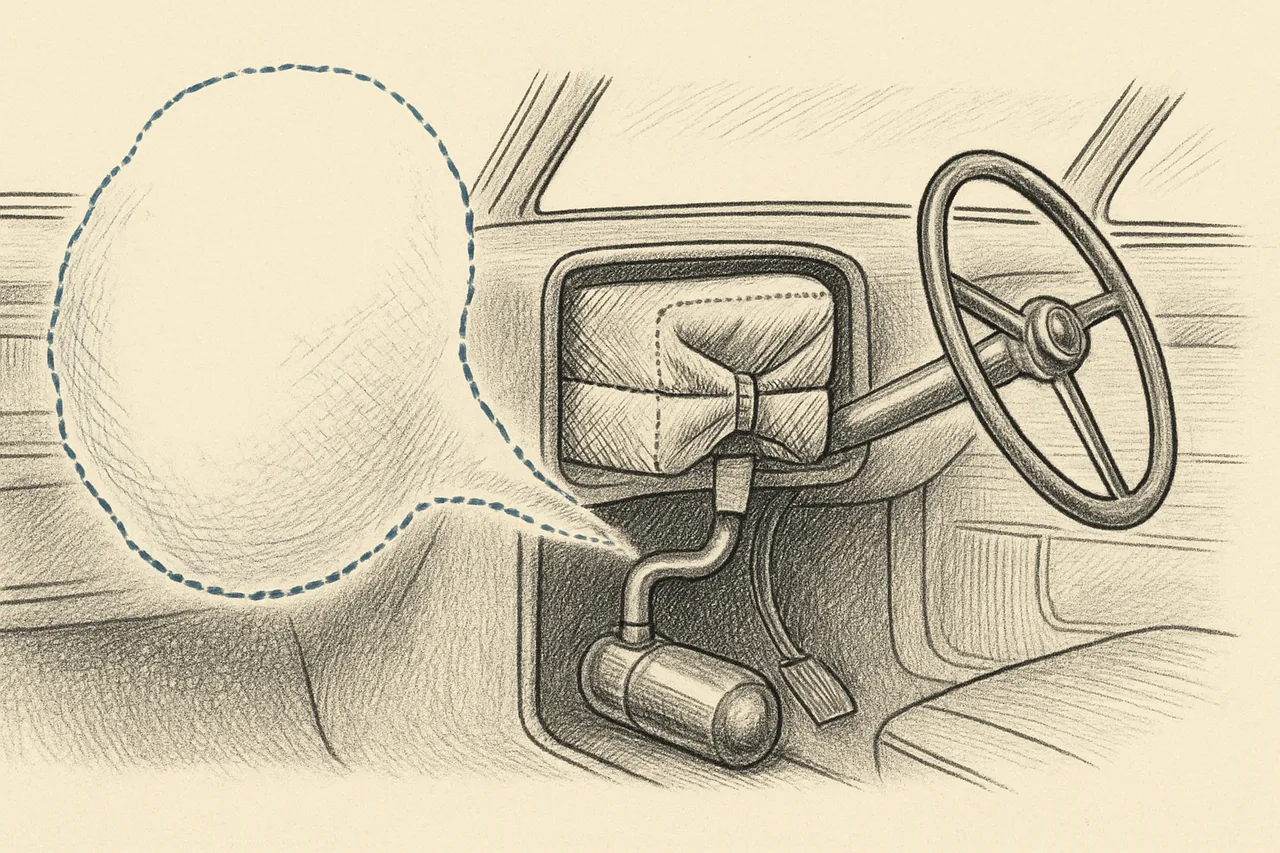
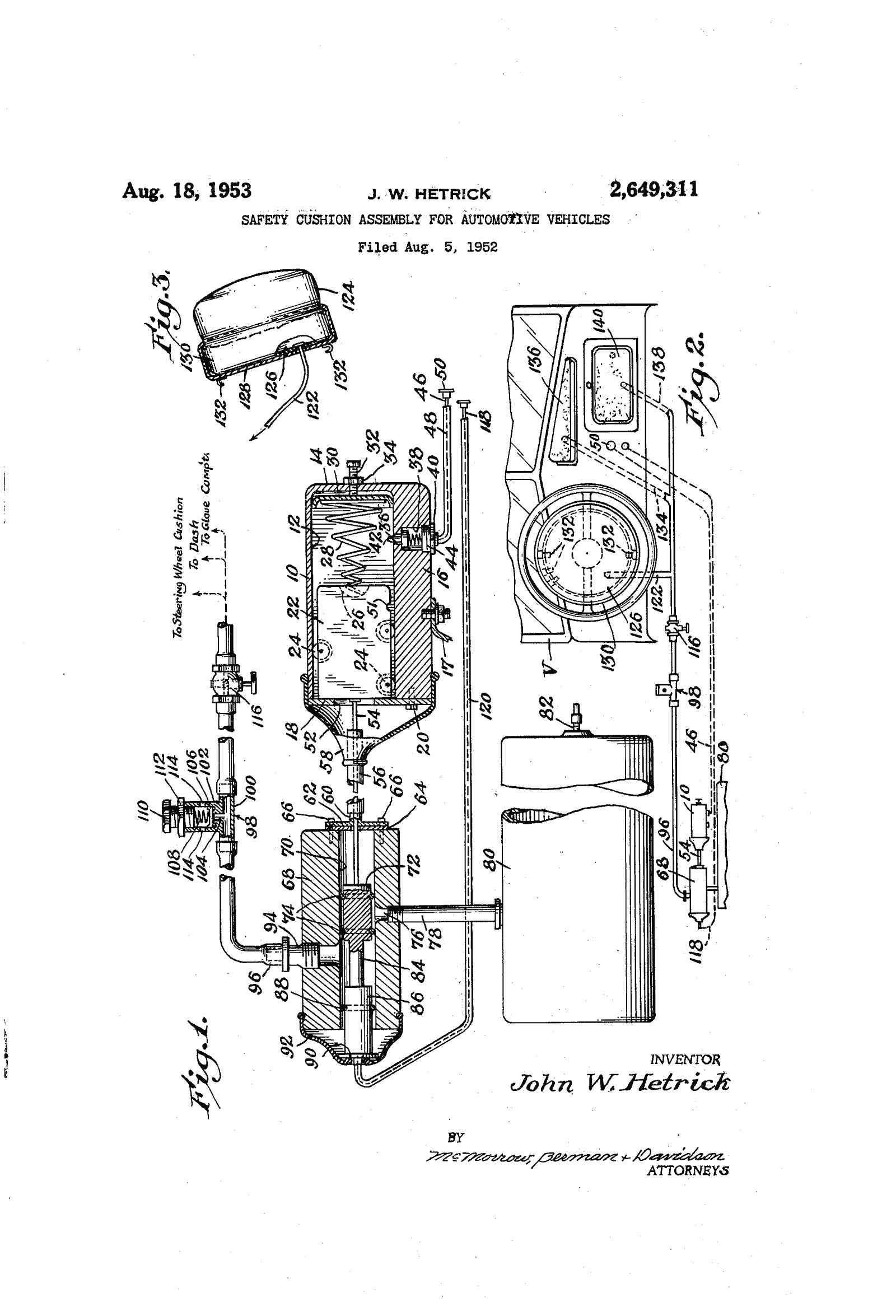
US2649311 was filed by John W. Hetrick on August 5, 1952, under the title Safety Cushion Assembly for Automotive Vehicles. It is the airbag, described clearly, roughly a quarter century before anyone would sell one.
The drive
Hetrick was an industrial engineer who had served in the Navy, where he worked with compressed air systems, including torpedoes. That background is the reason this patent exists rather than remaining a vague wish that cars were safer.
In the spring of 1952 he was driving outside Newport, Pennsylvania, with his wife and his seven year old daughter. Something appeared in the road, accounts differ on whether it was a rock or an animal, and he swerved hard into a ditch to avoid it.
Both he and his wife instinctively threw their arms out in front of their daughter to stop her going into the dashboard. Nobody was seriously hurt.
What he thought about afterward was that the reflex was correct and the mechanism was hopeless. A human arm cannot decelerate a child in a collision. But the shape of the response, getting something soft between a person and a hard surface very quickly, was right.
He connected it to a memory from the Navy, of a canvas cover being blown off a torpedo by compressed air and shooting into the air. Air stored under pressure can move a piece of fabric faster than anything a person can do.
He filed within a few months.
The core insight
The patent describes a folded cushion stored in a compartment, in the steering wheel hub and in the dashboard, connected to a supply of compressed air released on impact.
The idea depends on one physical fact that is easy to state and was not obvious in 1952. A collision takes a long time by mechanical standards. The occupant does not hit the dashboard at the instant of impact. The car stops first, and the body continues forward and arrives some tens of milliseconds later.
That gap is the entire opportunity. It is not much time, but it is enough time to inflate a bag, provided the inflation is driven by stored energy rather than a pump.
Hetrick had the concept and the timing right. What his version did not have was a workable trigger, and that turned out to be the hard part.
Why it took twenty-five years
Hetrick sent the patent to the major automakers. He got no interest. He never made money from it, and the patent expired in the early 1970s, before airbags reached the market.
The reasons for the delay are worth separating, because "the industry ignored safety" is only part of it.
Some of it was genuinely technical. A compressed air cylinder is a poor fit for a car, since it can leak over years of service and its inflation speed varies with temperature. The problem was eventually solved chemically rather than pneumatically, using a solid propellant that deflagrates and generates gas in milliseconds. And the trigger has to distinguish a real collision from a pothole in a few thousandths of a second, using mechanical or early electronic sensing, without ever firing by mistake, since an airbag deploying on the highway is itself a crash.
Some of it was not technical. Manufacturers were reluctant to market safety, on a widely held theory that emphasizing crashes reminded buyers that cars were dangerous. Seat belts had a similar slow adoption for similar reasons.
Airbags appeared in limited numbers in the 1970s, and became widespread only after federal rulemaking in the 1980s and 1990s made them effectively mandatory.
The credit
Hetrick is not the only claimant. Walter Linderer filed a similar compressed air concept in Germany at almost the same time, and the technology that actually shipped owes a great deal to later work, notably Allen Breed's sensor and inflator systems in the 1960s, which solved the detection problem Hetrick had not.
That is the ordinary shape of this. A patent can be correct, early, and specific, and still not be the thing that reaches production, because being right about the concept is a smaller part of the job than it looks.
Hetrick died in the 1990s, having received no royalties. He said in interviews that he was satisfied the idea had gotten where it was going.
The airbag ended up as a supplement to the belt rather than a replacement for it, and the belt had a more generous history. Volvo patented the three-point design and then opened it to every rival it had.
See the original
The full text and figures of US2649311 are on Google Patents.
Related stories
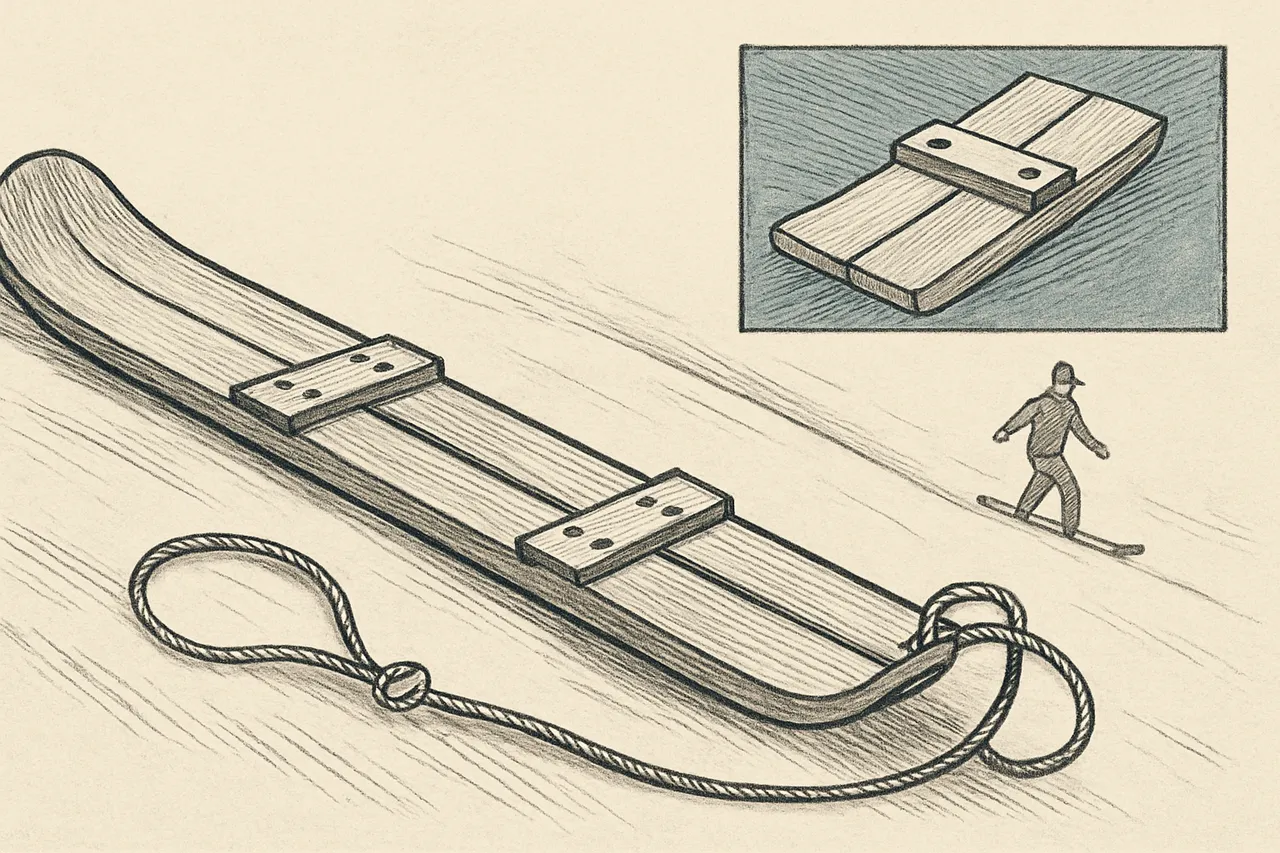
A Father Fastened Two Skis Together for His Daughter at Christmas in 1965. His Wife Named It the Snurfer.
Sherman Poppen was an engineer in Muskegon, Michigan, trying to keep his daughter busy over the holiday. He joined two children's skis side by side and tied a rope to the front. It sold as a toy by the hundreds of thousands, and the people who raced it turned it into a sport.
Read the story →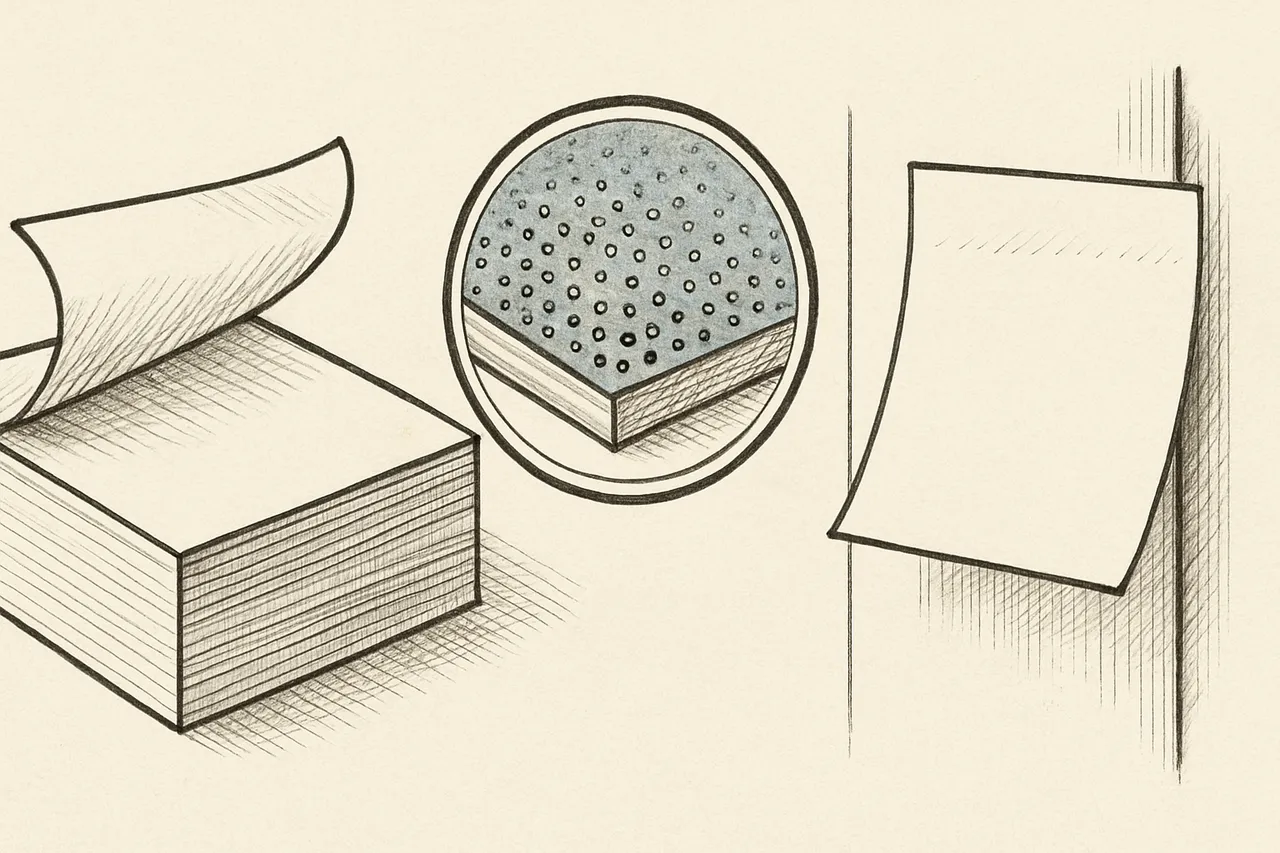
Spencer Silver Invented an Adhesive No One Wanted for Twelve Years
In 1968, a 3M chemist named Spencer Silver was trying to make a stronger adhesive. He accidentally made a weaker one that didn't stick permanently. The product it eventually became — Post-it Notes — did not ship for another twelve years.
Read the story →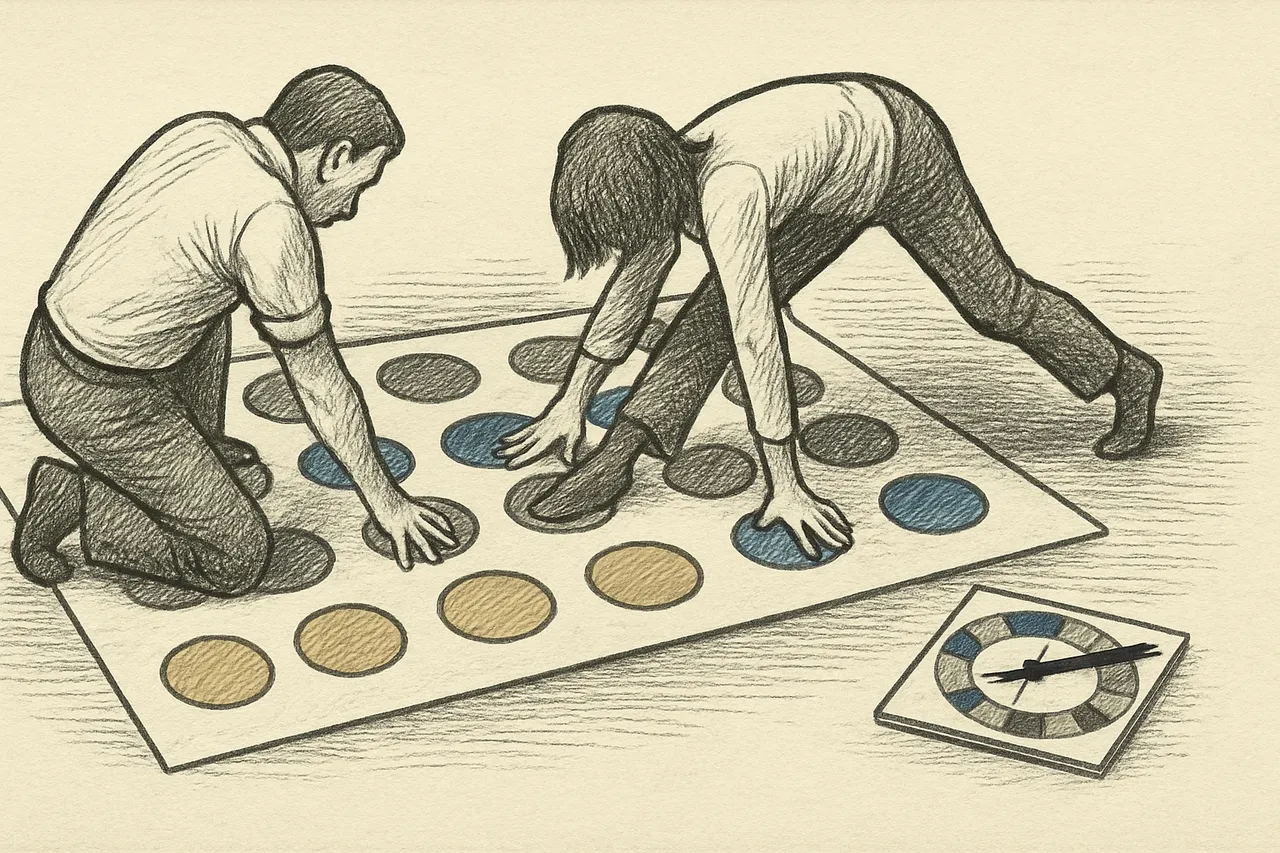
Twister's Patent Is Titled 'Apparatus for Playing a Game Wherein the Players Constitute the Game Pieces'
The patent title is the whole idea: the people are the pieces. Milton Bradley released the game in 1966, some retailers were wary of it, and critics found it a little too intimate. Then Johnny Carson played it on television with Eva Gabor, and the orders poured in.
Read the story →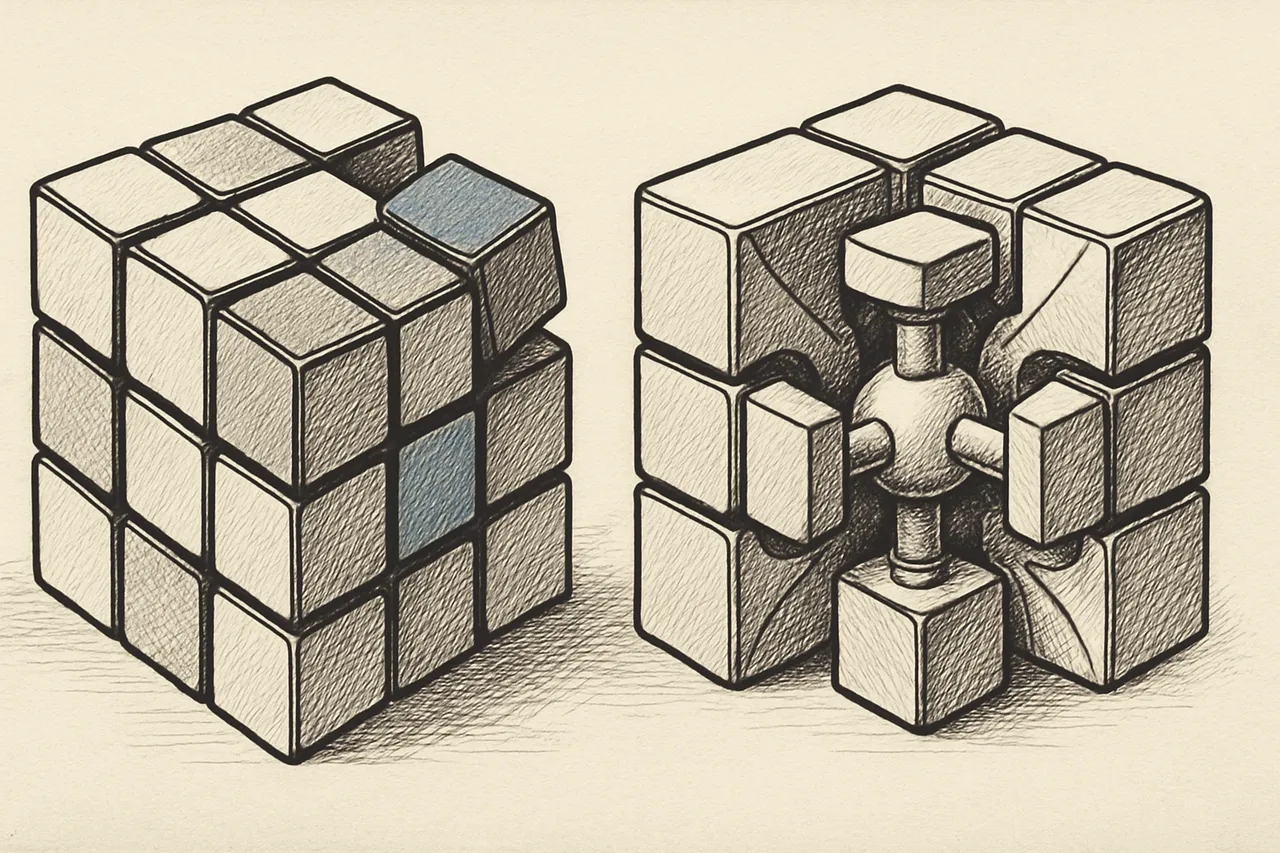
Ernő Rubik Needed About a Month to Solve His Own Cube. An American Court Later Found It Infringed an Earlier US Patent.
Rubik built the first cube in Budapest in 1974 as a way to think about three-dimensional movement. The clever part is how it holds together when most of its pieces are not attached to anything. In the United States, a chemist named Larry Nichols had patented a related puzzle in 1972, and his company sued.
Read the story →