A Father Fastened Two Skis Together for His Daughter at Christmas in 1965. His Wife Named It the Snurfer.
Sherman Poppen was an engineer in Muskegon, Michigan, trying to keep his daughter busy over the holiday. He joined two children's skis side by side and tied a rope to the front. It sold as a toy by the hundreds of thousands, and the people who raced it turned it into a sport.
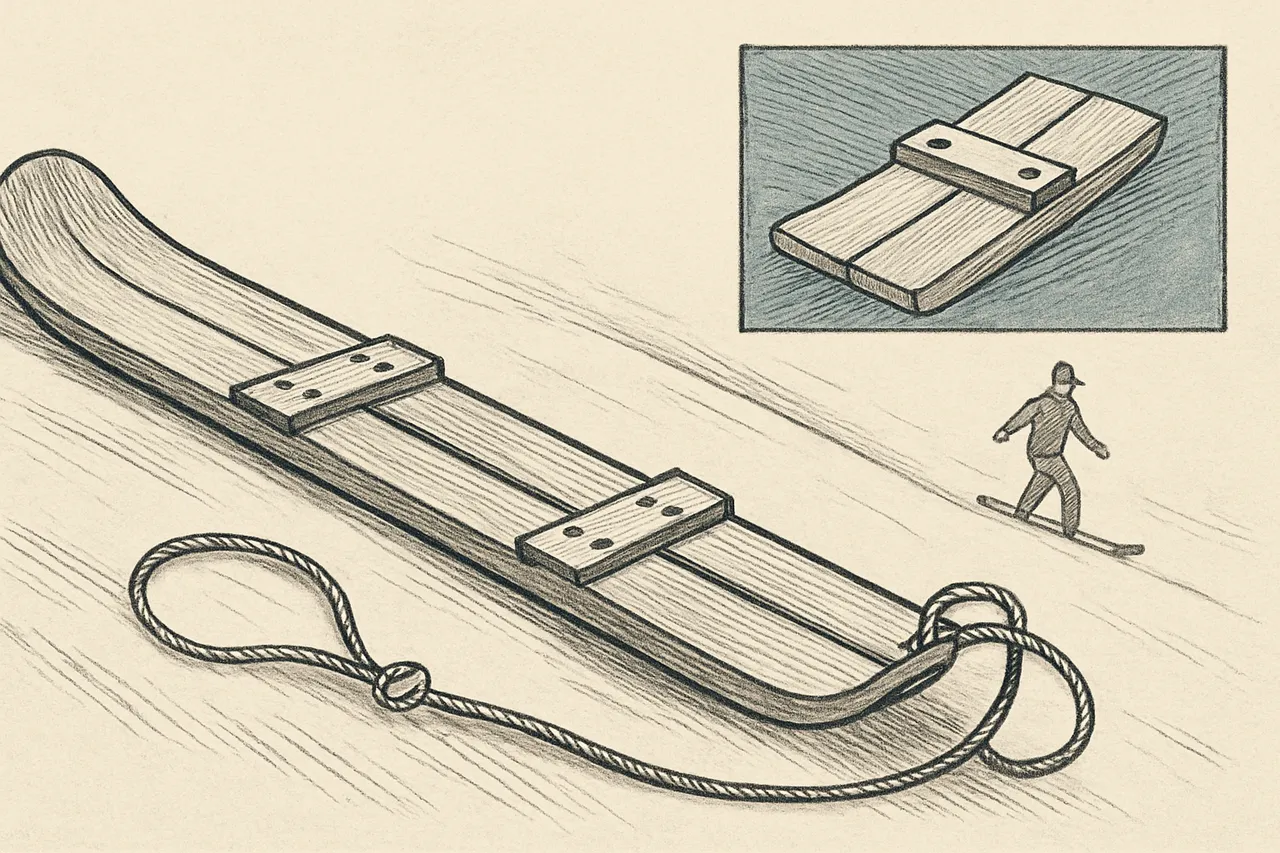
US3378274 was filed by Sherman R. Poppen on March 17, 1966. The Patent Office title is Surf-Type Snow Ski. It is the Snurfer, a children's toy, and it is the most direct ancestor of the modern snowboard.
Christmas in Muskegon
Poppen was an engineer living in Muskegon, Michigan. At Christmas in 1965, with the family at home and his young daughter Wendy looking for something to do, he went out to the garage.
He took two children's skis, fastened them side by side to make a single wide board, and gave it to her to ride down the hill in the yard. She stood on it sideways, the way a surfer stands, and slid down.
It worked well enough that the neighborhood children wanted one. Poppen made more. His wife Nancy came up with the name, a combination of snow and surfer.
What he patented
The patent describes a board that is recognizably a snowboard in its basic stance and use, and noticeably different in the details that matter.
The rider stands sideways on a single wide board with an upturned nose. There are no bindings. Your feet are simply on top of the board. To hold on and help steer, there is a rope attached to the nose, which the rider grips in one hand like a rein.
That arrangement is exactly right for a toy. A child can hop on, fall off harmlessly, and get up. Nothing holds the feet in place, so there is nothing to twist a knee when the board stops suddenly.
It is also the reason the Snurfer stayed a toy for a long time. Without bindings, a rider cannot transfer much force through the board. You cannot lean hard into a turn, carve an edge into firm snow, or control it at real speed. You mostly ride where the hill takes you and steer a little with the rope.
Brunswick
Poppen licensed the design to the Brunswick Corporation, best known for bowling equipment. It went on sale as a cheap wooden toy and was a hit, reportedly selling around half a million units in its first year, and many more over the following decade.
For most buyers it was a winter novelty, used on backyard hills and then left in the garage.
The riders who took it further
A smaller group took it seriously. Snurfer competitions began in Michigan in the late 1960s, and people started modifying their boards.
One of the riders who had grown up on a Snurfer was Jake Burton Carpenter. He began building his own boards, and the change he pushed hardest was adding bindings to hold the feet. When he brought a board with bindings to a Snurfer competition in 1979, it did not fit the rules, and organizers set up a separate category for it. Burton went on to found Burton Snowboards. Others, including Tom Sims, were developing boards along similar lines at the same time.
Bindings were the step that turned a toy into a sport. With the feet attached, the rider can put their full weight into the edge, and the board can be steered hard and ridden fast on steep terrain.
From backyard to the Olympics
For years many ski resorts banned snowboards outright. That changed through the 1980s and 1990s as the sport grew, and snowboarding made its debut as an Olympic event at the 1998 Winter Games in Nagano, Japan. A small number of resorts in the United States still do not allow snowboards.
Poppen died in 2019. He did not invent the modern snowboard, and he never claimed to. What he built was the object that put tens of thousands of children on a board sideways in the snow, and a few of them grew up wanting to find out how much further it could go.
See the original
The full text and figures of US3378274 are on patents.us.
Related stories
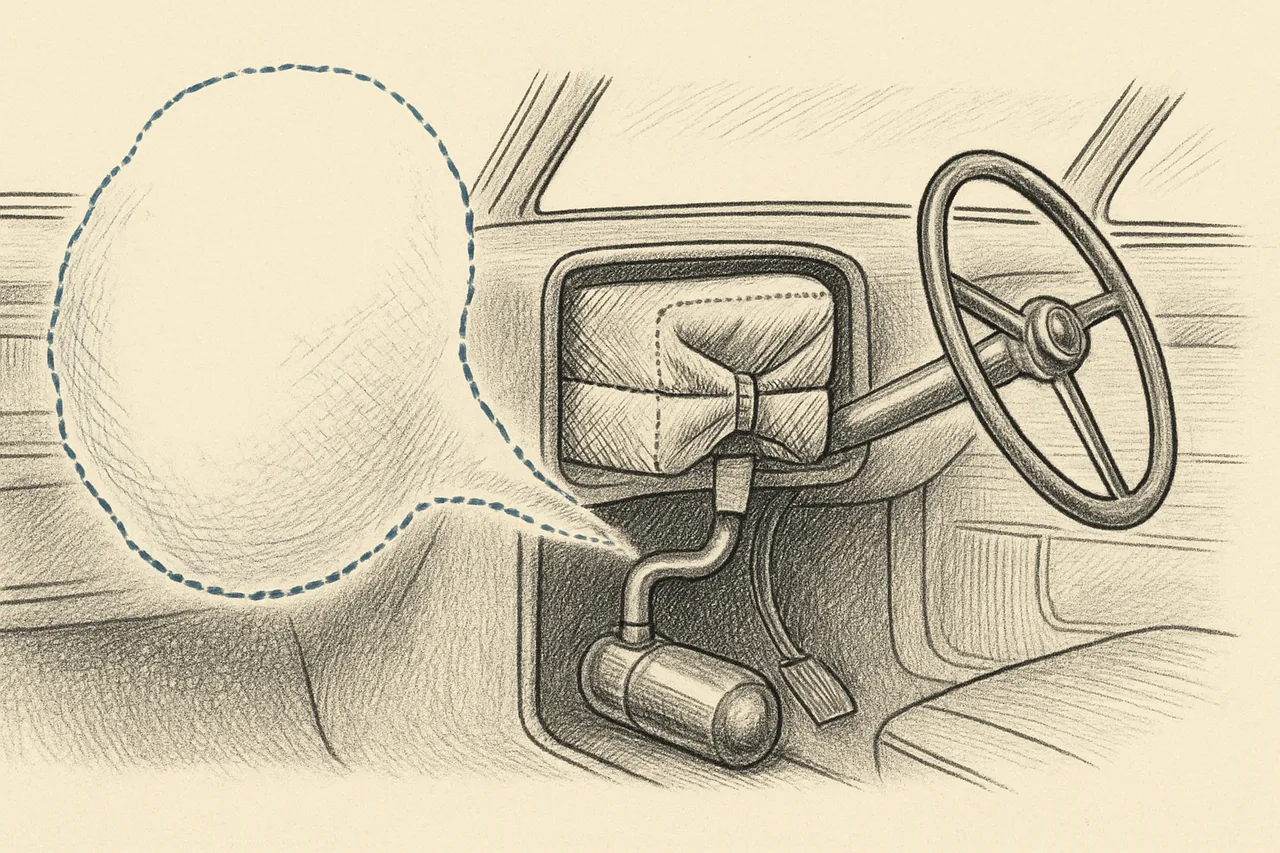
He Swerved to Avoid Something in the Road With His Family in the Car, and Patented the Airbag Three Months Later
John Hetrick was a Navy engineer who had worked with compressed air torpedoes. After a near miss on a Pennsylvania road in 1952, he worked out that a cushion could be inflated faster than a body can travel forward. Then he could not get a single manufacturer to care.
Read the story →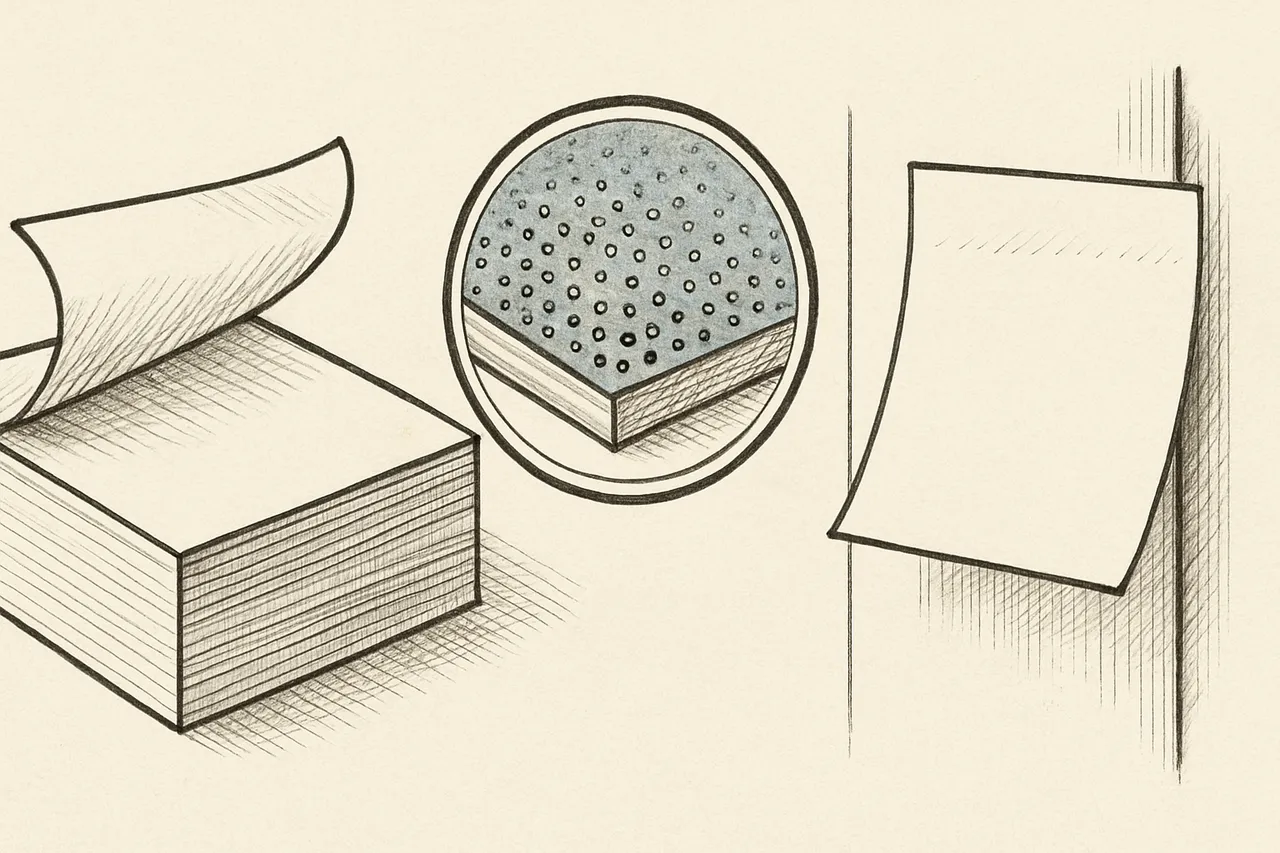
Spencer Silver Invented an Adhesive No One Wanted for Twelve Years
In 1968, a 3M chemist named Spencer Silver was trying to make a stronger adhesive. He accidentally made a weaker one that didn't stick permanently. The product it eventually became — Post-it Notes — did not ship for another twelve years.
Read the story →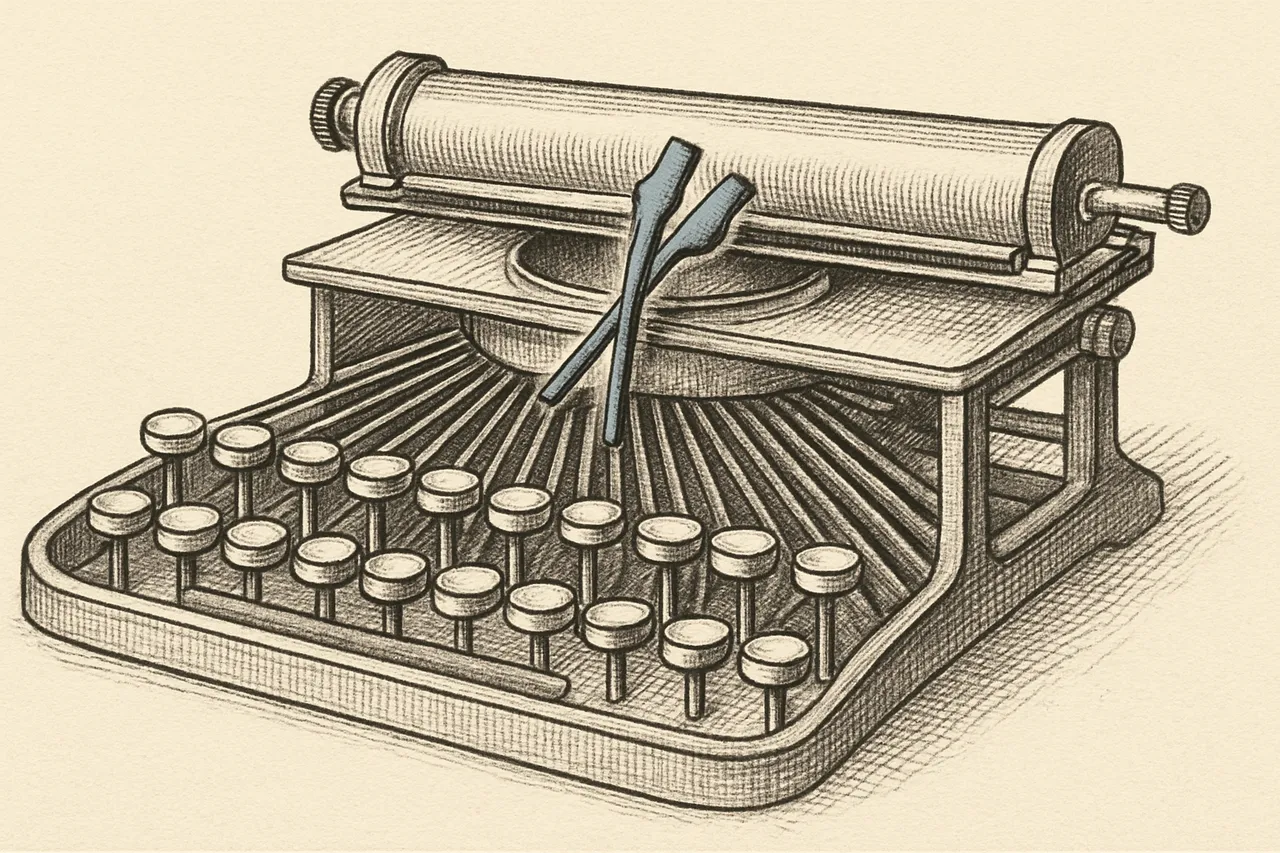
The 1868 Patent Behind the First Successful Typewriter Had Its Keys in Alphabetical Order. QWERTY Came Later, and Nobody Fully Agrees Why.
Christopher Latham Sholes and two partners patented a typewriter in Milwaukee in 1868 with keys arranged like a piano, roughly in alphabetical order. Over the next several years the letters were shuffled into QWERTY. The popular explanation for that is a distortion of a better one.
Read the story →
Frank Zamboni Spent Years Building a Machine So His Ice Rink Didn't Need a Crew of Men With Scrapers
Frank Zamboni ran an ice rink in Southern California, and resurfacing the ice by hand took several workers more than an hour. His machine did the whole job in a single pass. Its most important trick is the one people least expect: it lays down warm water, not cold.
Read the story →