Ernő Rubik Needed About a Month to Solve His Own Cube. An American Court Later Found It Infringed an Earlier US Patent.
Rubik built the first cube in Budapest in 1974 as a way to think about three-dimensional movement. The clever part is how it holds together when most of its pieces are not attached to anything. In the United States, a chemist named Larry Nichols had patented a related puzzle in 1972, and his company sued.
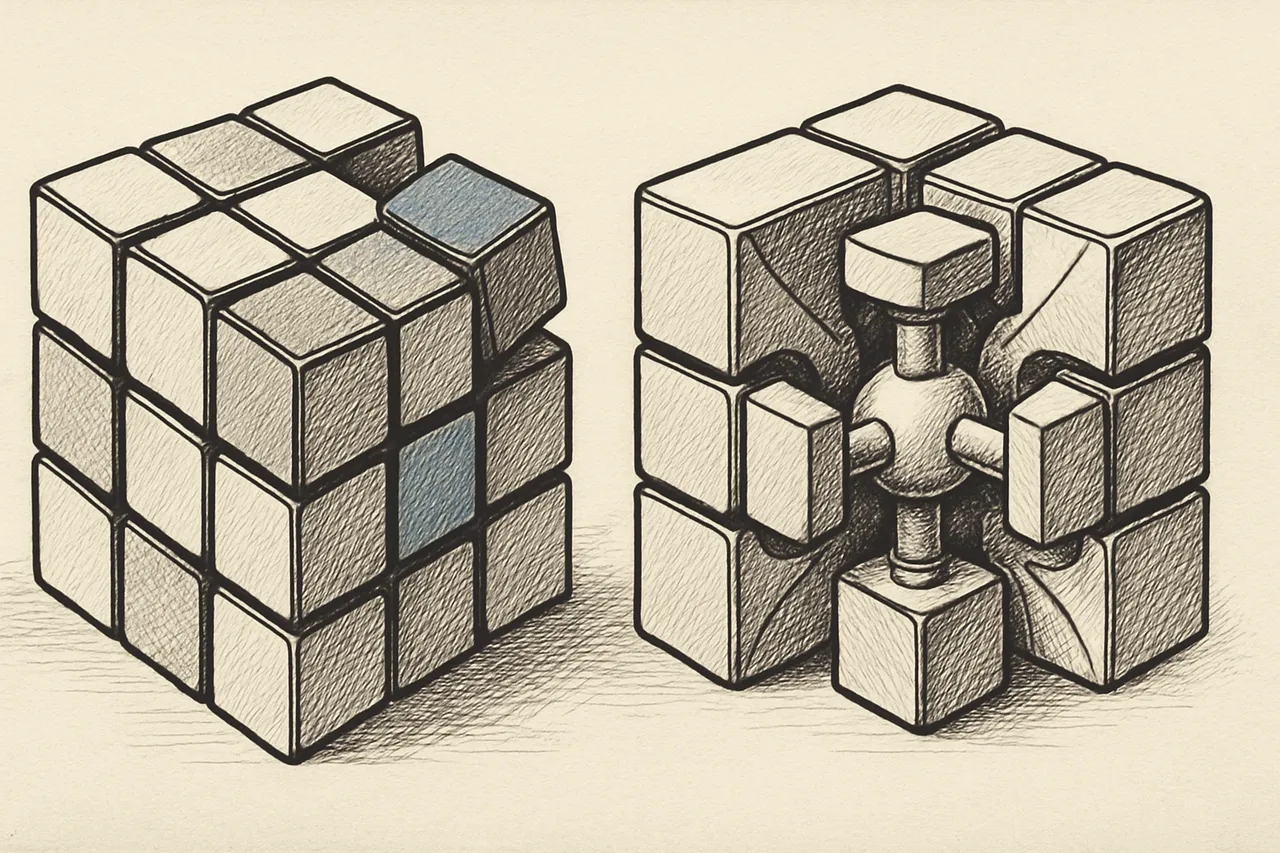
US4378116 was published on March 29, 1983, naming Ernő Rubik as inventor. The Patent Office title is Spatial Logical Toy. By the time it issued, the Rubik's Cube had already been through a worldwide craze, and it had also run into a patent filed in the United States years earlier by someone else.
A problem in movement
Rubik was a lecturer in design at the Academy of Applied Arts and Crafts in Budapest. In 1974 he built a small cube out of wooden blocks as a way of working through a structural question: how could a set of blocks be made to turn in groups, around several different axes, without the whole thing falling apart?
He built it, turned it, and scrambled it. By his own account, it then took him about a month to get it back to its original state. He had made a puzzle without setting out to.
How it holds together
The mechanism is the real invention, and it is less obvious than the puzzle.
A standard cube has 26 visible pieces: six center pieces, twelve edge pieces, and eight corner pieces. Only the six centers are fastened to anything. They are mounted on a hidden core, a three-axis spindle, and they can rotate in place but never move from their positions.
The edges and corners are not attached to the core or to each other. Each has a hidden extension on its inner side, and those extensions tuck underneath the neighboring pieces. The whole assembly is held together by the pieces pressing on one another, with the centers acting as anchors. Turn a face, and a ring of pieces slides around the core as a group, held in by the pieces around it.
That arrangement allows a very large number of positions. The standard cube can be scrambled into about 43 quintillion distinct configurations, and only one of them is solved.
From Budapest to everywhere
Rubik patented the cube in Hungary, and it went on sale there as the Magic Cube in the late 1970s. The Ideal Toy Company licensed it, renamed it after its inventor, and launched it internationally in 1980. It became one of the best-selling toys ever made.
Rubik's own US patent did not issue until 1983, after the peak of the craze, and the market had long since filled with imitations.
Larry Nichols
In 1972 the US Patent Office had granted US3655201 to Larry D. Nichols, a chemist in Massachusetts, for a pattern-forming puzzle with pieces rotatable in groups. Nichols's puzzle was a two by two by two cube. Its pieces were held together by magnets rather than by an interlocking internal mechanism.
The rights were held by the company Nichols worked for, Moleculon Research Corporation. When the Rubik's Cube became a huge American seller, Moleculon sued CBS, which had acquired Ideal Toy. A federal court found that the Rubik's Cube infringed one of Nichols's claims, and the appeals court upheld that finding in 1986.
Why a different mechanism could infringe
The result surprises people, because the two puzzles work very differently inside. One uses magnets. The other uses interlocking pieces on a spindle.
The answer is in how patent claims work. A patent does not protect the specific object an inventor built. It protects what the claims describe. A claim written broadly, in terms of a cube whose pieces rotate in groups about axes to form patterns, can cover devices that achieve that result by entirely different internal means. If the accused product does everything a claim describes, it infringes that claim, regardless of what holds it together.
It is not a verdict on who was more inventive. Rubik's interlocking mechanism is a brilliant piece of design, and it is the reason the cube could be mass produced cheaply and survive millions of twists. What the court decided was narrower: an earlier American patent already claimed part of what the cube does.
Independent inventors winning against large companies over a patent is a recurring story in this archive. For a longer and more punishing example, see Robert Kearns and the intermittent wiper.
See the original
The full text and figures of US4378116 are on patents.us.
Related stories
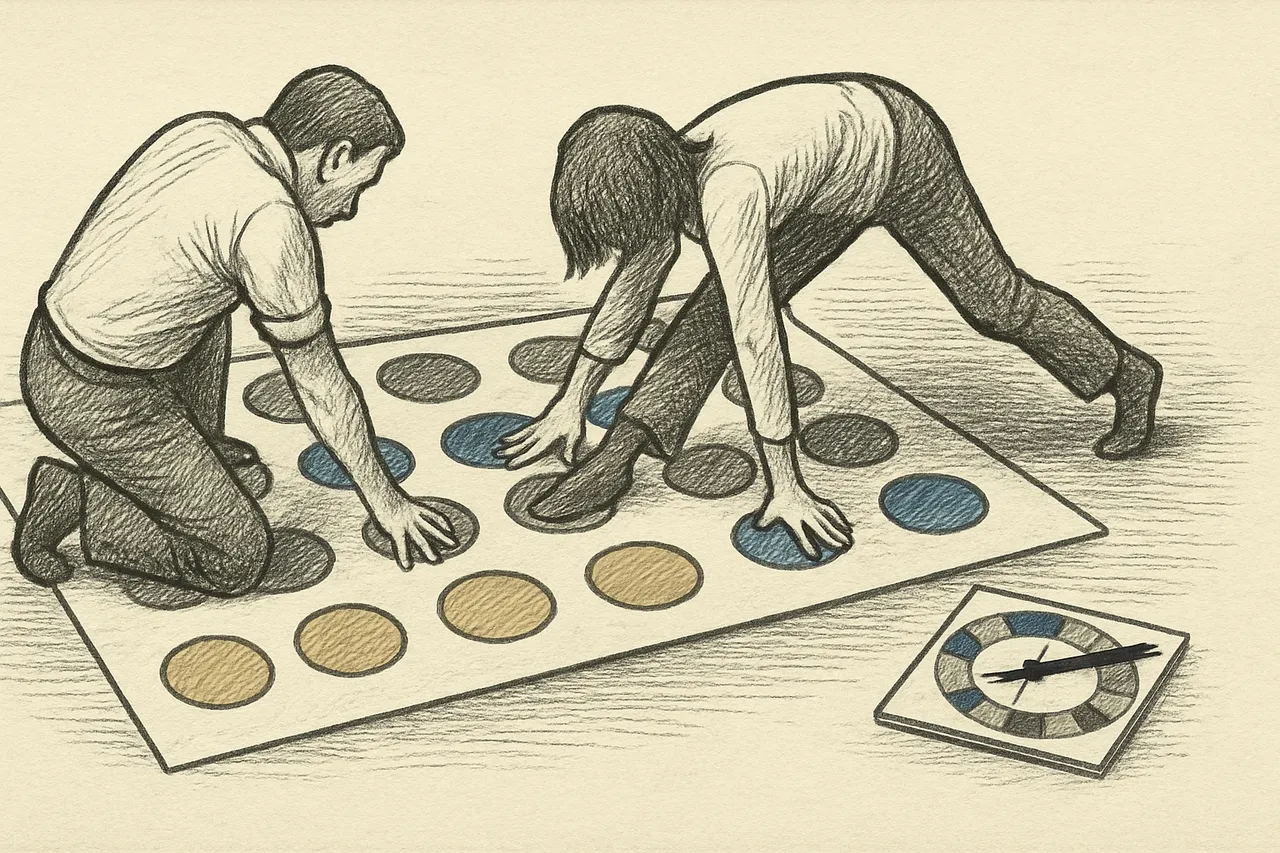
Twister's Patent Is Titled 'Apparatus for Playing a Game Wherein the Players Constitute the Game Pieces'
The patent title is the whole idea: the people are the pieces. Milton Bradley released the game in 1966, some retailers were wary of it, and critics found it a little too intimate. Then Johnny Carson played it on television with Eva Gabor, and the orders poured in.
Read the story →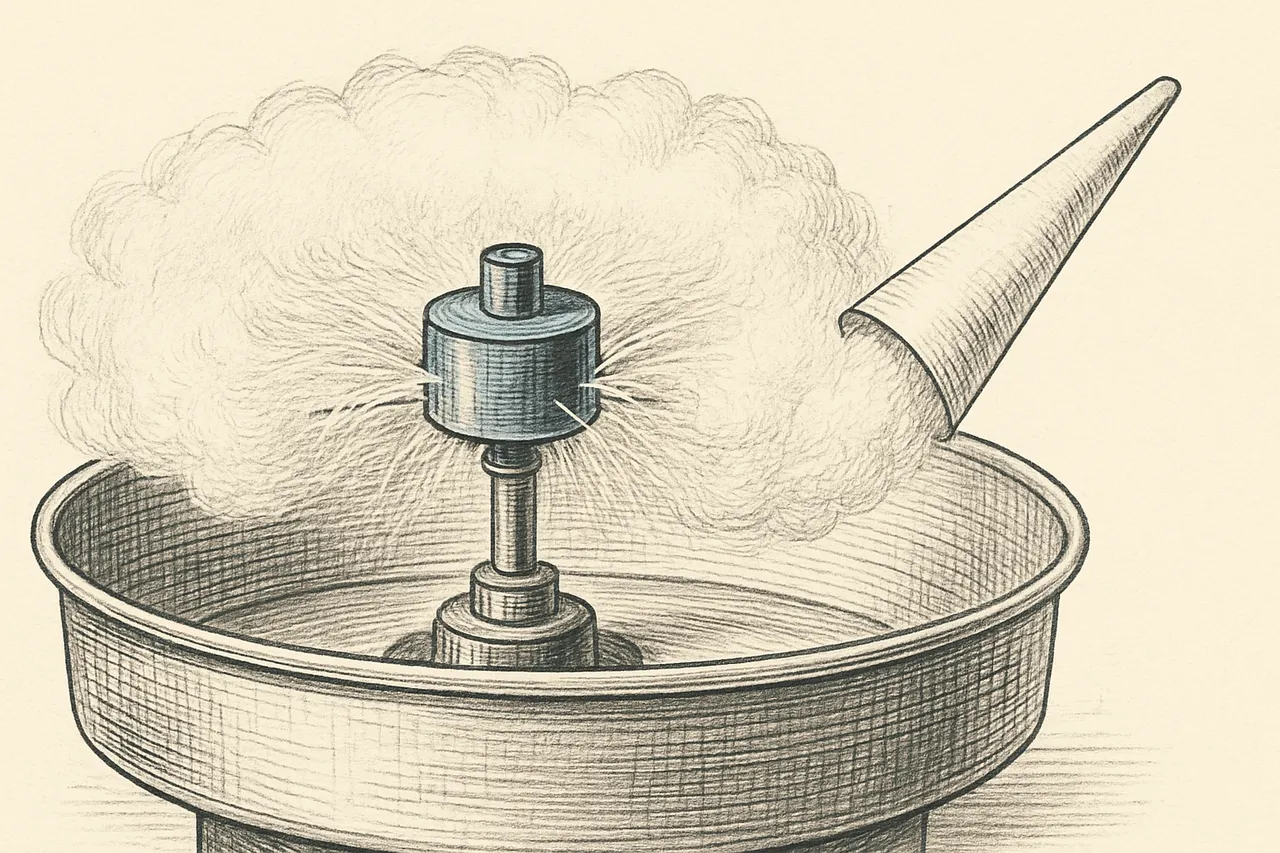
A Dentist Co-Invented the Cotton Candy Machine, and It Was Sold at the 1904 World's Fair as Fairy Floss
William Morrison was a dentist and John Wharton was a candy maker. Their machine melted sugar and flung it through tiny holes so that it cooled into threads finer than hair before it could crystallize. They filed in 1897, and at the St. Louis World's Fair it was a sensation.
Read the story →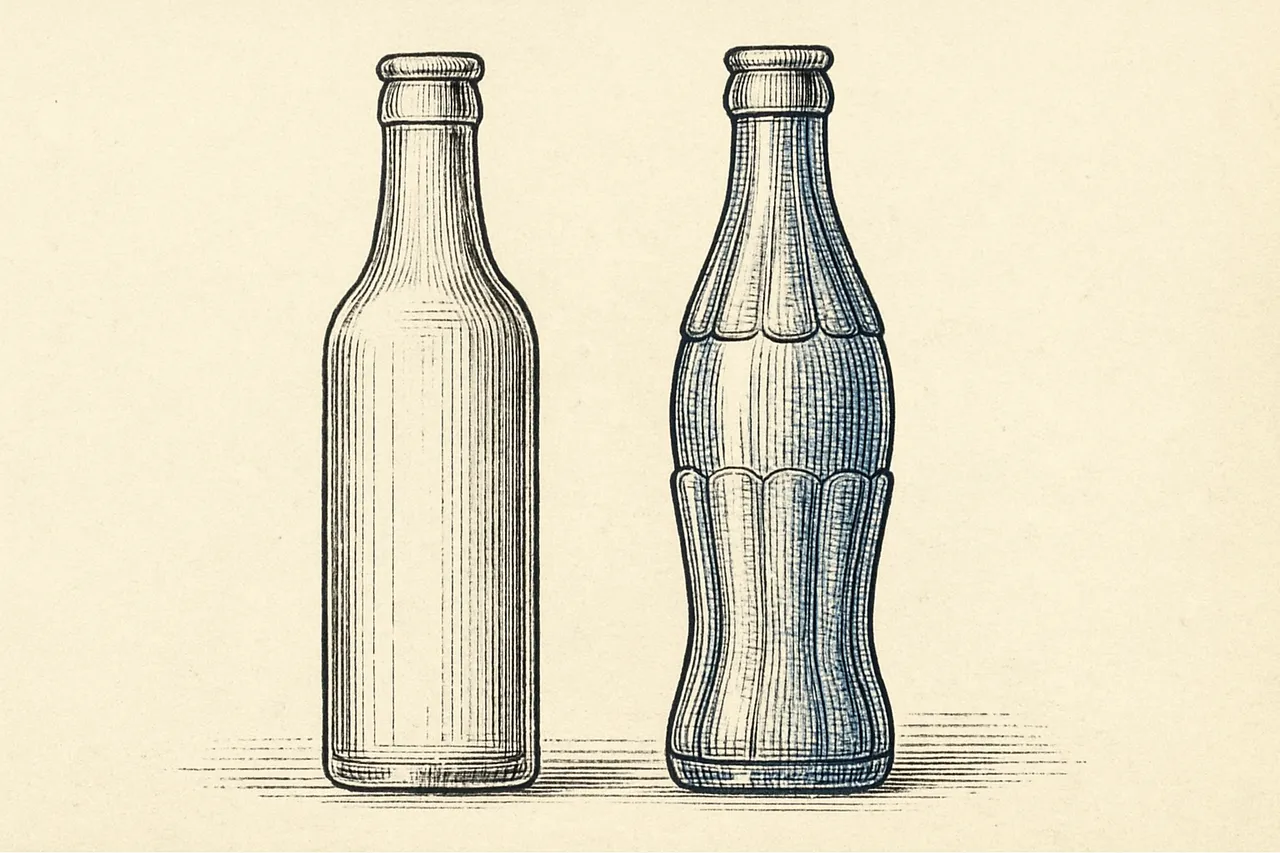
Coca-Cola Asked Glassmakers for a Bottle You Could Recognize in the Dark, or Broken on the Ground
In 1915 Coca-Cola had an imitation problem, since competitors used the same straight-sided bottles and borrowed-sounding names. It challenged glass companies to design a bottle identifiable by touch alone. The winner came from a small glassworks in Terre Haute, Indiana, and the name on the patent is not the name of the man who drew it.
Read the story →
The First American Roller Coaster Ran at Six Miles an Hour, and Its Inventor Built It to Lure People Away From Saloons
LaMarcus Thompson's Switchback Railway opened at Coney Island in 1884. Riders sat sideways on a bench, coasted down a gentle undulating track, then got out while attendants pushed the car over a switch so they could coast back the other way. It cost a nickel and it made a fortune.
Read the story →