A Dentist Co-Invented the Cotton Candy Machine, and It Was Sold at the 1904 World's Fair as Fairy Floss
William Morrison was a dentist and John Wharton was a candy maker. Their machine melted sugar and flung it through tiny holes so that it cooled into threads finer than hair before it could crystallize. They filed in 1897, and at the St. Louis World's Fair it was a sensation.
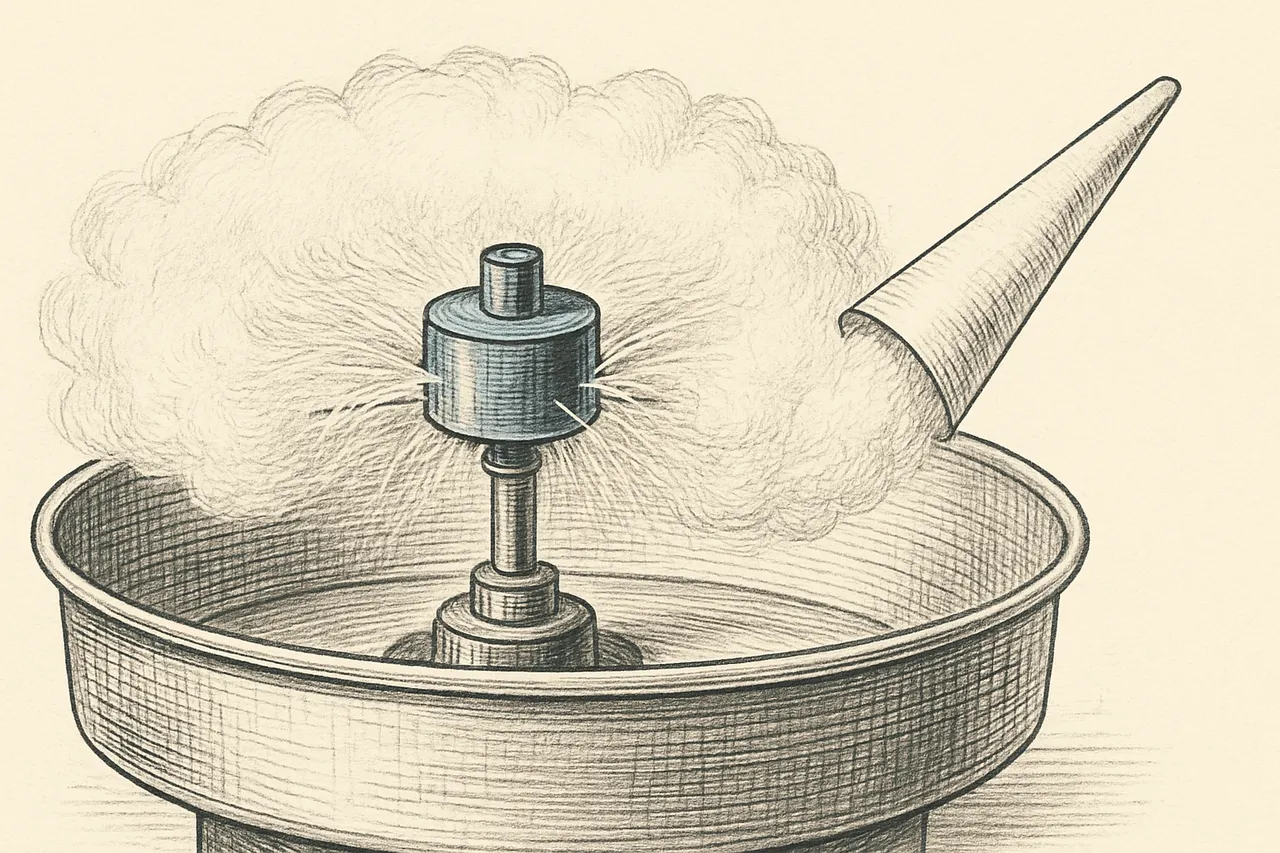
US618428 was filed on December 28, 1897, by William J. Morrison and John C. Wharton, and granted on January 31, 1899. The Patent Office title is Candy-Machine. Morrison was a dentist in Nashville, Tennessee. Wharton was a confectioner.
The machine they patented made cotton candy, and the fact that one of its inventors was a dentist is the part everyone remembers.
Spun sugar before the machine
Spun sugar was not new. European pastry cooks had been making it by hand for a long time, heating sugar until it melted and then flicking or drawing it out with a fork or whisk into fine threads that hardened in the air. It was used to decorate elaborate desserts.
It was also slow, skilled, and hot work, and it produced small amounts. Spun sugar was something served at expensive tables, not something sold by the paper cone.
What the machine does
Morrison and Wharton's machine mechanizes the whole process, and the principle is simple once you see it.
Sugar goes into a small heated head at the center of the machine, where it melts. The head spins rapidly, and centrifugal force drives the liquid sugar outward through very fine holes in its wall.
The streams that come out are so thin that they cool almost instantly in the surrounding air. They cool so fast that the sugar does not have time to form crystals. It solidifies as a glass, in threads finer than a human hair, which drift outward and collect in a large bowl around the spinning head. An operator gathers the web of threads onto a stick or into a container.
That is why cotton candy dissolves the moment it touches your tongue. It is sugar glass in extremely thin strands, with a huge surface area, and most of the volume of a serving is air. A portion that looks large contains much less sugar than its size suggests.
The 1904 World's Fair
The candy reached a mass audience at the Louisiana Purchase Exposition in St. Louis in 1904. It was sold there as Fairy Floss, in small boxes, at a price considered steep for a sweet. It sold anyway, in large numbers. The figure usually cited is more than 68,000 boxes over the course of the fair.
The same fair, and the same crowds, are part of the tangled history of another food that became a fixture, covered in our story on the ice cream cone.
A second dentist
The name cotton candy took over in the 1920s. A New Orleans dentist named Josef Lascaux is often credited with building a similar machine around that time and with popularizing the new name, which makes two dentists in a story about spun sugar. His role is less well documented than Morrison's.
The early machines were temperamental and prone to breaking down. Later designs made the machines reliable enough to run all day at a carnival or ballpark, which is where cotton candy settled permanently.
About the dentist
It is tempting to read something cynical into a dentist co-inventing a pure sugar confection. There is no evidence Morrison saw it that way, and the simpler explanation is that he was an inventive man with a partner who knew candy, and the two of them saw a way to mechanize something that had always been done by hand. Morrison's career as a dentist continued, and the machine was one enterprise among several.
What they built is still recognizable in every cotton candy machine in use: a heated spinning head, a ring of tiny holes, and a bowl to catch what flies out.
See the original
The full text and figures of US618428 are on patents.us.
Related stories
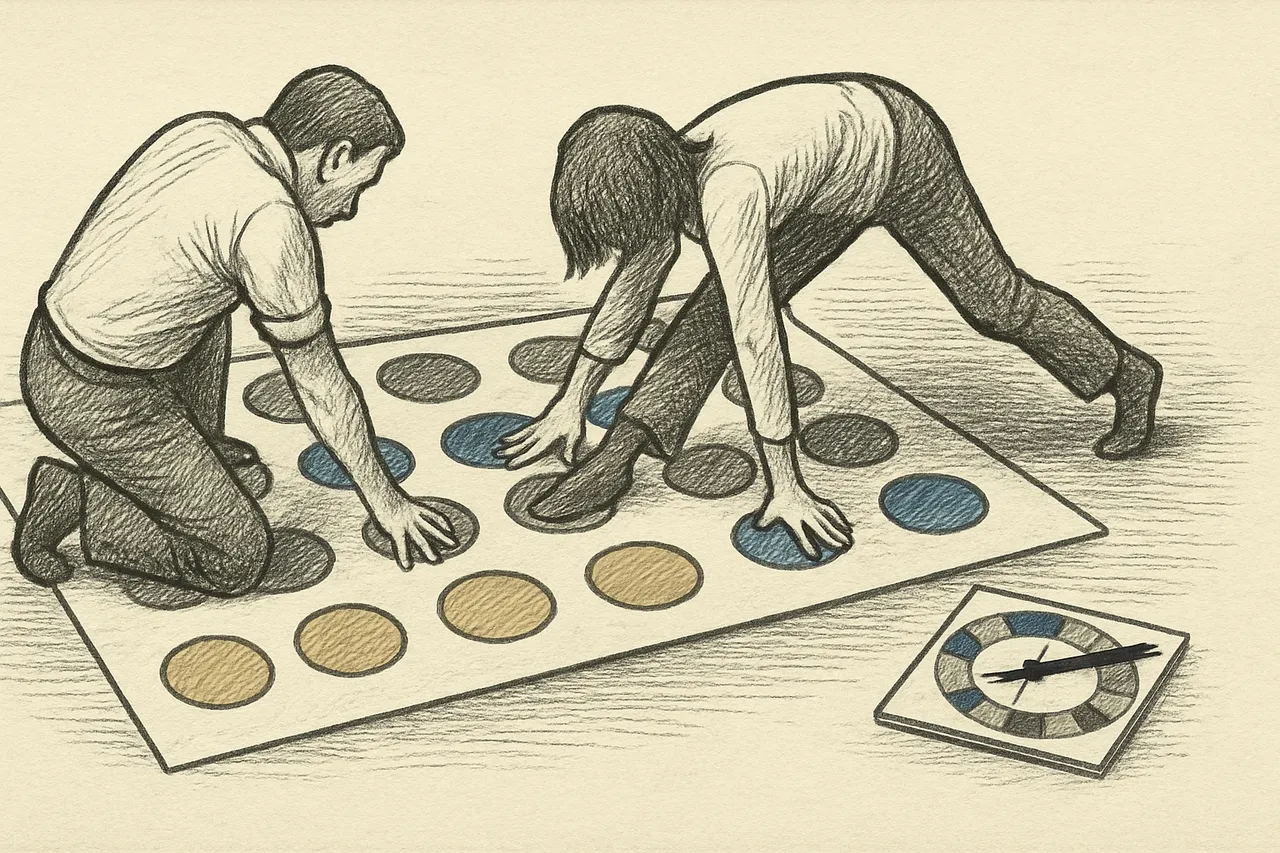
Twister's Patent Is Titled 'Apparatus for Playing a Game Wherein the Players Constitute the Game Pieces'
The patent title is the whole idea: the people are the pieces. Milton Bradley released the game in 1966, some retailers were wary of it, and critics found it a little too intimate. Then Johnny Carson played it on television with Eva Gabor, and the orders poured in.
Read the story →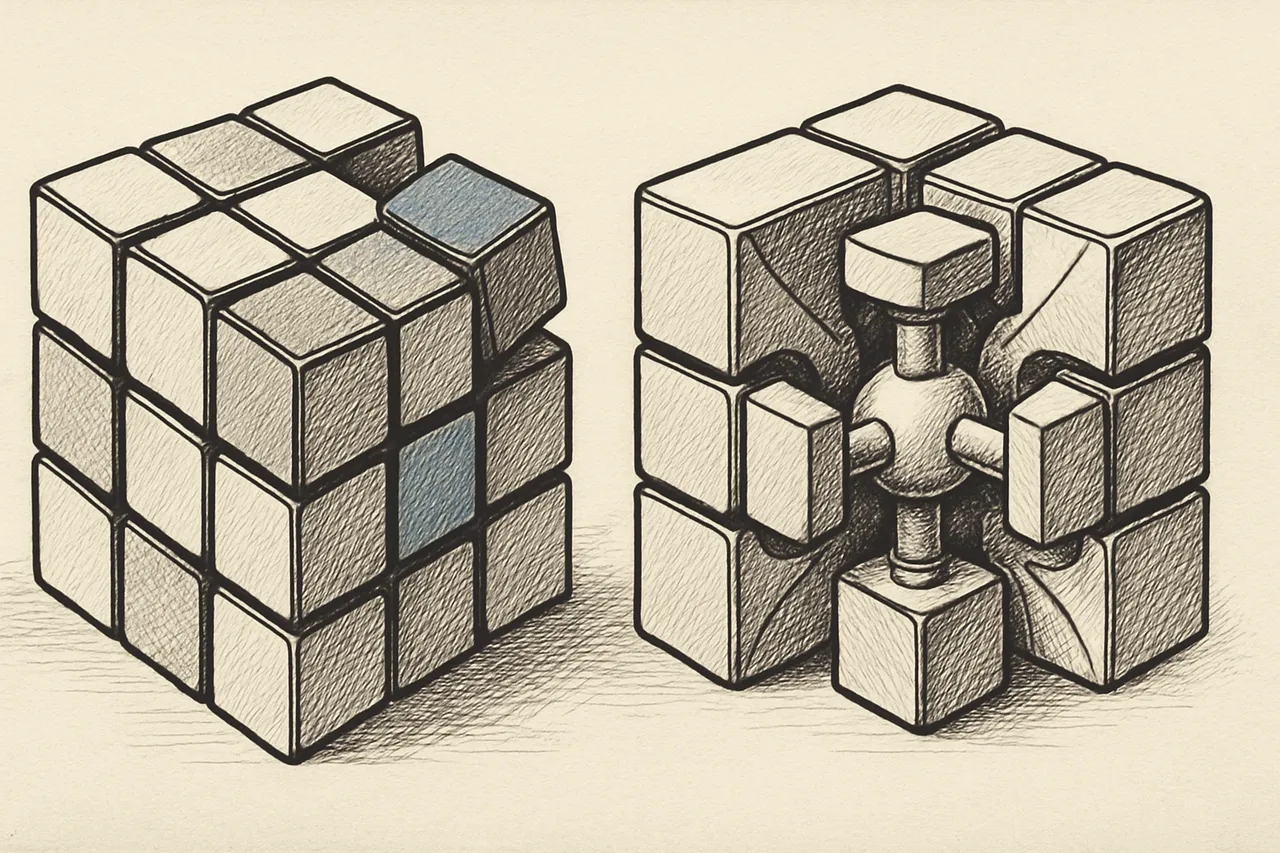
Ernő Rubik Needed About a Month to Solve His Own Cube. An American Court Later Found It Infringed an Earlier US Patent.
Rubik built the first cube in Budapest in 1974 as a way to think about three-dimensional movement. The clever part is how it holds together when most of its pieces are not attached to anything. In the United States, a chemist named Larry Nichols had patented a related puzzle in 1972, and his company sued.
Read the story →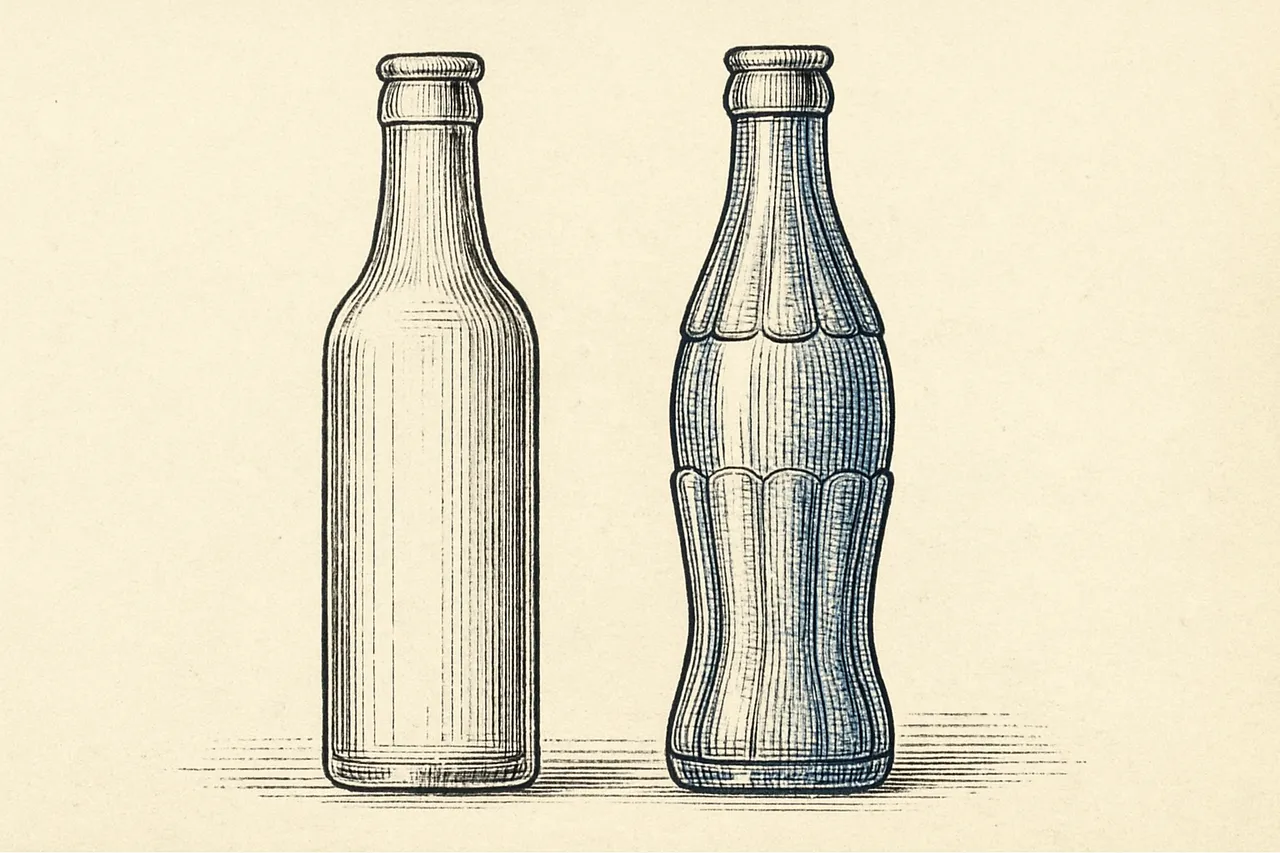
Coca-Cola Asked Glassmakers for a Bottle You Could Recognize in the Dark, or Broken on the Ground
In 1915 Coca-Cola had an imitation problem, since competitors used the same straight-sided bottles and borrowed-sounding names. It challenged glass companies to design a bottle identifiable by touch alone. The winner came from a small glassworks in Terre Haute, Indiana, and the name on the patent is not the name of the man who drew it.
Read the story →
The First American Roller Coaster Ran at Six Miles an Hour, and Its Inventor Built It to Lure People Away From Saloons
LaMarcus Thompson's Switchback Railway opened at Coney Island in 1884. Riders sat sideways on a bench, coasted down a gentle undulating track, then got out while attendants pushed the car over a switch so they could coast back the other way. It cost a nickel and it made a fortune.
Read the story →