The Ice Cream Cone Has at Least Five Claimed Inventors and One Very Convenient Legend
The story says a waffle vendor at the 1904 St. Louis World's Fair rescued a neighboring ice cream seller who ran out of dishes. It is a wonderful story. It is also contradicted by a patent filed in New York the year before.
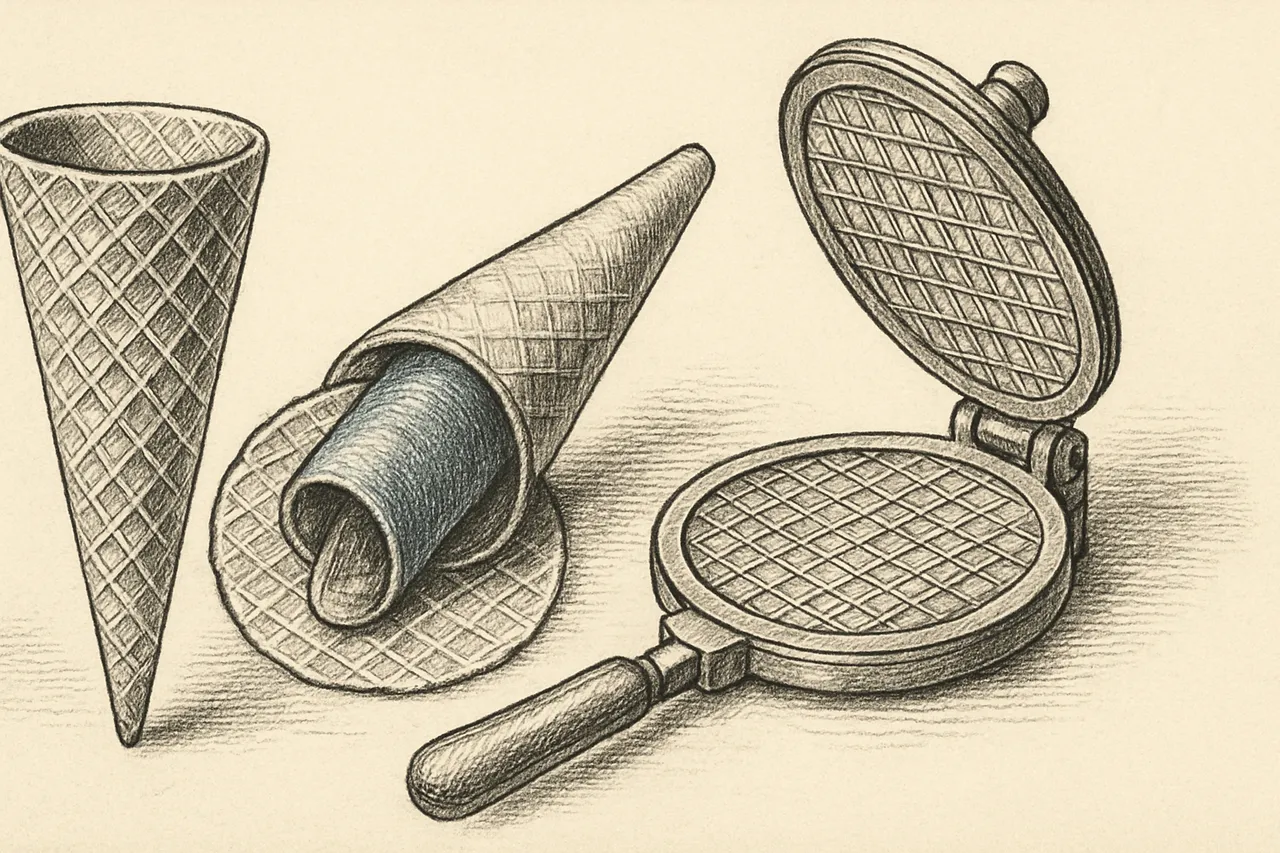
US1032261 was granted to Frederick Bruckman in 1912 for a machine for rolling ice cream cones. It is one of several patents in the cone's tangled history, and it arrives long after the argument about who invented the thing had already started.
The popular story is fixed and charming. At the 1904 Louisiana Purchase Exposition in St. Louis — the World's Fair — an ice cream vendor ran out of paper dishes on a hot day. A Syrian immigrant named Ernest Hamwi, selling a crisp waffle pastry called zalabis at the next stall, rolled one of his wafers into a cone, handed it over, and the ice cream cone was born.
It is a good story: immigrant ingenuity, a hot afternoon, a happy accident, an American icon. Versions of it are told at the fair's own historical exhibits.
The trouble with it
The trouble is that the cone predates the fair.
In 1903, a year before St. Louis, Italo Marchiony — an Italian immigrant selling ice cream from a pushcart in New York City — was granted a patent for a mold to make edible cups with sloping sides and a handle, produced in a hinged, waffle-iron-like device. He had reportedly been selling ice cream in edible pastry cups on the streets of New York since the 1890s, driven by a very practical problem: customers kept walking off with, or breaking, his glass serving dishes.
Earlier still, edible cones and rolled wafers served with ice cream appear in European cookbooks and illustrations going back into the nineteenth century. The idea of putting ice cream into something you could eat was not a bolt from the blue in 1904.
What likely did happen at St. Louis is that the cone met the American mass public. The fair drew roughly twenty million visitors, and multiple vendors there — Hamwi among several others who later claimed credit, including David Avayou and Abe Doumar — were selling ice cream in rolled waffles. The exposure turned a local curiosity into a national habit.
Why it stays contested
At least five people have been credited as the cone's inventor at various points, and the records genuinely conflict. Patents exist for molds and rolling machines from several inventors across a decade. Newspaper accounts from the fair are inconsistent. Family claims, understandably, are firm.
The honest summary is the one this archive keeps arriving at: popular objects rarely have a single inventor. They have a slow accumulation of people solving the same problem, one of whom happens to be standing in the right place when the public shows up.
The 1904 fair is not where the ice cream cone was invented. It is where it was discovered — by everybody at once, which is a different and in some ways more important event.
See the original
The full text and figures of US1032261 are on patents.us.
Related stories
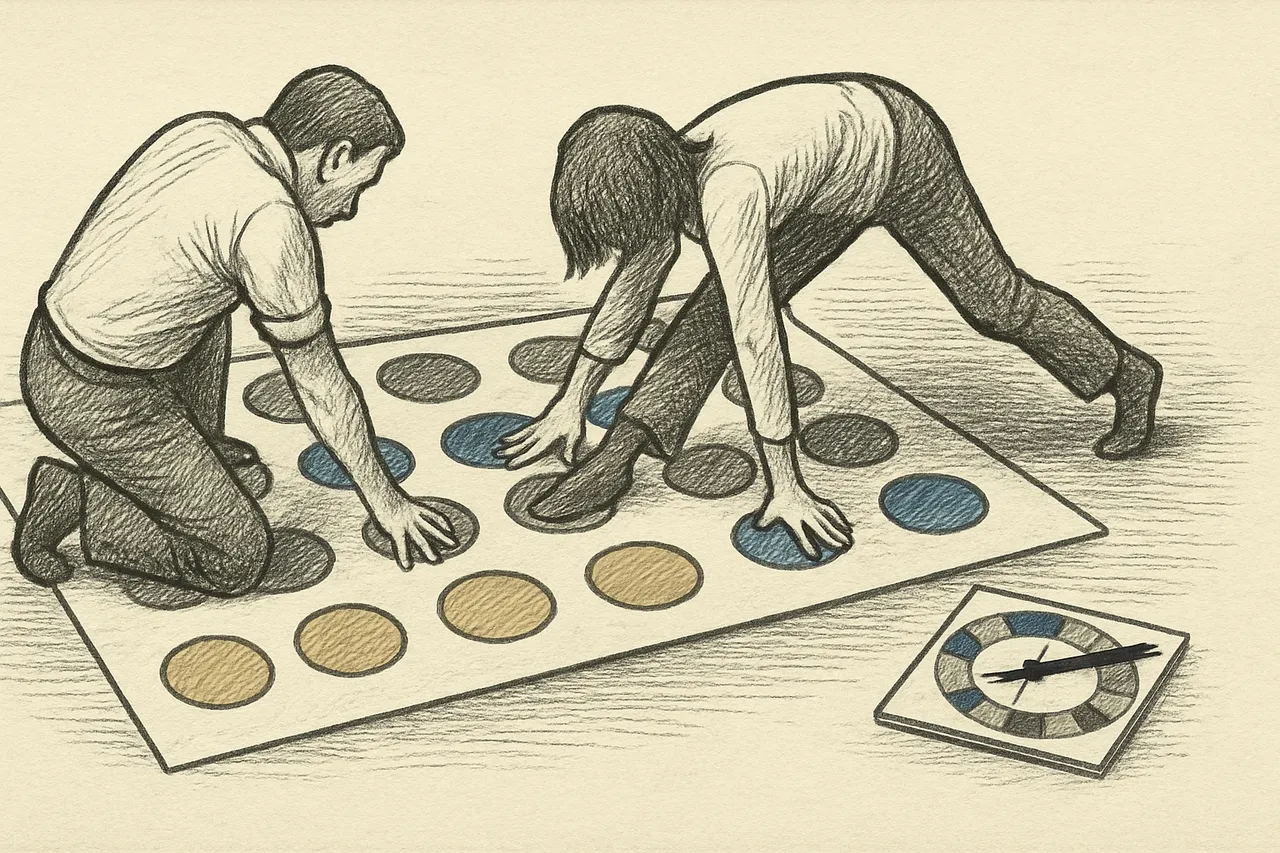
Twister's Patent Is Titled 'Apparatus for Playing a Game Wherein the Players Constitute the Game Pieces'
The patent title is the whole idea: the people are the pieces. Milton Bradley released the game in 1966, some retailers were wary of it, and critics found it a little too intimate. Then Johnny Carson played it on television with Eva Gabor, and the orders poured in.
Read the story →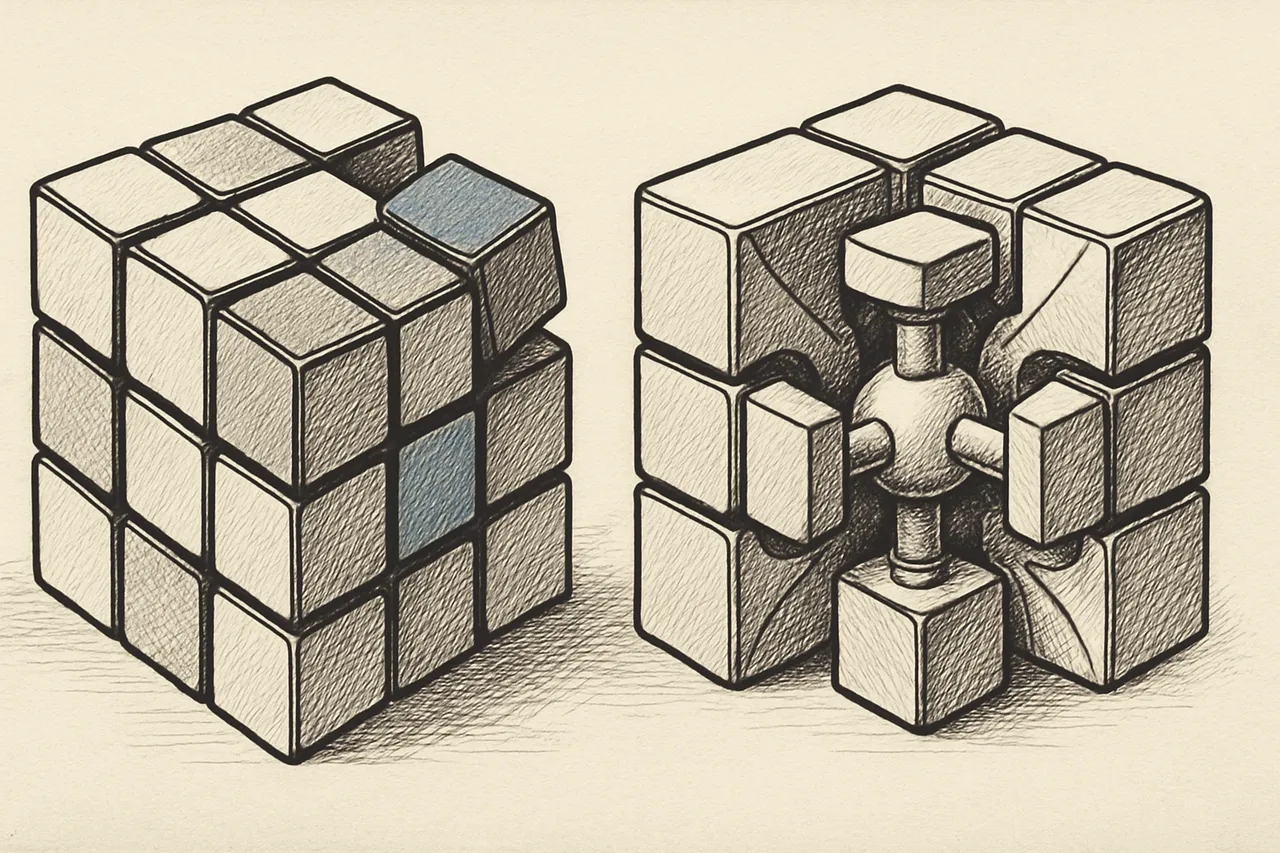
Ernő Rubik Needed About a Month to Solve His Own Cube. An American Court Later Found It Infringed an Earlier US Patent.
Rubik built the first cube in Budapest in 1974 as a way to think about three-dimensional movement. The clever part is how it holds together when most of its pieces are not attached to anything. In the United States, a chemist named Larry Nichols had patented a related puzzle in 1972, and his company sued.
Read the story →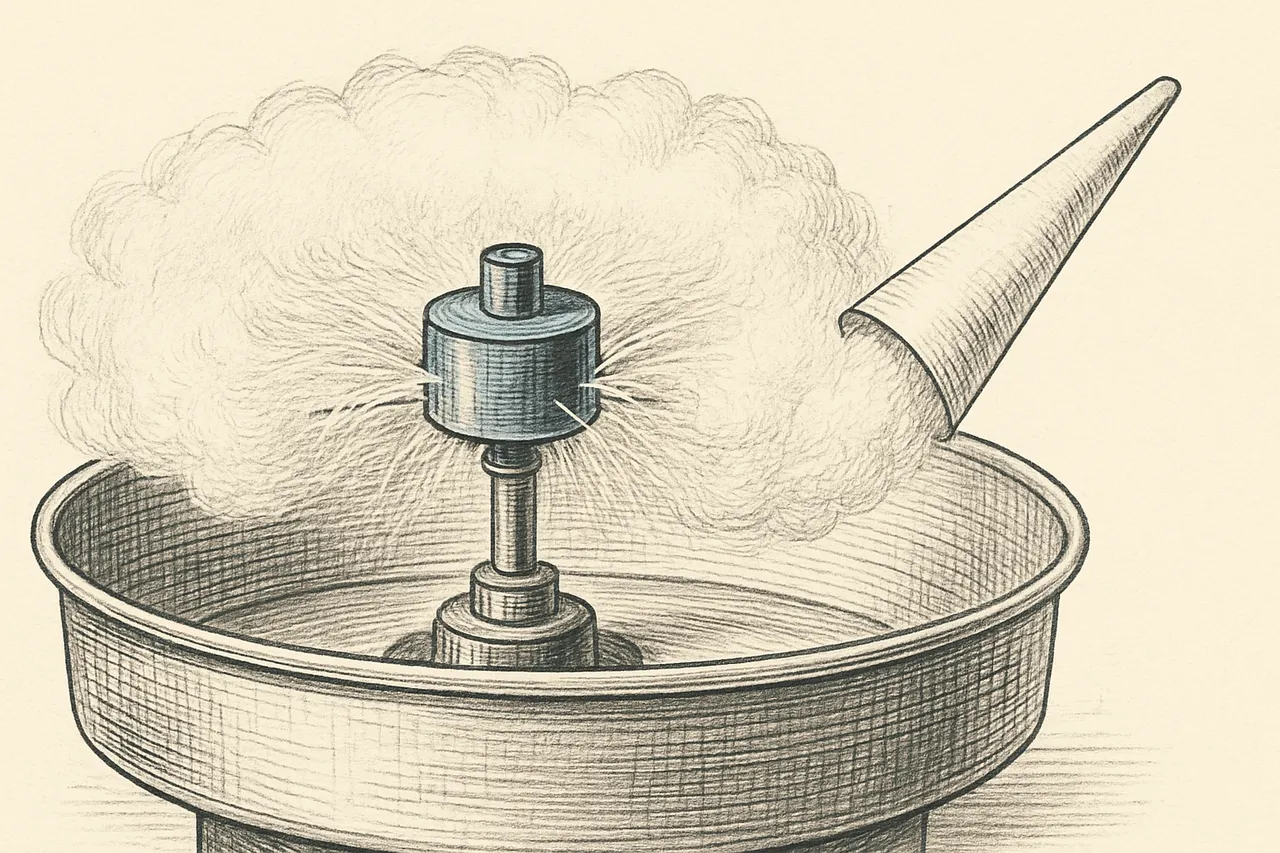
A Dentist Co-Invented the Cotton Candy Machine, and It Was Sold at the 1904 World's Fair as Fairy Floss
William Morrison was a dentist and John Wharton was a candy maker. Their machine melted sugar and flung it through tiny holes so that it cooled into threads finer than hair before it could crystallize. They filed in 1897, and at the St. Louis World's Fair it was a sensation.
Read the story →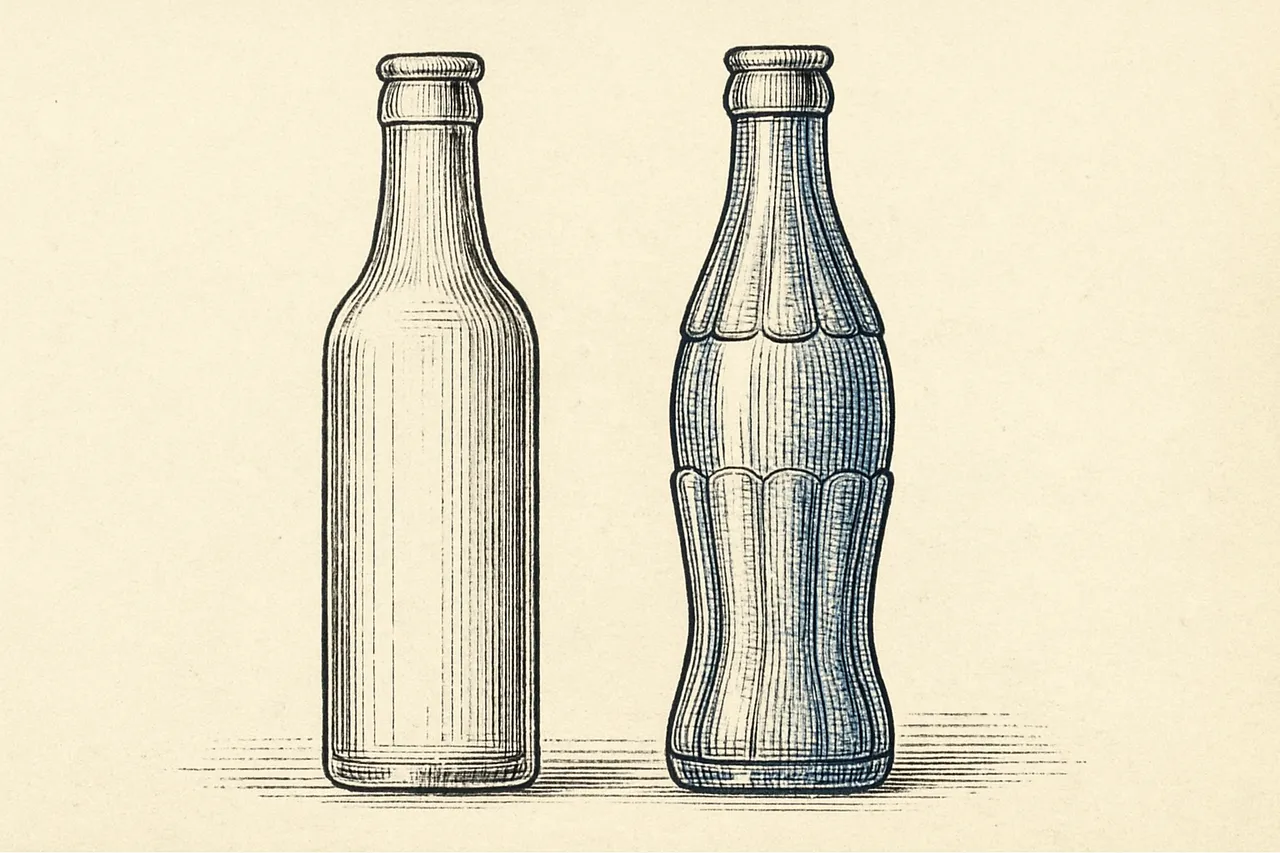
Coca-Cola Asked Glassmakers for a Bottle You Could Recognize in the Dark, or Broken on the Ground
In 1915 Coca-Cola had an imitation problem, since competitors used the same straight-sided bottles and borrowed-sounding names. It challenged glass companies to design a bottle identifiable by touch alone. The winner came from a small glassworks in Terre Haute, Indiana, and the name on the patent is not the name of the man who drew it.
Read the story →