Clarence Birdseye Watched Inuit Fishermen Pull Fish From a Hole in the Ice and Worked Out Why Frozen Food Tasted Bad
Frozen food existed long before Birdseye and it was considered close to inedible. What he figured out in Labrador is that the problem was never freezing. It was freezing slowly, and the difference comes down to the size of the ice crystals.
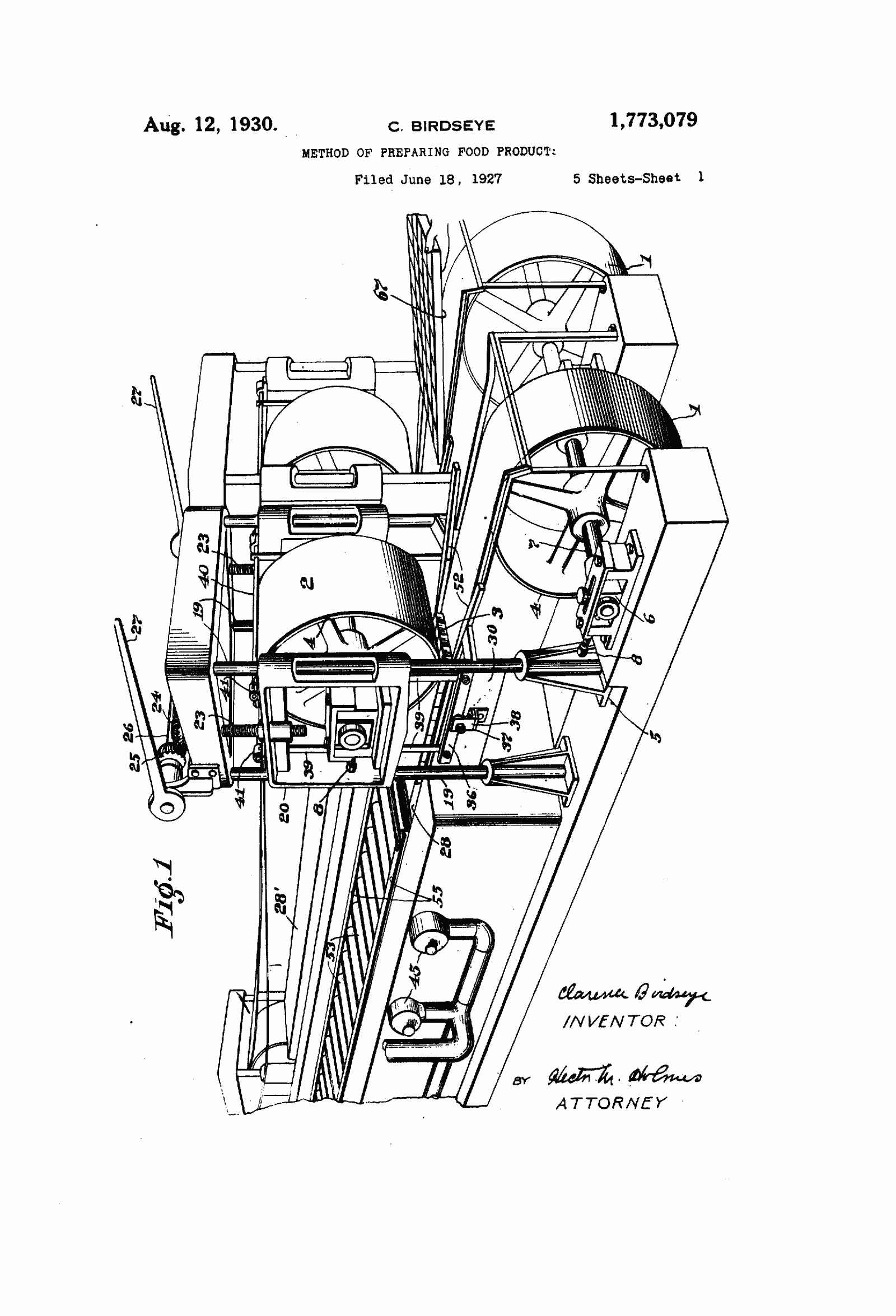
US1773079 was filed by Clarence Birdseye on June 18, 1927, under the title Method of Preparing Food Products. It is one of a large group of patents he filed through the 1920s, and together they created the frozen food industry.
The thing worth understanding is that Birdseye did not invent freezing food. People had been doing that for as long as there had been cold places. He worked out why the results were usually terrible.
Labrador
Birdseye spent time in Labrador in the 1910s working as a fur trader and naturalist. The winters there run far below zero, and he watched local Inuit fishermen pull fish up through holes cut in the ice.
What he noticed is that the fish froze almost the instant they hit the air, which at those temperatures could be forty below. And when those fish were thawed and cooked weeks or months later, they tasted like fresh fish. Not acceptable fish. Fresh.
This did not match what he knew about frozen food back home, which was widely regarded as a last resort. Commercially frozen fish in the United States at the time was mushy, watery, and unpleasant, to the point that frozen goods carried a genuine stigma and sold at a discount.
Same fish. Same freezing. Completely different result.
The size of the crystals
The explanation is the entire patent, and it is a nice piece of physics.
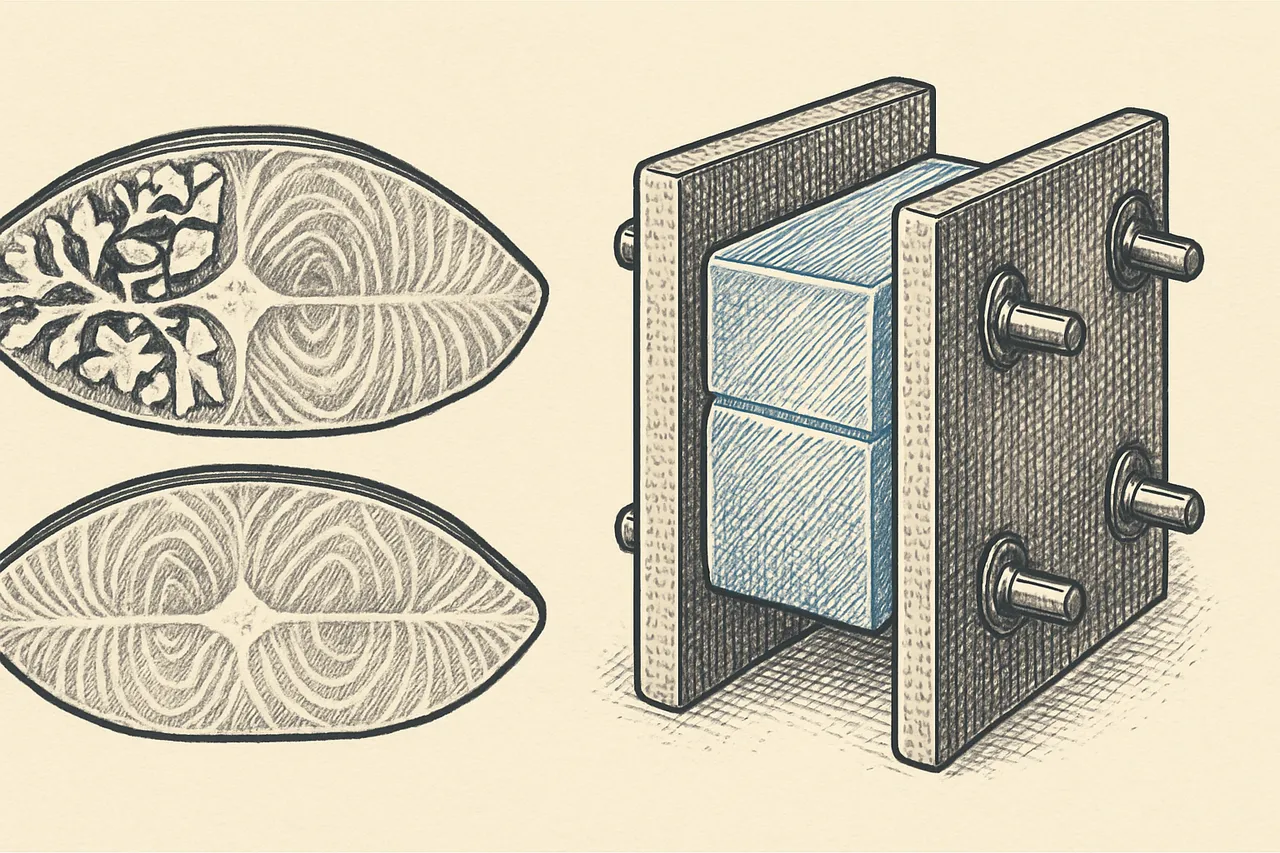
When water freezes slowly, the ice organizes itself into large crystals. Inside a piece of meat or fish, that water is held within cells and between muscle fibers, and large crystals growing in that space act like blades. They puncture cell walls and tear the fiber structure apart.
The damage is invisible while the food stays frozen. It shows up on thawing, when the ruptured cells cannot hold their liquid any more. The moisture runs out, taking flavor compounds with it, and what is left is the limp, dry, watery texture that gave frozen food its bad name. The food was not spoiled. It was structurally destroyed.
When water freezes very fast, there is no time for large crystals to form. You get a great many very small crystals instead, small enough that they sit within the tissue without slicing it open. The cell walls survive. On thawing, the food holds its own moisture, and it behaves like fresh food because structurally it still is.
Slow freezing and fast freezing are not different degrees of the same process. They produce physically different material.
Turning that into a machine
Knowing this does not get you a product. The engineering problem is removing heat from food fast enough, in industrial quantities, on a factory floor.
Birdseye's approach was to package the food first, in flat, relatively thin cartons, and then press those packages between metal plates chilled to well below freezing. Metal conducts heat far better than air does, contact on both faces halves the distance heat has to travel, and a thin flat package has very little interior that is far from a cold surface.
That combination is what makes the freeze fast enough. The system is usually described as the multiplate quick freeze machine, and the principle is still how commercial freezing works.
The flat rectangular package that frozen food still comes in is not a merchandising choice. It is a consequence of the physics.
What he sold, and for how much
Birdseye founded a company, struggled with it, and in 1929 sold the business and patents to Postum Company and Goldman Sachs for $22 million, which was an enormous sum. The buyer became General Foods, and the brand kept his name, respaced as Birds Eye.
He had to solve one more problem that was not technical. Almost nobody owned a freezer. Grocery stores had no way to hold frozen goods and no reason to want them. The company ended up leasing freezer display cases to retailers cheaply, because the product could not exist without a distribution chain that had never been built.
Birdseye held close to 300 patents when he died. The frozen food aisle exists because a fur trader paid attention to how fast a fish stopped moving.
See the original
The full text and figures of US1773079 are on Google Patents.
Related stories
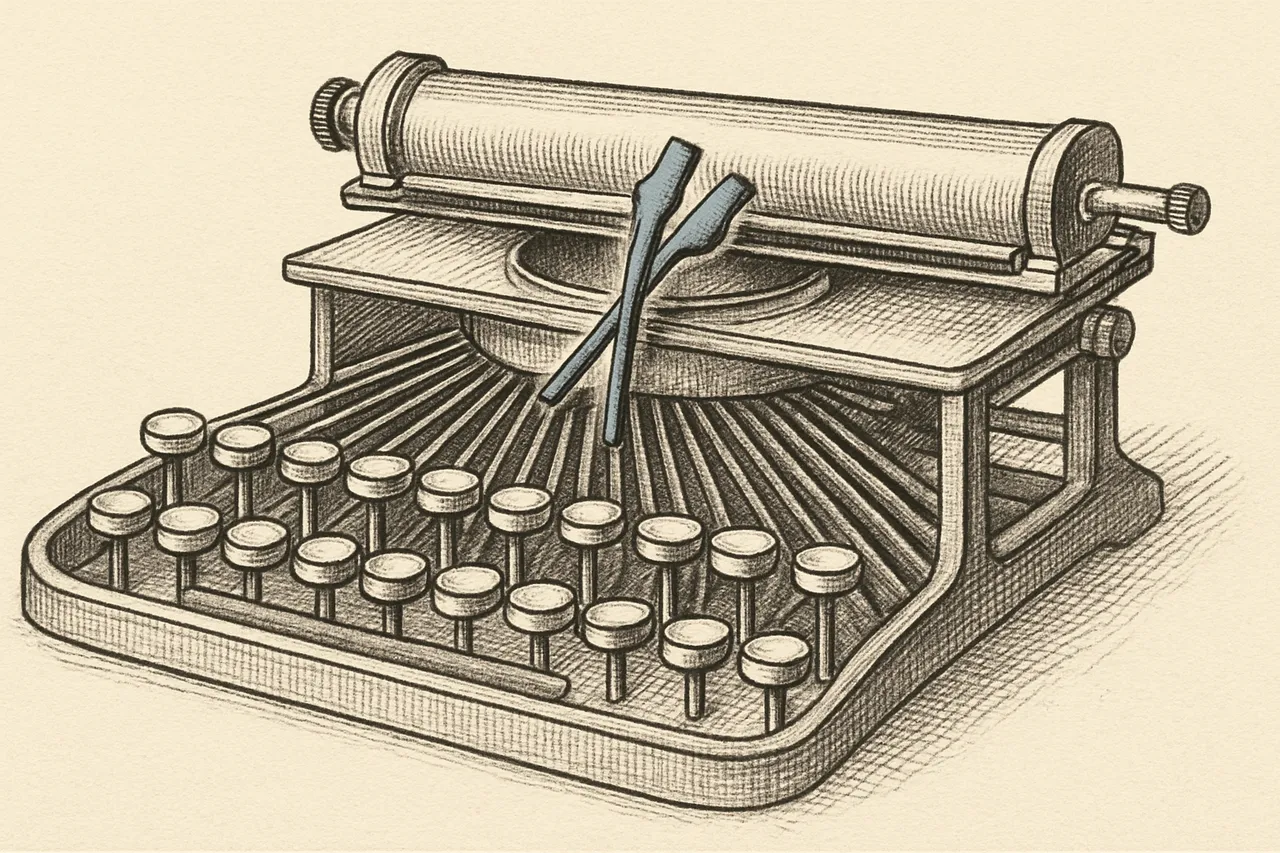
The 1868 Patent Behind the First Successful Typewriter Had Its Keys in Alphabetical Order. QWERTY Came Later, and Nobody Fully Agrees Why.
Christopher Latham Sholes and two partners patented a typewriter in Milwaukee in 1868 with keys arranged like a piano, roughly in alphabetical order. Over the next several years the letters were shuffled into QWERTY. The popular explanation for that is a distortion of a better one.
Read the story →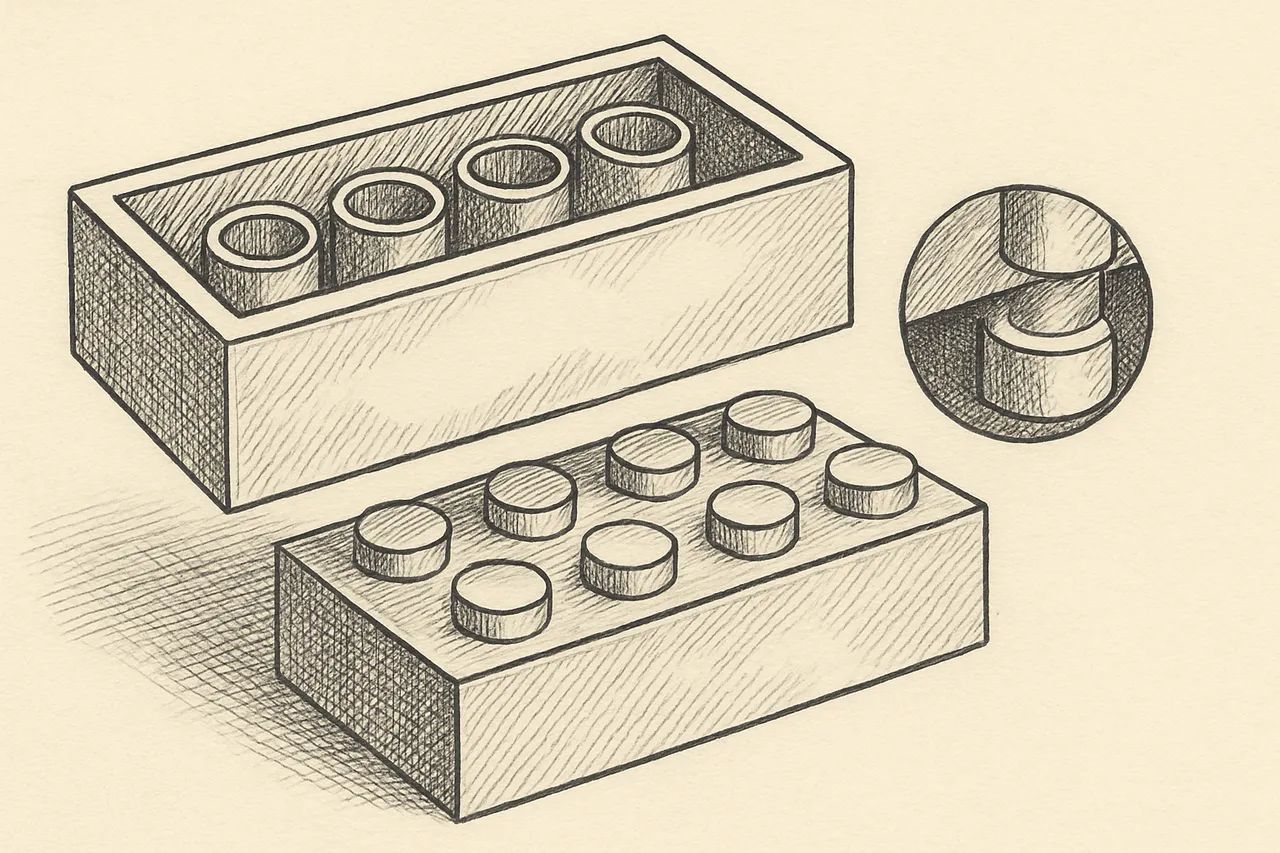
LEGO Bricks Were on Sale for Nine Years Before They Held Together Properly. The Fix Was a Row of Hollow Tubes.
The first LEGO bricks had studs on top and an empty space underneath, so models tended to come apart when you picked them up. Godtfred Kirk Christiansen's 1958 design put tubes inside the brick, and a brick molded that year still fits one molded today.
Read the story →
Volvo Patented the Three-Point Seat Belt in 1959, Then Opened the Patent to Every Rival It Had
Nils Bohlin came from building ejection seats for fighter aircraft, and he solved the seat belt in about a year. Volvo then did the thing companies almost never do with a patent that valuable: it made the design free to use, on the grounds that keeping it would cost lives.
Read the story →
Super Glue Was Discovered Twice by the Same Man, and He Threw It Out Both Times
Harry Coover found cyanoacrylate in 1942 while trying to make gun sights, and dismissed it for sticking to everything. He ran into it again in 1951 doing jet canopies. It took nine years and a second accident before anyone recognized that sticking to everything was the product.
Read the story →