The 1868 Patent Behind the First Successful Typewriter Had Its Keys in Alphabetical Order. QWERTY Came Later, and Nobody Fully Agrees Why.
Christopher Latham Sholes and two partners patented a typewriter in Milwaukee in 1868 with keys arranged like a piano, roughly in alphabetical order. Over the next several years the letters were shuffled into QWERTY. The popular explanation for that is a distortion of a better one.
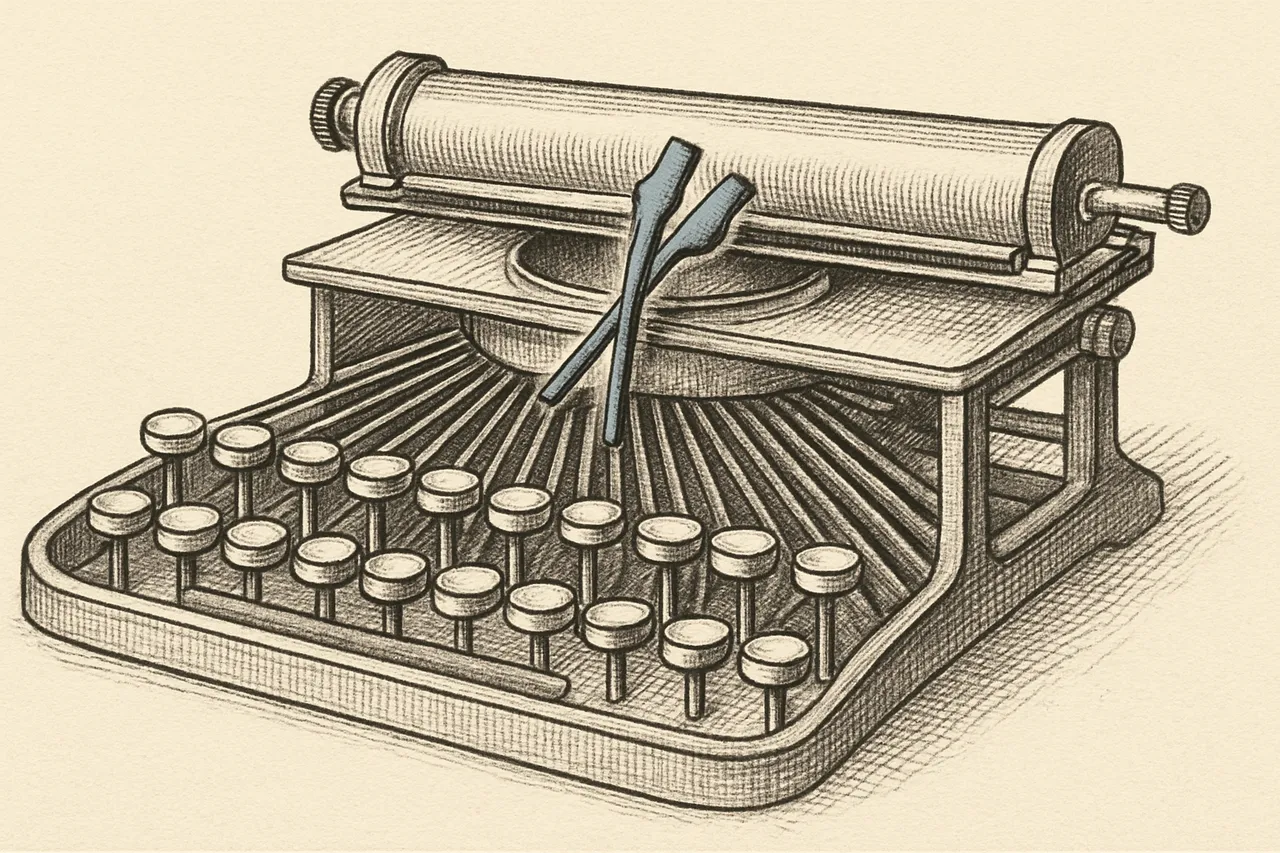
US79265 was granted on June 23, 1868, to C. Latham Sholes, Carlos Glidden, and Samuel W. Soule, all of Milwaukee, Wisconsin. The title is Improvement in Type-Writing Machines. It describes the machine that became the first commercially successful typewriter.
It does not describe the QWERTY keyboard. That arrived several years later, and the reasons for it are more interesting than the version usually repeated.
Not the first typewriter
People had been patenting writing machines for decades before 1868. William Austin Burt received a US patent in 1829 for a device he called the typographer, and a long list of inventors in several countries built machines that could, with patience, put letters on paper. Most were slow, awkward, or impractical to manufacture.
Sholes was a newspaper publisher and Wisconsin politician, not a trained machinist. Working with Glidden and Soule in a Milwaukee machine shop, he developed a design good enough to attract serious investment, most importantly from James Densmore, who pushed the inventors through years of refinement.
The keyboard in the patent
The machine shown in the 1868 patent has keys laid out much like a piano keyboard, in rows, with the letters arranged in roughly alphabetical order.
That is the obvious way to do it. If you are designing the first keyboard most people will ever use, putting A next to B next to C makes the keys easy to find.
The jamming problem
The layout ran into a mechanical problem.
In the Sholes design, each key drives a long metal typebar with a letter on its tip. The typebars are arranged in a circle beneath the paper, and each one swings up to strike the underside of the roller at a single common point. Because they all converge on the same spot, neighboring typebars in the circle pass very close to one another.
If a typist hits two keys in rapid succession whose typebars sit near each other, the first bar may not have fallen back before the second rises. The two collide and jam, and the typist has to stop and free them by hand. The typist could not easily see it happening either, because these early machines struck the underside of the paper, and the text was hidden until the carriage was moved.
How the letters moved
Over the next several years, as Sholes and Densmore tested machines with real users and made revisions, the arrangement of letters changed repeatedly. By the time the gun manufacturer E. Remington and Sons put the machine on sale in 1874, as the Sholes and Glidden Type-Writer, the keyboard was very close to QWERTY, with a few letters in different positions. Later adjustments produced the layout used today.
The explanations
The most popular explanation is that QWERTY was designed to slow typists down so the machine would not jam. This is a distortion. There is little evidence the goal was to make typing slower. The more defensible version is that the letters were arranged to keep commonly paired letters from sitting on typebars that would collide, which is a matter of where the bars sit in the mechanism, not of making anyone type less quickly.
Even that explanation does not account for everything. Some very common letter pairs, such as E and R, ended up right next to each other on the keyboard.
A different proposal, put forward by the Japanese researchers Koichi and Motoko Yasuoka, is that the layout was shaped by the machine's early users, especially telegraph operators transcribing Morse code, and that some letters were grouped because those operators needed to distinguish between codes that were easily confused. It is a serious argument, and it fits some details of the layout that the jamming explanation does not.
There is also a well-known story that the letters of the word TYPEWRITER were deliberately placed on the top row so salesmen could type the brand name quickly in demonstrations. It is true that the word can be typed entirely from the top row. There is no good evidence that this was the reason.
The honest summary is that QWERTY emerged from years of trial, mechanical constraint, and user feedback, and nobody wrote down a clear rationale at the time.
Why it never went away
Once typists had been trained on QWERTY and businesses had filled offices with QWERTY machines, changing the layout became very difficult. August Dvorak patented an alternative keyboard in the 1930s designed for speed and comfort, and it never displaced the original.
Economists have argued for decades about what QWERTY proves. Some treat it as the classic example of an inferior standard locked in by history. Others have challenged the evidence that the alternatives were meaningfully better. That argument continues.
What is not in dispute is that the mechanism QWERTY was arranged around, a circle of metal typebars striking one point on a roller, disappeared from most keyboards long ago. The letter order it produced is on nearly every phone and laptop in the world.
See the original
The full text and figures of US79265 are on patents.us.
Related stories
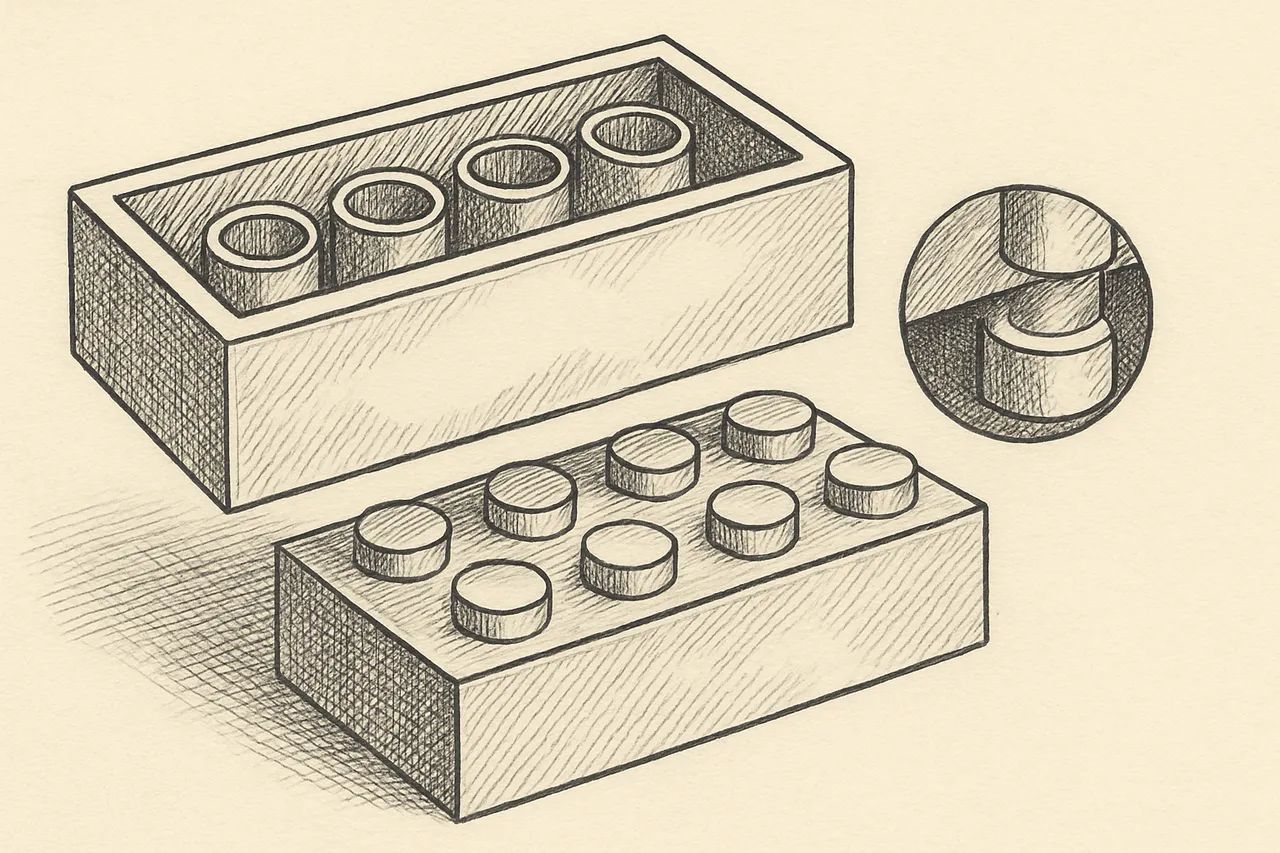
LEGO Bricks Were on Sale for Nine Years Before They Held Together Properly. The Fix Was a Row of Hollow Tubes.
The first LEGO bricks had studs on top and an empty space underneath, so models tended to come apart when you picked them up. Godtfred Kirk Christiansen's 1958 design put tubes inside the brick, and a brick molded that year still fits one molded today.
Read the story →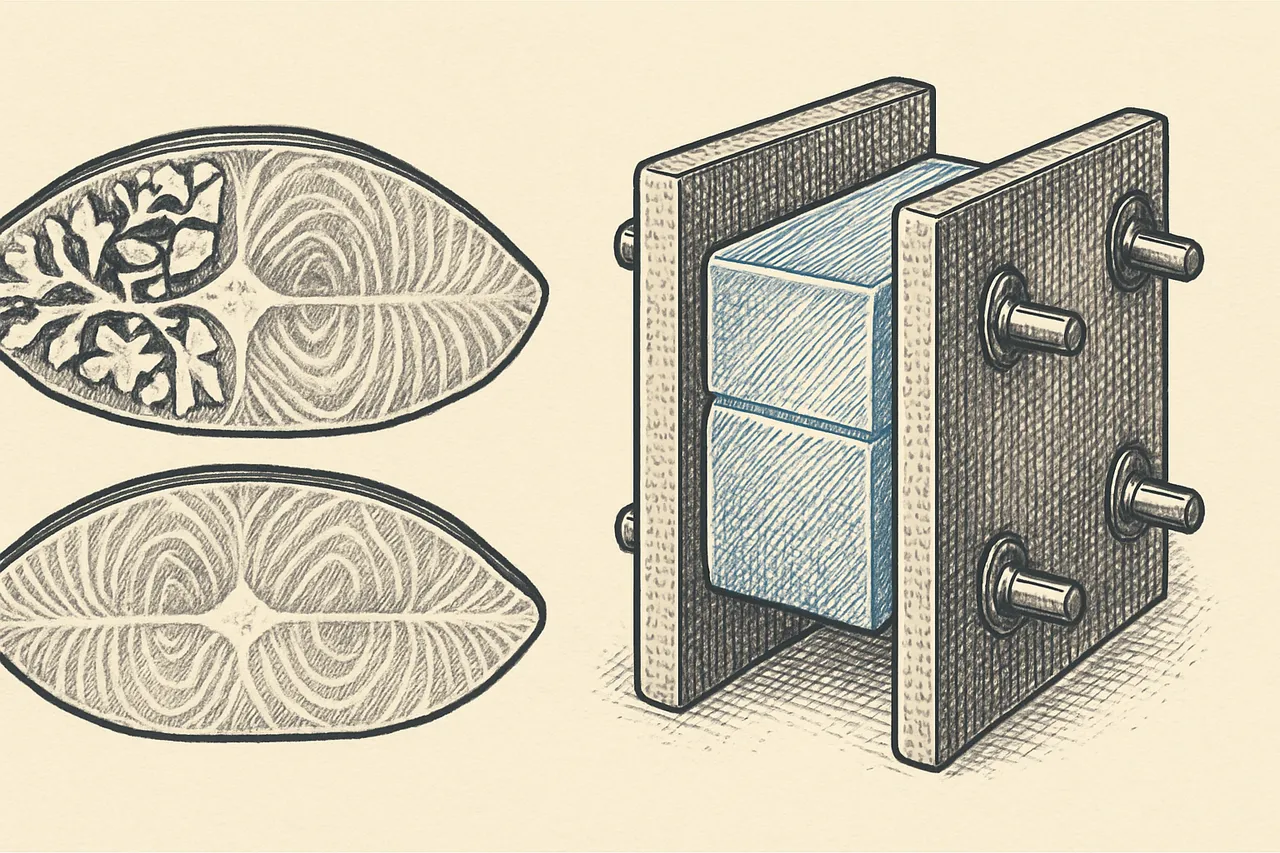
Clarence Birdseye Watched Inuit Fishermen Pull Fish From a Hole in the Ice and Worked Out Why Frozen Food Tasted Bad
Frozen food existed long before Birdseye and it was considered close to inedible. What he figured out in Labrador is that the problem was never freezing. It was freezing slowly, and the difference comes down to the size of the ice crystals.
Read the story →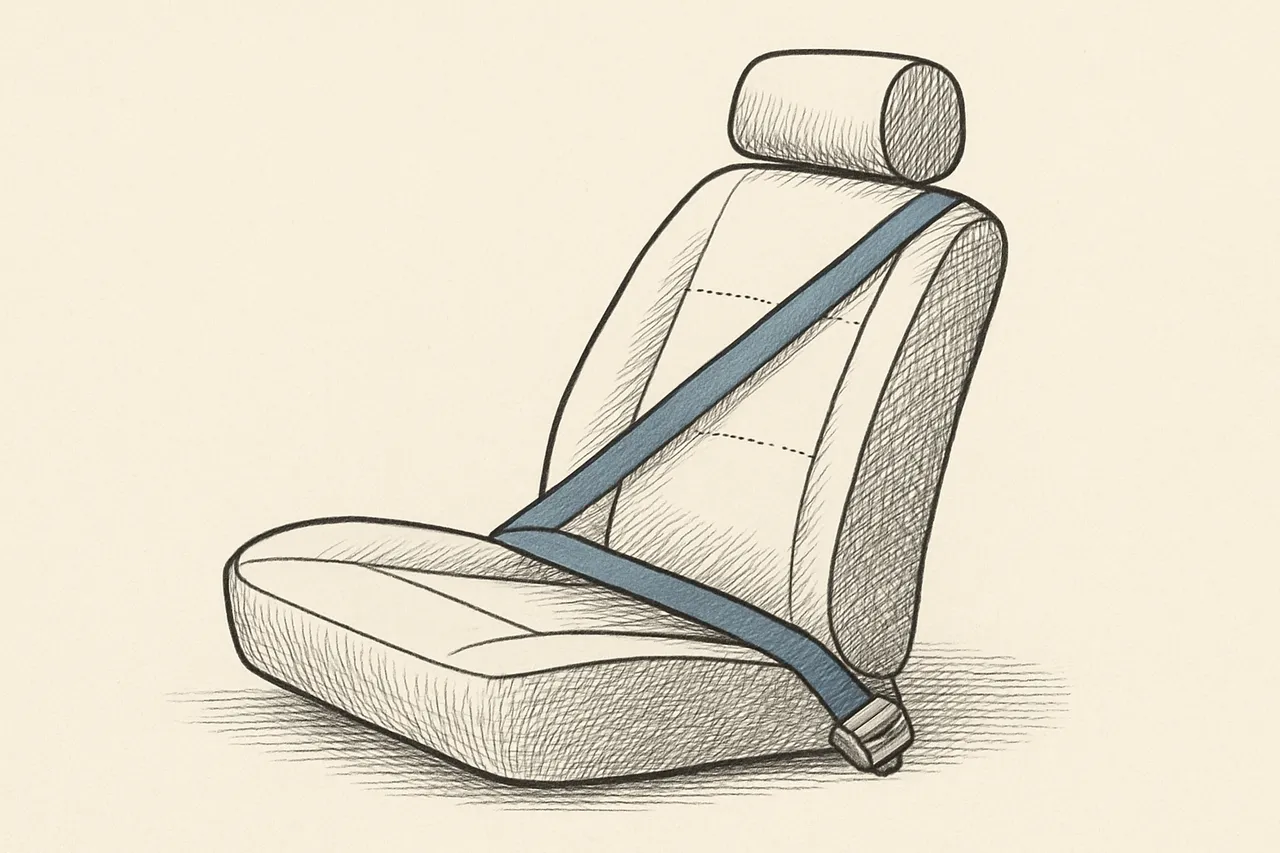
Volvo Patented the Three-Point Seat Belt in 1959, Then Opened the Patent to Every Rival It Had
Nils Bohlin came from building ejection seats for fighter aircraft, and he solved the seat belt in about a year. Volvo then did the thing companies almost never do with a patent that valuable: it made the design free to use, on the grounds that keeping it would cost lives.
Read the story →
Super Glue Was Discovered Twice by the Same Man, and He Threw It Out Both Times
Harry Coover found cyanoacrylate in 1942 while trying to make gun sights, and dismissed it for sticking to everything. He ran into it again in 1951 doing jet canopies. It took nine years and a second accident before anyone recognized that sticking to everything was the product.
Read the story →