Super Glue Was Discovered Twice by the Same Man, and He Threw It Out Both Times
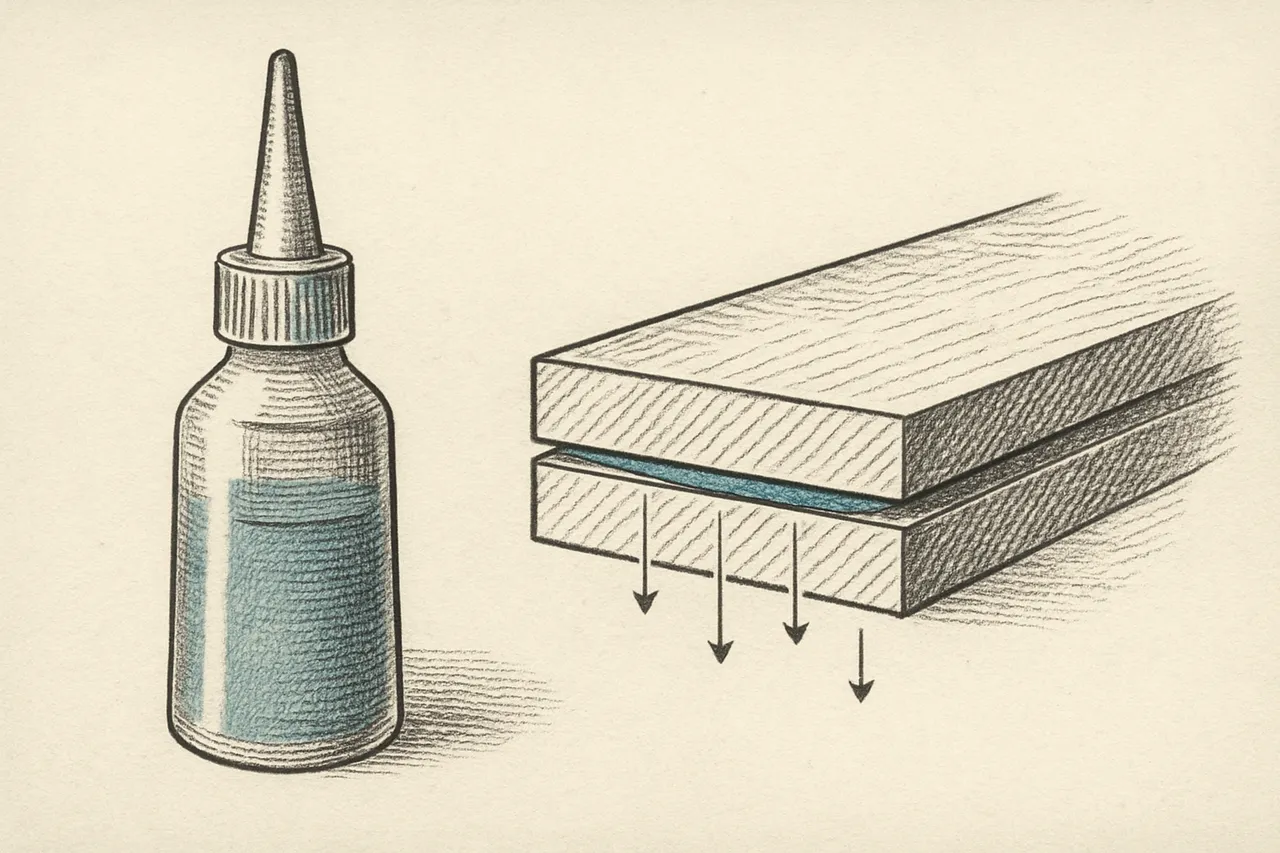
Harry Coover found cyanoacrylate in 1942 while trying to make gun sights, and dismissed it for sticking to everything. He ran into it again in 1951 doing jet canopies. It took nine years and a second accident before anyone recognized that sticking to everything was the product.
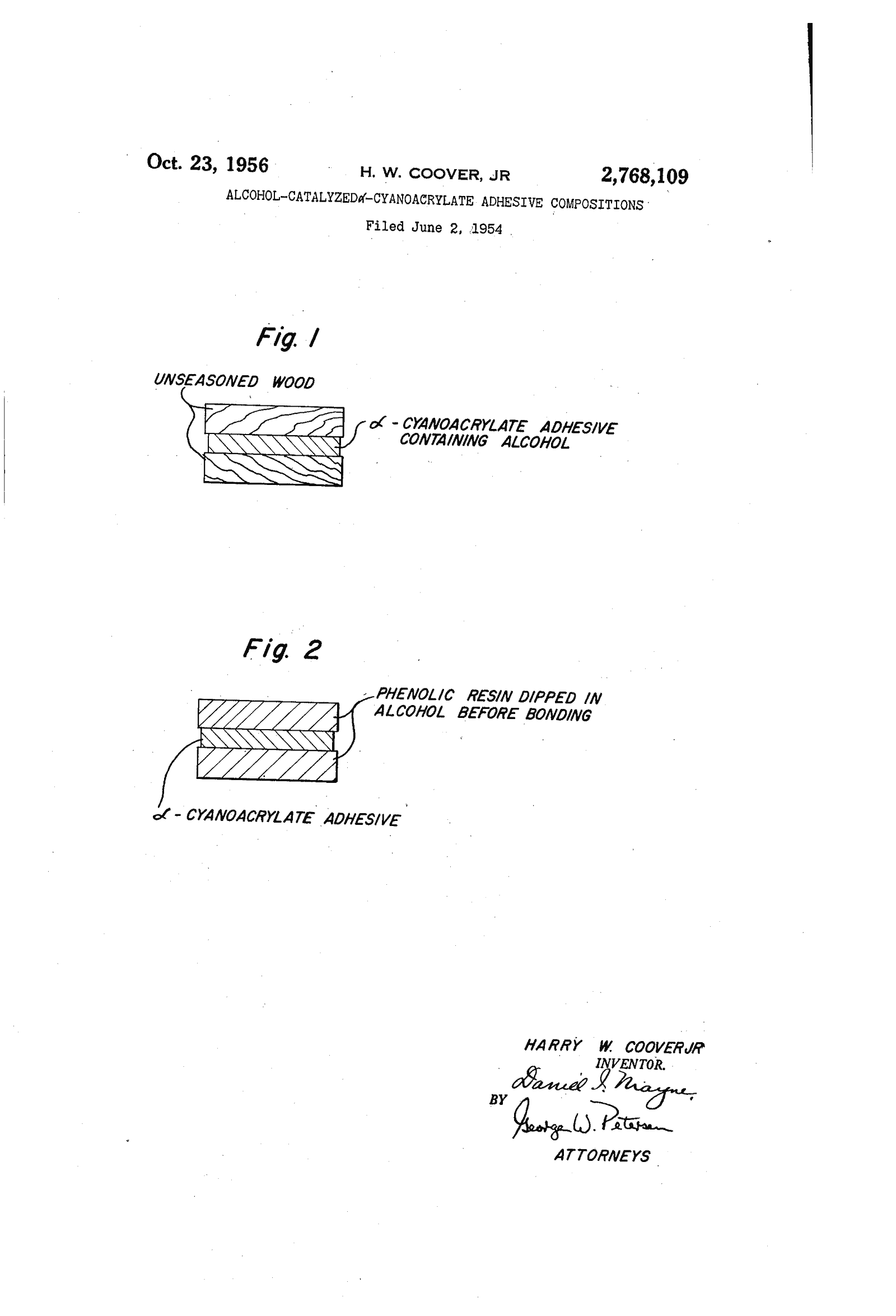
US2768109 was filed by Harry Wesley Coover Jr. on June 2, 1954, under a title that gives away nothing: Alcohol-catalyzed alpha-cyanoacrylate adhesive compositions. The product is super glue, and the history behind the filing is a good demonstration of how hard it can be to recognize a discovery when it is standing in front of you.
Coover found the compound twice, nine years apart, and the first time he threw it away.
1942: the gun sights
During the Second World War, Coover was working at Eastman Kodak on a project to produce clear plastic gun sights. The team was evaluating a family of compounds called cyanoacrylates, hoping one would form a suitably transparent optical plastic.
The cyanoacrylates were useless for the purpose. They stuck to everything they touched. Every piece of equipment they contacted was ruined, samples bonded to their containers, and the material could not be worked with in any normal laboratory sense.
The project rejected them. From the standpoint of building a gun sight, this is entirely correct, and it is worth saying plainly that the decision was not stupid. They needed a clear plastic. They had a substance that destroyed lab glassware.
1951: the jet canopies
Nine years later, Coover was supervising work at a Kodak facility in Tennessee on heat-resistant polymers for jet aircraft canopies. A researcher on the project, Fred Joyner, spread a film of ethyl cyanoacrylate between the two prisms of a refractometer to measure its refractive index.
The prisms bonded permanently. The instrument was expensive and it was finished.
This time Coover understood what he was looking at. The compound did not need heat. It did not need pressure. It did not need a catalyst added by the user. It simply bonded, instantly, under ordinary conditions.
Why it works
The mechanism is why the material kept ruining equipment, and it is the actual content of the patent.
Cyanoacrylate monomers polymerize on contact with trace moisture. Hydroxide ions in even a very thin film of water initiate the reaction, the monomers link into long chains almost immediately, and the chains lock the two surfaces together.
The important consequence is that there is enough water for this on nearly every surface in a normal room, including your skin, laboratory glass, and the air-exposed face of a refractometer prism. The glue does not need you to do anything. The conditions are already present, which is exactly why it was such a nuisance to a team trying to do something else.
This also explains the familiar behaviors. A thin layer bonds better than a thick one, because the reaction starts at the moist surfaces and a thick bead leaves an unreacted middle. And the bottle survives on the shelf because it is sealed away from humidity, with the formulation stabilized to keep it from setting on its own.
Coover's patent covers the compositions and the use of an alcohol catalyst in producing them, which is the piece that made the material manufacturable rather than merely interesting.
Sold, and then used for something else
Kodak brought it to market in 1958, initially under the name Eastman 910. Coover appeared on the television program I've Got a Secret in 1959 and lifted the host off the ground on a single drop of it applied between two steel cylinders, which was a genuinely effective demonstration.
The application that mattered most was medical. A cyanoacrylate formulation was used to close wounds, and it was carried in Vietnam, where sprayed onto a serious bleeding injury it could hold a wound closed long enough to get a soldier to a surgeon. The exact scope of battlefield use is described differently in different accounts, but the underlying property is not in dispute, and cyanoacrylate surgical adhesives are standard equipment today.
Coover eventually held 460 patents and received the National Medal of Technology and Innovation in 2010. He said more than once that the thing he was proudest of was the medical use, and he was reportedly untroubled by the fact that he had thrown the discovery away the first time.
The compound's defining property never changed across the whole story. It sticks to everything. Only the question changed, from what is wrong with this to what is it for.
Coover's problem was an adhesive that stuck to everything at a moment when nobody wanted it to. A chemist at 3M ran into the opposite trouble a few years later, with an adhesive that barely stuck at all: see the glue that waited twelve years for a use.
See the original
The full text and figures of US2768109 are on Google Patents.
Related stories
The 1868 Patent Behind the First Successful Typewriter Had Its Keys in Alphabetical Order. QWERTY Came Later, and Nobody Fully Agrees Why.
Christopher Latham Sholes and two partners patented a typewriter in Milwaukee in 1868 with keys arranged like a piano, roughly in alphabetical order. Over the next several years the letters were shuffled into QWERTY. The popular explanation for that is a distortion of a better one.
Read the story →
LEGO Bricks Were on Sale for Nine Years Before They Held Together Properly. The Fix Was a Row of Hollow Tubes.
The first LEGO bricks had studs on top and an empty space underneath, so models tended to come apart when you picked them up. Godtfred Kirk Christiansen's 1958 design put tubes inside the brick, and a brick molded that year still fits one molded today.
Read the story →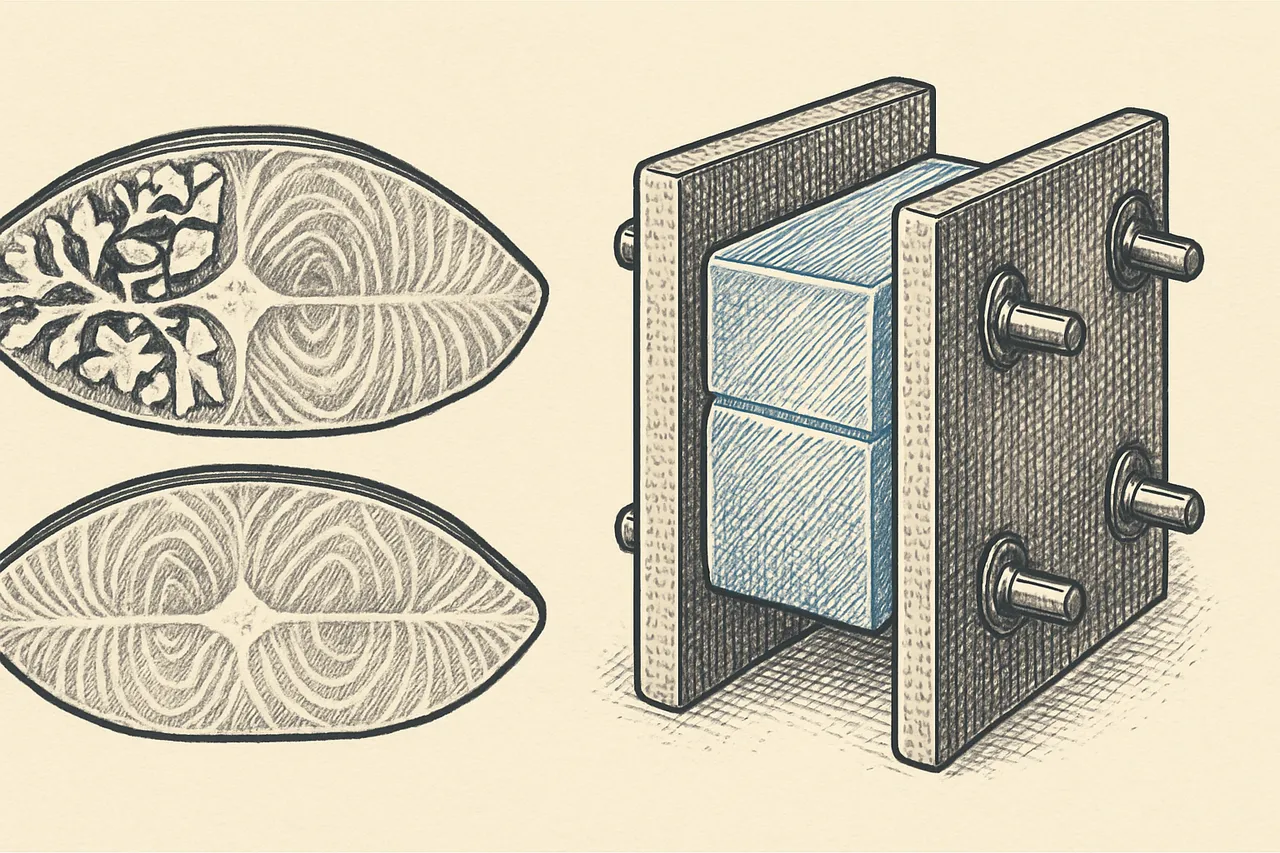
Clarence Birdseye Watched Inuit Fishermen Pull Fish From a Hole in the Ice and Worked Out Why Frozen Food Tasted Bad
Frozen food existed long before Birdseye and it was considered close to inedible. What he figured out in Labrador is that the problem was never freezing. It was freezing slowly, and the difference comes down to the size of the ice crystals.
Read the story →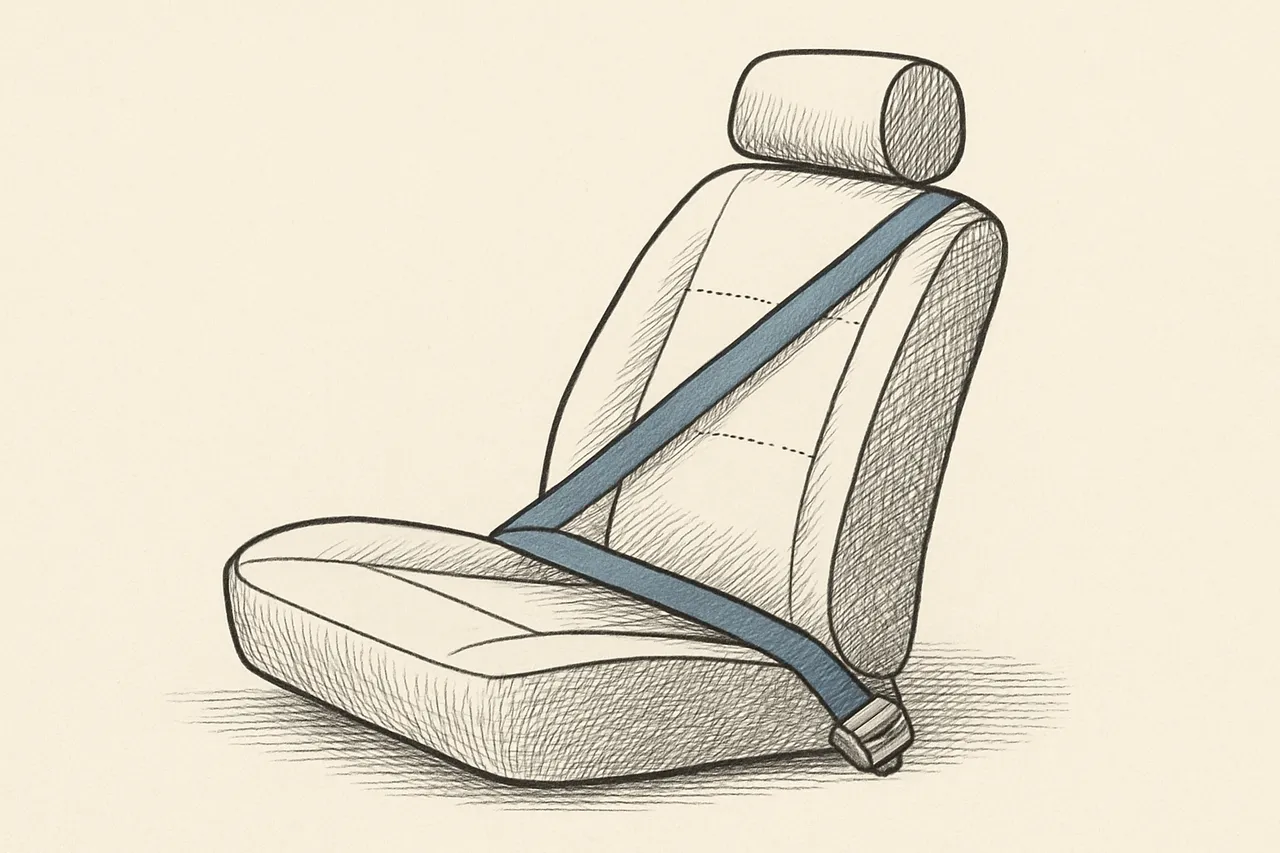
Volvo Patented the Three-Point Seat Belt in 1959, Then Opened the Patent to Every Rival It Had
Nils Bohlin came from building ejection seats for fighter aircraft, and he solved the seat belt in about a year. Volvo then did the thing companies almost never do with a patent that valuable: it made the design free to use, on the grounds that keeping it would cost lives.
Read the story →