The Statue of Liberty Was Patented in 1879, Seven Years Before It Was Dedicated
Auguste Bartholdi received US Design Patent 11,023 in February 1879 for a statue that would not stand in New York Harbor until 1886. Replicas were a fundraising tool for a project that was chronically short of money, and a design patent gave control over who could legally make them.
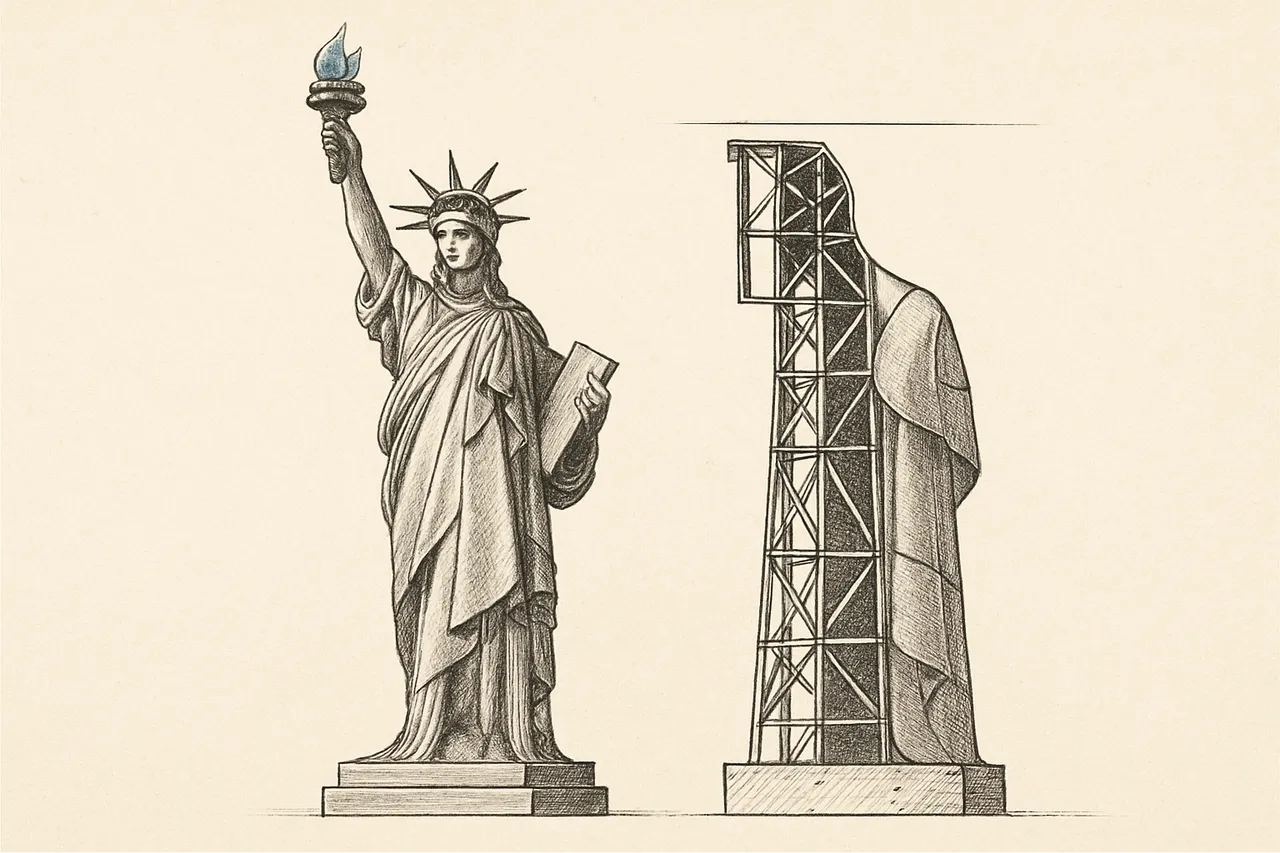
USD11023 is a design patent granted to Auguste Bartholdi of Paris on February 18, 1879. The title is Design for a Statue. The statue is the one in New York Harbor, and when the patent was granted, most of it did not yet exist.
What a design patent covers
There are two main kinds of US patent, and the difference matters here.
A utility patent covers how something works: a mechanism, a process, a composition. A design patent covers only what something looks like, meaning its ornamental appearance. It says nothing about how the object is built or what holds it up. It protects a shape.
Bartholdi's patent protects the appearance of the figure: a robed woman stepping forward, one arm raised holding a torch, the other holding a tablet, a crown of rays on her head. It is a patent on an image.
Why a sculptor wanted one
The statue was conceived as a gift from the people of France to the United States, with a division of labor. The French would pay for the statue. The Americans would pay for the pedestal it stood on. Both sides struggled to raise the money.
Bartholdi and the organizing committees raised funds by putting pieces of the statue on display and by selling reproductions. The right arm and torch were shown at the Centennial Exhibition in Philadelphia in 1876, where visitors paid to climb up to the balcony around the flame, and then in Madison Square Park in New York. The head was displayed at the Paris World's Fair in 1878.
Small replica statuettes were sold to supporters. A design patent in the United States gave the project a legal way to stop anyone else from making and selling unauthorized copies of the figure, which kept that income with the people paying for the statue.
The patent was, in practical terms, a fundraising instrument.
What the patent leaves out
Because a design patent covers appearance only, the most impressive engineering in the statue is not in it.
The figure is a thin skin of hammered copper, only a few millimeters thick, hung on an internal iron framework. The original engineer on the project, Eugène Viollet-le-Duc, died in 1879, the same year this patent issued, and the job passed to Gustave Eiffel, a few years before he built his tower. Eiffel designed a central iron pylon with a secondary framework of flexible iron straps connecting it to the copper. The skin is not rigidly fixed. It can expand and contract with temperature and flex in the wind without tearing itself apart.
The part that makes the statue stand up is invisible and unpatented. The part that makes it recognizable is what Bartholdi protected.
The face is often said to have been modeled on Bartholdi's mother. That claim is repeated widely and has never been firmly established.
The pedestal
The American half of the bargain nearly failed. By the mid 1880s the pedestal fund had stalled, and the finished statue was waiting in France.
In 1885 the newspaper publisher Joseph Pulitzer used his New York World to run a campaign, promising to print the name of every donor no matter how small the gift. It raised more than $100,000, and by the most commonly cited count more than 120,000 people contributed, most of them giving less than a dollar.
The statue crossed the Atlantic in pieces packed into crates in 1885 and was dedicated on October 28, 1886.
Afterward
The patent has long since expired, and the design belongs to everyone. The figure now appears on countless souvenirs, logos, stamps, and advertisements, and nobody needs permission to use it.
Design patents turn up in unexpected places in the archive. Another one, filed decades later, protected a shape almost as recognizable as this one: the Coca-Cola contour bottle.
See the original
The full text and figures of USD11023 are on patents.us.
Related stories
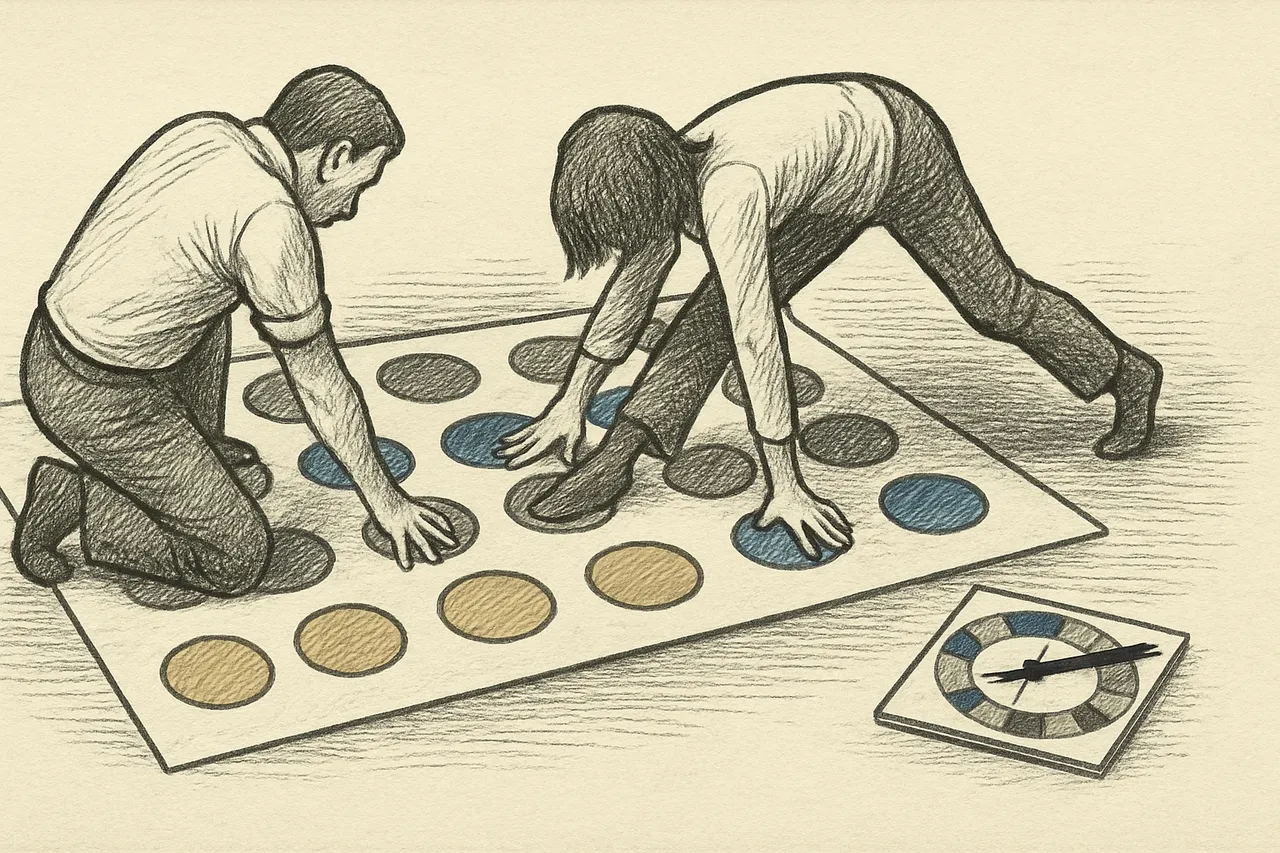
Twister's Patent Is Titled 'Apparatus for Playing a Game Wherein the Players Constitute the Game Pieces'
The patent title is the whole idea: the people are the pieces. Milton Bradley released the game in 1966, some retailers were wary of it, and critics found it a little too intimate. Then Johnny Carson played it on television with Eva Gabor, and the orders poured in.
Read the story →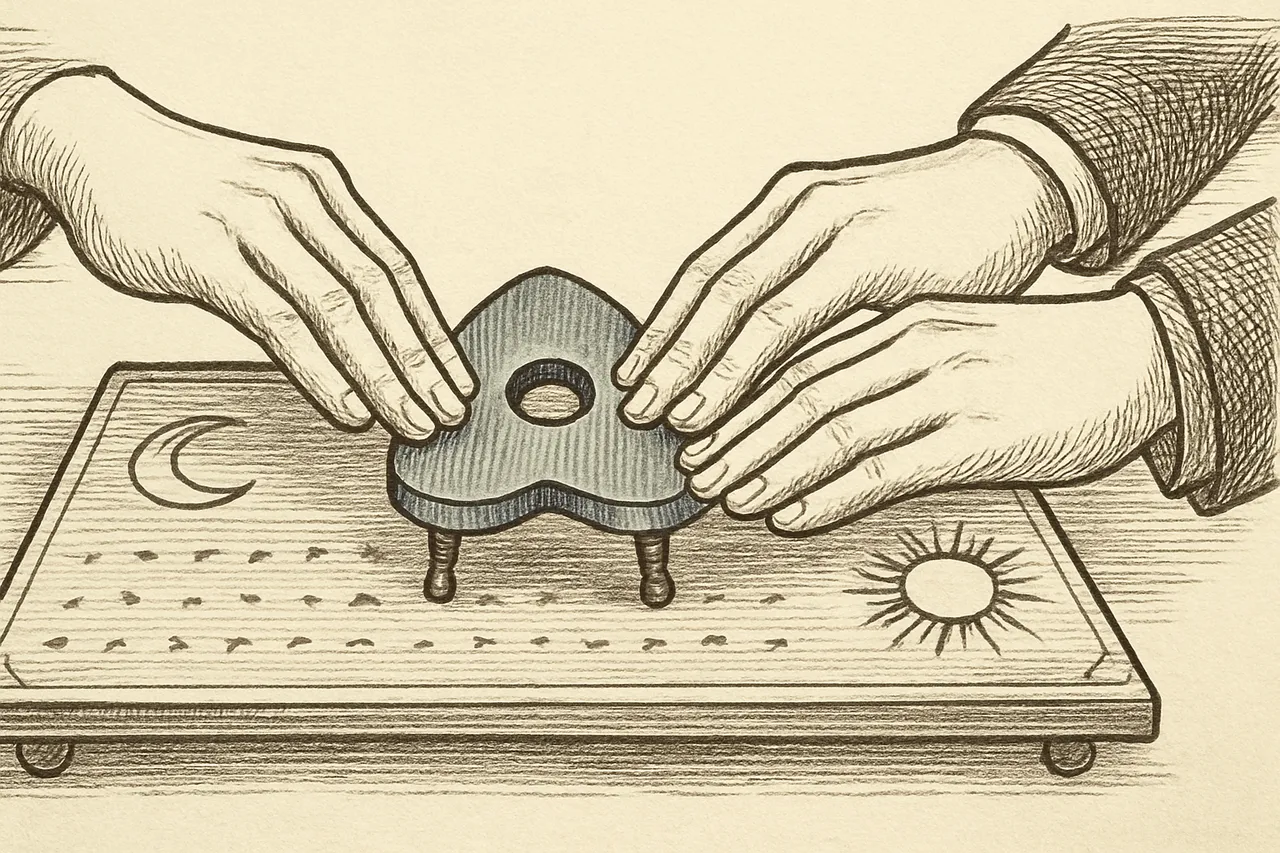
The Ouija Board's 1891 Patent Calls It an 'Egyptian Luck-Board' and Never Says How It Works
Elijah Bond's patent describes a board and a small pointer on legs, and makes no claim about what moves the pointer. The popular legend says the patent examiner demanded a demonstration first. The science, worked out decades before the patent, says the players are moving it themselves without realizing it.
Read the story →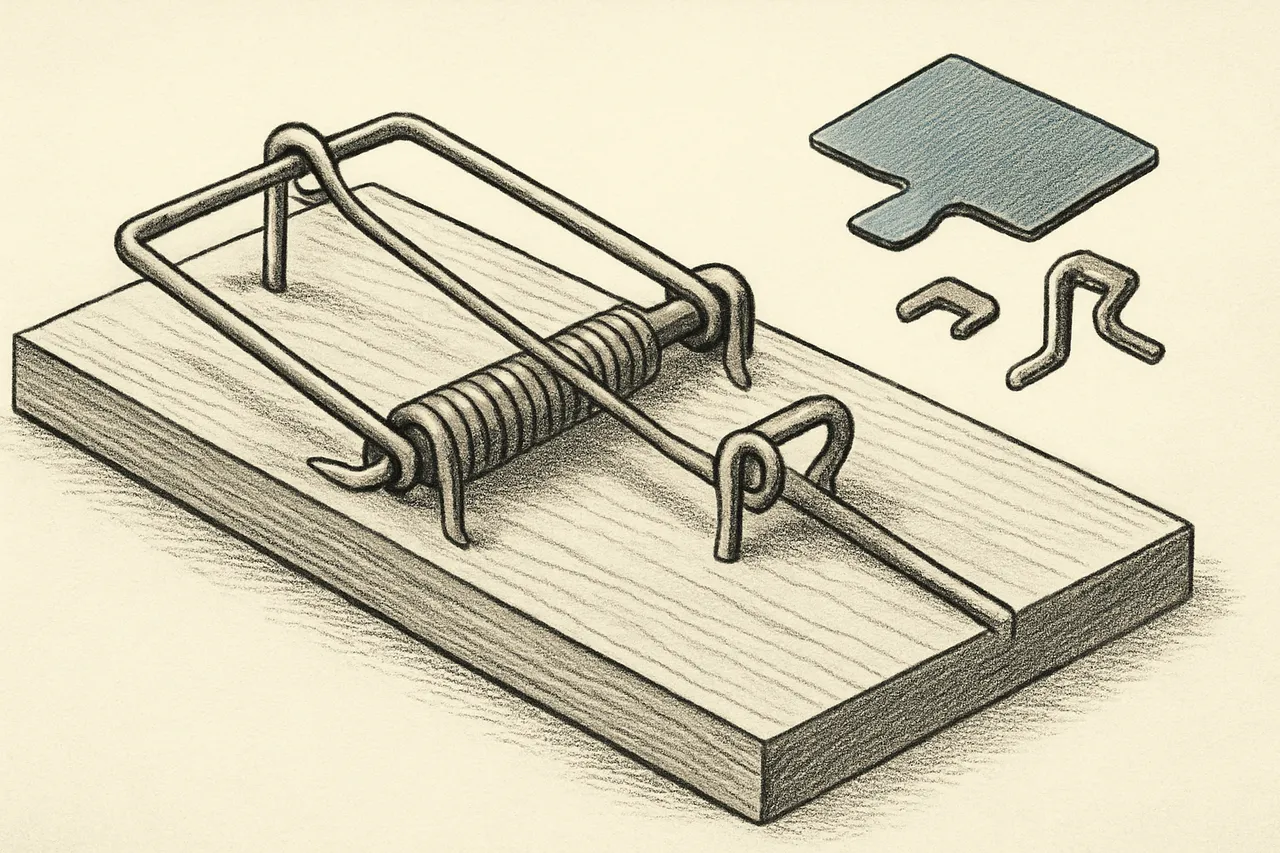
The Mousetrap Is the Most-Patented Device in American History. Almost None of Them Work.
More than four thousand mousetrap patents have been granted in the United States, and thousands more rejected. Roughly twenty have ever made money. The one that won was patented in 1894 and costs about a quarter.
Read the story →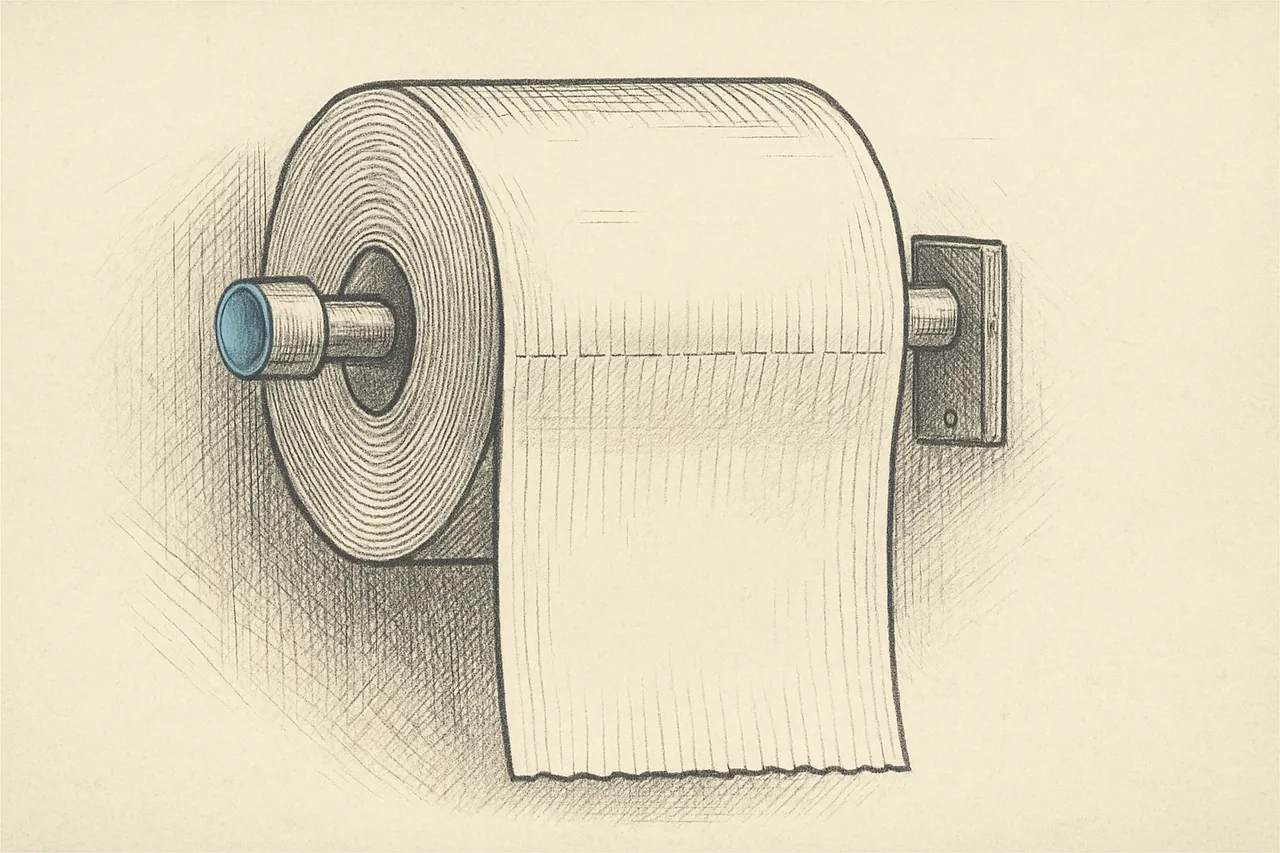
The 1891 Patent That Settles the Toilet Paper Argument: It's Over
Households have argued about whether the roll should hang over or under for more than a century. The original patent drawing, filed by Seth Wheeler in 1891, shows the paper coming over the top. The inventor's own diagram is not ambiguous.
Read the story →