The Pull-Tab Can Fixed One Problem and Created a Litter Crisis
Ermal Fraze forgot the church key at a family picnic and pried a beer can open on a car bumper. His fix put a tab on every can in America — and then put several billion sharp metal tabs on every beach, park, and roadside in it.
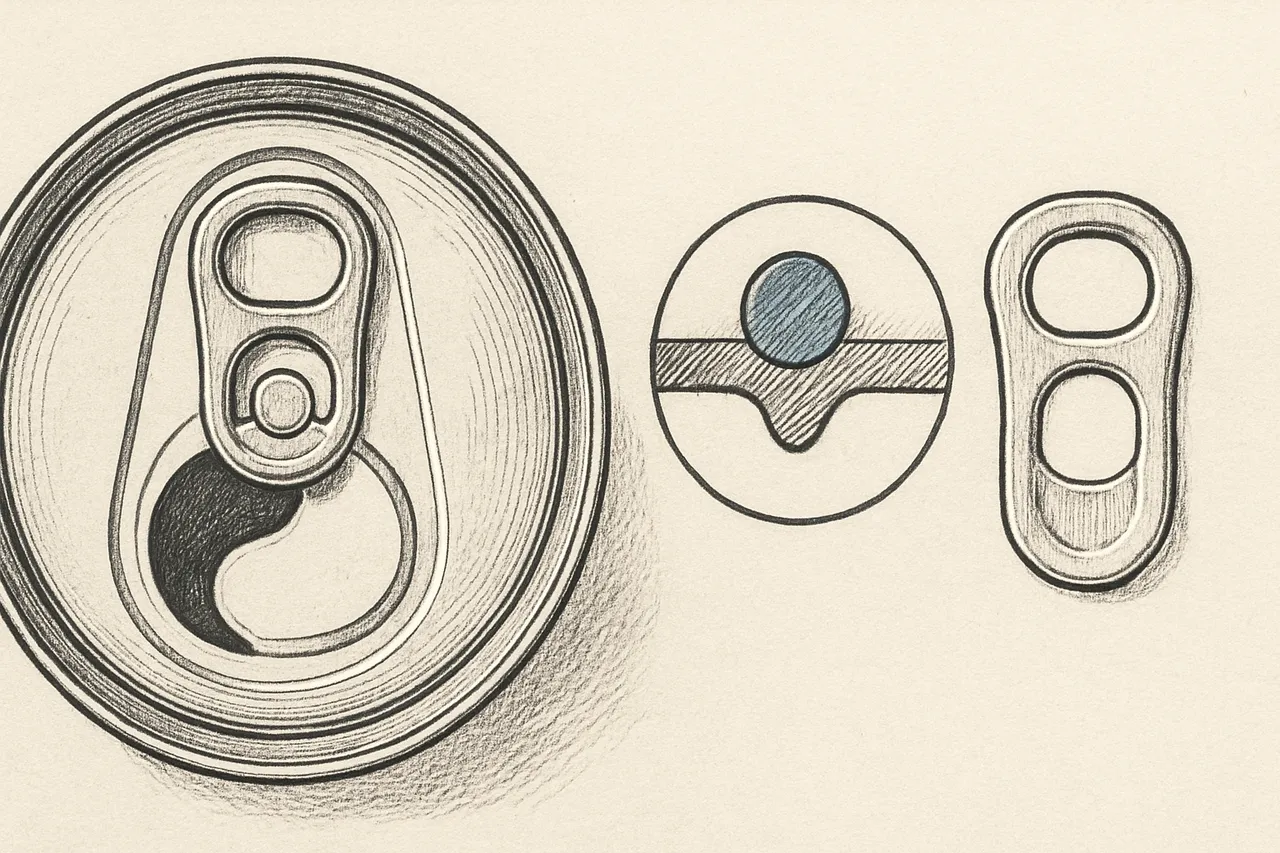
US3349949 was granted to Ermal Cleon Fraze on October 31, 1967. It covers the pull-tab opening for beverage cans, and the story behind it is the kind of small domestic humiliation that produces good engineering.
Before the pull tab, opening a can of beer or soda required a separate tool — the "church key," a pointed lever that punched a triangular hole in the lid, plus a second hole opposite for air. If you did not have one, you improvised, badly.
At a family picnic in 1959, Fraze — who owned Dayton Reliable Tool, a machine shop in Ohio — found himself without a church key. The commonly repeated account has him opening cans against the bumper of his car, which worked in the sense that the beer came out and did not work in most other senses.
The riveted tab
The engineering problem is more subtle than it looks. A can lid must be thin enough to tear open by hand along a controlled line, yet strong enough to contain carbonation pressure without leaking or bursting, and it must be mass-produced at a rate of hundreds per minute for a fraction of a cent.
Fraze's solution had two key pieces. First, a scored line pressed into the lid — a groove thin enough to tear predictably but not thin enough to fail under pressure. Second, and critically, a rivet formed from the lid metal itself, made by pushing up a small button of the aluminum and folding it over to secure the tab. Attaching the tab with a separate fastener would have added cost and a leak path; forming it from the lid solved both at once.
Fraze's tabs went onto Iron City Beer in Pittsburgh in 1962, and within a few years essentially the entire American beverage industry had converted.
The unintended consequence
The original design was a pull-off tab: it detached completely and came away in your hand. Hundreds of millions of cans a year meant hundreds of millions of small, sharp aluminum tabs, and people dropped them wherever they were standing.
Through the late 1960s and 1970s the tabs became an emblem of the era's litter problem — scattered across beaches, parks, roadsides, and campgrounds. Worse, they were a genuine injury hazard: sharp enough to cut bare feet, and small enough that people occasionally dropped them into the can and swallowed them.
Jimmy Buffett's "Margaritaville," recorded in 1977, contains the line about stepping on a pop-top and cutting a heel — a small piece of evidence about how ordinary the injury was.
The industry's fix was the stay-on tab, developed largely by Daniel F. Cudzik at Reynolds Metals in the mid-1970s. Instead of detaching, the tab levers a scored panel downward into the can and remains riveted to the lid. It is the design still in use today, and it eliminated the loose-tab problem essentially overnight as it was adopted.
The whole arc — a good invention, a large unforeseen externality, a second invention to fix it — took about fifteen years, and left behind an object so ordinary that almost nobody notices it was designed at all.
The pull tab was the last move in a long argument about how to get into a sealed metal container. The argument started badly: the tin can went 48 years with no opener at all.
See the original
The full text and figures of US3349949 are on patents.us.
Related stories
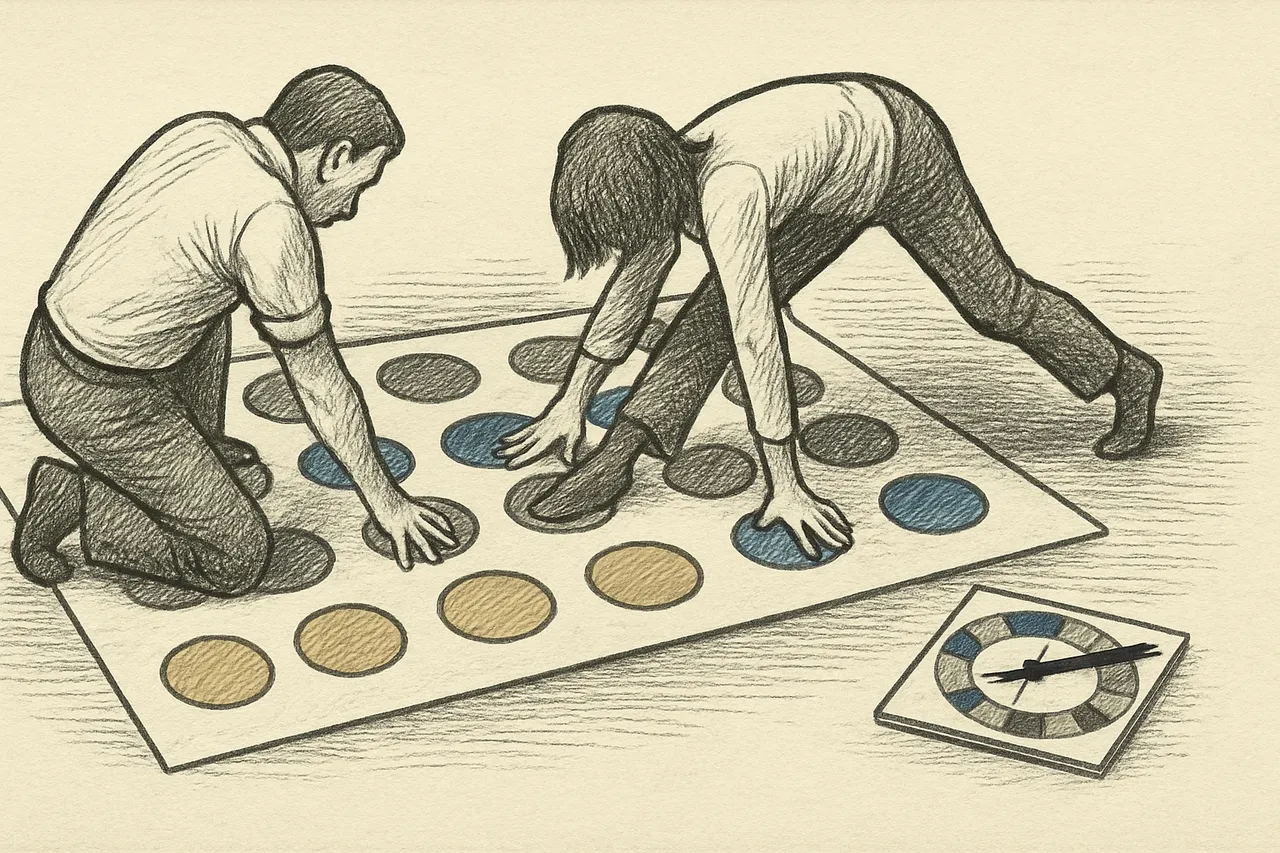
Twister's Patent Is Titled 'Apparatus for Playing a Game Wherein the Players Constitute the Game Pieces'
The patent title is the whole idea: the people are the pieces. Milton Bradley released the game in 1966, some retailers were wary of it, and critics found it a little too intimate. Then Johnny Carson played it on television with Eva Gabor, and the orders poured in.
Read the story →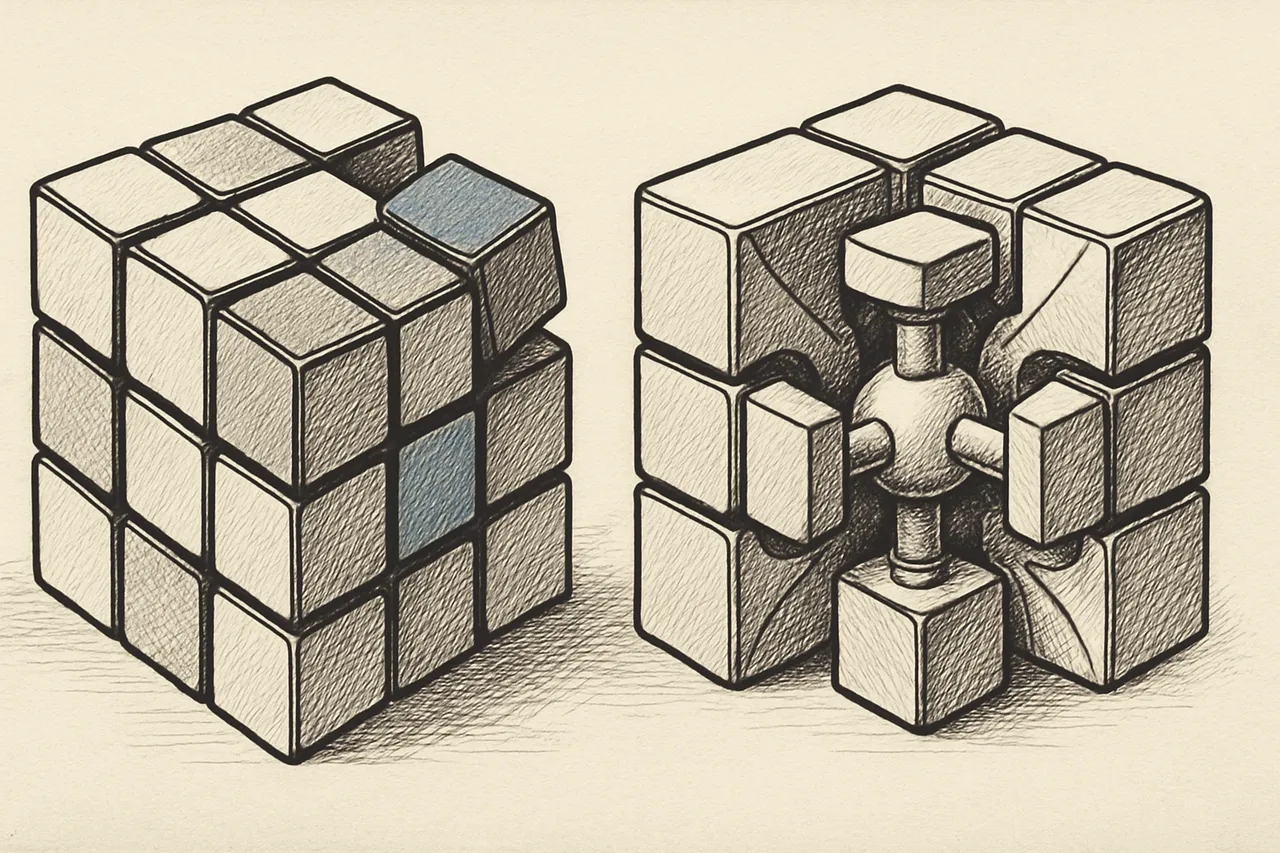
Ernő Rubik Needed About a Month to Solve His Own Cube. An American Court Later Found It Infringed an Earlier US Patent.
Rubik built the first cube in Budapest in 1974 as a way to think about three-dimensional movement. The clever part is how it holds together when most of its pieces are not attached to anything. In the United States, a chemist named Larry Nichols had patented a related puzzle in 1972, and his company sued.
Read the story →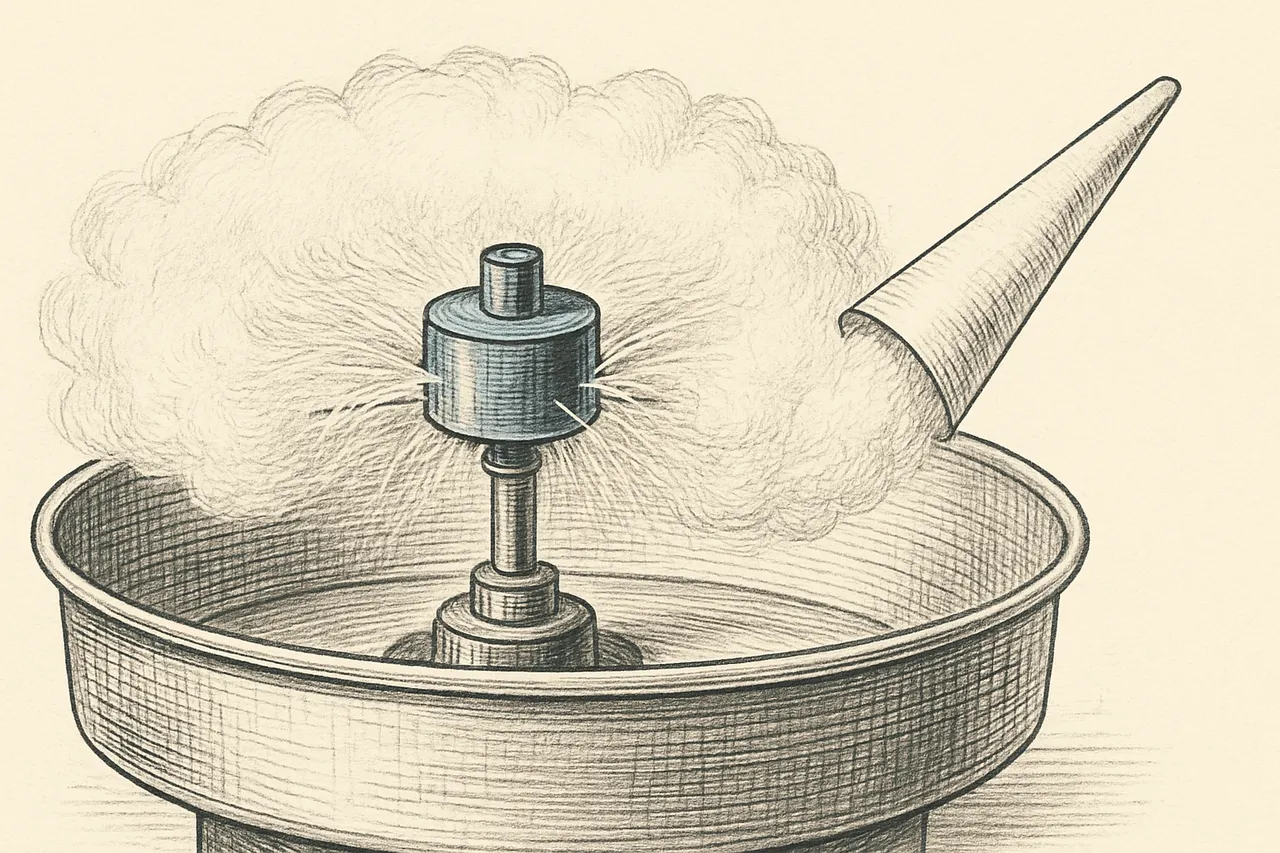
A Dentist Co-Invented the Cotton Candy Machine, and It Was Sold at the 1904 World's Fair as Fairy Floss
William Morrison was a dentist and John Wharton was a candy maker. Their machine melted sugar and flung it through tiny holes so that it cooled into threads finer than hair before it could crystallize. They filed in 1897, and at the St. Louis World's Fair it was a sensation.
Read the story →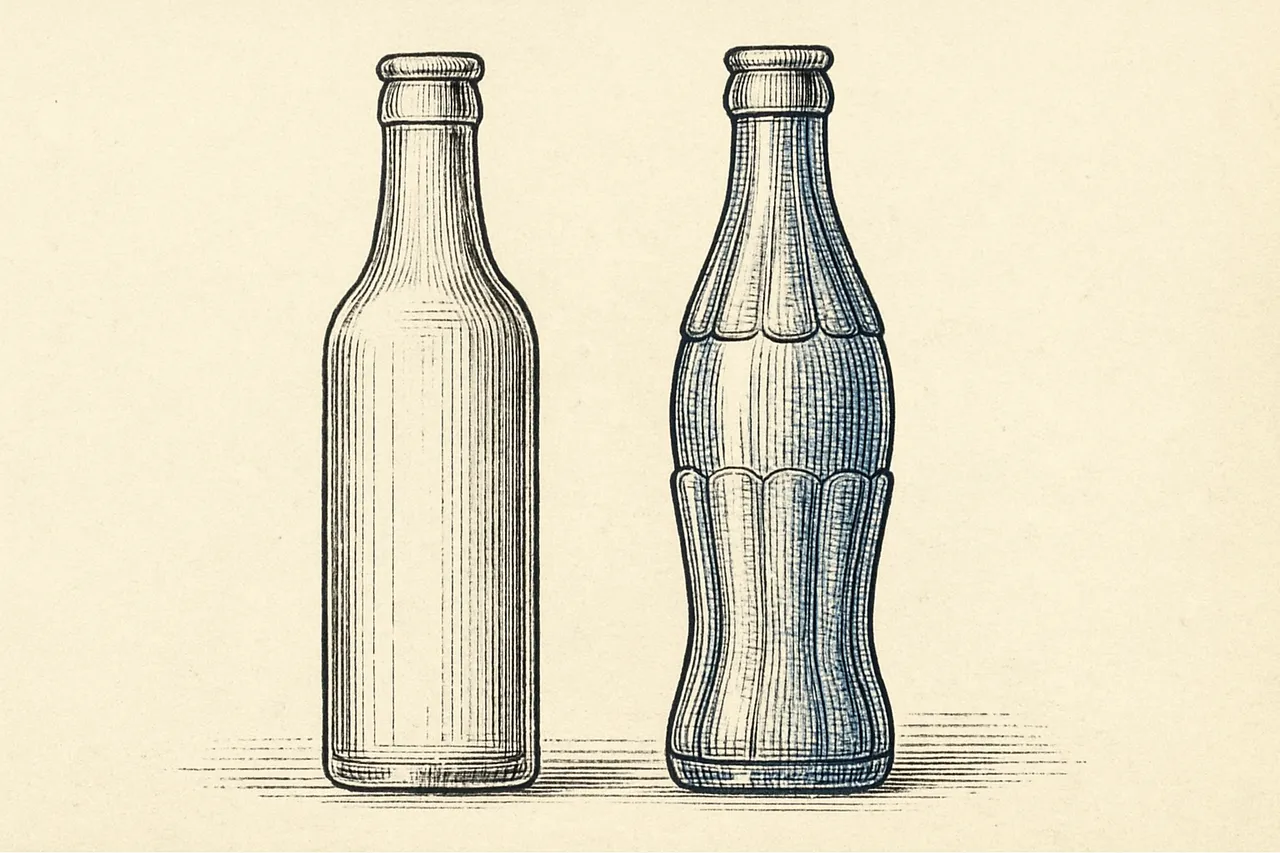
Coca-Cola Asked Glassmakers for a Bottle You Could Recognize in the Dark, or Broken on the Ground
In 1915 Coca-Cola had an imitation problem, since competitors used the same straight-sided bottles and borrowed-sounding names. It challenged glass companies to design a bottle identifiable by touch alone. The winner came from a small glassworks in Terre Haute, Indiana, and the name on the patent is not the name of the man who drew it.
Read the story →