The Tin Can Was Invented in 1810. The Can Opener Showed Up in 1858.
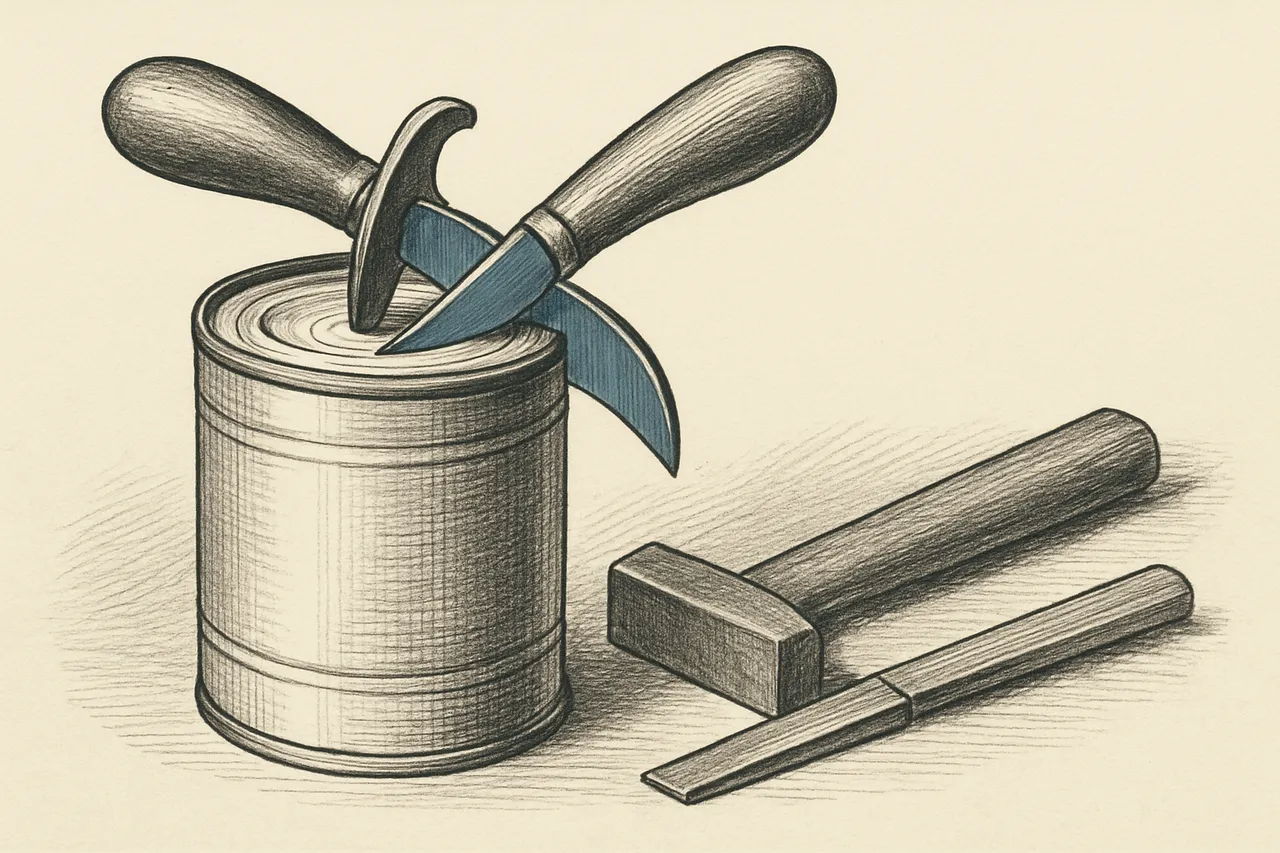
For nearly fifty years, the instructions on a tin can told you to open it with a hammer and a chisel. Ezra Warner's 1858 patent was the first American attempt to do it with one tool, and it was so dangerous that grocers had to operate it for you.
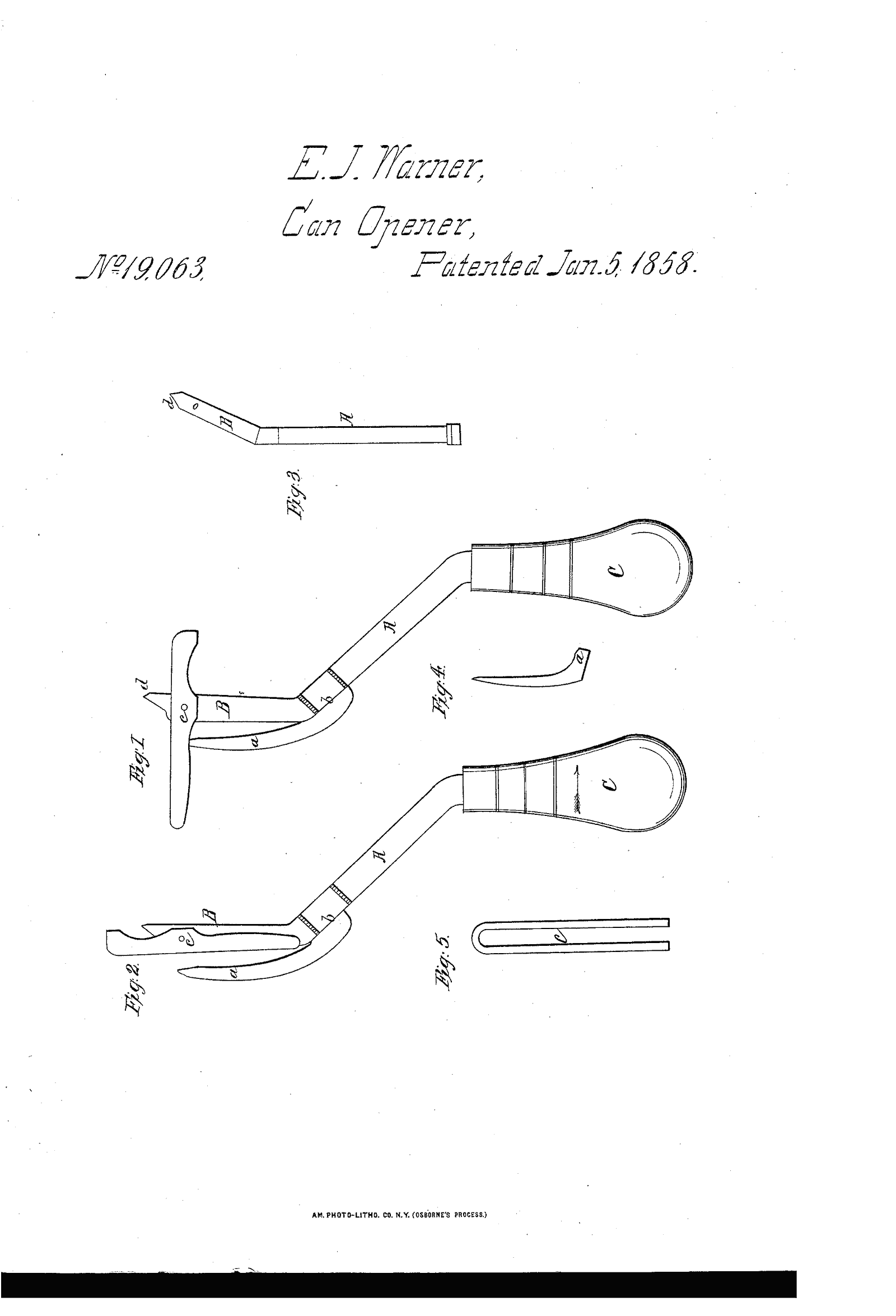
US19063 was granted to Ezra J. Warner of Waterbury, Connecticut, on January 5, 1858. The title the Patent Office gave it is plain enough: Instrument for Opening Cans. What makes it remarkable is the date, because the tin can had been in use for roughly half a century by then, and nobody had built a decent tool for getting into one.
Forty-eight years of hammering
The tin can was patented in Britain in 1810. It solved a real problem, which was that armies and navies needed food that would not rot on a long campaign, and it solved it extremely well. Early cans were made of wrought iron plated with tin, and they were built like the containers they were, which is to say heavy, thick walled, and close to indestructible.
That was the whole trouble. A can that survives a sea voyage also survives most attempts to open it.
Early cans carried instructions, and the instructions were exactly what you would expect from a period with no better idea available. One well-known label told the buyer to cut around the top near the outer edge with a chisel and hammer. Soldiers who had neither tended to use whatever they were carrying, which usually meant a bayonet, and sometimes meant a rifle.
The can, in other words, arrived as a finished product. The method for using it did not.
What Warner actually built
Warner's instrument does not look like a can opener. It looks like a weapon.
The tool has a heavy blade shaped roughly like a bayonet point. You drive the point down through the lid, and a guard stops it from plunging too deep into whatever is inside. A second, curved blade then cuts sideways as you work the handle around the rim, sawing a rough circle out of the top. Warner's own specification describes the operator being able to cut, in his words, as fast as he can move his hand.
That is the honest description of it. The tool worked by repeated stabbing.
It was good enough to matter. Warner's opener was used heavily by the Union Army during the Civil War, where canned rations and a reliable way into them were worth a great deal.
What it was not was safe. The blade left a jagged edge of raw metal around the opening, and the thing was genuinely hazardous in untrained hands. For years, the practical solution was that you did not own one. Grocery stores kept a Warner opener behind the counter, and the clerk opened your can for you before you carried it home.
Why the good version took another thirty years
The opener everyone pictures, with a cutting wheel that rolls around the rim, came in 1870 from William Lyman, and even that one needed you to pierce the center of the lid first and pivot around it. The version with a serrated feed wheel that grips the rim and pulls itself along, which is the design still in most kitchen drawers, arrived in 1925.
There is a reason the sequence ran this way, and it is not that people in 1810 were slow. It is that the can itself had to change first. Early cans were thick enough to need a chisel. As steel plate got thinner and cheaper through the nineteenth century, the lid became something a small wheel could cut, and only then was the rolling opener possible.
The tool could not be invented until the problem got easier.
The pattern
This is one of the cleaner examples of something that turns up constantly in the patent record. A famous invention gets credited with solving a problem, and the actual solution turns out to be a second invention nobody remembers, arriving decades later, once conditions allowed it.
The can preserved the food. For forty-eight years, getting at it was your business.
The can eventually attacked the problem from its own side, by carrying the opener with it. That story, and the enormous litter problem it created, is in the pull-tab can.
See the original
The full text and figures of US19063 are on Google Patents.
Related stories
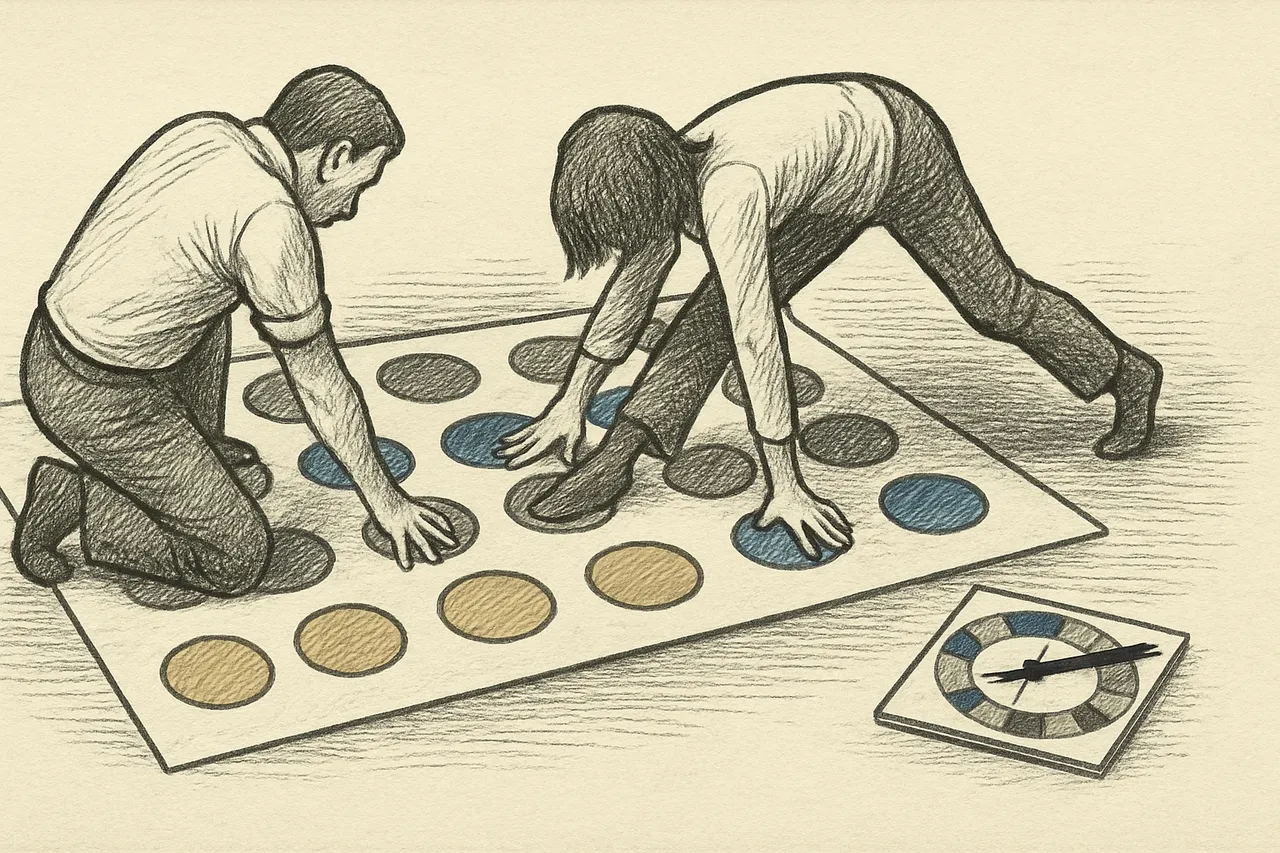
Twister's Patent Is Titled 'Apparatus for Playing a Game Wherein the Players Constitute the Game Pieces'
The patent title is the whole idea: the people are the pieces. Milton Bradley released the game in 1966, some retailers were wary of it, and critics found it a little too intimate. Then Johnny Carson played it on television with Eva Gabor, and the orders poured in.
Read the story →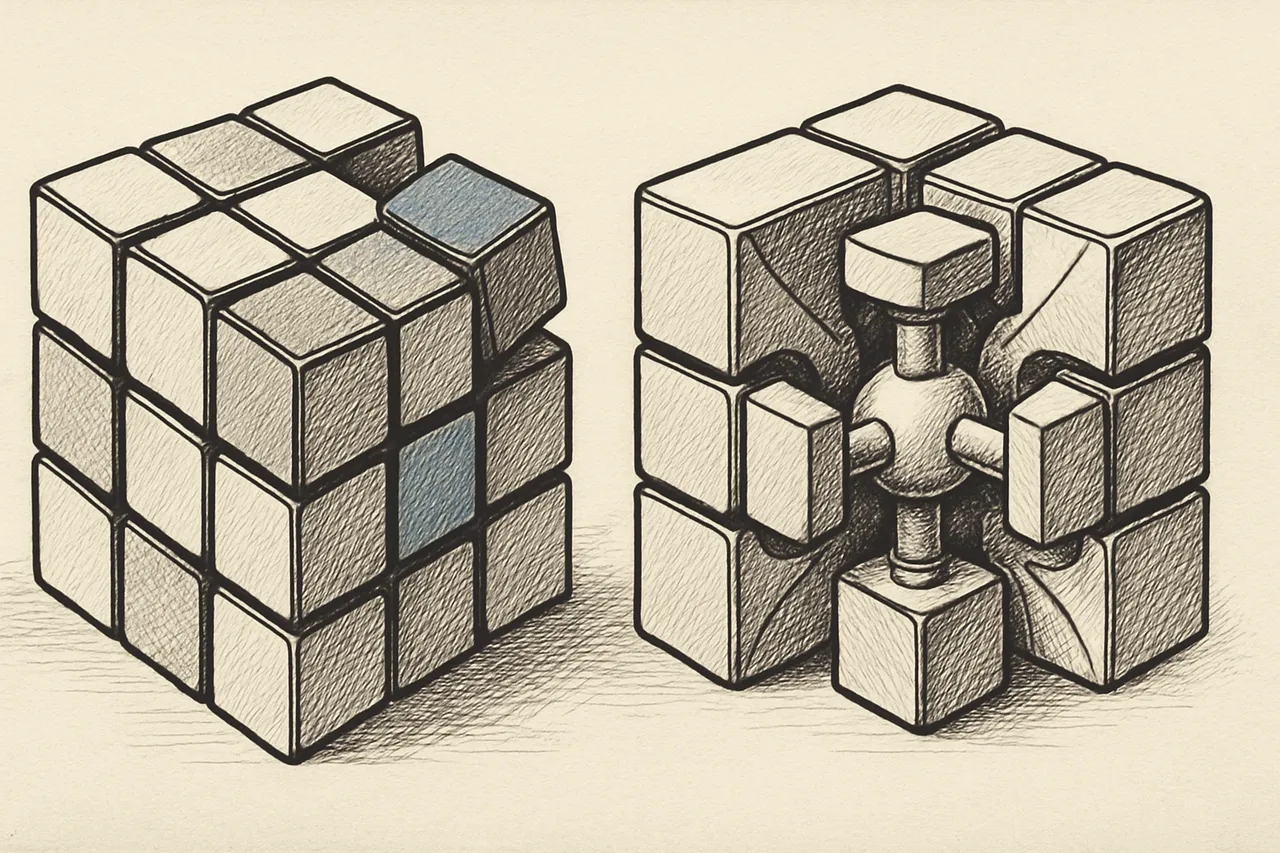
Ernő Rubik Needed About a Month to Solve His Own Cube. An American Court Later Found It Infringed an Earlier US Patent.
Rubik built the first cube in Budapest in 1974 as a way to think about three-dimensional movement. The clever part is how it holds together when most of its pieces are not attached to anything. In the United States, a chemist named Larry Nichols had patented a related puzzle in 1972, and his company sued.
Read the story →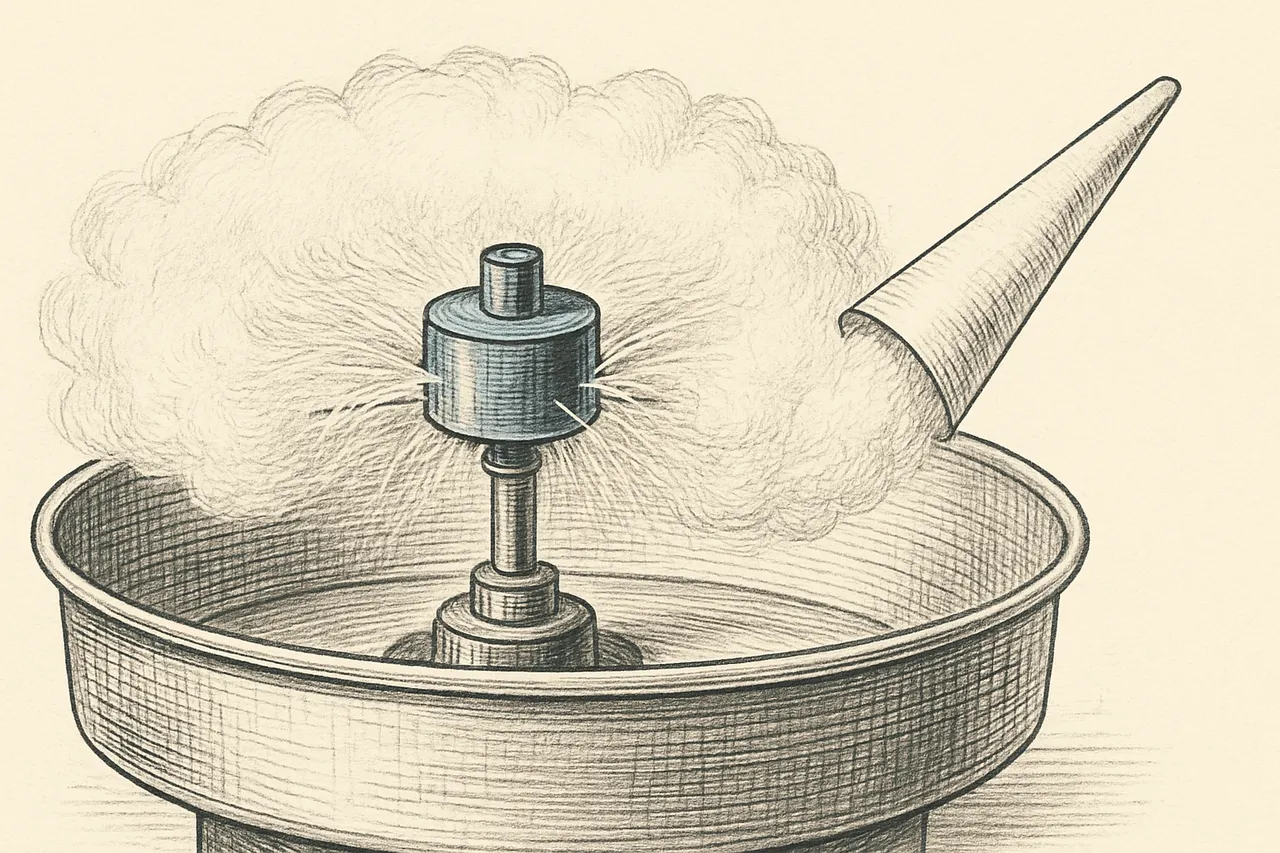
A Dentist Co-Invented the Cotton Candy Machine, and It Was Sold at the 1904 World's Fair as Fairy Floss
William Morrison was a dentist and John Wharton was a candy maker. Their machine melted sugar and flung it through tiny holes so that it cooled into threads finer than hair before it could crystallize. They filed in 1897, and at the St. Louis World's Fair it was a sensation.
Read the story →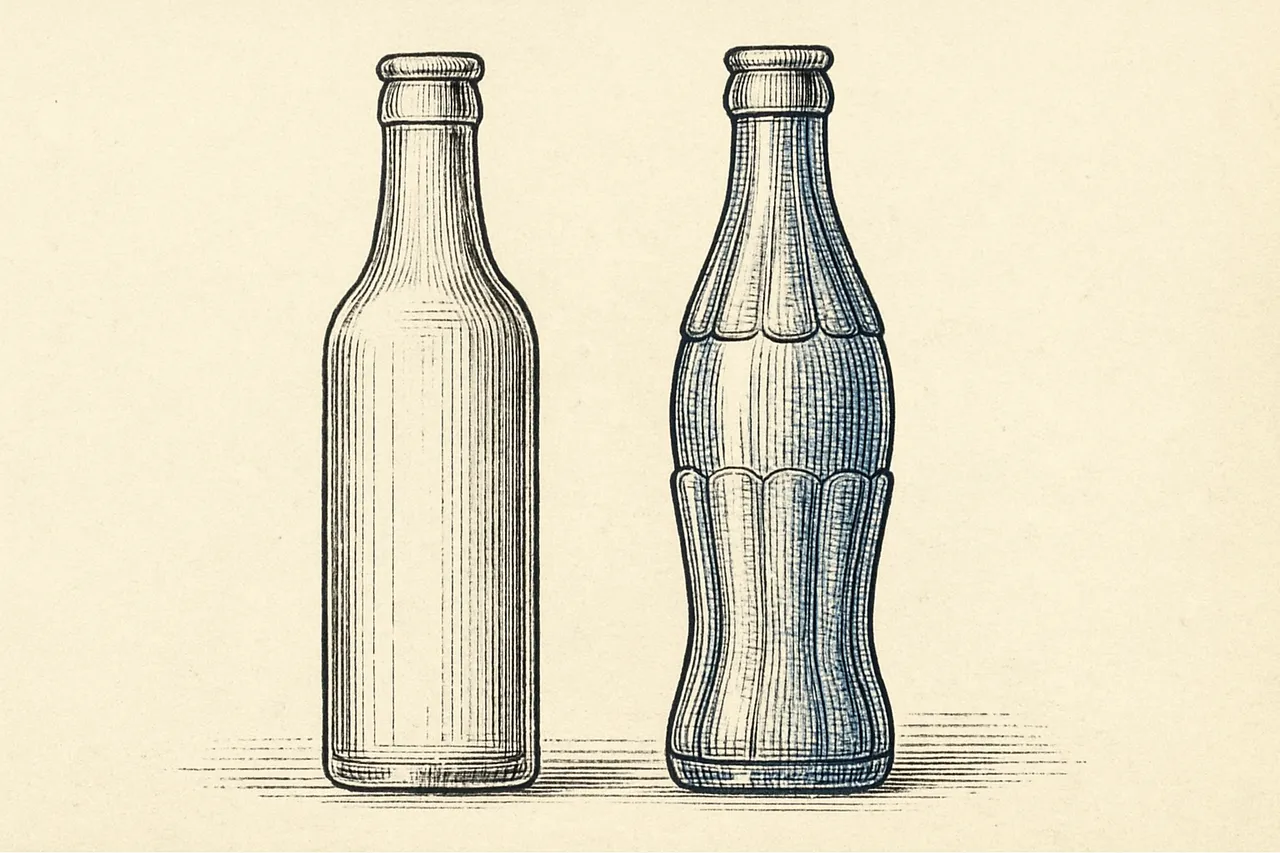
Coca-Cola Asked Glassmakers for a Bottle You Could Recognize in the Dark, or Broken on the Ground
In 1915 Coca-Cola had an imitation problem, since competitors used the same straight-sided bottles and borrowed-sounding names. It challenged glass companies to design a bottle identifiable by touch alone. The winner came from a small glassworks in Terre Haute, Indiana, and the name on the patent is not the name of the man who drew it.
Read the story →