Mary Anderson Patented the Windshield Wiper. No One Bought It.
Mary Anderson was riding a streetcar through New York in a winter sleet storm in 1902 when she watched the driver lean out the window every few seconds to wipe the glass by hand. She went home and patented the windshield wiper. No automaker would license it.
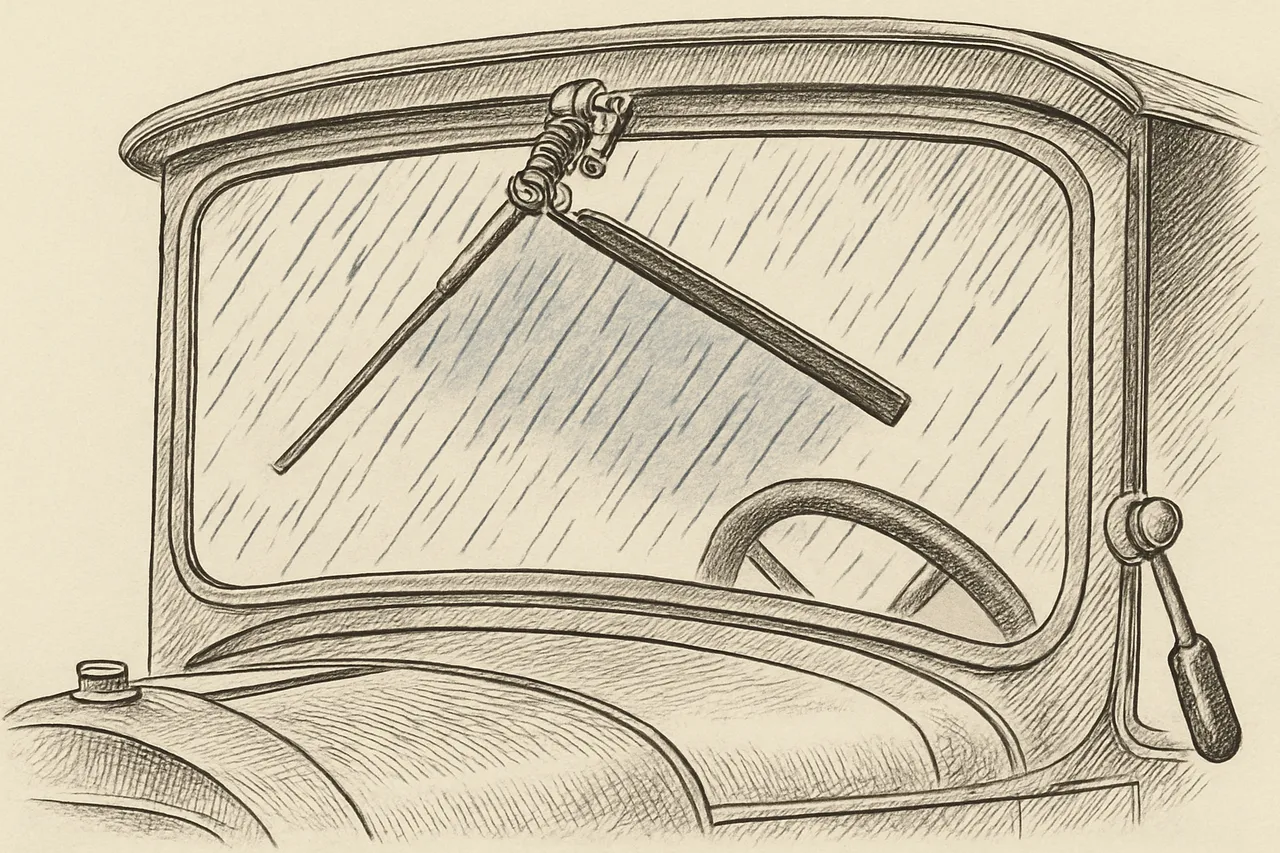
In November of 1902, Mary Anderson was riding a streetcar in New York City during a winter storm. The combination of falling sleet and the streetcar's forward motion made the windshield essentially opaque within seconds of the driver wiping it. The driver solved the problem by repeatedly stopping the car, opening the side window, leaning out, and clearing the glass by hand with a rag. He was not enjoying it. Neither were the passengers, who included Anderson.
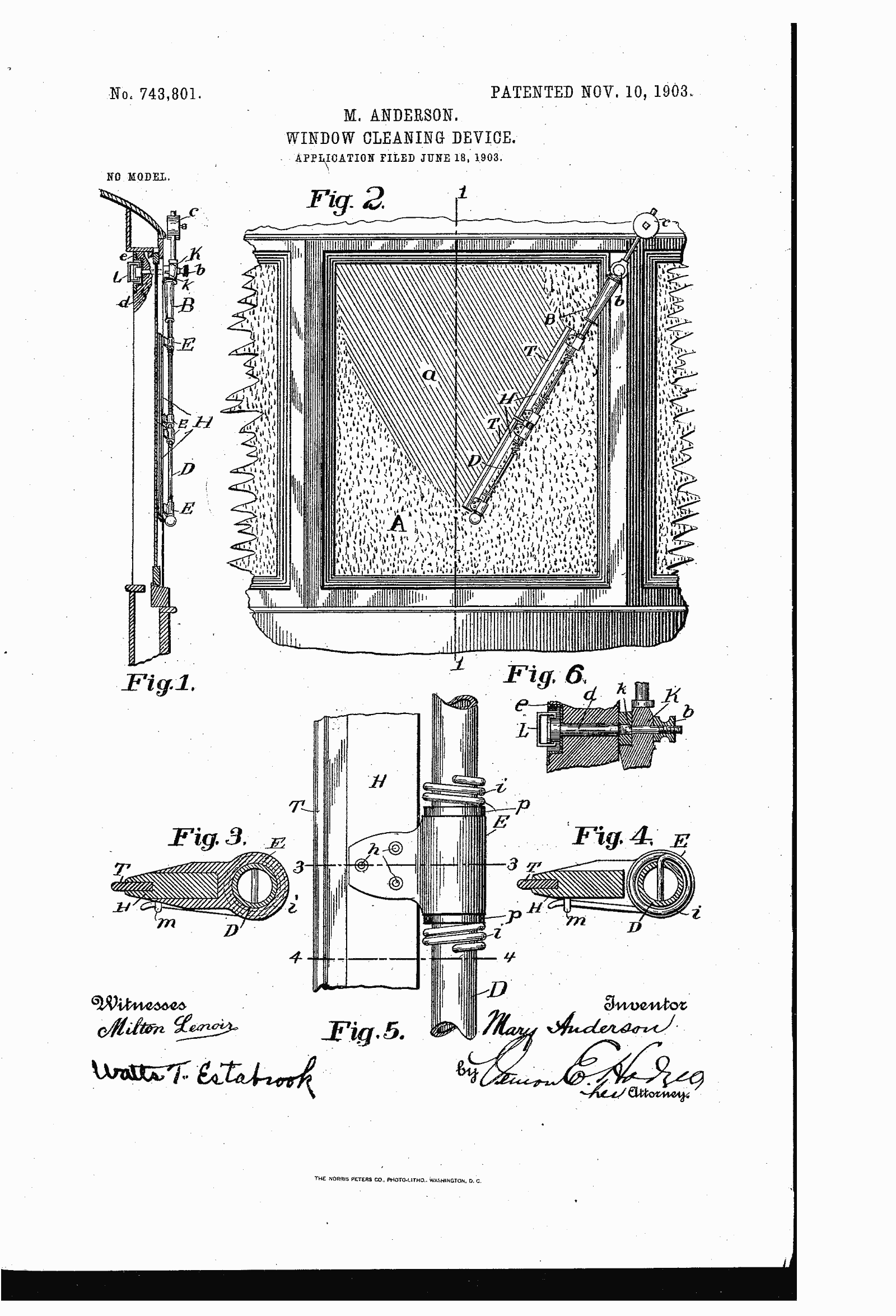
She was a real-estate developer from Birmingham, Alabama, on a trip north. She returned home, sketched a mechanism, and filed for a patent the following year. US743801 was granted on November 10, 1903. The title is "Window-Cleaning Device." The mechanism: a spring-loaded swinging arm with a rubber blade, mounted outside the windshield, controlled from inside the cab by a small lever the driver could operate without opening anything.
Anderson tried to sell it. Her surviving correspondence with at least one major manufacturer, the Dinning and Eckenstein firm of Canada, includes a 1905 letter explaining that the company had reviewed her design and found it of no commercial value: "we do not consider it to be of such commercial value as would warrant our undertaking its sale."
What didn't happen
Anderson held the patent for its full seventeen-year term. It expired in 1920. Across those seventeen years, no automaker licensed it. Cars in the United States were multiplying rapidly during the period — registered automobiles went from about 8,000 in 1900 to over eight million by 1920 — and yet windshield wipers were not standard equipment on any of them. Drivers continued to lean out windows, or stop, or pull over during weather, or simply not drive in the rain.
In 1922, two years after Anderson's patent expired, Cadillac became the first major American automaker to ship cars with windshield wipers as standard. By the late 1920s, they were on most production vehicles. By 1930, you could not legally sell a passenger car in most US states without them.
Anderson never received any meaningful compensation. She had simply been seventeen years too early.
What it tells us
The case is sometimes told as an example of how patent terms work against early inventors: file too early and your protection expires before the market arrives. That is true. It is also true that the 1905 letter declining her invention reflected something beyond pure economics — the firm's actual stated objection was that the wiper would be distracting to the driver. The same objection had been raised against rear-view mirrors, turn signals, and headlights at various points. None of those objections aged well either.
Anderson lived until 1953. She had time to watch every car in America be built with the device she had described in a 1903 patent, none of them paying her anything. She rarely discussed the patent in her later years; her family said she found the topic annoying.
Anderson's wiper swept continuously for as long as it was running, which is correct in heavy rain and wrong in a drizzle. Fixing that took another sixty years, and it produced one of the longest patent fights in American history. See Robert Kearns and the intermittent wiper.
See the original
The full text and figures of US743801 are on Google Patents.
Related stories
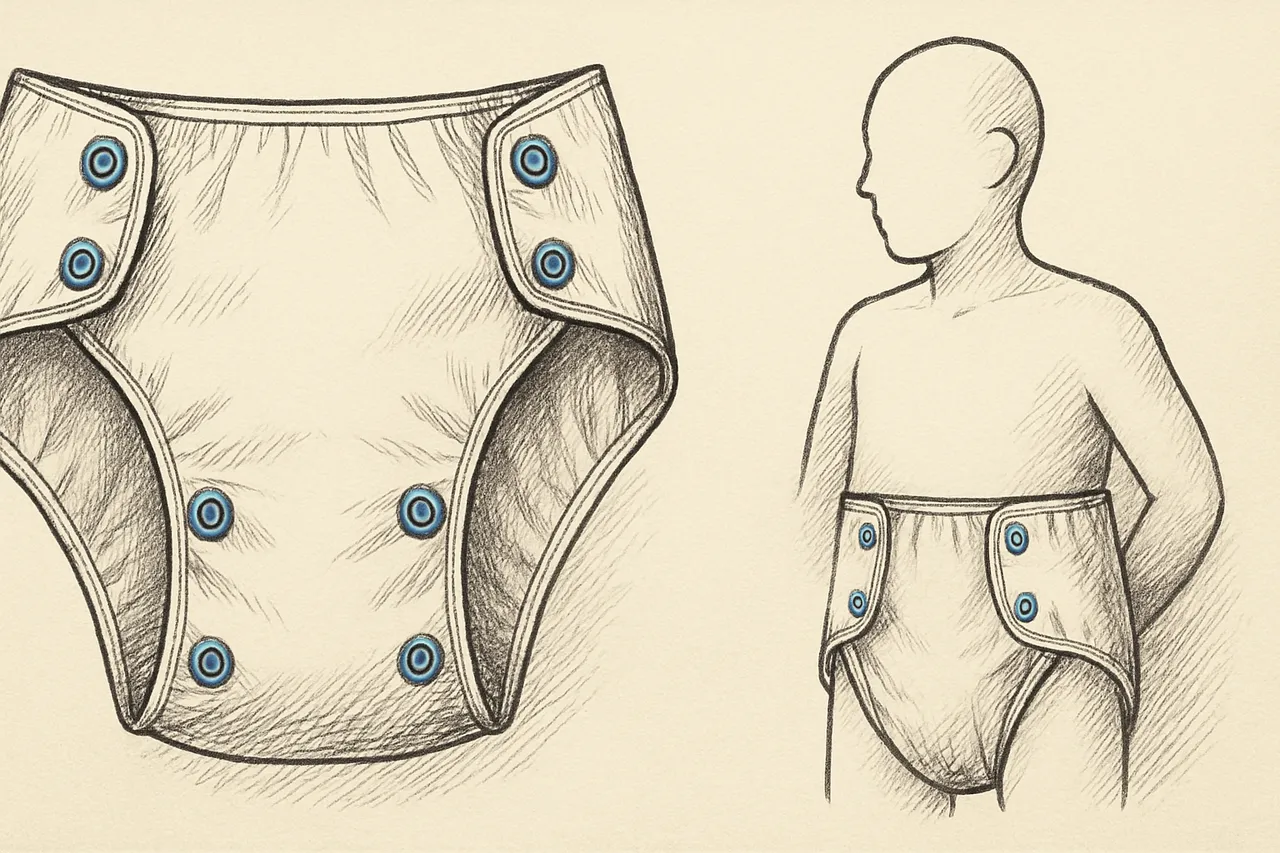
Marion Donovan Invented the Disposable Diaper. Every Manufacturer Turned Her Down.
A young mother cut up a shower curtain to make a leak-proof diaper cover. It worked. When she took the next step — a fully disposable diaper — the industry told her there was no demand. They were wrong by about a decade.
Read the story →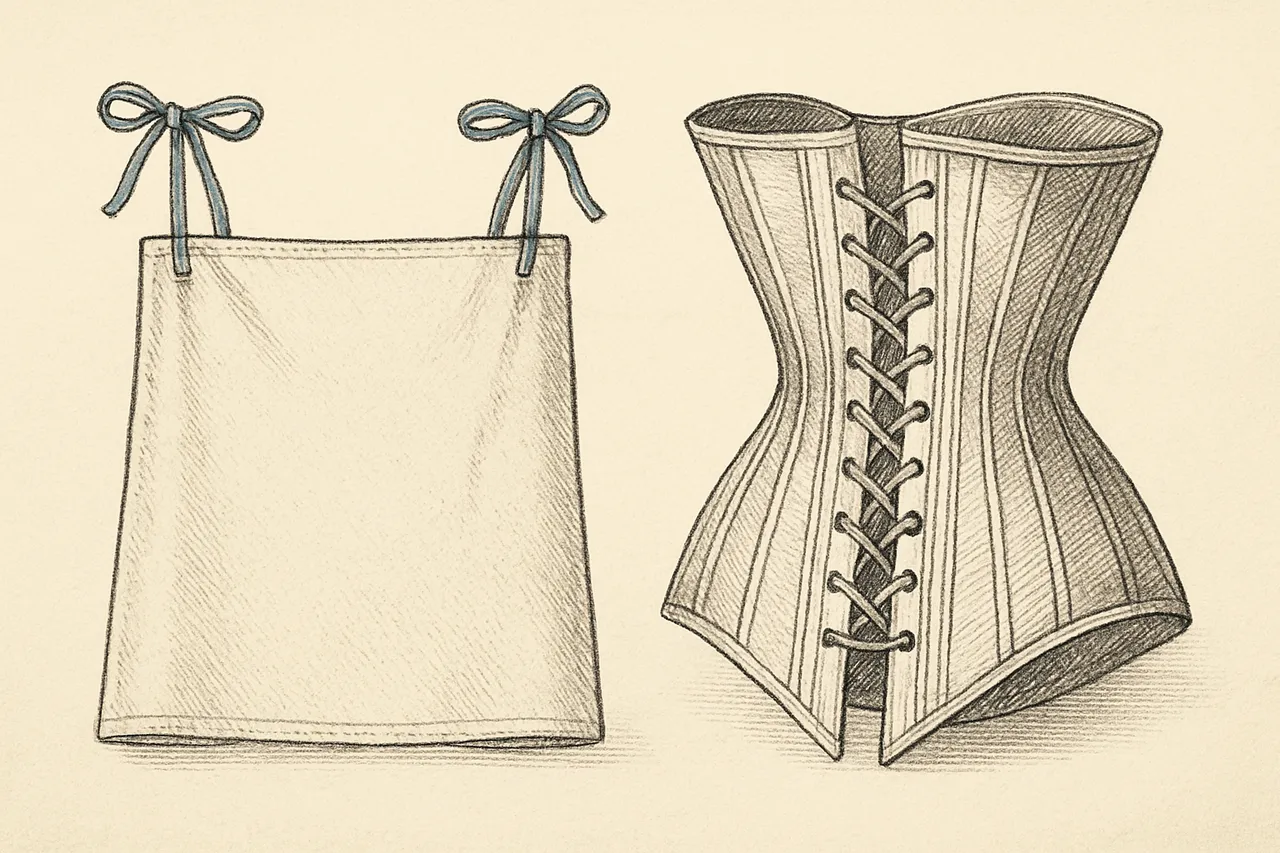
The First Modern Bra Was Two Handkerchiefs and a Ribbon, Improvised Before a Party
Mary Phelps Jacob was nineteen, dressing for a debutante ball, and the corset under her gown was ruining it. She had her maid bring two handkerchiefs and some ribbon. Four years later she held a US patent, and not long after that she sold it for $1,500.
Read the story →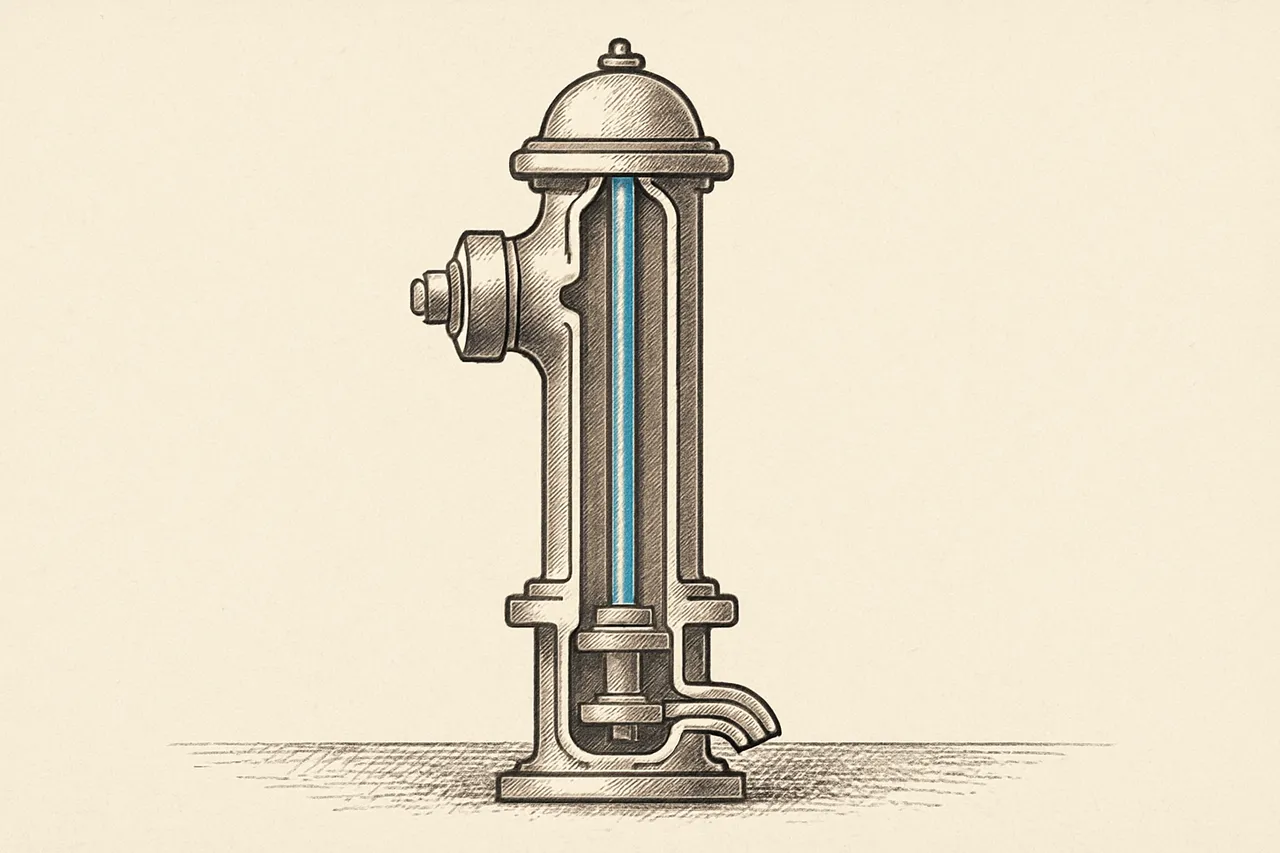
The Fire Hydrant Patent Was Destroyed in a Fire
Frederick Graff is usually credited with the post hydrant around 1801. Nobody can check, because the Patent Office burned to the ground in 1836 and took roughly ten thousand patents with it, including his.
Read the story →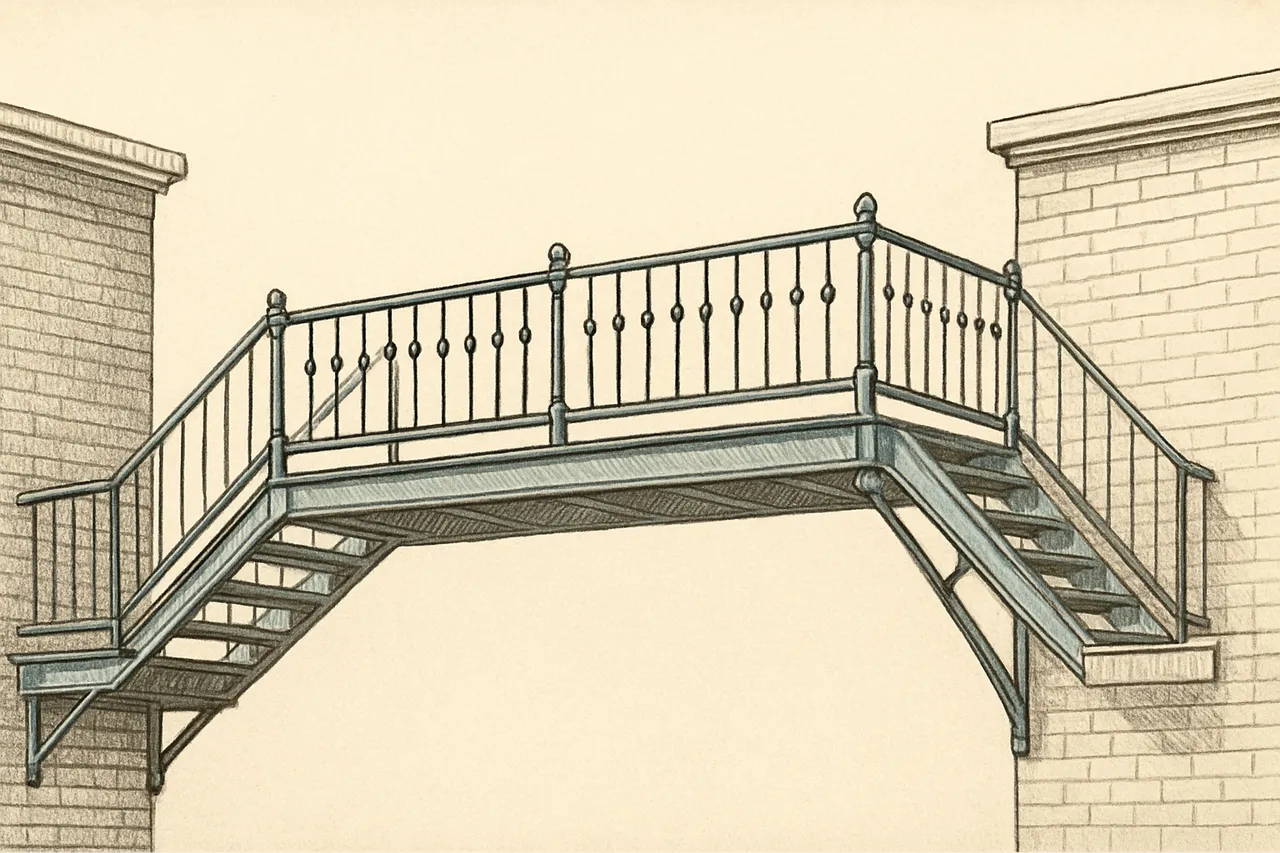
Anna Connelly Patented the Fire Escape in 1887, and Cities Started Requiring Them
American cities were building upward faster than they could evacuate. Anna Connelly, one of the earliest women to hold a US patent, proposed an external bridge between rooftops with railings — an escape route that did not depend on the burning stairwell.
Read the story →