Maria Beasley Patented a Fireproof Folding Life Raft in 1880. The Story That It Was on the Titanic Doesn't Hold Up.
Maria Beasley's 1880 life raft folded flat out of hinged metal floats and was built not to burn. It is often said to have saved Titanic passengers. It did not, and her real fortune came from machines for making barrels.
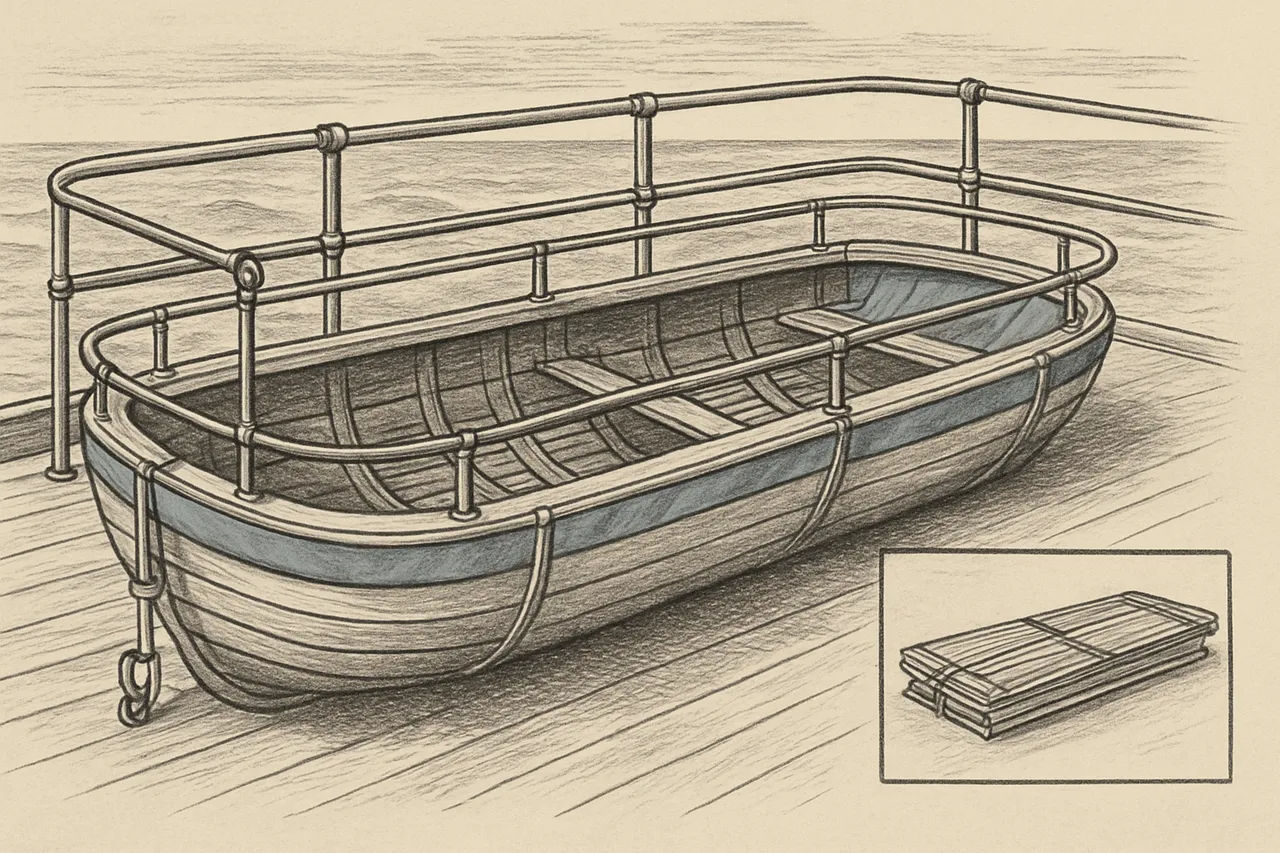
US226264 was issued to Maria E. Beasley of Philadelphia on April 6, 1880. The title is "Life-Raft." She had filed it the previous October, and her own statement of purpose is plain: a raft that is "fire-proof, compact, safe, and readily-launched," which "can be made instantly available when required."
What she built
The raft is a row of hollow metal floats, rectangular, with their ends beveled underneath. They are joined side by side with hinges, so the whole thing folds together for stowing on deck and opens out flat when it is needed. Hinged along the outer floats is a grated railing with a strong top rail and rowlocks for oars, and gates at each end close it into a complete rectangular enclosure.
The fireproofing is in the material. Wooden lifeboats burn, and a ship's fire was one of the disasters a lifeboat existed to escape. Beasley's floats were metal.
She improved it two years later. US258191, issued May 16, 1882, lets the railing swing either upward or downward, so the raft is usable whichever side lands up in the water, which is a real problem for anything thrown overboard in a hurry.
Where the money actually came from
Beasley held fifteen US patents, and the life rafts were not what made her wealthy. Barrels were.
Her first barrel patent, a machine for driving hoops onto barrels, came in 1881, and she refined it repeatedly through the 1880s along with machines for making and setting up the barrels themselves. Refineries were the customers. Standard Oil reportedly licensed one machine for $175 a month, and by 1912 the hoop-driving patent was reportedly bringing in about $20,000 a year in royalties, a very large income for the time. Her company was later bought by the American Barrel and Stave Company for $1.4 million.
Her other patents ran from a foot warmer in 1878 to a way of preventing railroad cars from derailing in 1898.
The Titanic story
Beasley is very often described as the inventor of life rafts that saved hundreds of people from the Titanic. It is a satisfying story, and it does not survive a look at the ship.
The Titanic carried lifeboats, not life rafts: wooden boats on davits, plus four collapsible boats with canvas sides. Those collapsibles were a different design from hers, and nothing ties Beasley rafts to the ship. Four collapsible boats could not have carried the hundreds of survivors the story credits to her in any case.
She died in 1913, the year after the Titanic sank.
Why she still matters
Strip away the legend and what remains is more unusual than the legend. Beasley was a nineteenth century woman who held fifteen patents, licensed industrial machinery to Standard Oil, and lived on the royalties. The life raft is the invention people remember, because it connects to a story everyone knows. The barrel machine is the one that paid.
See the original
The full text and figures of US226264 are on Google Patents.
Related stories
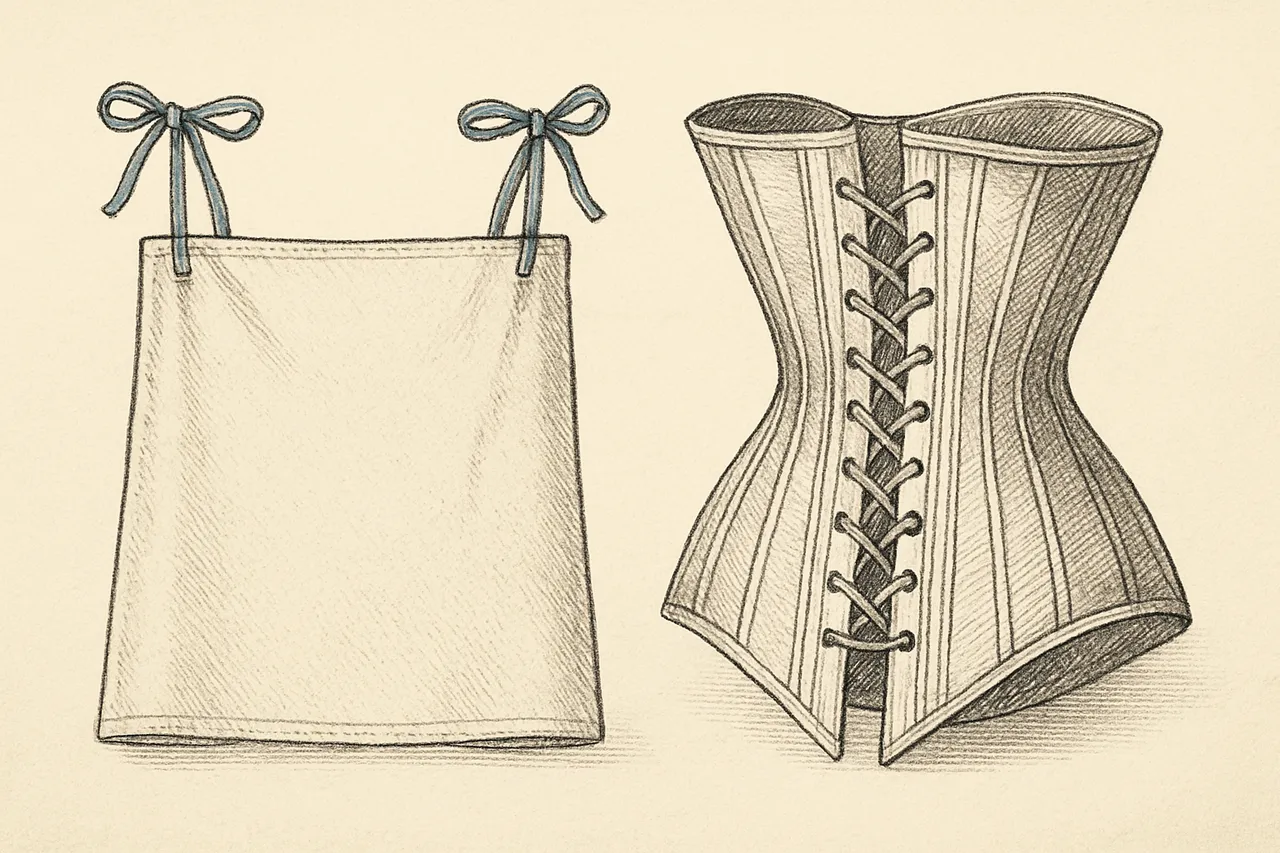
The First Modern Bra Was Two Handkerchiefs and a Ribbon, Improvised Before a Party
Mary Phelps Jacob was nineteen, dressing for a debutante ball, and the corset under her gown was ruining it. She had her maid bring two handkerchiefs and some ribbon. Four years later she held a US patent, and not long after that she sold it for $1,500.
Read the story →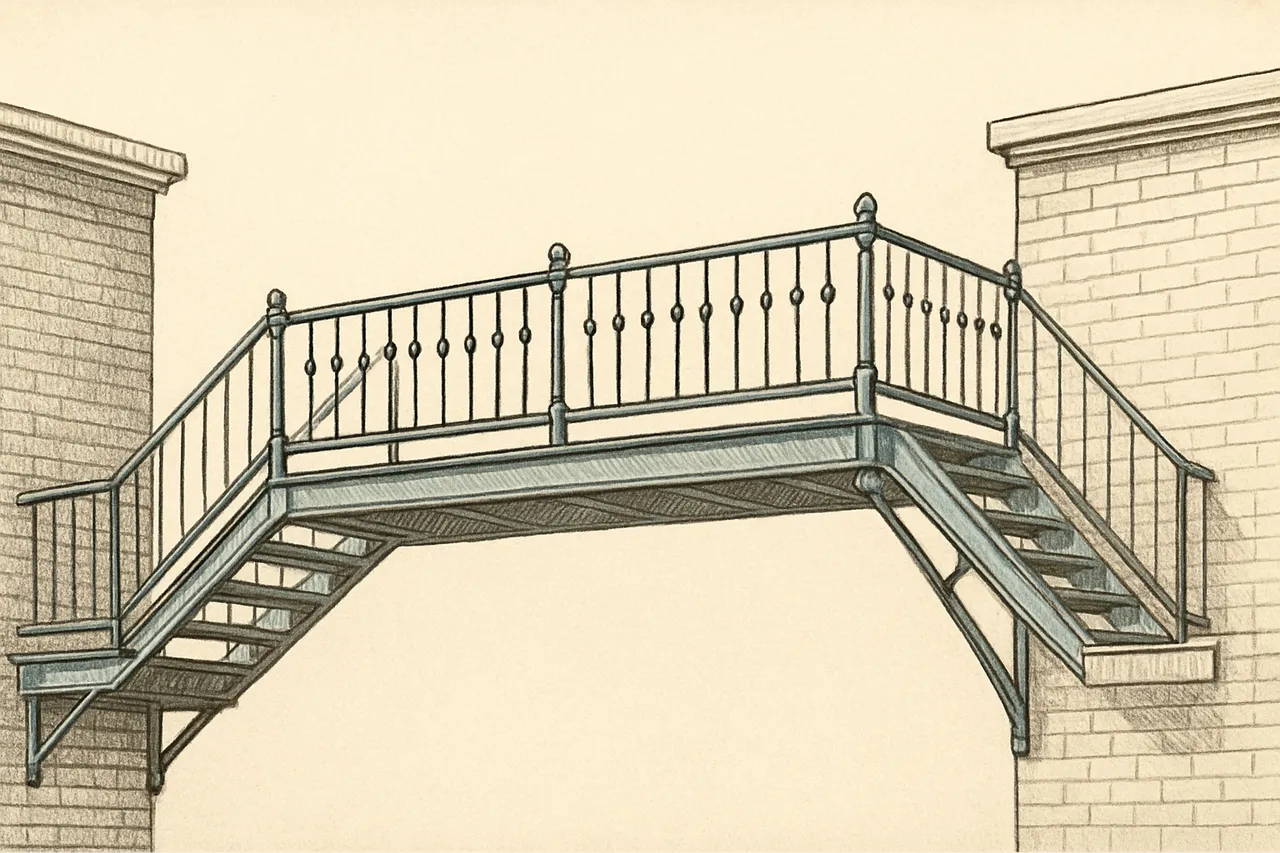
Anna Connelly Patented the Fire Escape in 1887, and Cities Started Requiring Them
American cities were building upward faster than they could evacuate. Anna Connelly, one of the earliest women to hold a US patent, proposed an external bridge between rooftops with railings — an escape route that did not depend on the burning stairwell.
Read the story →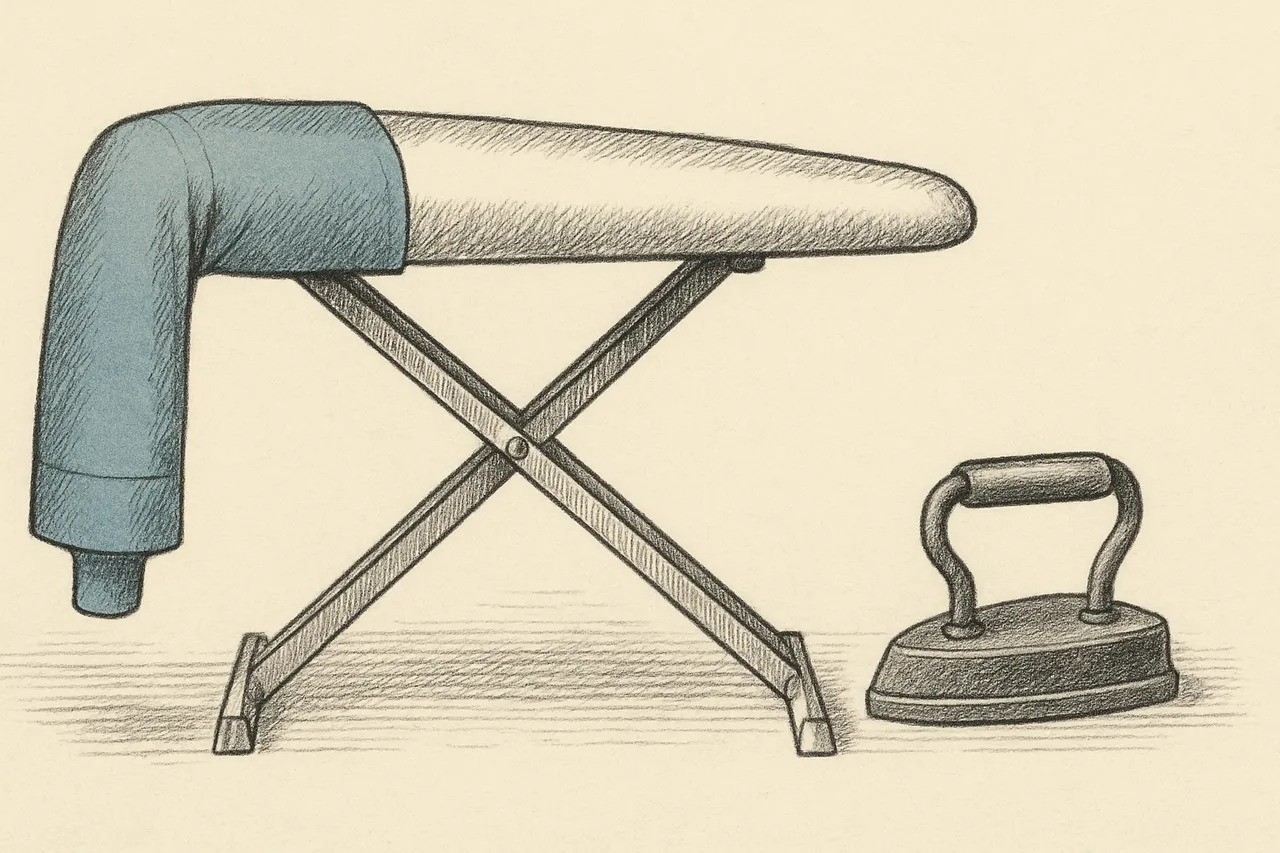
Sarah Boone Was Born Enslaved. In 1892 She Patented the Ironing Board You Still Use.
Flat boards laid across chairs could not press a fitted sleeve or a curved bodice without creasing everything else. Sarah Boone, one of the first Black women in America to receive a patent, gave the board a narrow padded shape that fit the garment.
Read the story →
Tupperware Sat on Shelves for Years. A Single Mother Selling It at Parties Saved the Company.
Earl Tupper's airtight burping seal was a genuine breakthrough that nobody could figure out how to use. Brownie Wise, a divorced single mother with no formal business training, outsold every store in the country from her living room.
Read the story →