Doug Engelbart Patented the Mouse and Made Ten Thousand Dollars
In 1967, Douglas Engelbart filed a patent for a small box with two metal wheels underneath, which his colleague William English had built out of wood. The patent expired in 1987, just as the device was about to become the most-used input mechanism on Earth.
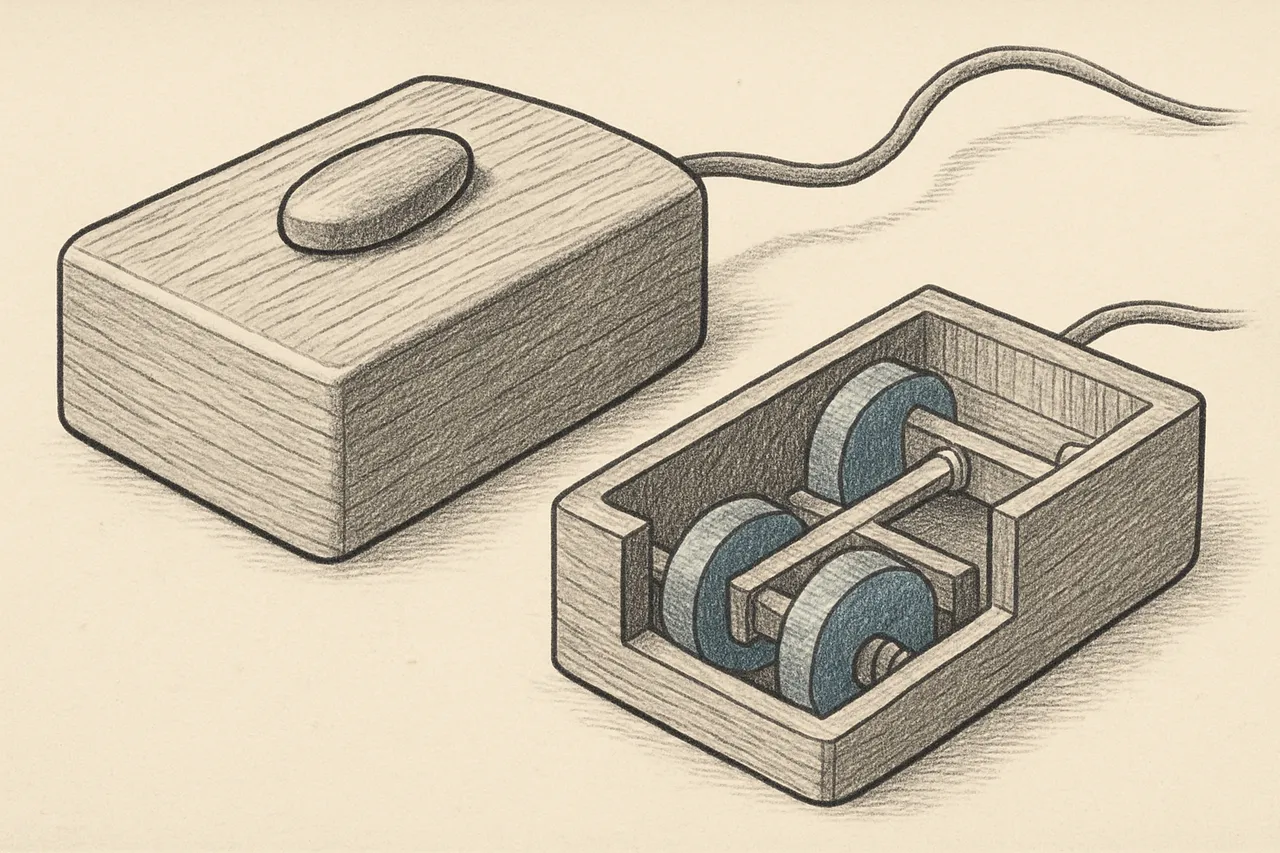
US3541541 was filed on June 21, 1967, and issued on November 17, 1970, three years later. It is titled, with the relentless dryness that characterizes hardware patents, "X-Y Position Indicator for a Display System." The inventor named on it is Douglas C. Engelbart of the Stanford Research Institute. The first working device was built to his design by his SRI colleague William K. English, whose name is not on the patent.
The drawings in the patent show a small hand-held box with two perpendicular wheels underneath; the first one English built was carved from wood. As you push the block, the wheels rotate at rates proportional to your motion in the X and Y directions. Wires inside translate that rotation into a position on a screen. There is a single button on top.
It was, of course, the mouse.
The Mother of All Demos
The patent was filed about eighteen months before the device was first shown publicly. On December 9, 1968, in San Francisco, Engelbart gave what is now universally called the "Mother of All Demos." In ninety minutes, he demonstrated, working live in front of an audience of about a thousand people: a graphical user interface, hypertext links, real-time collaborative editing, video conferencing, dynamic outlining, and the mouse itself. None of these things existed in the consumer computing world. Most would not exist there for another fifteen to twenty-five years.
The audience response was, by most accounts, polite confusion. People understood what they had seen — there was no doubt the demo had worked — but the path from "this is what SRI built" to "this is what every office in America will use" was not yet visible. SRI licensed the mouse patent to a few interested parties. Apple Computer paid SRI roughly $40,000 for a non-exclusive license in the late 1970s, before the Macintosh.
Engelbart himself was reportedly paid about ten thousand dollars by SRI for the invention, in keeping with standard institutional employment arrangements.
What expired before it was needed
US3541541 was a seventeen-year patent, the standard term at the time. It expired in 1987. The Macintosh, the first mass-market computer to ship with a mouse, was released in 1984. By the time the world genuinely needed mice in volume — Windows 95, the graphical web, the explosion of personal computing — Engelbart's patent was three years into the public domain.
The mouse Engelbart designed and English built in the 1960s sold something like a billion units in the following decades. Engelbart received almost none of that money. He spent the rest of his career on the rest of the demo — collaborative editing, hypertext, the augmentation of human intellect — and watched the world adopt his most trivial invention while ignoring the larger system he had built it to serve.
He died in 2013. He had received the Turing Award in 1997 and the National Medal of Technology in 2000. The mouse on the desk in front of you is, in mechanical lineage, a direct descendant of US3541541.
See the original
The full text and figures of US3541541 are on Google Patents.
Related stories
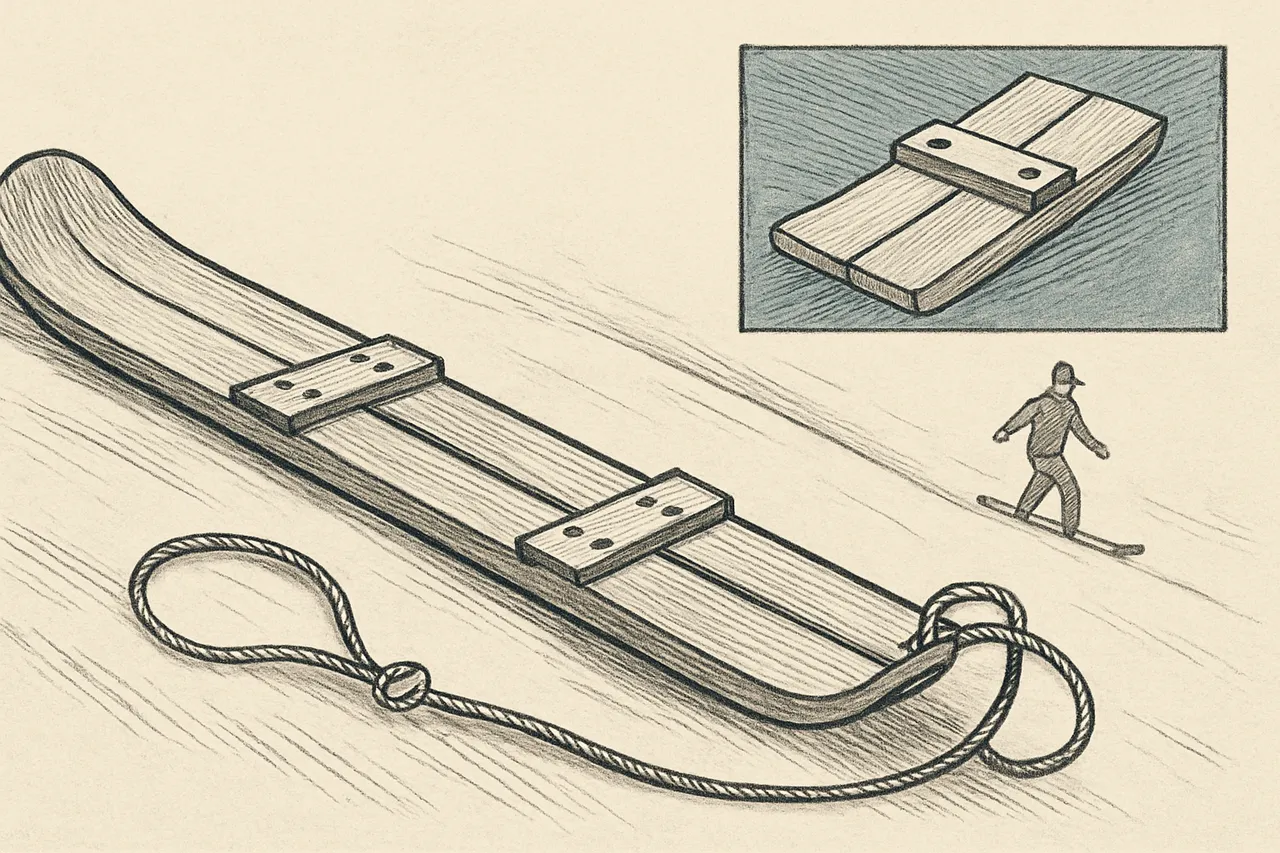
A Father Fastened Two Skis Together for His Daughter at Christmas in 1965. His Wife Named It the Snurfer.
Sherman Poppen was an engineer in Muskegon, Michigan, trying to keep his daughter busy over the holiday. He joined two children's skis side by side and tied a rope to the front. It sold as a toy by the hundreds of thousands, and the people who raced it turned it into a sport.
Read the story →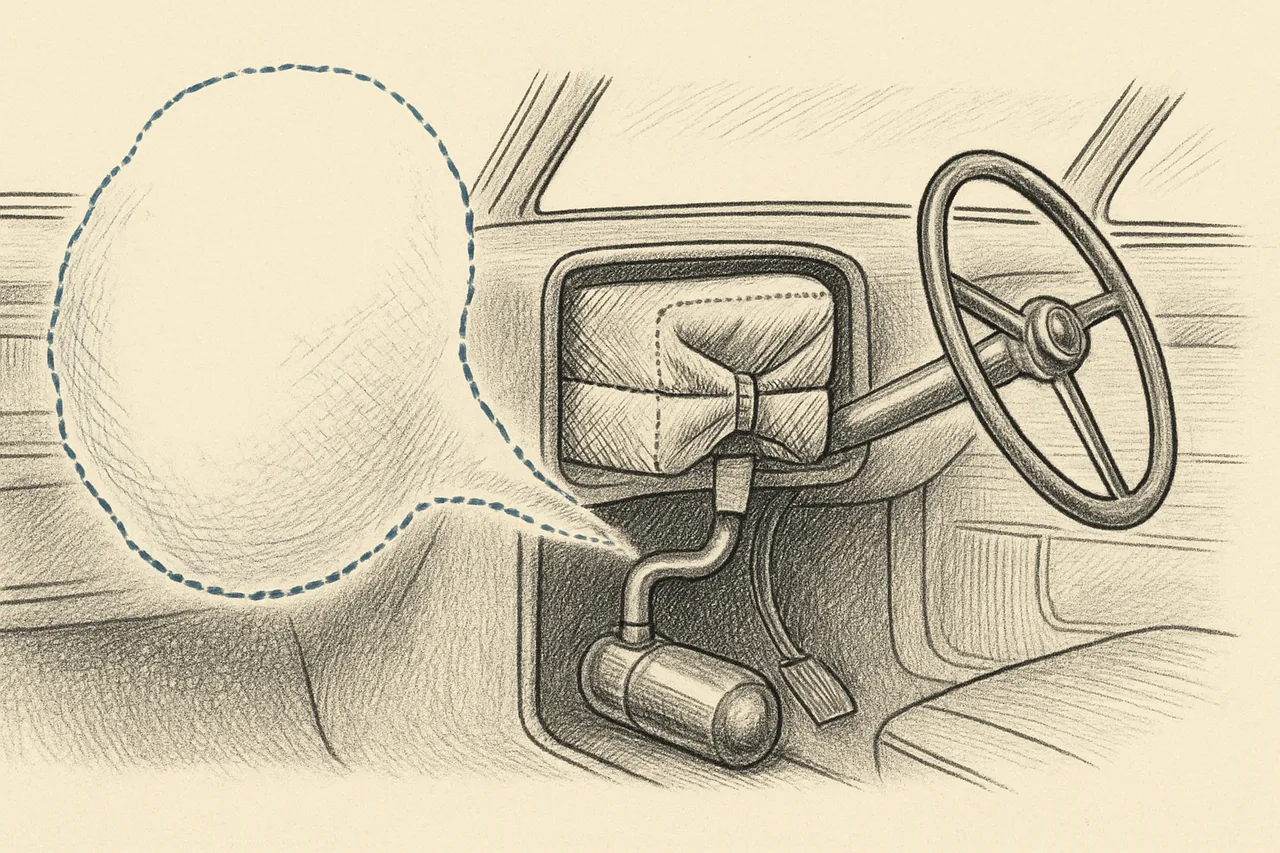
He Swerved to Avoid Something in the Road With His Family in the Car, and Patented the Airbag Three Months Later
John Hetrick was a Navy engineer who had worked with compressed air torpedoes. After a near miss on a Pennsylvania road in 1952, he worked out that a cushion could be inflated faster than a body can travel forward. Then he could not get a single manufacturer to care.
Read the story →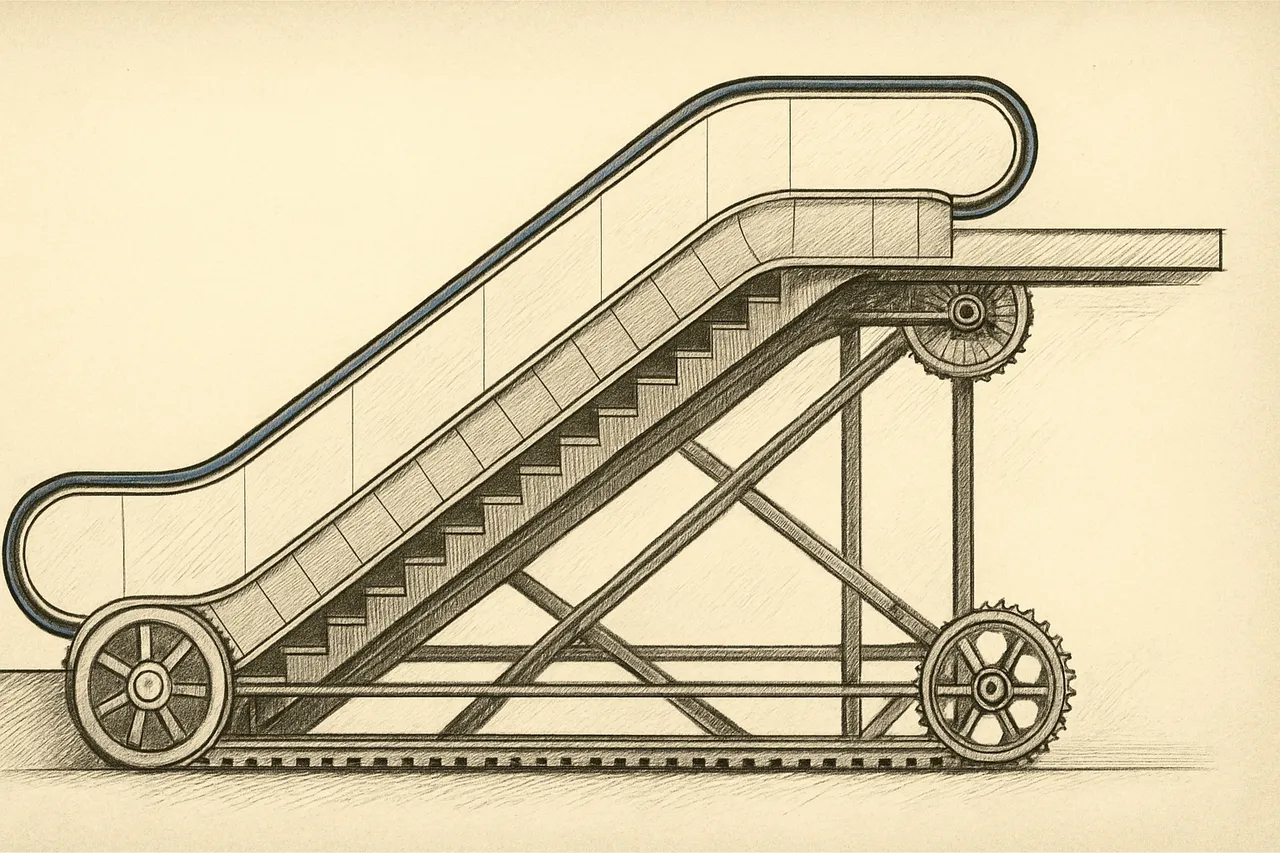
The Escalator Was Patented in 1859. Nobody Built One for Thirty Years.
Nathan Ames patented 'revolving stairs' before the Civil War. He admitted he wasn't sure what would power them, never built one, and died four years later at thirty-nine. The moving staircase arrived a generation after he did.
Read the story →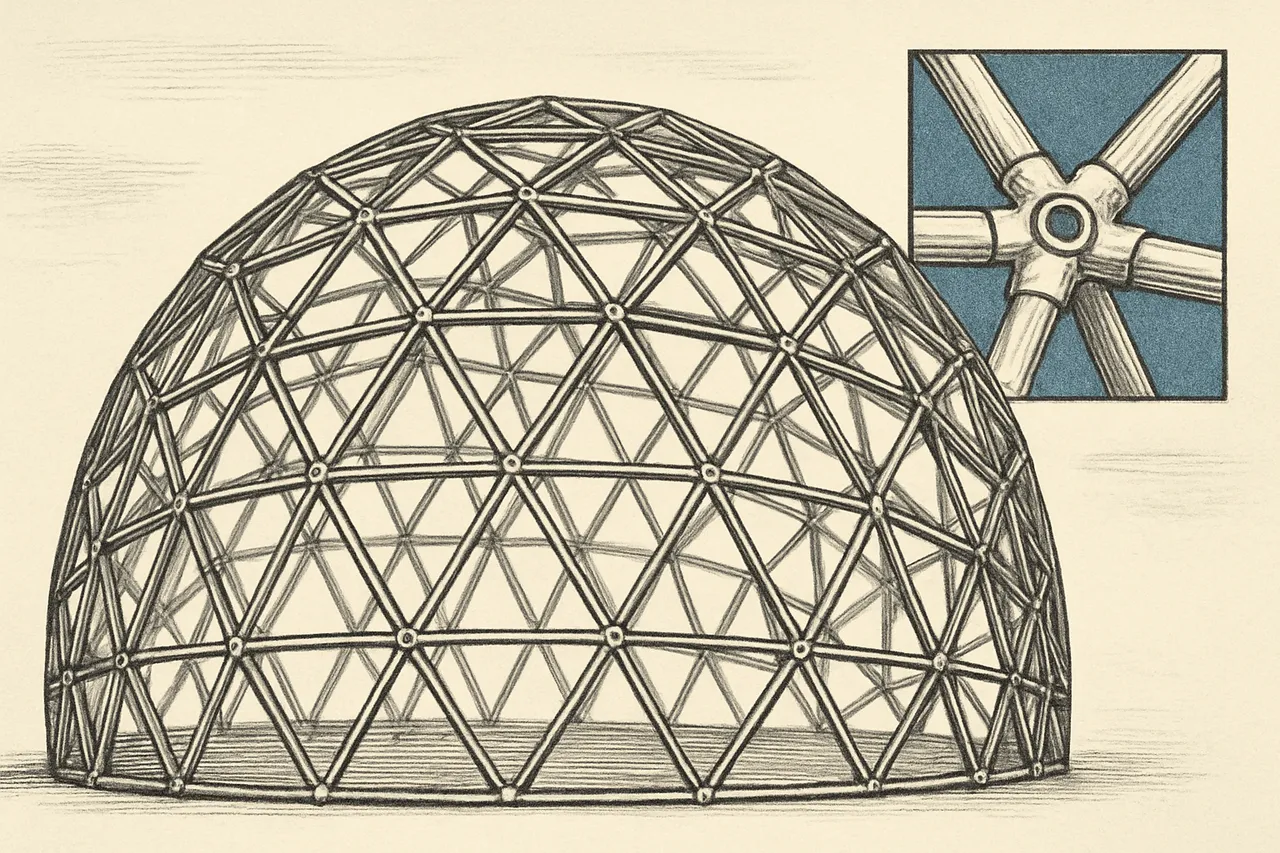
Buckminster Fuller Patented a Dome That Gets Stronger as It Gets Bigger
Most structures get weaker and heavier as they scale up. Buckminster Fuller's geodesic dome does the opposite — it grows more efficient the larger it becomes. It was too strange for mainstream architecture, but it went to the South Pole, the World's Fair, and the cover of the future.
Read the story →