A Nurse in Queens Invented Home Security in 1966
Marie Van Brittan Brown worked irregular nursing shifts in a high-crime neighborhood and didn't feel safe answering her door. So she and her husband designed — and patented — the first home security system with closed-circuit cameras, a remote door release, two-way audio, and a panic button. Decades before any of it was commercial.
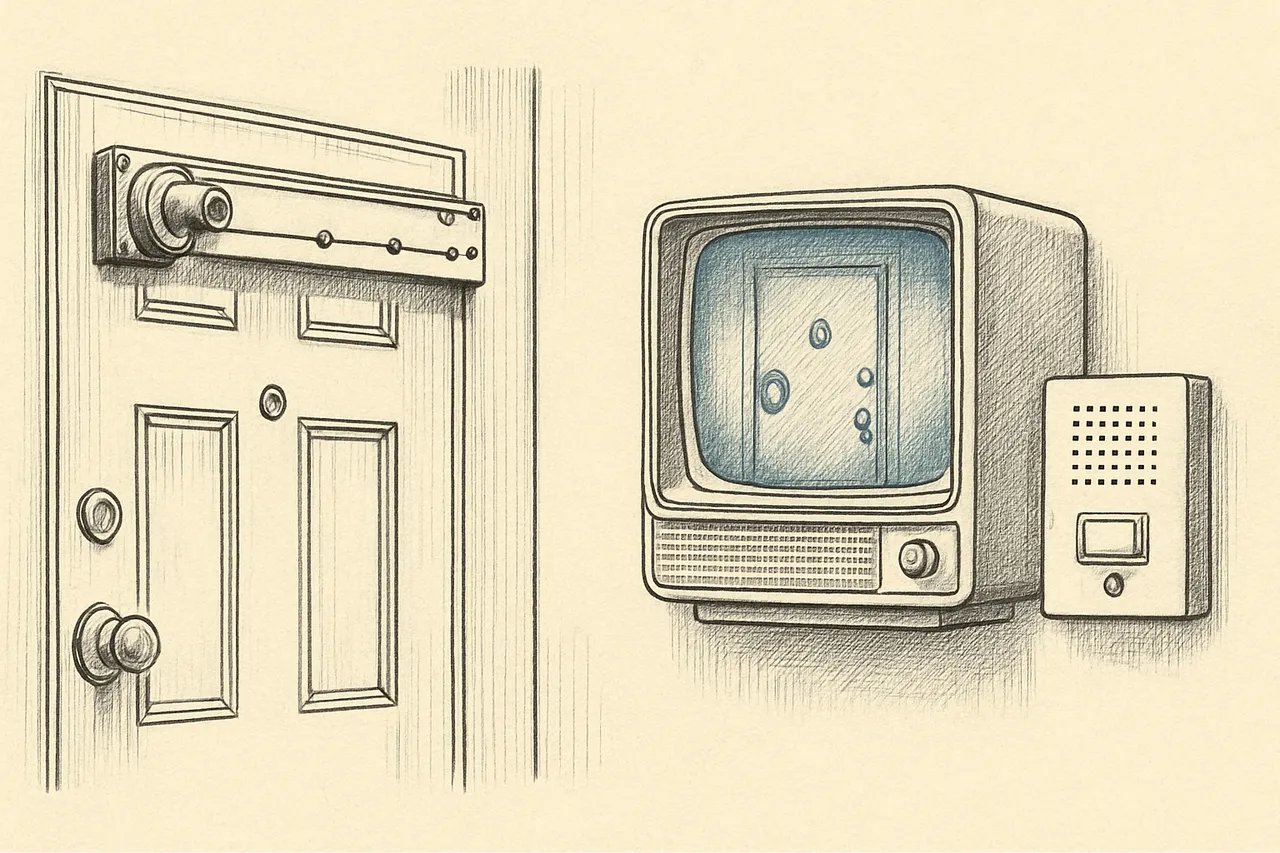
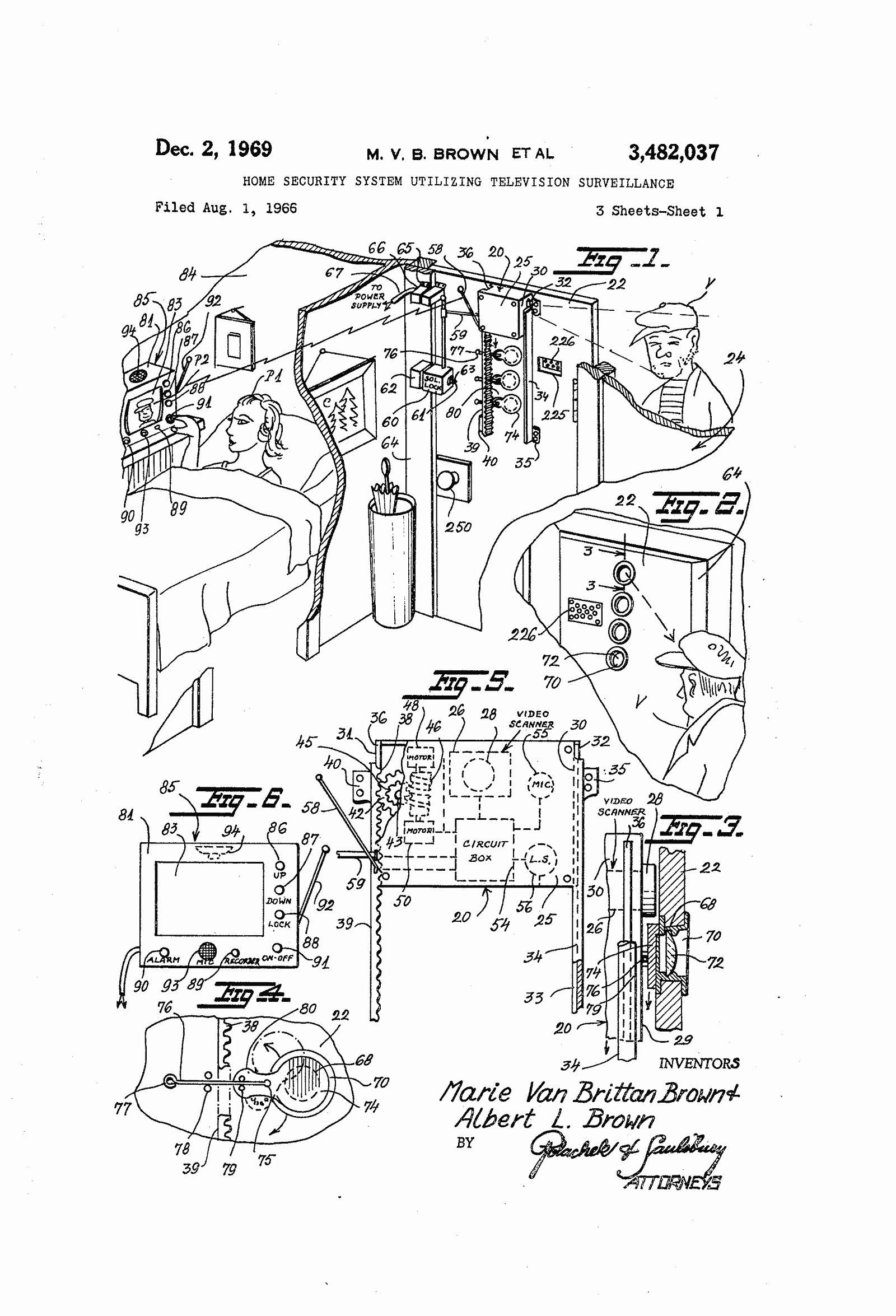
US3482037 was filed in 1966 and granted on December 2, 1969. The title is "Home Security System Utilizing Television Surveillance." The named inventors are Marie Van Brittan Brown and Albert L. Brown of Jamaica, Queens, New York.
Marie Brown was a nurse. Her shifts were irregular, often ending late at night, and the neighborhood she lived in had a high crime rate and slow police response times. The specific problem she wanted to solve was narrow and personal: when someone knocked at the door at an odd hour, she had no safe way to see who it was, to speak to them without opening the door, to let in someone she trusted, or to summon help quickly if she needed it. Albert Brown worked in electronics. Together they built a system.
What the patent describes
The system in US3482037 includes, in 1966:
- A motorized camera that could slide vertically between several peepholes set at different heights in the door, so the resident could view a caller whether they were tall, short, or a child.
- A monitor inside the home — a television screen — displaying the camera's feed, so the resident could see the caller from another room.
- A two-way microphone and speaker allowing the resident to talk with the person at the door without opening it.
- A remote-controlled door latch that could be released by the push of a button from inside.
- An emergency panic button that would send an alarm to a security firm or directly to police.
Read that list again and then look at the marketing copy for any modern smart-home security product — a Ring doorbell, a Nest camera, a remote smart lock, a monitored alarm system. Every single element is in the 1966 filing. The Browns described the entire category, as a single integrated system, more than forty years before it became a mass consumer product.
What happened to it
The patent was granted in 1969. It has since been cited as prior art by dozens of later patents — the figure usually given is around thirty-five citations, including by companies working on exactly the closed-circuit and remote-monitoring systems the Browns had outlined. The Browns themselves did not commercialize it at scale; building the system required custom electronics that were expensive in the late 1960s, and the couple did not have the capital or industrial backing to manufacture it.
Marie Van Brittan Brown received an award from the National Scientists Committee and a small amount of press attention at the time. She did not become wealthy or famous from the invention. She died in 1999. The broader recognition — the inclusion in "Black inventors who shaped modern life" features, the acknowledgment that home security as a product category essentially begins with her patent — has arrived mostly in the years since her death.
See the original
The full text and figures of US3482037 are on Google Patents.
Related stories
The Hollywood Actress Who Invented Wi-Fi
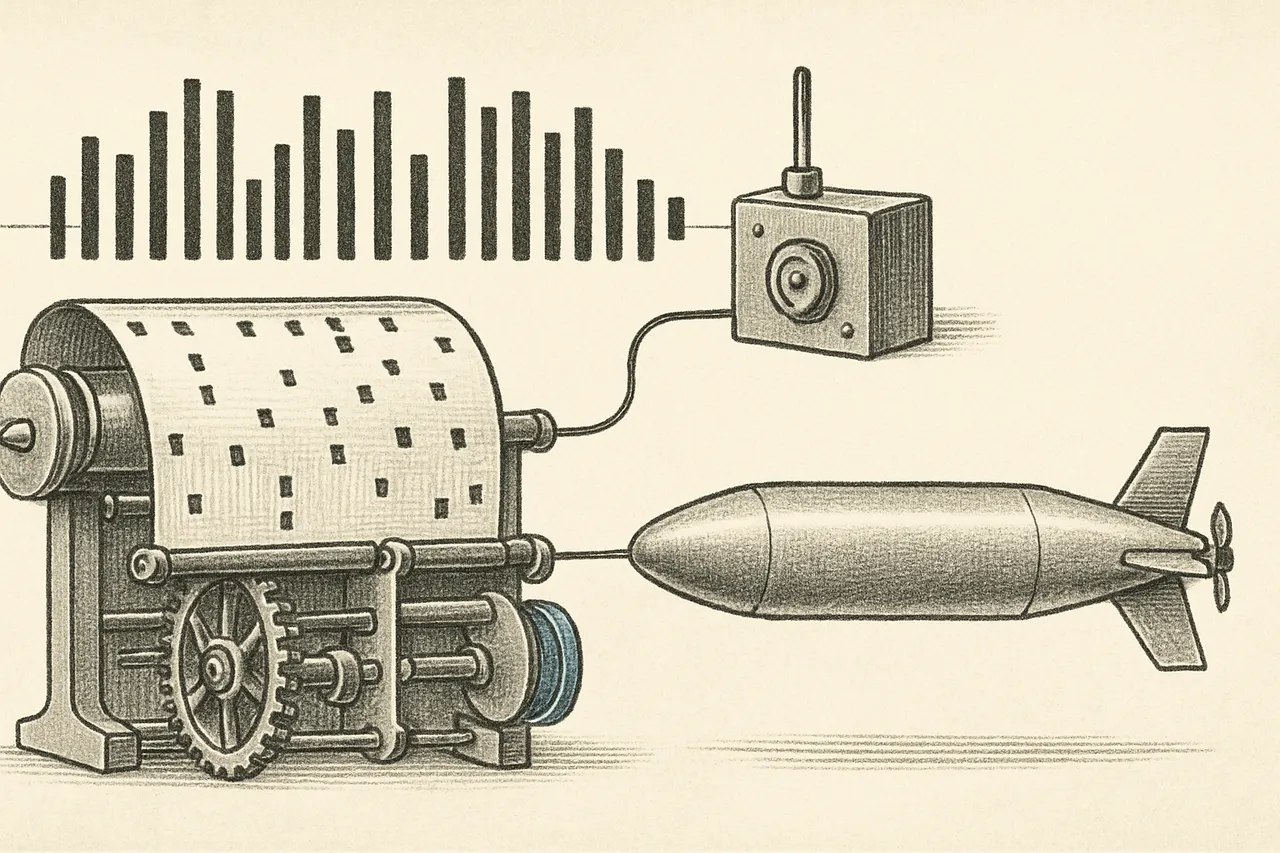
In 1942, Hedy Lamarr — at the time MGM's most photographed actress — co-patented a frequency-hopping radio system designed to guide torpedoes. The Navy filed it away. Fifty years later, every cellphone on Earth was using the same idea.
Read the story →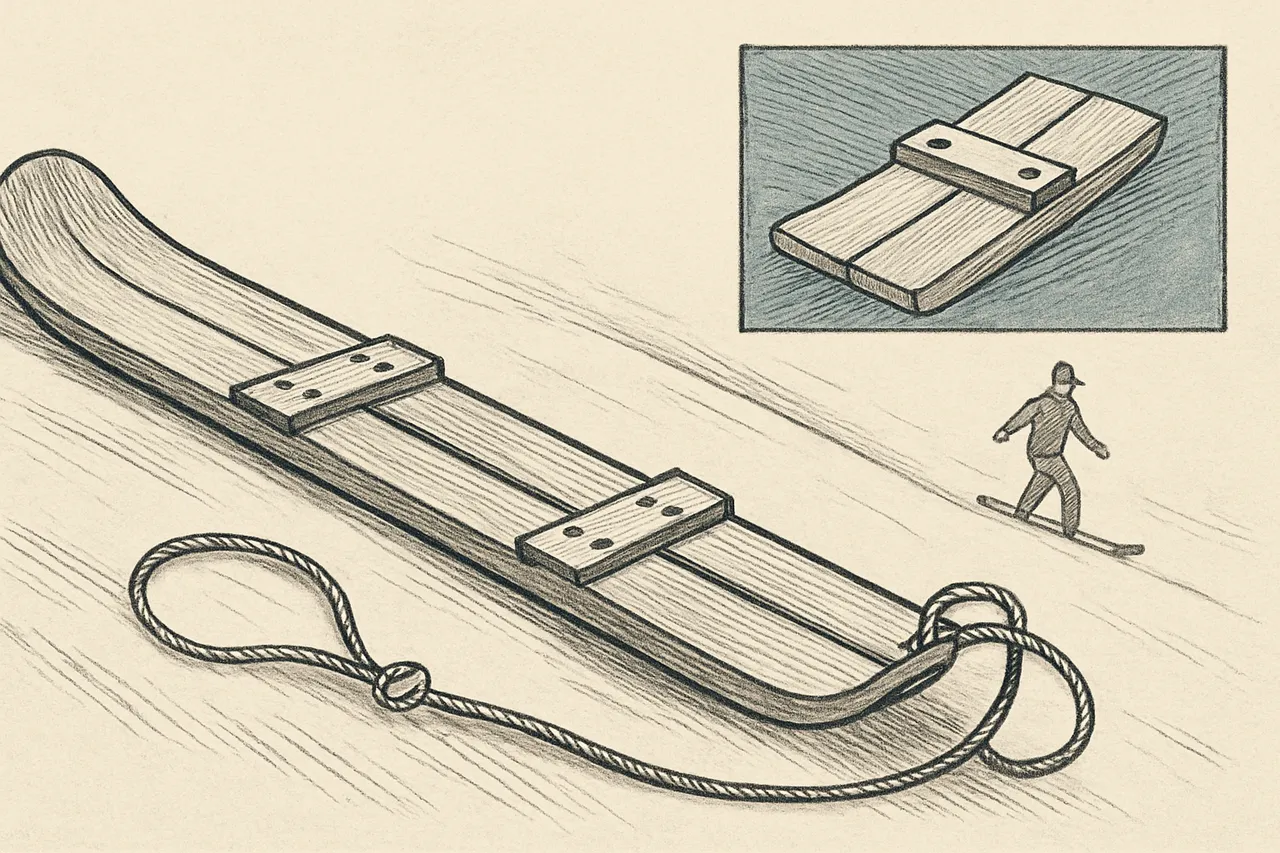
A Father Fastened Two Skis Together for His Daughter at Christmas in 1965. His Wife Named It the Snurfer.
Sherman Poppen was an engineer in Muskegon, Michigan, trying to keep his daughter busy over the holiday. He joined two children's skis side by side and tied a rope to the front. It sold as a toy by the hundreds of thousands, and the people who raced it turned it into a sport.
Read the story →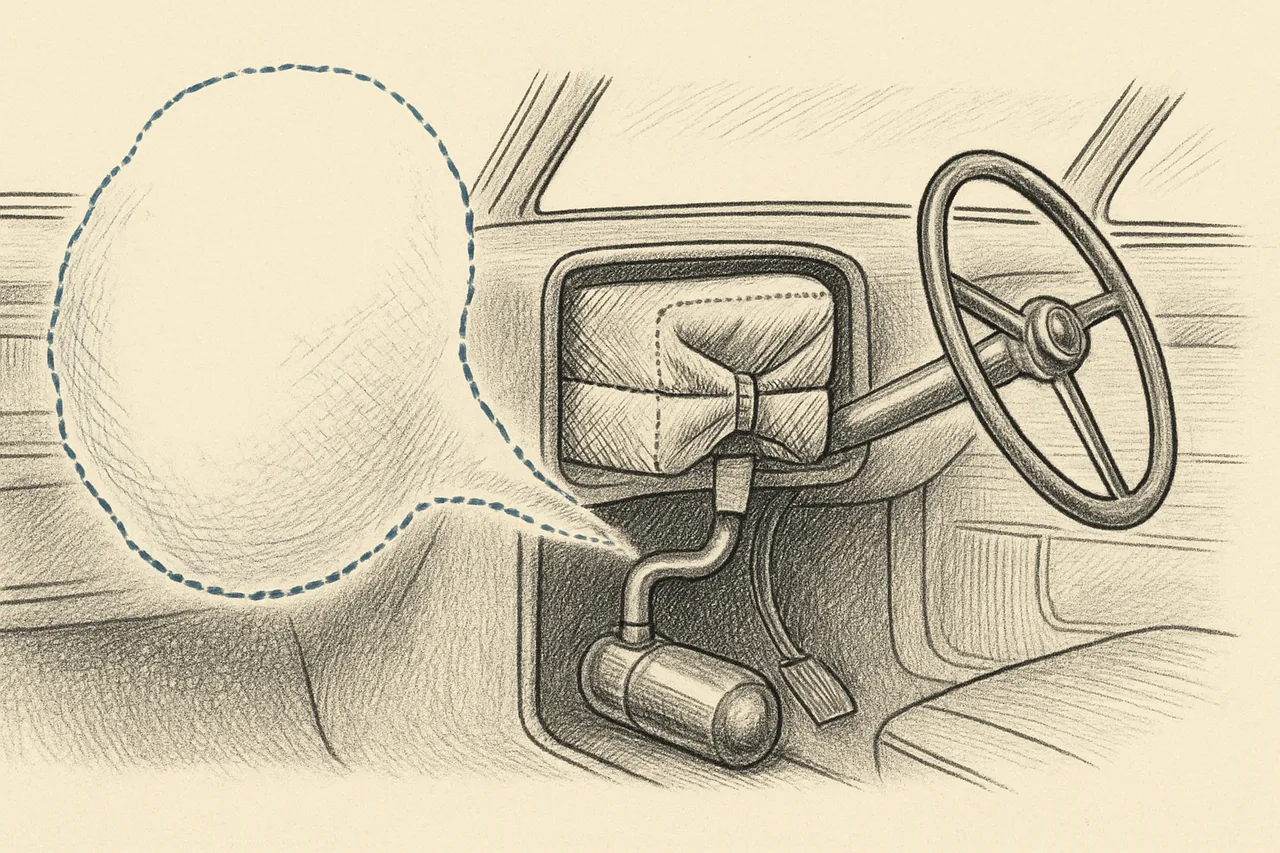
He Swerved to Avoid Something in the Road With His Family in the Car, and Patented the Airbag Three Months Later
John Hetrick was a Navy engineer who had worked with compressed air torpedoes. After a near miss on a Pennsylvania road in 1952, he worked out that a cushion could be inflated faster than a body can travel forward. Then he could not get a single manufacturer to care.
Read the story →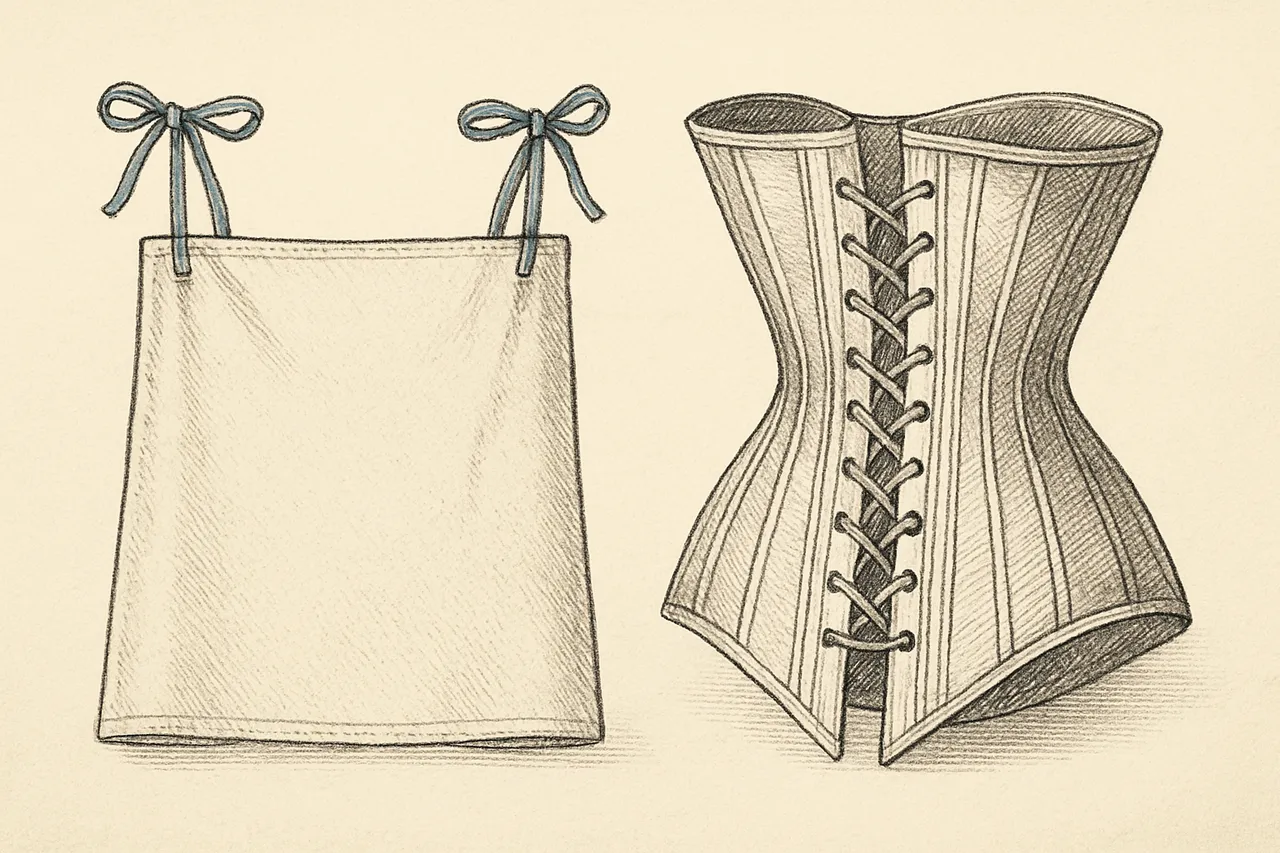
The First Modern Bra Was Two Handkerchiefs and a Ribbon, Improvised Before a Party
Mary Phelps Jacob was nineteen, dressing for a debutante ball, and the corset under her gown was ruining it. She had her maid bring two handkerchiefs and some ribbon. Four years later she held a US patent, and not long after that she sold it for $1,500.
Read the story →