Lewis Waterman Did Not Invent the Fountain Pen. He Invented the Small Part That Stopped It Blotting.
Fountain pens existed for decades before 1884 and most of them were awful, flooding the page one moment and running dry the next. Waterman's patent fixes the reason why, and the fix is a set of narrow grooves cut into a piece of hard rubber.
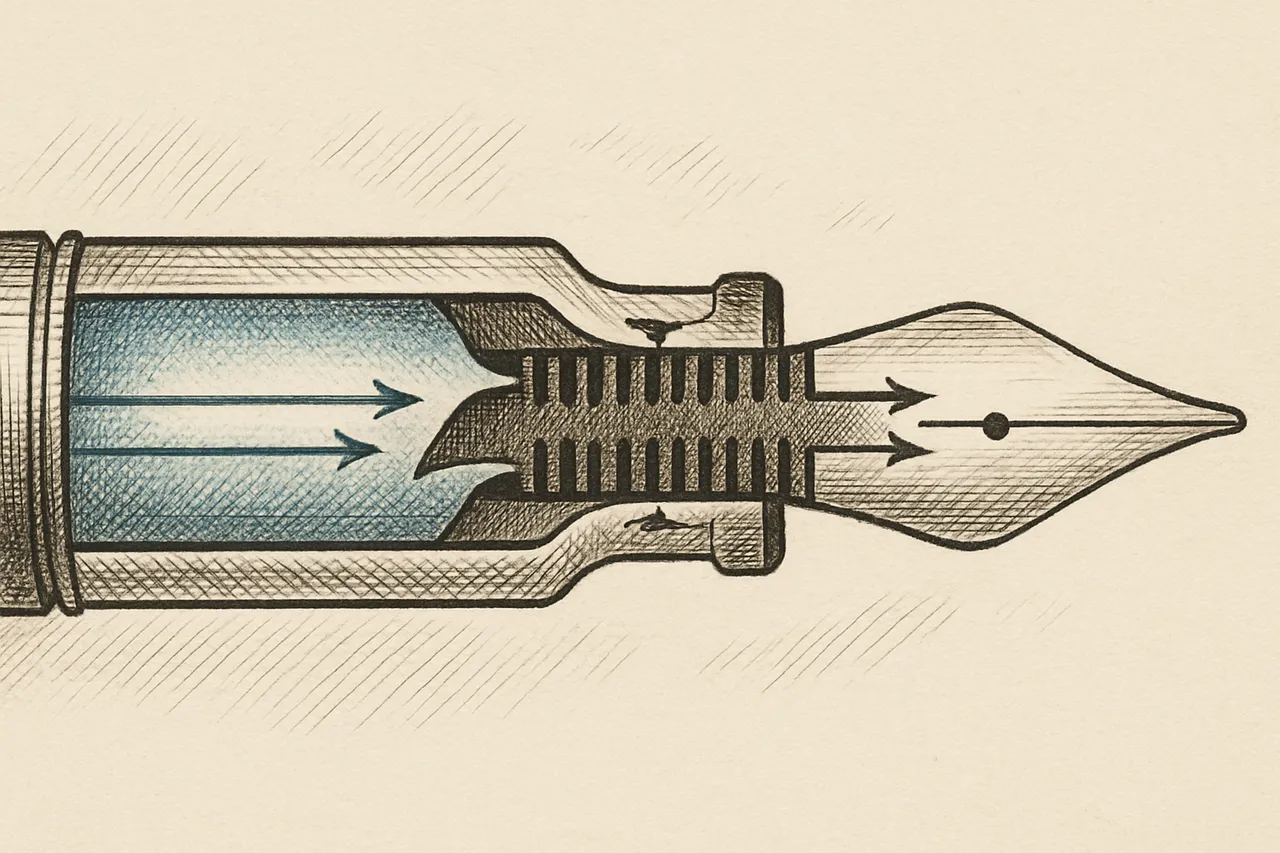
US293545 was granted to L. E. Waterman on February 12, 1884. The Patent Office title is Fountain-Pen. The pen was not new. The part of it that Waterman fixed had been defeating inventors for half a century.
The problem with every fountain pen before this
A fountain pen is a reservoir of ink, a nib, and a path between them. The difficulty is entirely in that path, and it comes down to a fact about closed containers.
When ink leaves the reservoir, something has to take its place. If air cannot get in, a vacuum forms behind the ink and the flow stops, and the pen writes dry. If air can get in freely, it tends to arrive all at once as a bubble, which shoves a slug of ink out through the nib and deposits a blot on the page.
Early fountain pens swung between these two failures, sometimes within the same sentence. They were widely sold and widely disliked. Many people kept using dip pens, which are inconvenient but predictable.
The trouble was never the reservoir or the nib. It was that ink going out and air coming in were fighting over the same passage.
What the patent does
Waterman's answer was to cut a series of narrow grooves, or fissures, into the hard rubber feed bar that sits between the reservoir and the nib.
These channels are fine enough for capillary action to take hold. Ink wets the walls of a narrow channel and is drawn along it steadily, and the narrowness means the flow is metered rather than free. The pen delivers a controlled trickle instead of a surge.
The clever part is what happens in the same grooves at the same time. Because a groove is a channel rather than a sealed tube, air can travel back up along it, past the ink, into the reservoir. Ink moves forward and air moves backward in the same passage, continuously, and the pressure inside the reservoir never gets far enough out of balance to either lock the flow or force a blob out.
It is a small piece of shaped rubber. It is also the difference between a pen you can carry in a pocket and a device that ruins documents.
The story about the contract
The tale attached to this patent is well known. Waterman is said to have been an insurance salesman who had a client ready to sign a policy, produced a fountain pen for the signature, and watched it blot ink across the contract. By the time he returned with a replacement form, a competitor had signed the client instead. He is said to have gone away and built a better pen.
The story is repeated in nearly every account of the company, and it is a very good story. It is also the kind of origin tale that later company advertising tends to polish, and the evidence for it is thin. Treat it as a legend that may well contain something true rather than as a documented event.
What is documented is that Waterman was selling pens in New York in the 1880s, initially assembling them by hand and selling them out of a cigar shop, and that he backed them with a guarantee at a time when buyers had every reason to distrust a fountain pen.
Afterward
The company he founded became one of the dominant pen makers in the world. Waterman died in 1901, and the business carried his name long after.
The feed design spread and improved, and by the early twentieth century the fountain pen had become the ordinary tool of business and correspondence, which it remained for roughly fifty years until a different pressure-and-flow solution arrived and displaced it. That one used a rotating ball, and it is covered in our story on the ballpoint pen.
Waterman's contribution is easy to undervalue because it is not the visible part of the object. Nobody buys a pen for its feed. The nib gets the attention, the barrel carries the brand, and the grooved piece of rubber in the middle is the reason any of it works.
See the original
The full text and figures of US293545 are on patents.us.
Related stories
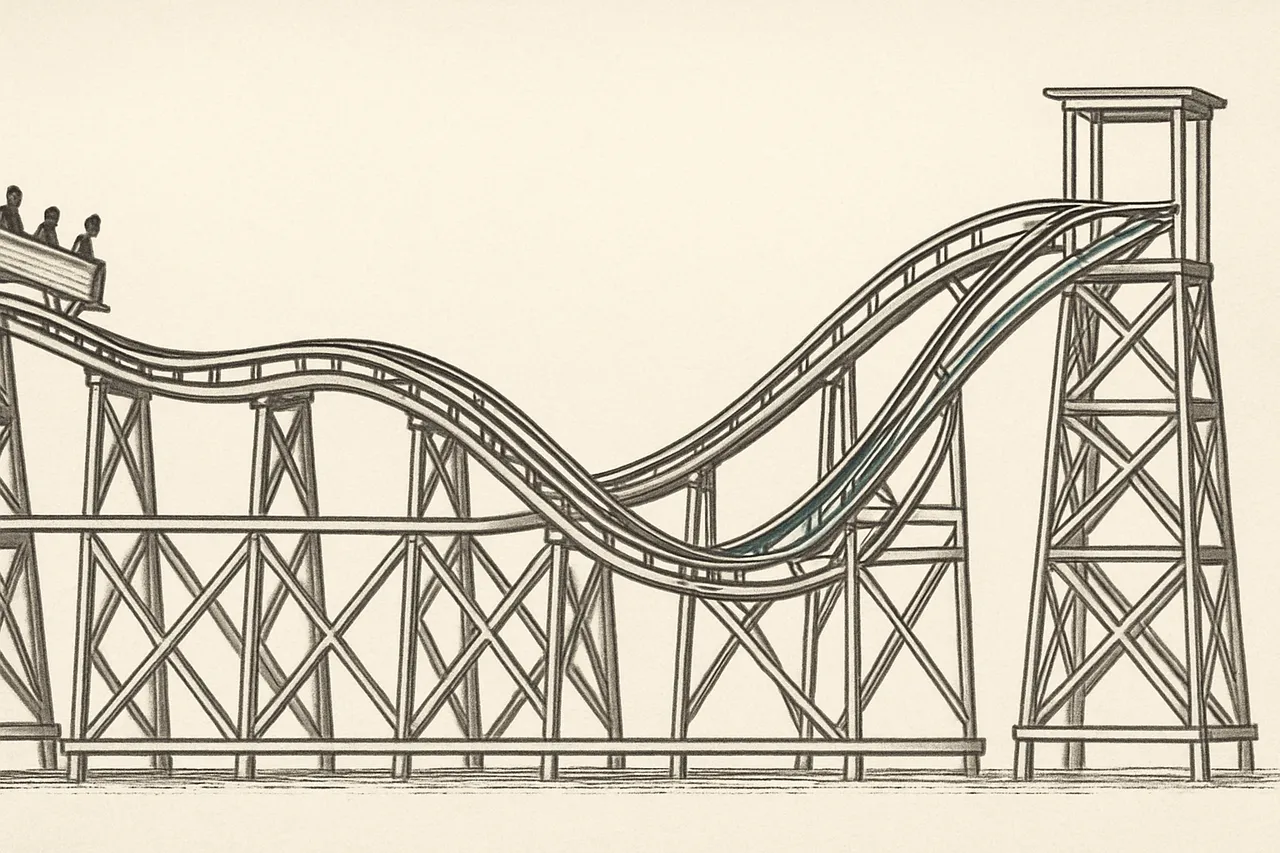
The First American Roller Coaster Ran at Six Miles an Hour, and Its Inventor Built It to Lure People Away From Saloons
LaMarcus Thompson's Switchback Railway opened at Coney Island in 1884. Riders sat sideways on a bench, coasted down a gentle undulating track, then got out while attendants pushed the car over a switch so they could coast back the other way. It cost a nickel and it made a fortune.
Read the story →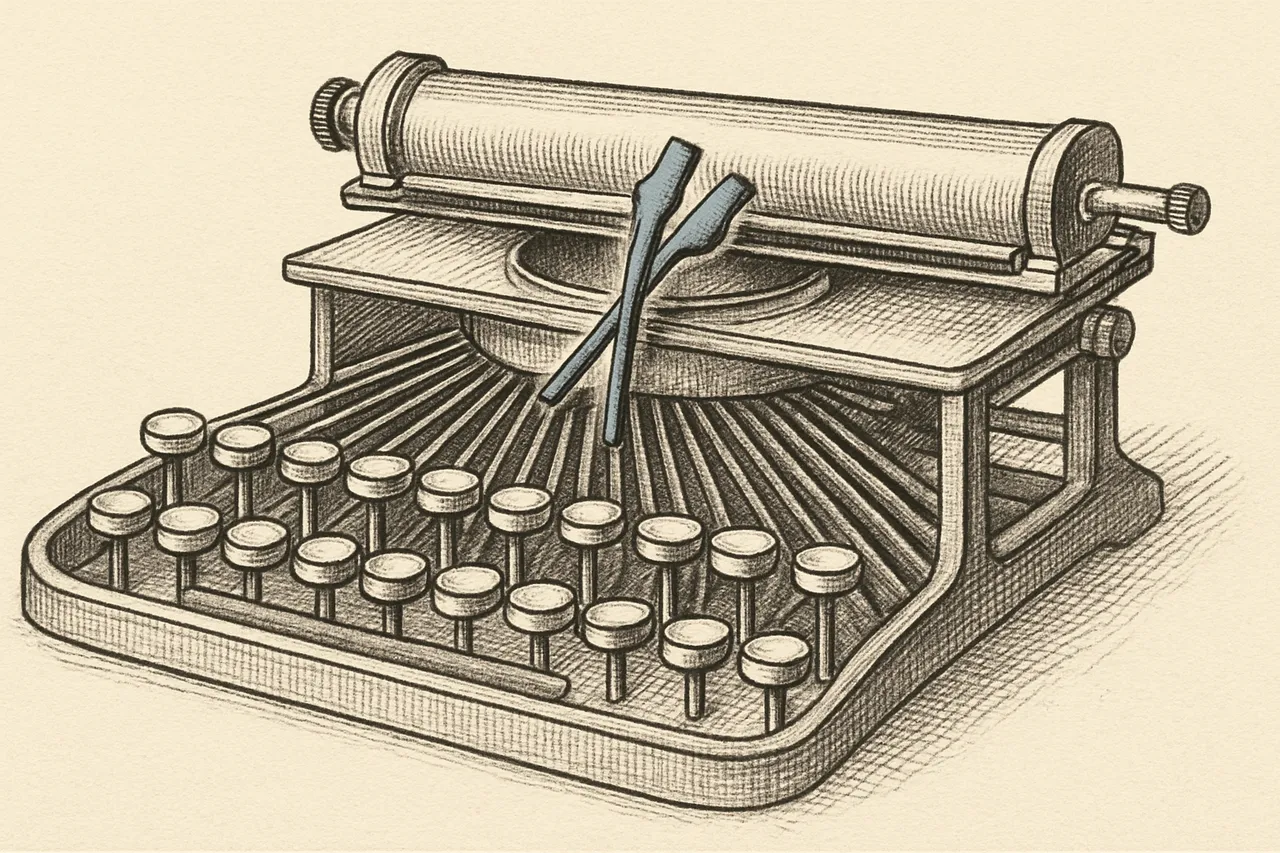
The 1868 Patent Behind the First Successful Typewriter Had Its Keys in Alphabetical Order. QWERTY Came Later, and Nobody Fully Agrees Why.
Christopher Latham Sholes and two partners patented a typewriter in Milwaukee in 1868 with keys arranged like a piano, roughly in alphabetical order. Over the next several years the letters were shuffled into QWERTY. The popular explanation for that is a distortion of a better one.
Read the story →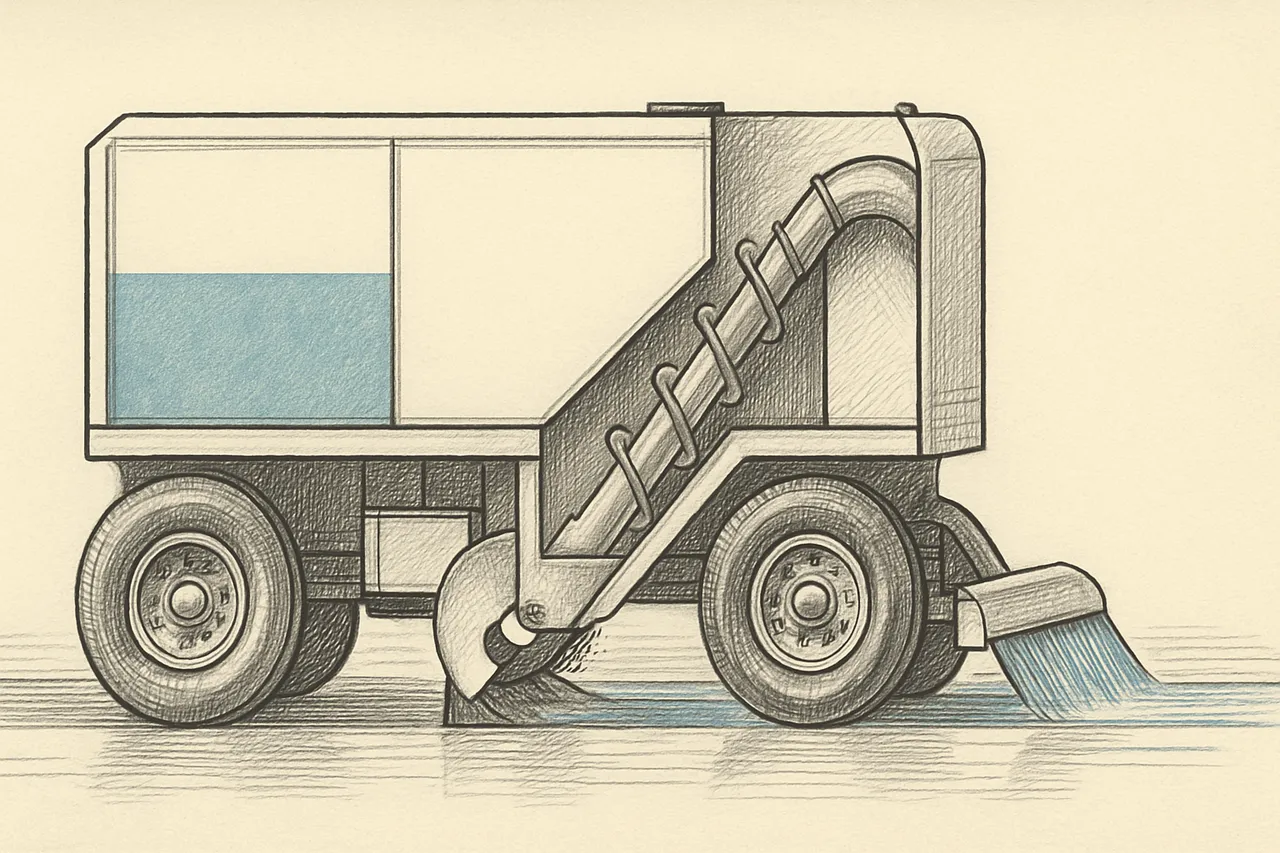
Frank Zamboni Spent Years Building a Machine So His Ice Rink Didn't Need a Crew of Men With Scrapers
Frank Zamboni ran an ice rink in Southern California, and resurfacing the ice by hand took several workers more than an hour. His machine did the whole job in a single pass. Its most important trick is the one people least expect: it lays down warm water, not cold.
Read the story →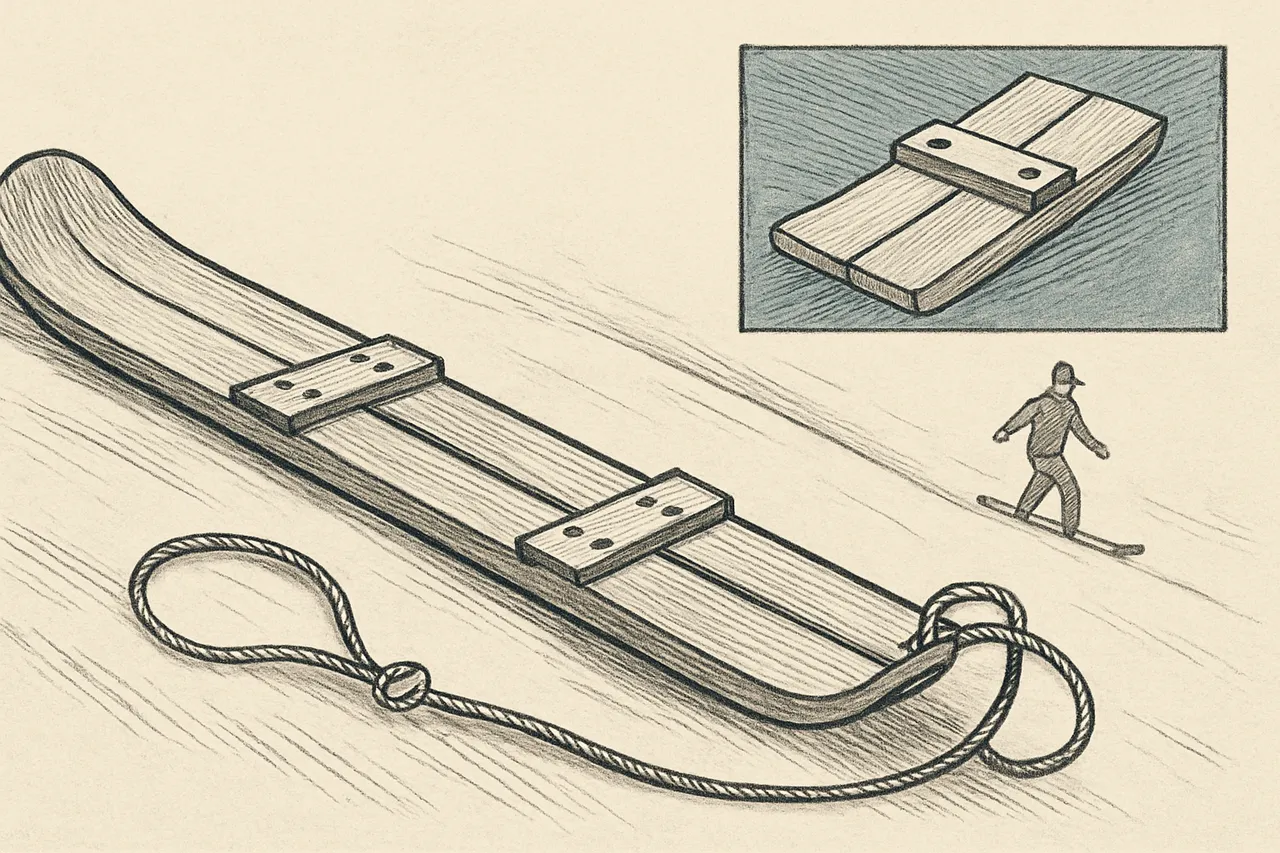
A Father Fastened Two Skis Together for His Daughter at Christmas in 1965. His Wife Named It the Snurfer.
Sherman Poppen was an engineer in Muskegon, Michigan, trying to keep his daughter busy over the holiday. He joined two children's skis side by side and tied a rope to the front. It sold as a toy by the hundreds of thousands, and the people who raced it turned it into a sport.
Read the story →