The Lock on Your Front Door Copies a Design the Egyptians Used Four Thousand Years Ago
Linus Yale Jr. did not invent the pin tumbler. Ancient Egyptian locks used wooden pins dropped into a bolt and a toothed key that lifted them. What Yale did was shrink it, make it out of metal, and put it in a cylinder small enough for a door.
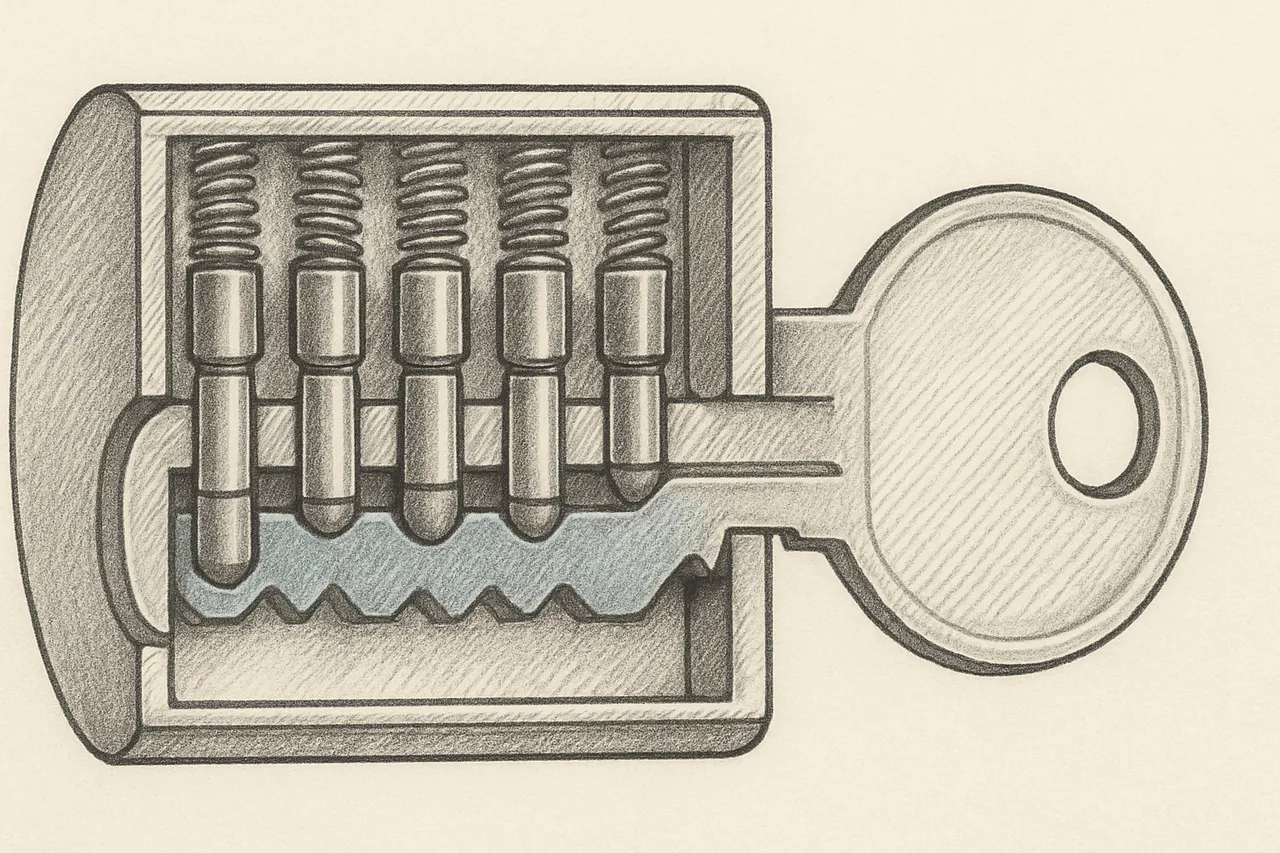
US48475 was granted to Linus Yale Jr. in 1865 and covers the pin tumbler cylinder lock. If you own a house, the key in your pocket almost certainly works on this principle.
The principle is roughly four thousand years old.
Egyptian locks from around 2000 BCE used a wooden bolt with a set of vertical pins that dropped into matching holes and jammed it in place. The key was a wooden bar with pegs sticking up from it. Insert it, lift the pins to the right height, and the bolt slides. Examples have been found at Khorsabad and the design shows up across the ancient Near East.
Yale's contribution was not the idea. It was making the idea small.
What was wrong with locks in 1860
Lock technology in the mid nineteenth century was dominated by lever tumbler mechanisms, and the good ones were large, heavy, and expensive. Bank vaults and strongboxes got serious locks. Ordinary doors got weak warded locks that a competent thief could open with a bent piece of wire, because the mechanism was little more than a set of obstructions that a skeleton key could avoid.
The gap was economic. Nobody had a design that was both hard to pick and cheap enough to hang on every door in a city.
The cylinder
Yale, whose father had also been a lockmaker, worked out how to build the ancient pin principle at small scale in metal.
His cylinder holds a row of pin stacks. Each stack has two pieces, a driver pin above and a key pin below, pushed down by a spring. With no key in the lock, the drivers cross the gap between the rotating plug and the housing, so the plug cannot turn. The correct key lifts every stack exactly enough that the split between driver and key pin lands flush at that gap, called the shear line. Then the plug rotates.
The important consequence is combinatorial. With five pins and several possible heights each, the number of distinct keys runs into the thousands, and they can be cut cheaply on a machine. The lock became mass producible and individually unique at the same time.
The second consequence is the flat key. Earlier keys were bulky. A pin tumbler needs only a thin serrated blade, which is why keys became small enough to carry a handful of them.
What came after
Yale founded the company that still bears his name, and the cylinder became the world standard for doors. It has been attacked continuously ever since. Picking a pin tumbler exploits manufacturing tolerances, setting pins one at a time until all of them happen to sit at the shear line. Bump keys, rakes, and impressioning all work on the same weakness.
Lockmakers have answered with security pins shaped like spools and serrated columns that give false feedback, with tighter tolerances, and with sidebars that add a second condition beyond the shear line.
None of it changed the underlying architecture. A modern high security lock is still a set of pins that a key lifts to a line, which is what the Egyptians were doing with wood.
See the original
The full text and figures of US48475 are on patents.us.
Related stories
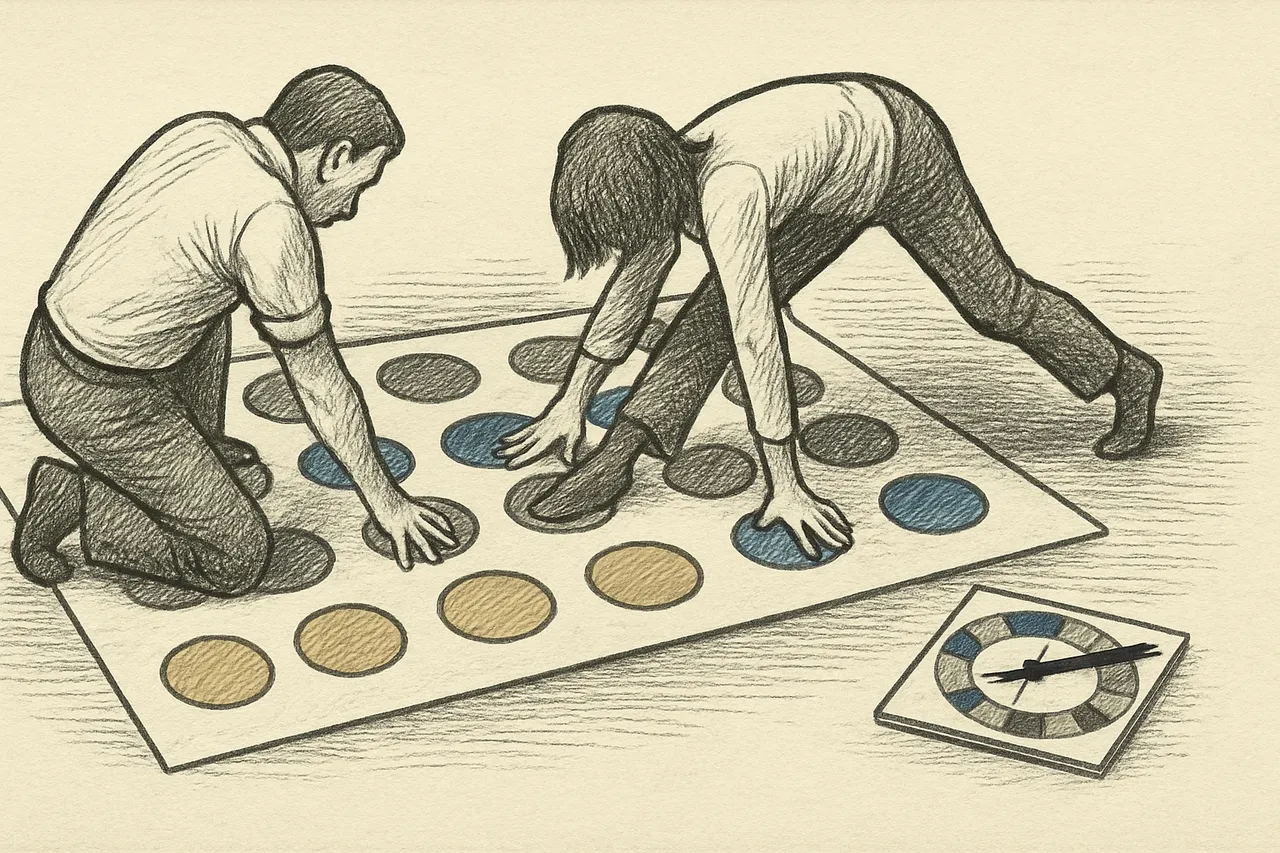
Twister's Patent Is Titled 'Apparatus for Playing a Game Wherein the Players Constitute the Game Pieces'
The patent title is the whole idea: the people are the pieces. Milton Bradley released the game in 1966, some retailers were wary of it, and critics found it a little too intimate. Then Johnny Carson played it on television with Eva Gabor, and the orders poured in.
Read the story →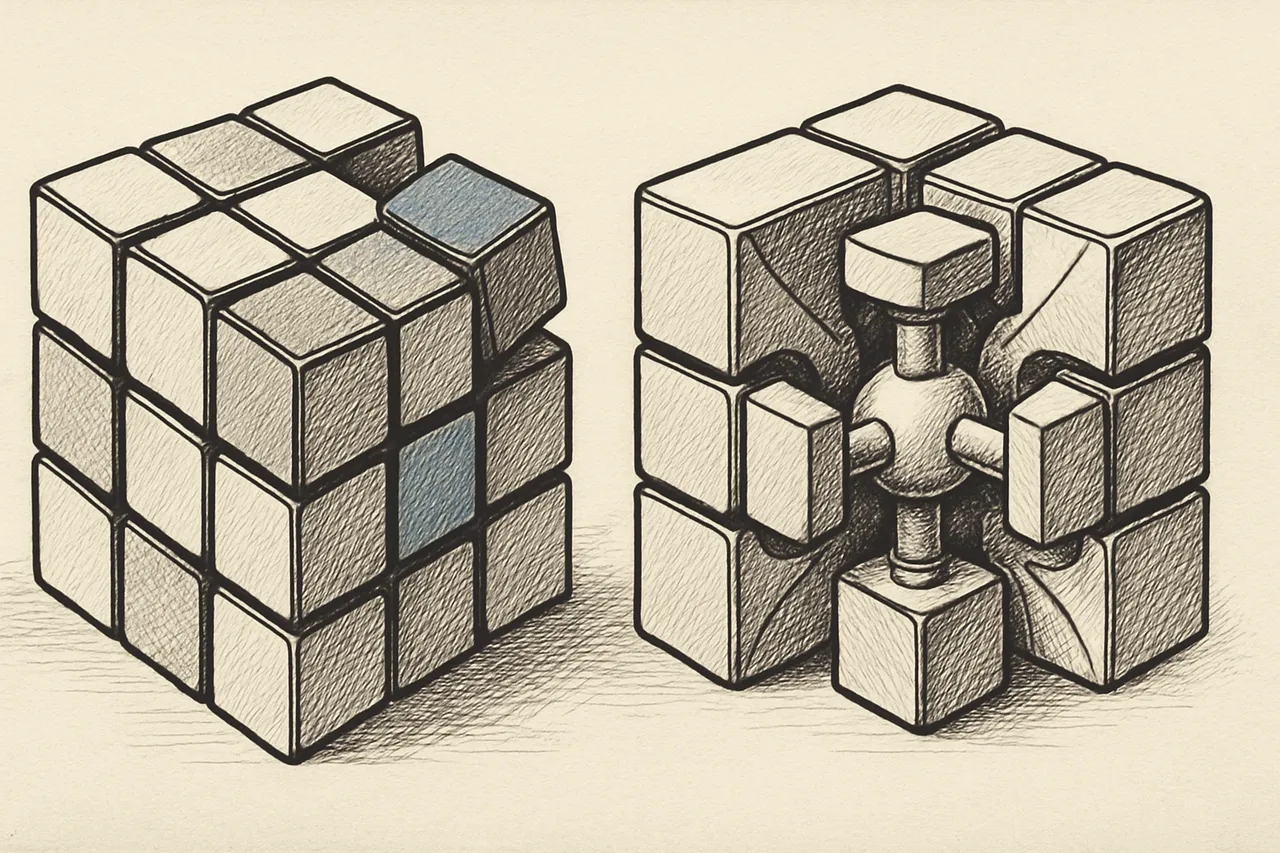
Ernő Rubik Needed About a Month to Solve His Own Cube. An American Court Later Found It Infringed an Earlier US Patent.
Rubik built the first cube in Budapest in 1974 as a way to think about three-dimensional movement. The clever part is how it holds together when most of its pieces are not attached to anything. In the United States, a chemist named Larry Nichols had patented a related puzzle in 1972, and his company sued.
Read the story →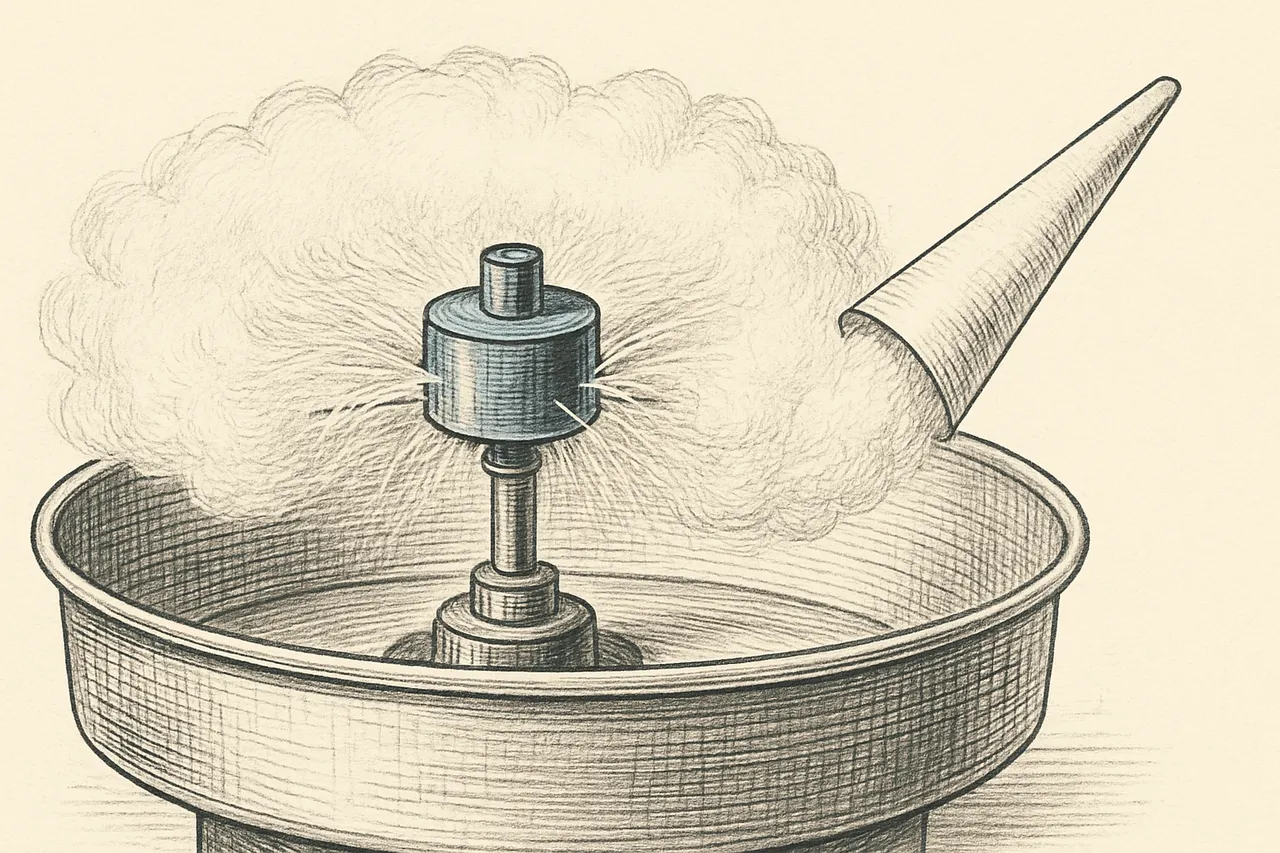
A Dentist Co-Invented the Cotton Candy Machine, and It Was Sold at the 1904 World's Fair as Fairy Floss
William Morrison was a dentist and John Wharton was a candy maker. Their machine melted sugar and flung it through tiny holes so that it cooled into threads finer than hair before it could crystallize. They filed in 1897, and at the St. Louis World's Fair it was a sensation.
Read the story →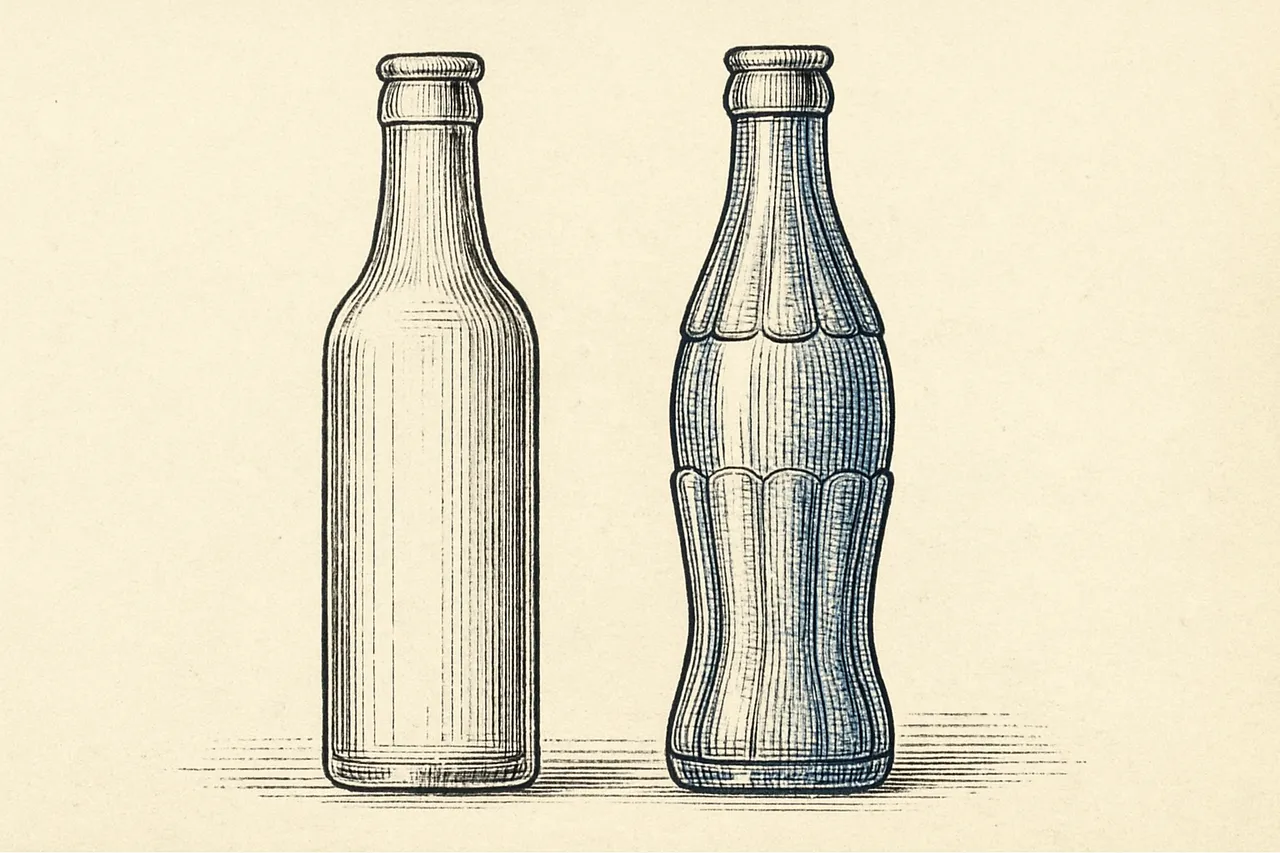
Coca-Cola Asked Glassmakers for a Bottle You Could Recognize in the Dark, or Broken on the Ground
In 1915 Coca-Cola had an imitation problem, since competitors used the same straight-sided bottles and borrowed-sounding names. It challenged glass companies to design a bottle identifiable by touch alone. The winner came from a small glassworks in Terre Haute, Indiana, and the name on the patent is not the name of the man who drew it.
Read the story →