A Father Cut Holes in a Plastic Ball So His Son Could Throw a Curve in a Small Backyard
David Mullany watched his twelve-year-old wreck his arm trying to throw curveballs with a taped-up tennis ball. He took some plastic spheres from a perfume-packaging factory, cut slots in them with a razor, and solved it on the eighth try.
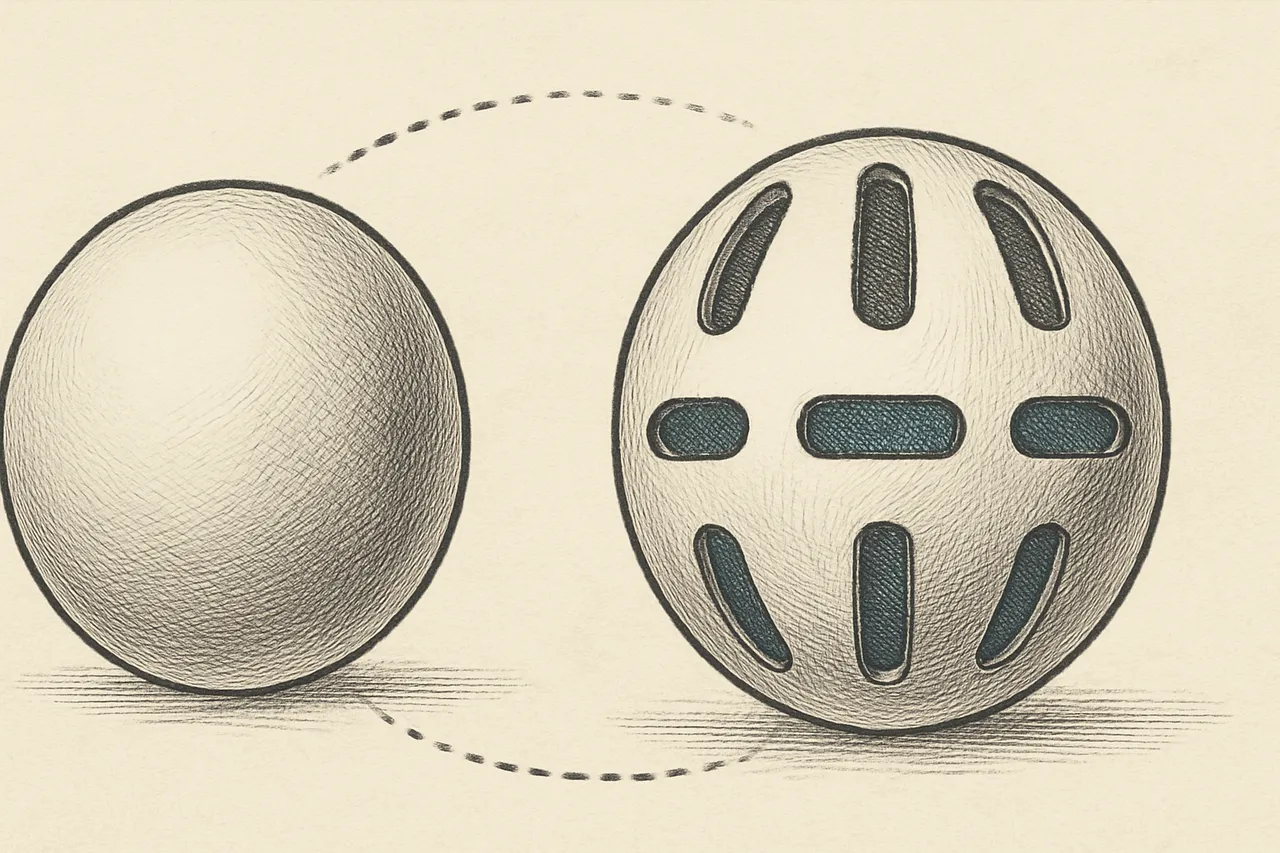
US2776139 was granted to David N. Mullany on January 1, 1957. It covers a hollow plastic ball with openings in one side, and it is the reason children can throw a wicked curve in a space the size of a driveway.
Mullany was a former semi-professional pitcher in Fairfield, Connecticut, and in 1953 he was out of work and watching his twelve-year-old son play a backyard game with friends using a perforated plastic golf ball and a broomstick. The boys kept trying to throw breaking pitches, and Mullany could see his son straining his arm doing it — the exact injury pattern that ends young pitching careers.
He set out to make a ball that would curve without the violent wrist and elbow snapping that a real curveball demands.
Eight tries
A friend of Mullany's worked at a company that made packaging for Coty perfume, and supplied him with hollow plastic spheres about the size of a baseball. Mullany sat at his kitchen table with a razor blade, cutting different patterns of holes, and had his son test each one in the yard.
The version that worked — reportedly the eighth — is asymmetric in a specific way: eight oblong slots cut through one hemisphere, with the other hemisphere left completely solid.
That asymmetry is the whole invention. Air passing over the perforated side behaves differently from air passing over the smooth side, producing a large and stable pressure imbalance. The result is that the ball curves dramatically on its own, from an ordinary easy throw, with essentially no strain on the arm. Orient the holes differently and you get a different break.
It also cannot be hit very far, and it will not break a window, which made it a backyard game rather than a field game.
The name
The name came from the boys. A pitch that makes a batter miss entirely is a strikeout, and in the local slang of the time the batter had "whiffed." The kids called it the whiff ball; Mullany dropped the h and registered Wiffle, partly to save money on signage letters.
He mortgaged the house to start production in 1953. The Wiffle Ball Inc. has been run by the Mullany family ever since, in the same part of Connecticut, and the ball is still made in the United States.
Why it lasted
The Wiffle ball is a small masterpiece of constraint-driven design. Every property follows from the requirement that the game be playable in a small yard by children with no equipment and no space: it is light so it cannot travel far or hurt anyone, hollow so it is cheap, and slotted so that a twelve-year-old with a weak arm can throw something that looks like major-league breaking stuff.
More than sixty years later, the design has not been meaningfully changed, because there is nothing left in it to improve.
See the original
The full text and figures of US2776139 are on patents.us.
Related stories
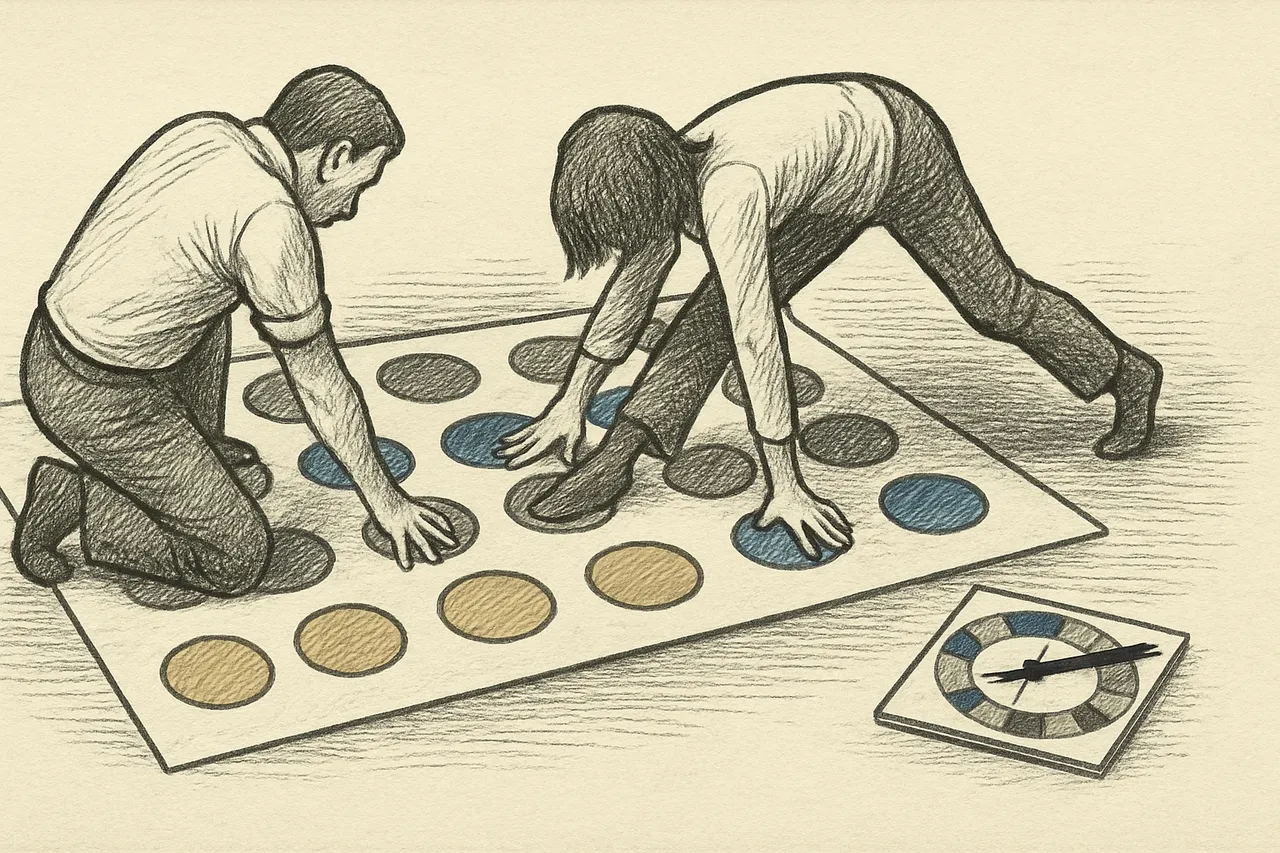
Twister's Patent Is Titled 'Apparatus for Playing a Game Wherein the Players Constitute the Game Pieces'
The patent title is the whole idea: the people are the pieces. Milton Bradley released the game in 1966, some retailers were wary of it, and critics found it a little too intimate. Then Johnny Carson played it on television with Eva Gabor, and the orders poured in.
Read the story →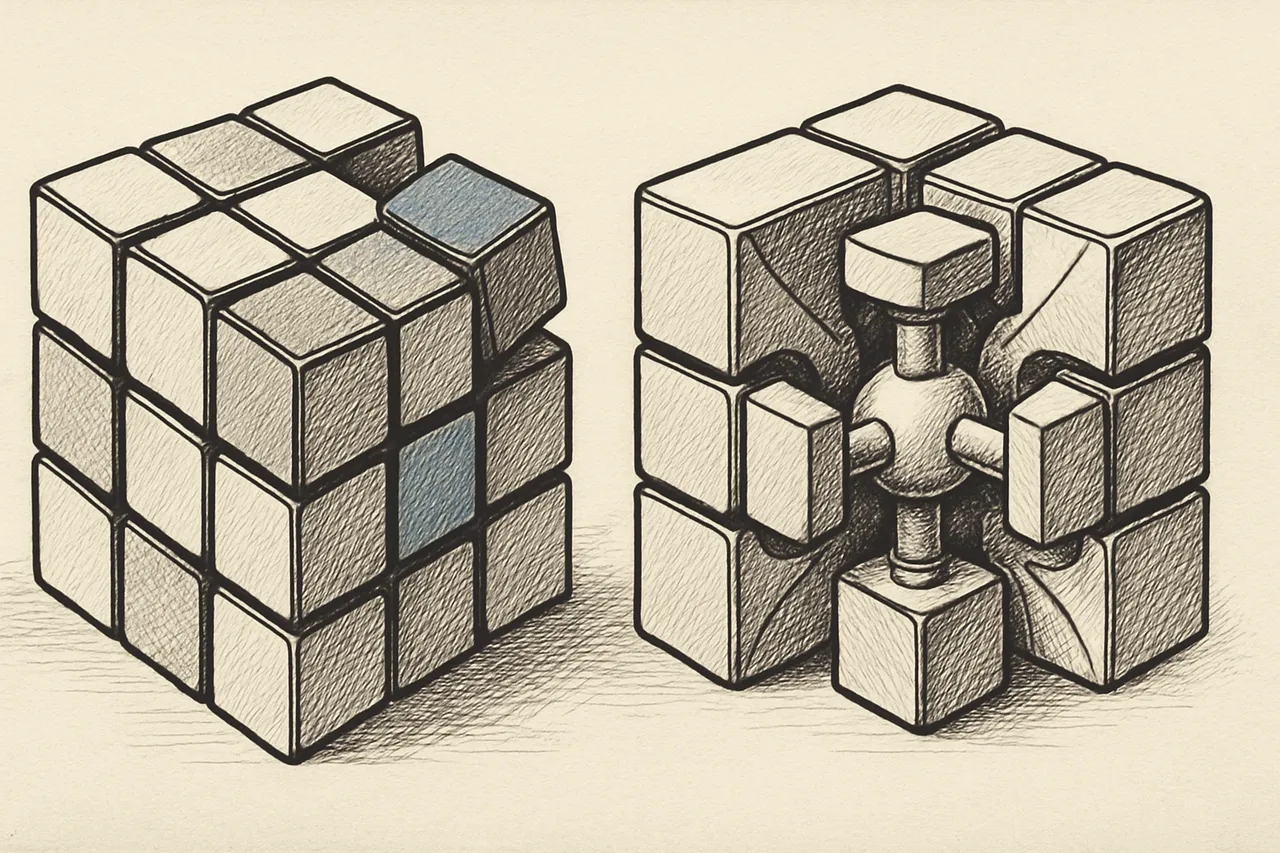
Ernő Rubik Needed About a Month to Solve His Own Cube. An American Court Later Found It Infringed an Earlier US Patent.
Rubik built the first cube in Budapest in 1974 as a way to think about three-dimensional movement. The clever part is how it holds together when most of its pieces are not attached to anything. In the United States, a chemist named Larry Nichols had patented a related puzzle in 1972, and his company sued.
Read the story →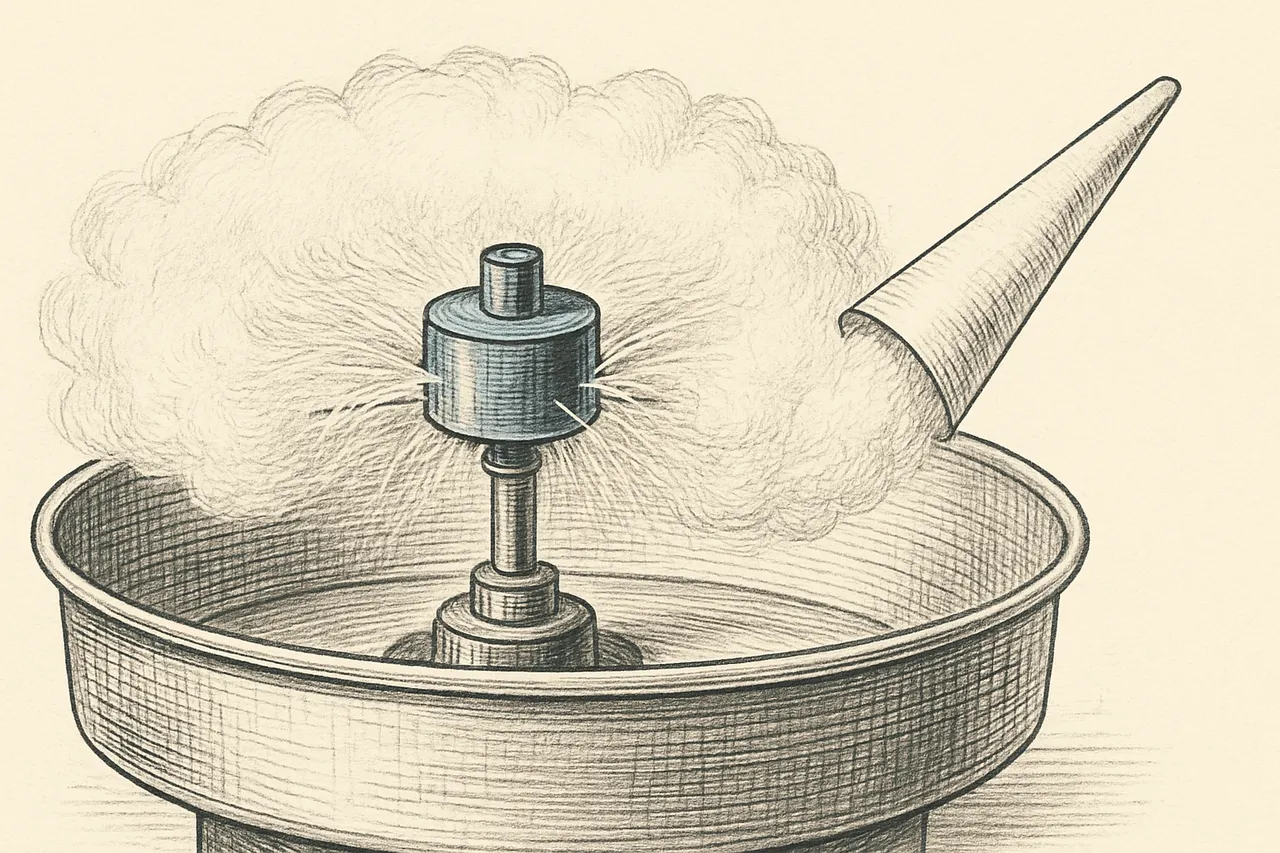
A Dentist Co-Invented the Cotton Candy Machine, and It Was Sold at the 1904 World's Fair as Fairy Floss
William Morrison was a dentist and John Wharton was a candy maker. Their machine melted sugar and flung it through tiny holes so that it cooled into threads finer than hair before it could crystallize. They filed in 1897, and at the St. Louis World's Fair it was a sensation.
Read the story →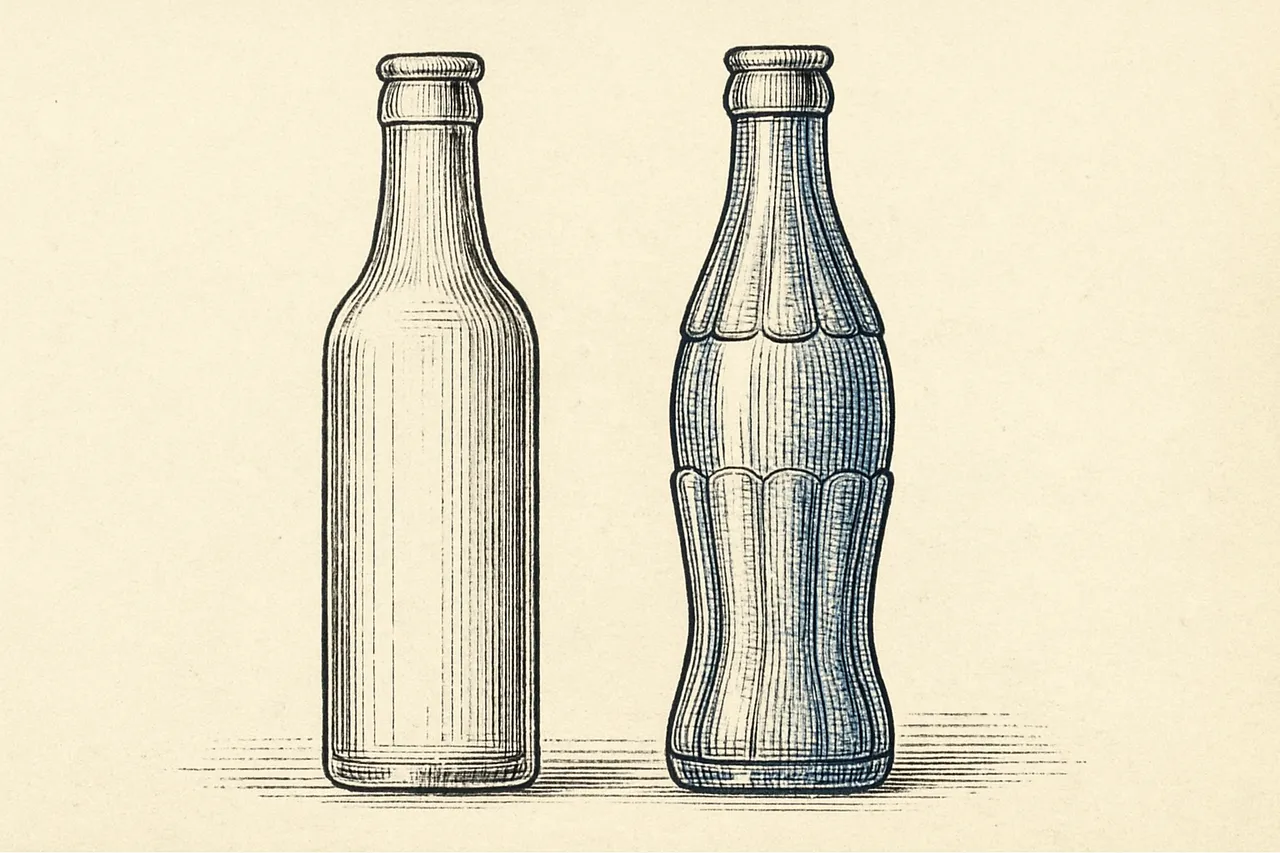
Coca-Cola Asked Glassmakers for a Bottle You Could Recognize in the Dark, or Broken on the Ground
In 1915 Coca-Cola had an imitation problem, since competitors used the same straight-sided bottles and borrowed-sounding names. It challenged glass companies to design a bottle identifiable by touch alone. The winner came from a small glassworks in Terre Haute, Indiana, and the name on the patent is not the name of the man who drew it.
Read the story →