The Umbrella Barely Changed for Two Thousand Years, Then Somebody Made It Fold
Parasols existed in ancient Egypt, China, and Rome. The object stayed roughly the same until the nineteenth century, when steel ribs made it light enough to carry and hinged struts made it collapse into a bag.
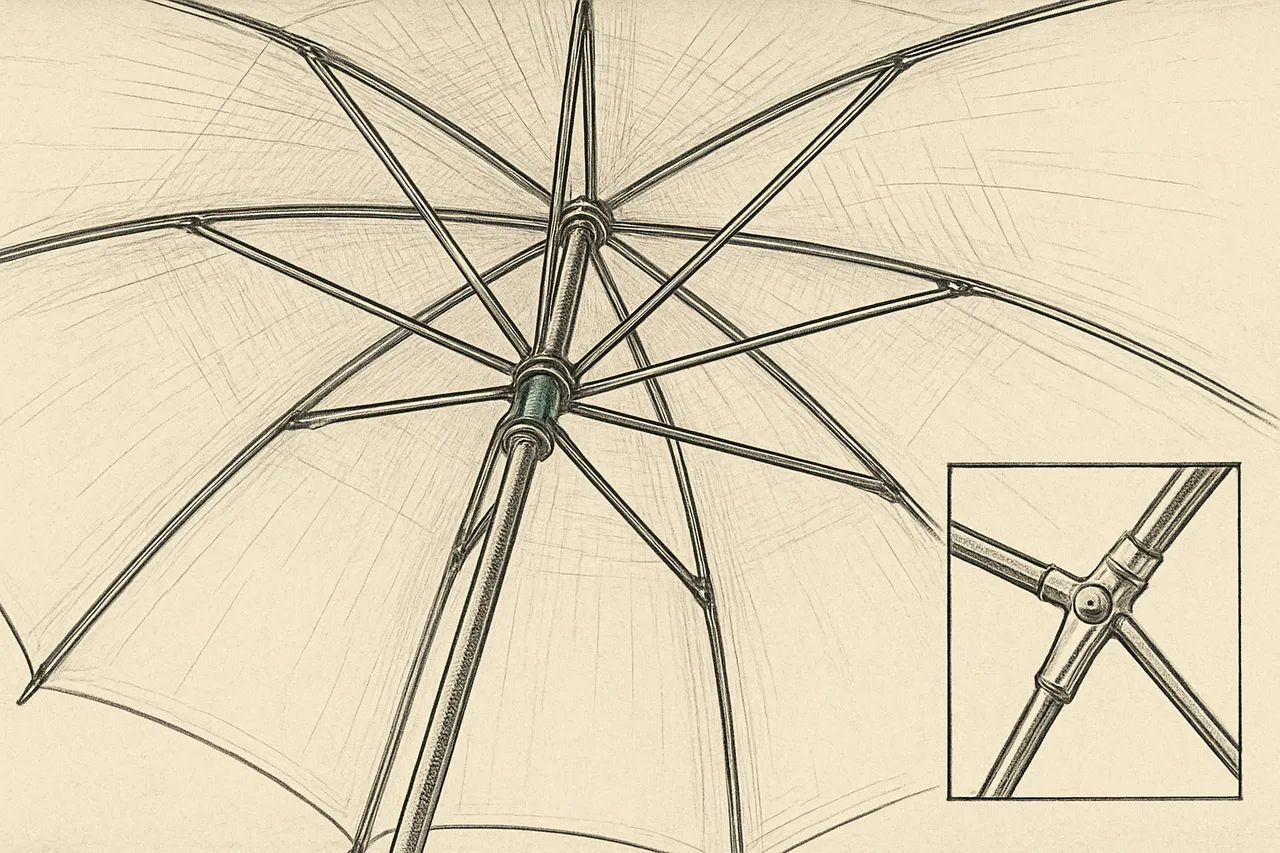
US1245641 covers improvements to a collapsible umbrella frame. It sits near the end of a very long development that spent most of its history barely moving.
Parasols show up in Egyptian relief carvings, in Chinese records going back well over two thousand years, and across Assyria, India, Greece, and Rome. For most of that span the object was a canopy on a stick, carried for shade and for status, often by a servant rather than by the person being shaded. Chinese craftsmen waterproofed theirs with lacquer, which made the parasol into a rain umbrella.
Then it sat there for centuries.
What was holding it back
Two problems kept the umbrella from being an everyday personal object.
Weight was the first. Frames were made from wood or whalebone. A canopy large enough to keep a person dry, with ribs stiff enough to hold shape in wind, came out heavy enough that carrying it around all day was a chore.
Bulk was the second. Early umbrellas collapsed only in the sense that the fabric gathered around the shaft. The ribs were full length, so a closed umbrella was still a rigid pole as long as the canopy radius. You could not put one anywhere.
There was also a social barrier in Europe. Umbrellas were considered feminine, and a man carrying one in eighteenth century London was mocked for it. Jonas Hanway is generally credited with carrying one publicly for about thirty years until the ridicule wore off.
The steel rib
Samuel Fox introduced the steel-ribbed umbrella frame in England in the 1850s, using thin U-section steel instead of whalebone. Steel is far stiffer for its weight, so the ribs could be slimmer, the whole frame got lighter, and the umbrella became something a person carried themselves rather than something a servant held.
The mechanism most people never look at is the runner. A sliding collar on the shaft is connected to each rib by a diagonal stretcher. Push the runner up and the stretchers lever the ribs outward into tension. It is a set of linked triangles, which is why an open umbrella is rigid and why a single inverted rib ruins the whole canopy.
Folding
Making it fit in a bag required breaking the ribs into hinged segments that telescope with the shaft, which multiplies the number of joints and the number of things that can fail. Compact folding umbrellas were developed through the early and mid twentieth century, with Hans Haupt's work in Germany in the 1920s among the notable steps, and they became ordinary consumer goods after the Second World War.
The tradeoff was never solved. A folding umbrella has more joints, shorter leverage, and lighter material, so it inverts in wind more readily than a full-length one. Every umbrella sold today is a choice between carrying something inconvenient that survives a storm and something convenient that does not.
See the original
The full text and figures of US1245641 are on patents.us.
Related stories
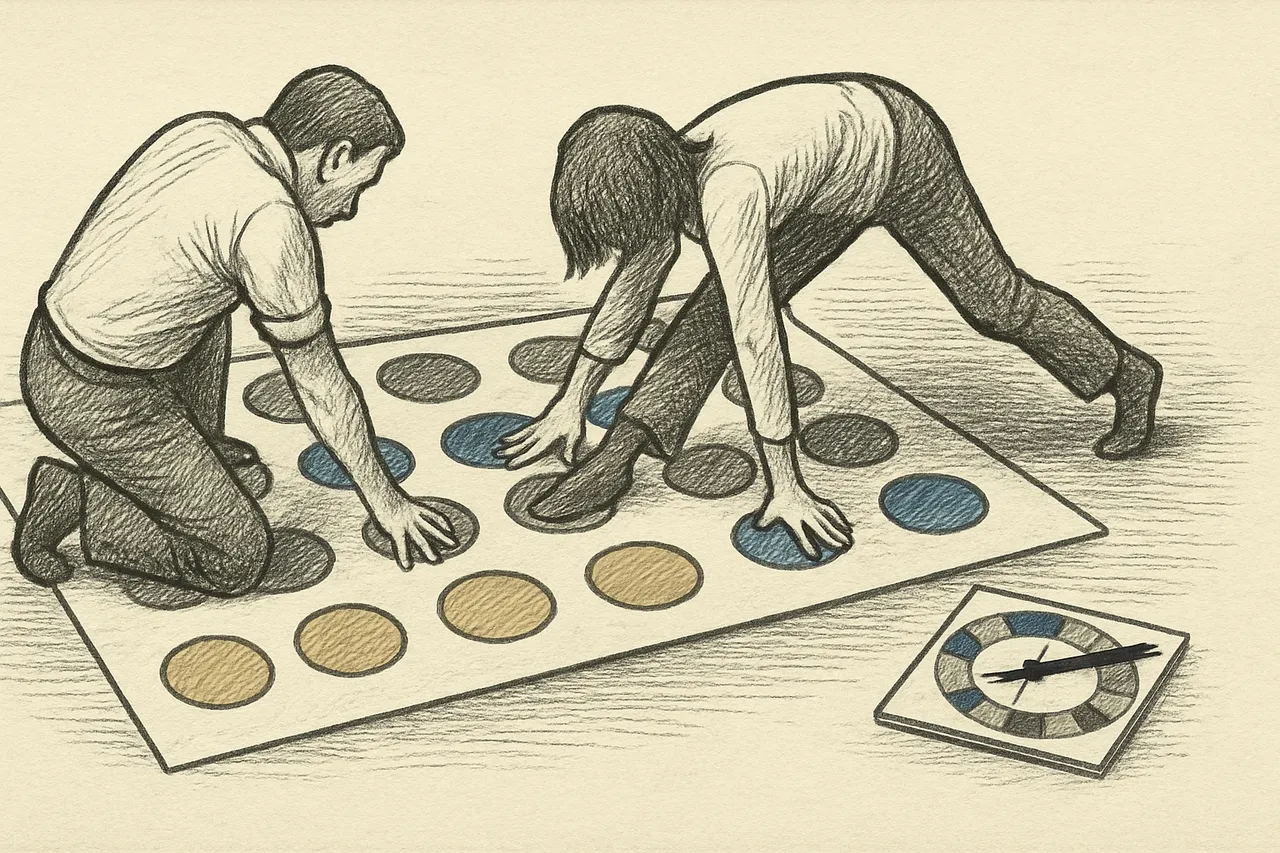
Twister's Patent Is Titled 'Apparatus for Playing a Game Wherein the Players Constitute the Game Pieces'
The patent title is the whole idea: the people are the pieces. Milton Bradley released the game in 1966, some retailers were wary of it, and critics found it a little too intimate. Then Johnny Carson played it on television with Eva Gabor, and the orders poured in.
Read the story →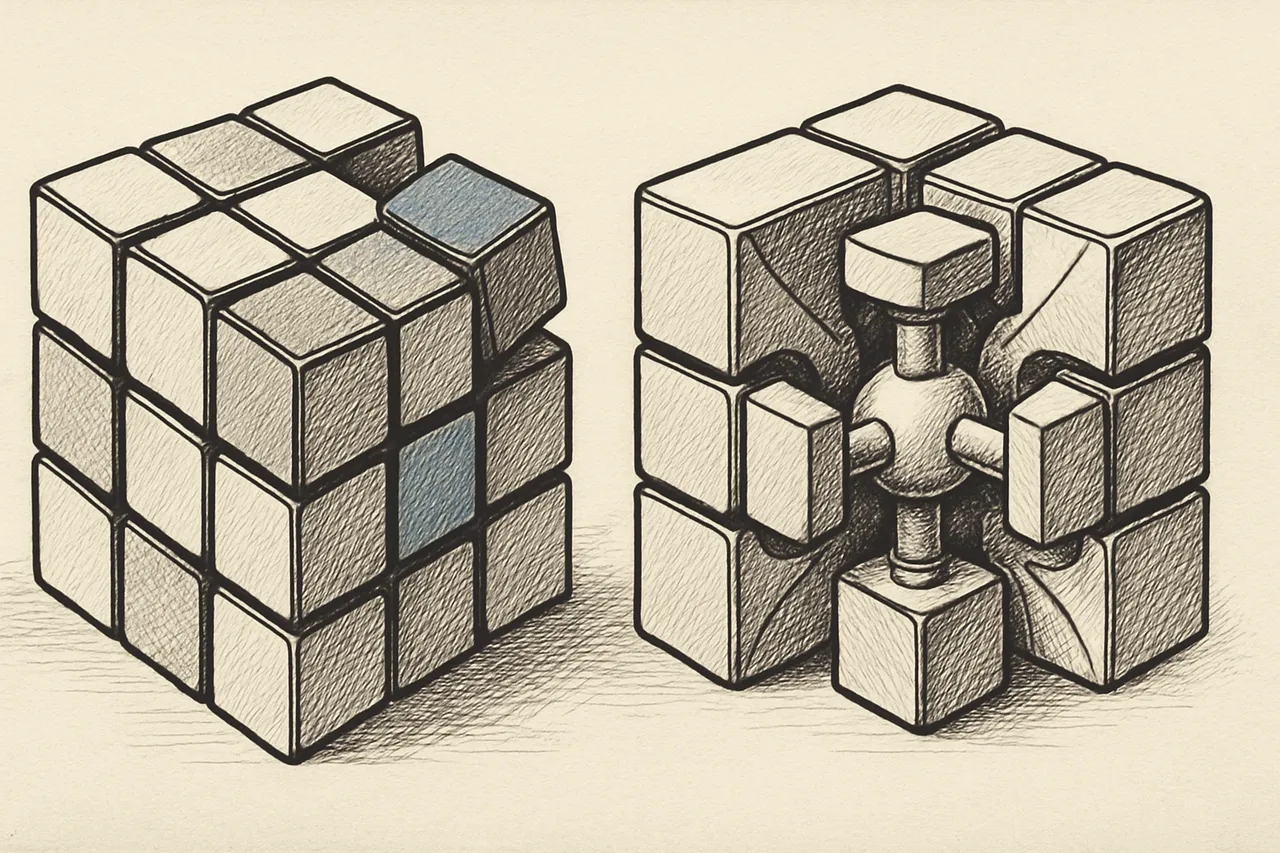
Ernő Rubik Needed About a Month to Solve His Own Cube. An American Court Later Found It Infringed an Earlier US Patent.
Rubik built the first cube in Budapest in 1974 as a way to think about three-dimensional movement. The clever part is how it holds together when most of its pieces are not attached to anything. In the United States, a chemist named Larry Nichols had patented a related puzzle in 1972, and his company sued.
Read the story →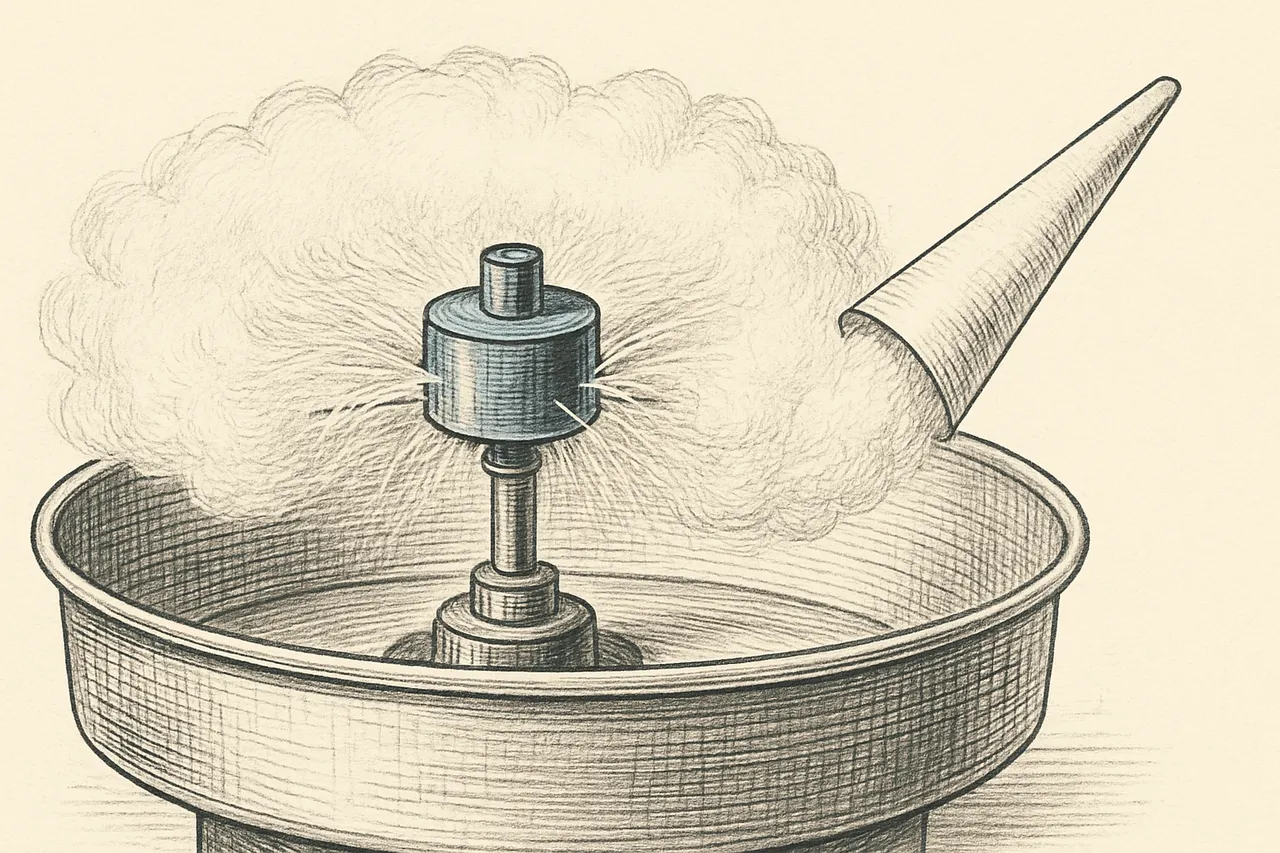
A Dentist Co-Invented the Cotton Candy Machine, and It Was Sold at the 1904 World's Fair as Fairy Floss
William Morrison was a dentist and John Wharton was a candy maker. Their machine melted sugar and flung it through tiny holes so that it cooled into threads finer than hair before it could crystallize. They filed in 1897, and at the St. Louis World's Fair it was a sensation.
Read the story →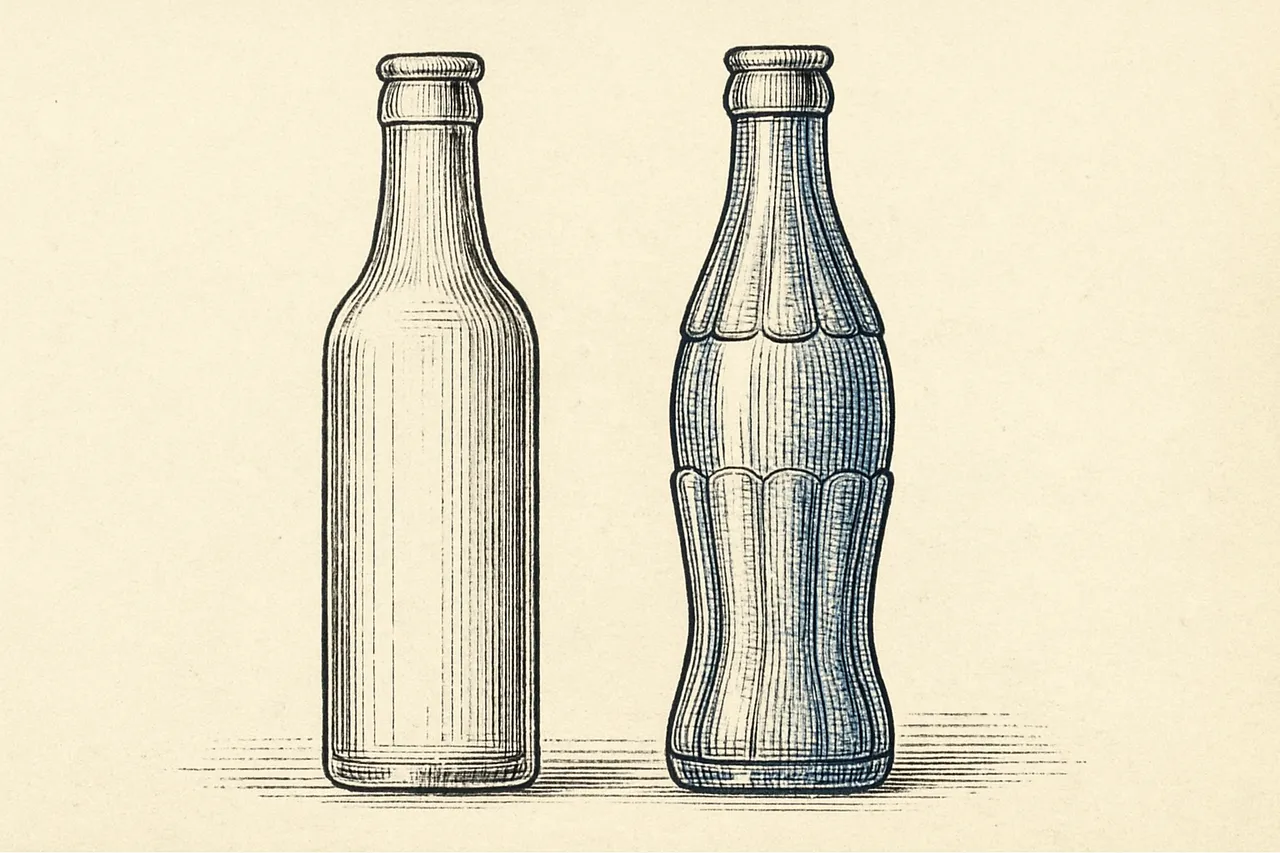
Coca-Cola Asked Glassmakers for a Bottle You Could Recognize in the Dark, or Broken on the Ground
In 1915 Coca-Cola had an imitation problem, since competitors used the same straight-sided bottles and borrowed-sounding names. It challenged glass companies to design a bottle identifiable by touch alone. The winner came from a small glassworks in Terre Haute, Indiana, and the name on the patent is not the name of the man who drew it.
Read the story →