The Scientist Who Invented the Thermos Refused to Patent It. Someone Else Made the Fortune.
James Dewar built the vacuum flask in 1892 to hold liquefied gases in his laboratory. He considered it a gift to science and never filed. A German glassblower he had hired to make them saw a consumer product, patented it, and named it Thermos.
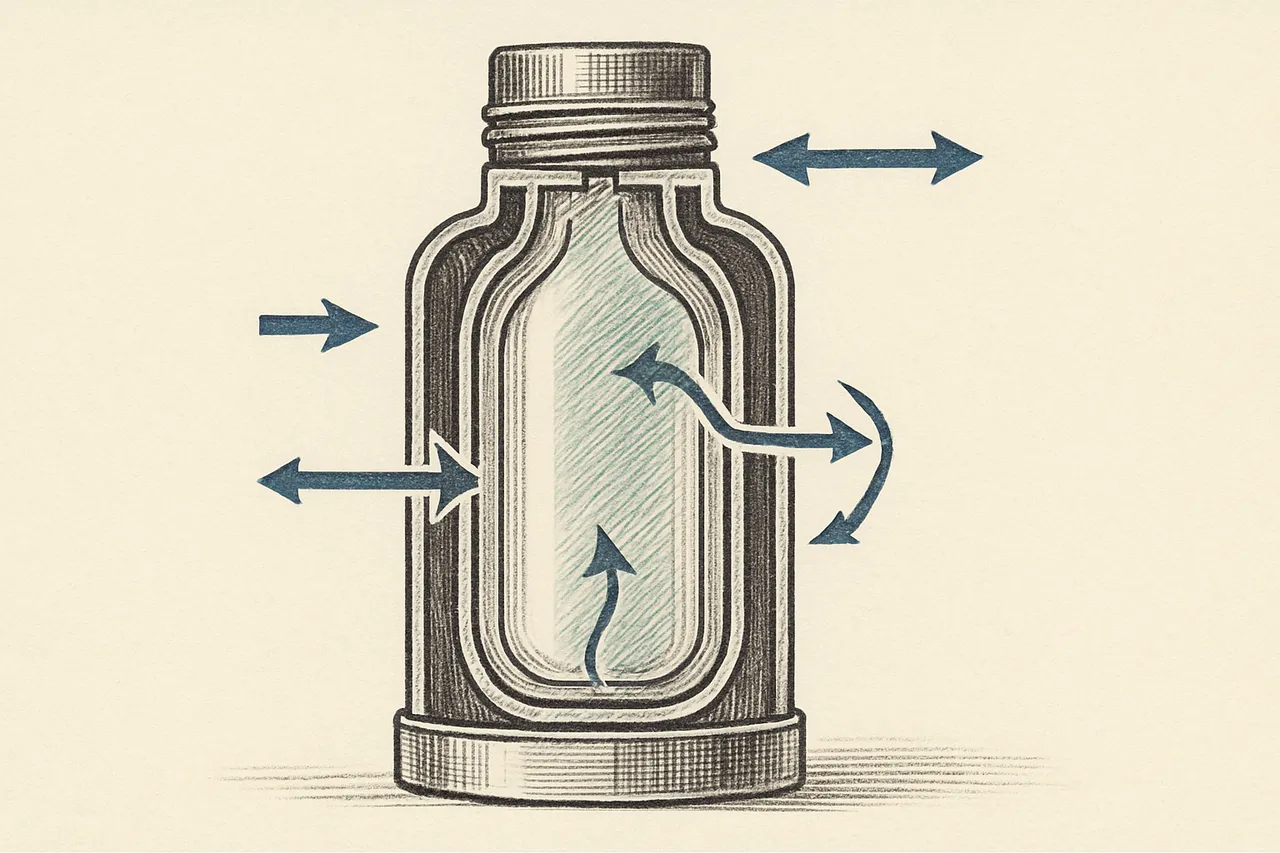
US872795 and its related filings cover the vacuum flask as a commercial product. The person who invented the thing is not on any of them.
Sir James Dewar was a Scottish chemist and physicist at the Royal Institution in London, working at the frontier of low-temperature physics. In 1892 he needed a container that could hold liquefied gases — substances at hundreds of degrees below zero — long enough to study them. Everything he had leaked heat too fast.
His solution attacks all three modes of heat transfer at once, which is why it works so well.
Three problems, one object
Conduction is defeated by making the vessel double-walled and evacuating the gap between the walls. A vacuum has almost nothing in it to carry heat, so the inner vessel is nearly thermally disconnected from the outer one. The only remaining bridge is the narrow neck where the walls join.
Convection is defeated by the same vacuum: no air means no circulating currents.
Radiation is defeated by silvering both facing surfaces of the gap, so infrared energy is reflected back where it came from rather than absorbed.
The result holds hot things hot and cold things cold with equal indifference, which is the source of the old joke about how it knows.
The gift
Dewar published the design and refused to patent it.
His position, consistent with the culture of the Royal Institution and with his own view of himself as a scientist rather than a manufacturer, was that a laboratory instrument belonged to science. He wanted other researchers to build them freely.
He appears never to have considered that anyone outside a laboratory would want one.
Thermos
Dewar contracted the delicate glassblowing to outside craftsmen. Among them was Reinhold Burger, a German glassblower, who did see the consumer application: a flask that keeps coffee hot is useful to anyone who eats lunch away from home.
Burger encased the fragile glass vessel in a protective metal housing — the practical change that turned a laboratory apparatus into something a person could carry in a lunchbox — patented the commercial article in Germany in 1903, and ran a public competition to name it. The winning entry was Thermos, from the Greek for heat.
The product was an immediate international success. Thermos flasks went with Peary toward the North Pole, with Shackleton to the Antarctic, and up in early aircraft and balloons, and the publicity from those expeditions built the brand.
Dewar sued, and lost. He had published the design openly; there was nothing left to claim.
He remained an eminent scientist, was knighted, and never earned anything from the vacuum flask. Thermos became so dominant that in the United States the trademark was eventually ruled generic — the word had become the ordinary English name for the object, which is the last thing that happens to a brand before it disappears into the language.
See the original
The full text and figures of US872795 are on patents.us.
Related stories
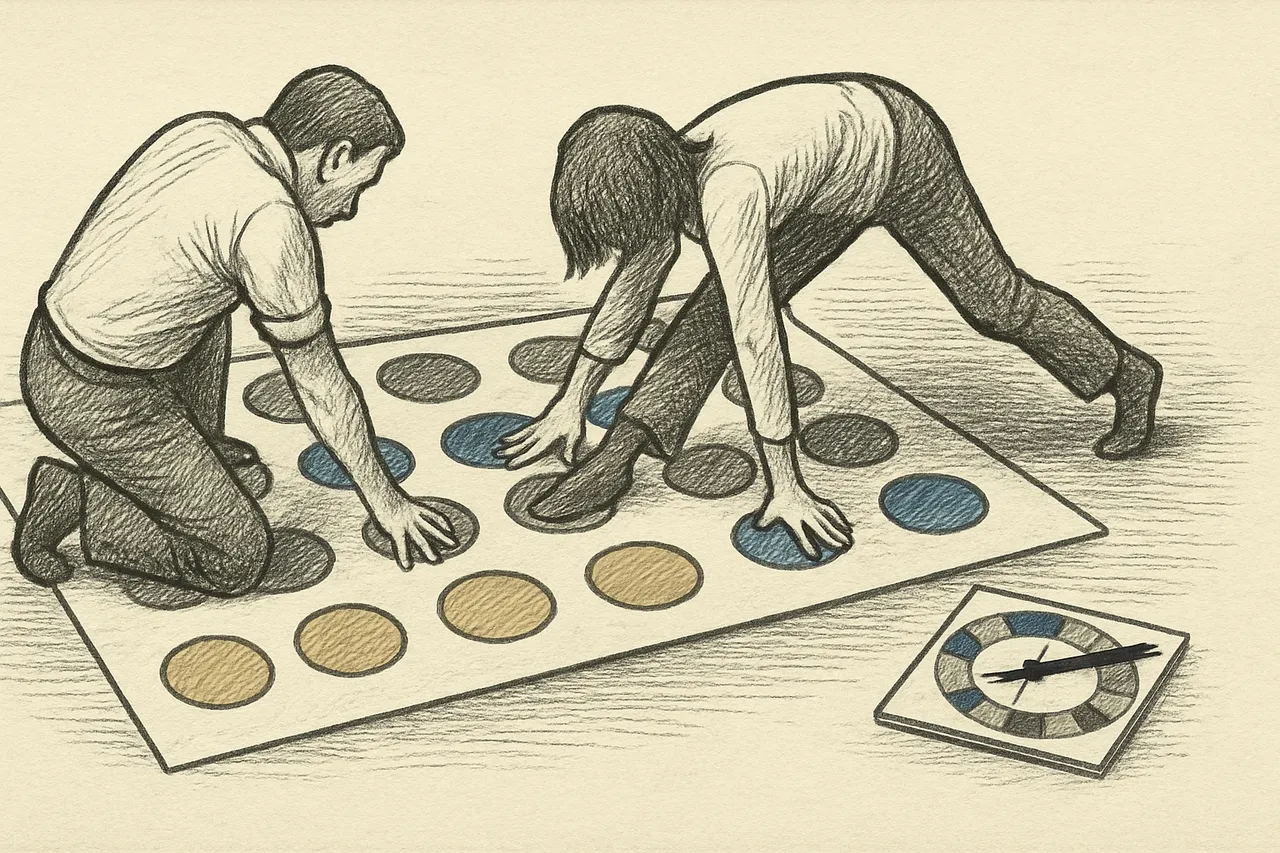
Twister's Patent Is Titled 'Apparatus for Playing a Game Wherein the Players Constitute the Game Pieces'
The patent title is the whole idea: the people are the pieces. Milton Bradley released the game in 1966, some retailers were wary of it, and critics found it a little too intimate. Then Johnny Carson played it on television with Eva Gabor, and the orders poured in.
Read the story →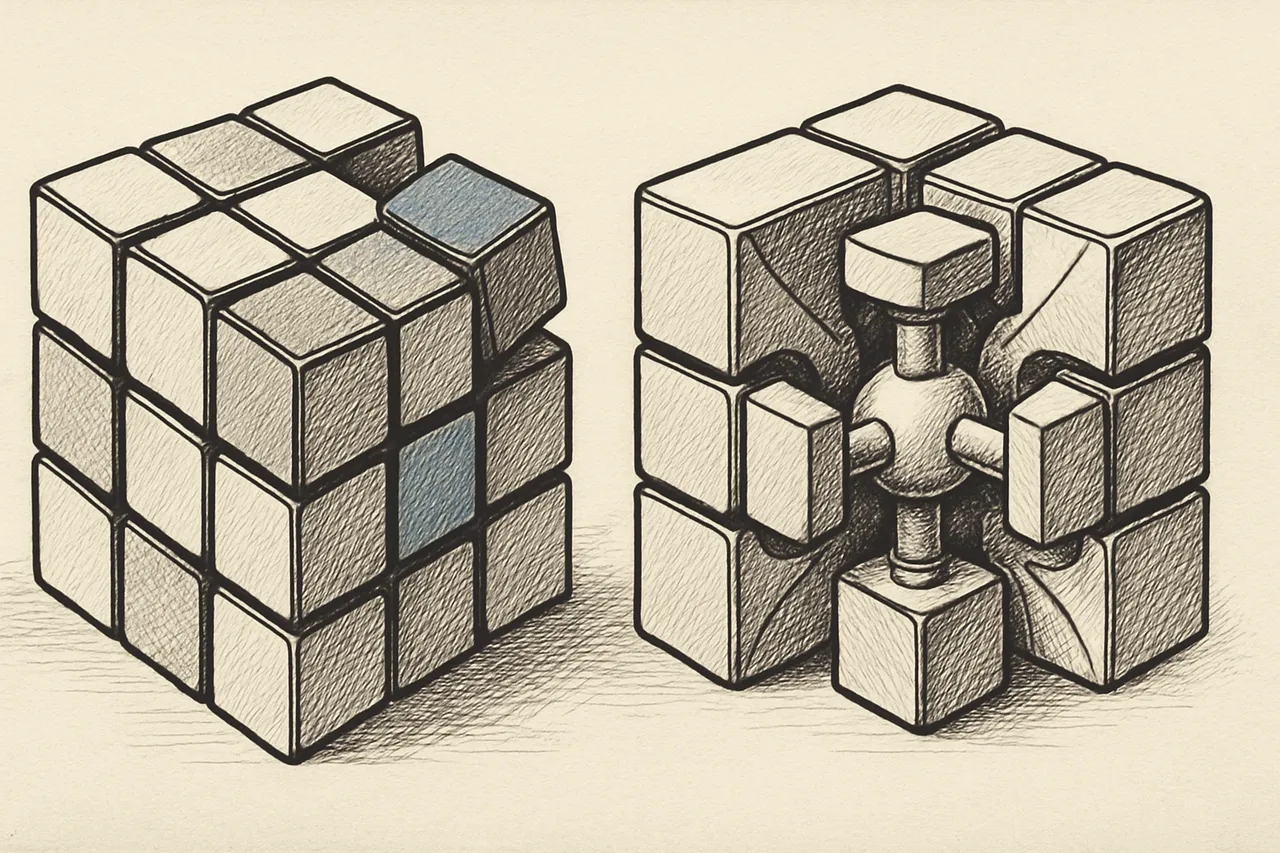
Ernő Rubik Needed About a Month to Solve His Own Cube. An American Court Later Found It Infringed an Earlier US Patent.
Rubik built the first cube in Budapest in 1974 as a way to think about three-dimensional movement. The clever part is how it holds together when most of its pieces are not attached to anything. In the United States, a chemist named Larry Nichols had patented a related puzzle in 1972, and his company sued.
Read the story →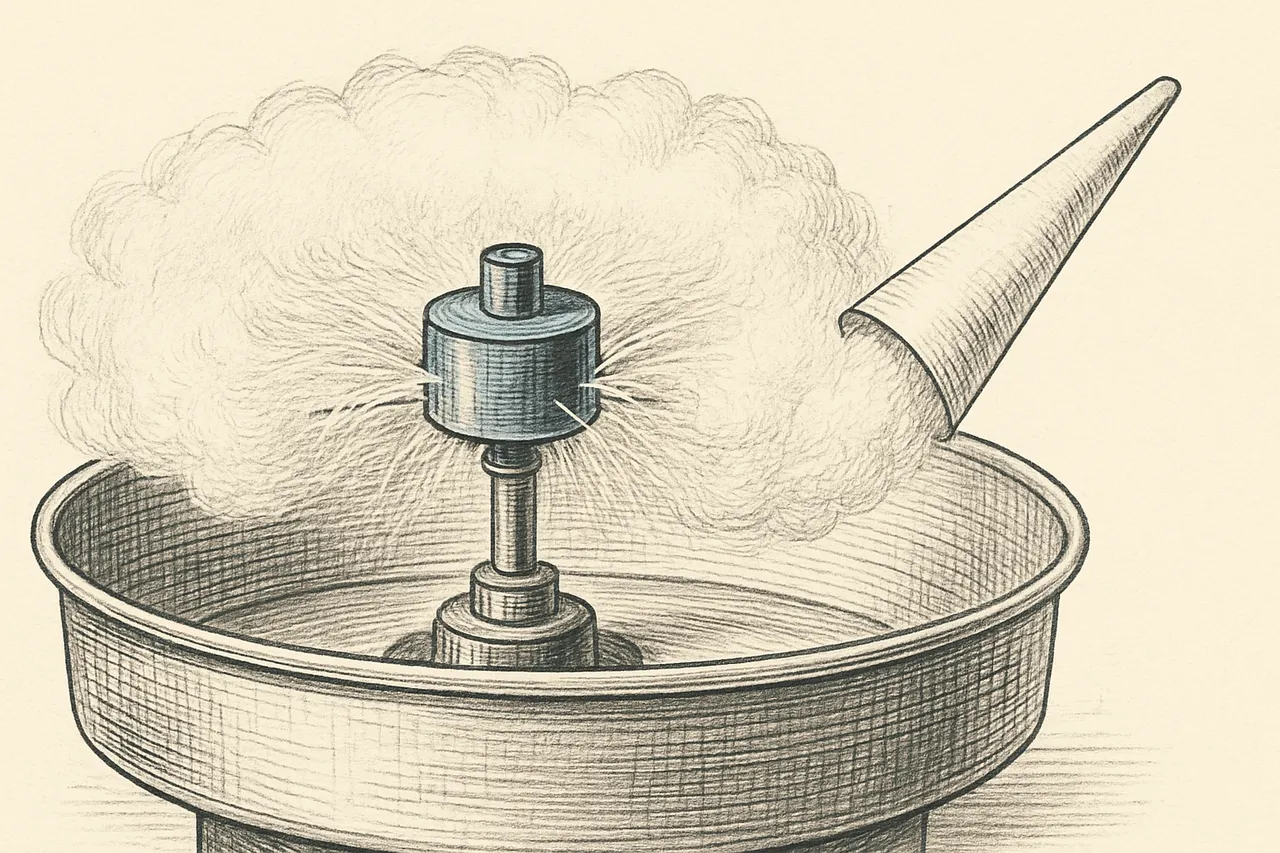
A Dentist Co-Invented the Cotton Candy Machine, and It Was Sold at the 1904 World's Fair as Fairy Floss
William Morrison was a dentist and John Wharton was a candy maker. Their machine melted sugar and flung it through tiny holes so that it cooled into threads finer than hair before it could crystallize. They filed in 1897, and at the St. Louis World's Fair it was a sensation.
Read the story →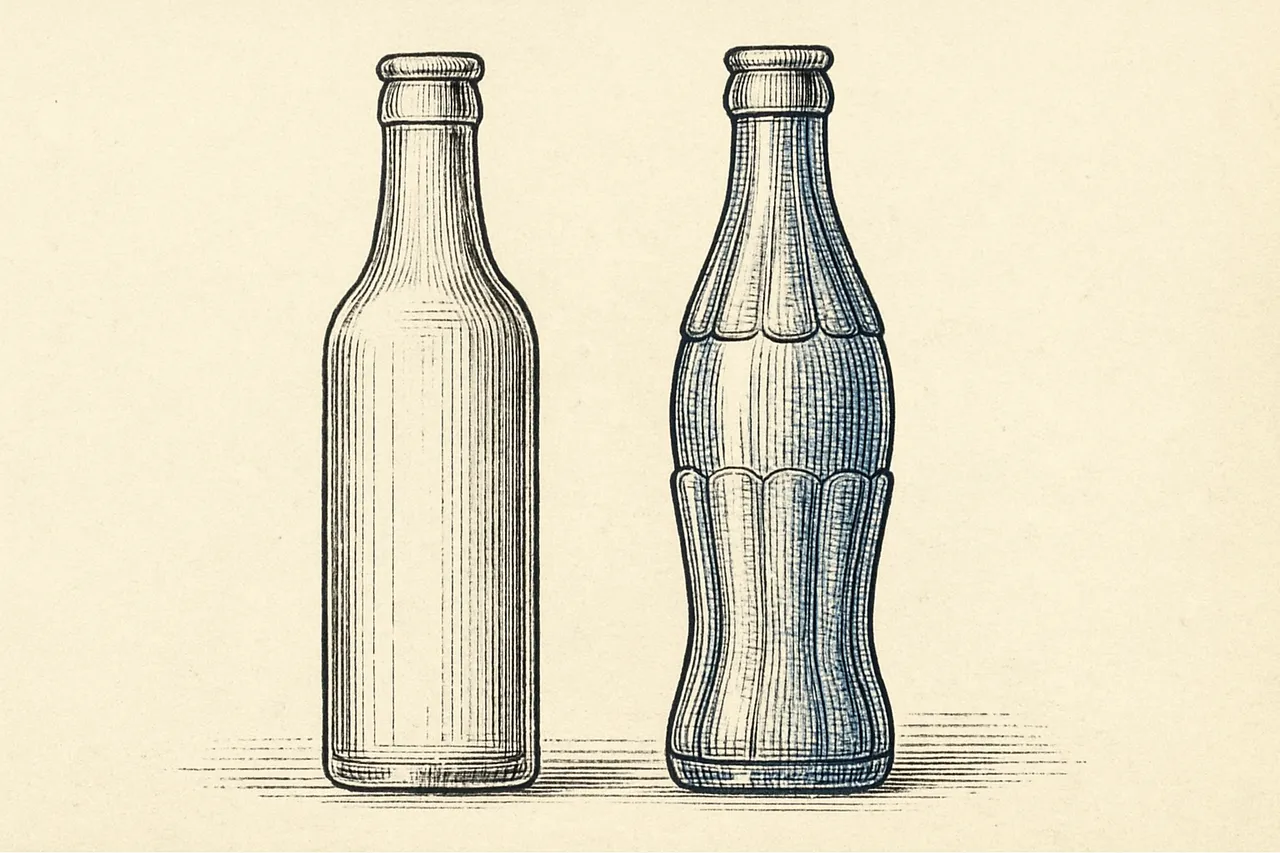
Coca-Cola Asked Glassmakers for a Bottle You Could Recognize in the Dark, or Broken on the Ground
In 1915 Coca-Cola had an imitation problem, since competitors used the same straight-sided bottles and borrowed-sounding names. It challenged glass companies to design a bottle identifiable by touch alone. The winner came from a small glassworks in Terre Haute, Indiana, and the name on the patent is not the name of the man who drew it.
Read the story →