It Took a Century to Figure Out That the Staples Should Come in a Strip
Early staplers held one staple at a time. You loaded it, squeezed, and reloaded. Every improvement for decades tried to make the mechanism better. The actual breakthrough was gluing the staples together so the machine could hold hundreds.
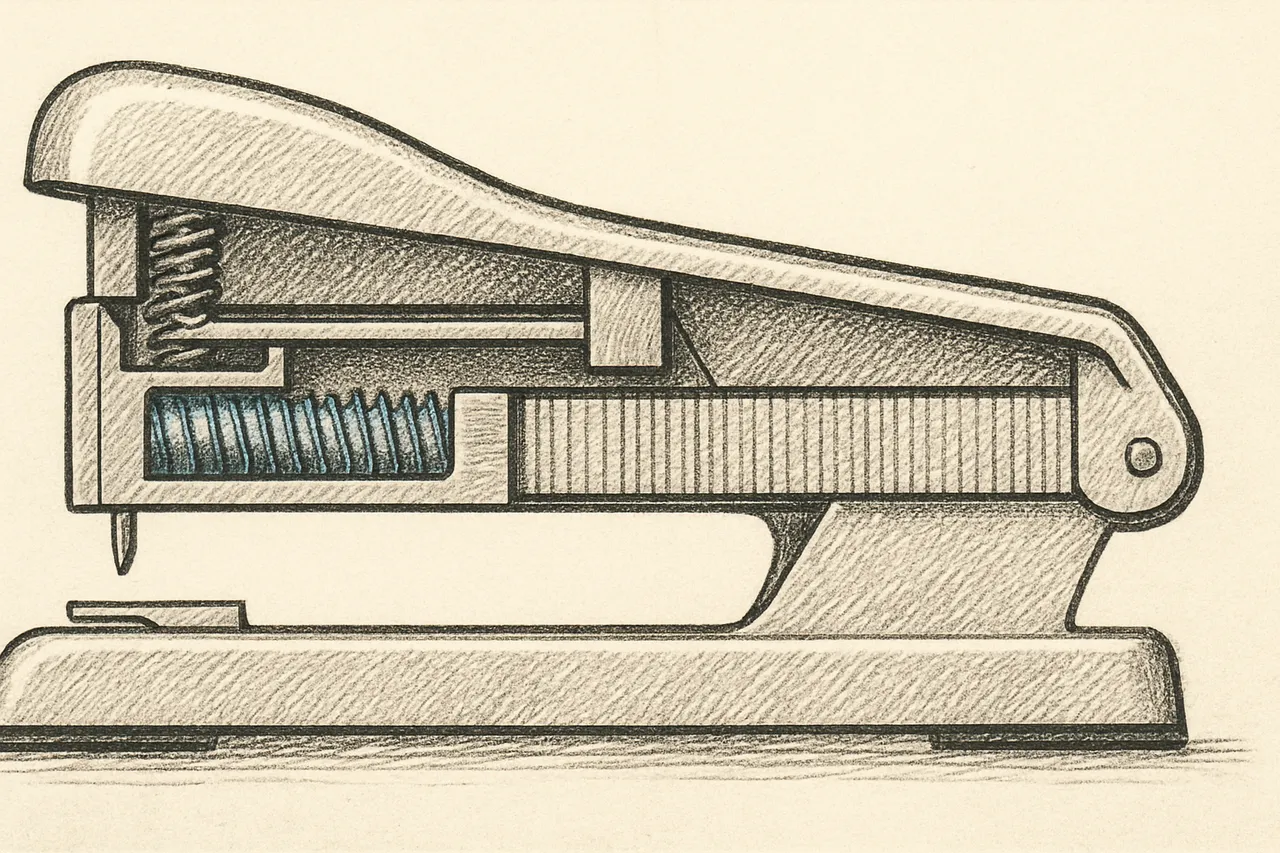
US212316 was granted to George W. McGill on February 18, 1879, for a press to insert metal fasteners into paper. McGill spent the better part of two decades on the problem of binding paper with metal, and his machines are the direct ancestors of the object on your desk.
They also had a defect that took another forty years to fix, and the fix was not mechanical.
One at a time
McGill's stapler, and essentially every stapler for decades after, held a single staple. You placed it in the machine, pressed the handle to drive it through the paper, and then loaded the next one by hand.
This is not a small inconvenience. For an office binding hundreds of documents a day, the loading motion dominates the task entirely. The actual stapling takes a moment; the reloading takes several.
Inventors kept attacking the wrong part. The patent record through the late nineteenth and early twentieth centuries is full of ingenious staplers with improved levers, better anvils, cleverer driving mechanisms, spring-loaded feeds — all of them still fed one fastener at a time, because a loose pile of staples cannot be stacked in a channel without jamming.
Gluing the ammunition
The breakthrough, arriving in the early twentieth century and refined through the 1920s, was to change the staples rather than the machine: manufacture them in a long strip, held together side by side with a thin adhesive.
A glued strip is rigid enough to sit in a spring-loaded magazine and advance reliably, and weak enough that the driver blade shears off exactly one staple per stroke. Suddenly a stapler could hold two hundred staples, and the reload became a once-a-week event instead of a once-a-document one.
Everything people think of as "the stapler" — the flat magazine, the spring, the satisfying single-stroke action — depends on that consumable innovation, not on the press.
Why it is a good lesson
The stapler is a clean case of a category-wide blind spot. For roughly fifty years, dozens of capable inventors optimized the durable machine while the actual constraint sat in the disposable part nobody was looking at.
It also produced a second-order effect familiar from the razor and the bottle cap: once the staples were a proprietary consumable strip, the business shifted from selling staplers to selling staples, and manufacturers had a strong interest in strip formats that fit their own machines.
The modern desk stapler has barely changed since the 1930s. It is one of those objects that reached its final form early and simply stopped, because there is nothing left in it worth improving.
See the original
The full text and figures of US212316 are on patents.us.
Related stories
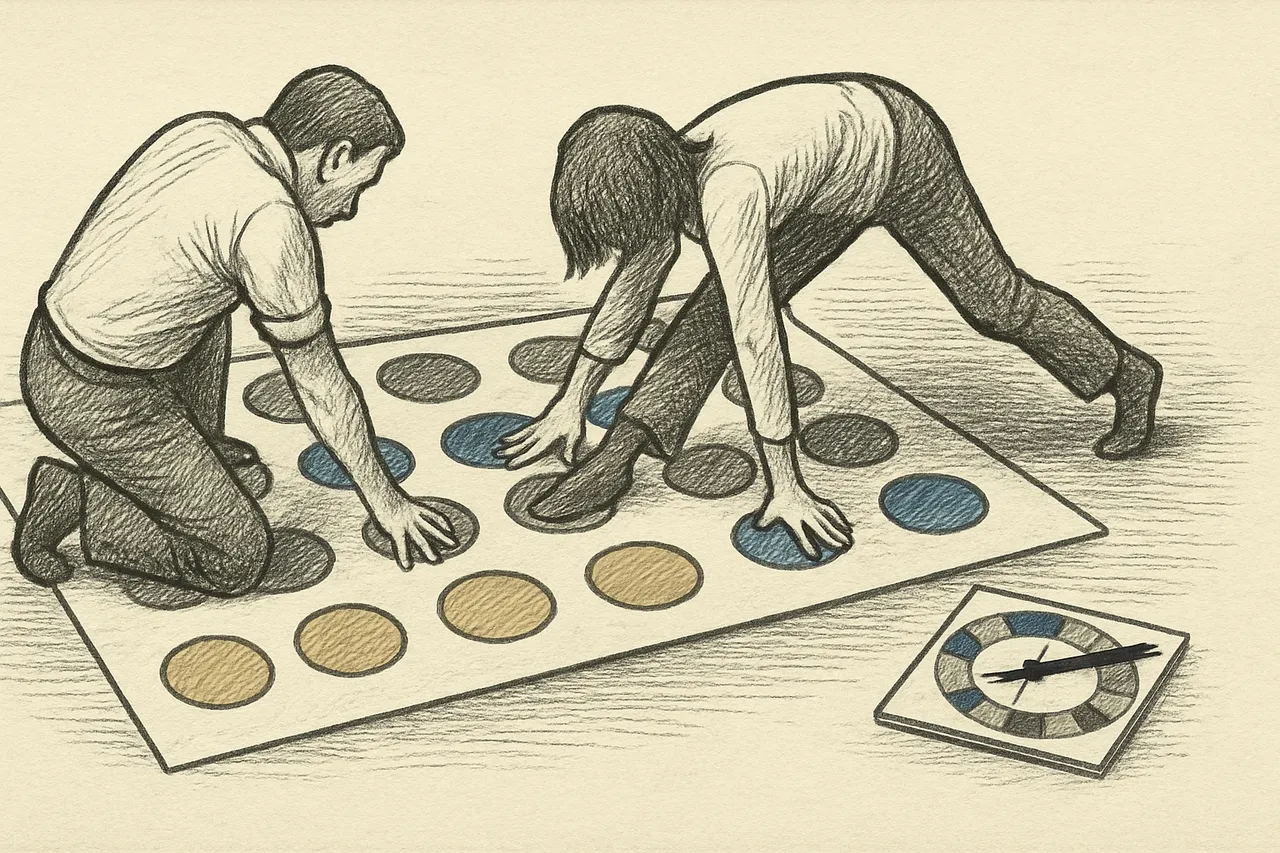
Twister's Patent Is Titled 'Apparatus for Playing a Game Wherein the Players Constitute the Game Pieces'
The patent title is the whole idea: the people are the pieces. Milton Bradley released the game in 1966, some retailers were wary of it, and critics found it a little too intimate. Then Johnny Carson played it on television with Eva Gabor, and the orders poured in.
Read the story →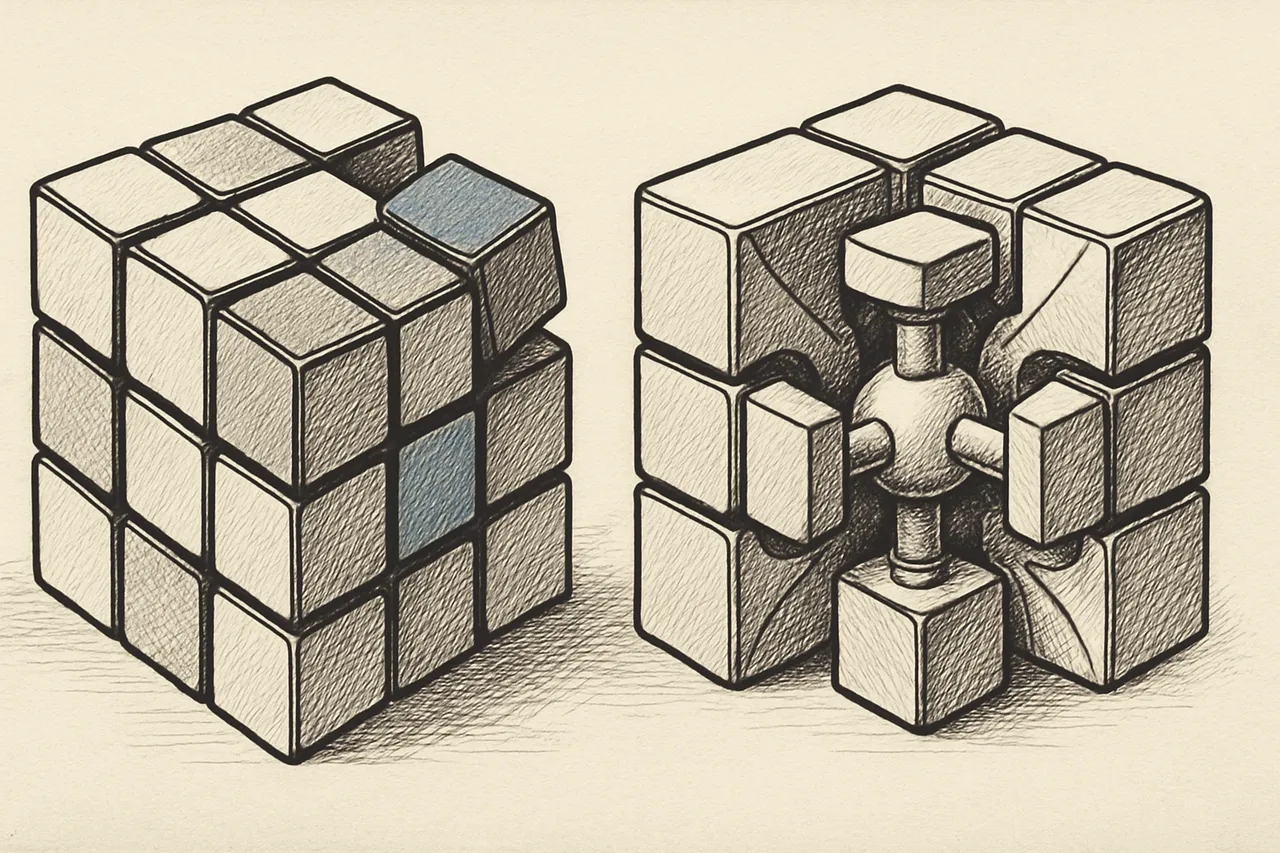
Ernő Rubik Needed About a Month to Solve His Own Cube. An American Court Later Found It Infringed an Earlier US Patent.
Rubik built the first cube in Budapest in 1974 as a way to think about three-dimensional movement. The clever part is how it holds together when most of its pieces are not attached to anything. In the United States, a chemist named Larry Nichols had patented a related puzzle in 1972, and his company sued.
Read the story →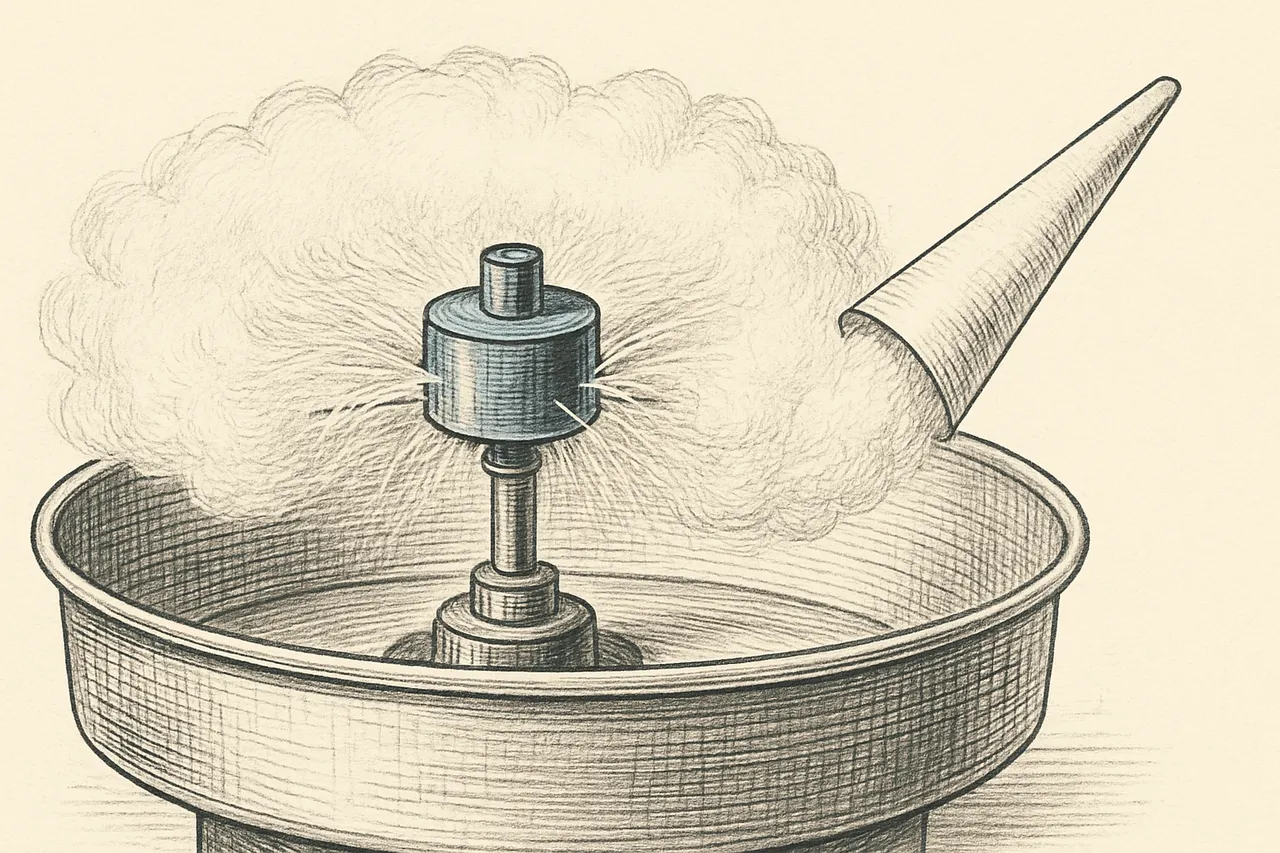
A Dentist Co-Invented the Cotton Candy Machine, and It Was Sold at the 1904 World's Fair as Fairy Floss
William Morrison was a dentist and John Wharton was a candy maker. Their machine melted sugar and flung it through tiny holes so that it cooled into threads finer than hair before it could crystallize. They filed in 1897, and at the St. Louis World's Fair it was a sensation.
Read the story →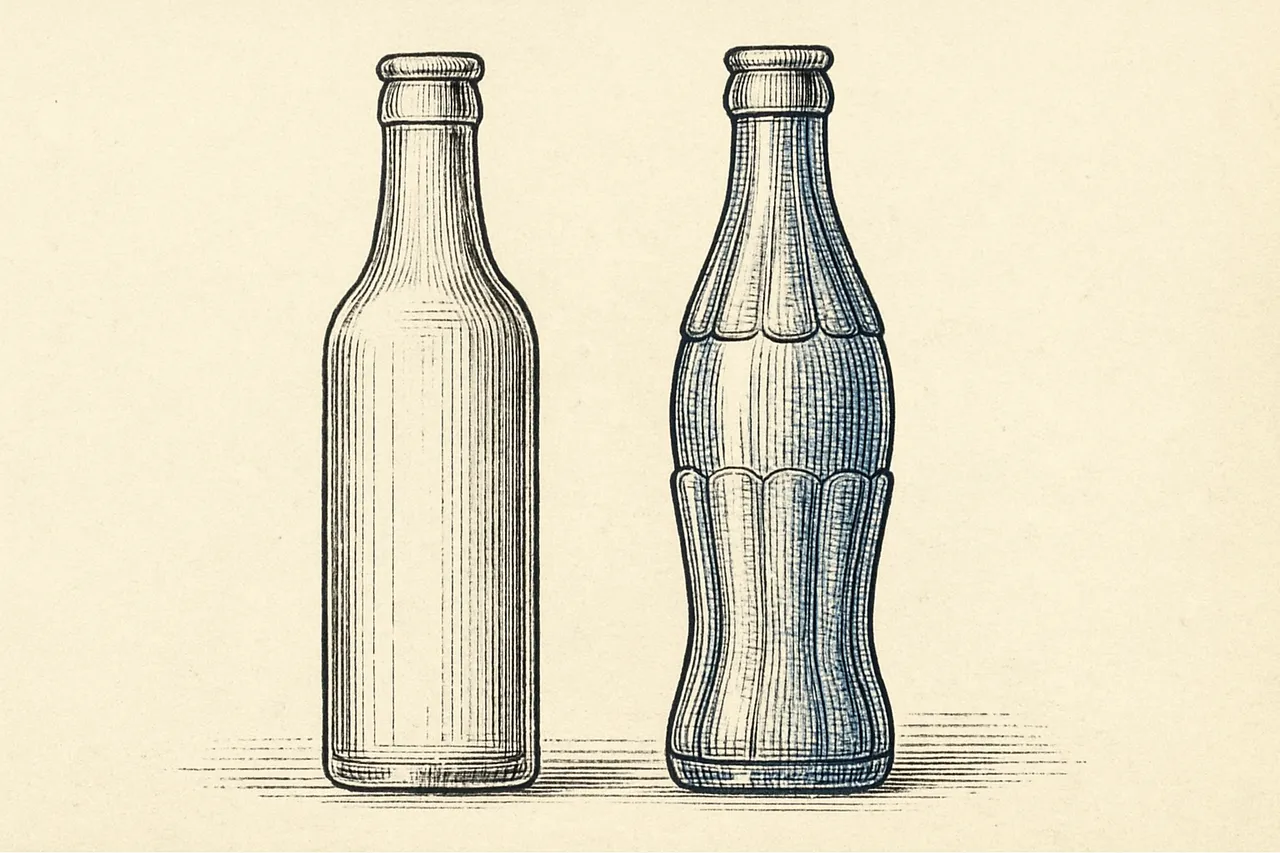
Coca-Cola Asked Glassmakers for a Bottle You Could Recognize in the Dark, or Broken on the Ground
In 1915 Coca-Cola had an imitation problem, since competitors used the same straight-sided bottles and borrowed-sounding names. It challenged glass companies to design a bottle identifiable by touch alone. The winner came from a small glassworks in Terre Haute, Indiana, and the name on the patent is not the name of the man who drew it.
Read the story →