The Phillips Screw Is Designed to Slip. That Was the Whole Point.
Everyone who has stripped a Phillips head assumes it is a flaw. It is not. The driver was built to climb out of the socket at a set torque, because in 1936 nobody had a reliable way to stop an assembly line worker from overtightening a screw.
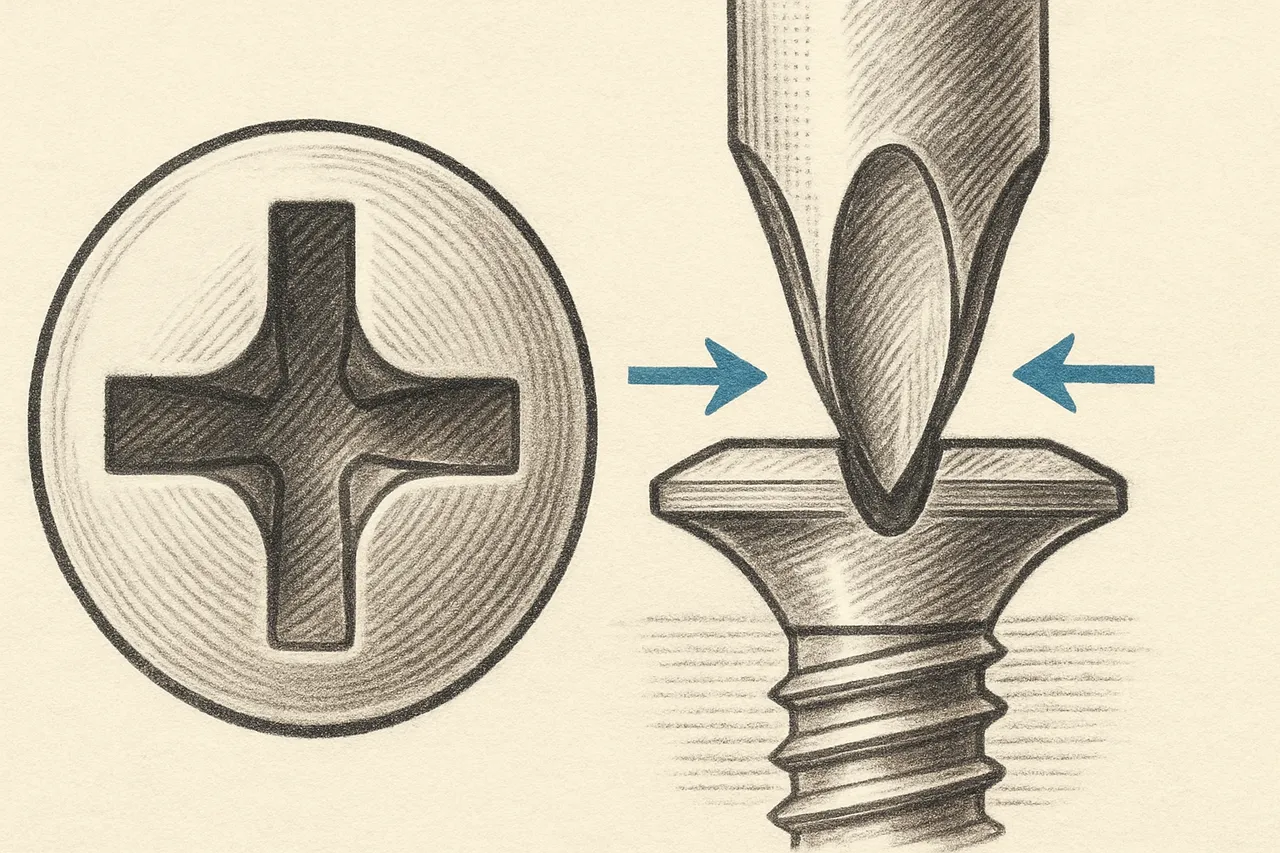
US2046343 was granted to Henry F. Phillips on June 30, 1936. It covers the cross-recess screw head that carries his name and sits in most of the furniture, appliances, and cars built in the last ninety years.
Phillips did not invent it. He bought it.
The design came from an Oregon inventor named John P. Thompson, who had patented a cross-recessed screw in the early 1930s and could not persuade any manufacturer to make it. Thompson sold the rights to Phillips, who was a businessman rather than a machinist. Phillips refined the geometry, filed his own patents, and then did the thing Thompson could not, which was to get an industry to adopt it.
Why slots were failing
The flat-blade screw had a specific problem on an assembly line. A screwdriver in a slot wants to slide sideways out of it, and the harder you push, the more likely the blade is to skate off and gouge the workpiece. Slotted screws also cannot be started easily with one hand, because nothing holds the driver in place.
Detroit was building cars faster every year and wanted power screwdrivers. Slotted heads and power drivers are a bad combination. The blade cams out of the slot at speed and damages the paint, the panel, or the operator.
The cam-out was deliberate
Phillips solved the alignment problem with a tapered socket. The four-point recess is self-centering, so a driver dropped near the head falls into position, and it holds the screw well enough to start one-handed.
Then he did something that has confused people ever since. He kept the taper shallow enough that past a certain torque, the driver rides up and out of the recess.
That behavior, called cam-out, was a feature. In 1936 there was no cheap, reliable torque clutch to put on a production screwdriver. Overtightening was a real and expensive problem: stripped threads, cracked castings, sheared fasteners. The Phillips head gave factories a mechanical torque limit built into the fastener itself. The driver popped out before the worker could destroy the joint.
General Motors tested it on the 1937 Cadillac and adopted it widely. Most of the American auto industry followed within a few years.
Why it feels broken now
Modern power tools have adjustable clutches, so the reason for the cam-out is gone. What remains is a screw head that slips under load, chews itself into a useless cone, and frustrates anyone trying to remove an old fixture.
Later designs fixed it by refusing to cam out at all. Pozidriv adds a second set of ribs. Robertson, the square socket used widely in Canada, grips without slipping and predates Phillips by decades. Torx uses a six-lobe star that transmits high torque without pushing the driver out.
All of them are better fasteners. Phillips still dominates, mostly because the tooling, the drivers, and the habits are everywhere and switching costs more than it saves.
See the original
The full text and figures of US2046343 are on patents.us.
Related stories
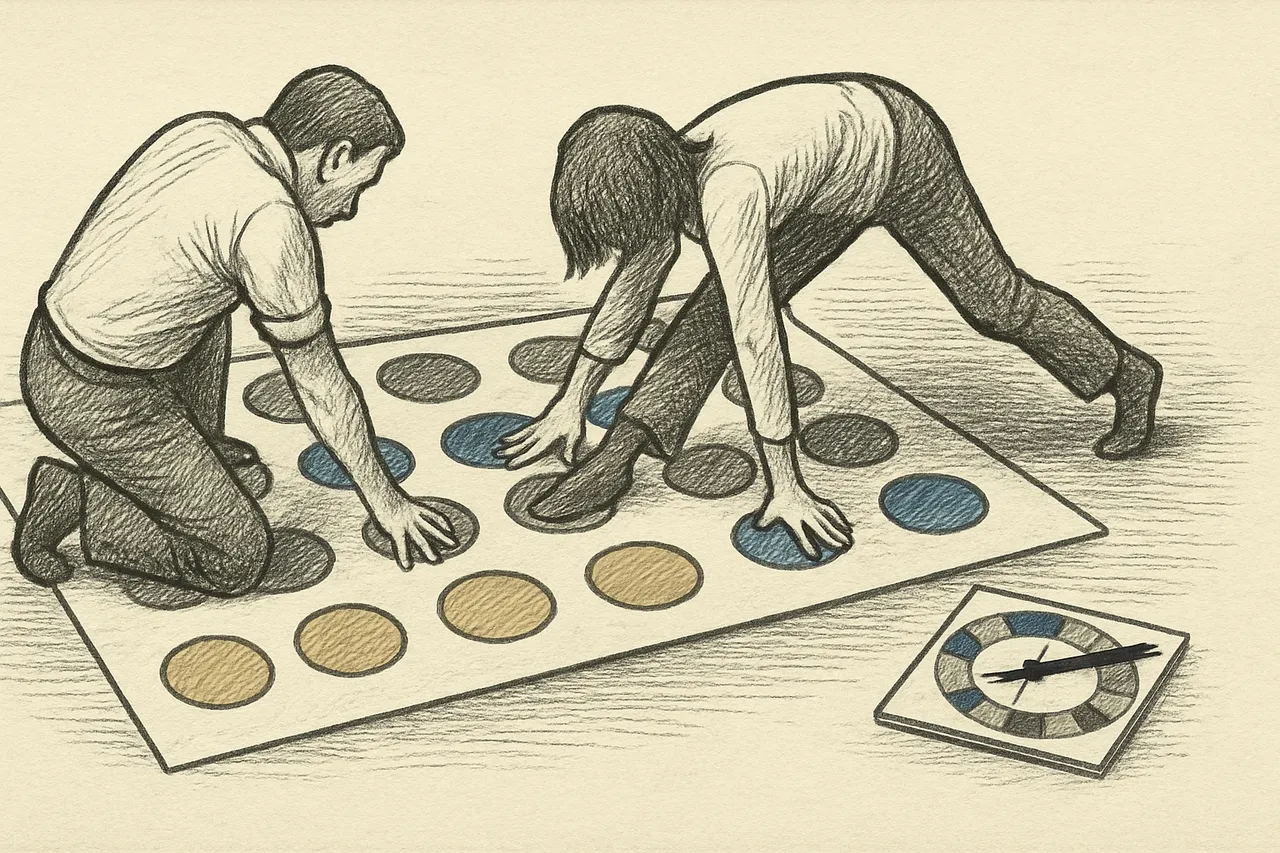
Twister's Patent Is Titled 'Apparatus for Playing a Game Wherein the Players Constitute the Game Pieces'
The patent title is the whole idea: the people are the pieces. Milton Bradley released the game in 1966, some retailers were wary of it, and critics found it a little too intimate. Then Johnny Carson played it on television with Eva Gabor, and the orders poured in.
Read the story →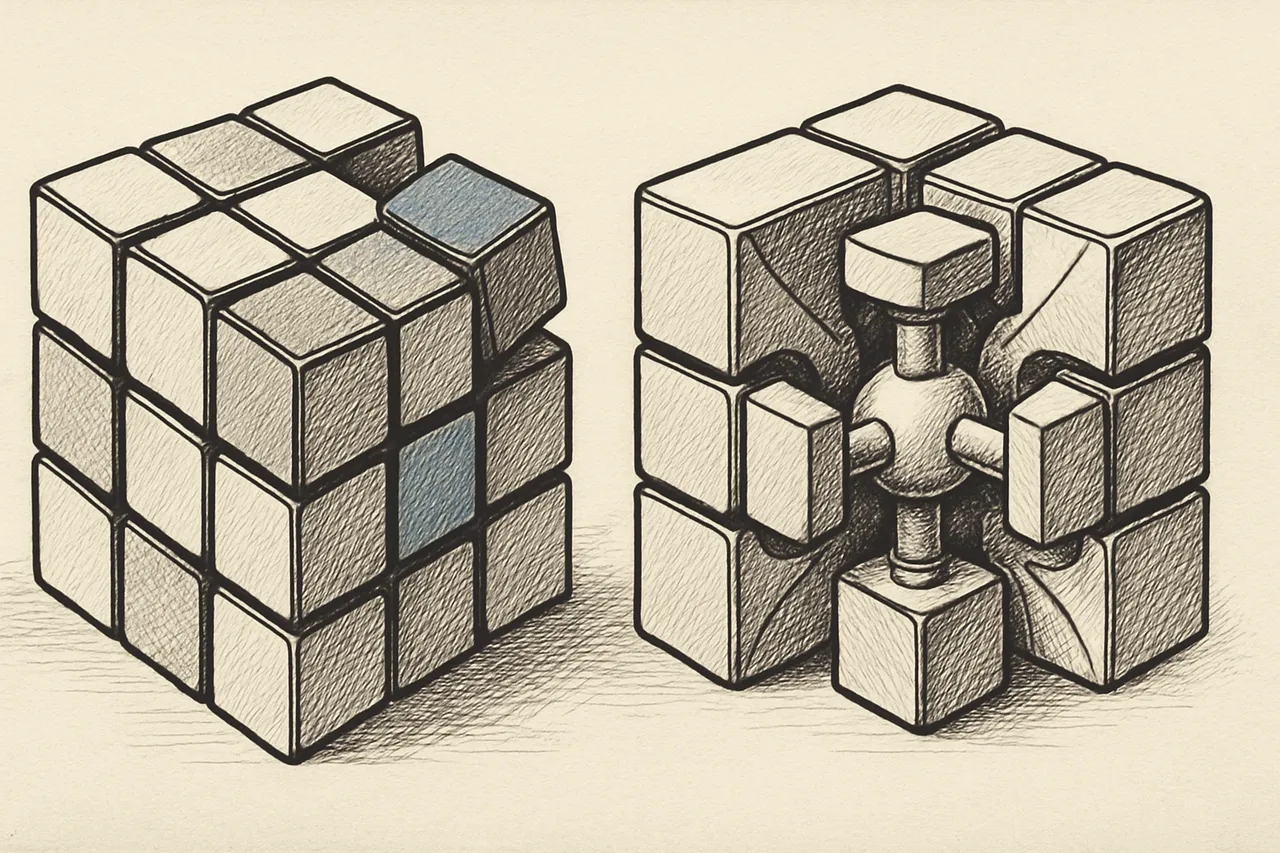
Ernő Rubik Needed About a Month to Solve His Own Cube. An American Court Later Found It Infringed an Earlier US Patent.
Rubik built the first cube in Budapest in 1974 as a way to think about three-dimensional movement. The clever part is how it holds together when most of its pieces are not attached to anything. In the United States, a chemist named Larry Nichols had patented a related puzzle in 1972, and his company sued.
Read the story →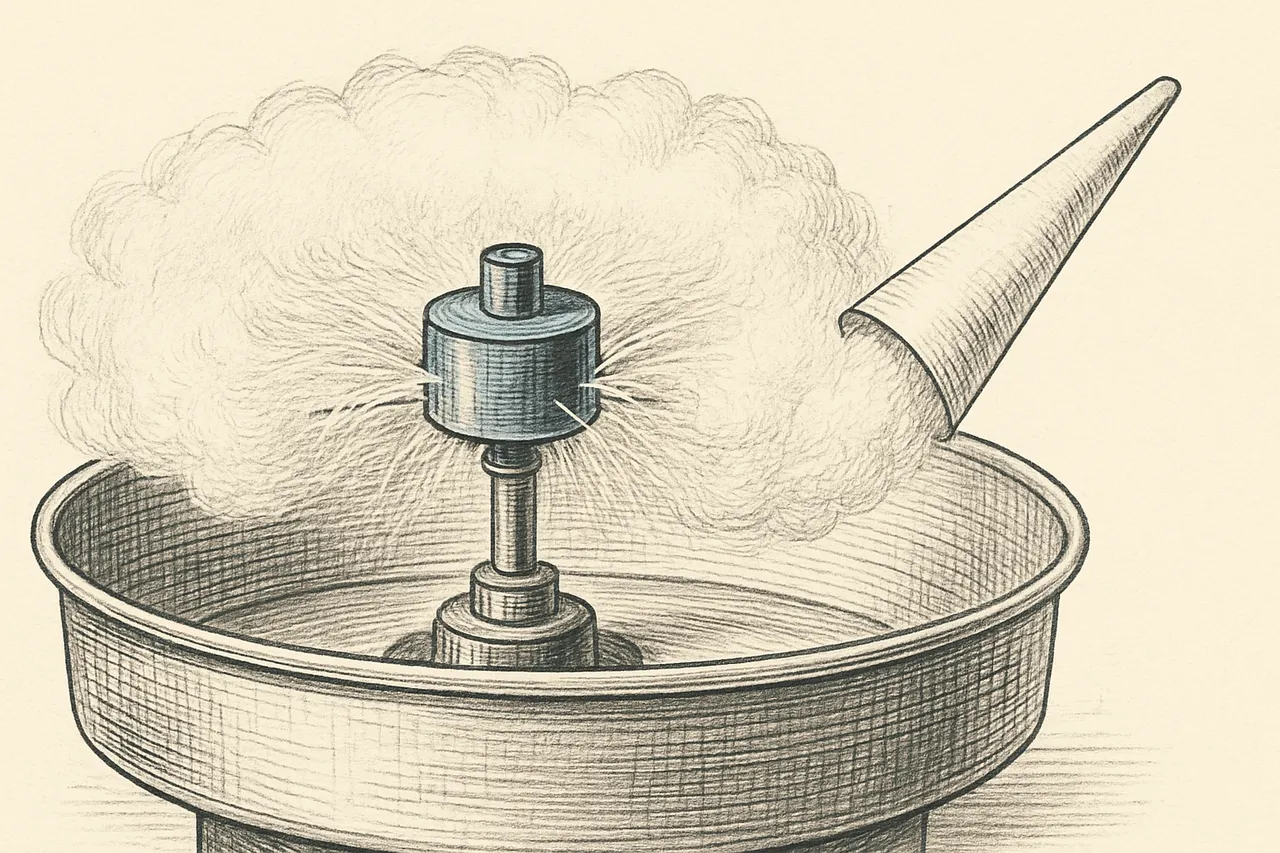
A Dentist Co-Invented the Cotton Candy Machine, and It Was Sold at the 1904 World's Fair as Fairy Floss
William Morrison was a dentist and John Wharton was a candy maker. Their machine melted sugar and flung it through tiny holes so that it cooled into threads finer than hair before it could crystallize. They filed in 1897, and at the St. Louis World's Fair it was a sensation.
Read the story →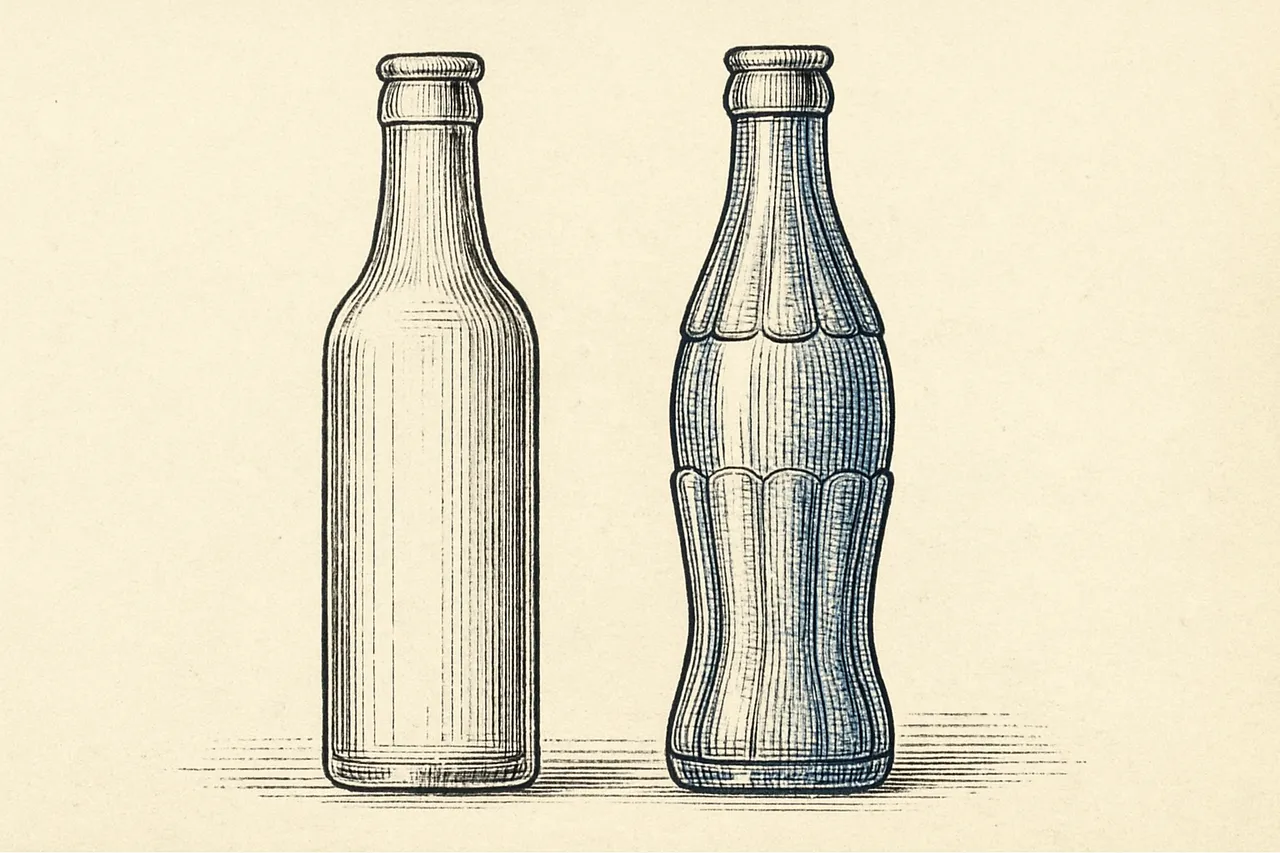
Coca-Cola Asked Glassmakers for a Bottle You Could Recognize in the Dark, or Broken on the Ground
In 1915 Coca-Cola had an imitation problem, since competitors used the same straight-sided bottles and borrowed-sounding names. It challenged glass companies to design a bottle identifiable by touch alone. The winner came from a small glassworks in Terre Haute, Indiana, and the name on the patent is not the name of the man who drew it.
Read the story →