The Patent That Fenced the American West
In 1874, an Illinois farmer named Joseph Glidden was granted a patent for a wire fence with sharp points twisted into it. Within ten years, the open range of the American West had effectively ceased to exist.
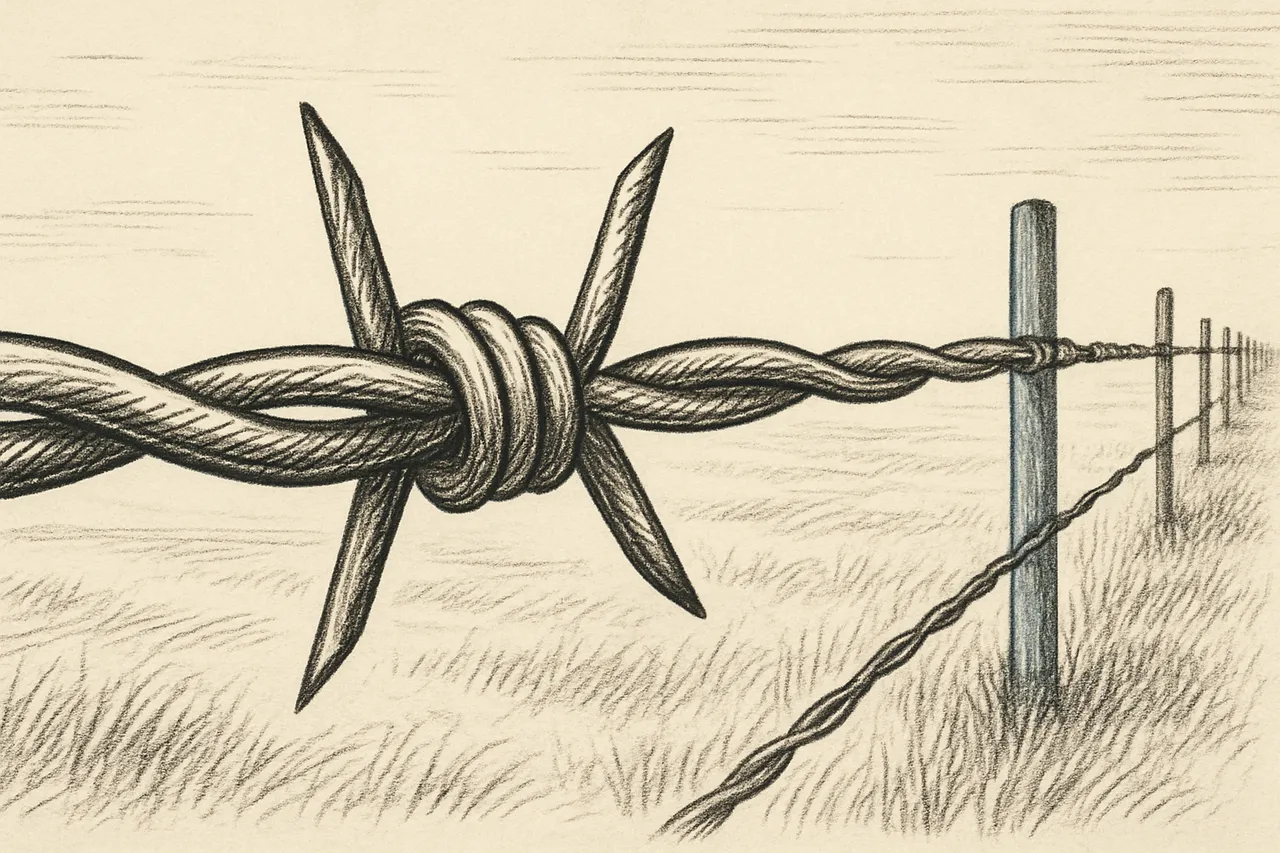
US157124 was issued to Joseph F. Glidden on November 24, 1874. The title is "Improvement in Wire Fences." The mechanism is straightforward enough that the entire patent runs to two pages: one sheet of drawings and one of text. Take two strands of plain steel wire. Twist them together. At regular intervals, wrap a short third piece of wire around the twist so that two sharp ends stick out perpendicular to the run. Repeat for the length of your fence.
Glidden had not invented the idea of barbed wire. At least four earlier patents had described the basic concept, going back to a French design from 1860. What Glidden's patent had — and what the others didn't — was a configuration that could be manufactured at speed with simple, modified existing machinery. His version was, in short, cheap to make and easy to install. The earlier ones weren't.
What it broke
Within months of the patent issuing, Glidden and his business partner Isaac Ellwood opened the Barb Fence Company in DeKalb, Illinois. Within five years they were shipping wire by the trainload to Texas, the Dakotas, the cattle states, the homesteading territories. Within ten years, the open range — the system of free-ranging, brand-marked cattle that had defined the American West for two generations — had effectively collapsed.
The collapse was not metaphorical. It was physical. Ranchers and homesteaders fenced in land that had previously been pastured collectively. Cattle that had ranged across hundreds of miles of open territory found themselves penned. Cowboys, whose entire profession had revolved around herding through unfenced country, became, within a decade, anachronisms.
There were armed conflicts. The Texas "fence-cutting wars" of the early 1880s pitted ranchers and homesteaders against open-range cattlemen who would ride out at night to cut the new wire. People were killed. State legislatures eventually had to make fence-cutting a felony.
Native communities whose treaty rights guaranteed access to ancestral lands found themselves cut off from traditional hunting grounds and water sources by privately-owned fencing they had no legal standing to remove. The wire became known, on Plains reservations, as the devil's rope.
What it built
Glidden died in 1906, by then one of the wealthiest men in the United States. The patent itself had expired in 1891 — seventeen years was the standard term — but by then the market was so dominated by his manufacturing operation that the expiration barely mattered. Modern American agriculture, in a fairly direct sense, runs on grids of descendants of his wire. The total length of barbed wire produced since 1874 is in the trillions of feet. There is, in any direction, almost nowhere in the rural United States that you can walk in a straight line for an hour without crossing some.
What Glidden patented in 1874 was a fence design. What he actually patented, in retrospect, was the end of the commons.
See the original
The full text and figures of US157124 are on Google Patents.
Related stories
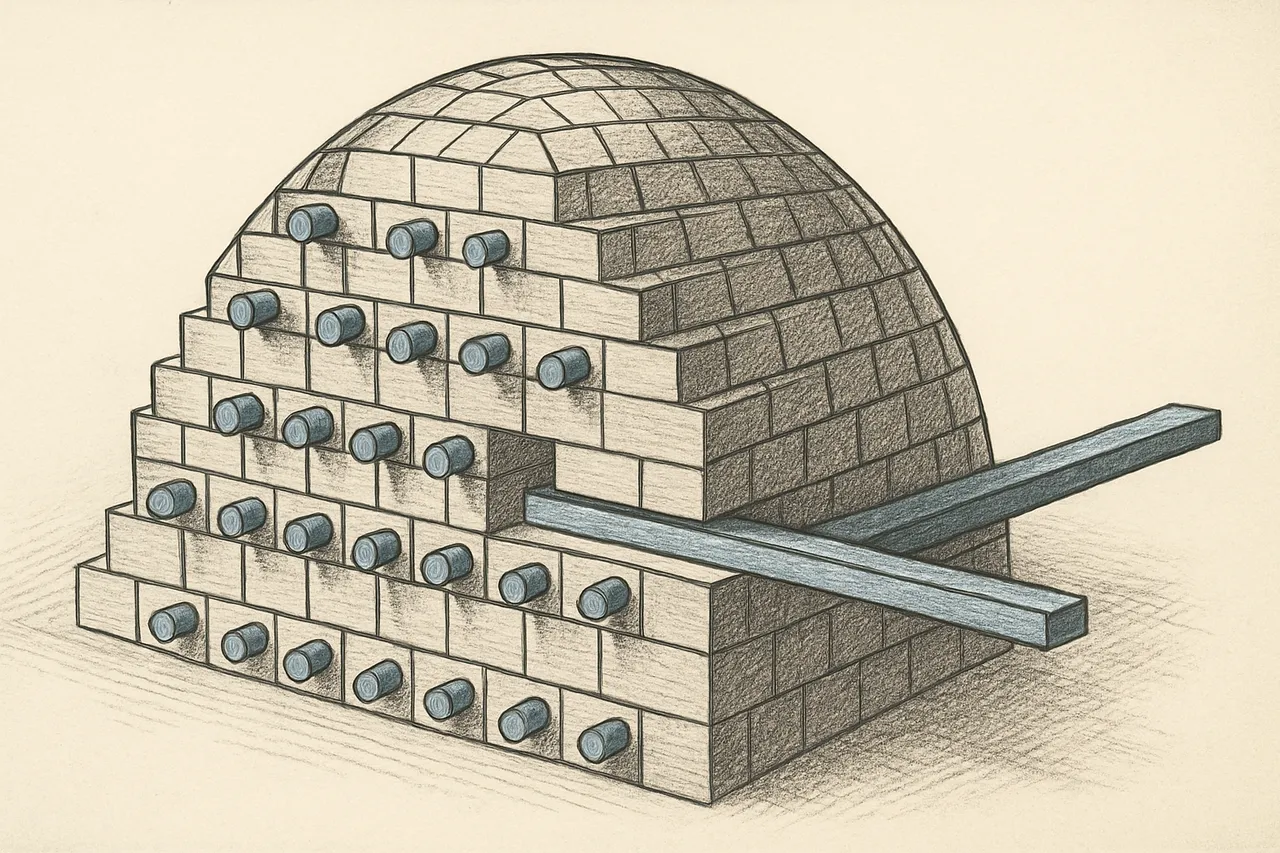
Fermi and Szilard Filed a Patent on the Nuclear Reactor in 1944. It Stayed Secret for More Than Ten Years.
The patent is titled Neutronic Reactor, which is a very flat name for the machine that produced the first controlled nuclear chain reaction. It was filed during the Manhattan Project, buried under a secrecy order, and not published until 1955, six months after Enrico Fermi died.
Read the story →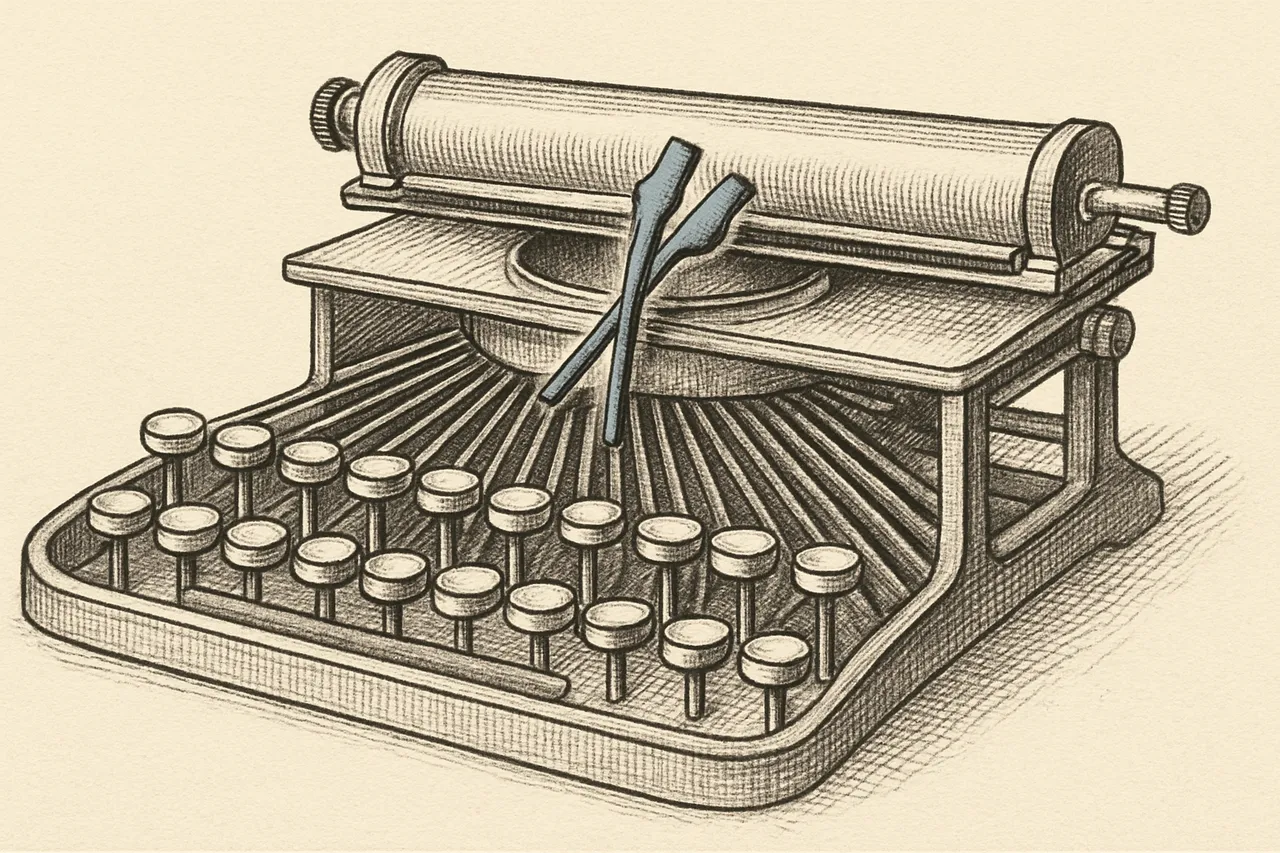
The 1868 Patent Behind the First Successful Typewriter Had Its Keys in Alphabetical Order. QWERTY Came Later, and Nobody Fully Agrees Why.
Christopher Latham Sholes and two partners patented a typewriter in Milwaukee in 1868 with keys arranged like a piano, roughly in alphabetical order. Over the next several years the letters were shuffled into QWERTY. The popular explanation for that is a distortion of a better one.
Read the story →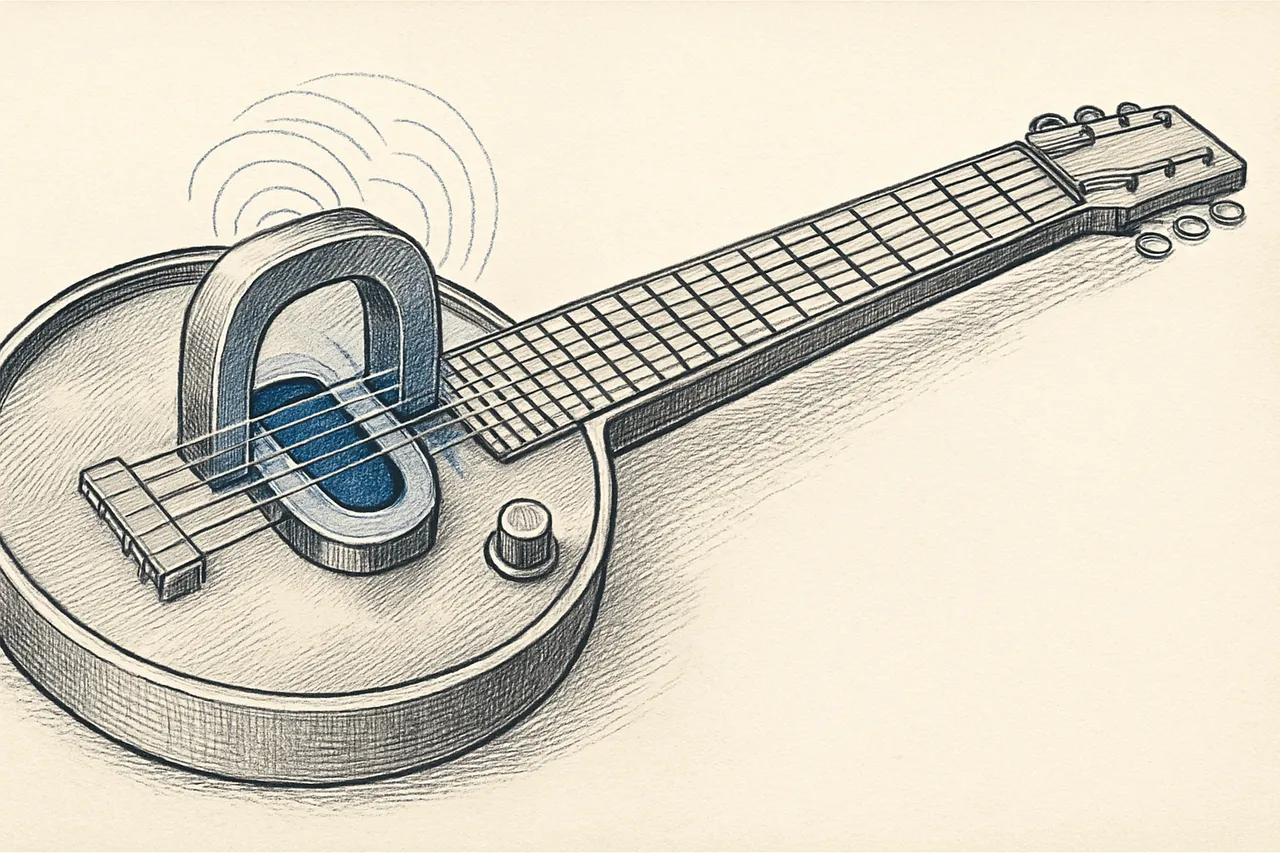
The First Electric Guitar You Could Buy Was Nicknamed the Frying Pan, and Its Patent Took Three Years
In the big band era, guitarists could not be heard over the horns. George Beauchamp set the strings inside a pair of horseshoe magnets, wound a coil beneath them, and mounted it all on a round aluminum body with a long neck. It looked like cookware, and the magnetic pickup it used is still how electric guitars work.
Read the story →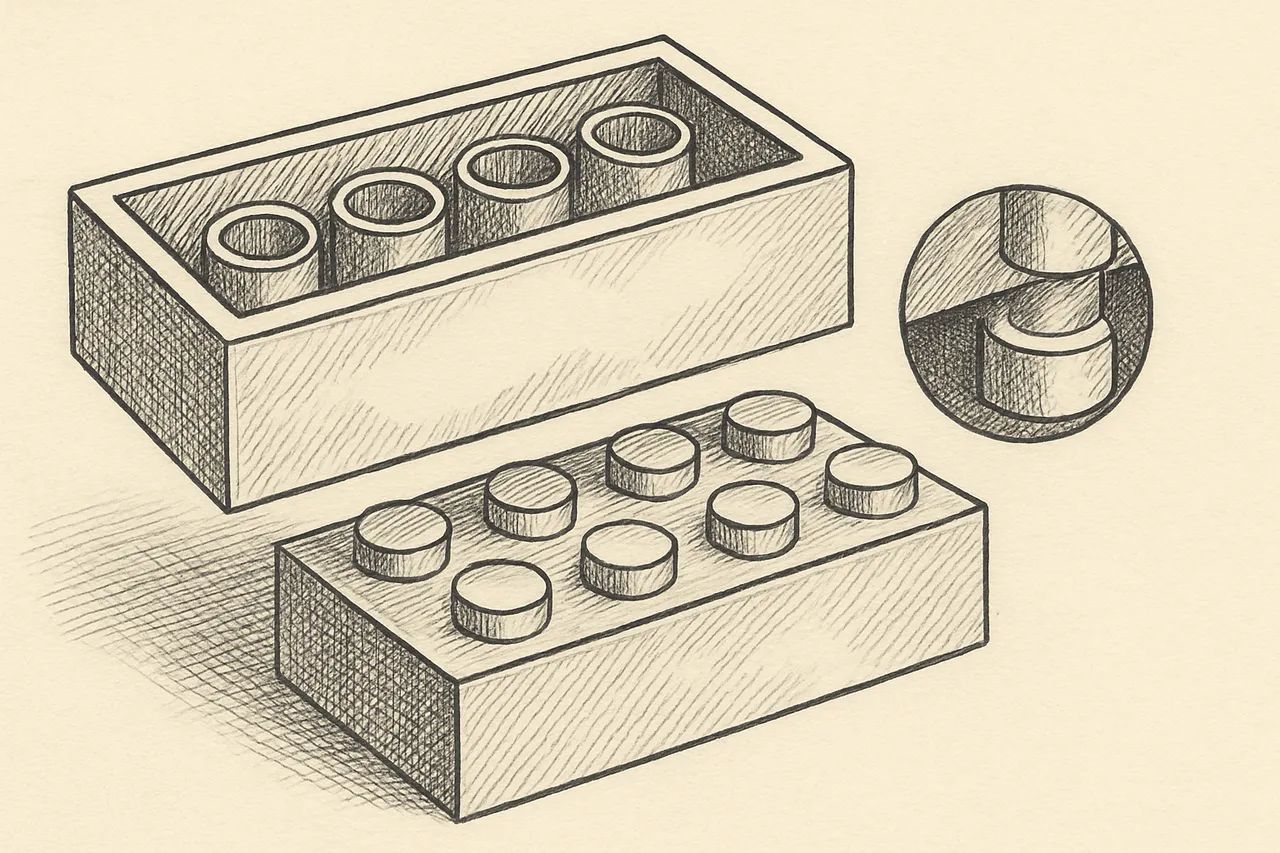
LEGO Bricks Were on Sale for Nine Years Before They Held Together Properly. The Fix Was a Row of Hollow Tubes.
The first LEGO bricks had studs on top and an empty space underneath, so models tended to come apart when you picked them up. Godtfred Kirk Christiansen's 1958 design put tubes inside the brick, and a brick molded that year still fits one molded today.
Read the story →