The Patent on Pointing a Laser at a Cat
In 1995, the USPTO granted Kevin Amiss and Martin Greenstein a patent on the act of exercising a cat by getting it to chase a moving spot of light. The patent was real. The cats did not pay royalties.
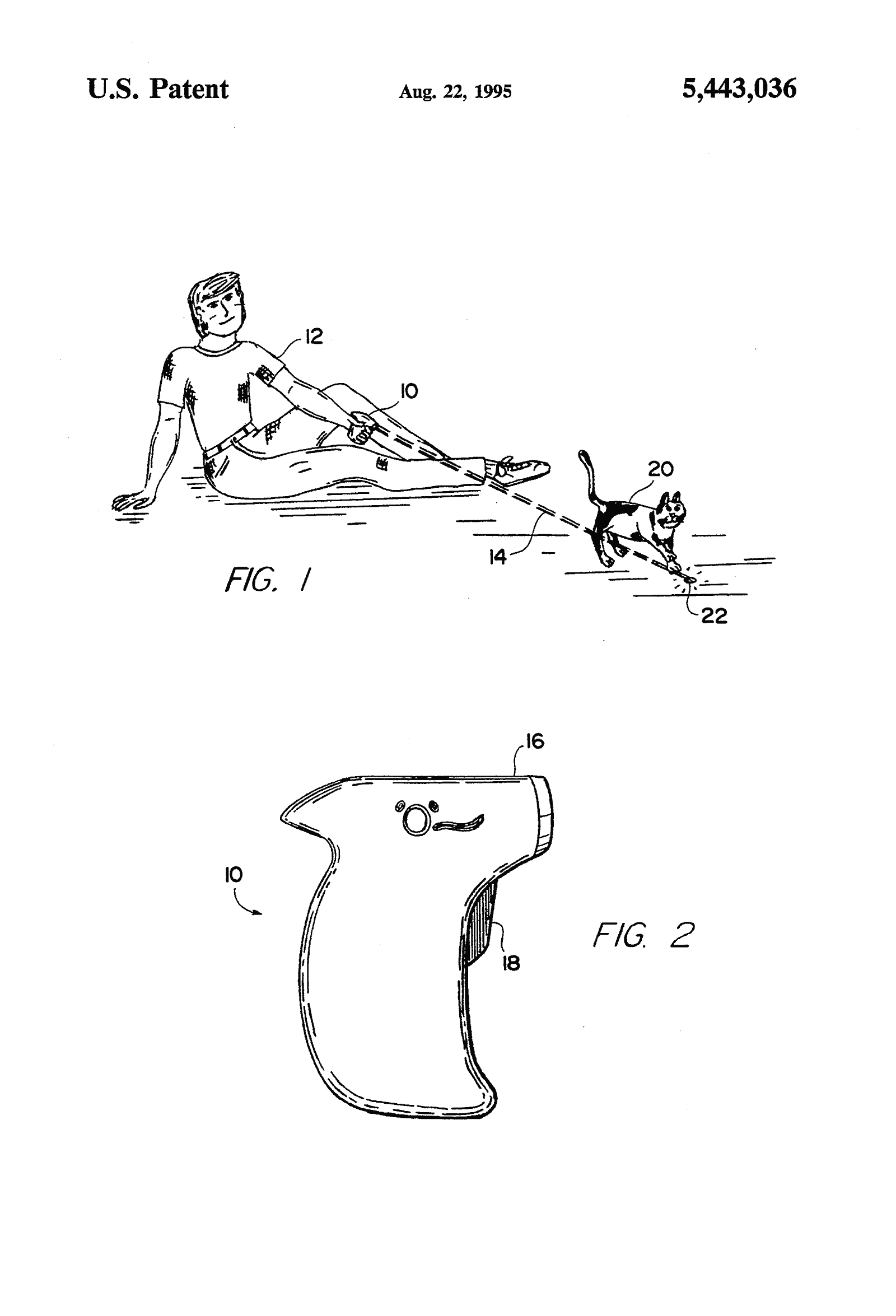
US5443036 was filed on November 2, 1993, and granted on August 22, 1995. The applicants were Kevin T. Amiss and Martin H. Greenstein, both patent attorneys at the firm Cushman, Darby & Cushman in Washington, D.C. The title of the patent is "Method of Exercising a Cat."
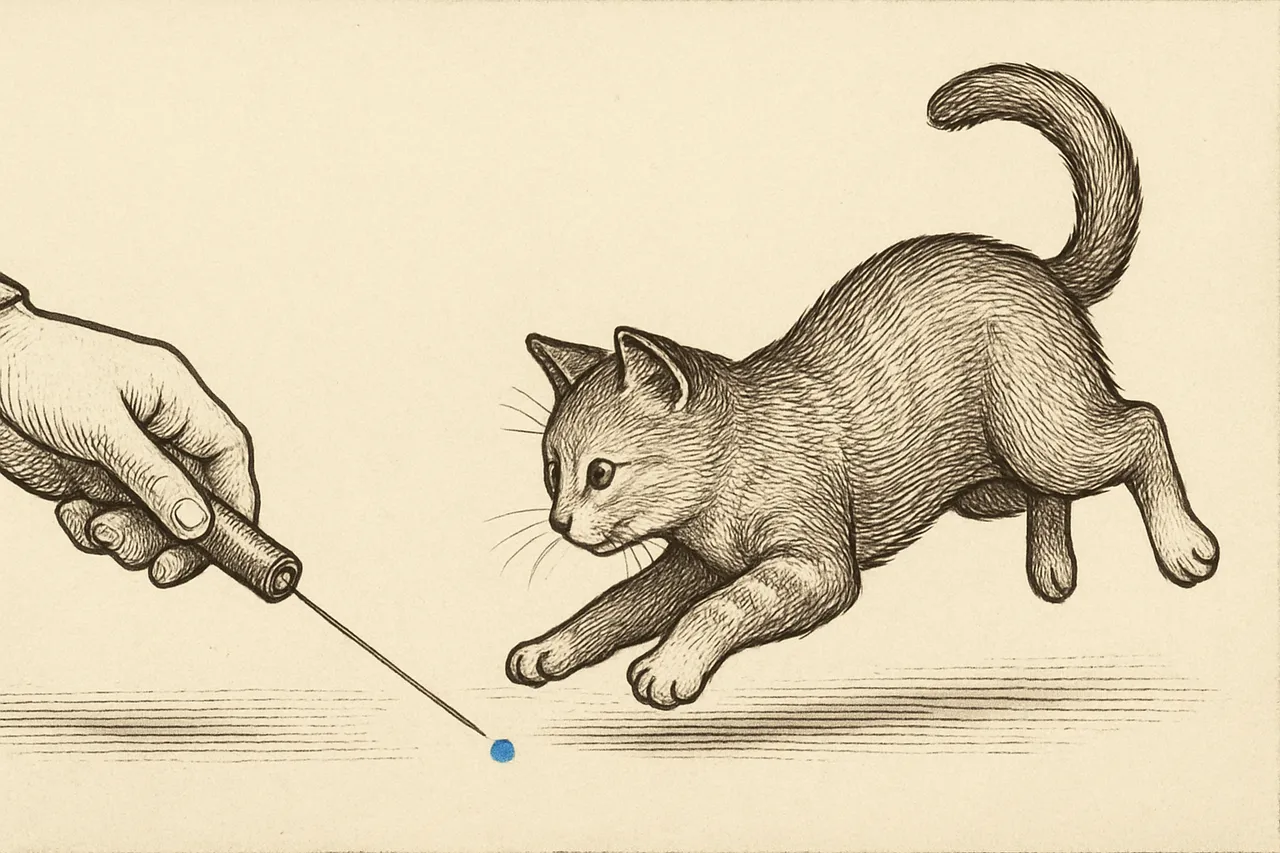
The full text describes a procedure most cat owners will recognize: produce a small, moving spot of light using a "hand-held laser apparatus," direct that spot at the floor or a wall in the vicinity of the cat, and move the spot around in a manner calculated to attract the cat's attention. The cat will, the patent helpfully explains, "give chase." This counts, per claim 1, as exercise.
How a thing like this gets granted
Whether the application was a deliberate professional joke or a sincere filing has been debated in patent-law circles for thirty years. Amiss and Greenstein were both established practitioners at a major DC firm. They had to know what they were doing. The prevailing theory is that the filing was a half-serious test — a demonstration to themselves, to junior attorneys at their firm, and possibly to the patent office, that the method patent category as it stood in the early 1990s could be made to do almost anything.
The examiner found no prior art that specifically described pointing a laser at a cat to induce chasing behavior. The general practice was, of course, ancient — anything that moves randomly across the floor will engage a cat — but nothing in the searchable patent database, the technical literature, or the trade press precisely matched the claim language. The application was approved.
The wider point
Method patents — patents on a process rather than a device — exploded in number through the 1990s and 2000s. Software patents fell into the same category, as did business-method patents (Amazon's 1-Click checkout, the priceline.com reverse auction, hundreds of online-shopping-cart variations). The patent on exercising a cat was, by the standards of what came later, almost dignified. At least it described something a person could physically do.
The patent was never enforced. Laser pointers continued to be sold and used on cats worldwide without royalty payment, and Amiss and Greenstein never sued anyone. It expired in 2015, twenty years after filing, having generated a great deal of citation in law reviews and almost no income.
It is now a teaching case. Patent-policy textbooks use it to explain what is wrong with method patents that are obvious in retrospect. Patent examiners' training programs use it to explain why prior-art searches need to consider "common knowledge" outside the formal literature. And the cat — or any cat — continues to chase the dot, royalty-free.
See the original
The full text and figures of US5443036 are on Google Patents.
Related stories
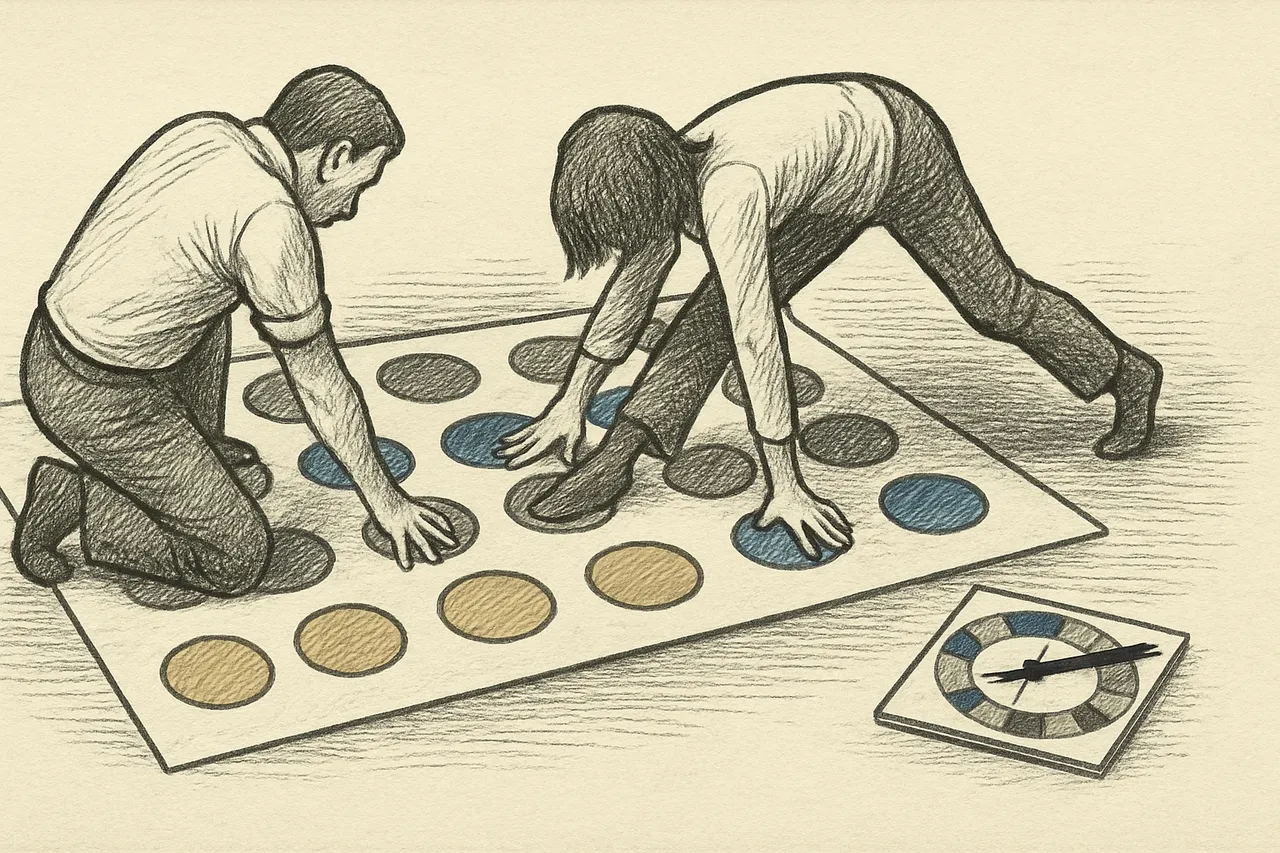
Twister's Patent Is Titled 'Apparatus for Playing a Game Wherein the Players Constitute the Game Pieces'
The patent title is the whole idea: the people are the pieces. Milton Bradley released the game in 1966, some retailers were wary of it, and critics found it a little too intimate. Then Johnny Carson played it on television with Eva Gabor, and the orders poured in.
Read the story →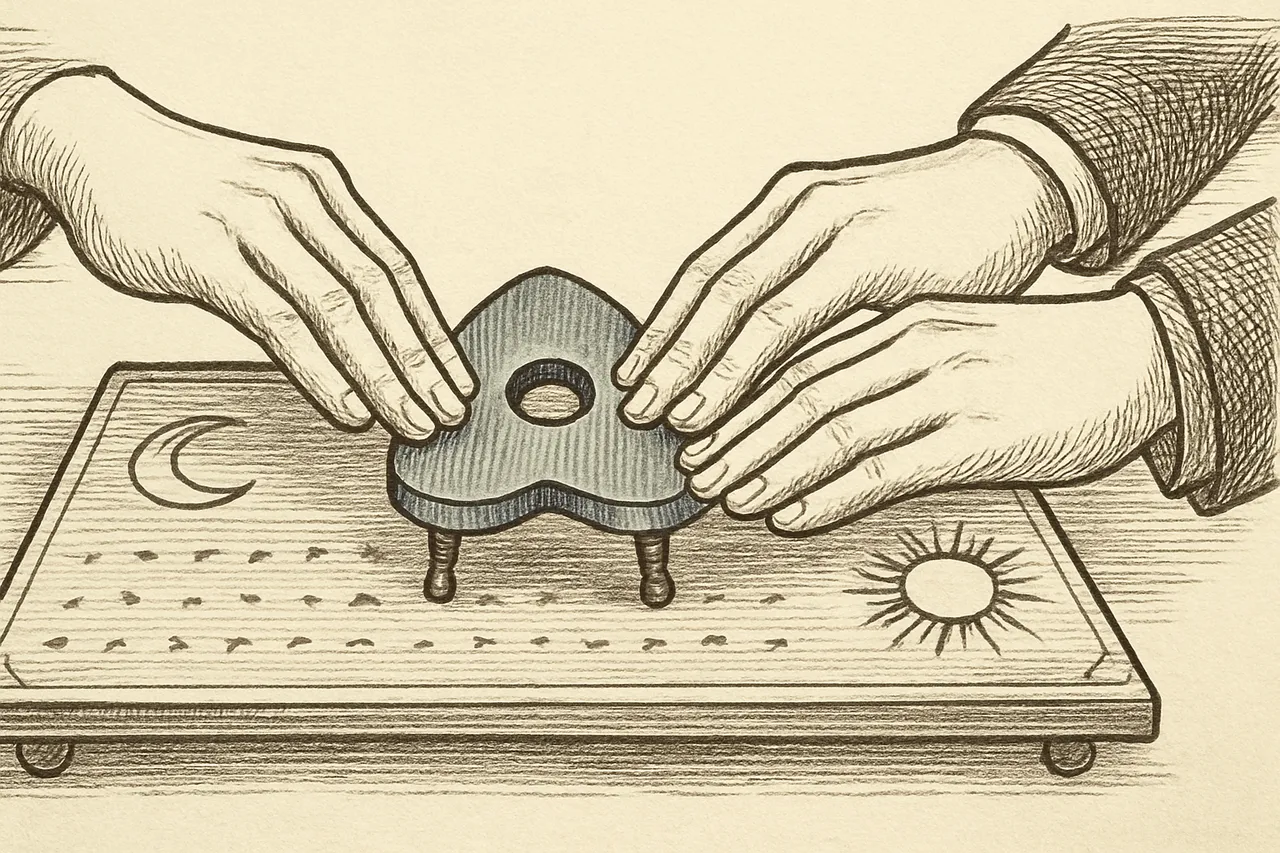
The Ouija Board's 1891 Patent Calls It an 'Egyptian Luck-Board' and Never Says How It Works
Elijah Bond's patent describes a board and a small pointer on legs, and makes no claim about what moves the pointer. The popular legend says the patent examiner demanded a demonstration first. The science, worked out decades before the patent, says the players are moving it themselves without realizing it.
Read the story →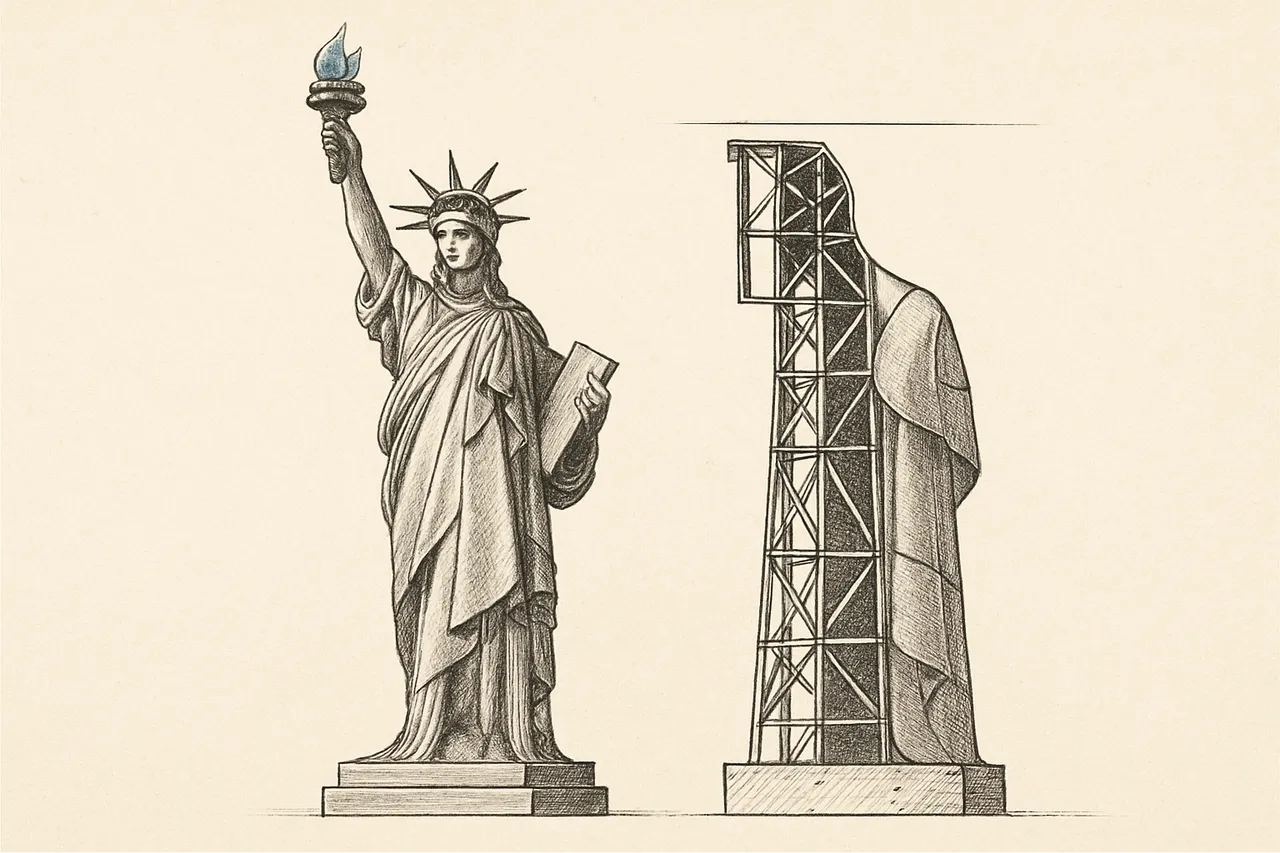
The Statue of Liberty Was Patented in 1879, Seven Years Before It Was Dedicated
Auguste Bartholdi received US Design Patent 11,023 in February 1879 for a statue that would not stand in New York Harbor until 1886. Replicas were a fundraising tool for a project that was chronically short of money, and a design patent gave control over who could legally make them.
Read the story →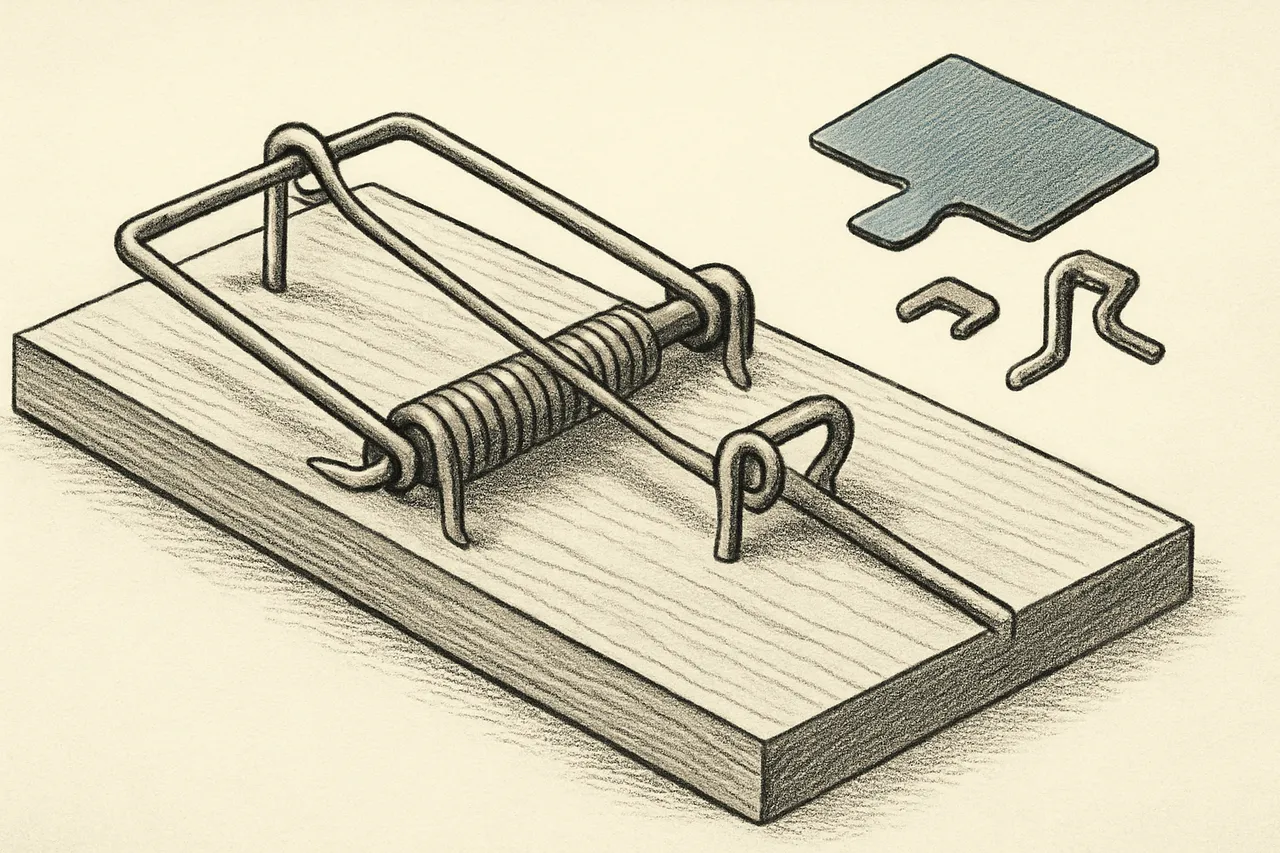
The Mousetrap Is the Most-Patented Device in American History. Almost None of Them Work.
More than four thousand mousetrap patents have been granted in the United States, and thousands more rejected. Roughly twenty have ever made money. The one that won was patented in 1894 and costs about a quarter.
Read the story →