The Beerbrella: A Tiny Umbrella Whose Only Job Is to Shade Your Beer
In 2003, the USPTO granted a patent for a miniature umbrella, roughly the size of a saucer, that clamps onto a beer bottle to keep the sun off it. The name in the official patent title is, in full legal seriousness, the 'Beerbrella.'
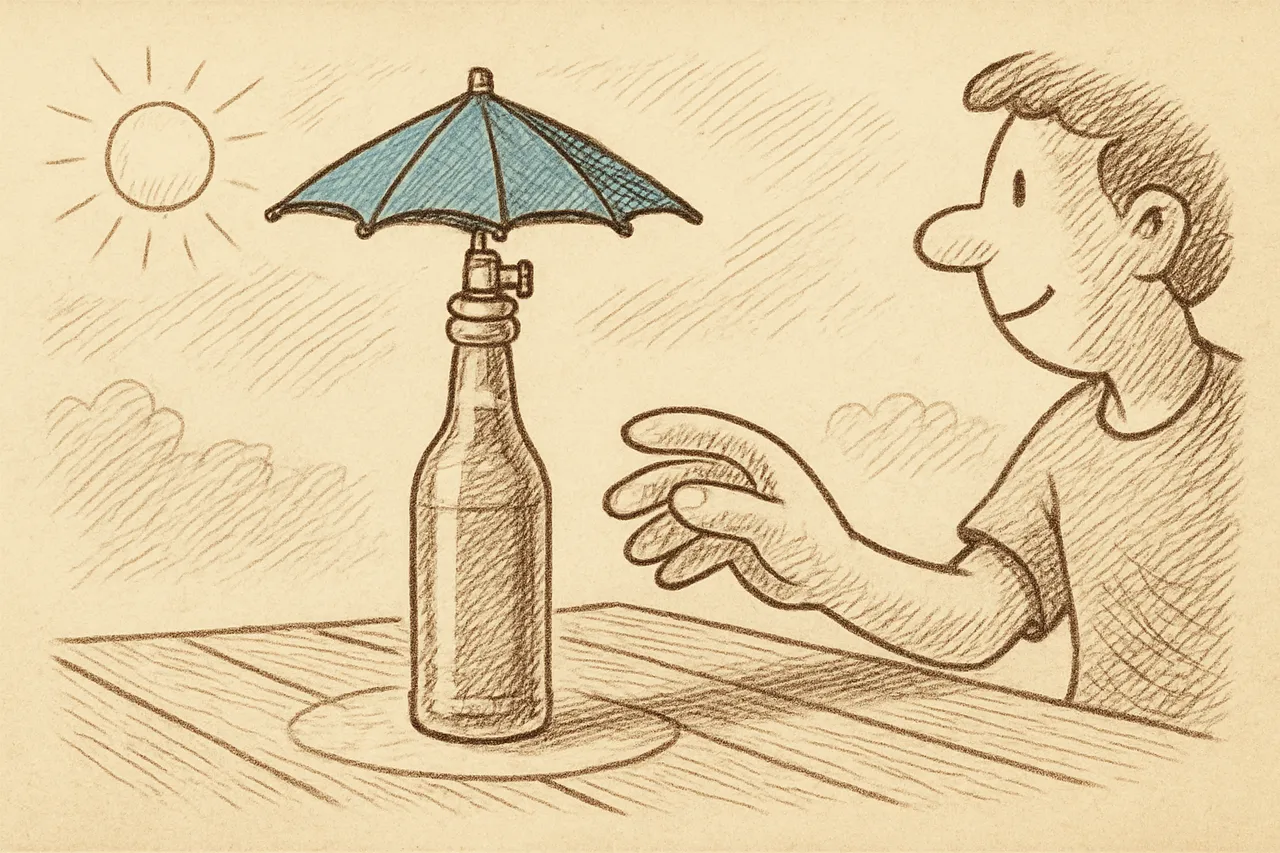
US6637447 was granted on October 28, 2003, to Robert M. Nelson of Wimberley, Texas. The official title of the patent is "Beerbrella." This is not a nickname added later by amused journalists; it is the word the inventor put on the application and the word the United States Patent and Trademark Office printed at the top of the granted patent. A federal patent examiner reviewed, and the United States government issued, a patent formally titled "Beerbrella."
The invention is exactly what the name promises: a small umbrella, described in the patent as roughly twelve inches across, designed to be attached to a beverage container — a beer bottle or can — in order to shade it from the sun. The stated purpose is to keep a cold drink cold by keeping direct sunlight off it while the owner relaxes outdoors. A clip or strap secures the little umbrella's shaft to the bottle, and the canopy angles over the drink.
The claims
The patent is drafted with complete professional seriousness, which is the source of most of its charm. It includes multiple claims covering variations in the attachment mechanism — a clamp, a strap, an adhesive — and in the umbrella's construction. It notes, in the measured tone of patent prose, that the device may be decorated or printed with advertising, anticipating the promotional-giveaway market. The figures show the Beerbrella clamped jauntily to a bottle, canopy deployed, casting its tiny circle of shade.
Nothing about the drafting suggests a joke. The inventor appears to have genuinely wanted to protect his idea, went to the expense and effort of a full patent application, and received a valid United States patent for it.
The genre
The Beerbrella belongs to the great tradition of the sincere leisure-product patent — the Beerbrella, the beverage-cooling coozies, the various hats with built-in drink holders and straws. These are inventions aimed squarely at the small, real, human problem of being comfortable while doing nothing in particular. They are not going to change the world. They were never going to change the world. Their inventors mostly knew that. What they wanted was a patent on a genuinely novel gadget, and the system — which tests for novelty and non-obviousness, not ambition — gave them one.
There is no evidence the Beerbrella became a commercial phenomenon, though small novelty versions of the general concept have been sold. It endures instead as a beloved fixture of strange-patent collections, cherished precisely because a real inventor really did secure a real federal patent on a doll-sized umbrella for a beer, and the paperwork calls it, with a completely straight face, a Beerbrella.
See the original
The full text and figures of US6637447 are on patents.us.
Related stories
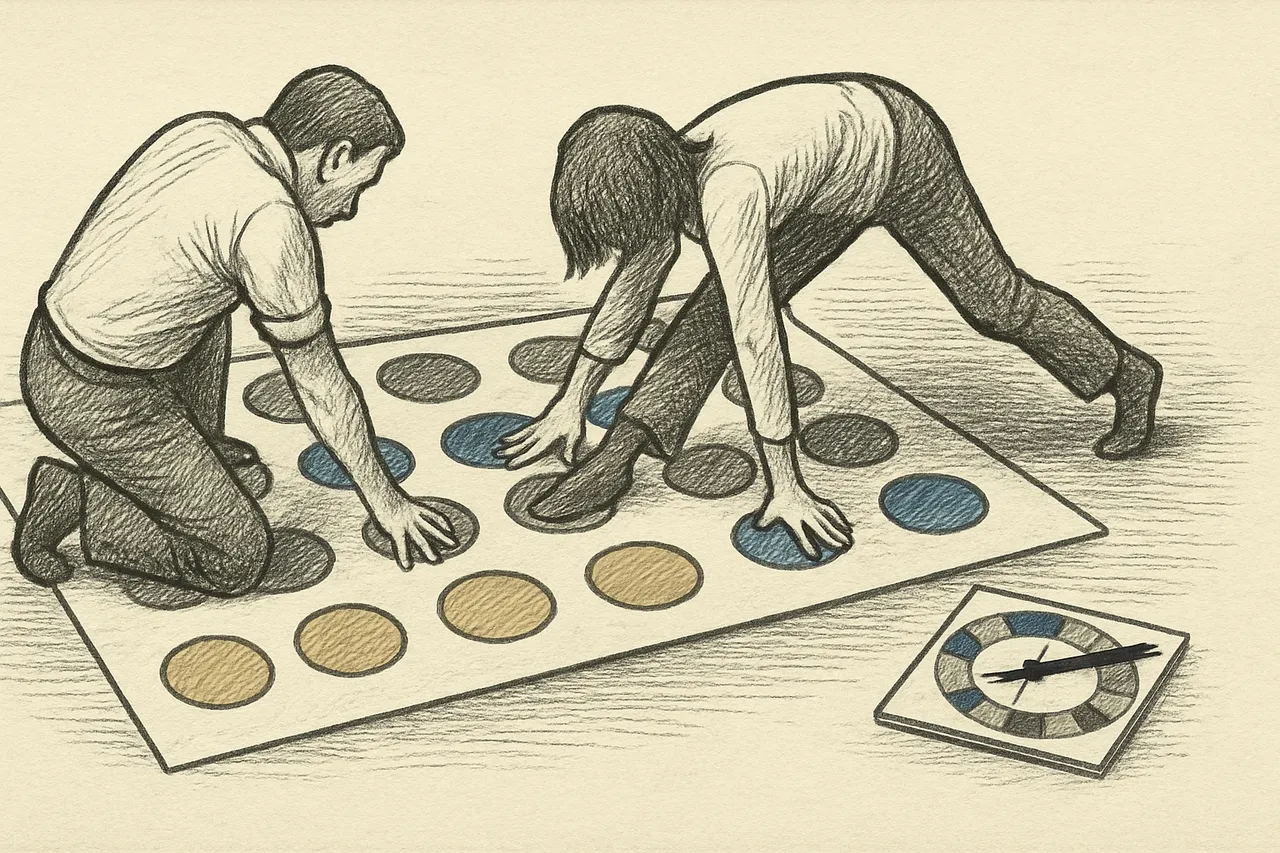
Twister's Patent Is Titled 'Apparatus for Playing a Game Wherein the Players Constitute the Game Pieces'
The patent title is the whole idea: the people are the pieces. Milton Bradley released the game in 1966, some retailers were wary of it, and critics found it a little too intimate. Then Johnny Carson played it on television with Eva Gabor, and the orders poured in.
Read the story →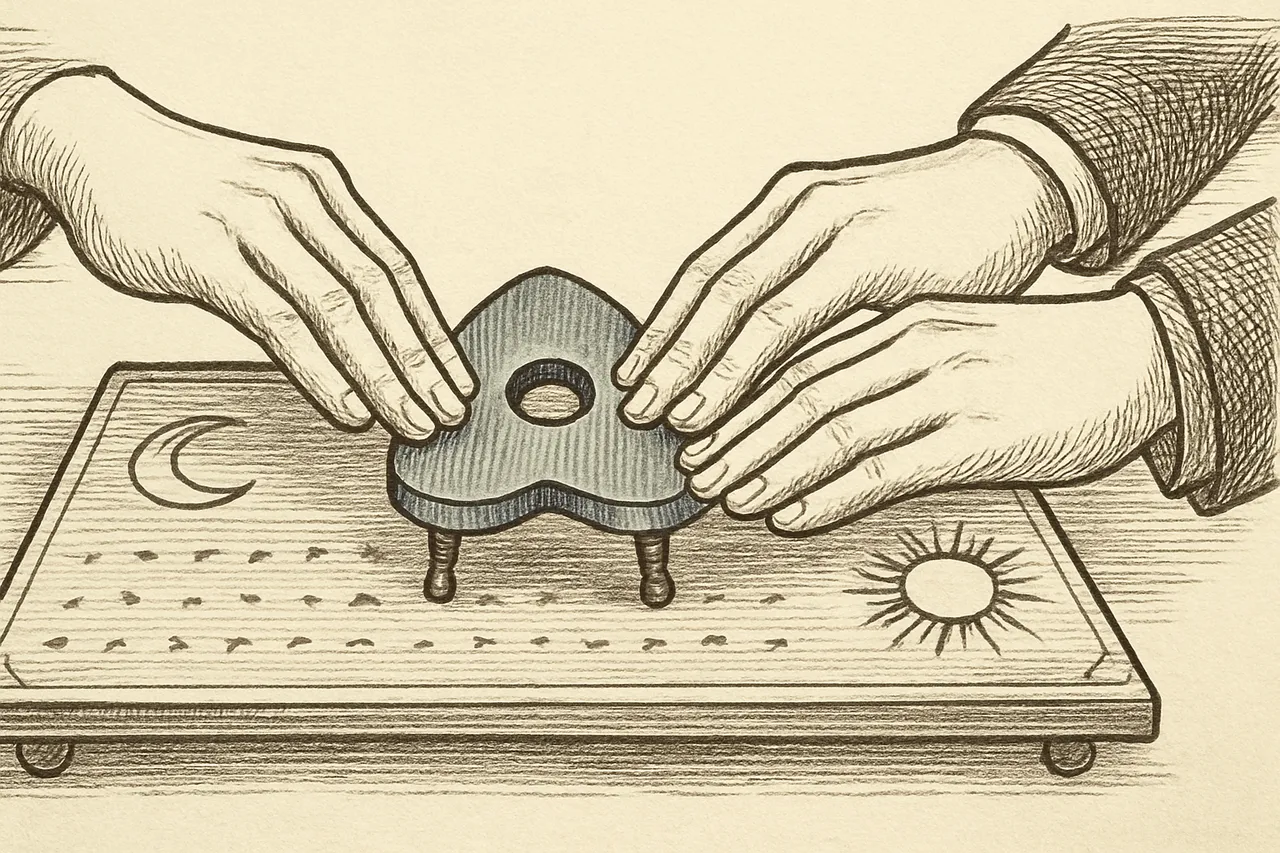
The Ouija Board's 1891 Patent Calls It an 'Egyptian Luck-Board' and Never Says How It Works
Elijah Bond's patent describes a board and a small pointer on legs, and makes no claim about what moves the pointer. The popular legend says the patent examiner demanded a demonstration first. The science, worked out decades before the patent, says the players are moving it themselves without realizing it.
Read the story →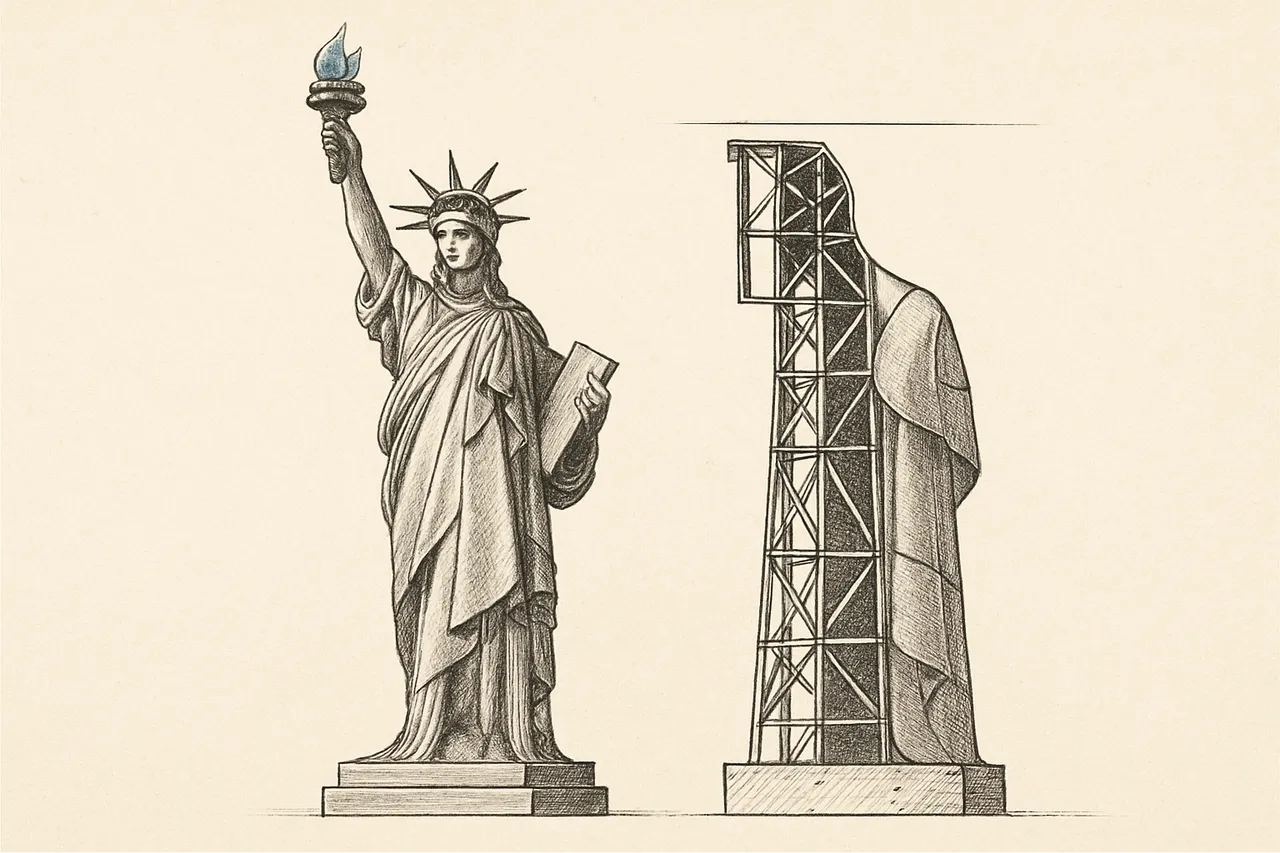
The Statue of Liberty Was Patented in 1879, Seven Years Before It Was Dedicated
Auguste Bartholdi received US Design Patent 11,023 in February 1879 for a statue that would not stand in New York Harbor until 1886. Replicas were a fundraising tool for a project that was chronically short of money, and a design patent gave control over who could legally make them.
Read the story →
The Mousetrap Is the Most-Patented Device in American History. Almost None of Them Work.
More than four thousand mousetrap patents have been granted in the United States, and thousands more rejected. Roughly twenty have ever made money. The one that won was patented in 1894 and costs about a quarter.
Read the story →