The Patent for Patting Yourself on the Back
In 1986, the USPTO granted a patent for a device consisting of a simulated human hand on a spring-loaded arm, mounted so that a person could reach up, pull it down, and administer a congratulatory pat to their own back.
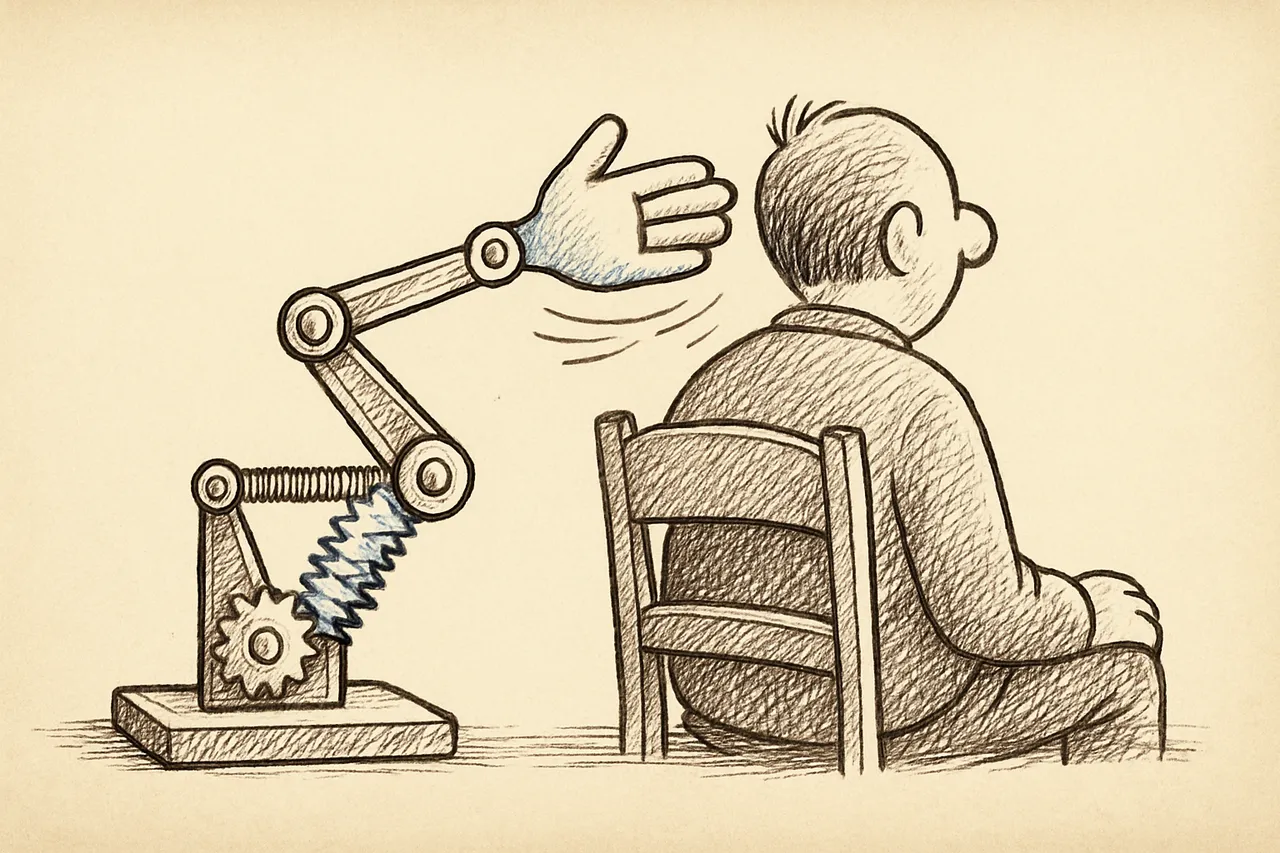
US4608967 was granted on September 2, 1986. The title is "Apparatus for Patting a Person on an Upper Portion of a Back of the Person" — which is a remarkably precise way of describing a machine for patting yourself on the back. The drawings show exactly that: a simulated human hand, mounted at the end of a pivoting arm, arranged so that the user can grasp a handle, swing the hand up and over their own shoulder, and deliver a series of approving pats to their own back.
The patent explains its purpose without a trace of irony. It observes that people frequently deserve congratulation for their accomplishments but do not always have anyone present to provide it, and that the gesture of a pat on the back is a well-understood form of positive reinforcement. The device, therefore, allows a person to supply this reinforcement to themselves, at will, whenever a moment of self-congratulation is required.
The engineering
The mechanism is described in full technical detail. There is a pivot, an arm, a counterweight or spring arrangement to control the motion, and the hand itself — molded to approximate a real human hand so that the pat feels appropriately authentic. The patent specifies the geometry required to bring the hand into contact with the correct "upper portion" of the back, and describes the pivoting action that produces the patting motion rather than a single static press.
Someone worked this out carefully. The figures are neat and properly labeled. The claims are drafted in the formal, hedge-everything language of real patent prosecution. The application was examined and granted like any other. By every procedural measure, the self-back-patting machine is exactly as legitimate a patent as the telephone.
Why it endures
The pat-on-the-back apparatus is a fixture of "most ridiculous patents" collections, and it belongs to a specific and beloved subgenre: the sincere novelty. It is not a method patent of questionable obviousness, and it is not a cynical attempt to monopolize something ordinary. It is a real, buildable mechanical device whose entire reason for existing is a small, human, faintly melancholy joke — the idea that a person might need, and be unable to obtain, a simple gesture of encouragement, and might therefore build a machine to provide it.
There is no evidence the device was ever manufactured or sold, which places it among the enormous population of patents that exist only as documents — granted, archived, and never built. But it captures something the more famous patents do not. The telephone and the transistor tell you what people needed. The machine for patting yourself on the back tells you something about how they felt.
See the original
The full text and figures of US4608967 are on patents.us.
Related stories
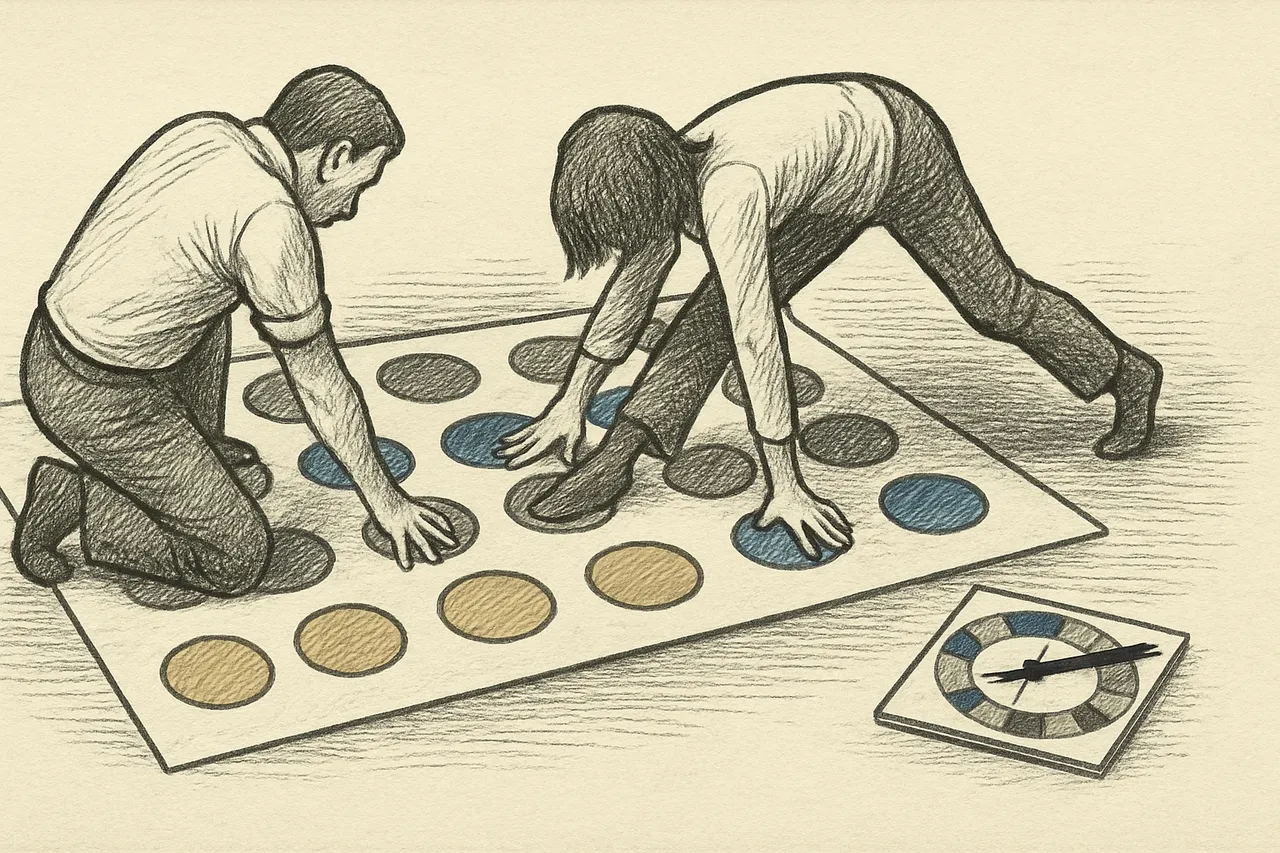
Twister's Patent Is Titled 'Apparatus for Playing a Game Wherein the Players Constitute the Game Pieces'
The patent title is the whole idea: the people are the pieces. Milton Bradley released the game in 1966, some retailers were wary of it, and critics found it a little too intimate. Then Johnny Carson played it on television with Eva Gabor, and the orders poured in.
Read the story →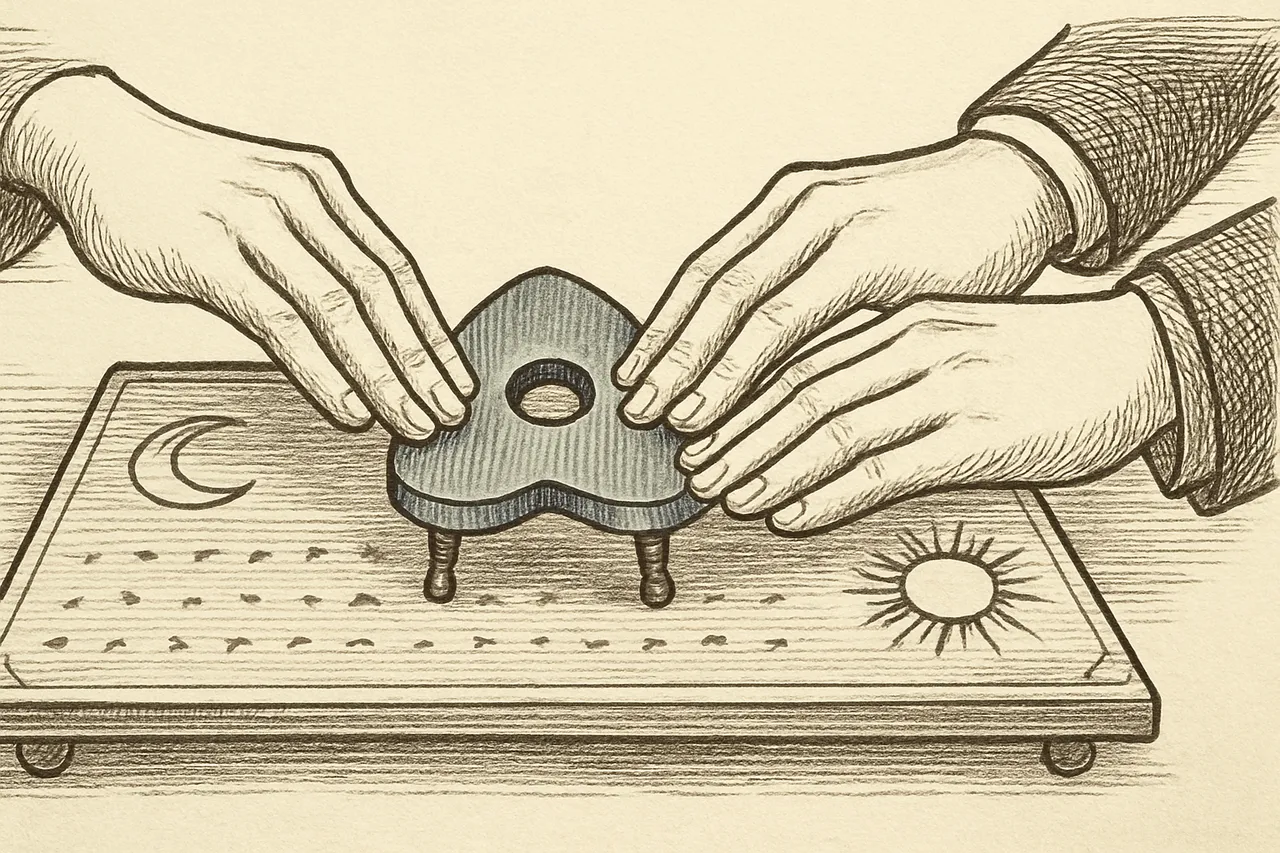
The Ouija Board's 1891 Patent Calls It an 'Egyptian Luck-Board' and Never Says How It Works
Elijah Bond's patent describes a board and a small pointer on legs, and makes no claim about what moves the pointer. The popular legend says the patent examiner demanded a demonstration first. The science, worked out decades before the patent, says the players are moving it themselves without realizing it.
Read the story →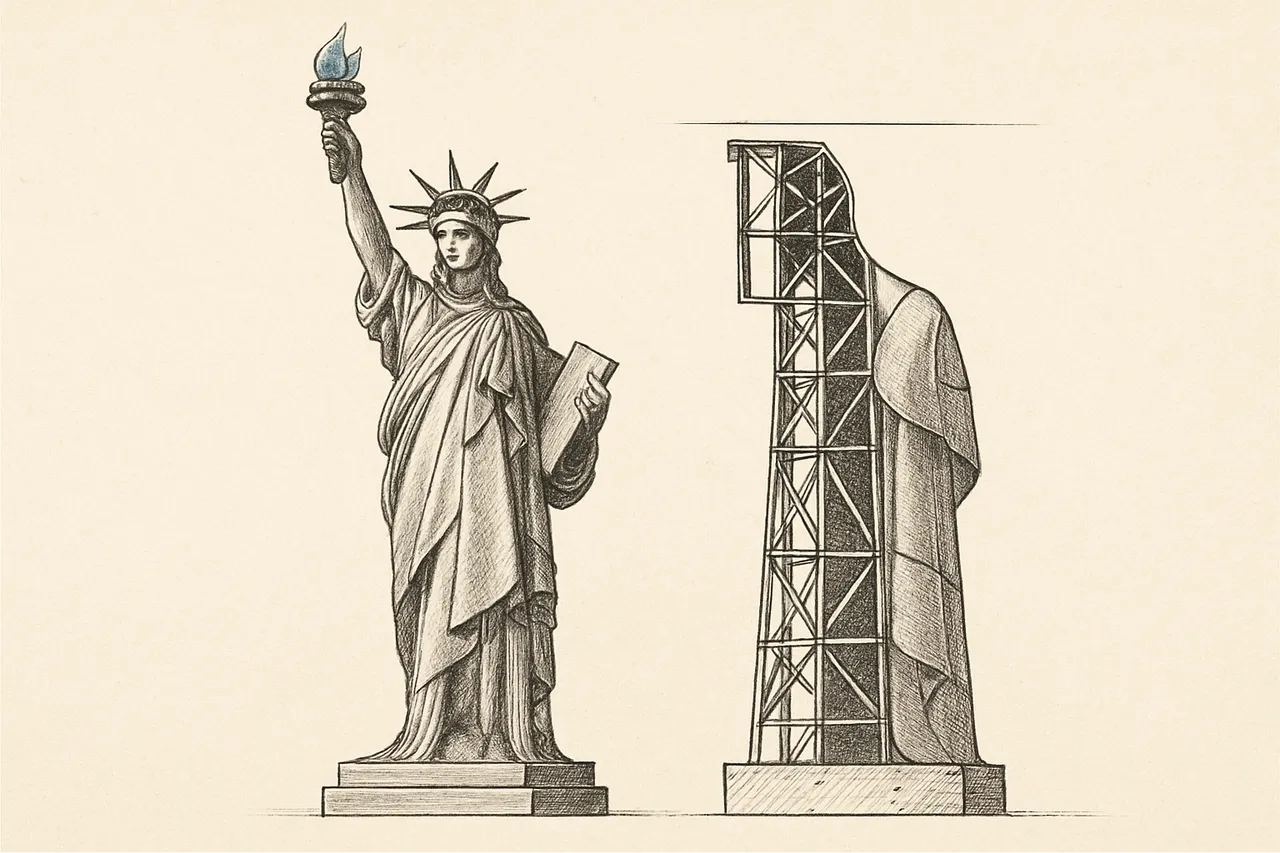
The Statue of Liberty Was Patented in 1879, Seven Years Before It Was Dedicated
Auguste Bartholdi received US Design Patent 11,023 in February 1879 for a statue that would not stand in New York Harbor until 1886. Replicas were a fundraising tool for a project that was chronically short of money, and a design patent gave control over who could legally make them.
Read the story →
The Mousetrap Is the Most-Patented Device in American History. Almost None of Them Work.
More than four thousand mousetrap patents have been granted in the United States, and thousands more rejected. Roughly twenty have ever made money. The one that won was patented in 1894 and costs about a quarter.
Read the story →