The Patent for Surviving a Fire by Breathing Through the Toilet
In 1982, an inventor received a US patent for a fresh-air breathing device intended for high-rise fires. The device was a snorkel. You inserted it past the water in the toilet bowl and breathed the fresh air drawn down the plumbing's vent stack.
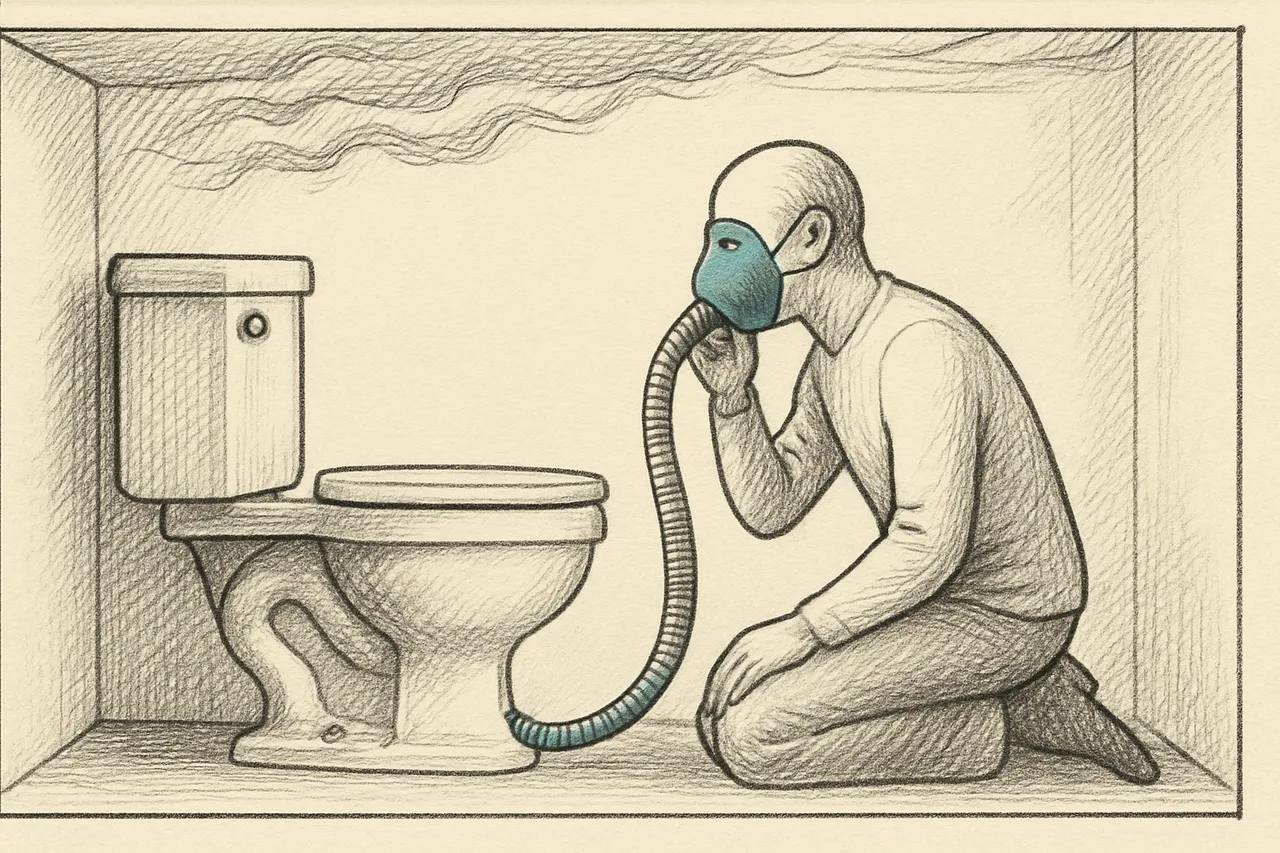
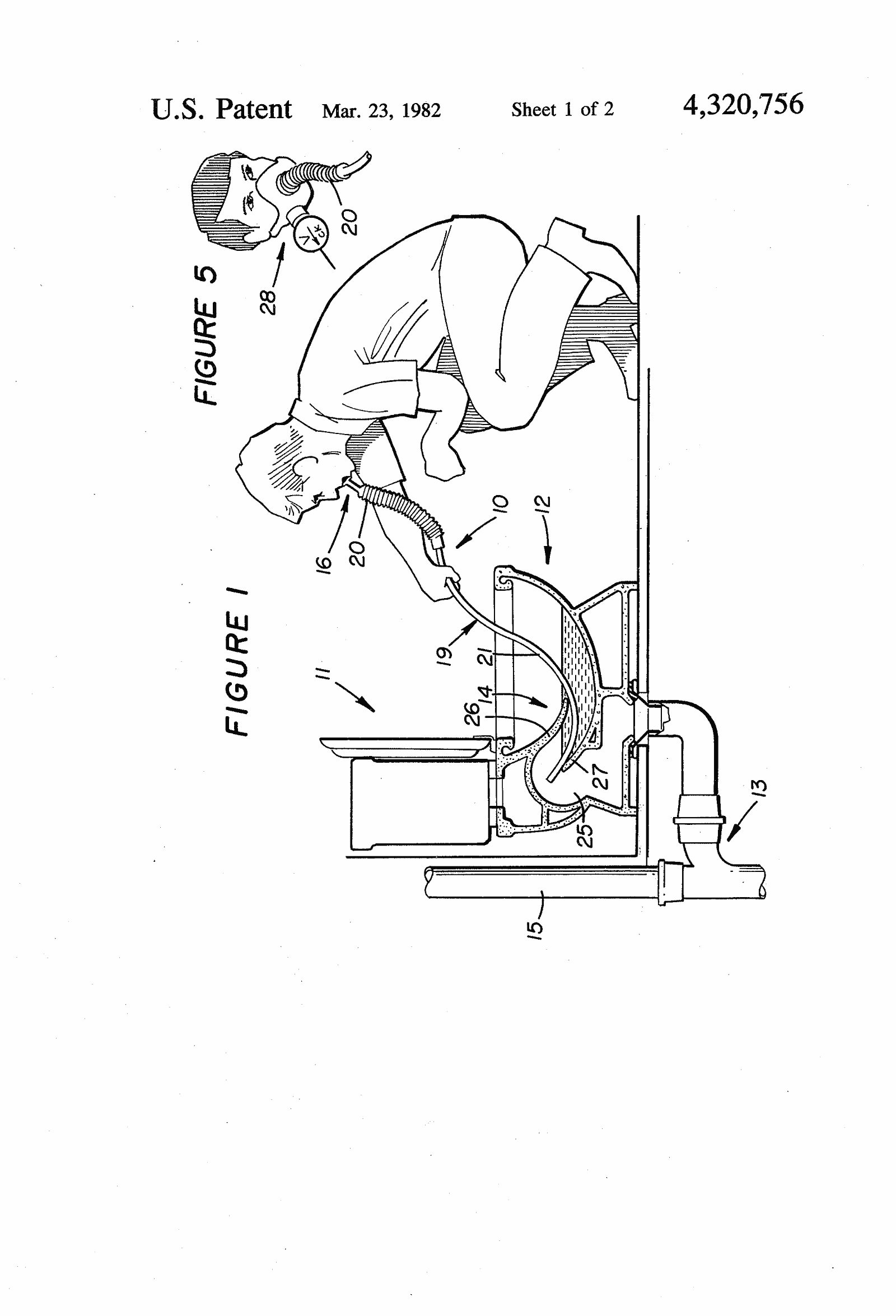
US4320756 was filed in 1980 and granted on March 23, 1982. The title is "Fresh-Air Breathing Device and Method." The drawings, which are the part everyone remembers, show a human figure kneeling on a bathroom floor, a mask strapped to their face, a tube running from the mask down into a toilet bowl.
The reasoning behind it is more sound than the image suggests.
The actual physics
In a high-rise building fire, the immediate killer is usually not flame but smoke. Smoke is hot, so it rises and accumulates at the ceiling, then banks downward as it fills a room. A person trapped in a smoke-filling room has minutes, and the safest air is near the floor — which is why fire safety instructions tell you to crawl.
The patent's insight goes one step further. A modern building's plumbing includes a vent stack — a pipe that runs from the drains up through the roof, open to the outside air, which exists to equalize pressure so that draining water doesn't siphon the water out of every trap in the building. That vent stack contains a column of relatively fresh outside air, connected to the bathroom through the toilet's drain, and sealed off from the smoke filling the room by the water in the toilet's trap.
The device in US4320756 is a tube, with a face mask on one end, long enough to reach past the water in the toilet bowl and into the drain. The trapped person inserts it, seals the mask to their face, and breathes the fresh air drawn down from the roof vent through the plumbing — waiting out the fire, or at least the smoke, with a supply of breathable air that the smoke cannot reach.
Why it's on every list
The toilet snorkel is a permanent fixture of "strangest patents ever granted" lists, and it is easy to see why: the central image is inherently absurd, and the practical scenario it imagines — a person calmly kneeling at a toilet with a breathing tube while their building burns — strains belief. Executing the plan would require knowing about the device, having it on hand, locating it during a fire, and then maintaining the composure to assemble and use it correctly in a smoke-filled bathroom.
But the patent was not a joke. It was filed in complete earnest by an inventor genuinely attempting to address a real and deadly problem — high-rise fire fatalities — using a correct piece of plumbing physics. It belongs to a particular and sympathetic category of strange patent: not the cynical or the trivial, but the earnest and slightly desperate — good reasoning, applied to a terrible problem, arriving at a solution that is almost, but not quite, usable.
See the original
The full text and figures of US4320756 — including the much-reproduced drawing of the kneeling figure — are on Google Patents.
Related stories
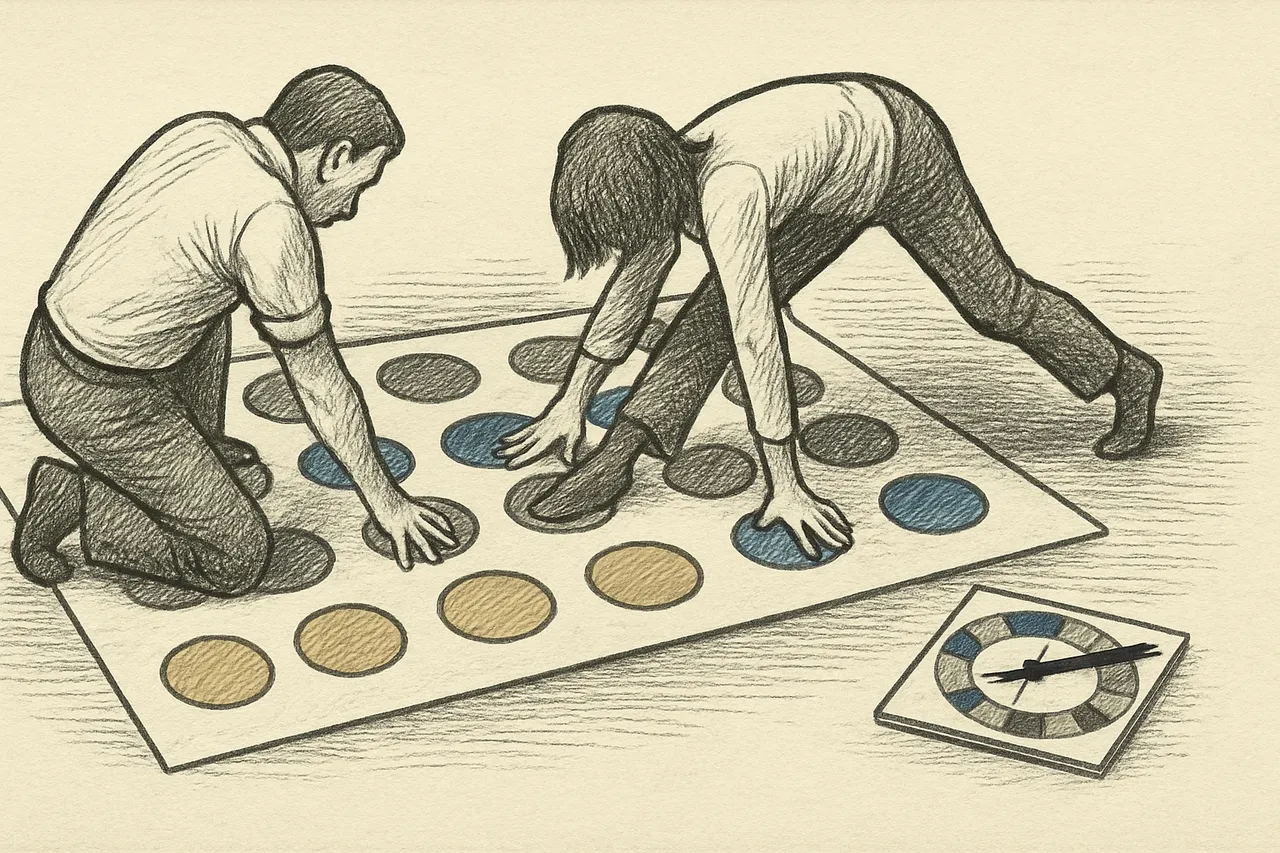
Twister's Patent Is Titled 'Apparatus for Playing a Game Wherein the Players Constitute the Game Pieces'
The patent title is the whole idea: the people are the pieces. Milton Bradley released the game in 1966, some retailers were wary of it, and critics found it a little too intimate. Then Johnny Carson played it on television with Eva Gabor, and the orders poured in.
Read the story →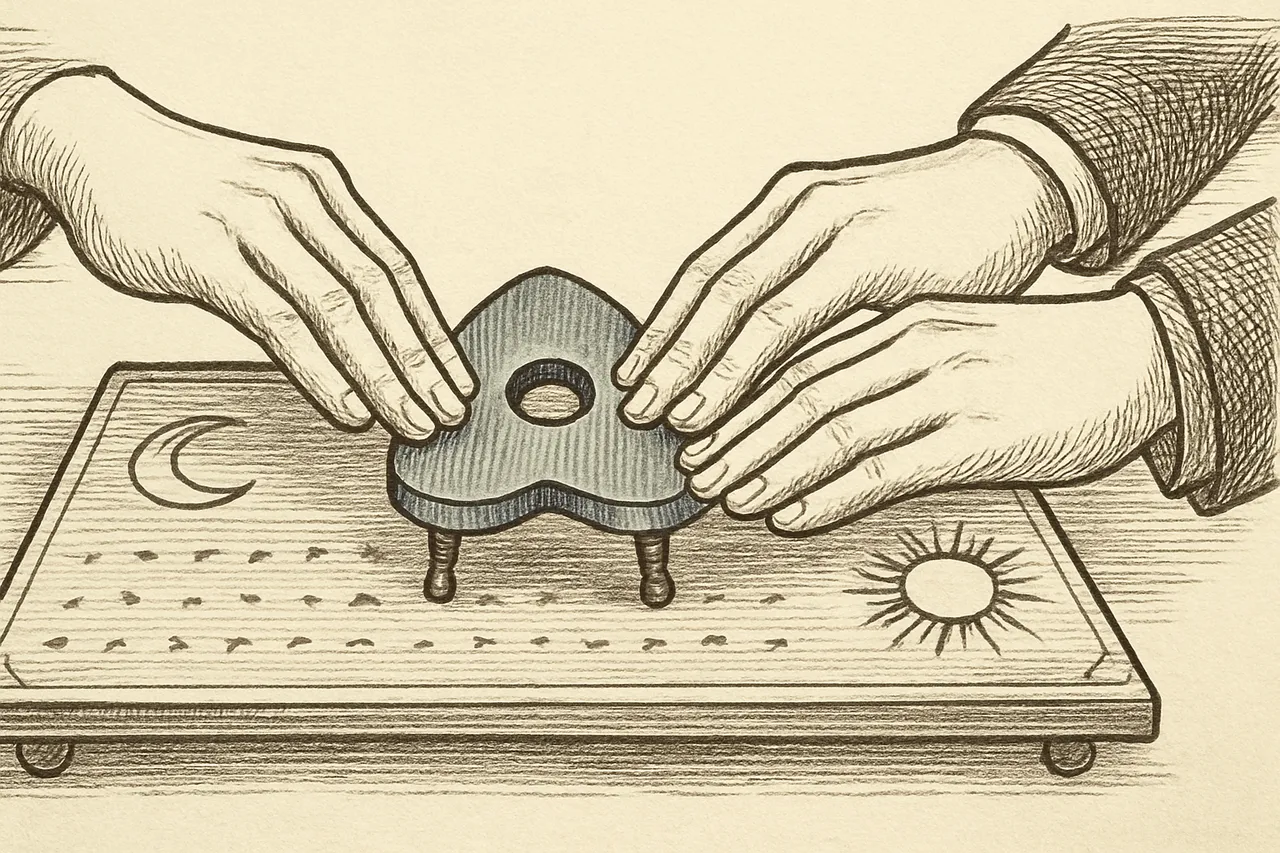
The Ouija Board's 1891 Patent Calls It an 'Egyptian Luck-Board' and Never Says How It Works
Elijah Bond's patent describes a board and a small pointer on legs, and makes no claim about what moves the pointer. The popular legend says the patent examiner demanded a demonstration first. The science, worked out decades before the patent, says the players are moving it themselves without realizing it.
Read the story →
The Statue of Liberty Was Patented in 1879, Seven Years Before It Was Dedicated
Auguste Bartholdi received US Design Patent 11,023 in February 1879 for a statue that would not stand in New York Harbor until 1886. Replicas were a fundraising tool for a project that was chronically short of money, and a design patent gave control over who could legally make them.
Read the story →
The Mousetrap Is the Most-Patented Device in American History. Almost None of Them Work.
More than four thousand mousetrap patents have been granted in the United States, and thousands more rejected. Roughly twenty have ever made money. The one that won was patented in 1894 and costs about a quarter.
Read the story →