Smucker's Patented the Peanut Butter and Jelly Sandwich
In 1999, the J.M. Smucker Company received a US patent on a 'Sealed Crustless Sandwich.' For seven years, the company sent cease-and-desist letters to small-town caterers, school lunch programs, and competing sandwich makers, before the patent was finally pulled apart on reexamination.
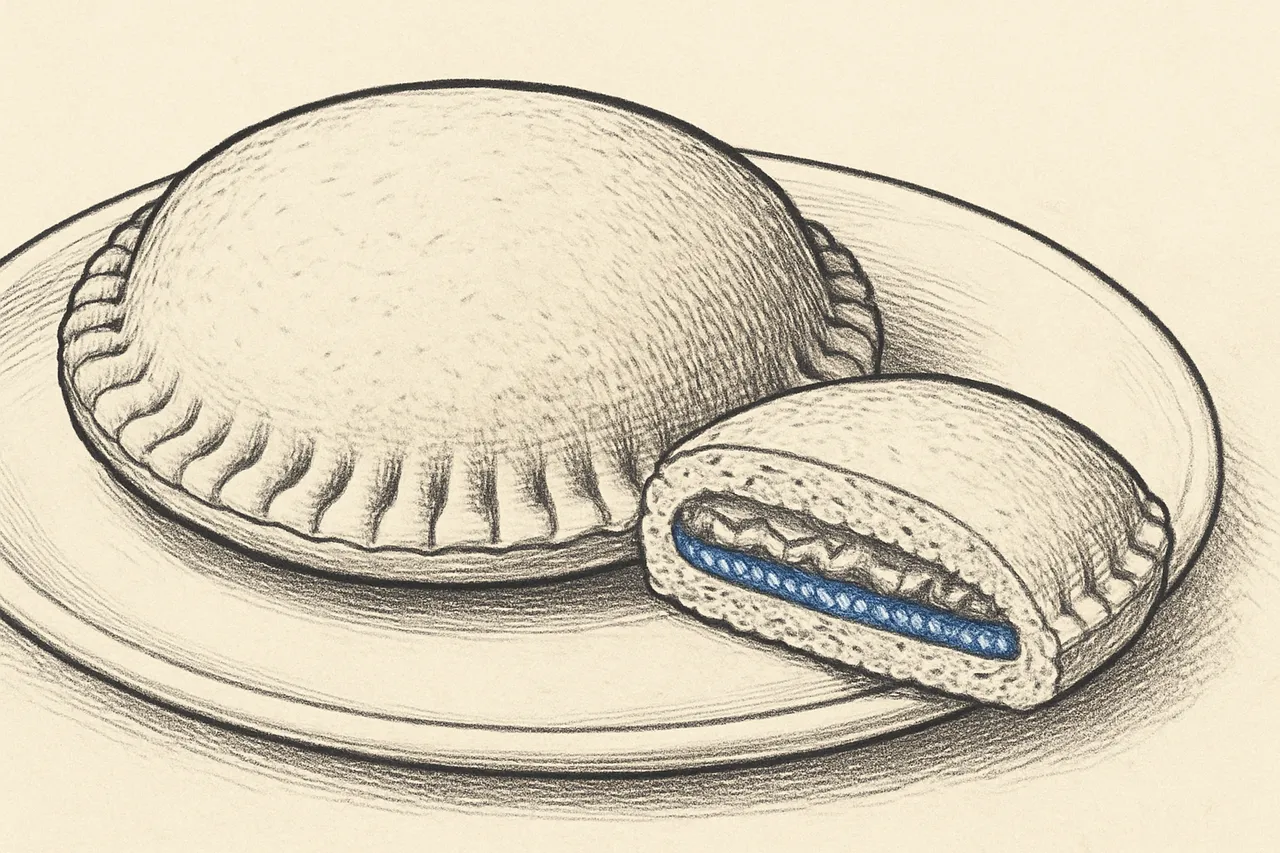
US6004596 was filed on December 8, 1997, and granted on December 21, 1999, to Albie L. Menendez of Orrville, Ohio. The patent rights were assigned to a small Ohio company called Menusaver, Inc., which was acquired shortly after by the J.M. Smucker Company. The title is "Sealed Crustless Sandwich." The drawings show a circular sandwich viewed from above and in cross-section, with a crimped sealed edge running around the perimeter.
The patent text describes a sandwich, made of two slices of bread, in which the filling — peanut butter on one side, jelly on the other — is sealed inside by crimping the edges of the bread together with sufficient force to form a hermetic seal. The crust of the bread is then trimmed off. The result is a circular, sealed, crustless peanut-butter-and-jelly sandwich. It is the Uncrustable. Smucker's had patented the Uncrustable.
What the patent said the invention was
The claims, as approved, were astonishingly broad. They covered, among other things, any sandwich with sealed crimped edges; any crustless sandwich containing one or more fillings; any sandwich filling consisting of peanut butter on one side and fruit jelly on the other; and any process for making such a sandwich. The patent did not restrict itself to mass-produced frozen sandwiches sold under the Uncrustables trademark. It covered, by claim language, every crimped-edge crustless PB&J ever produced by anyone, anywhere, for any purpose.
Smucker's took this seriously. Between 2000 and 2007, the company sent cease-and- desist letters to a string of small operators making similar sandwiches: a tiny sandwich shop in Michigan, a regional school-lunch supplier, a competing frozen- sandwich startup called Albie's Foods, and at least one home-based catering business. Most recipients folded immediately. Albie's Foods (no relation to the patent's named inventor, Albie Menendez — a coincidence neither party found amusing) fought back. In 2005, with the support of patent-reform advocates and pro bono legal counsel, Albie's formally requested USPTO reexamination of the patent.
The reexamination
The reexamination was an extended embarrassment for the patent office. The examiner who reviewed the original 1999 application had failed to identify substantial prior art — including, most damningly, a 1942 patent for a "sealed pie" with crimped edges that had described an essentially identical mechanical technique, and a long history of crimped-edge sealed pasties and dumplings going back centuries. The reexamination also turned up earlier descriptions of crustless sandwiches in cookbooks dating to the 1920s.
In April 2007, the USPTO formally invalidated the broadest claims of US6004596. Smucker's appealed. The appeal was denied. The narrower remaining claims — covering the specific Uncrustables manufacturing process — survived, but the company's ability to use the patent against competing sandwich makers was effectively gone.
What it actually proved
The Smucker's PB&J patent became, for the next decade, the most-cited example in patent-reform advocacy of how badly broken the post-1990s USPTO grant process had become. The patent had been granted with effectively no functional prior-art search. The broadest claims would have given a single company a monopoly on a food preparation technique that had been in widespread use for a hundred years. Enforcement had specifically targeted small businesses that lacked the resources to mount a legal defense.
Uncrustables themselves continued to sell well. The product is, by industry estimates, one of the largest single product lines in Smucker's portfolio, generating substantially over a billion dollars in annual revenue. The frozen sandwich is a genuinely convenient lunch product, and consumers have no particular grievance against it. The grievance, when it existed, was always about the patent — about what the patent attempted to claim, and what the patent office had let it attempt to claim without serious examination.
See the original
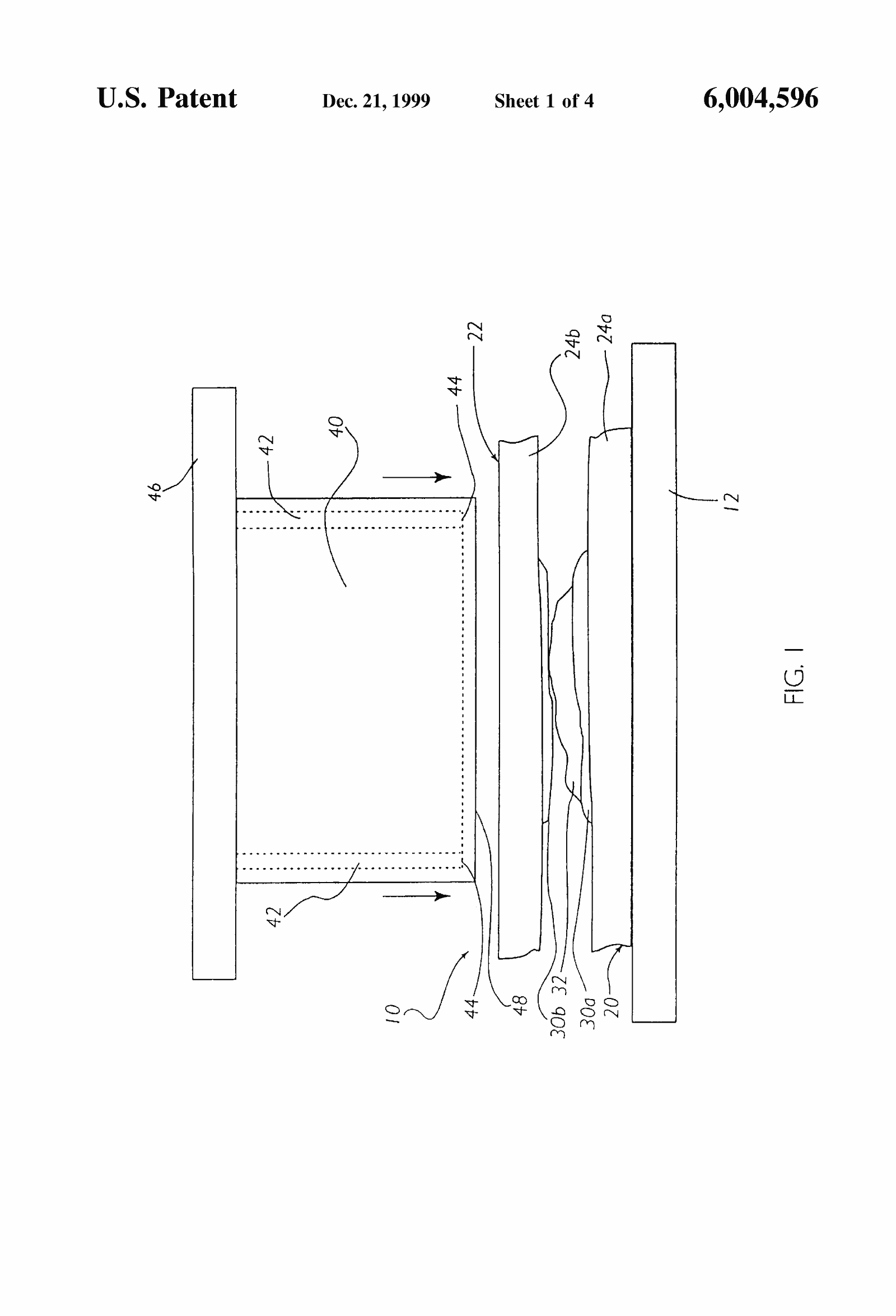
The full text and figures of US6004596 are on Google Patents.
Related stories
Twister's Patent Is Titled 'Apparatus for Playing a Game Wherein the Players Constitute the Game Pieces'
The patent title is the whole idea: the people are the pieces. Milton Bradley released the game in 1966, some retailers were wary of it, and critics found it a little too intimate. Then Johnny Carson played it on television with Eva Gabor, and the orders poured in.
Read the story →
The Mousetrap Is the Most-Patented Device in American History. Almost None of Them Work.
More than four thousand mousetrap patents have been granted in the United States, and thousands more rejected. Roughly twenty have ever made money. The one that won was patented in 1894 and costs about a quarter.
Read the story →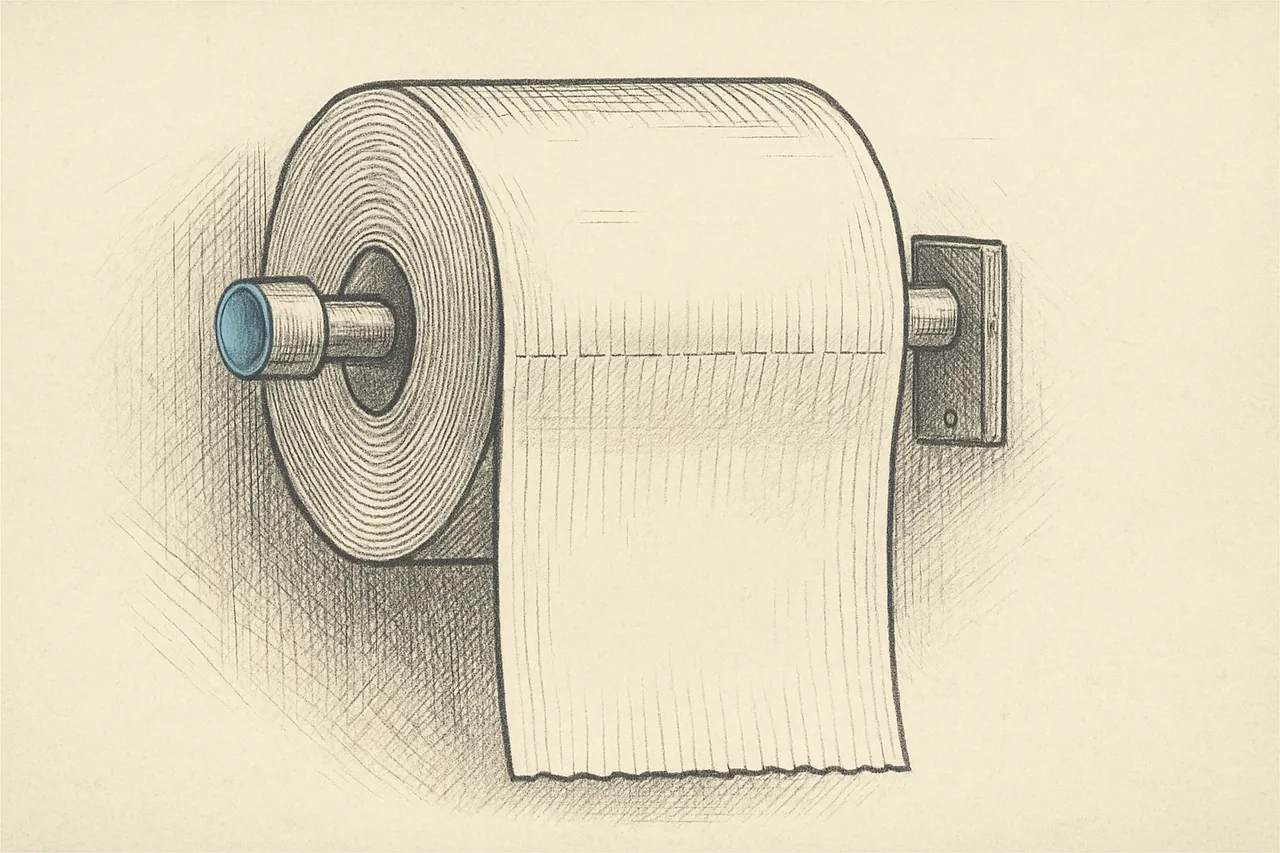
The 1891 Patent That Settles the Toilet Paper Argument: It's Over
Households have argued about whether the roll should hang over or under for more than a century. The original patent drawing, filed by Seth Wheeler in 1891, shows the paper coming over the top. The inventor's own diagram is not ambiguous.
Read the story →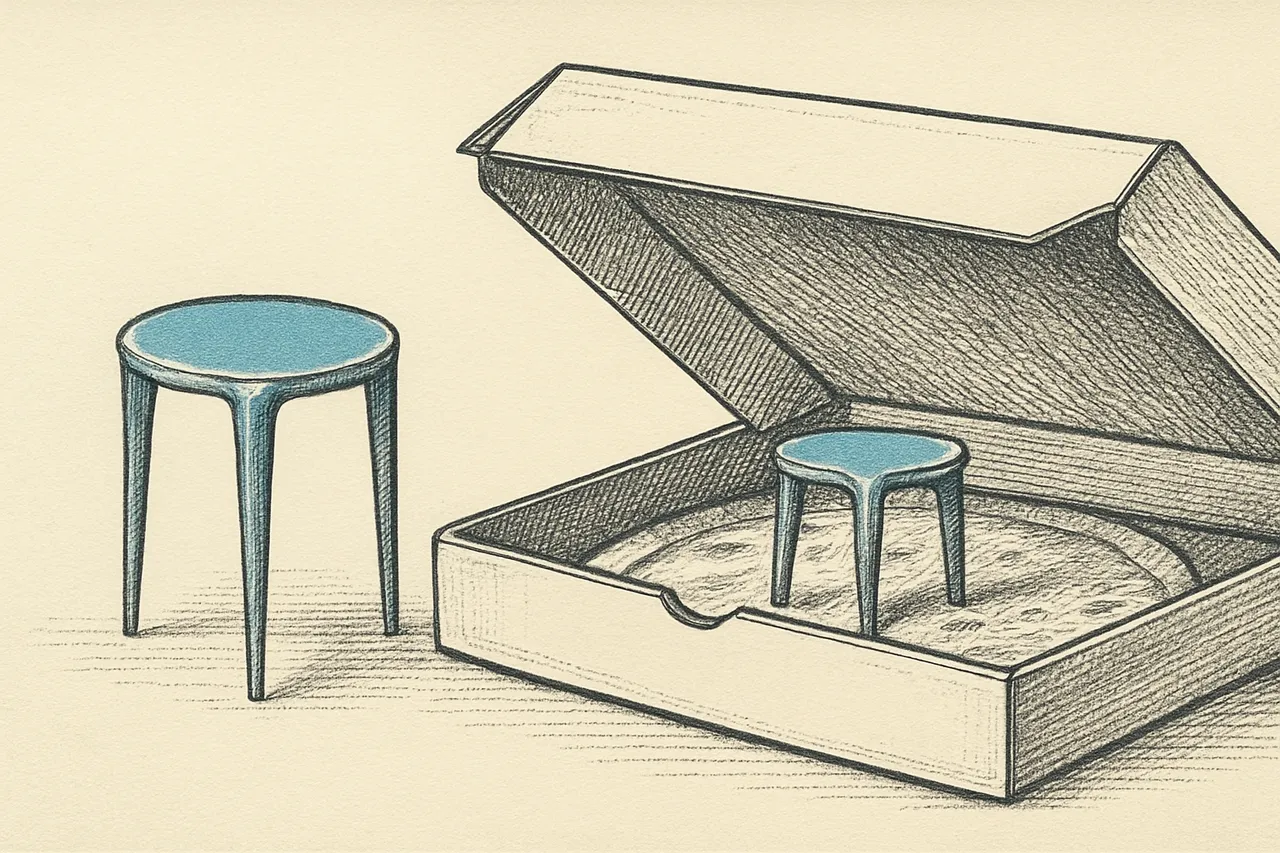
Someone Patented the Little Plastic Table in Your Pizza Box
The three-legged plastic stool in the middle of a delivered pizza has a name, a purpose, and a 1985 United States patent. It exists because a hot cardboard lid sags, and a sagging lid ruins the cheese.
Read the story →