The Patent for Birthing a Baby by Centrifugal Force
In 1965, a New York couple named George and Charlotte Blonsky received a US patent for a machine that spun a woman in labor on a rotating turntable, using centrifugal force to deliver the child. They were entirely sincere. They had detailed engineering drawings.
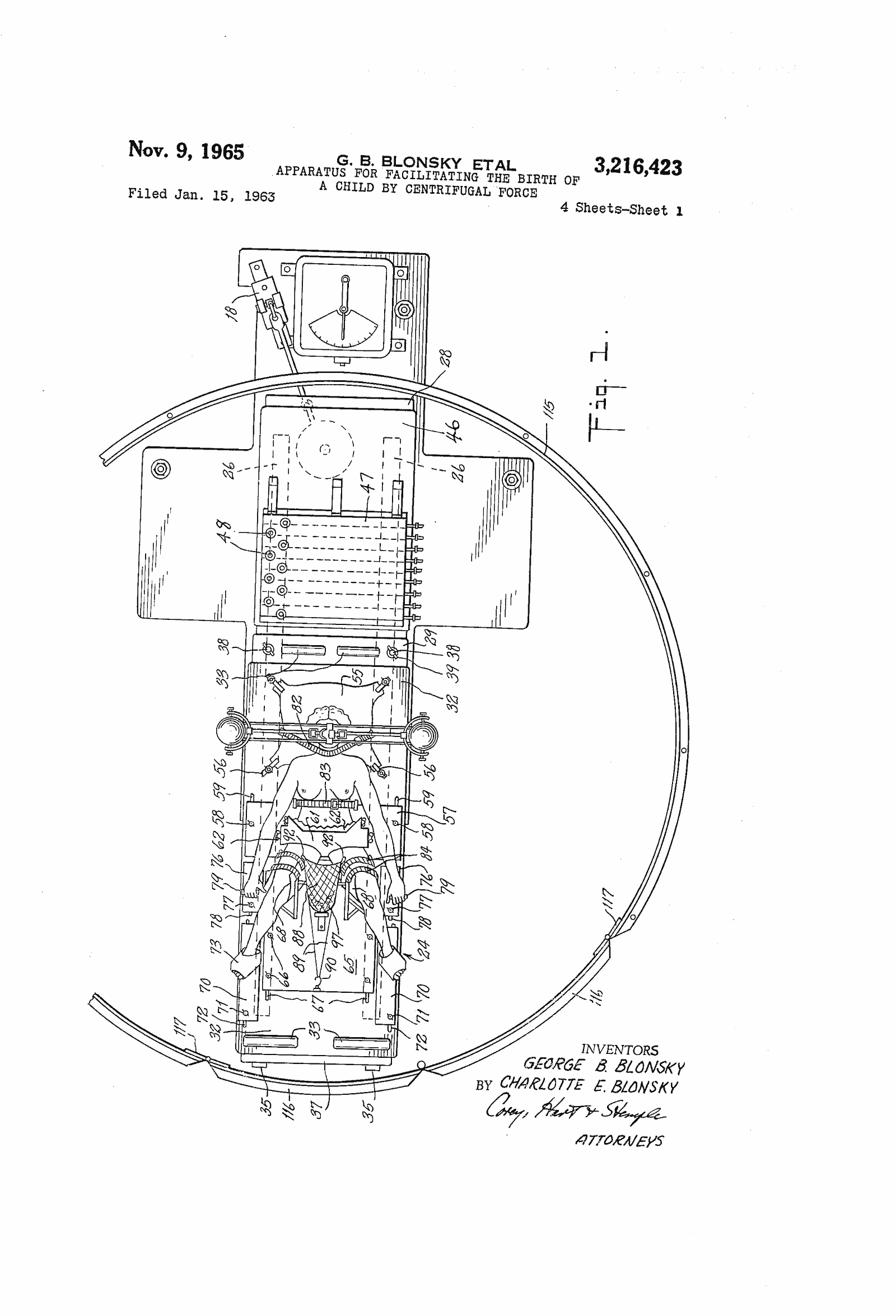
US3216423 was filed on November 9, 1962, and granted three years later, on November 9, 1965. The applicants are listed as George B. Blonsky and Charlotte E. Blonsky, both of New York City. The title is "Apparatus for Facilitating the Birth of a Child by Centrifugal Force."
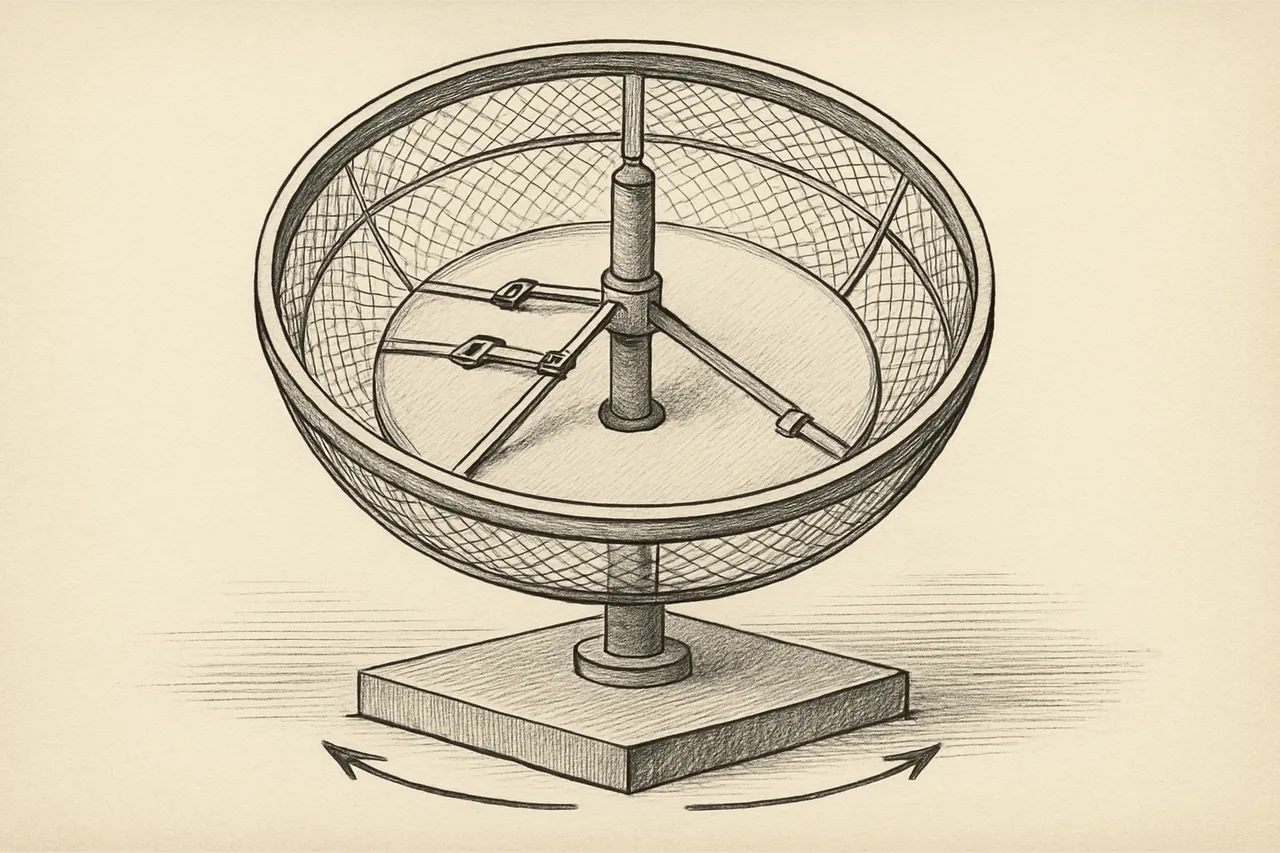
The patent runs six pages and includes seven sheets of detailed mechanical drawings. The premise, stated in the opening paragraphs, is that modern women — described by the Blonskys as "civilized women, who often do not have the opportunity to develop the muscles needed in giving birth" — could benefit from mechanical assistance in delivery. The mechanical assistance proposed is a large rotating turntable, on which the woman in labor would lie flat, head toward the center, feet toward the rim. Restraints would secure her in place. The turntable would then spin.
Centrifugal force, the Blonskys explain in careful prose, would assist the contractions by pulling the child outward toward the rim of the turntable, where, upon delivery, it would be caught by a stretched cloth net positioned around the outside perimeter. A small motor and gearing mechanism would allow the operator to adjust the speed. The patent specifies a maximum recommended rotation of approximately 82 RPM, generating roughly 7G of centrifugal force at the mother's pelvis.
How sincere it was
The Blonskys appear to have been entirely sincere. George Blonsky was a mining engineer who had emigrated from Greece; Charlotte was his wife, listed as co-inventor in keeping with their joint development of the idea over several years. They had no children of their own — the patent file notes this — and had developed the apparatus, by their account, after observing animal births in which the natural forces involved seemed mechanically advantageous in ways human anatomy did not preserve.
The patent application was reviewed by examiner Lawrence W. Trapp, who, finding no prior art on the specific question of childbirth-by-centrifuge, granted it. The device was never built. No medical institution showed interest. Obstetric anesthesia and the post-war boom in hospital-based delivery had already made the problem the Blonskys were trying to solve — the mechanical difficulty of unassisted delivery — increasingly moot.
The Ig Nobel
In 1999, the patent was awarded the Ig Nobel Prize for Managed Health Care. Both Blonskys had been dead for over twenty years by then. The prize ceremony at Harvard featured a brief reading from the patent itself, including the recommended rotation speeds and the dimensions of the catching net.
The patent is now a fixture of medical-ethics curricula and patent-policy seminars. It is often paired with the swing patent and the cat-laser patent as examples of what the USPTO will grant when no prior art has been formally documented in the patent literature itself, regardless of whether the idea would survive contact with practitioners in the relevant field.
The Blonskys themselves seem to have considered the patent a serious contribution to obstetric science. They were, at minimum, the only people in history to have produced a fully engineered set of plans for a machine that no doctor has ever asked them to build.
See the original
The full text and figures of US3216423 — including the spinning turntable, the restraint harness, and the perimeter catching net — are on Google Patents.
Related stories
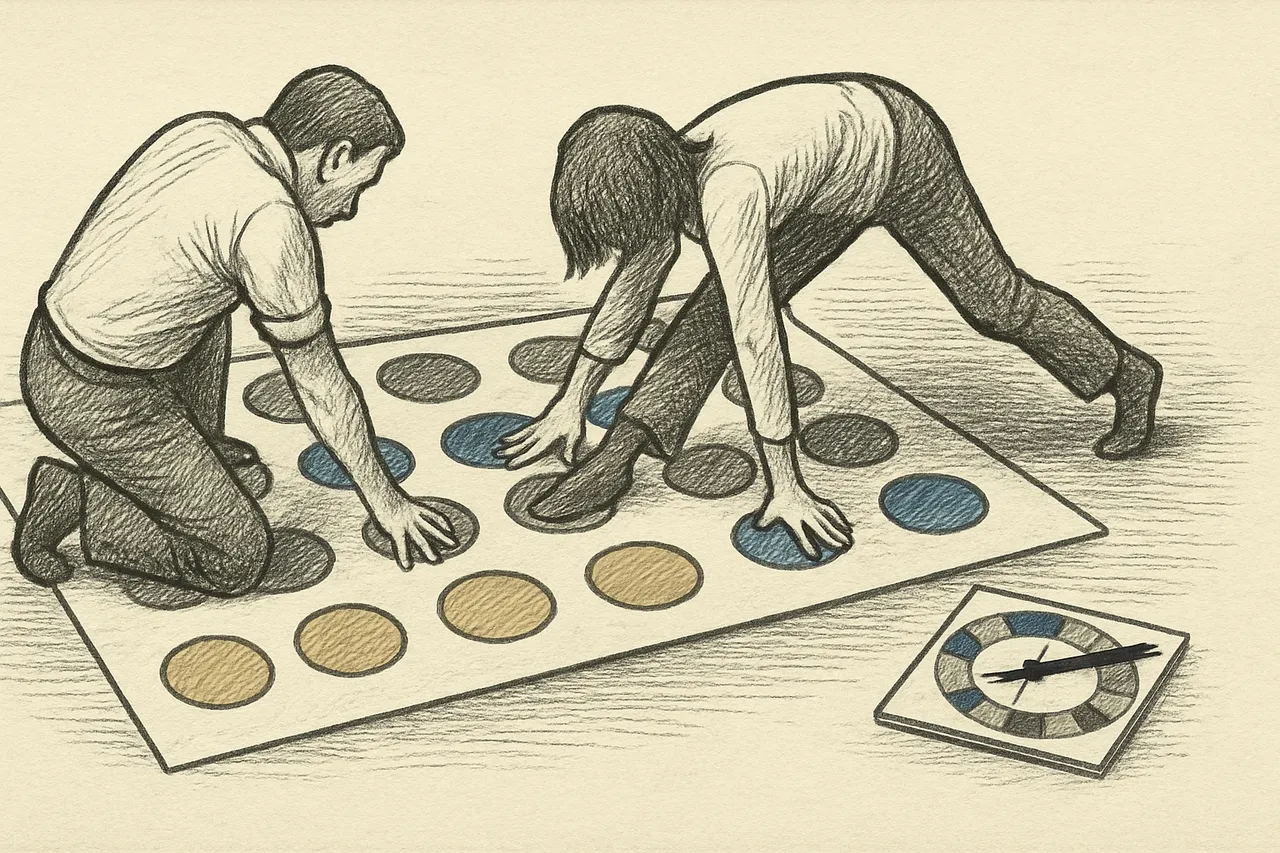
Twister's Patent Is Titled 'Apparatus for Playing a Game Wherein the Players Constitute the Game Pieces'
The patent title is the whole idea: the people are the pieces. Milton Bradley released the game in 1966, some retailers were wary of it, and critics found it a little too intimate. Then Johnny Carson played it on television with Eva Gabor, and the orders poured in.
Read the story →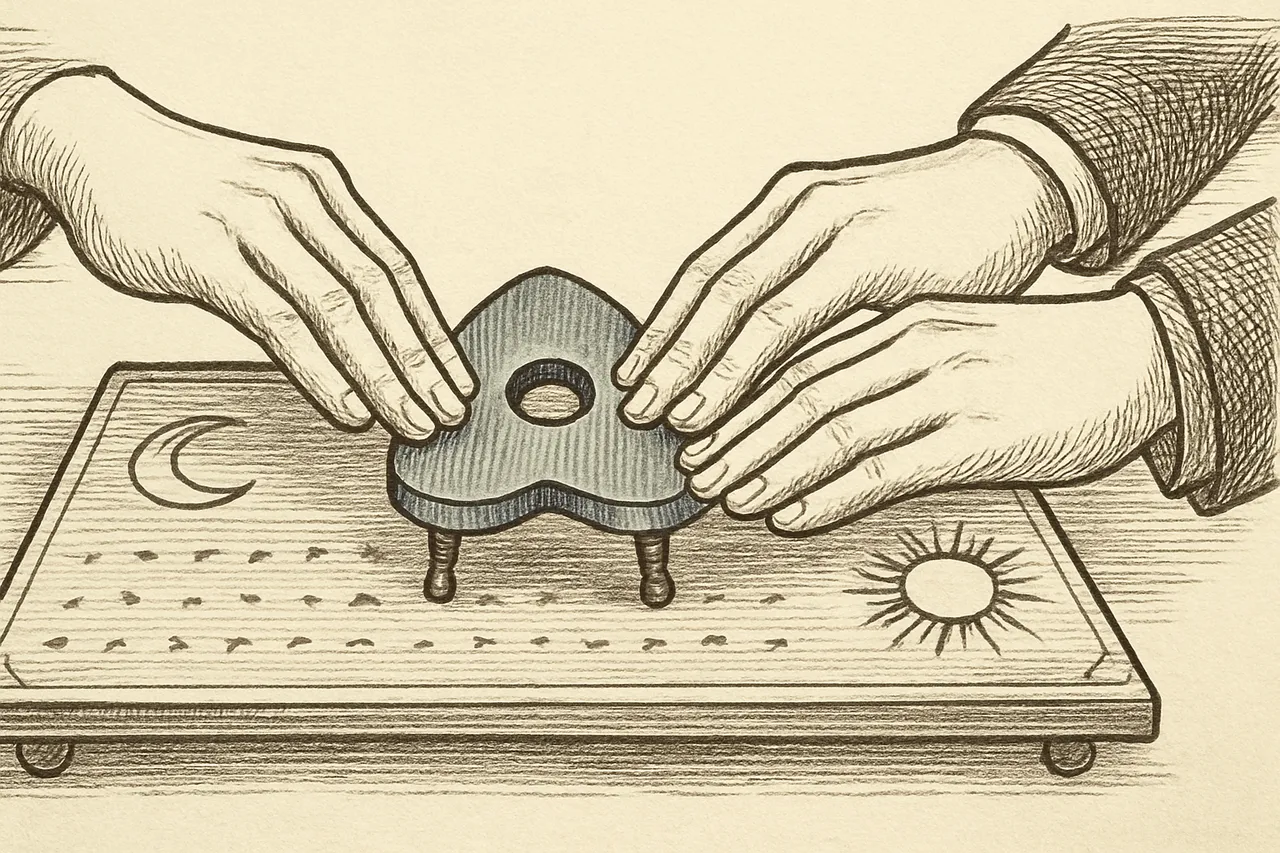
The Ouija Board's 1891 Patent Calls It an 'Egyptian Luck-Board' and Never Says How It Works
Elijah Bond's patent describes a board and a small pointer on legs, and makes no claim about what moves the pointer. The popular legend says the patent examiner demanded a demonstration first. The science, worked out decades before the patent, says the players are moving it themselves without realizing it.
Read the story →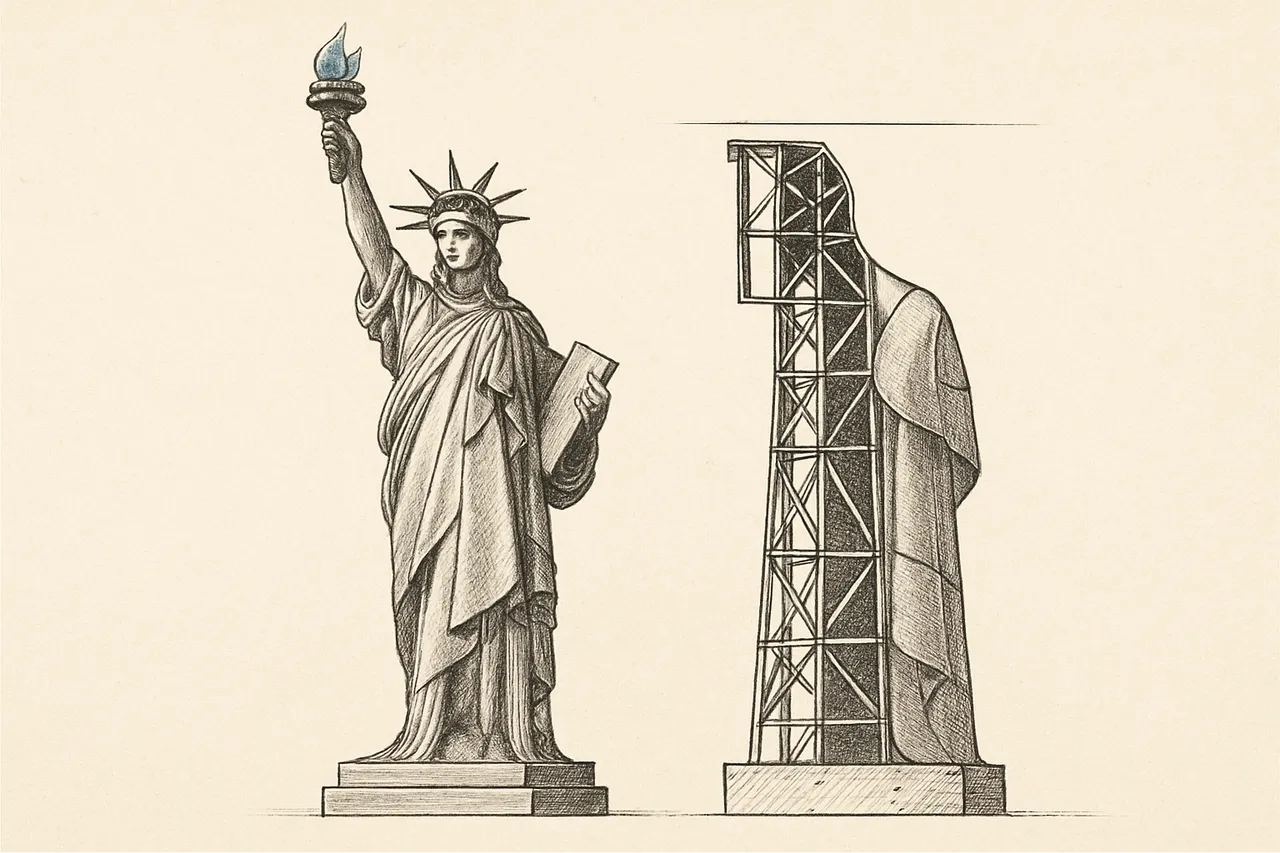
The Statue of Liberty Was Patented in 1879, Seven Years Before It Was Dedicated
Auguste Bartholdi received US Design Patent 11,023 in February 1879 for a statue that would not stand in New York Harbor until 1886. Replicas were a fundraising tool for a project that was chronically short of money, and a design patent gave control over who could legally make them.
Read the story →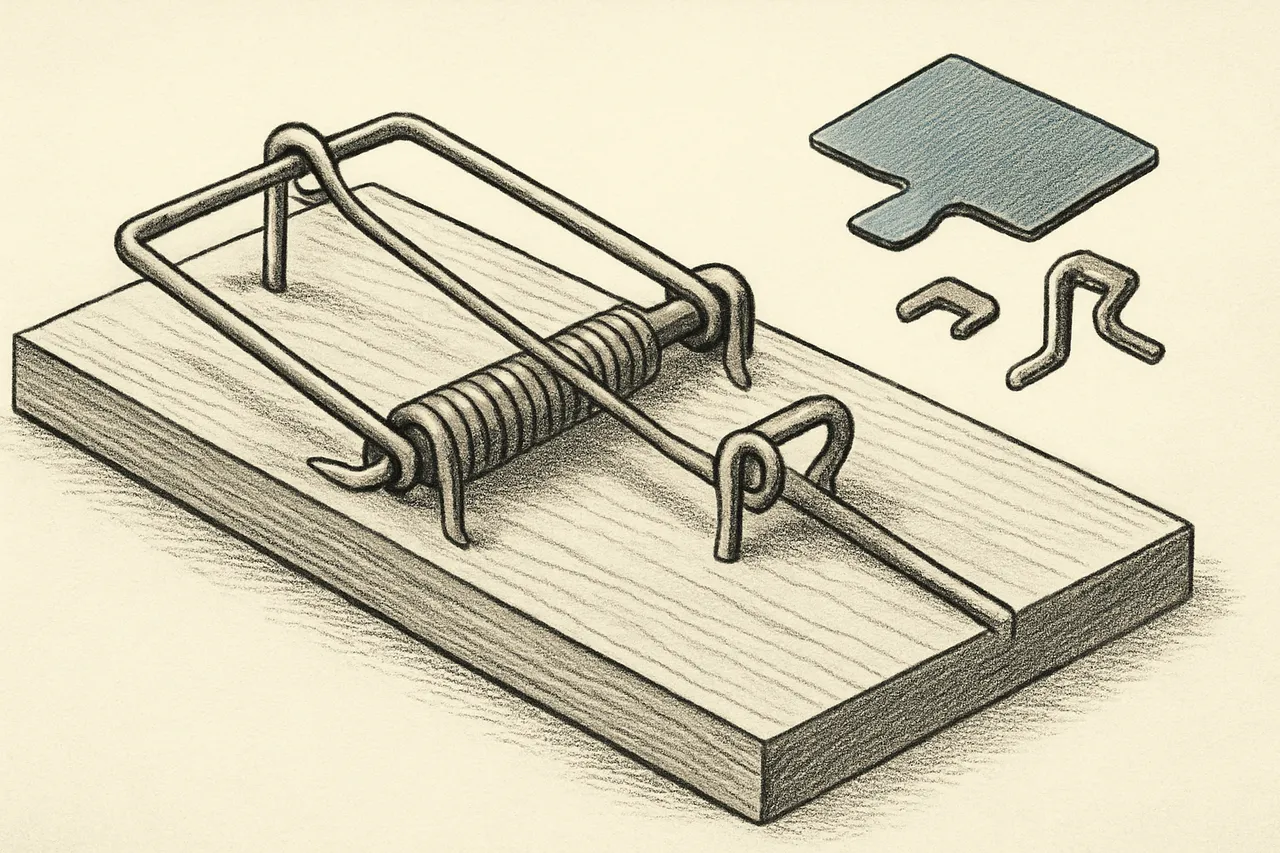
The Mousetrap Is the Most-Patented Device in American History. Almost None of Them Work.
More than four thousand mousetrap patents have been granted in the United States, and thousands more rejected. Roughly twenty have ever made money. The one that won was patented in 1894 and costs about a quarter.
Read the story →