Norway Built a Monument to the Man Who Invented the Paper Clip. He Didn't Invent It.
Johan Vaaler patented a paper clip in 1899. It was not the clip we use, which was already being manufactured in Britain. Norway made him a national hero anyway — and during the Nazi occupation, the clip became something more than office equipment.
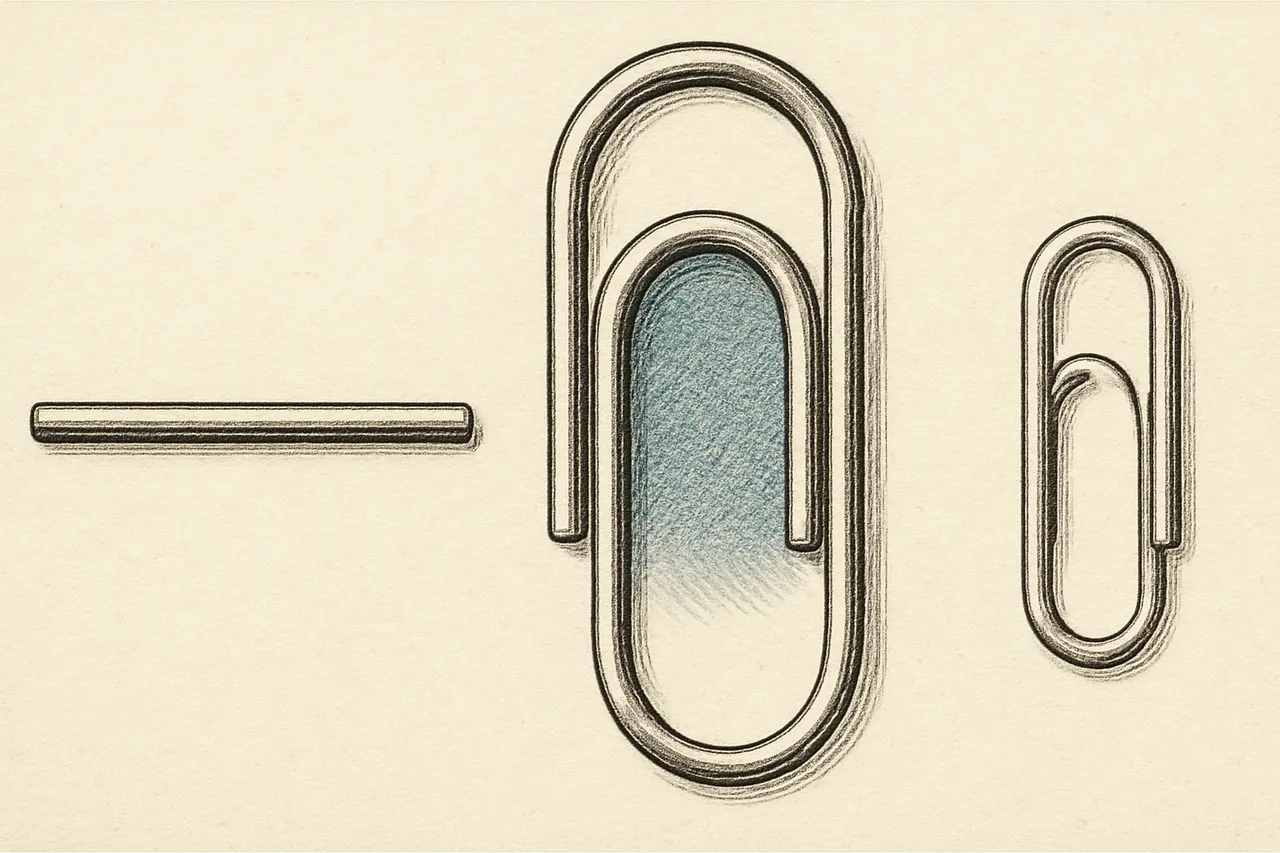
US675761 is one of several American patents covering bent-wire paper fasteners around the turn of the twentieth century. The paper clip is a useful case study in how invention credit actually gets assigned, because the man most famously credited with it did not invent the object in question, and the reasons the myth stuck are more interesting than the truth.
The Gem
The clip you are picturing — the flat double-oval loop of springy wire — is called the Gem. It was in production in Britain by the 1890s, manufactured by the Gem Manufacturing Company, and it was never patented in the form that won. It simply appeared, was obviously good, and spread.
Its virtue is that it is a single piece of wire that exploits its own springiness: the loops separate under load and clamp back, gripping paper by tension without piercing it. There are dozens of patented alternatives — clips with teeth, clips with clamps, clips shaped like owls and triangles — and the plain Gem beat all of them because it is cheap, snag-resistant, and works.
Johan Vaaler
Johan Vaaler was a Norwegian inventor who, in 1899, patented in Germany and later in the United States a wire paper fastener of his own design. His clip was not the Gem. It lacked the crucial second full loop, which meant it lacked the springy grip that makes the Gem work; his design had to be manipulated more awkwardly and held less well.
By the time Vaaler filed, the superior Gem was already being sold. His clip was never manufactured commercially in any significant quantity.
The myth began in the 1920s, when a Norwegian engineering dictionary and subsequent national accounts credited Vaaler with inventing the paper clip. Norway, a small country that had only become fully independent in 1905, embraced the claim. It was repeated for decades, taught in schools, and eventually memorialized: a giant paper-clip sculpture was erected outside a school in Oslo, and Norway issued a commemorative stamp.
The sculpture, in a detail that historians of the object find delicious, is shaped like a Gem — the clip Vaaler did not design.
The occupation
There is a part of the story that redeems the whole affair.
During the German occupation of Norway in the Second World War, Norwegians began wearing paper clips on their lapels as a silent sign of resistance and national unity — partly on the strength of the belief that the clip was a Norwegian invention, and partly for the plain symbolism of the thing: a small object whose entire function is holding things together.
Wearing one could get you arrested. People wore them anyway.
So the historical record is that Johan Vaaler patented a clip that was not the paper clip, was credited with an invention that was not his, and became the namesake of a symbol that genuinely mattered to people under occupation. The credit is wrong. The monument is, in a roundabout way, deserved.
See the original
The full text and figures of US675761 are on patents.us.
Related stories
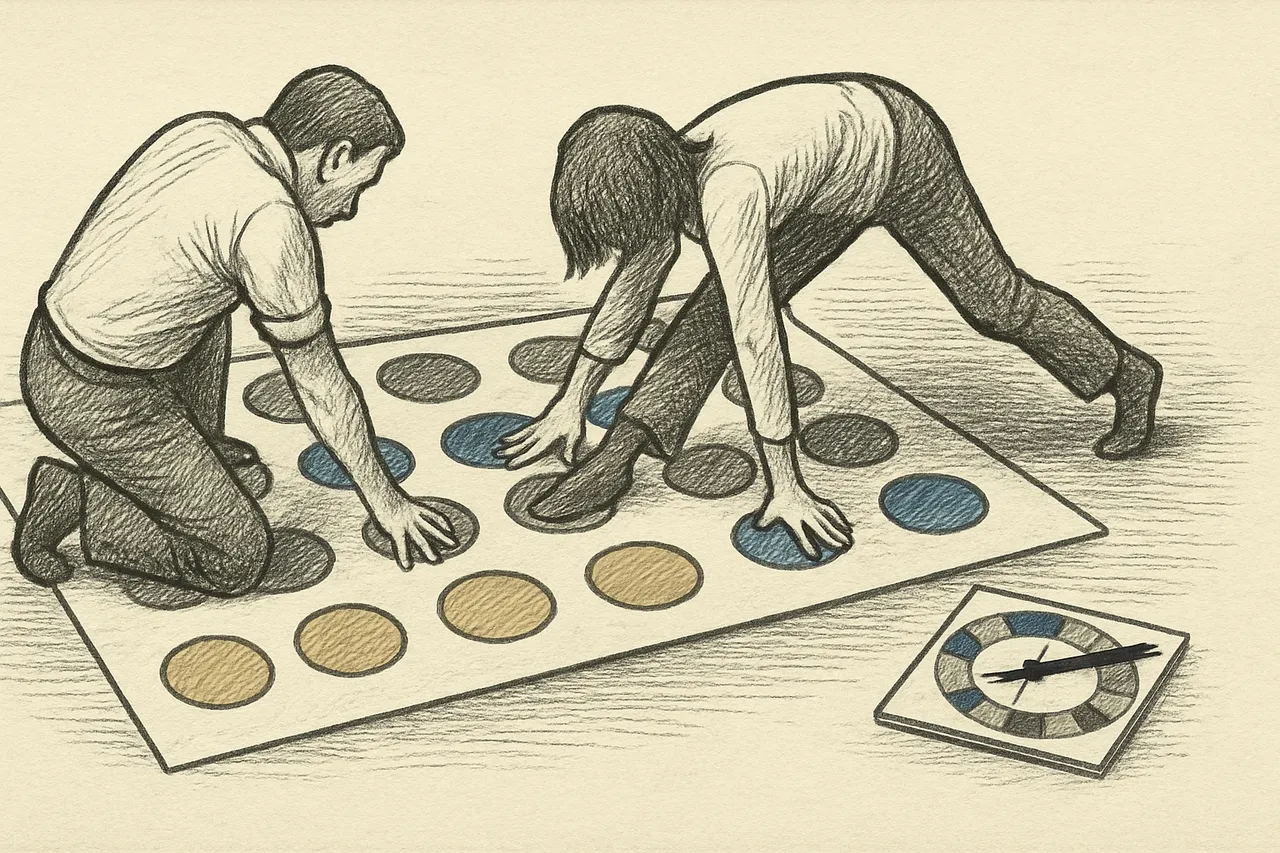
Twister's Patent Is Titled 'Apparatus for Playing a Game Wherein the Players Constitute the Game Pieces'
The patent title is the whole idea: the people are the pieces. Milton Bradley released the game in 1966, some retailers were wary of it, and critics found it a little too intimate. Then Johnny Carson played it on television with Eva Gabor, and the orders poured in.
Read the story →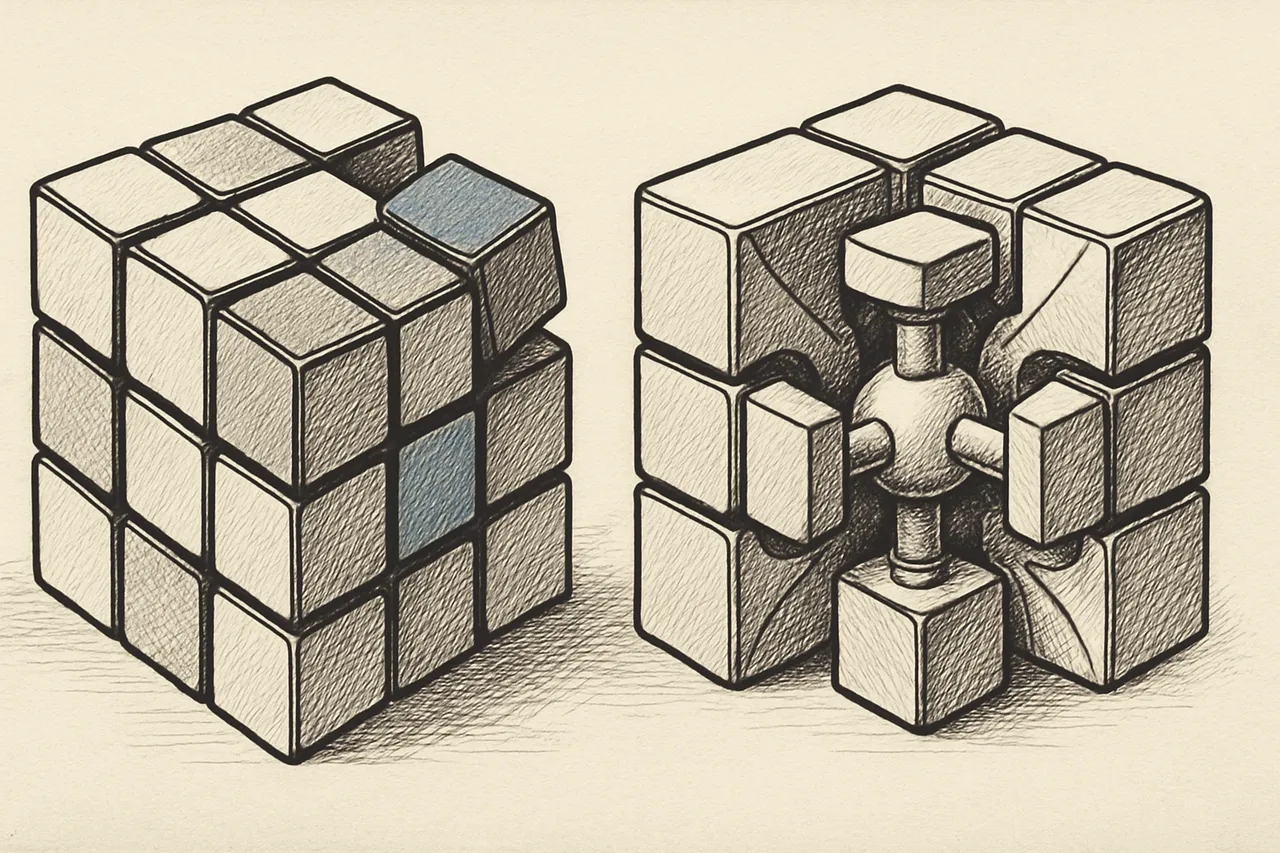
Ernő Rubik Needed About a Month to Solve His Own Cube. An American Court Later Found It Infringed an Earlier US Patent.
Rubik built the first cube in Budapest in 1974 as a way to think about three-dimensional movement. The clever part is how it holds together when most of its pieces are not attached to anything. In the United States, a chemist named Larry Nichols had patented a related puzzle in 1972, and his company sued.
Read the story →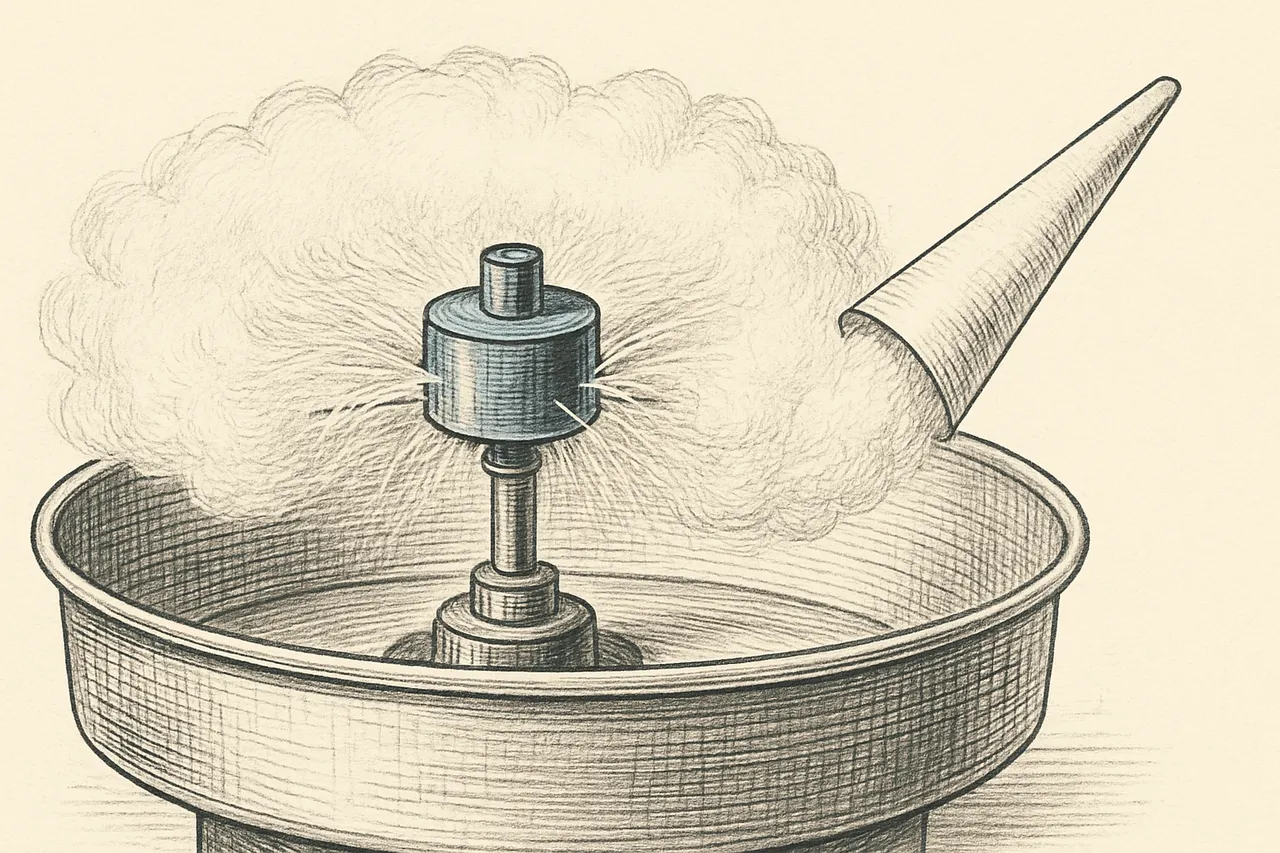
A Dentist Co-Invented the Cotton Candy Machine, and It Was Sold at the 1904 World's Fair as Fairy Floss
William Morrison was a dentist and John Wharton was a candy maker. Their machine melted sugar and flung it through tiny holes so that it cooled into threads finer than hair before it could crystallize. They filed in 1897, and at the St. Louis World's Fair it was a sensation.
Read the story →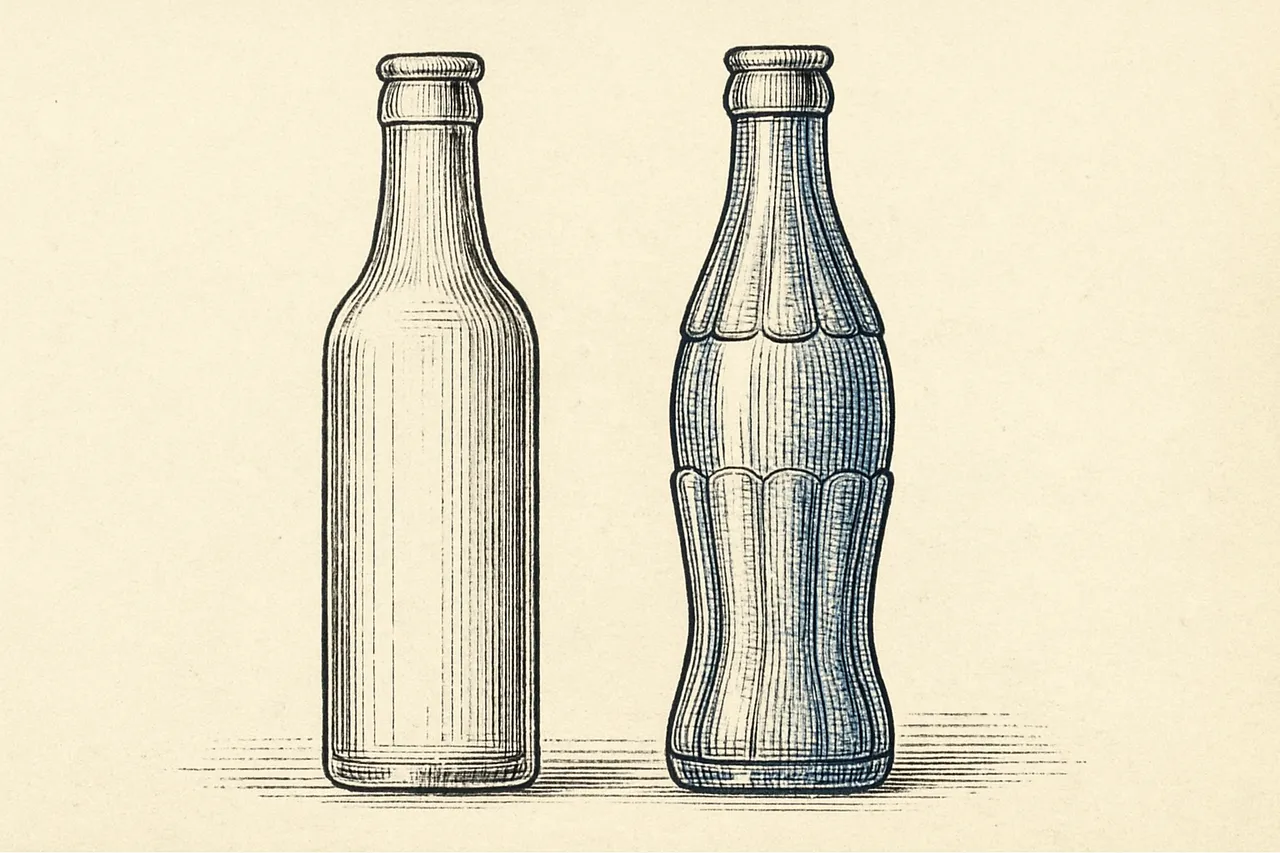
Coca-Cola Asked Glassmakers for a Bottle You Could Recognize in the Dark, or Broken on the Ground
In 1915 Coca-Cola had an imitation problem, since competitors used the same straight-sided bottles and borrowed-sounding names. It challenged glass companies to design a bottle identifiable by touch alone. The winner came from a small glassworks in Terre Haute, Indiana, and the name on the patent is not the name of the man who drew it.
Read the story →