The Frisbee Began as a Pie Tin, a Flying-Saucer Hoax, and a Man Selling Discs in a Costume
Fred Morrison sold his plastic disc at county fairs by pretending to sell an invisible wire — 'the disc is free, the wire costs a dollar.' The saucer craze gave him a name. Then a toy company renamed it after a pie company.
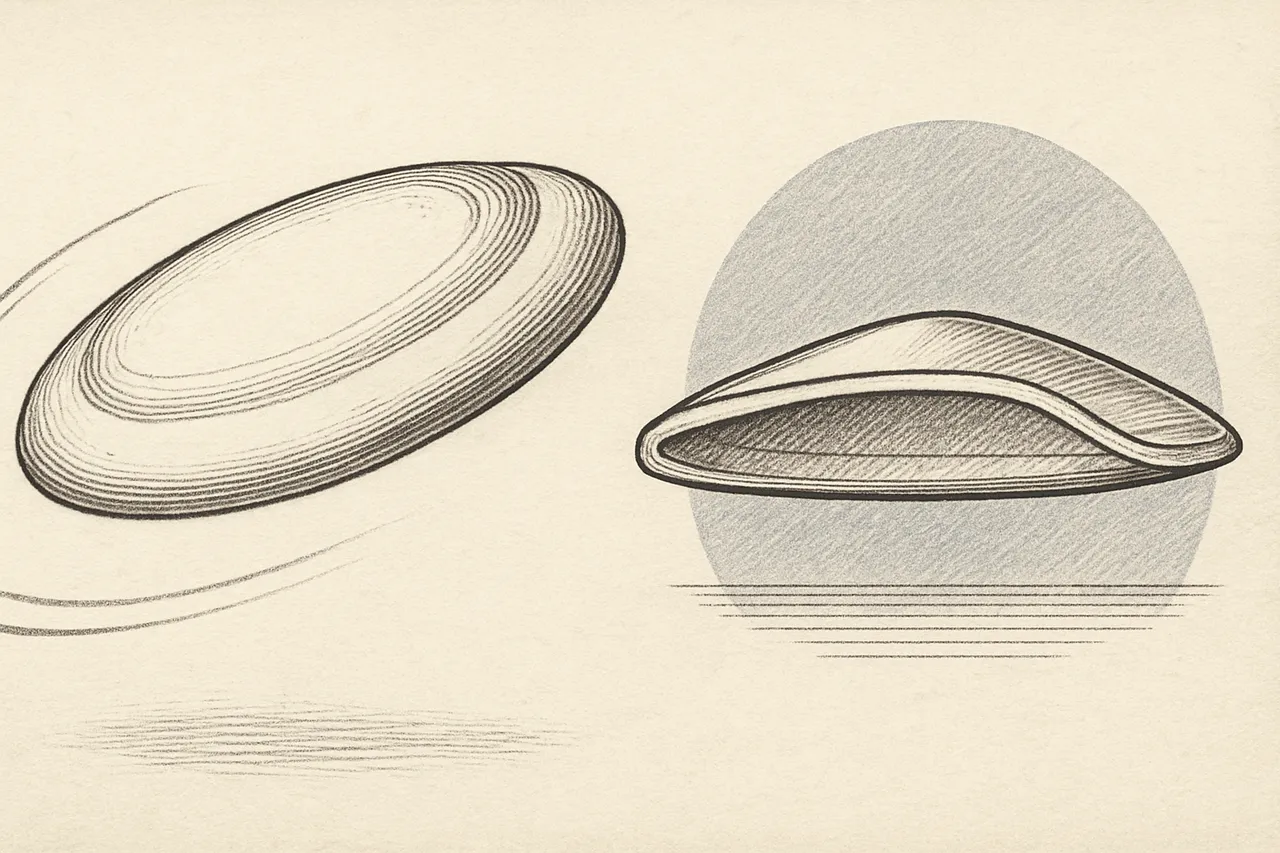
US3359678 was granted to Walter Frederick Morrison on December 26, 1967. The title is "Flying Saucer." Morrison had been throwing, refining, and selling flying discs for twenty years by then, and the object had already passed through several names, one hoax, and a costume.
The origin, by Morrison's own repeated telling, was a cake pan. In 1937, on a beach in Los Angeles, he and his future wife Lucile were tossing a popcorn-can lid, which dented, and then a cake pan, which flew better. A stranger offered them a quarter for the pan — which had cost five cents — and Morrison noticed that there was money in throwing things.
He flew fighters in the Second World War and was shot down and held as a prisoner of war; he later said his understanding of airfoils and lift came in part from that flying. After the war he sketched a disc he called the Whirlo-Way.
Riding the saucer craze
In 1947 the Kenneth Arnold sighting and then the Roswell incident set off the American flying-saucer panic. Morrison, alert to a marketing opportunity, renamed his disc the Flyin-Saucer. He and a partner produced them and sold them at county fairs and beaches around southern California.
The sales technique was pure carnival. Morrison would set up with a partner some distance away and offer the discs with the line that he was actually selling an invisible wire — a hundred feet of it for a dollar — and the disc came free with the wire. The pitch was a joke everyone was in on, and it drew a crowd, which was the point. He sometimes worked in a costume befitting the saucer theme.
In 1955 he designed a better disc, with a more refined aerodynamic profile, and called it the Pluto Platter — again leaning on the space enthusiasm of the era. This is the design that underlies the modern Frisbee, and the shape described in his patent: a curved lip and domed top that generate stable lift while the spin provides gyroscopic stability.
Wham-O renames it
In 1957 Morrison sold the rights to the toy company Wham-O. The company's founders, Rich Knerr and Arthur Melin, discovered that college students in the northeast had for years been throwing empty pie tins from the Frisbie Pie Company of Bridgeport, Connecticut, shouting "Frisbie!" as a warning to anyone in the flight path.
Wham-O adopted the name, respelling it Frisbee, and Morrison — by his own account — thought the new name was terrible.
He was, he later admitted with good humor, completely wrong. The Frisbee became one of the best-selling toys in history, with sales estimated in the hundreds of millions of units. Morrison's royalties, by his own statement, ran to more than a million dollars.
Whole sports grew out of it: Ultimate, disc golf, freestyle, and the entire canine-disc world. It has been used to study aerodynamics and thrown on the Moon's behalf in countless schoolyards.
The object is essentially a well-tuned cake pan. The name honors a pie company that had nothing to do with it. And the man who patented it made his first sales pretending to sell an invisible wire.
See the original
The full text and figures of US3359678 are on patents.us.
Related stories
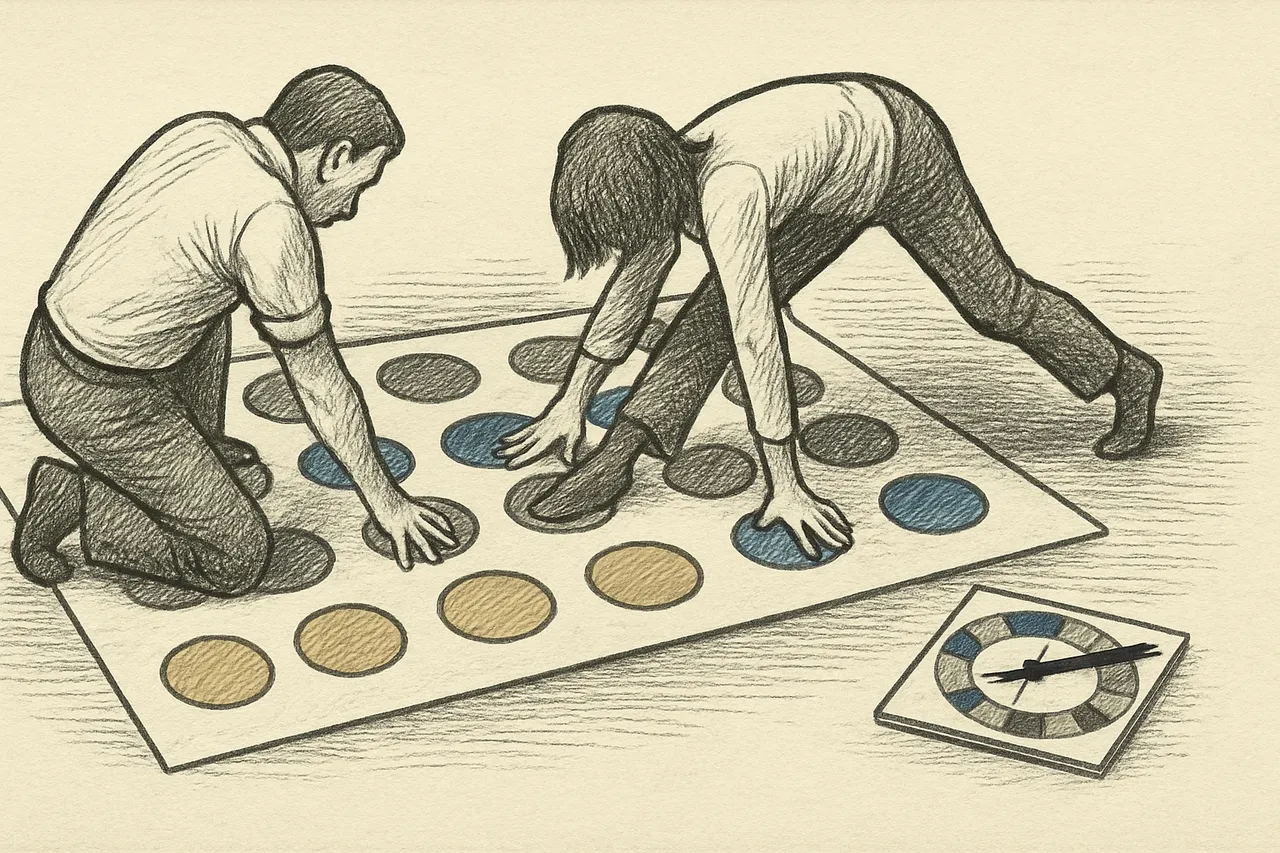
Twister's Patent Is Titled 'Apparatus for Playing a Game Wherein the Players Constitute the Game Pieces'
The patent title is the whole idea: the people are the pieces. Milton Bradley released the game in 1966, some retailers were wary of it, and critics found it a little too intimate. Then Johnny Carson played it on television with Eva Gabor, and the orders poured in.
Read the story →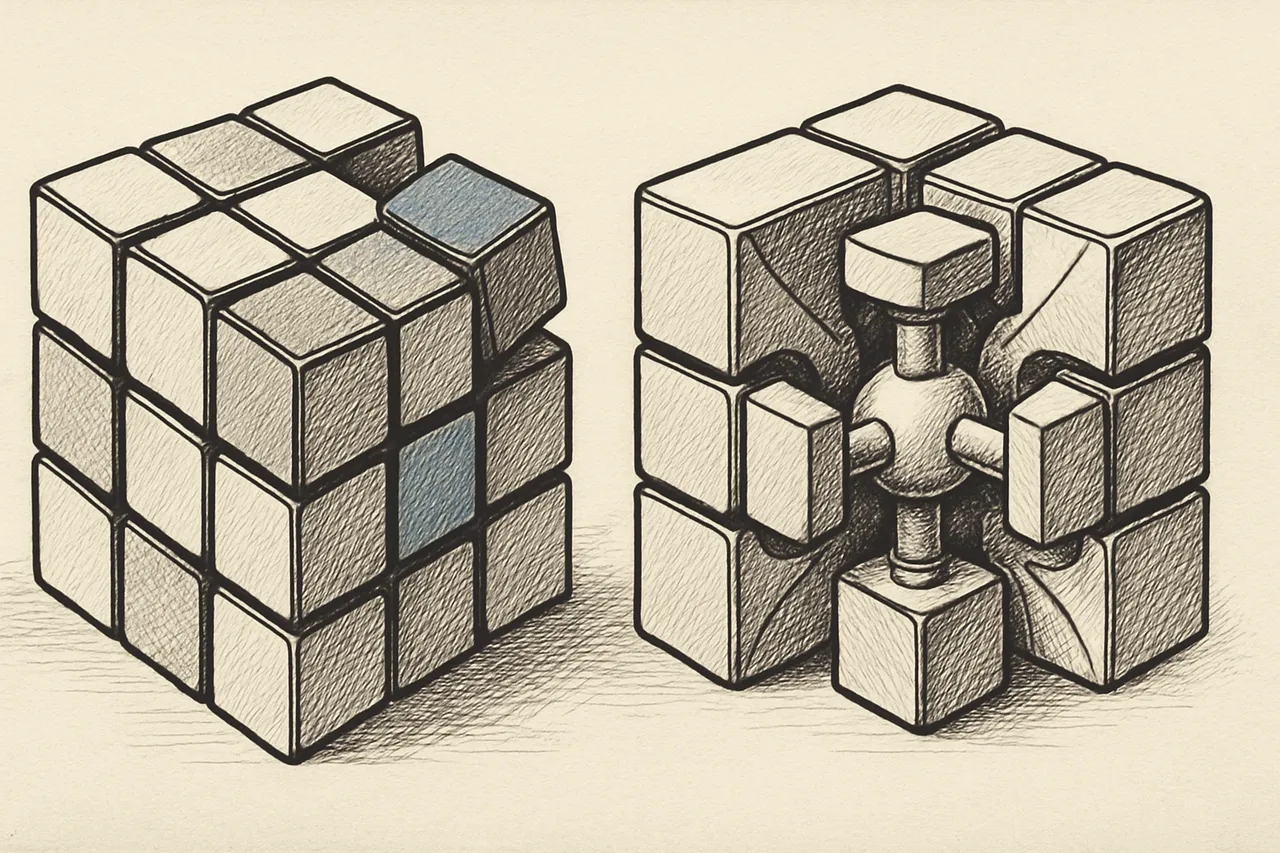
Ernő Rubik Needed About a Month to Solve His Own Cube. An American Court Later Found It Infringed an Earlier US Patent.
Rubik built the first cube in Budapest in 1974 as a way to think about three-dimensional movement. The clever part is how it holds together when most of its pieces are not attached to anything. In the United States, a chemist named Larry Nichols had patented a related puzzle in 1972, and his company sued.
Read the story →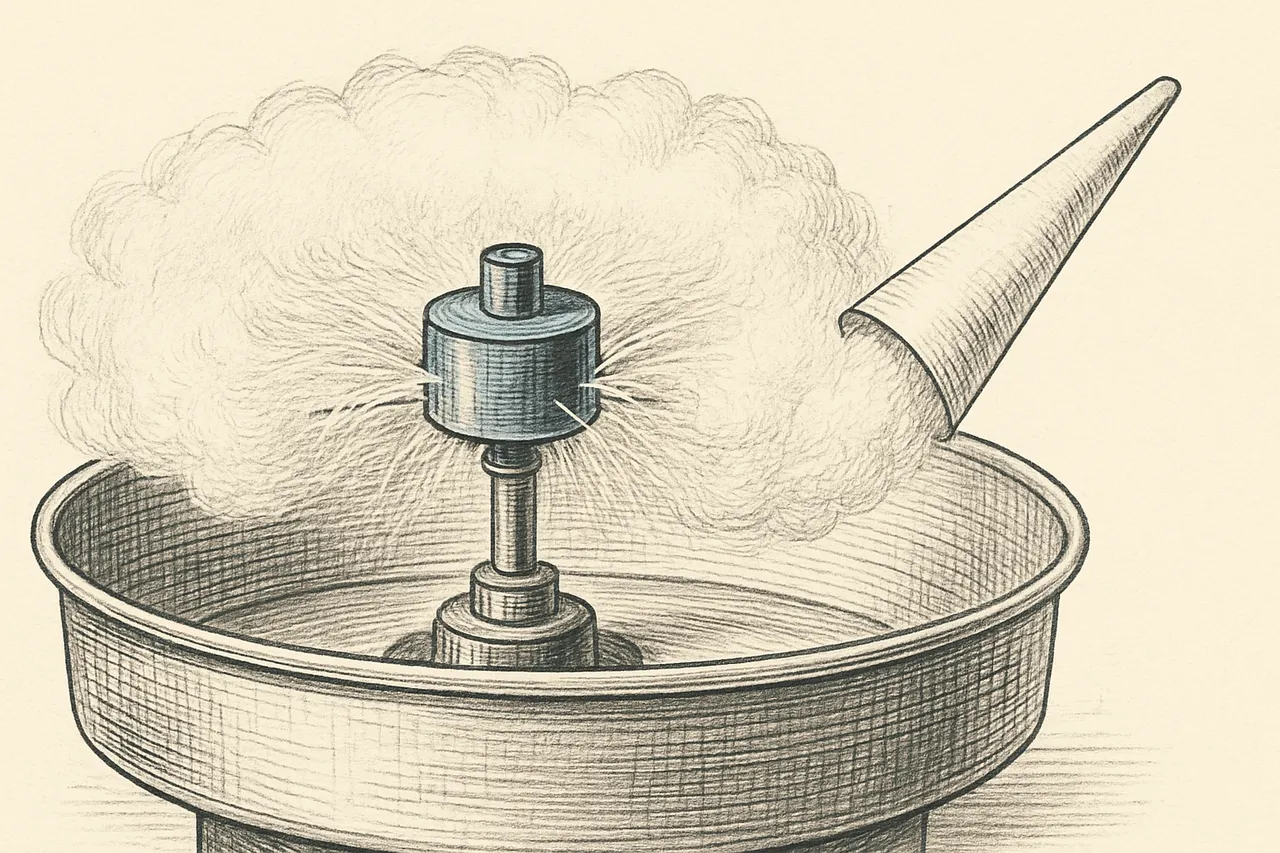
A Dentist Co-Invented the Cotton Candy Machine, and It Was Sold at the 1904 World's Fair as Fairy Floss
William Morrison was a dentist and John Wharton was a candy maker. Their machine melted sugar and flung it through tiny holes so that it cooled into threads finer than hair before it could crystallize. They filed in 1897, and at the St. Louis World's Fair it was a sensation.
Read the story →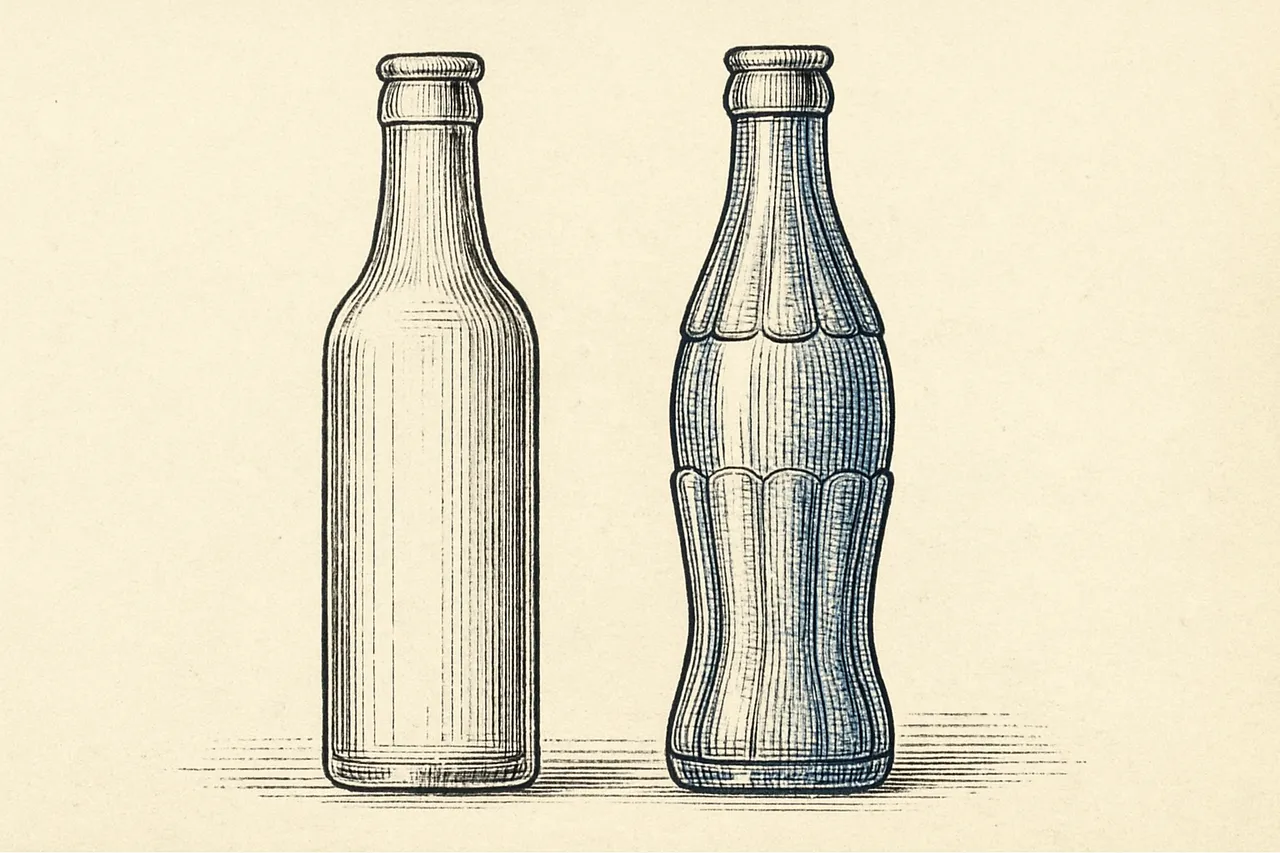
Coca-Cola Asked Glassmakers for a Bottle You Could Recognize in the Dark, or Broken on the Ground
In 1915 Coca-Cola had an imitation problem, since competitors used the same straight-sided bottles and borrowed-sounding names. It challenged glass companies to design a bottle identifiable by touch alone. The winner came from a small glassworks in Terre Haute, Indiana, and the name on the patent is not the name of the man who drew it.
Read the story →