The Fire Hydrant Patent Was Destroyed in a Fire
Frederick Graff is usually credited with the post hydrant around 1801. Nobody can check, because the Patent Office burned to the ground in 1836 and took roughly ten thousand patents with it, including his.
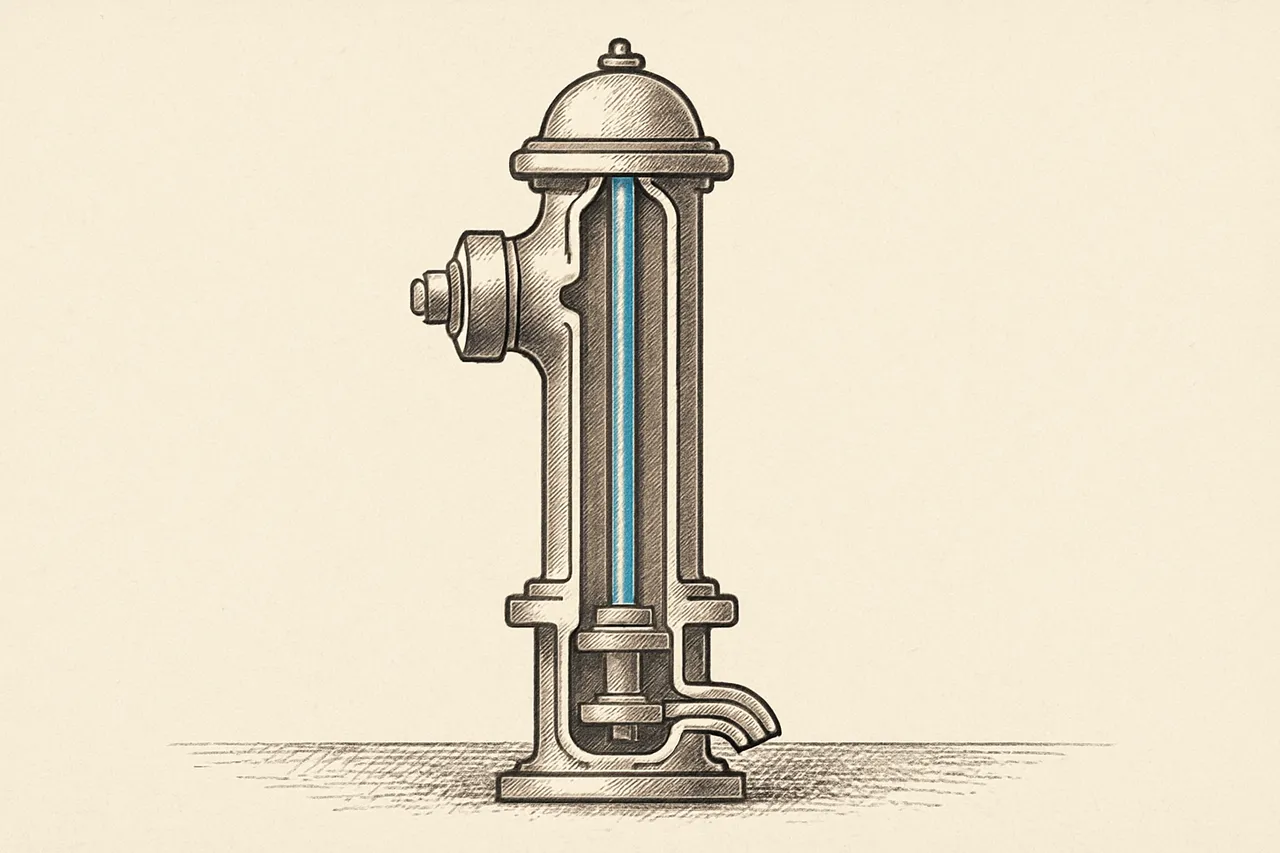
US94749 was granted to Birdsill Holly of Lockport, New York, on September 14, 1869, for an "Improvement in Hydrants." Holly is best known for the pressurized municipal water systems that let firefighters work straight from the mains. His hydrant patent is not the first hydrant patent. Nobody can produce the first hydrant patent, because it no longer exists.
On December 15, 1836, the building housing the United States Patent Office caught fire. The collection inside was almost entirely paper and wooden models, stored in a structure with no fireproofing, and there was no working fire apparatus close enough to save it. Something on the order of ten thousand patents burned, along with thousands of models.
Those records had no backup. The Patent Office had never systematically copied them.
Restoring what could be restored
Congress responded by asking inventors to submit their own copies so the record could be rebuilt. Patents recovered this way were renumbered with an X suffix and are known as the X patents.
Only a fraction came back. Roughly two thousand of the ten thousand were restored, mostly from inventors who happened to have kept their paperwork. The rest are gone, and for many of them the only evidence that they ever existed is a mention in a ledger or a lawsuit.
Frederick Graff, who ran the Philadelphia Water Works, is usually credited with the post hydrant around 1801. His design put a valve and an outlet on a standing post connected to a water main, so firefighters could tap the municipal supply directly instead of hauling from cisterns and wells.
His patent was among the ones that burned, and it was not restored. The attribution rests on secondary accounts rather than on a document anyone can pull.
What is actually in a hydrant
The visible post is the least interesting part.
In cold climates the main valve is not up in the post at all. It sits at the bottom, below the frost line, and is opened by a long stem running down from the nut on top. Water only enters the barrel when the hydrant is opened. That is why a hydrant does not freeze solid in winter and why it takes many turns to open one.
There is also a small drain port at the base. When the hydrant is closed, water left in the barrel drains out into the surrounding gravel instead of sitting there and freezing.
Hydrants are also designed to break. The section at ground level typically has a breakaway flange and a stem coupling that shears if a car hits it, so the post snaps off cleanly while the buried valve stays shut. The spectacular geyser everyone pictures happens when that safety feature fails or when someone opens the hydrant deliberately.
The irony is the record
The fire hydrant exists to stop fires from destroying buildings. The document establishing who invented it was destroyed when a building burned down.
See the original
The full text and figures of US94749 are on Google Patents.
Related stories
Bubble Wrap Was Invented as Wallpaper. Nobody Bought It.
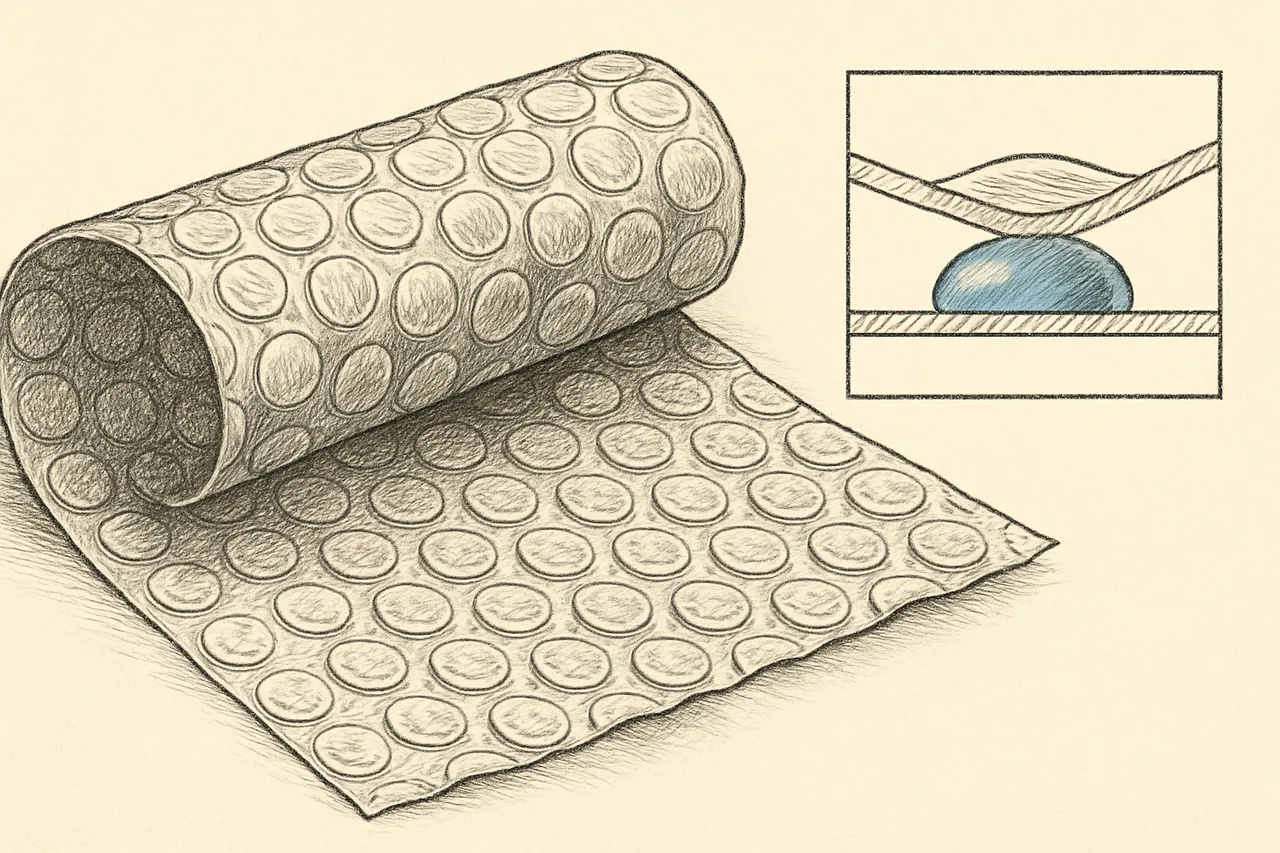
Two engineers sealed two shower curtains together and trapped air bubbles between them. They were trying to make textured wallpaper. That failed. So did their second idea, greenhouse insulation. Then IBM shipped a computer.
Read the story →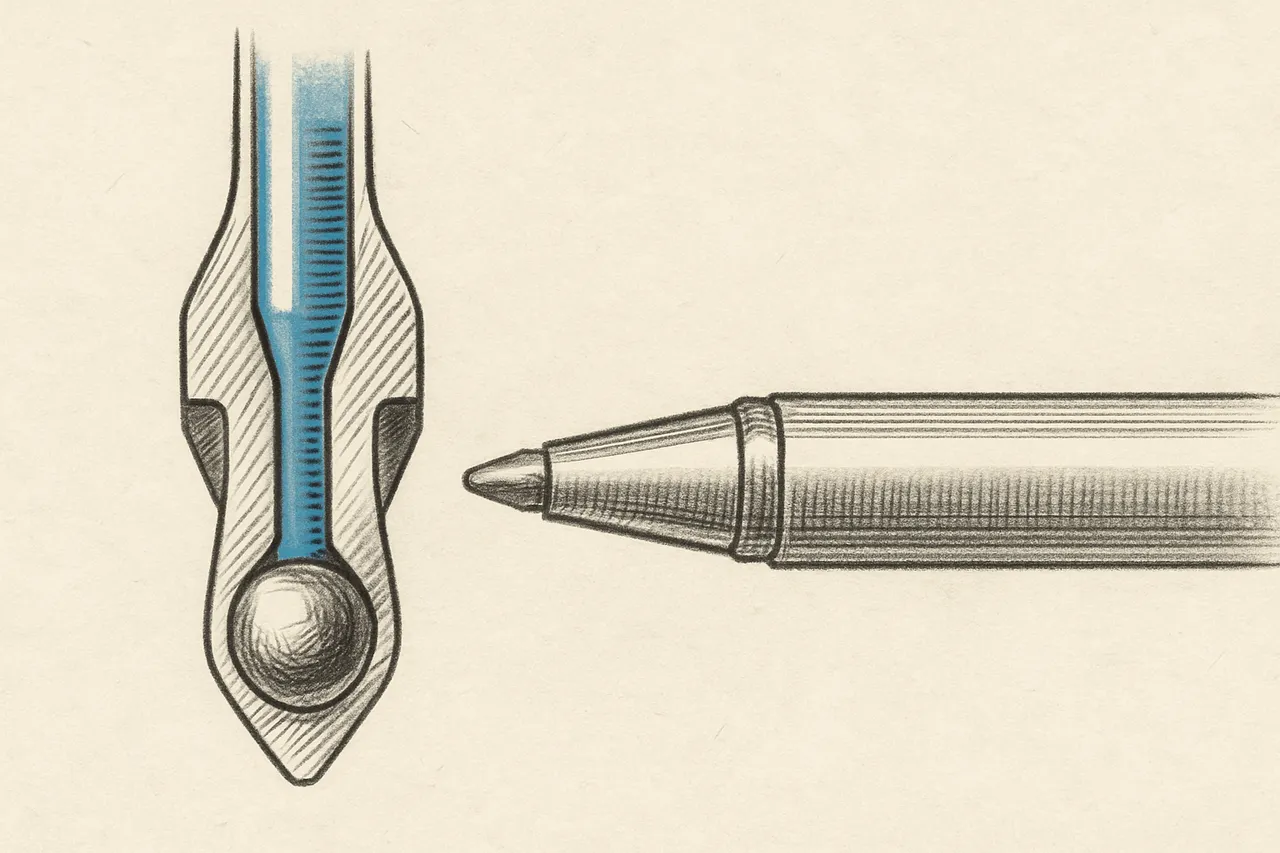
The Ballpoint Pen Took Decades and a World War to Get Right
A Hungarian newspaper editor was tired of fountain pens smudging his proofs. His fix — a tiny rotating ball fed by quick-drying ink — had been patented before and had always failed. It took him years, an escape from fascism, and an air force to make it work.
Read the story →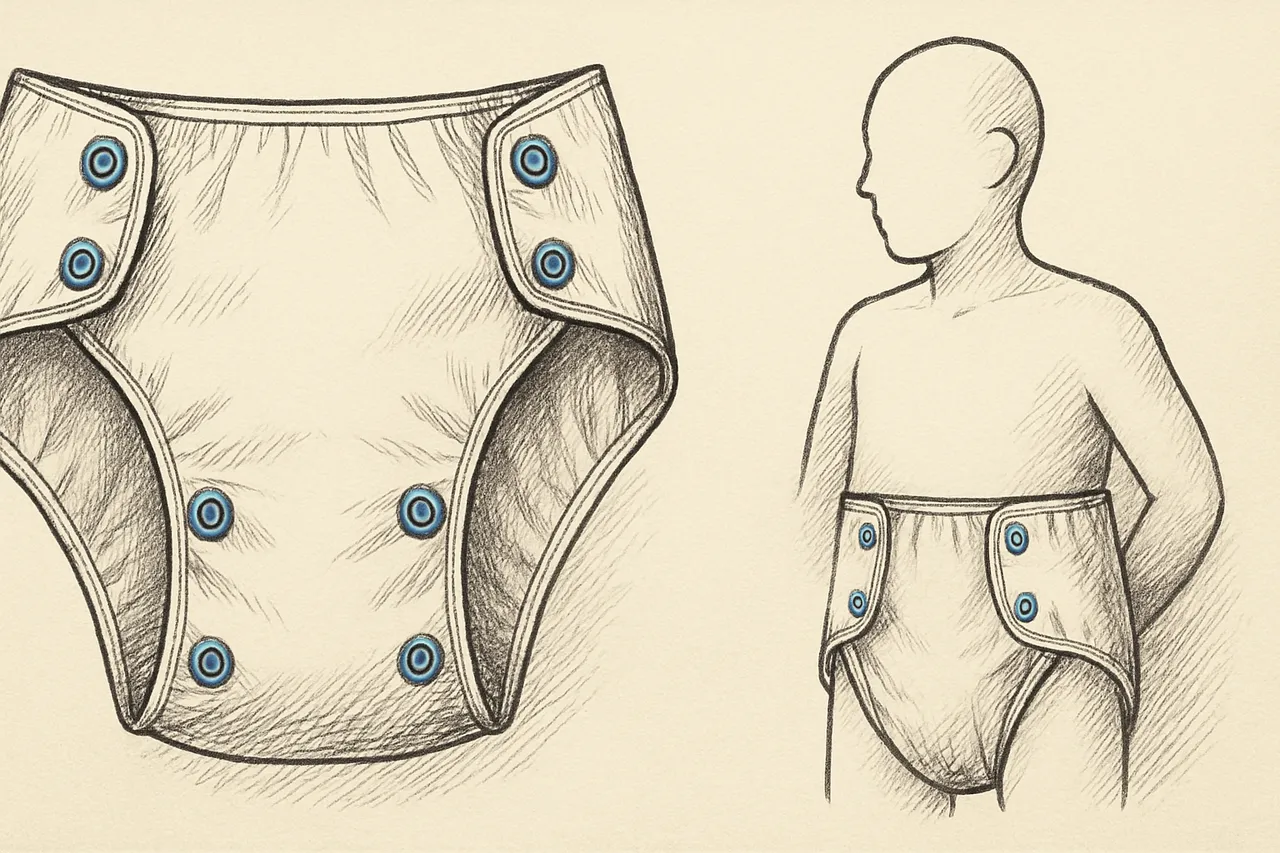
Marion Donovan Invented the Disposable Diaper. Every Manufacturer Turned Her Down.
A young mother cut up a shower curtain to make a leak-proof diaper cover. It worked. When she took the next step — a fully disposable diaper — the industry told her there was no demand. They were wrong by about a decade.
Read the story →
Spencer Silver Invented an Adhesive No One Wanted for Twelve Years
In 1968, a 3M chemist named Spencer Silver was trying to make a stronger adhesive. He accidentally made a weaker one that didn't stick permanently. The product it eventually became — Post-it Notes — did not ship for another twelve years.
Read the story →