Bubble Wrap Was Invented as Wallpaper. Nobody Bought It.
Two engineers sealed two shower curtains together and trapped air bubbles between them. They were trying to make textured wallpaper. That failed. So did their second idea, greenhouse insulation. Then IBM shipped a computer.
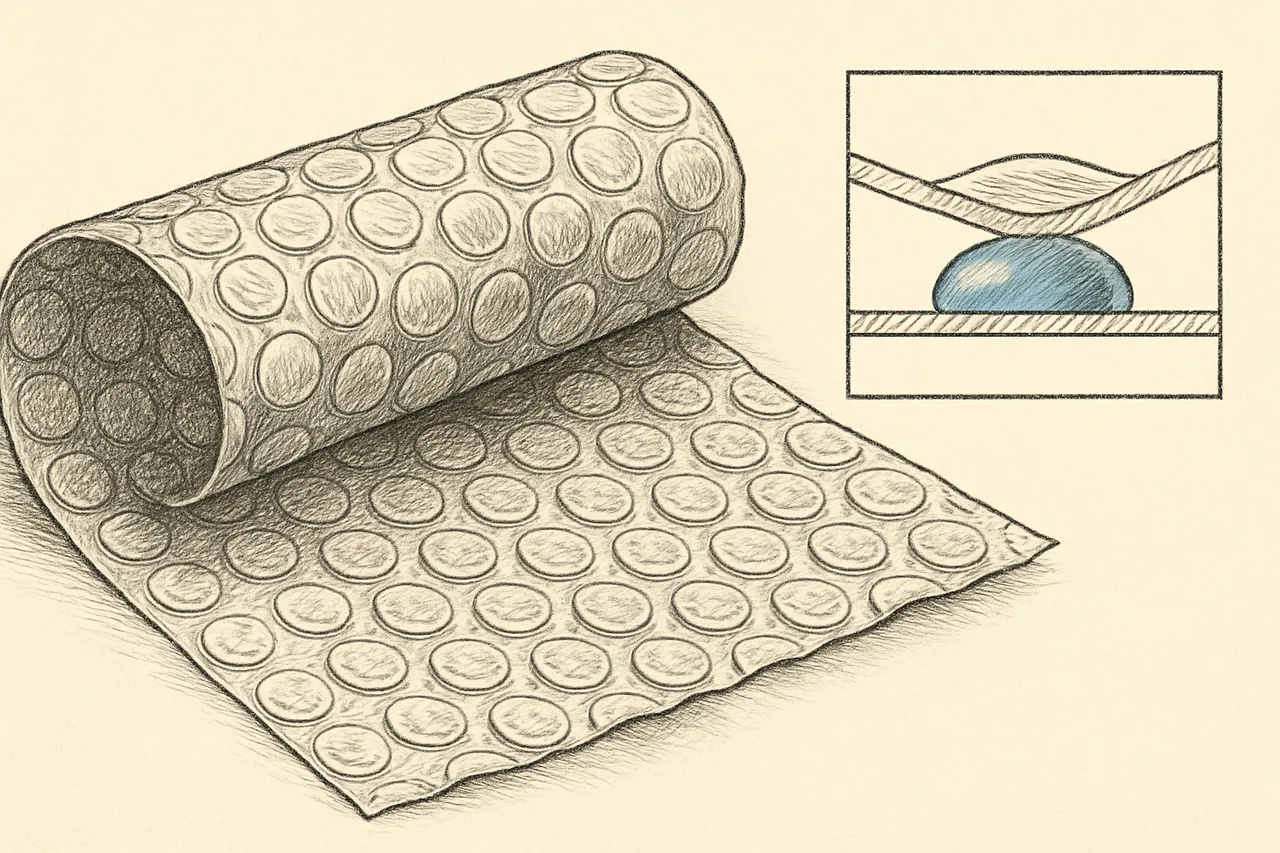
US3142599 was granted on July 28, 1964, to Alfred W. Fielding and Marc A. Chavannes. The title is "Method for Making Laminated Cushioning Material." The material is Bubble Wrap, and the reason it exists at all is that its inventors failed twice at what they were actually trying to do.
In 1957, working in a garage in Hawthorne, New Jersey, Fielding (an engineer) and Chavannes (a Swiss inventor) were trying to make a new kind of wallpaper. The idea was three-dimensional, texturally interesting wall covering for the modern home: seal two plastic shower curtains together in a way that trapped a regular grid of air bubbles between them, and you would have a wall surface unlike anything else on the market.
They made the material successfully. The wallpaper business went nowhere. It turned out that almost nobody wanted a bumpy plastic wall.
Failure number two
Undeterred, they looked for another use, and settled on greenhouse insulation. The logic was sound — trapped air is an excellent insulator, and a translucent bubble sheet could in principle line a greenhouse and hold heat while letting light through. They marketed it. That failed too.
At this point the pair had a genuinely novel, patentable material and no market at all for it. They had solved a manufacturing problem in search of a problem to solve.
IBM ships a computer
The break came in 1959, when a marketer at their company, Frederick Bowers, learned that IBM was about to begin shipping its new 1401 variable-word-length computer. Shipping a computer in 1959 was a fraught business. The machines were large, delicate, expensive, and traveled by truck and rail across a country whose roads were not gentle. Existing protective packing — crumpled newspaper, wood shavings, shredded paper — was messy, inconsistent, and heavy.
Bowers pitched the bubble material to IBM as packaging. It was light, it was clean, it conformed to irregular shapes, and its trapped air absorbed shock beautifully. IBM adopted it. The company, renamed Sealed Air, had found its market on the third try, and the material has been the default protective packaging of the world ever since.
The second product
There is a coda that the patent could never have anticipated. Bubble Wrap has a large and entirely unintended secondary function: people pop it. Compulsively, pleasurably, and across every culture that encounters it. The sensation has been the subject of actual stress-relief research, has spawned keychains and phone apps that simulate it, and is a significant part of why the brand is a household word rather than an industrial supply term.
Sealed Air has periodically leaned into this, including a 2015 redesign — bubbles connected by tiny channels, so a sheet could be shipped flat and inflated on site — that was more efficient to transport and, to the public's audible dismay, did not pop properly. The company kept making the traditional poppable kind too.
Two men set out to sell you a bumpy wall. What they actually invented was the sound of opening a package.
See the original
The full text and figures of US3142599 are on patents.us.
Related stories
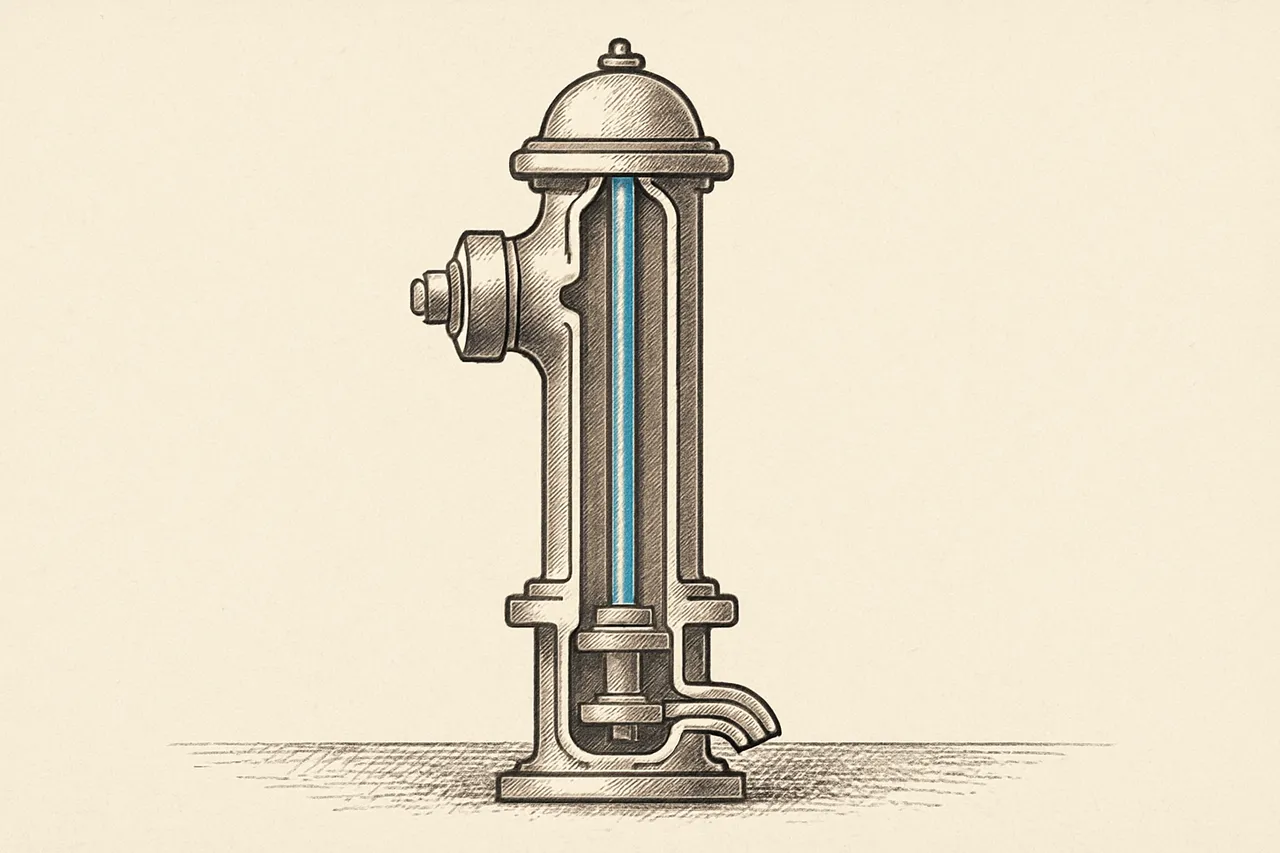
The Fire Hydrant Patent Was Destroyed in a Fire
Frederick Graff is usually credited with the post hydrant around 1801. Nobody can check, because the Patent Office burned to the ground in 1836 and took roughly ten thousand patents with it, including his.
Read the story →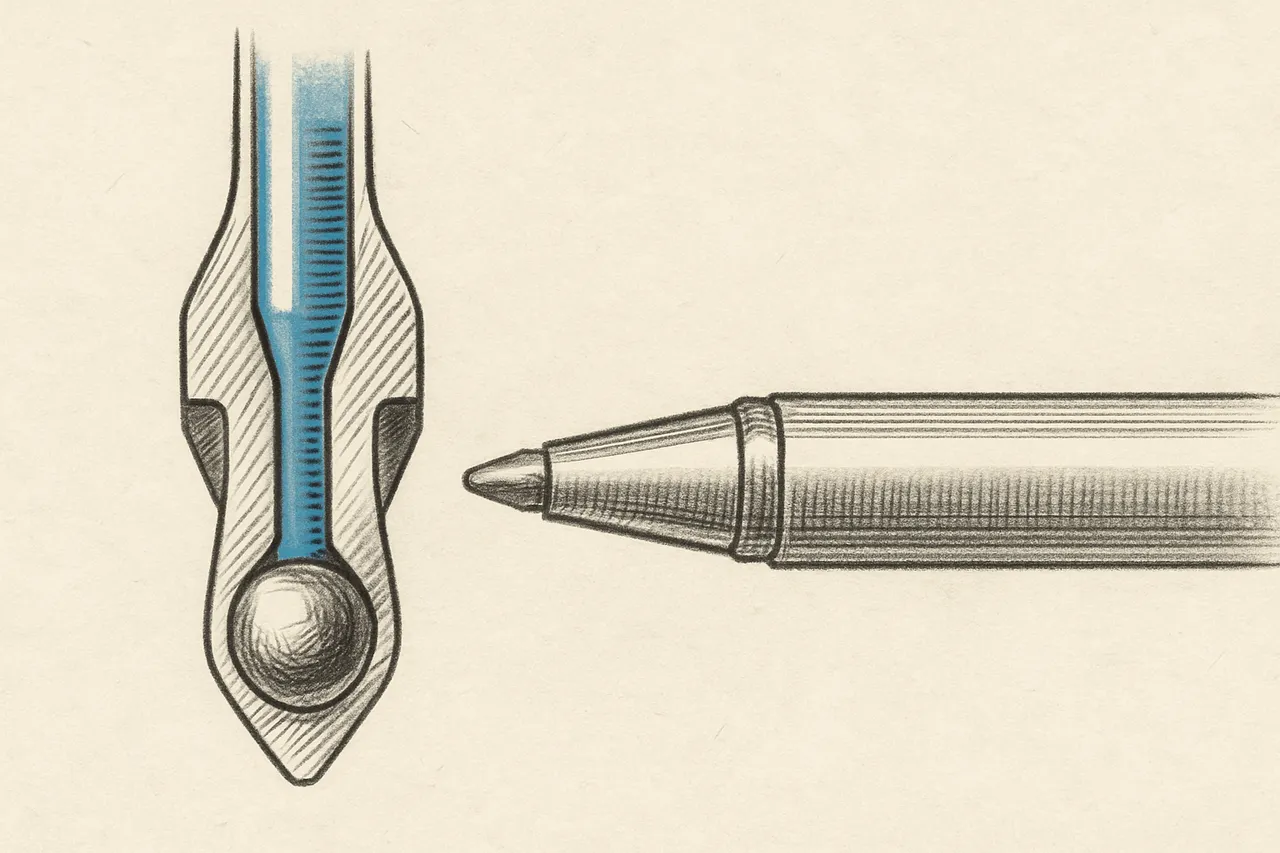
The Ballpoint Pen Took Decades and a World War to Get Right
A Hungarian newspaper editor was tired of fountain pens smudging his proofs. His fix — a tiny rotating ball fed by quick-drying ink — had been patented before and had always failed. It took him years, an escape from fascism, and an air force to make it work.
Read the story →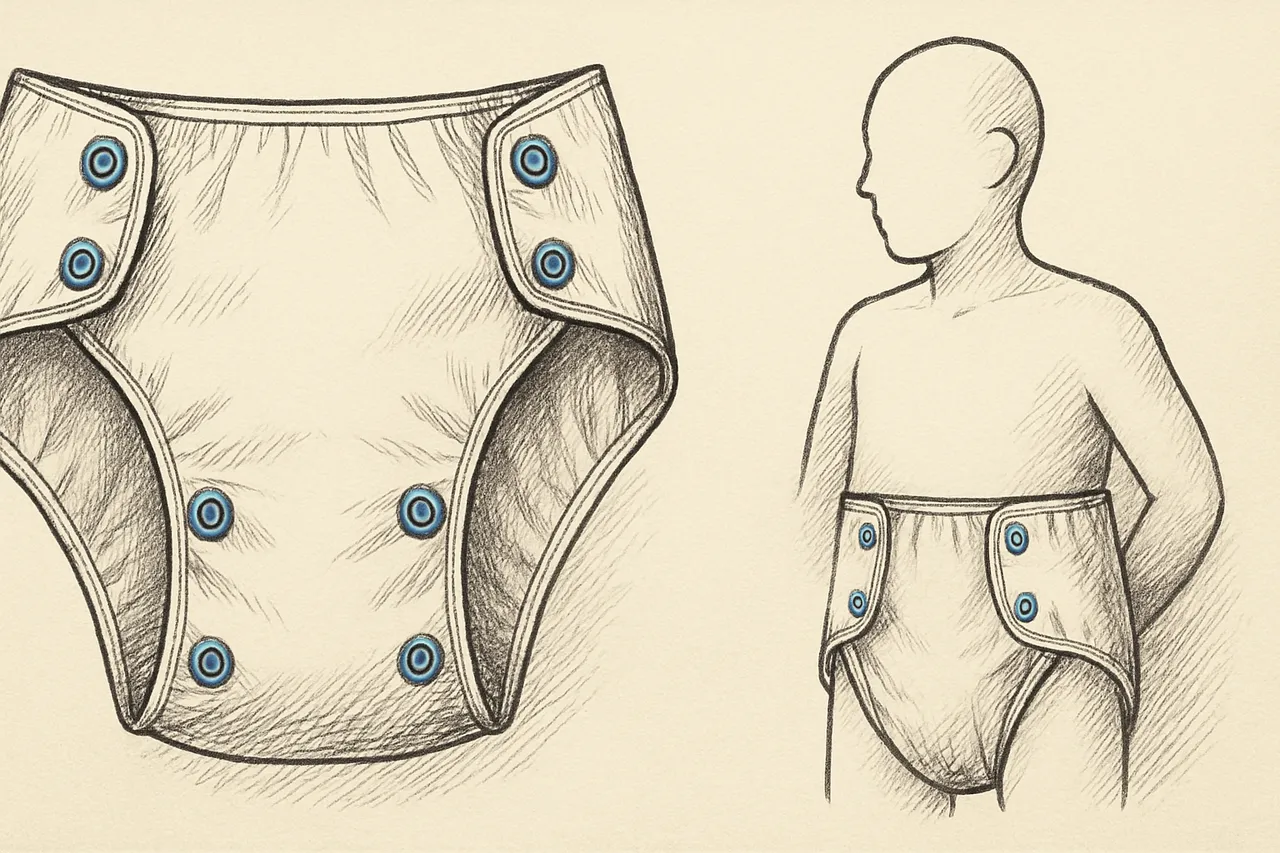
Marion Donovan Invented the Disposable Diaper. Every Manufacturer Turned Her Down.
A young mother cut up a shower curtain to make a leak-proof diaper cover. It worked. When she took the next step — a fully disposable diaper — the industry told her there was no demand. They were wrong by about a decade.
Read the story →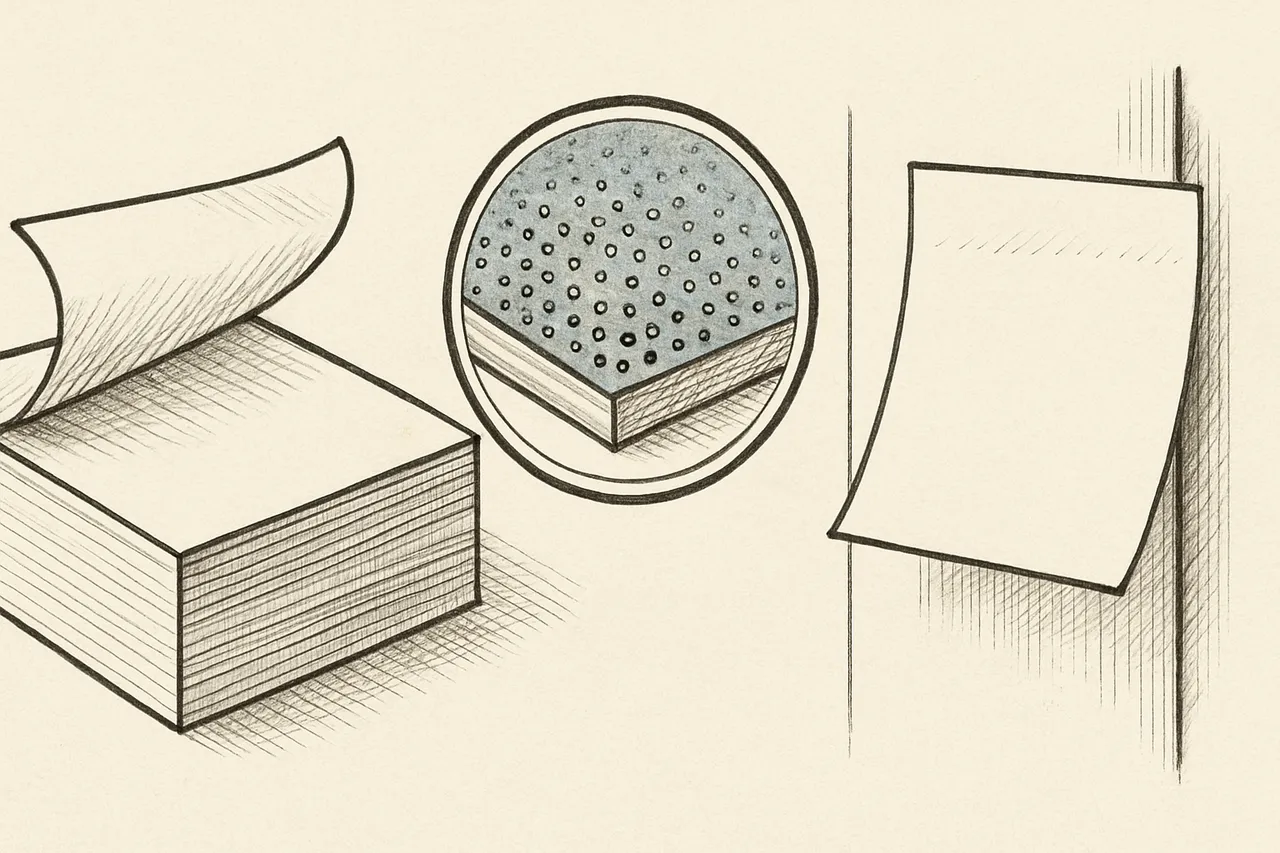
Spencer Silver Invented an Adhesive No One Wanted for Twelve Years
In 1968, a 3M chemist named Spencer Silver was trying to make a stronger adhesive. He accidentally made a weaker one that didn't stick permanently. The product it eventually became — Post-it Notes — did not ship for another twelve years.
Read the story →