The Etch A Sketch Was Rejected Everywhere, Then Bought for $25,000 at the Last Minute
A French garage mechanic invented a drawing screen that worked with aluminum powder and static electricity. Toy companies turned him down for years. Ohio Art passed on it twice before an executive took a second look on the way out the door.
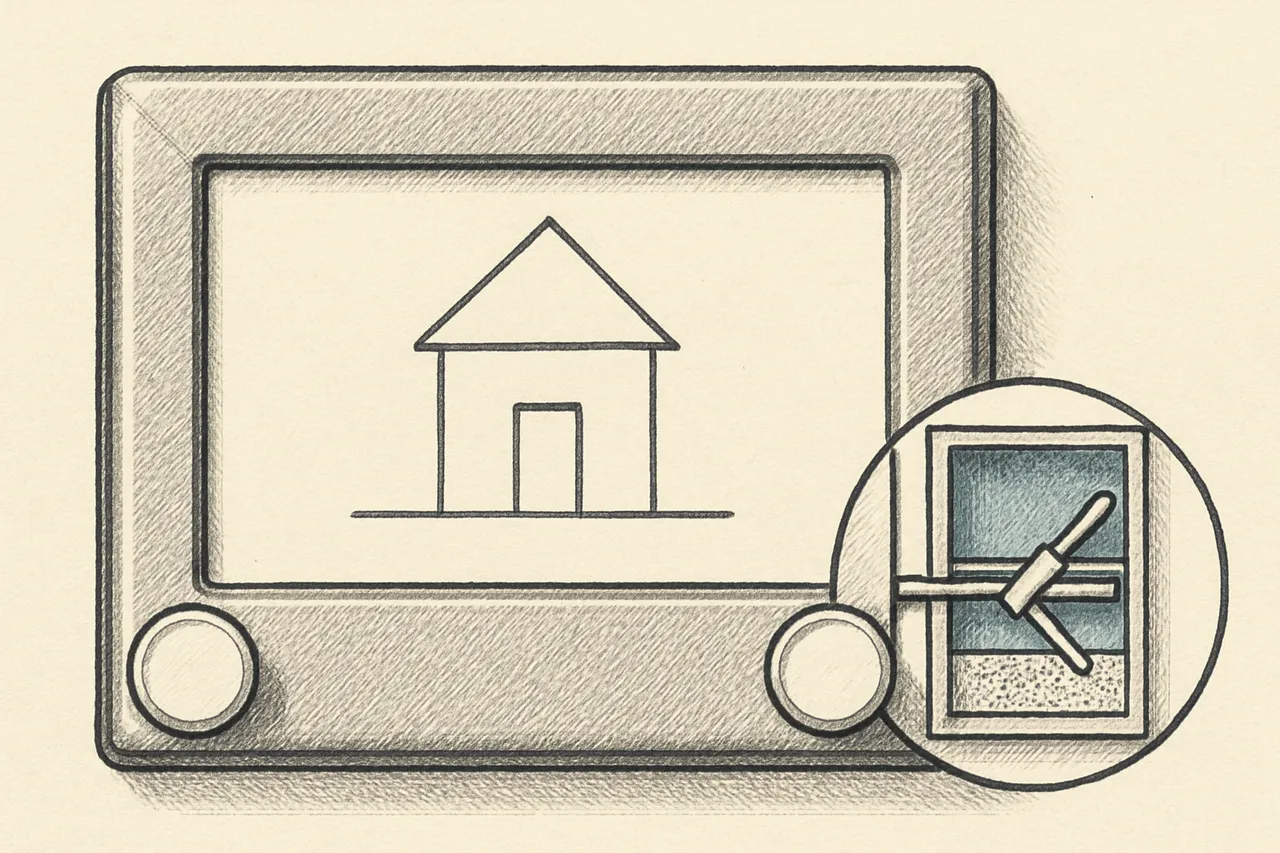
US3055113 covers the drawing toy the world knows as the Etch A Sketch. Its inventor was André Cassagnes, a French electrical technician and garage mechanic, and the mechanism he worked out is considerably stranger than most people realize.
Cassagnes' account of the origin involves a light-switch plate at work. He peeled a translucent decal off a switch panel and noticed that marks made in the fine coating on the back showed through the front clearly. That observation turned into a toy he called L'Écran Magique — the Magic Screen.
How it actually works
There is no ink, no lead, and no screen technology in the modern sense. The inside of the glass is coated with an extremely fine aluminum powder, held there by static electricity, which makes the screen look uniformly gray.
The two knobs drive a stylus on a pair of rails behind the glass — one knob moves it horizontally, the other vertically, which is why the toy draws only in horizontal and vertical strokes and why diagonals require turning both knobs at once. Anything curved is an act of coordination.
The stylus does not deposit anything. It scrapes the aluminum powder away from the inside of the glass, and the dark interior of the case shows through as a line. Turning the toy over and shaking it tumbles the powder and beads inside, recoating the glass and erasing the drawing.
Rejected, rejected, rejected
Cassagnes showed the Magic Screen at the Nuremberg International Toy Fair in 1959. It attracted essentially no interest. Toy companies passed.
The Ohio Art Company, of Bryan, Ohio, saw it there and declined. They saw it again later and declined again. The version usually told is that as the company's representatives were leaving, an executive took another look, reconsidered, and Ohio Art eventually bought the rights — for a figure generally reported around twenty-five thousand dollars, a substantial sum in 1959 but a rounding error against what followed.
Ohio Art renamed it the Etch A Sketch and put it out for Christmas 1960. It sold about 600,000 units in that first season and went on to sell well over 100 million.
The long tail
The Etch A Sketch was inducted into the National Toy Hall of Fame in 1998. It has an unusual second life as an artist's medium — practitioners produce astonishingly detailed work on it, and because the drawing is only powder on glass, finished pieces have to be carefully drilled and drained of their aluminum dust to be preserved without shaking themselves blank.
Cassagnes, for his part, largely stepped back from toys and spent much of his later life designing competition kites, at which he was also extremely good. He was not widely credited as the Etch A Sketch's inventor in America for decades; the recognition arrived late, and he died in 2013.
The object is a sealed box of aluminum dust with two knobs, invented by a mechanic, turned down by everyone, and bought on a second glance.
See the original
The full text and figures of US3055113 are on patents.us.
Related stories
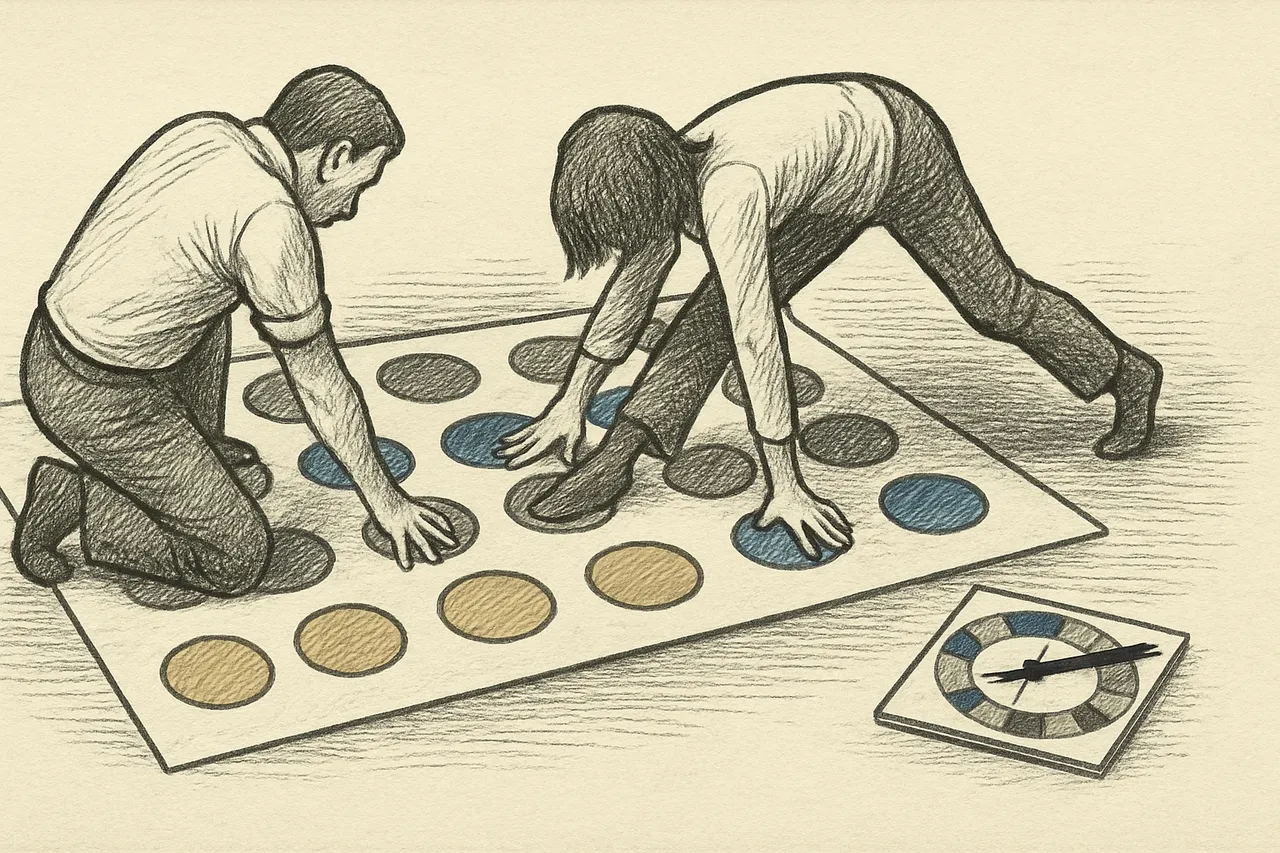
Twister's Patent Is Titled 'Apparatus for Playing a Game Wherein the Players Constitute the Game Pieces'
The patent title is the whole idea: the people are the pieces. Milton Bradley released the game in 1966, some retailers were wary of it, and critics found it a little too intimate. Then Johnny Carson played it on television with Eva Gabor, and the orders poured in.
Read the story →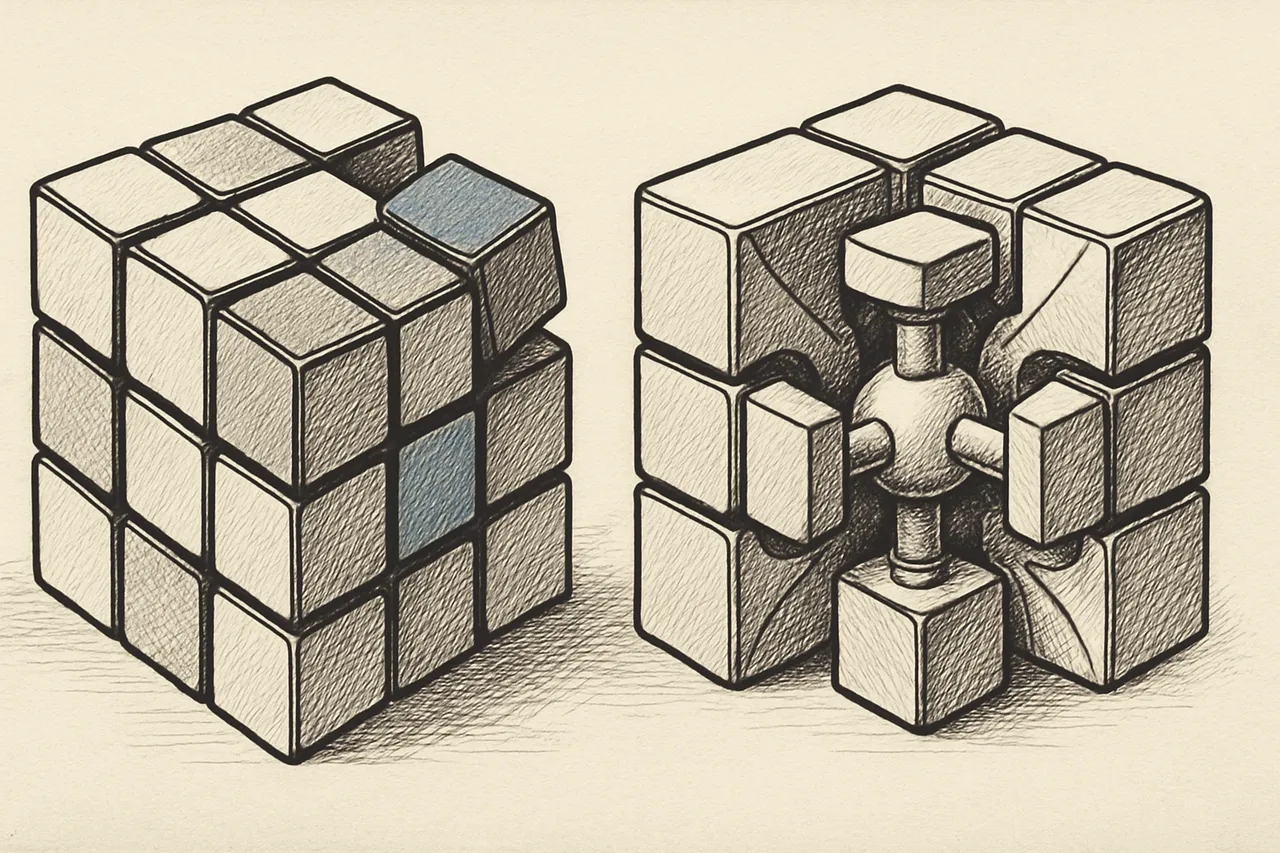
Ernő Rubik Needed About a Month to Solve His Own Cube. An American Court Later Found It Infringed an Earlier US Patent.
Rubik built the first cube in Budapest in 1974 as a way to think about three-dimensional movement. The clever part is how it holds together when most of its pieces are not attached to anything. In the United States, a chemist named Larry Nichols had patented a related puzzle in 1972, and his company sued.
Read the story →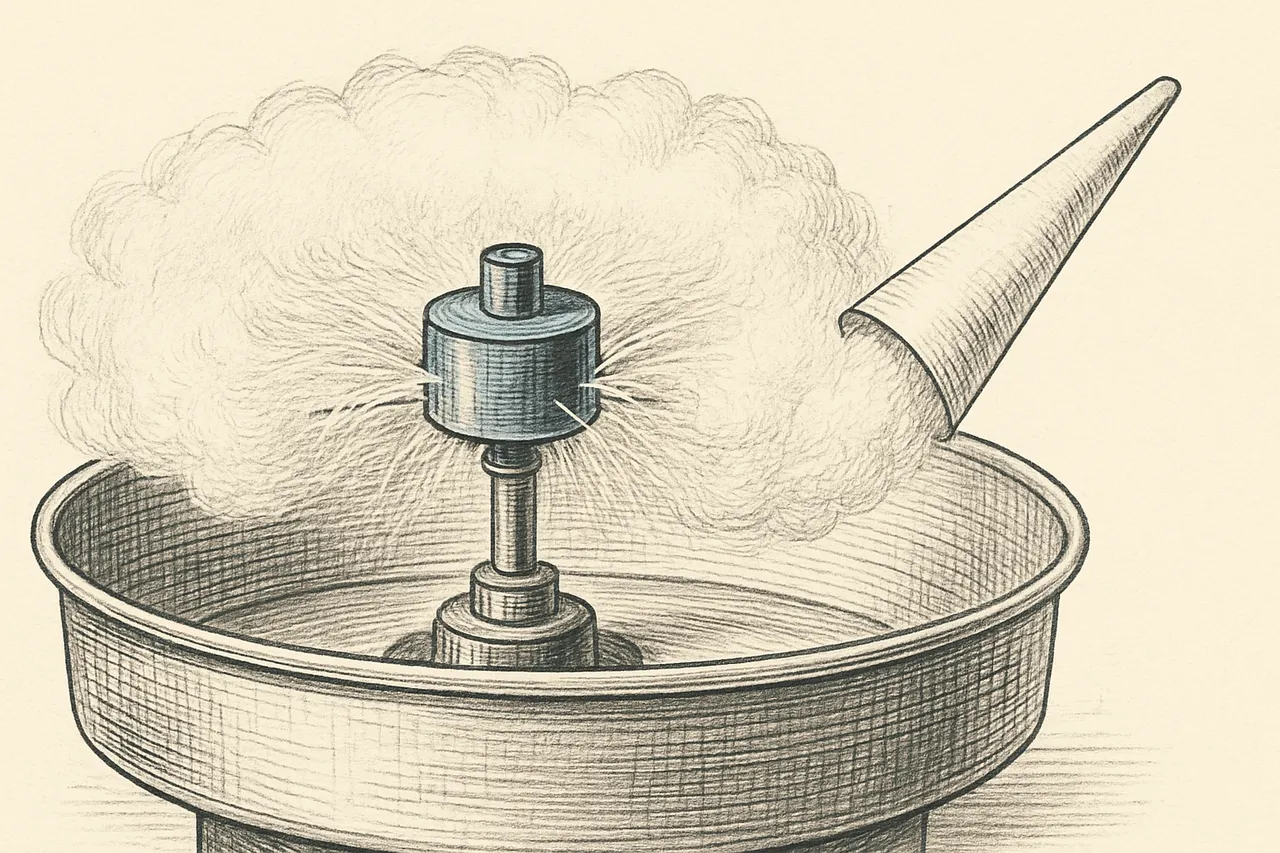
A Dentist Co-Invented the Cotton Candy Machine, and It Was Sold at the 1904 World's Fair as Fairy Floss
William Morrison was a dentist and John Wharton was a candy maker. Their machine melted sugar and flung it through tiny holes so that it cooled into threads finer than hair before it could crystallize. They filed in 1897, and at the St. Louis World's Fair it was a sensation.
Read the story →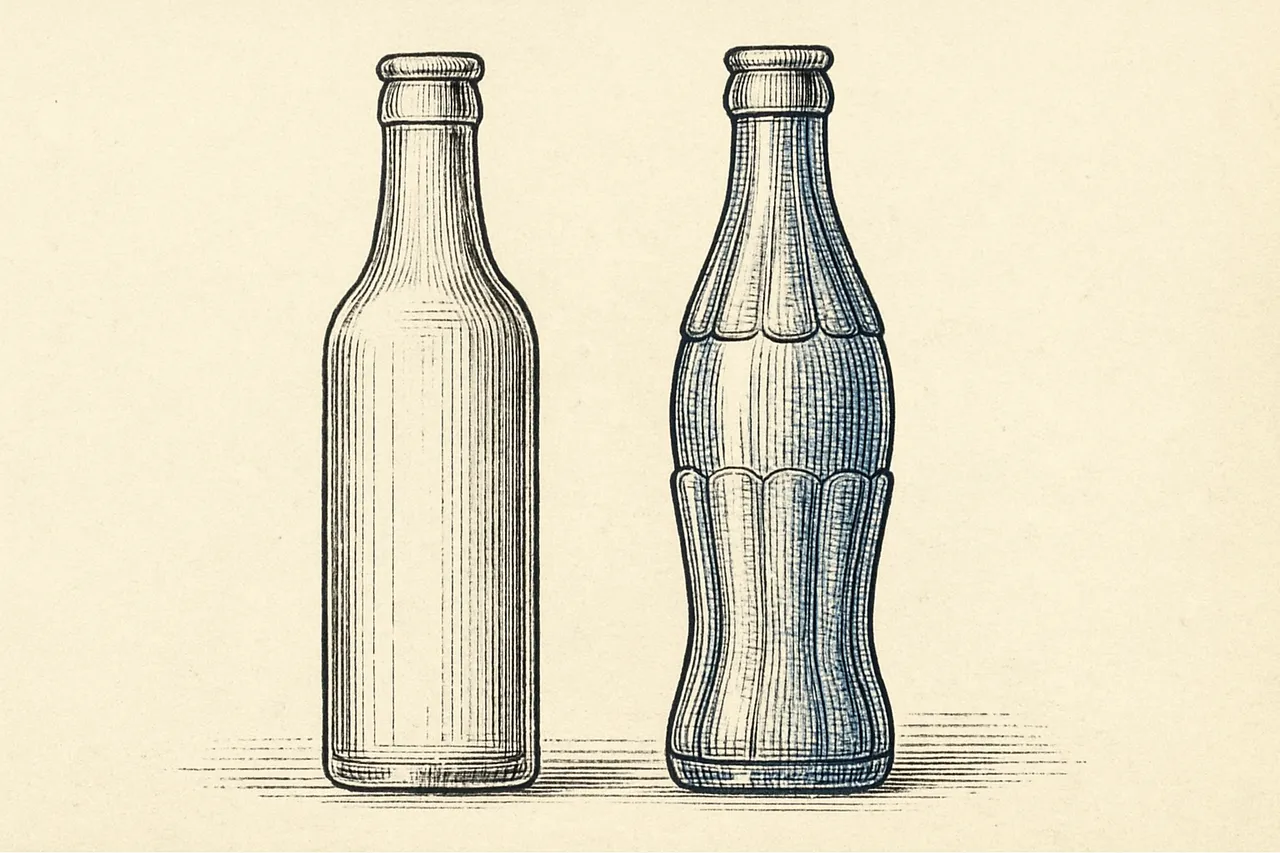
Coca-Cola Asked Glassmakers for a Bottle You Could Recognize in the Dark, or Broken on the Ground
In 1915 Coca-Cola had an imitation problem, since competitors used the same straight-sided bottles and borrowed-sounding names. It challenged glass companies to design a bottle identifiable by touch alone. The winner came from a small glassworks in Terre Haute, Indiana, and the name on the patent is not the name of the man who drew it.
Read the story →