Willis Johnson Patented an Egg Beater in 1884, When Roughly A Thousand People Were Trying To
Beating eggs by hand with a fork or a bundle of twigs took a long time and gave inconsistent results. For about forty years the patent office received a flood of mechanical beaters, and almost all of them jammed, leaked, or fell apart.
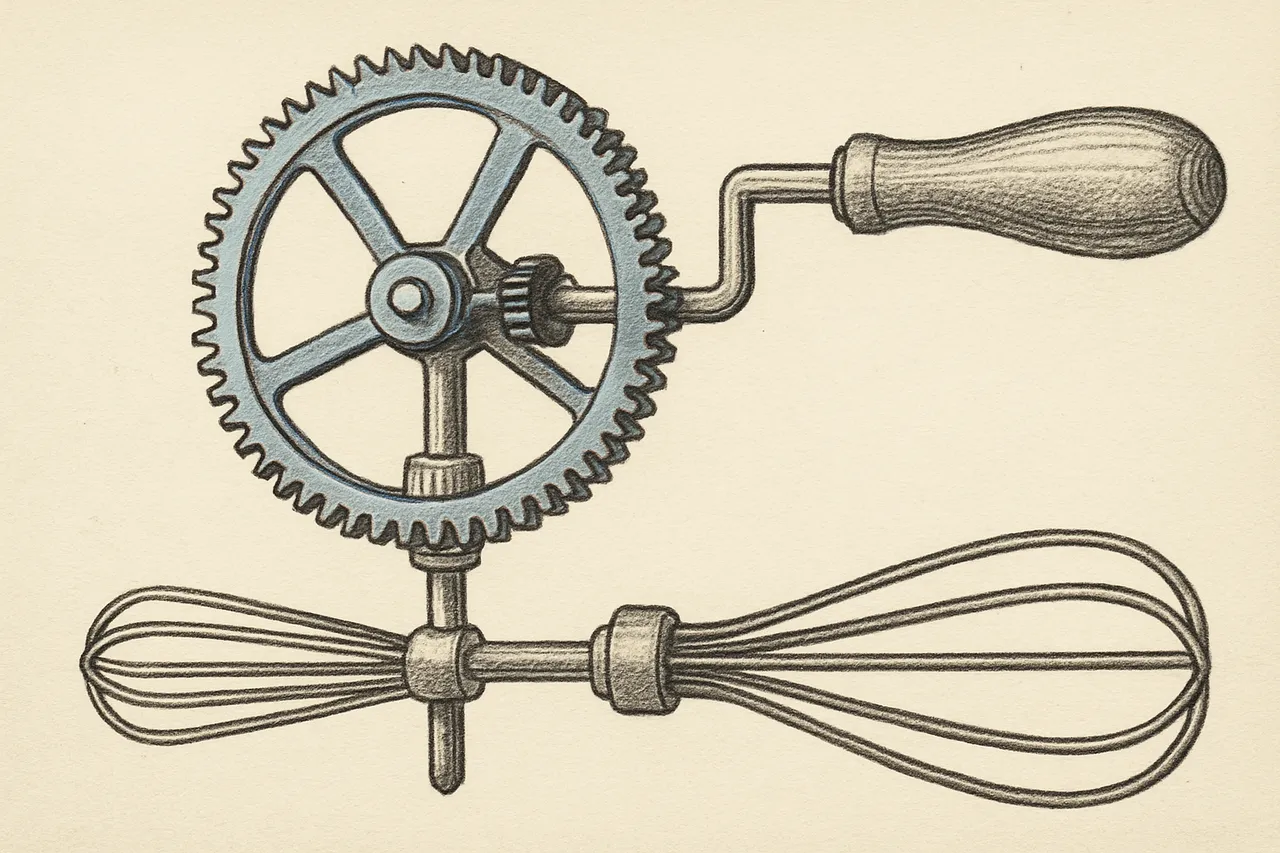
US292821 was granted to Willis Johnson of Cincinnati on February 5, 1884, for a mechanical egg beater. Johnson was a Black inventor, and his design also handled batter, which is why it is sometimes described as an ancestor of the mixer rather than just the beater.
He was filing into a crowded field. The late nineteenth century produced an extraordinary volume of egg beater patents, running into the hundreds and by some counts well past a thousand across the period. Collectors of antique kitchen tools catalog dozens of mechanically distinct types.
Why so many people cared
Whipping eggs or cream by hand is slow, and the results are unreliable.
The physics is that you are forcing air into a liquid and stabilizing it in a protein or fat structure. That requires a lot of small, fast, repeated shearing actions. A fork delivers few of them per stroke. Getting egg whites to stiff peaks with a fork takes many minutes of hard work, and if you stop too early or beat too far, the foam collapses or turns grainy.
Nineteenth century cooking leaned heavily on beaten eggs. Cakes rose on whipped whites before chemical leavening was common and reliable, so the quality of a cake depended directly on somebody's arm.
That combination, a task that is universal, tiring, skill-dependent, and clearly mechanizable, is what draws inventors in volume.
What was hard about it
The mechanism looks trivial and was not.
Gearing has to step up the speed enough to be worth using, which means a large drive wheel turning small pinions. Those gears sit directly above a bowl of raw egg and get splashed constantly, so they corrode, gum up, and are miserable to clean. Early beaters were often made of tinned iron that rusted within a season.
The whisks have to counter-rotate to work efficiently, which needs a second gear train. They also have to be stiff enough to shear the liquid and springy enough not to bend permanently when they hit the side of a bowl.
Most of the patents in the flood failed on one of those points. They jammed, they shed gear teeth, they could not be washed, or they required two hands plus a third to hold the bowl.
What survived
The design that won is the geared rotary beater with a vertical crank, refined through the 1870s and 1880s and standardized by the early twentieth century. It is still sold, and it is still recognizably the same object.
Electric mixers eventually took the work, but the hand beater persists for the same reason the reel mower does. It is cheap, silent, needs no power, and for one bowl of cream it is faster to grab than to plug in.
See the original
The full text and figures of US292821 are on patents.us.
Related stories
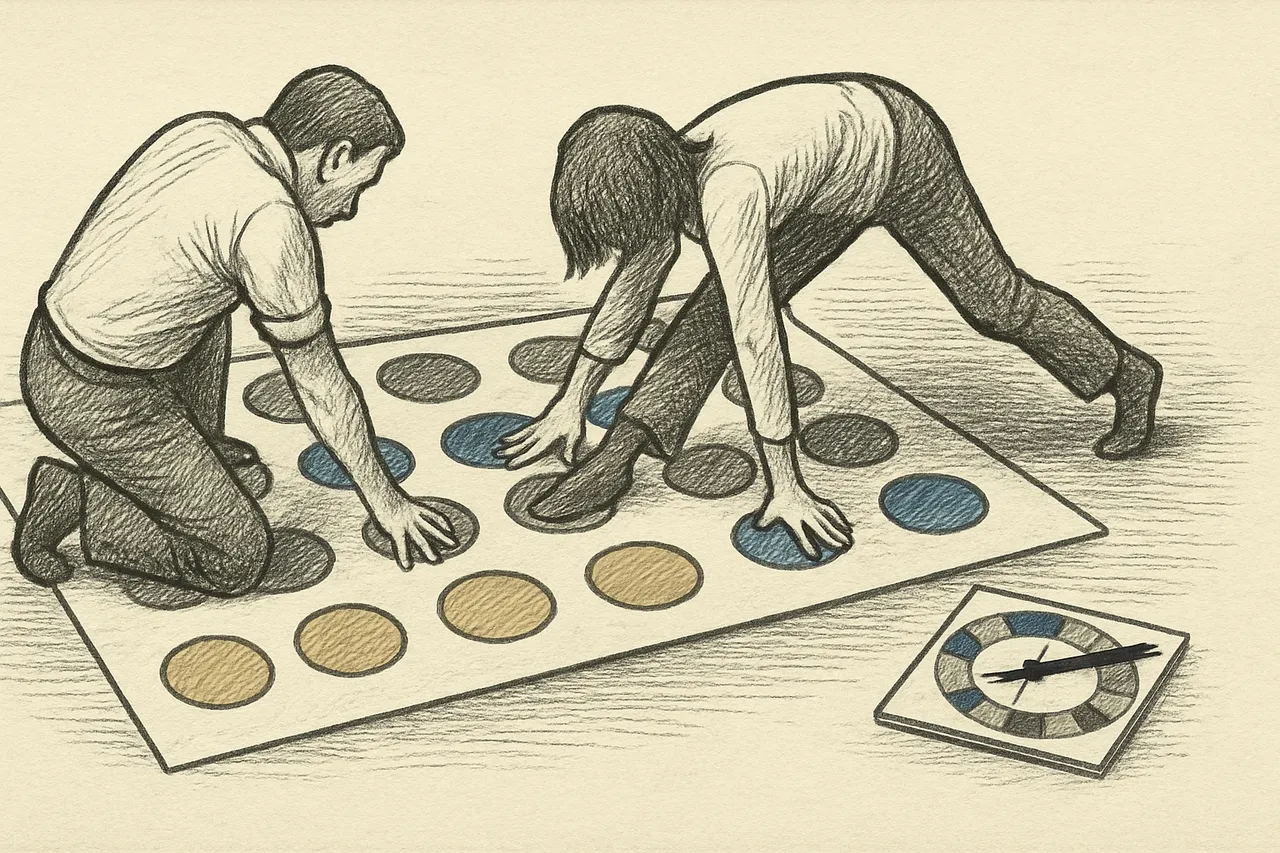
Twister's Patent Is Titled 'Apparatus for Playing a Game Wherein the Players Constitute the Game Pieces'
The patent title is the whole idea: the people are the pieces. Milton Bradley released the game in 1966, some retailers were wary of it, and critics found it a little too intimate. Then Johnny Carson played it on television with Eva Gabor, and the orders poured in.
Read the story →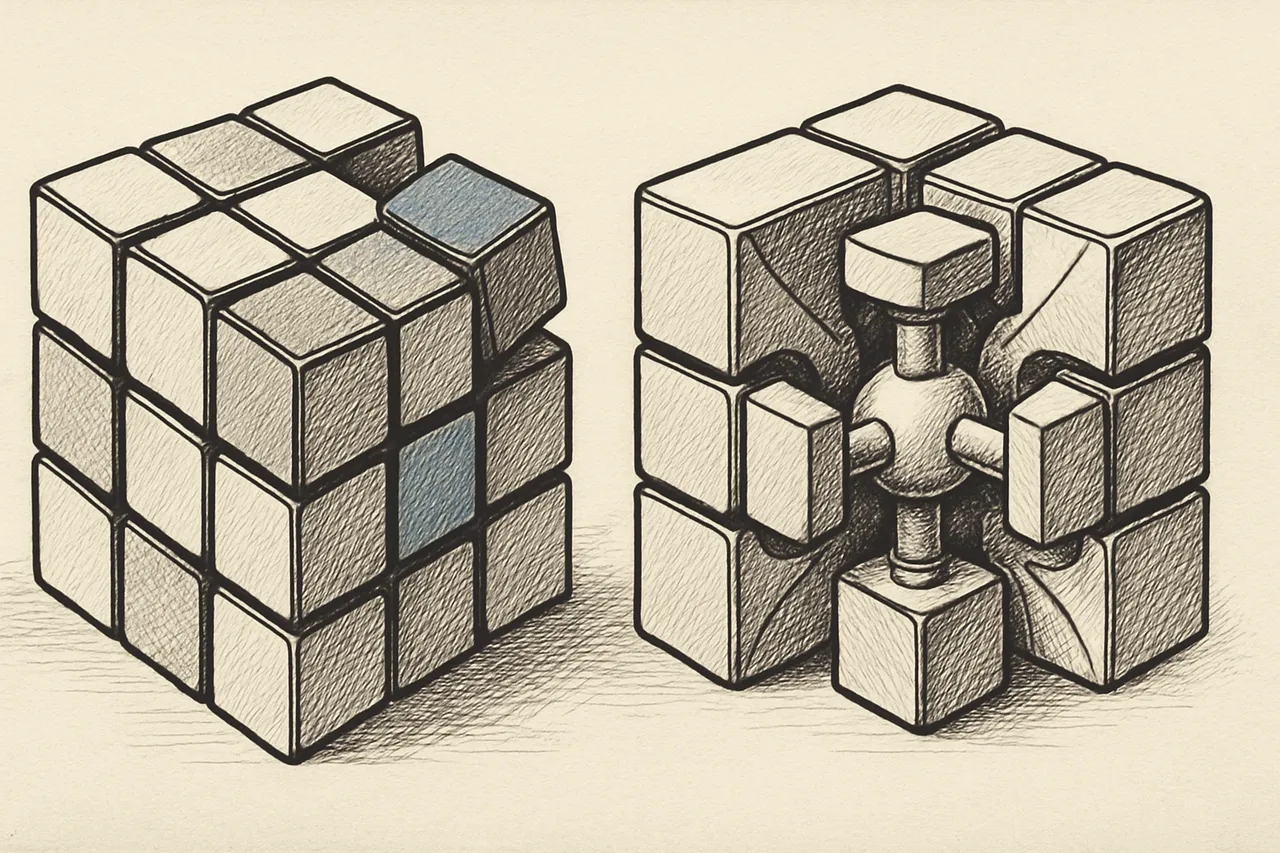
Ernő Rubik Needed About a Month to Solve His Own Cube. An American Court Later Found It Infringed an Earlier US Patent.
Rubik built the first cube in Budapest in 1974 as a way to think about three-dimensional movement. The clever part is how it holds together when most of its pieces are not attached to anything. In the United States, a chemist named Larry Nichols had patented a related puzzle in 1972, and his company sued.
Read the story →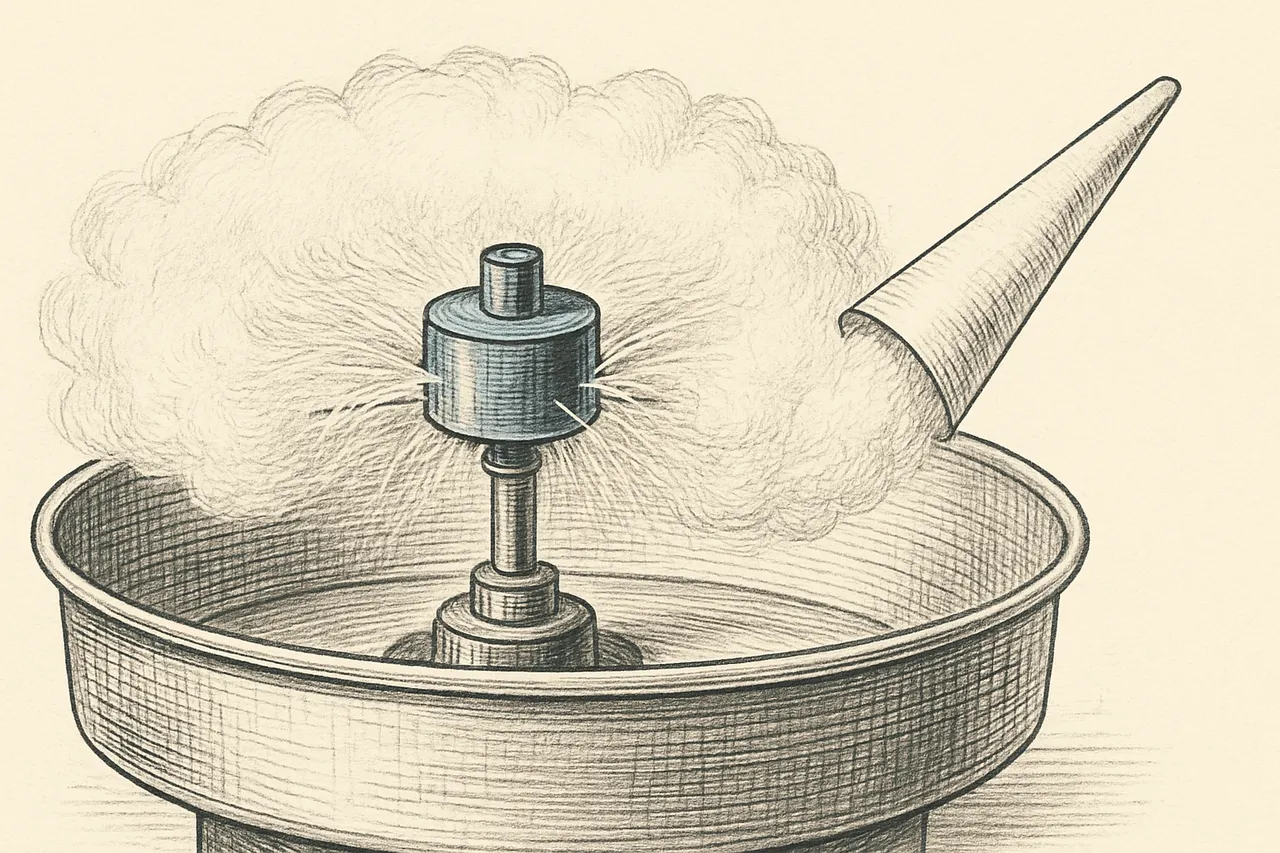
A Dentist Co-Invented the Cotton Candy Machine, and It Was Sold at the 1904 World's Fair as Fairy Floss
William Morrison was a dentist and John Wharton was a candy maker. Their machine melted sugar and flung it through tiny holes so that it cooled into threads finer than hair before it could crystallize. They filed in 1897, and at the St. Louis World's Fair it was a sensation.
Read the story →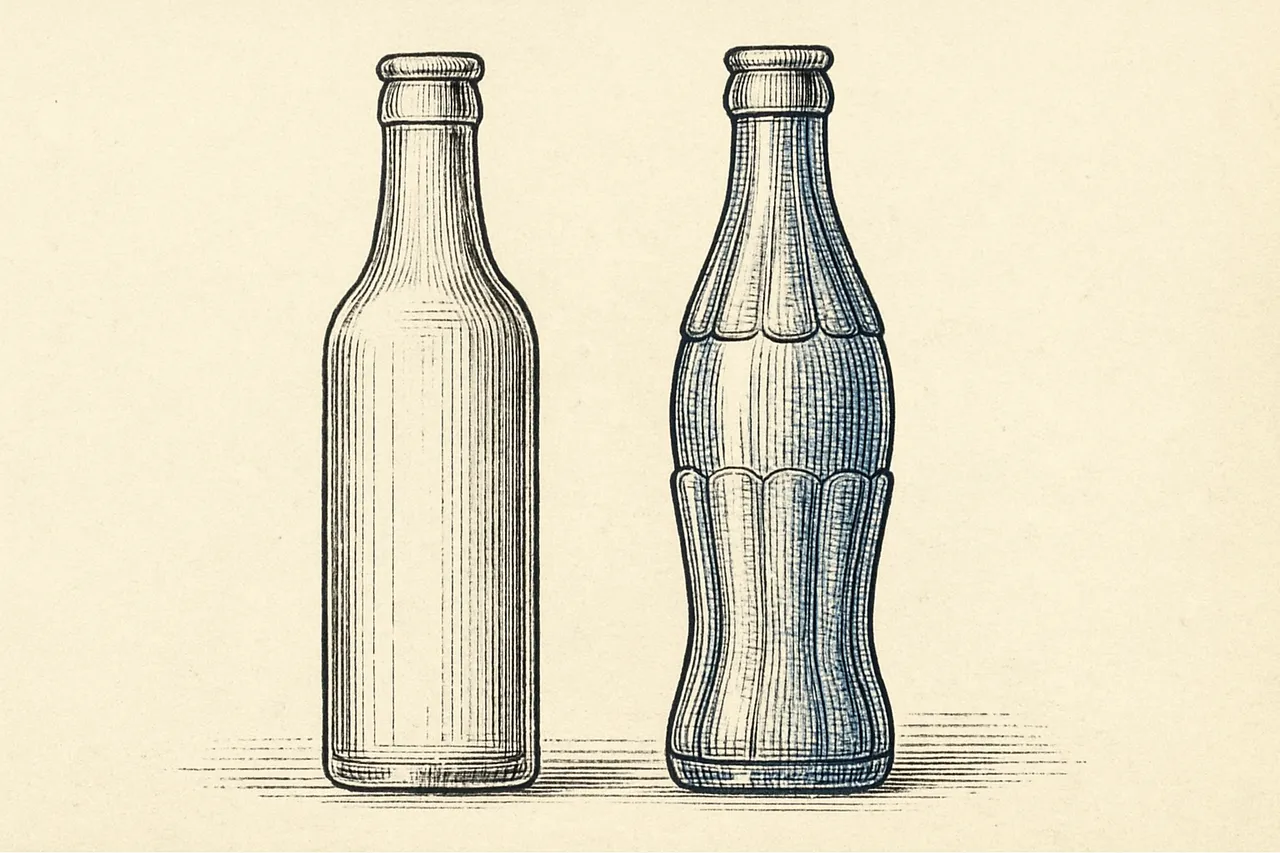
Coca-Cola Asked Glassmakers for a Bottle You Could Recognize in the Dark, or Broken on the Ground
In 1915 Coca-Cola had an imitation problem, since competitors used the same straight-sided bottles and borrowed-sounding names. It challenged glass companies to design a bottle identifiable by touch alone. The winner came from a small glassworks in Terre Haute, Indiana, and the name on the patent is not the name of the man who drew it.
Read the story →