The Comb-Over Patent
In 1977, two brothers in Orlando, Florida received a US patent for a method of combing one's hair to disguise baldness. It is among the most-cited examples of why the patent system needed reform — and a winner of the 2004 Ig Nobel Prize.
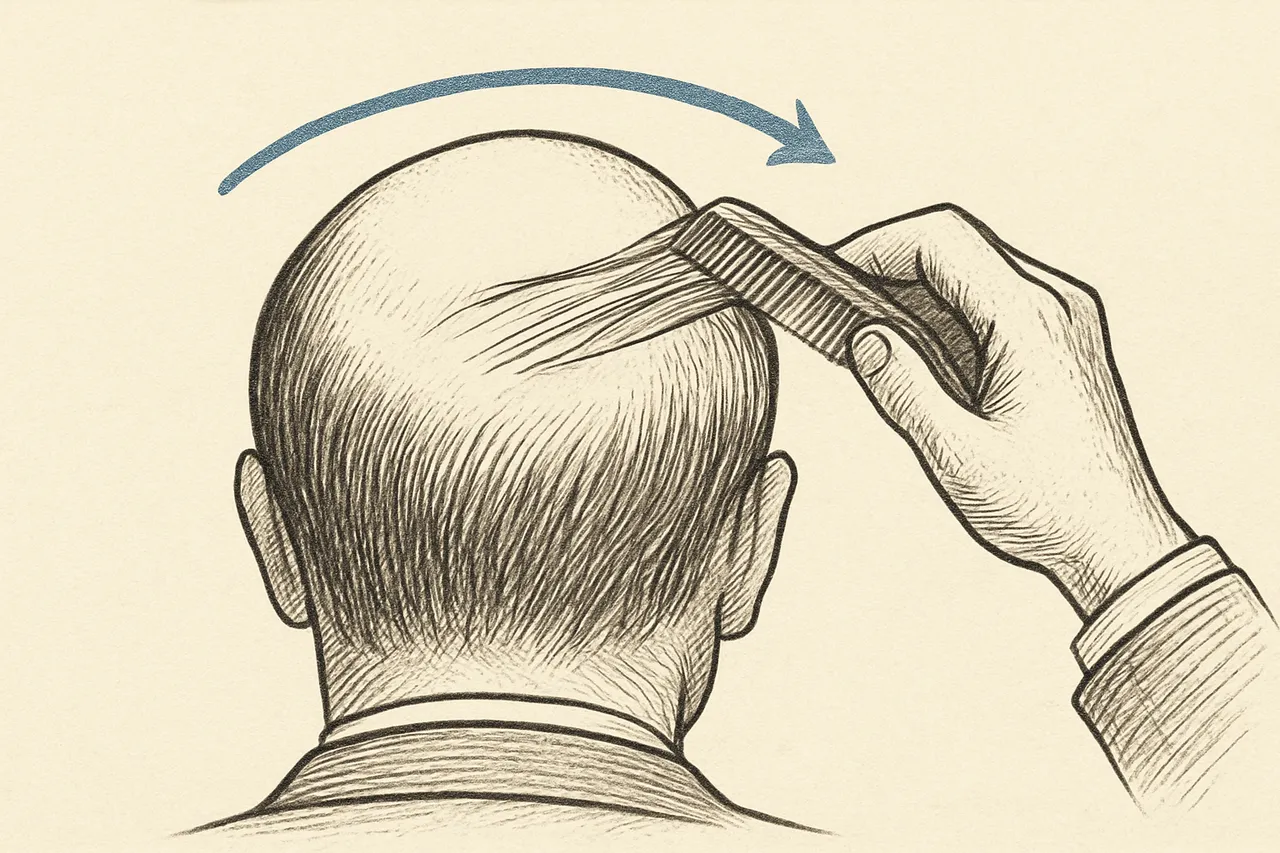
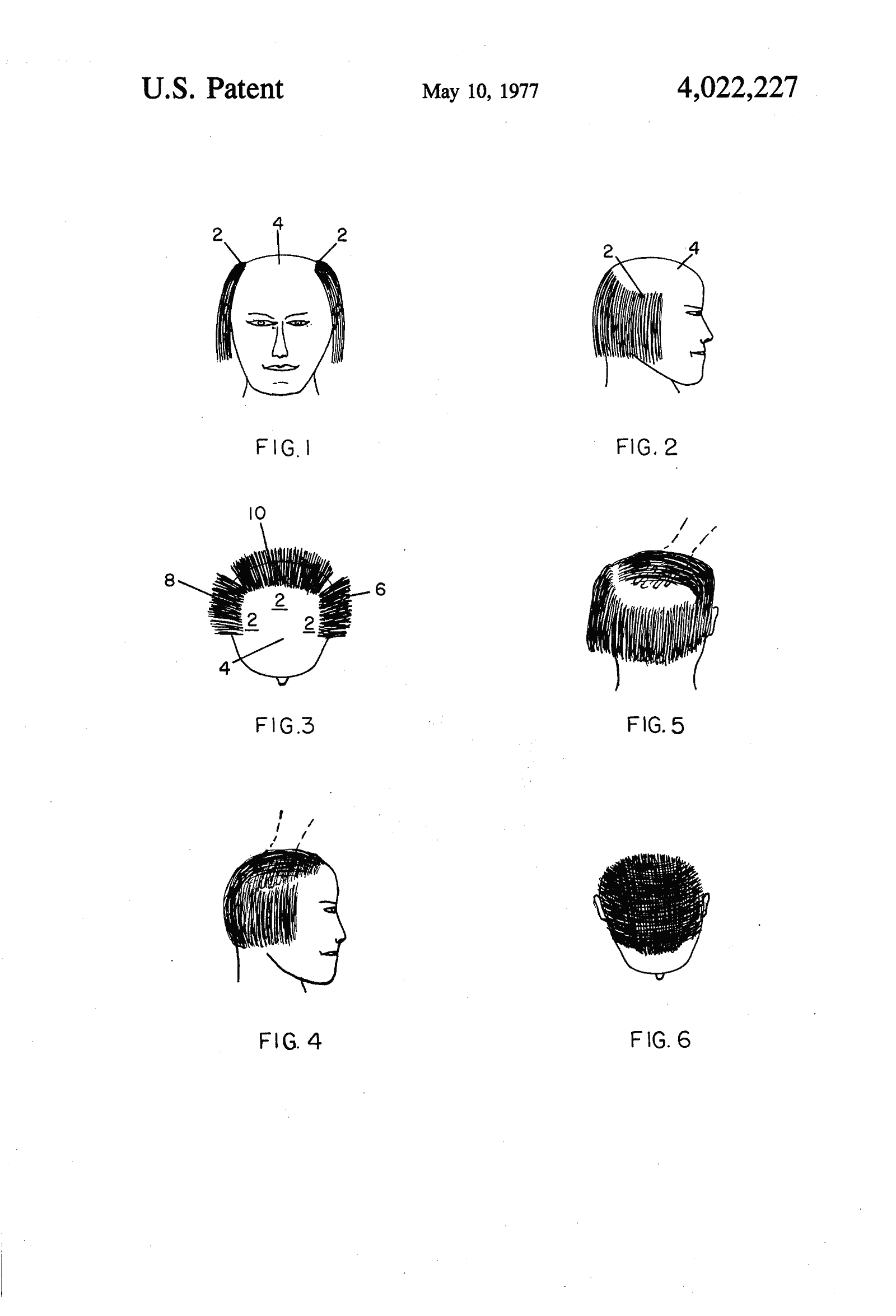
US4022227 was granted on May 10, 1977, to Frank J. Smith and Donald J. Smith of Orlando, Florida. The title, with the technical clarity of all USPTO documents, is "Method of Concealing Partial Baldness."
The five-page patent describes a procedure most middle-aged men in 1977 already knew intimately: parting the hair on the side of the head, growing the side hair long, and combing it across the top of the head to obscure the bald spot. The patent specifies "three sections" — left side, right side, and back — to be combed in a particular sequence to maximize coverage. The drawings include numbered figures showing the head in profile and from above, with arrows indicating combing direction.
It was, in other words, a patent on the comb-over.
How it got granted
Patent examiners in the 1970s were required to find prior art — earlier disclosures of the same invention — before rejecting an application. A patent on a method (rather than a device) was a relatively new and lightly regulated category. While men had been combing hair across bald spots for as long as men had been balding, almost none of that history had been written down in a form a patent examiner could find through standard search procedures. The Smiths' application described their method in formal patent language, with figures, and cited no obvious prior art. The examiner approved it.
The grant was, broadly, an embarrassment. Coverage in the technical press at the time treated it as a one-off oddity. In retrospect, it was something else: a leading indicator of a structural problem at the USPTO that would explode in the 1990s with the introduction of software and business-method patents.
The Ig Nobel
The patent was awarded the 2004 Ig Nobel Prize for Engineering — a satirical award given for research that "first makes people laugh, then makes them think." The Smith brothers attended the Harvard ceremony and gave a brief acceptance speech.
The actual mechanics of the patent were, by 2004, mostly irrelevant. The patent had expired in 1994, and the comb-over had not become noticeably more or less popular as a hairstyle during its term. Hair-replacement surgery, transplants, and finally simple acceptance of baldness had eaten most of the comb-over's market share over the intervening decades.
What the patent had become, by 2004, was a teaching example. Patent law textbooks used it. Examiners' training programs used it. Senate hearings on patent reform used it. The question it raised — what should and should not be patentable? — turned out to be the defining patent-policy question of the next thirty years, and it had been raised most clearly not by lawyers or economists but by two brothers in Florida who really did, sincerely, want a patent on combing your hair sideways.
See the original
The full text and figures of US4022227 are on Google Patents.
Related stories
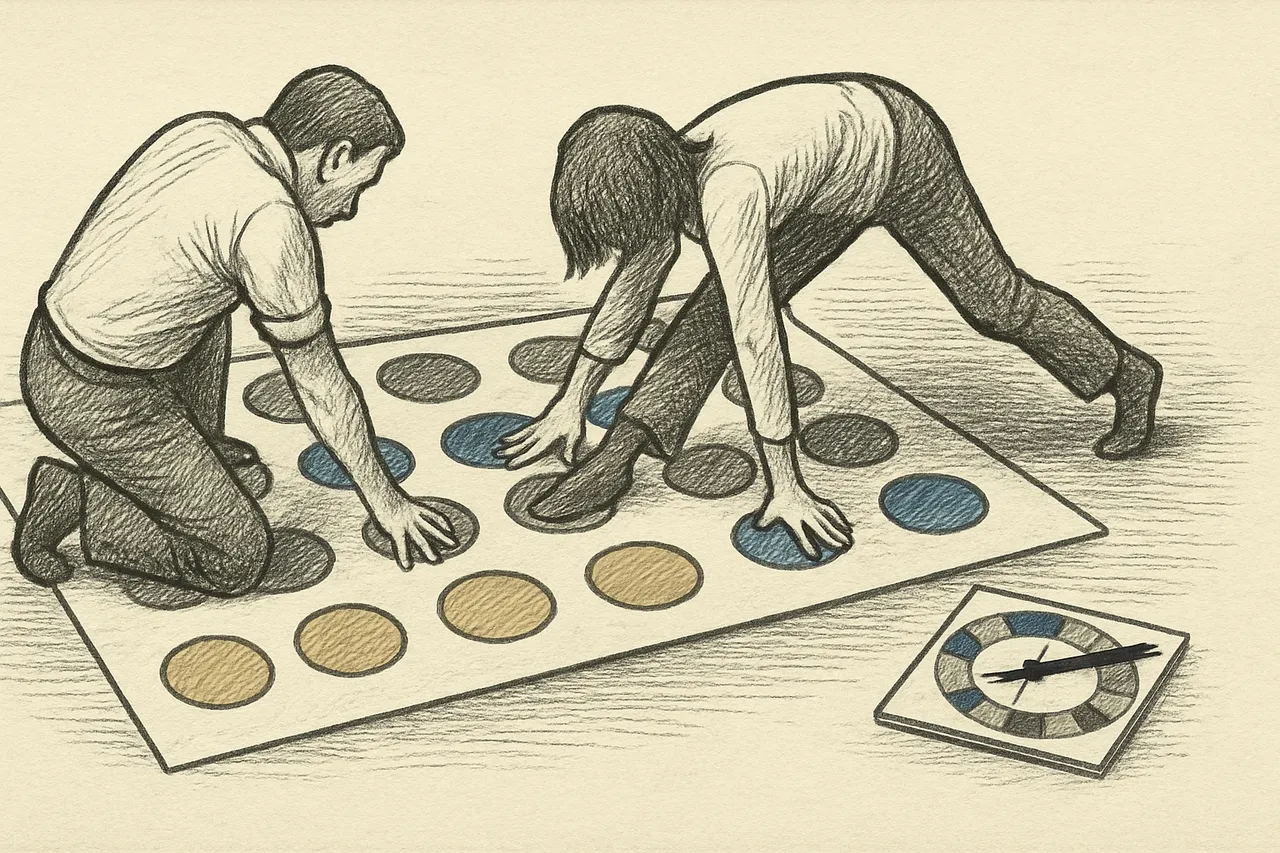
Twister's Patent Is Titled 'Apparatus for Playing a Game Wherein the Players Constitute the Game Pieces'
The patent title is the whole idea: the people are the pieces. Milton Bradley released the game in 1966, some retailers were wary of it, and critics found it a little too intimate. Then Johnny Carson played it on television with Eva Gabor, and the orders poured in.
Read the story →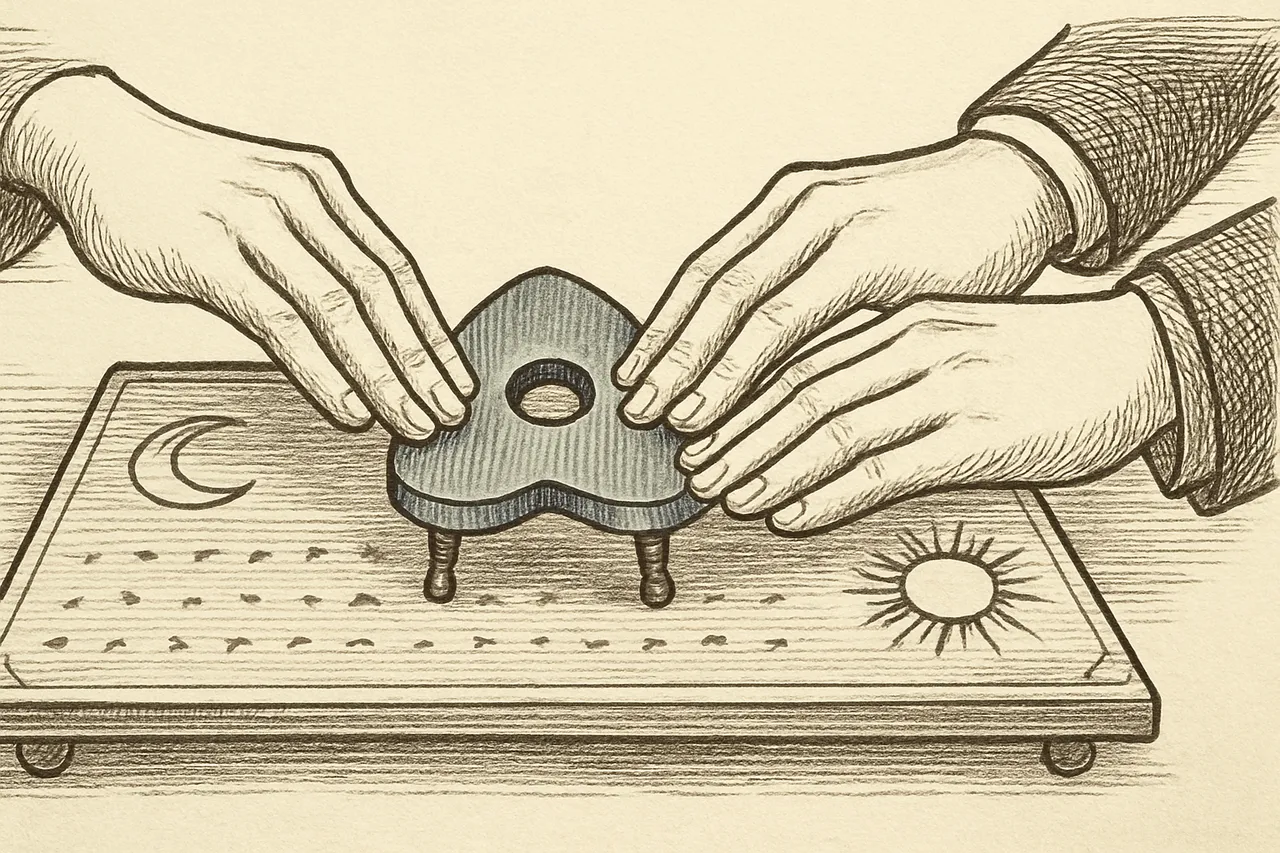
The Ouija Board's 1891 Patent Calls It an 'Egyptian Luck-Board' and Never Says How It Works
Elijah Bond's patent describes a board and a small pointer on legs, and makes no claim about what moves the pointer. The popular legend says the patent examiner demanded a demonstration first. The science, worked out decades before the patent, says the players are moving it themselves without realizing it.
Read the story →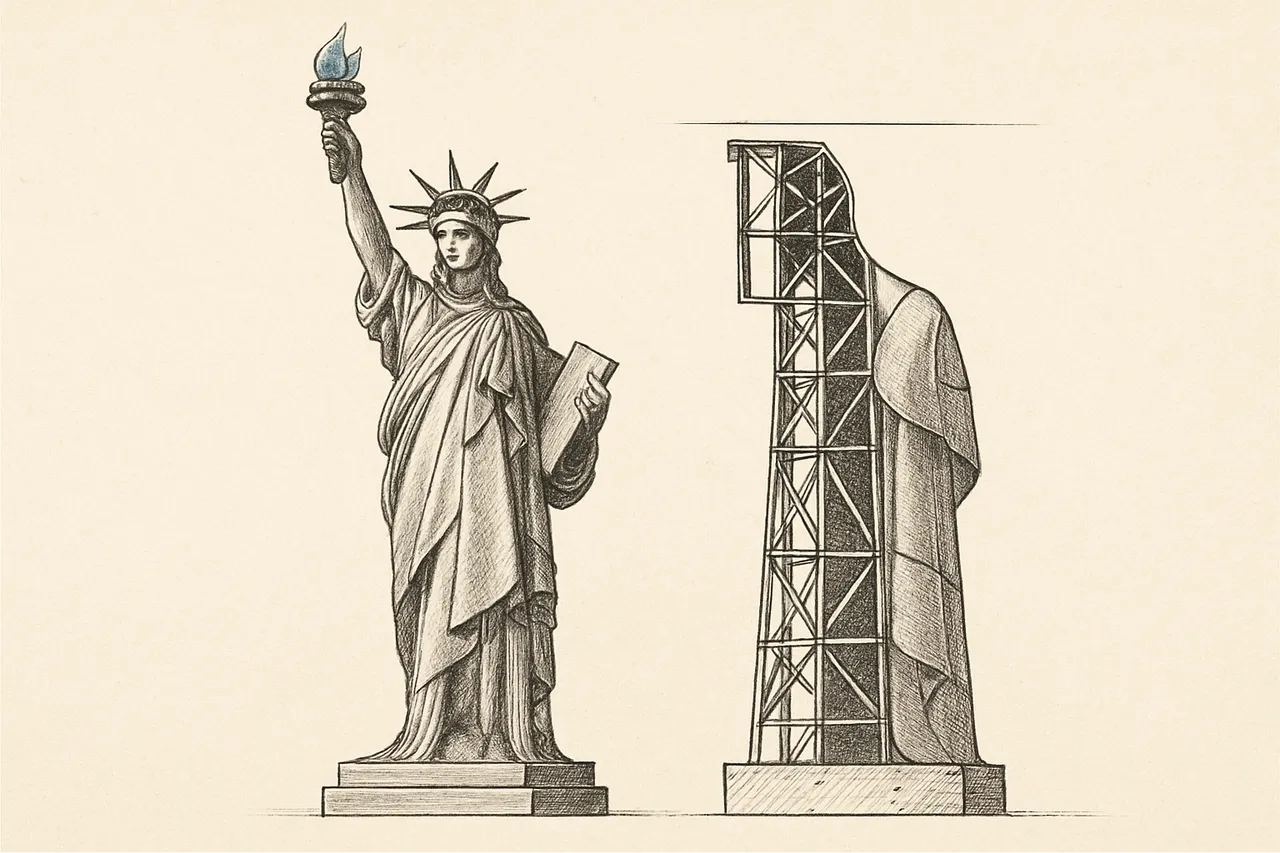
The Statue of Liberty Was Patented in 1879, Seven Years Before It Was Dedicated
Auguste Bartholdi received US Design Patent 11,023 in February 1879 for a statue that would not stand in New York Harbor until 1886. Replicas were a fundraising tool for a project that was chronically short of money, and a design patent gave control over who could legally make them.
Read the story →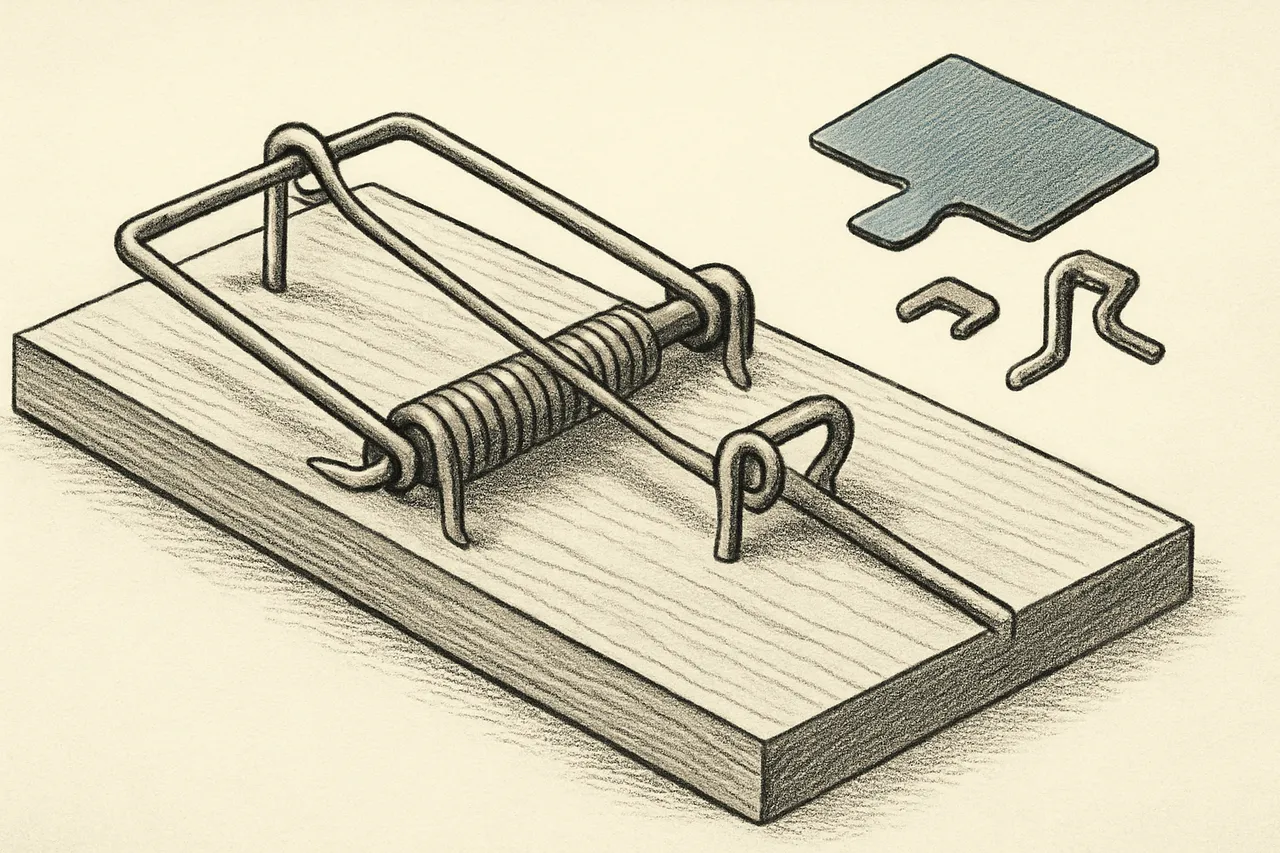
The Mousetrap Is the Most-Patented Device in American History. Almost None of Them Work.
More than four thousand mousetrap patents have been granted in the United States, and thousands more rejected. Roughly twenty have ever made money. The one that won was patented in 1894 and costs about a quarter.
Read the story →