The Bottle Cap Made Him Rich. Then He Told an Employee to Invent Something People Throw Away.
William Painter solved the problem of sealing carbonated drinks with a crimped metal cap that cost almost nothing and was ruined by opening. He then gave a struggling salesman named King Gillette one piece of advice, and it created the razor business.
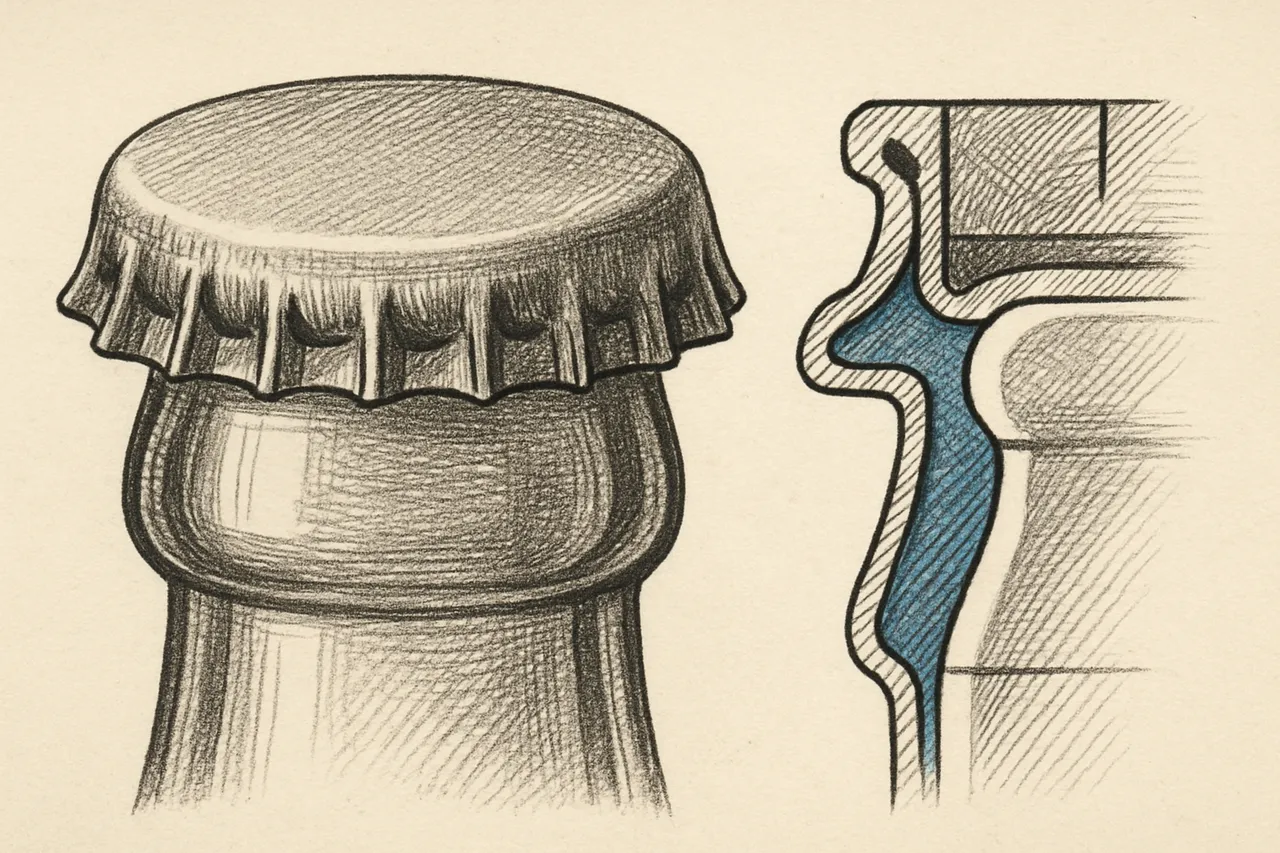
US468258 was granted to William Painter on February 2, 1892. The title is "Bottle-Sealing Device." It is the crown cork — the fluted metal cap on a glass bottle — and it solved a problem that had frustrated the drinks industry for decades.
Carbonated beverages are under pressure, and pressure wants out. Nineteenth-century closures were all compromises: cork stoppers that let gas escape and sometimes shot out, elaborate wire-and-porcelain swing tops that were expensive and had to be cleaned and reused, and internal glass marbles held shut by the carbonation itself. All were costly, inconsistent, or both.
Painter's cap has twenty-one flutes crimped down over the lip of the bottle, with a soft liner inside — originally cork — pressed against the glass to form the seal. The pressure inside the bottle actually helps hold the seal tight.
The unusual part
The design decision that mattered most was not mechanical. It was economic, and at the time it was close to heretical.
Painter deliberately made the cap destroyed by use. Opening it deforms the metal so it cannot be resealed. In an era when bottlers carefully collected, washed, and reused their closures, he proposed a closure so cheap that throwing it away was the correct thing to do.
The bottlers resisted. Painter had to demonstrate that the total cost of a single-use cap beat the cost of collecting, sanitizing, and re-fitting reusable closures — and he had to invent an opener, and get one into people's hands, to make the system work at all.
He won the argument. Crown Cork & Seal became a large and durable company, and the crown cap is still, more than a century later, the standard closure on beer bottles worldwide, essentially unchanged.
The advice
Painter's second contribution to industrial history was a sentence.
Among his employees was a traveling salesman named King Camp Gillette, who wanted badly to invent something and could not decide what. Painter, by Gillette's own account, told him to invent something that would be used once, thrown away, and bought again — the insight that had made the crown cap work.
Gillette spent years turning that over before landing on the object where it applied most obviously: the razor blade. Straight razors were expensive and had to be stropped and honed constantly. A cheap stamped steel blade, too thin to sharpen, sold in packs and discarded when dull, fit Painter's principle exactly.
That became the disposable safety razor, and with it the business model — sell the handle cheap, sell the blades forever — that now underpins printers and ink, consoles and games, coffee machines and pods.
Painter died in 1906. His patent is on a bottle cap. His actual legacy is the idea that the most profitable products are the ones you buy again next week.
See the original
The full text and figures of US468258 are on patents.us.
Related stories
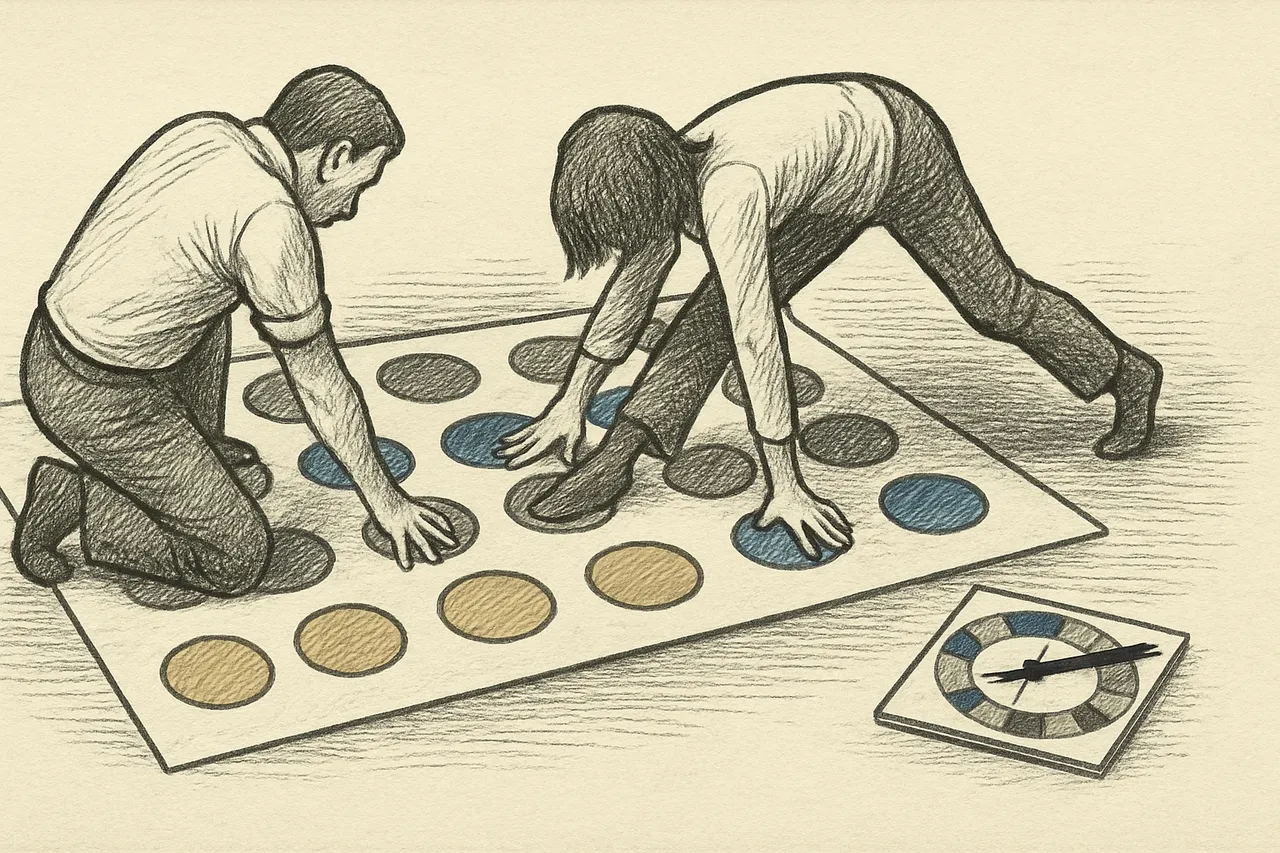
Twister's Patent Is Titled 'Apparatus for Playing a Game Wherein the Players Constitute the Game Pieces'
The patent title is the whole idea: the people are the pieces. Milton Bradley released the game in 1966, some retailers were wary of it, and critics found it a little too intimate. Then Johnny Carson played it on television with Eva Gabor, and the orders poured in.
Read the story →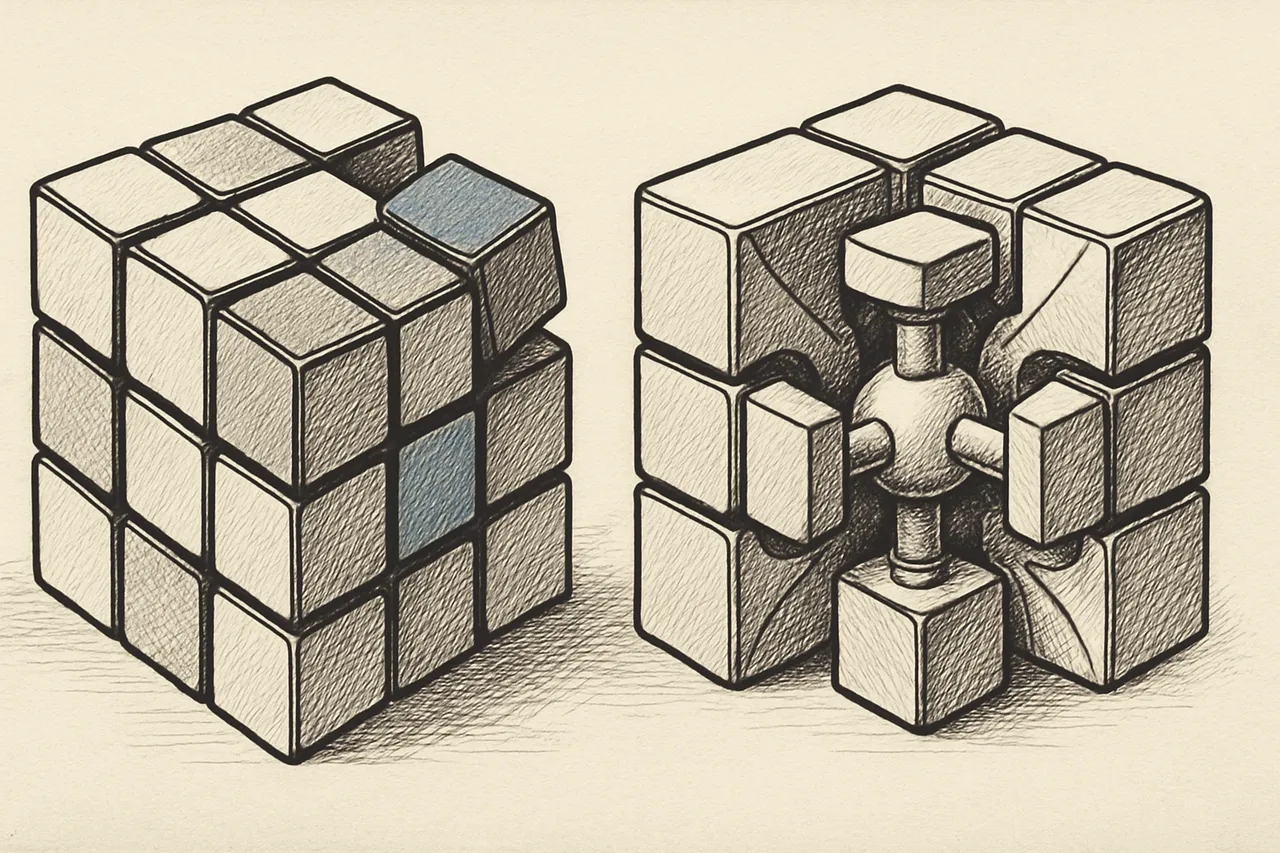
Ernő Rubik Needed About a Month to Solve His Own Cube. An American Court Later Found It Infringed an Earlier US Patent.
Rubik built the first cube in Budapest in 1974 as a way to think about three-dimensional movement. The clever part is how it holds together when most of its pieces are not attached to anything. In the United States, a chemist named Larry Nichols had patented a related puzzle in 1972, and his company sued.
Read the story →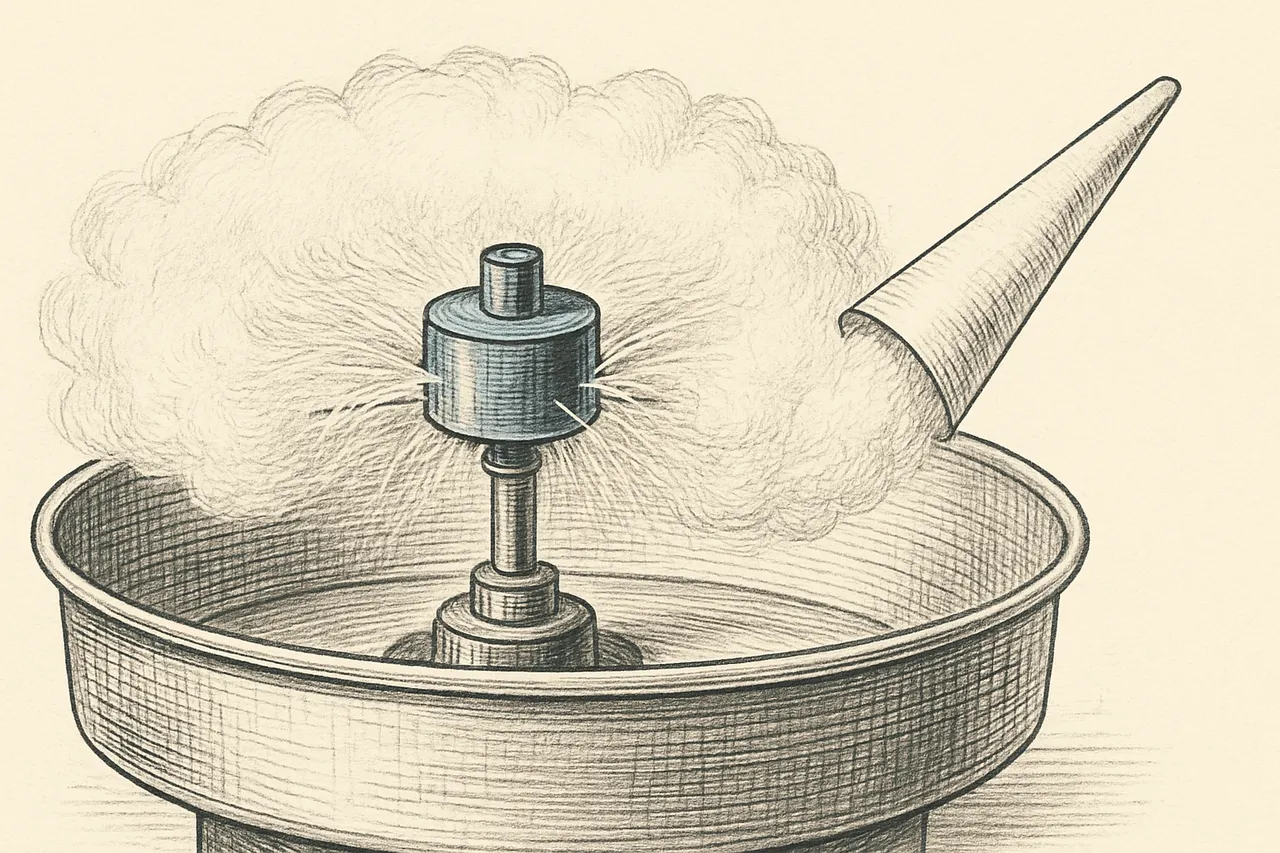
A Dentist Co-Invented the Cotton Candy Machine, and It Was Sold at the 1904 World's Fair as Fairy Floss
William Morrison was a dentist and John Wharton was a candy maker. Their machine melted sugar and flung it through tiny holes so that it cooled into threads finer than hair before it could crystallize. They filed in 1897, and at the St. Louis World's Fair it was a sensation.
Read the story →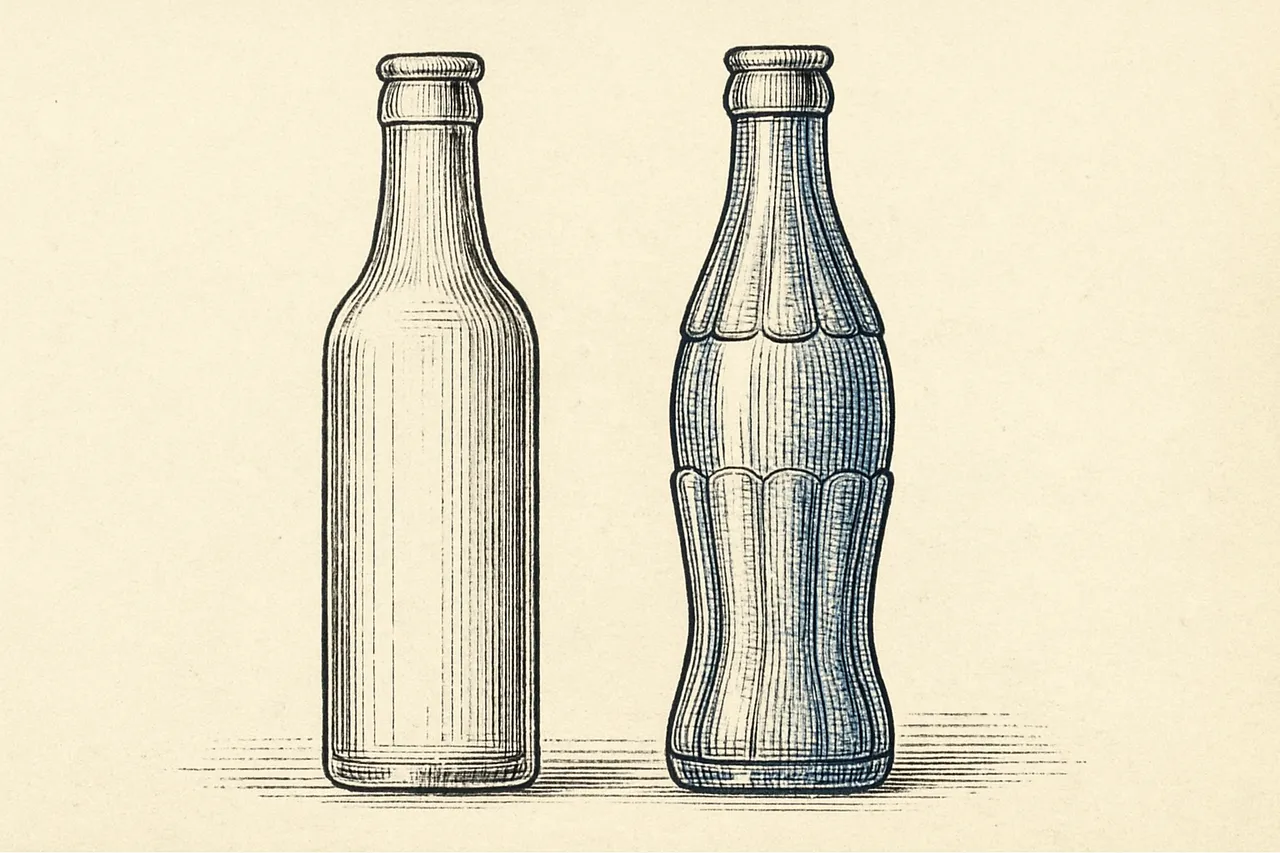
Coca-Cola Asked Glassmakers for a Bottle You Could Recognize in the Dark, or Broken on the Ground
In 1915 Coca-Cola had an imitation problem, since competitors used the same straight-sided bottles and borrowed-sounding names. It challenged glass companies to design a bottle identifiable by touch alone. The winner came from a small glassworks in Terre Haute, Indiana, and the name on the patent is not the name of the man who drew it.
Read the story →